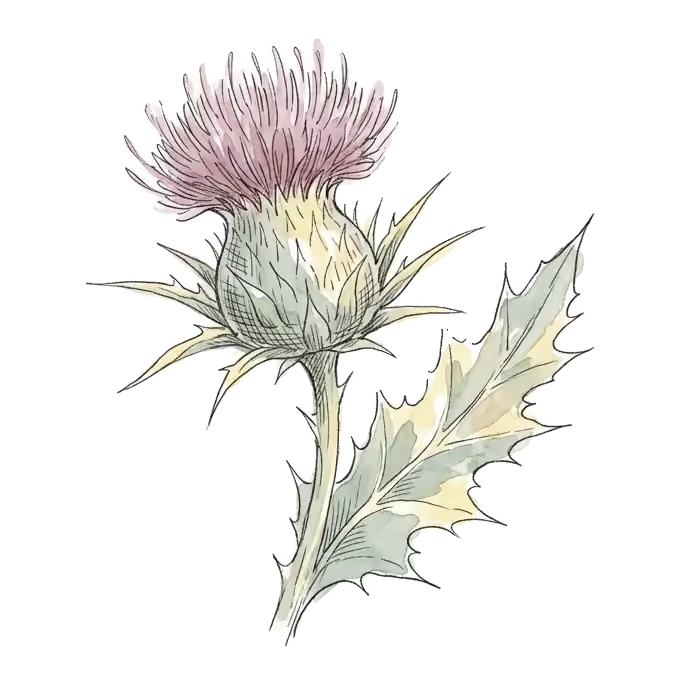
Milk Thistle (Silybum marianum)
Silybum marianum · also known as Mary thistle, holy thistle, St. Mary's thistle, Marian thistle, silymarin
By Superfoods Advisor Editors·July 3, 2026
Milk thistle for liver health: what silymarin trials show for fatty liver and hepatitis, the 420 mg daily dose studied, side effects and interactions.
Milk thistle (Silybum marianum) is a Mediterranean plant whose seed extract, silymarin, is taken for liver health. In fatty liver disease, pooled trials found small drops in the liver enzymes ALT and AST, but a 2025 Cochrane review rated that evidence as very low certainty, and two NCCIH-funded trials in hepatitis C and NASH found no benefit.
Also called Mary thistle or St. Mary’s thistle, it is a flowering plant in the Asteraceae family, native to the Mediterranean basin and naturalized widely across Europe, the Americas, and Australia. Its characteristic purple blooms and leaves veined with white — the “milk” in its name — have made it recognizable across centuries of herbal practice. The plant’s seeds (technically achenes) contain the bioactive fraction of interest: a family of polyphenolic compounds collectively termed silymarin, which has been used medicinally for about 2,000 years (Abenavoli et al., 2018).
Ancient Greek and Roman herbalists described milk thistle for liver and gallbladder complaints, and in the late 19th and early 20th centuries American Eclectic physicians used the seed preparations for congestion of the liver and spleen (EMA, 2018). In the 20th century, German researchers isolated silymarin and studied it in animals and people. Today, standardized milk thistle extract is widely studied for liver-related uses and is approved in Germany (Commission E monograph) for supportive treatment of chronic inflammatory liver conditions and cirrhosis (EMA, 2018).
Evidence at a glance
Active Compounds
The term “silymarin” refers to a concentrated complex of flavonolignans and a flavonoid extracted from milk thistle seeds, typically constituting 70–80% of standardized extracts (the Commission E monograph specifies 70%; EMA, 2018). The principal constituents are:
Silybin A and silybin B (also called silibinin): These two diastereomers together make up approximately 50–60% of the silymarin complex (EMA, 2018) and are considered its most biologically active components. Silybin B predominates in most commercial extracts. Both have been studied individually and show hepatoprotective, antioxidant, and anti-inflammatory properties in preclinical models.
Silydianin and silychristin: Flavonolignans comprising roughly 30% of silymarin combined (about 20% silychristin and 10% silydianin; EMA, 2018). In a study of cholecystectomy patients, both were barely detectable in bile after oral silymarin (Schandalik et al., 1992), so their contribution to the extract’s effects is uncertain.
Isosilybin A and isosilybin B: Present in smaller amounts; isosilybin A and B have attracted research interest for potential anti-cancer properties in prostate cancer cell lines (preclinical only; Deep et al., 2007).
Taxifolin (dihydroquercetin): A flavonoid present in silymarin that contributes antioxidant activity.
The poor water solubility and low oral bioavailability of silymarin compounds — particularly silybin — has driven development of enhanced-bioavailability formulations, including phospholipid complexes (silybin-phosphatidylcholine, sold as Siliphos) and nanoparticle formulations. In one small study, the phospholipid complex delivered about four times as much silybin to bile as standard silymarin at the same silybin dose (Schandalik et al., 1992).
Evidence for Purported Benefits
Hepatoprotection and Chronic Liver Disease
Evidence:Limited Results conflict: pooled RCTs show small liver-enzyme drops, while two NCCIH-funded trials found no benefit.
Proposed hepatoprotective mechanisms come mostly from experimental animal studies, and how well they translate to people is not established (Valenzuela & Garrido, 1994). They include:
- Membrane stabilization: Silymarin binds to and stabilizes hepatocyte plasma membranes, reducing penetration of hepatotoxins (including alcohol metabolites, Amanita phalloides toxins, and pharmaceutical hepatotoxins).
- Protein synthesis support: In animal studies, silymarin increased ribosomal RNA synthesis in liver cells, which has been proposed to aid repair of damaged tissue.
- Antioxidant activity: Silymarin scavenges reactive oxygen species and upregulates cellular antioxidant defenses (glutathione, superoxide dismutase), reducing oxidative hepatic injury.
- NF-κB pathway modulation: In preclinical models, silymarin inhibits NF-κB activation, reducing downstream pro-inflammatory cytokine production (TNF-α, IL-6) (Federico et al., 2017).
A meta-analysis by Zhong et al. (2017) pooling 8 RCTs (587 patients with nonalcoholic fatty liver disease) found that silymarin lowered AST by about 6.6 U/L and ALT by about 9.2 U/L more than control. Liver enzymes are surrogate markers, and the trials did not establish effects on liver outcomes. Two NCCIH-funded trials, one in hepatitis C and one in nonalcoholic steatohepatitis, found no benefit from silymarin, and NCCIH considers the evidence for liver disease conflicting or too limited for conclusions (NCCIH).
Fatty Liver Disease (NAFLD)
Evidence:Limited A 17-RCT Cochrane review found a small ALT drop but rated its certainty very low.
Abenavoli et al. (2018) reviewed silymarin in NAFLD and other liver diseases and concluded that, despite encouraging preclinical data, better-designed randomized trials are needed. A 2025 Cochrane review (Wang et al., 2025; 17 RCTs, 2,069 participants) found that silymarin alone may lower ALT by about 7 U/L compared with placebo or no intervention, but rated the certainty of this evidence as very low.
Amanita phalloides Poisoning (Amatoxin Toxicity)
Intravenous silybin (silibinin; Legalon SIL) is used in European clinical practice for Amanita phalloides (death cap mushroom) poisoning, where it is administered as an antidote. In a retrospective analysis of 2,108 hospitalized amatoxin poisonings, silybin-based regimens were associated with lower mortality than most other treatments, though the data are observational and the authors called for confirmatory research (Enjalbert et al., 2002). Oral silymarin supplements are not equivalent to intravenous formulations in this context.
Diabetes and Insulin Resistance
Evidence:Limited Small RCTs, mostly from one region; a five-trial meta-analysis found glucose and HbA1c drops but rated the evidence low quality.
Several small RCTs suggest silymarin may modestly reduce fasting blood glucose and HbA1c in type 2 diabetes; most were done in Middle Eastern countries, and it is unclear whether the results generalize (NCCIH). A meta-analysis by Voroneanu et al. (2016) of five RCTs (270 patients) found significant reductions in fasting glucose (−26.9 mg/dL) and HbA1c (about −1.1 percentage points) with silymarin, though the authors judged the evidence to be of low quality and made no recommendation.
Typical Use and Dosing
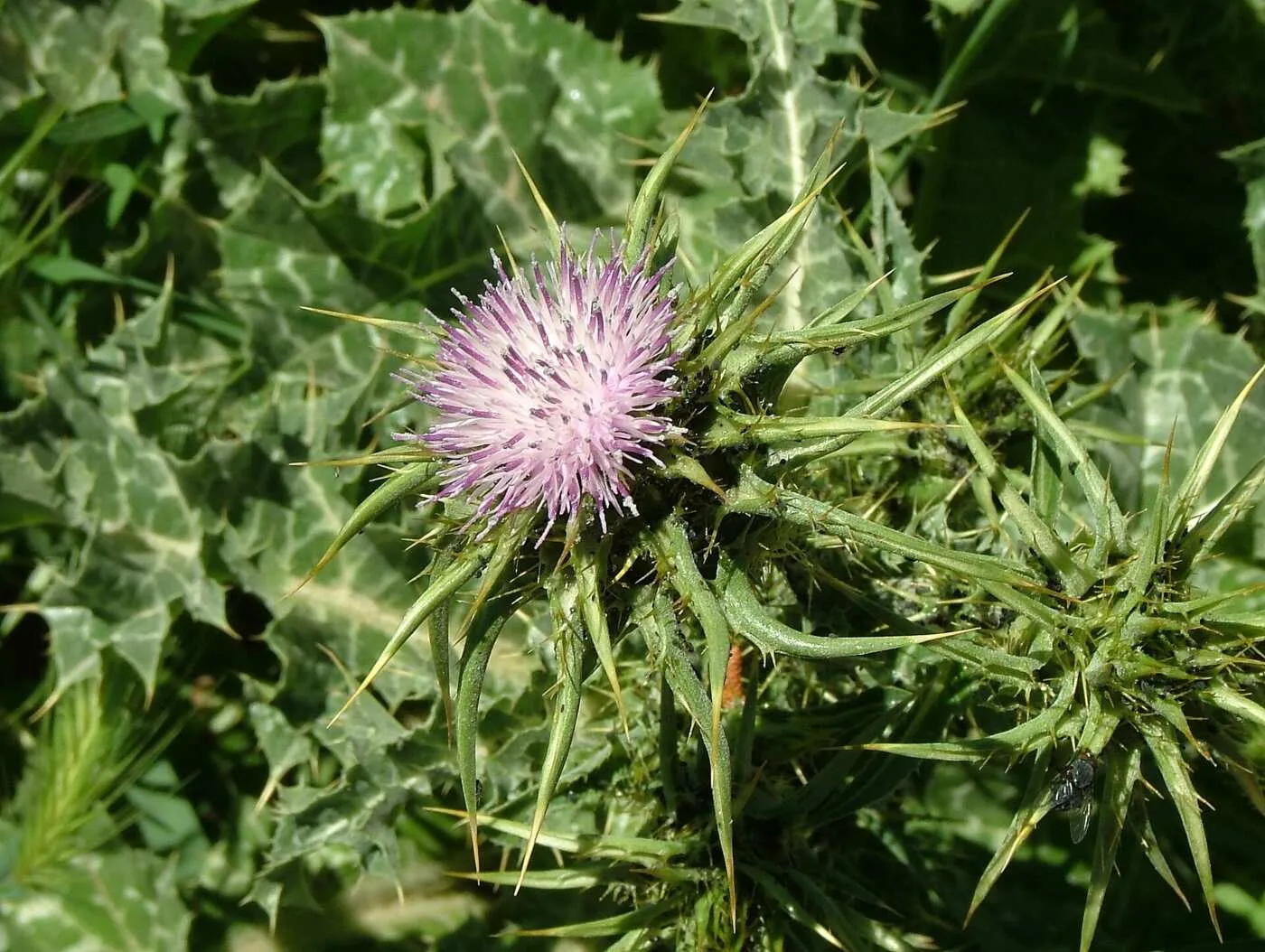 Photo: SuperJew, CC BY-SA 3.0, via Wikimedia Commons
Standardized extract: The most commonly studied dose is 420 mg/day of silymarin, usually given as 140 mg three times daily (EMA, 2018). This equates to approximately 525 mg/day of extract at 80% standardization.
Duration: Clinical trials of standardized extract in liver disease have run from one month to several years, and most measured liver enzymes rather than clinical outcomes (EMA, 2018).
Enhanced bioavailability forms: In healthy volunteers, a silybin-phosphatidylcholine complex produced much higher plasma silybin levels than silymarin at the same silybin dose (Barzaghi et al., 1990). Whether this translates into better clinical outcomes has not been shown.
Food use: Milk thistle leaves and young shoots are edible (sometimes consumed as a vegetable in Mediterranean regions), but food-level intakes deliver negligible silymarin compared to supplemental doses.
Milk thistle is often sold next to adaptogens such as ashwagandha, which has its own documented liver-injury cases; our review of the adaptogen evidence covers those reports and how to read herbal trial data.
Safety, Side Effects, and Interactions
Taken orally, milk thistle appears to be well tolerated (NCCIH); in a 7-day trial, doses up to 2.1 g of silymarin per day caused no drug-related adverse events (Hawke et al., 2010). Reported side effects include:
- GI effects: Digestive symptoms such as bloating, nausea, and gas are the most common side effects (NCCIH).
- Allergic reactions: Cross-reactivity with other Asteraceae/Compositae plants (ragweed, chrysanthemums, marigolds, daisies) is possible. Individuals with known Asteraceae allergy should use caution (NCCIH).
- Mild laxative effect: Silymarin has historically been described as mildly cholagogic (stimulating bile flow), which may cause loose stools in sensitive individuals.
Drug interactions: Silymarin is a modest inhibitor of CYP3A4 and CYP2C9 enzymes in vitro, raising theoretical concerns about interactions with medications metabolized by these pathways (e.g., certain statins, immunosuppressants, anticoagulants); two silymarin flavonolignans inhibited CYP2C9-mediated warfarin metabolism in human liver preparations (Brantley et al., 2010). A 2019 review concluded that such enzyme effects are unlikely to matter clinically in most cases (Xie et al., 2019), but in one small trial 140 mg of silymarin three times daily for 14 days raised losartan exposure in people with the common CYP2C9 genotype (Han et al., 2009). Accordingly, individuals taking narrow-therapeutic-window medications (warfarin, cyclosporine, tacrolimus) should inform their healthcare provider before supplementing.
Pregnancy and breastfeeding: Little is known about whether milk thistle is safe during pregnancy or breastfeeding (NCCIH); use it only under medical supervision.
Contraindications: Individuals with hormone-sensitive conditions should note that laboratory studies report estrogenic activity from silymarin and silibinin, mainly via estrogen receptor beta (MSK, About Herbs), though clinical evidence for hormonal effects is lacking.
Product Selection Criteria
- Standardization: Choose products standardized to at least 70–80% silymarin content by weight, which is the reference standard used in most clinical trials. Products not specifying silymarin percentage are difficult to dose meaningfully.
- Form: Standard silymarin extract is appropriate for most users. Silybin-phosphatidylcholine (phytosome) forms deliver more silybin to the bloodstream, though a clinical advantage is unproven and they carry a higher cost.
- Seed vs. aerial extract: Ensure the product specifies seed-derived silymarin, not aerial parts (leaves, stems), which have minimal silymarin content.
- Third-party testing: Certification by NSF International or USP verifies identity, potency, and that contaminants including heavy metals are below set limits; Informed Sport screens only for banned substances.
- Dosing transparency: Prefer products listing both total extract weight and standardized silymarin content per serving so you can calculate actual silymarin intake.
Frequently Asked Questions
Is milk thistle good for your liver?
The evidence is limited and conflicting. Meta-analyses in fatty liver disease found small reductions in the liver enzymes ALT and AST, but these are surrogate markers, and the trials did not show effects on liver outcomes. Two NCCIH-funded trials, in hepatitis C and in NASH, found no benefit. Anyone with liver disease should use it only alongside medical care, not instead of it.
Can milk thistle help fatty liver?
Possibly a little, on lab measures. A 2025 Cochrane review of 17 trials and 2,069 participants found silymarin alone may lower ALT by about 7 U/L compared with placebo or no treatment, but rated the certainty as very low. No trial has shown that it reverses fatty liver or prevents its complications. Weight, diet and medical follow-up remain the established approach.
How much milk thistle per day is typical?
The dose studied most often is 420 mg of silymarin a day, usually taken as 140 mg three times daily. At 80% standardization that is about 525 mg of extract. A 7-day trial found doses up to 2.1 g of silymarin a day caused no drug-related adverse events. Check the label for the silymarin content, not only the extract weight.
Does milk thistle detox the liver?
There is no evidence that it “detoxes” a healthy liver. The research measured liver enzymes in people with liver disease, and the proposed protective mechanisms come mostly from animal studies. The one established medical use is intravenous silibinin for death cap mushroom poisoning in hospitals, which oral supplements cannot replicate.
What are the side effects of milk thistle?
Taken by mouth it appears to be well tolerated. Bloating, nausea, gas and loose stools are the most common complaints, and people allergic to ragweed, chrysanthemums, marigolds or daisies may react. Little is known about safety in pregnancy or breastfeeding. Because silymarin can affect liver enzymes that process drugs, people on warfarin, cyclosporine, tacrolimus or losartan should check with a prescriber.
References
Show all 17 referencesShow fewer
- Abenavoli, L., Izzo, A. A., Milić, N., Cicala, C., Santini, A., & Capasso, R. (2018). Milk thistle (Silybum marianum): A concise overview on its chemistry, pharmacological, and nutraceutical uses in liver diseases. Phytotherapy Research, 32(11), 2202–2213.
- Zhong, S., Fan, Y., Yan, Q., Fan, X., Wu, B., Han, Y., & Zhong, J. (2017). The therapeutic effect of silymarin in the treatment of nonalcoholic fatty disease: A meta-analysis (PRISMA) of randomized control trials. Medicine, 96(49), e9061.
- Voroneanu, L., Nistor, I., Dumea, R., Apetrii, M., & Covic, A. (2016). Silymarin in type 2 diabetes mellitus: A systematic review and meta-analysis of randomized controlled trials. Journal of Diabetes Research, 2016, 5147468.
- Federico, A., Dallio, M., & Loguercio, C. (2017). Silymarin/silybin and chronic liver disease: A marriage of many years. Molecules, 22(2), 191.
- Hawke, R. L., Schrieber, S. J., Soule, T. A., Wen, Z., Smith, P. C., Reddy, K. R., … Fried, M. W. (2010). Silymarin ascending multiple oral dosing phase I study in noncirrhotic patients with chronic hepatitis C. Journal of Clinical Pharmacology, 50(4), 434–449.
- European Medicines Agency, Committee on Herbal Medicinal Products. (2018). Assessment report on Silybum marianum (L.) Gaertn., fructus. EMA/HMPC/294188/2013.
- Wang, C., Shang, Y., Kanaan, G., Chai, L., Li, H., & Qi, X. (2025). Silymarin for adults with metabolic dysfunction-associated steatotic liver disease. Cochrane Database of Systematic Reviews, 6, CD015524.
- Schandalik, R., Gatti, G., & Perucca, E. (1992). Pharmacokinetics of silybin in bile following administration of silipide and silymarin in cholecystectomy patients. Arzneimittelforschung, 42(7), 964–968.
- Enjalbert, F., Rapior, S., Nouguier-Soulé, J., Guillon, S., Amouroux, N., & Cabot, C. (2002). Treatment of amatoxin poisoning: 20-year retrospective analysis. Journal of Toxicology: Clinical Toxicology, 40(6), 715–757.
- Han, Y., Guo, D., Chen, Y., Chen, Y., Tan, Z. R., & Zhou, H. H. (2009). Effect of silymarin on the pharmacokinetics of losartan and its active metabolite E-3174 in healthy Chinese volunteers. European Journal of Clinical Pharmacology, 65(6), 585–591.
- Valenzuela, A., & Garrido, A. (1994). Biochemical bases of the pharmacological action of the flavonoid silymarin and of its structural isomer silibinin. Biological Research, 27(2), 105–112.
- Deep, G., Oberlies, N. H., Kroll, D. J., & Agarwal, R. (2007). Isosilybin B and isosilybin A inhibit growth, induce G1 arrest and cause apoptosis in human prostate cancer LNCaP and 22Rv1 cells. Carcinogenesis, 28(7), 1533–1542.
- Barzaghi, N., Crema, F., Gatti, G., Pifferi, G., & Perucca, E. (1990). Pharmacokinetic studies on IdB 1016, a silybin-phosphatidylcholine complex, in healthy human subjects. European Journal of Drug Metabolism and Pharmacokinetics, 15(4), 333–338.
- Brantley, S. J., Oberlies, N. H., Kroll, D. J., & Paine, M. F. (2010). Two flavonolignans from milk thistle (Silybum marianum) inhibit CYP2C9-mediated warfarin metabolism at clinically achievable concentrations. Journal of Pharmacology and Experimental Therapeutics, 332(3), 1081–1087.
- Xie, Y., Zhang, D., Zhang, J., & Yuan, J. (2019). Metabolism, transport and drug-drug interactions of silymarin. Molecules, 24(20), 3693.
- National Center for Complementary and Integrative Health. Milk thistle.
- Memorial Sloan Kettering Cancer Center. About Herbs: Milk thistle.
More in Roots & Herbs
- Ashwagandha (Withania somnifera)
Ashwagandha side effects, who should avoid it, and drug interactions, plus what trials show for stress, sleep and strength at clinical doses.
- Basil (Ocimum basilicum)
Basil benefits: what lab and human studies show, vitamin K per serving, sweet basil vs holy basil, and the estragole and warfarin cautions.
- Black Pepper (Piper nigrum)
Black pepper benefits: how piperine raises absorption of curcumin and some drugs, what human studies show, side effects, and drug interactions.
- Cilantro / Coriander (Coriandrum sativum)
Cilantro vs parsley: how the two herbs differ in flavor, vitamin K and vitamin C, plus what the evidence says about cilantro benefits and safety.
- Cinnamon (Cinnamomum verum / C. cassia)
Ceylon cinnamon vs cassia: coumarin levels and liver risk, how much is safe per day, and what trials show for blood sugar and cholesterol.
- Garlic (Allium sativum)
Garlic benefits for blood pressure, cholesterol and colds: what trials show, how much raw garlic or supplement they used, and bleeding risks.

Curated by Superfoods Advisor Editors·Last updated