The Best Ashwagandha Supplements in 2026
By Superfoods Advisor Editors·July 1, 2026
Updated July 7, 2026Top-ranked
 Check price on Amazon on Amazon for Youtheory Ashwagandha 1000 mg (KSM-66), 60 Count (opens in a new tab)
 Check price on Amazon on Amazon for Pure Encapsulations Ashwagandha 500 mg, 60 Capsules (opens in a new tab)
 Check price on Amazon on Amazon for Goli Nutrition ASHWA Vitamin Gummy (KSM-66) (opens in a new tab)
Compare all 6 picks →Affiliate links. Disclosure.
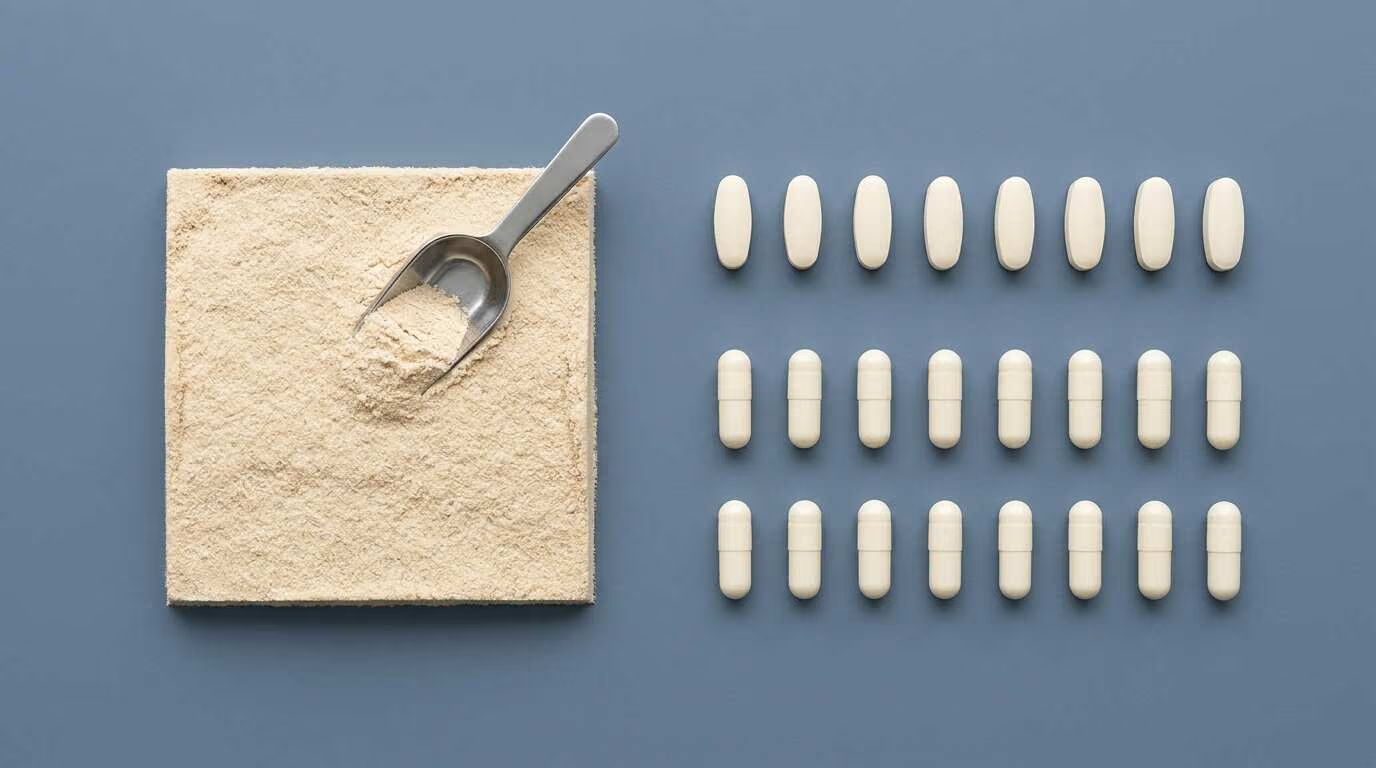
The best ashwagandha supplement here is Youtheory KSM-66: six products ranked on extract standardization, disclosed testing and trial-matched dose.
Top-ranked · 6 products compared
We earn a commission on purchases made through these links. It does not affect our rankings. See our affiliate disclosure.
| # | Product | Score | Details |
|---|---|---|---|
| 1 | | ||
| 2 | | ||
| 3 | | ||
| 4 |  | ||
| 5 |  | ||
| 6 |  |
1Youtheory
Ashwagandha 1000 mg (KSM-66), 60 Count
The only capsule in this comparison that discloses a branded, clinically-studied extract (KSM-66, standardized to ≥5% withanolides) at a clinical daily dose: 600 mg of KSM-66 within a 1,000 mg blend. Closest match to the published trials of any capsule here.
Strengths
- KSM-66 branded extract, ≥5% withanolides
- 600 mg KSM-66 per serving matches the trial dose
- NSF-registered manufacturing facility
Trade-offs
- Brand says this product is not third-party tested
- No Informed Sport mark on this product
The only capsule on this list that discloses a branded, clinically-studied extract. Two capsules deliver a 1,000 mg blend: 600 mg of KSM-66 root extract (standardized by the ingredient supplier to ≥5% withanolides) plus 400 mg of plain organic root powder, with 20 mg of ginger extract alongside (Youtheory label). The KSM-66 portion matches the 600 mg/day used in the most-cited KSM-66 stress trials (Chandrasekhar et al., 2012, PubMed; Salve et al., 2019, PubMed). Youtheory's own FAQ states this product is not third-party tested (the brand reports in-house purity testing), the bottle is not individually NSF-certified, and it does not carry an Informed Sport mark; the manufacturer's Irvine, CA facility is listed by NSF under its dietary-supplement GMP standard.
Reddit discussion of Youtheory on r/Supplements and r/Nootropics that we read was mostly favorable, chiefly because it is a well-priced KSM-66 product (particularly the 180-count Costco reference bottle); we could not verify individual thread URLs and are not linking them.
2Pure Encapsulations
Ashwagandha 500 mg, 60 Capsules
Hypoallergenic formulation from a professional-line brand; NSF-registered facility. Extract is a generic root extract (2.5% withanolides), not a branded clinical one, and the manufacturer received a 2011 FDA cGMP warning letter (historical, not for this product).
Strengths
- Hypoallergenic, minimal excipients
- Professional-line brand, publishes GMP information
- NSF-registered manufacturing facility
Trade-offs
- 2.5% withanolides, not KSM-66 or Sensoril
- 2011 FDA cGMP warning to the manufacturer
A defensible pick for readers whose top criterion is a hypoallergenic, minimally-excipiented capsule from a professional-line brand. Pure Encapsulations (now owned by Nestlé Health Science) publishes GMP information and manufactures in an NSF-registered facility.
Two caveats we surface because the site's editorial standard requires it: (1) the ashwagandha product is a generic root extract standardized to 2.5% withanolides (label via Swanson), not KSM-66 or Sensoril, meaning it is not directly comparable to the products used in the clinical literature; and (2) the manufacturer received an FDA Warning Letter in 2011 for cGMP violations at its Sudbury, MA facility (also covered by ConsumerLab). That action is historical and was not against this product, but a data-driven review has to name it.
3Goli Nutrition
ASHWA Vitamin Gummy (KSM-66)
KSM-66 at 150 mg per gummy; the labeled 2-gummy serving (300 mg) reaches the low end of trial doses. Contains added sugar. Manufacturer has unresolved class-action complaints over advertising.
Strengths
- Discloses KSM-66 at 150 mg per gummy
- Two gummies reach the low end of trial doses
- No capsule to swallow
Trade-offs
- Contains added sugar
- Unresolved class-action complaints over advertising
Goli discloses KSM-66 at 150 mg per gummy; the labeled two-gummy serving of 300 mg reaches the low end of the KSM-66 clinical dose range (250–600 mg/day in Salve et al., 2019).
Three data-driven caveats: (1) a single gummy is sub-clinical, so readers who take one to reduce sugar are dosing below trial thresholds; (2) the product contains added sugar, which is a defensible criticism for anything sold as cortisol- or stress-management support and is a recurring theme in independent aggregators like Garage Gym Reviews' Goli teardown; and (3) Goli Nutrition has unresolved class-action complaints alleging false advertising on the ashwagandha product specifically and on its wider gummy line (Caputo v. Goli Nutrition, 1:22-cv-07723). Litigation is not an FDA action and does not indicate contamination, but it is a data point about the manufacturer's advertising history that a buyer should have.
Check price on Amazon on Amazon for Goli Nutrition ASHWA Vitamin Gummy (KSM-66) (opens in a new tab)
4Nutricost
Ashwagandha 600 mg Capsules, 120 Count
Generic root extract (min. 2.5% withanolides) in a 120-capsule bottle. Transparent about being an unbranded extract. Reasonable first bottle for readers testing tolerability.
Strengths
- 120 capsules of 600 mg extract per bottle
- Label is honest about being an unbranded extract
- No FDA warning letters or recalls surfaced
Trade-offs
- Generic extract, not a branded clinical one
- No NSF or USP mark, no published COA
Nutricost sits at the value end of the "just an ashwagandha capsule" market. The product is honest about what it is: a generic root extract standardized to a minimum 2.5% total withanolides (label via Vitacost), not a branded ingredient. No FDA warning letters or recalls surfaced against Nutricost. There is no NSF or USP certification for this product, and no published Certificate of Analysis.
The single most defensible reason to buy Nutricost is low-commitment exploration. If you want to try ashwagandha before committing to a premium price, this is a reasonable first bottle; if it works, upgrade to a branded, clinically studied extract when you refill.
5NaturaLife Labs
Organic Ashwagandha 1300 mg with Black Pepper
USDA-organic root powder blended with a 2.5%-withanolide root extract and black pepper. The 2,100 mg per-serving (3-capsule) figure is a blend total; the extract's share is not disclosed.
Strengths
- USDA-organic root sourcing
- Added black pepper (piperine), sold as an absorption aid
- No fillers or magnesium stearate, per the brand
Trade-offs
- 2,100 mg is a proprietary-blend total
- Extract share of the blend not disclosed
Two verifiable selling points: USDA-organic root sourcing and added black pepper, which the brand markets as an absorption aid. Piperine's absorption evidence comes mainly from curcumin (Shoba et al., 1998); we found no study measuring its effect on withanolide absorption. The 2,100 mg per-serving figure (a three-capsule serving) is a blend total across organic root powder, a root extract standardized to 2.5% withanolides, and organic black pepper (NaturaLife product page). The label does not say how much of the blend is extract, so no withanolide dose can be calculated.
If certified-organic sourcing is your hard requirement, this product is reasonable with the caveat that clinical-trial dose comparability is limited.
6Horbäach
Ashwagandha High Strength Capsules
Value brand competing on milligrams-per-serving. No published Certificate of Analysis or named third-party lab; no disclosed withanolide standardization.
Strengths
- Value-priced brand; check the current listing price
- No FDA warning letters surfaced against the brand
- High raw-herb equivalency per serving
Trade-offs
- No disclosed withanolide standardization
- No named third-party lab, no published COA
A value-priced brand and the pick where the data gap is largest: no disclosed withanolide standardization, no named third-party testing partner, no publicly linked COA.
Horbäach's "max strength" language typically refers to raw-herb equivalency ratios rather than bioactive dose. No FDA warning letters surfaced against Horbäach. Include only if price is the sole deciding factor and you accept unknown standardization.
Check price on Amazon on Amazon for Horbäach Ashwagandha High Strength Capsules (opens in a new tab)
The best ashwagandha supplement in this comparison is Youtheory Ashwagandha 1000 mg, because it is the only capsule that discloses a branded, clinically studied extract (KSM-66, standardized to ≥5% withanolides) at the daily dose used in the main stress trials, 600 mg. Pure Encapsulations suits sensitivities, Goli suits the capsule-averse, and Nutricost is a low-cost first bottle.
How we chose
We ranked six Amazon products on what a label, a brand disclosure or an independent source lets a buyer check. We ran no lab assays. The criteria, in order of weight:
- Extract standardization. A branded clinical extract (KSM-66 or Sensoril) with a stated withanolide percentage ranked above a generic standardized extract, which ranked above a product that states none.
- Dose against the trials. How closely a labeled serving matches the 250 to 600 mg a day of KSM-66 used in the main stress trials.
- Disclosed testing and certifications. A named third-party lab or a published certificate of analysis, NSF facility registration, USDA Organic.
- Brand history. FDA warning letters and class-action complaints, checked for every brand.
- Customer review patterns. Recurring themes in Amazon reviews and Reddit threads, read against the trial timelines.
Why standardization is the ranking criterion
Peer-reviewed trials on ashwagandha for stress and cortisol dose subjects with standardized extracts of known withanolide content, not raw root powder. The two branded extracts most common in the clinical literature are KSM-66 (Ixoreal Biomed, standardized to ≥5% withanolides by HPLC) and Sensoril (Natreon, standardized to ≥10% withanolide glycosides). Generic root extracts that state a withanolide percentage (Pure Encapsulations and Nutricost here, at 2.5%) are standardized, but not to the specification of the extracts used in those trials, so their results don’t transfer directly. Products that don’t disclose an extract standardization ratio at all are selling raw powder equivalent, and there is no way to reason about whether a given serving reaches a trial-relevant dose.
The relevance is not theoretical. In its most recent review, ConsumerLab tested 13 ashwagandha supplements and Approved only 5; the other 8 contained just 7.8% to 83% of the withanolides expected from their labels, and three of those eight used the same popular branded extract. The Pure Encapsulations and Youtheory products on this list were among the 13, but ConsumerLab’s individual results are paywalled and we could not verify whether they passed; the aggregate finding is the reason we weight disclosed standardization above raw-milligram claims. Background on withanolides, trial doses, and how KSM-66 differs from Sensoril is in the ashwagandha encyclopedia entry.
Safety before you buy
Ashwagandha is generally well tolerated in trials; reported side effects are usually mild (drowsiness, stomach upset, diarrhea). The serious risk is rare liver injury: case series from the US Drug-Induced Liver Injury Network and Iceland (Björnsson et al. 2020) and from India (Philips et al. 2023) describe jaundice after single-ingredient ashwagandha products, and three of the five Indian patients with pre-existing liver disease developed liver failure and died. Germany’s BfR advises people with liver disease not to take it. Stop and seek care if jaundice, dark urine or itching develops. None of the products above is exempt from this; standardization tells you the dose, not the liver risk.
The NCCIH advises against ashwagandha during pregnancy or breastfeeding, with autoimmune or thyroid disorders, before surgery, and with hormone-sensitive prostate cancer. It lists possible interactions with medication for diabetes, blood pressure or seizures, and with sedatives, thyroid hormone and immunosuppressants. If any of those apply, talk to your prescriber before choosing a product. Denmark bans ashwagandha in food supplements, and several other European authorities advise against it (BfR 2024). The full list is in the encyclopedia entry.
What we verified vs. what we didn’t
Amazon renders prices, star ratings, review counts, and individual reviews behind JavaScript that our automated checks did not resolve reliably. To avoid publishing numbers that rot within days, this review does not state per-product prices, star ratings, or “X% of reviewers say” figures. What we did verify against manufacturer disclosures and independent sources:
- Extract type and standardization claims for each product
- Serving size and capsules per bottle
- Certifications (or absence of them)
- FDA warning-letter and class-action history for each brand
Where a source disagreed with a manufacturer’s marketing, we surface it below.
What we excluded and why
- Products with “maximum strength” or “clinical dose” language that do not disclose an extract standardization ratio or a Certificate of Analysis.
- Products from manufacturers with active FDA warning letters as of 2026-07-07 (none of the six above are in that set).
- Multi-ingredient adaptogen blends where ashwagandha’s proportion of the blend is not stated, because effects can’t be attributed to ashwagandha specifically.
- Products from brands where the Amazon storefront could not be traced to a named legal entity or manufacturer of record.
How to read Amazon reviews on any of these
Because we didn’t publish per-product sentiment percentages (Amazon dynamically renders that data and it changes weekly), a few reference points for reading the review pages yourself:
- Ashwagandha commonly has a strong earthy or sulfurous smell on opening; that is a property of the plant, not a defect. Reviews mentioning “smells like a horse” are describing an accurate expectation, not a QC failure.
- The main KSM-66 stress trials ran about eight weeks of consistent dosing (Chandrasekhar et al., 2012; Salve et al., 2019). Reviews left after a few days of use tell you about tolerability, not efficacy.
- “I can’t tell if it’s working” reviews are useful signal. Meta-analyses report improvements in stress and anxiety scores, but from small, heterogeneous trials (Marchi et al., 2025), and honest placebo-uncertain reports are a healthier baseline than uniformly enthusiastic ones.
- Sudden clusters of five-star reviews with generic phrasing, dated within a narrow window, are a common warning sign of review manipulation on Amazon. Longer-tenured products with distributed review dates (Nutricost, Youtheory) are more legible than newer listings.
Frequently Asked Questions
What is the best ashwagandha supplement?
Youtheory Ashwagandha 1000 mg (KSM-66) ranks first in this comparison. It is the only capsule here that discloses a branded, clinically studied extract at a trial-matched dose: 600 mg of KSM-66 in a two-capsule serving, alongside 400 mg of plain root powder. Its main weakness is testing: the brand says this product relies on in-house quality testing rather than a third-party lab.
Which form of ashwagandha is most effective?
The human trials mostly used standardized root extracts of known withanolide content, chiefly KSM-66 (≥5% withanolides) and Sensoril (≥10% withanolide glycosides). Their results don’t transfer directly to raw root powder or to products that state no standardization, so a named extract and percentage on the label is the most useful signal. The dose per serving matters more than whether it comes as a capsule or a gummy.
Does ashwagandha lower cortisol?
Small trials suggest it may. In Salve et al. (2019), 250 or 600 mg a day of KSM-66 for eight weeks was associated with lower serum cortisol and better sleep. Meta-analyses report improvements in stress and anxiety scores, but they pool small, heterogeneous trials (Marchi et al., 2025), so the size of any effect is uncertain.
Is ashwagandha safe to take?
It is generally well tolerated in trials, with mostly mild side effects such as drowsiness, stomach upset or diarrhea. Rare cases of liver injury have been reported, some severe. NCCIH advises against it during pregnancy or breastfeeding, with autoimmune or thyroid disorders and before surgery, and lists possible drug interactions. If any of those apply, talk to your prescriber before choosing a product.
Should ashwagandha be taken with food?
Stomach upset when it is taken on an empty stomach is a common complaint in customer reviews and Reddit threads, and taking it with a meal is the usual workaround. Follow the directions on your bottle, since labels differ. Consistent daily use for about eight weeks matches the length of the main KSM-66 trials, which is the fairest point at which to judge it.
Related
- Encyclopedia: Ashwagandha: mechanisms, withanolide chemistry, trial doses, contraindications.
- Review: Youtheory Ashwagandha 1000 mg (KSM-66): the top-ranked product in detail.
- Guide: How to take ashwagandha for sleep and anxiety: timing, dose and what the trials measured.
- Science: Adaptogens explained: how ashwagandha’s evidence compares with rhodiola and ginseng.
- Guide: Anti-inflammatory pantry: where adaptogens fit alongside dietary strategy.
- Policy: Affiliate disclosure: how these picks are made and monetized.
References
Show all 12 referencesShow fewer
- Chandrasekhar K, Kapoor J, Anishetty S. (2012). A prospective, randomized double-blind, placebo-controlled study of safety and efficacy of a high-concentration full-spectrum extract of ashwagandha root in reducing stress and anxiety in adults. Indian Journal of Psychological Medicine.
- Salve J, Pate S, Debnath K, Langade D. (2019). Adaptogenic and anxiolytic effects of ashwagandha root extract in healthy adults: a double-blind, randomized, placebo-controlled clinical study. Cureus.
- Marchi M, et al. (2025). The effect of Withania somnifera (Ashwagandha) on mental health symptoms in individuals with mental disorders: systematic review and meta-analysis. BJPsych Open.
- Shoba G, et al. (1998). Influence of piperine on the pharmacokinetics of curcumin in animals and human volunteers. Planta Medica.
- Björnsson HK, et al. (2020). Ashwagandha-induced liver injury: a case series from Iceland and the US Drug-Induced Liver Injury Network. Liver International.
- Philips CA, et al. (2023). Ashwagandha-induced liver injury: a case series from India and literature review. Hepatology Communications.
- National Center for Complementary and Integrative Health (NIH). Ashwagandha. Fact sheet.
- German Federal Institute for Risk Assessment (BfR). (2024). Ashwagandha: food supplements with potential health risks. Communication 39/2024.
- ConsumerLab.com. Ashwagandha supplements reviews and top picks. Independent product testing.
- ConsumerLab.com. (2024). Little ashwagandha in most ashwagandha supplements. Testing findings.
- ConsumerLab.com. (2012). FDA warns supplement company of manufacturing violations. Recall and warning coverage.
- NSF International. NSF/ANSI 455-2 Good Manufacturing Practices for Dietary Supplements: Nutrawise Health & Beauty Corporation, Irvine, CA. Certification listing.
Read the underlying research in the encyclopedia entry.
By Superfoods Advisor Editors·Published July 1, 2026·Updated July 7, 2026