Chia Seeds vs Flaxseed: Omega-3, Fiber, and Which to Choose
By Superfoods Advisor Editors·October 23, 2026
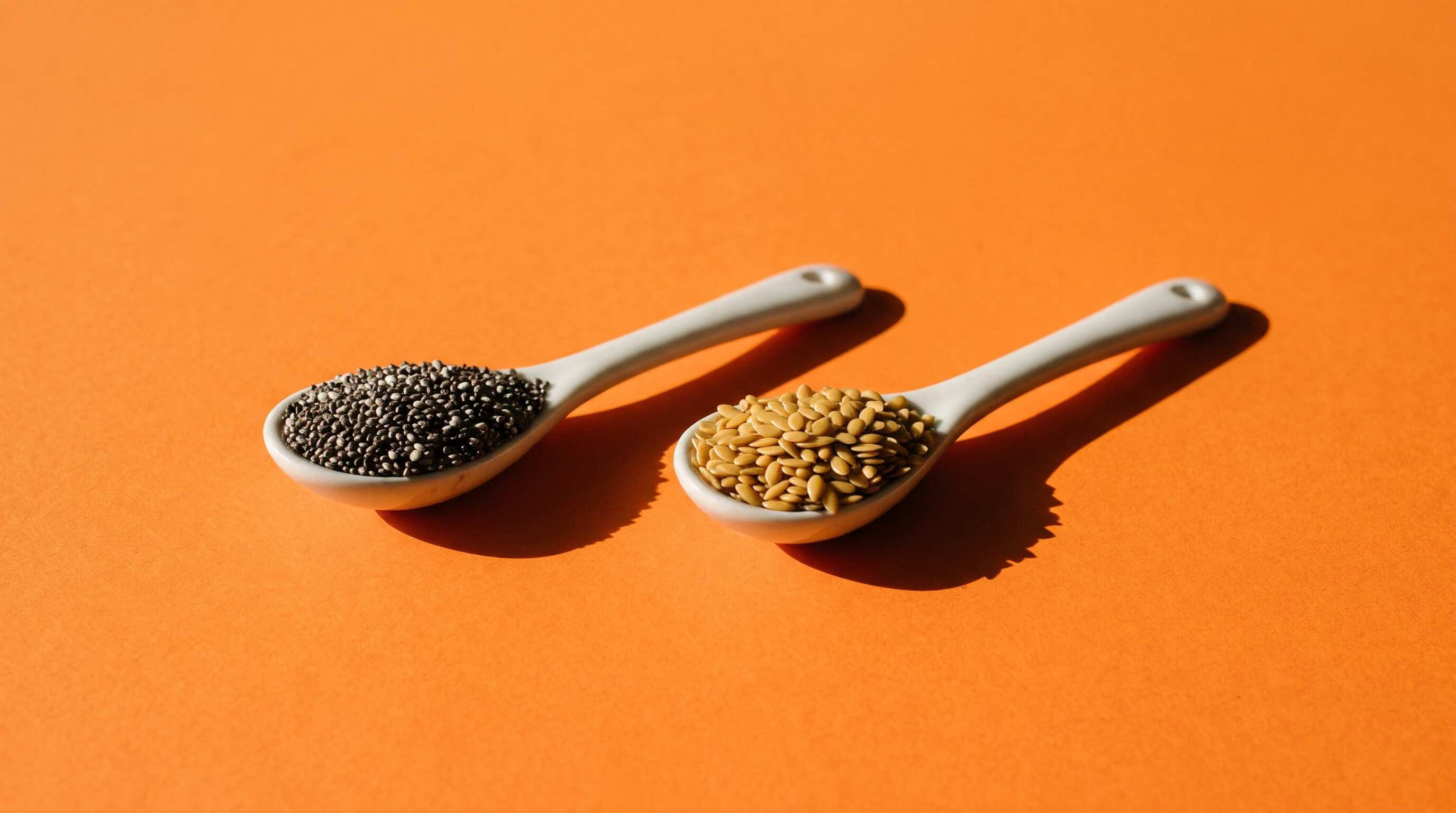
Chia seeds vs flaxseed compared per ounce from USDA data: ALA omega-3, fiber type, lignans, minerals, weight-loss trials, and why flax has to be ground.
Chia seeds vs flaxseed: neither wins across the board. Ground flaxseed has more ALA omega-3 per gram and is the richest dietary source of lignans, but it must be ground and the meal goes rancid quickly. Chia has more fiber and about 2.5 times the calcium, needs no grinding, and keeps for a long time. Eating both is a sensible answer.
Chia (Salvia hispanica) is a mint-family seed native to Mexico and Guatemala; flaxseed, also called linseed (Linum usitatissimum), comes from the flax plant. They are different species with different chemistry, though both are sold as omega-3 seeds. Want the most omega-3 per ounce, or lignans? Ground flax. Want fiber, calcium and less fuss? Chia.
Below are the numbers, what the trials do and don’t support, and how to prepare each seed so the nutrients on the label are the ones you absorb.
Chia vs Flax at a Glance: Nutrition per Ounce
All figures are per 1 oz (28.35 g) of whole dry seed, calculated from the USDA FoodData Central SR Legacy entries for chia seeds, dried (FDC 170554) and flaxseed (FDC 169414). Grinding flax changes how much you absorb, not what a gram contains.
| Nutrient (per 28 g) | Chia seeds | Flaxseed |
|---|---|---|
| Calories | 138 kcal | 151 kcal |
| Protein | 4.7 g | 5.2 g |
| Total fat | 8.7 g | 12.0 g |
| ALA (omega-3) | 5.1 g | 6.5 g |
| Linoleic acid (omega-6) | 1.7 g | 1.7 g |
| Total fiber | 9.8 g | 7.7 g |
| Soluble fiber (approx.)* | ~1.8 g | ~2.6 g |
| Insoluble fiber (approx.)* | ~7.9 g | ~5.1 g |
| Lignans | Not a notable source | ~85 mg |
| Calcium | 179 mg | 72 mg |
| Magnesium | 95 mg | 111 mg |
| Phosphorus | 244 mg | 182 mg |
| Potassium | 115 mg | 230 mg |
| Iron | 2.2 mg | 1.6 mg |
| Zinc | 1.3 mg | 1.2 mg |
| Selenium | 15.6 µg | 7.2 µg |
| Thiamine (B1) | 0.18 mg | 0.47 mg |
*USDA does not split fiber into soluble and insoluble for either seed. The chia estimate applies the roughly 4.3:1 insoluble-to-soluble ratio reported in one compositional analysis (Menga et al., 2017, Food Chem); the flax estimate uses the roughly one-third soluble share given in our flaxseed entry. Published ratios vary with variety and method, so treat both as approximate. The lignan figure is from the Milder et al. (2005) database (about 301 mg per 100 g); USDA does not report lignans.
Spoons are where the comparison gets slippery. A level tablespoon of whole chia weighs about 12 g (the conversion used in this site’s chia recipes and stated in our chia seeds entry), so an ounce is a little over two tablespoons. Ground flax is much fluffier: USDA lists 7 g for a tablespoon of ground flaxseed and 10.3 g for a tablespoon of whole seed, which puts an ounce of ground flax at about four tablespoons.
| Per level tablespoon | Chia (whole, 12 g) | Flax (ground, 7 g) |
|---|---|---|
| Calories | 58 kcal | 37 kcal |
| ALA | 2.1 g | 1.6 g |
| Fiber | 4.1 g | 1.9 g |
Chia vs Flax for Omega-3
Both seeds are among the richest plant sources of alpha-linolenic acid (ALA), the essential omega-3 fatty acid, and both carry more omega-3 than omega-6 (roughly 3:1 for chia and 4:1 for flax, from the USDA figures above). By weight, flax wins: 22.8 g ALA per 100 g against 17.8 g for chia.
Two caveats matter more than that gap.
The first is the seed coat. Flaxseed’s hard hull resists digestion. In a three-month trial in healthy adults, 30 g a day of milled flaxseed baked into muffins significantly raised plasma ALA, while the same amount of whole flaxseed did not (Austria et al., 2008). Chia is often described as fine to eat whole, but a 10-week trial in overweight postmenopausal women found that 25 g a day of milled chia raised plasma ALA by 58% and EPA by 39%, while whole chia produced no significant change (Nieman et al., 2012, J Altern Complement Med). Whole chia still counts for something: at a higher dose of 50 g a day, stirred into water, it raised plasma ALA by about 24% in an earlier 12-week trial (Nieman et al., 2009). If omega-3 is the main reason you eat either seed, grind flax without exception, and consider grinding chia as well.
The second is that ALA is not EPA or DHA. The body converts only a small fraction of ALA into the long-chain omega-3s found in fish. A review from the International Society for the Study of Fatty Acids and Lipids concluded that ALA supplementation raises blood EPA and DPA but has little effect on DHA, which rises reliably only with preformed DHA (Brenna et al., 2009, Prostaglandins Leukot Essent Fatty Acids). If DHA is what you are after, neither seed replaces marine omega-3s; our review of the EPA and DHA research covers that side of the question. ALA does carry its own observational association with cardiovascular outcomes: a meta-analysis of 27 observational studies found higher ALA exposure associated with a moderately lower risk of cardiovascular disease (pooled relative risk 0.86), though with high unexplained variation between studies, and such associations cannot establish cause (Pan et al., 2012, Am J Clin Nutr).
Ground flax gives the most ALA per gram. By the spoonful, chia is slightly ahead.
Chia vs Flax for Fiber
Chia has more fiber per ounce (about 9.8 g vs 7.7 g) and, because a tablespoon of chia is denser than a tablespoon of ground flax, roughly twice as much per spoon. Either makes a real dent in the 25–38 g a day recommended for adults up to age 50, a target most adults miss (Linus Pauling Institute); our fiber and microbiome research review explains why that shortfall matters.
The bigger difference is fiber type:
- Chia fiber is mostly insoluble, the kind that adds bulk and speeds transit. Its soluble portion is concentrated in the mucilage layer on the seed surface, which is why whole chia gels on contact with liquid even though soluble fiber is the smaller fraction overall.
- Flax fiber has a higher soluble share, a gel-forming mucilage of mixed polysaccharides that sits in the seed coat. It is released when the seed is ground and wetted, which is why flax meal mixed with water (“flax egg”) thickens into a binder.
Viscous soluble fiber is the type associated with slower glucose absorption and modest cholesterol reductions in the broader fiber literature, while insoluble fiber is more relevant to stool bulk and regularity. At the one or two tablespoons most people eat, though, the type probably matters less than simply getting more fiber in. On that count chia wins, especially by the spoonful.
Lignans: Flaxseed’s Distinctive Compound
Lignans are polyphenols that gut bacteria convert into the enterolignans enterodiol and enterolactone, which have weak estrogen-like or anti-estrogenic activity depending on context. Flax has no real competition here. When researchers fermented 68 plant foods with human fecal bacteria to simulate colonic digestion, flaxseed flour produced the largest amounts of mammalian lignans of any food tested (Thompson et al., 1991, Nutr Cancer). A later Dutch database measured about 301 mg of lignans per 100 g of flaxseed, roughly ten times the next-highest food, sesame (Milder et al., 2005).
Chia has not been characterized as a notable lignan source. If lignans are part of the appeal, flax is the only option of the two.
What lignans do in people is less settled than how much flax contains. Observational studies have linked lignan intake and higher enterolactone levels with some health outcomes, but the findings are inconsistent: one meta-analysis of breast cancer survival found lower mortality with higher exposure in postmenopausal women and the opposite association in premenopausal women (Liu et al., 2021, J Cancer). Such links can also be confounded by overall diet quality, and trial evidence remains preliminary. Our flaxseed entry summarizes that research, including why people with hormone-sensitive conditions are advised to discuss flax with their clinician.
Chia vs Flax for Weight Loss
Neither seed is a weight-loss treatment, and the trials for both are modest.
- Flaxseed: a meta-analysis of 45 randomized placebo-controlled trials found an average reduction of about 1 kg in body weight and 0.8 cm in waist circumference with flaxseed supplementation. Effects were more apparent in trials using whole flaxseed at 30 g a day or more, lasting 12 weeks or longer, and in participants with a BMI of 27 or higher (Mohammadi-Sartang et al., 2017, Obes Rev).
- Chia: results are mixed. A 12-week trial of 50 g a day of whole chia in overweight adults found no effect on body weight or composition (Nieman et al., 2009, Nutr Res). A six-month trial in 77 adults with type 2 diabetes on a calorie-restricted diet reported 1.9 kg of weight loss with chia versus 0.3 kg with an oat-bran control (Vuksan et al., 2017, Nutr Metab Cardiovasc Dis). A 2024 dose-response meta-analysis found no significant effect of chia on body weight, though it did report blood-pressure reductions, and its authors rated most included studies as low quality (Kiani et al., 2024, Complement Ther Med).
Both seeds are calorie-dense; two tablespoons of chia carry about 117 kcal. Whatever effect exists plausibly comes from fiber and fullness rather than anything special about the seed, and it only shows up if the seeds replace other food instead of landing on top of it. Flax has the larger and more consistent set of trials. The average effect is small for both.
Blood Pressure and Cardiometabolic Markers
The evidence for both seeds is most consistent here, though the trials are still small.
A meta-analysis of 14 flaxseed trials found small average reductions in systolic (−1.8 mmHg) and diastolic (−1.6 mmHg) blood pressure, and the diastolic reduction held in subgroups of trials using whole flaxseed (rather than oil, lignan, or fiber extracts) and lasting 12 weeks or longer (Khalesi et al., 2015, J Nutr). In a single six-month trial in 110 people with peripheral artery disease, 30 g a day of milled flaxseed lowered systolic blood pressure by about 10 mmHg relative to placebo, with the effect concentrated in participants who were hypertensive at baseline (Rodriguez-Leyva et al., 2013, Hypertension).
For chia, the 2024 meta-analysis by Kiani et al. reported pooled reductions in systolic and diastolic blood pressure across ten publications, alongside a small decrease in HDL cholesterol, and cautioned that study quality was mostly low. A second 2024 meta-analysis of 14 trials found lower triglycerides and, at higher doses only, lower LDL cholesterol and systolic blood pressure (Fateh et al., 2024, Prostaglandins Other Lipid Mediat).
These are changes in risk markers over mostly short trials, not evidence that either seed prevents cardiovascular disease.
Whole vs Ground: Flax Must Be Ground
Of all the differences, this one changes what you do in the kitchen.
Grind flaxseed, or buy it ground (“flax meal” or “milled flaxseed”). Whole seeds often pass through intact, which is why whole flax failed to raise blood ALA in the trial above. A coffee or spice grinder does a few days’ worth in seconds. Golden and brown flax are broadly similar nutritionally; direct comparisons find modest differences in fat and polyphenol content (Drozdowska et al., 2025, Nutrients).
Whole chia is easier to live with because it hydrates and softens in liquid. Soaking it into a gel, as in chia pudding, is the most common preparation. Grinding chia appears to improve ALA uptake further, per the Nieman 2012 trial, and ground chia works in baking and smoothies where a gel texture is unwanted.
Storage and Rancidity
ALA is a highly unsaturated fat and oxidizes readily in air, light and heat. The seed coat is its main protection.
- Whole chia: keeps for a long time airtight in a cool, dark cupboard.
- Whole flax: also keeps well while intact.
- Ground flax: the most fragile form. Store it airtight in the refrigerator and use it within about three months, or freeze it for longer storage, as our flaxseed entry recommends. Grinding small batches from whole seed sidesteps the problem.
- Ground chia: treat it like ground flax and refrigerate it.
Rancid seeds or meal smell bitter, fishy or like paint. Throw them out; oxidized fat brings none of the benefits and tastes bad.
How to Use Each
Chia works best where you want gel or crunch:
- Puddings and overnight oats (soak 15–30 minutes or overnight; our chia pudding recipes use a 1:4 seed-to-milk base)
- Stirred into yogurt, smoothies, or water as a thickener
- Sprinkled whole on salads or toast for texture
- As an egg replacer: about 1 tablespoon of chia with 3 tablespoons of water, rested until gelled
Ground flax works best where you want it to disappear:
- Stirred into oatmeal, yogurt, or smoothies (its mild, nutty flavor is easy to hide)
- Replacing part of the flour in muffins, pancakes, and quick breads
- As an egg replacer: 1 tablespoon of ground flax with about 3 tablespoons of water
- Mixed into meatballs, veggie burgers, or breading as a binder
Flaxseed oil is a different product. It concentrates ALA but has none of the fiber or lignans, needs refrigeration, and is no good for high-heat cooking.
Who Might Prefer Which
- Pick ground flax if you care most about ALA per gram, if lignans interest you, or if your seeds mostly go into baking, where flax binds well. The blood-pressure and weight trials are also more numerous for flax.
- Pick chia if you want the most fiber per spoonful, extra calcium (about 2.5 times flax per ounce), no grinder, and a seed that keeps for months without refrigeration.
- Use both if you eat seeds daily. A tablespoon of each gives about 3.7 g of ALA and 6 g of fiber, with the two fiber types covering each other.
If you eat plant-based and want protein too, hemp seeds are a reasonable third option; see our plant-based protein guide and the hemp seeds entry.
Safety Notes
Most adults tolerate both seeds well as food. A few cautions:
- Fiber and fluid. Increase intake gradually and drink enough water; a sudden jump brings bloating and gas. Dry chia seeds swell rapidly, and a published case report describes chia seeds that gelled into an esophageal blockage in a patient with likely eosinophilic esophagitis (Simmelink et al., 2017, Case Rep Intern Med), so soak chia or eat it mixed into wet food, especially if you have any difficulty swallowing.
- Medication timing. Like other high-fiber foods, both seeds may slow or reduce the absorption of oral medications taken at the same time. Taking them one to two hours apart is a common precaution; ask your pharmacist about your specific medicines.
- Blood thinners. Trials have not shown a clear effect of these seeds on clotting: 30 g a day of flaxseed in any form did not change platelet aggregation (Austria et al., 2008), and about 37 g a day of chia left hemostatic function unchanged in people with type 2 diabetes (Vuksan et al., 2007, Diabetes Care). People taking anticoagulant or antiplatelet drugs, or preparing for surgery, may still want to mention regular high intake to their prescriber.
- Hormone-sensitive conditions (flax). Because flax lignans have weak estrogen-related activity, people with hormone-sensitive cancers or conditions should discuss regular flax intake with their clinician. A systematic review of flax and breast cancer found that the limited evidence, mostly observational, pointed toward lower rather than higher risk (Flower et al., 2014, Integr Cancer Ther).
- Cyanogenic compounds (flax). Raw flax contains cyanogenic glycosides, which can release small amounts of cyanide. The European Food Safety Authority found that average dietary cyanide exposure in Europe stays below its acute reference dose for cyanide (EFSA CONTAM Panel, 2019). Very large habitual amounts are best avoided.
- Allergy. Allergy to either seed is uncommon but documented, including anaphylaxis, mostly in case reports (Parrinello et al., 2026; Porr et al., 2026). Chia proteins cross-react with sesame in lab tests, though whether that matters clinically is unresolved.
A Note on Health Claims
The trials cited here are mostly small and short, and they report group averages on risk markers, not what will happen to any one person. Neither seed treats, cures, or prevents disease. If you have a medical condition or take prescription medication, talk with your clinician before making a large change to your diet.
Frequently Asked Questions
Which is better, chia seeds or flaxseed?
Neither is better overall. Ground flaxseed has more ALA omega-3 per gram and is uniquely rich in lignans. Chia has more fiber and calcium, needs no grinding, and stores longer. Pick on whichever of those matters most to you, or use both.
Is chia or flax better for omega-3?
Flax has more ALA per ounce (about 6.5 g vs 5.1 g), but only when ground; whole flaxseed did not raise blood ALA in a controlled trial. By the tablespoon, whole chia (2.1 g) edges out ground flax (1.6 g) because chia is denser. Neither provides meaningful DHA.
Is chia or flax better for fiber?
Chia has more total fiber: about 9.8 g per ounce versus 7.7 g for flax, and about twice as much per tablespoon. Flax fiber has a higher soluble share.
Is chia or flax better for weight loss?
Flax has the larger evidence base, with a meta-analysis of 45 trials showing an average weight reduction of about 1 kg. Chia trials are mixed. For either seed, any effect is small and depends on overall calorie intake.
Do I need to grind chia seeds like flaxseed?
Flaxseed needs grinding to be absorbed well. Chia can be eaten whole, especially soaked. In one trial only milled chia raised blood omega-3 levels at 25 g a day, although whole chia did raise plasma ALA at 50 g a day in another, so grinding chia may help if omega-3 intake is the goal.
Are chia seeds and flaxseed the same thing?
No. They come from unrelated plants: chia from Salvia hispanica, a member of the mint family, and flaxseed (linseed) from Linum usitatissimum. Both are small, fiber-rich seeds high in ALA omega-3, which is why they are often compared, but flax is the standout source of lignans, and chia gels in liquid without grinding.
Can I eat chia and flax together?
Yes. Their nutrient profiles complement each other, and many people add both to oatmeal, yogurt, or smoothies. Count the combined fiber, though: an ounce of each supplies roughly 17 g, so build up gradually and drink enough water to avoid bloating.
Is there a downside to chia seeds?
For most adults, the main downsides are digestive. A sudden jump in intake can cause bloating and gas, and dry chia swells quickly: one published case report describes dry seeds gelling into an esophageal blockage. Soak chia or mix it into wet food. Like other high-fiber foods, it may also slow absorption of medicines taken at the same time.
What happens if I eat chia and flax every day?
Most trials gave 25-50 g a day for weeks to months, and most adults tolerate both seeds well as food. Reported effects were modest: pooled flax trials found about 1 kg of average weight loss, and meta-analyses of both seeds reported small average reductions in blood pressure. Very large habitual amounts of raw flax are best avoided because of its cyanogenic compounds.
How much should I eat per day?
Common food amounts are one to two tablespoons of each. Most trials used roughly 25–50 g a day. Start low and build up so your digestion can adjust.
References
Show all 25 referencesShow fewer
- U.S. Department of Agriculture. Seeds, chia seeds, dried. FoodData Central, SR Legacy, FDC ID 170554. FoodData Central
- U.S. Department of Agriculture. Seeds, flaxseed. FoodData Central, SR Legacy, FDC ID 169414. FoodData Central
- Austria JA, Richard MN, Chahine MN, et al. Bioavailability of alpha-linolenic acid in subjects after ingestion of three different forms of flaxseed. J Am Coll Nutr. 2008;27(2):214-221. PubMed
- Nieman DC, Gillitt N, Jin F, et al. Chia seed supplementation and disease risk factors in overweight women: a metabolomics investigation. J Altern Complement Med. 2012;18(7):700-708. PubMed
- Brenna JT, Salem N Jr, Sinclair AJ, Cunnane SC. alpha-Linolenic acid supplementation and conversion to n-3 long-chain polyunsaturated fatty acids in humans. Prostaglandins Leukot Essent Fatty Acids. 2009;80(2-3):85-91. PubMed
- Pan A, Chen M, Chowdhury R, et al. α-Linolenic acid and risk of cardiovascular disease: a systematic review and meta-analysis. Am J Clin Nutr. 2012;96(6):1262-1273. PubMed
- Menga V, Amato M, Phillips TD, et al. Gluten-free pasta incorporating chia (Salvia hispanica L.) as thickening agent. Food Chem. 2017;221:1954-1961. PubMed
- Thompson LU, Robb P, Serraino M, Cheung F. Mammalian lignan production from various foods. Nutr Cancer. 1991;16(1):43-52. PubMed
- Milder IE, Arts IC, van de Putte B, Venema DP, Hollman PC. Lignan contents of Dutch plant foods: a database including lariciresinol, pinoresinol, secoisolariciresinol and matairesinol. Br J Nutr. 2005;93(3):393-402. PubMed
- Mohammadi-Sartang M, Mazloom Z, Raeisi-Dehkordi H, et al. The effect of flaxseed supplementation on body weight and body composition: a systematic review and meta-analysis of 45 randomized placebo-controlled trials. Obes Rev. 2017;18(9):1096-1107. PubMed
- Nieman DC, Cayea EJ, Austin MD, et al. Chia seed does not promote weight loss or alter disease risk factors in overweight adults. Nutr Res. 2009;29(6):414-418. PubMed
- Vuksan V, Jenkins AL, Brissette C, et al. Salba-chia (Salvia hispanica L.) in the treatment of overweight and obese patients with type 2 diabetes: a double-blind randomized controlled trial. Nutr Metab Cardiovasc Dis. 2017;27(2):138-146. PubMed
- Kiani S, Naghshi S, Saghafi-Asl M. Effects of chia (Salvia hispanica L.) on anthropometric measures and other cardiometabolic risk factors: a systematic review and dose-response meta-analysis. Complement Ther Med. 2024;86:103086. PubMed
- Fateh HL, Ahmed DH, Najafabadi MS, Moludi J. The impact of chia seeds on diabetes, blood pressure, lipid profile, and obesity indicators: systematic review and meta-regression analysis of 14 randomized controlled trials. Prostaglandins Other Lipid Mediat. 2024;175:106907. PubMed
- Khalesi S, Irwin C, Schubert M. Flaxseed consumption may reduce blood pressure: a systematic review and meta-analysis of controlled trials. J Nutr. 2015;145(4):758-765. PubMed
- Rodriguez-Leyva D, Weighell W, Edel AL, et al. Potent antihypertensive action of dietary flaxseed in hypertensive patients. Hypertension. 2013;62(6):1081-1089. PubMed
- Linus Pauling Institute Micronutrient Information Center. Fiber. Oregon State University. LPI
- Liu Z, Fei YJ, Cao XH, et al. Lignans intake and enterolactone concentration and prognosis of breast cancer: a systematic review and meta-analysis. J Cancer. 2021;12(9):2787-2796. PubMed
- Drozdowska M, Piasna-Słupecka E, Kmiecik K, et al. Compositional and functional analysis of golden and brown flaxseed. Nutrients. 2025;17(21):3407. PubMed
- Simmelink A, Rawl RE, Browne L, Scobey M. Watch it grow: esophageal impaction with chia seeds. Case Rep Intern Med. 2017;4(2):49. DOI
- Vuksan V, Whitham D, Sievenpiper JL, et al. Supplementation of conventional therapy with the novel grain Salba (Salvia hispanica L.) improves major and emerging cardiovascular risk factors in type 2 diabetes. Diabetes Care. 2007;30(11):2804-2810. PubMed
- Flower G, Fritz H, Balneaves LG, et al. Flax and breast cancer: a systematic review. Integr Cancer Ther. 2014;13(3):181-192. PubMed
- EFSA Panel on Contaminants in the Food Chain. Evaluation of the health risks related to the presence of cyanogenic glycosides in foods other than raw apricot kernels. EFSA J. 2019;17(4):e05662. PubMed
- Parrinello G, et al. Flaxseed allergy: insights from a case series. Eur Ann Allergy Clin Immunol. 2026. PubMed
- Porr C, et al. Chia seed allergy: emerging clinical evidence, molecular allergens, and the unresolved question of cross-reactivity. Nutrients. 2026. PubMed
Read next


Written by Superfoods Advisor Editors·Published October 23, 2026