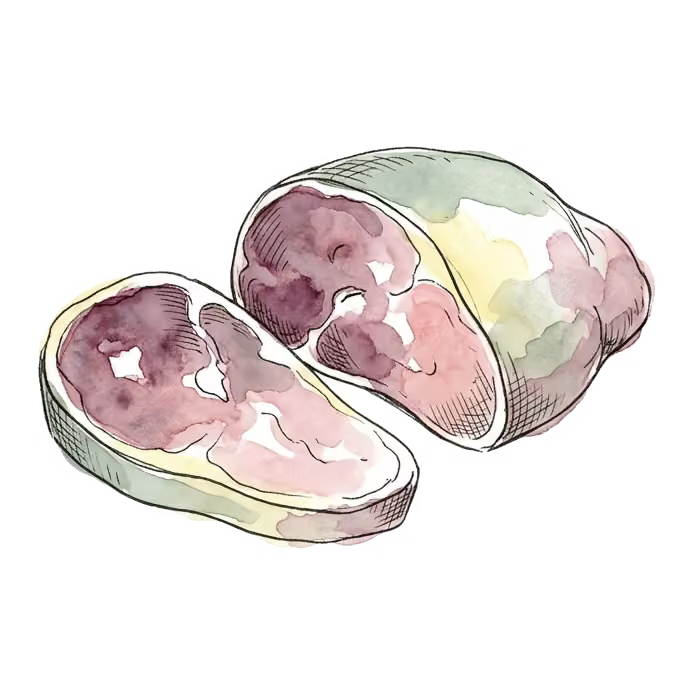
Beef Liver
Bos taurus (hepatic tissue) · also known as calf liver, veal liver, organ meat, offal
By Superfoods Advisor Editors·July 3, 2026
Is beef liver good for you? Its B12, vitamin A, copper and iron per 100 g, how often to eat it, liver supplements, and the vitamin A toxicity limit.
Beef liver, the liver of cattle (Bos taurus), is an organ meat with very high levels of vitamin B12, preformed vitamin A and copper. It is nutrient-dense but best eaten in small, infrequent portions: 100 g pan-fried supplies about 83 mcg of B12 and 7,740 mcg of vitamin A, roughly 2.5 times the adult upper limit for preformed vitamin A.
Calf and veal liver are the same organ from younger animals. Liver stores nutrients for the whole animal, which is why it also supplies iron (a minority of it as heme iron), folate, riboflavin, choline and some coenzyme Q10 (CoQ10). Interest in it has grown with ancestral and organ-meat diets and with freeze-dried beef liver supplements, but practical use depends on the retinol limits set out below.
Evidence at a glance
Active Compounds and Nutritional Profile
Beef liver supplies more vitamin B12, vitamin A and copper per gram than almost any other common food. The following values are approximate per 100 g of beef liver, cooked, pan-fried, from USDA FoodData Central (FDC ID 168627). Percent Daily Values use the FDA adult DVs.
- Calories: ~175 kcal
- Protein: ~26 g (complete, all essential amino acids present)
- Fat: ~5 g (including ~0.3 g arachidonic acid; FDC lists no DHA)
- Vitamin A: ~7,740 mcg RAE, almost all of it preformed retinol — approximately 860% of the Daily Value (DV)
- Vitamin B12: ~83 mcg — approximately 3,460% of DV
- Folate: ~260 mcg DFE — approximately 65% of DV
- Riboflavin (B2): ~3.4 mg — approximately 263% of DV
- Niacin (B3): ~17.5 mg — approximately 109% of DV
- Pantothenic acid (B5): ~7 mg — approximately 140% of DV
- Iron: ~6 mg — approximately 34% of DV (total iron; FDC does not separate heme from non-heme iron)
- Copper: ~14.6 mg — approximately 1,620% of DV
- Selenium: ~33 mcg — approximately 60% of DV
- Zinc: ~5 mg — approximately 48% of DV
- Choline: ~418 mg — approximately 76% of the Adequate Intake (AI)
- Coenzyme Q10 (CoQ10): present, as in other meats; not reported by FDC, and published values vary by analysis method
Retinol vs. beta-carotene: The vitamin A in beef liver is preformed retinol, not the provitamin-A carotenoid beta-carotene found in plant foods. Retinol is used directly by the body without conversion, which accounts for its potency — and its toxicity risk at high intake. Beta-carotene from plants carries no equivalent toxicity risk because conversion to retinol is regulated and inefficient.
Heme and non-heme iron: Unlike muscle meat, whose iron is largely heme iron bound within hemoglobin and myoglobin, liver is the body’s iron store and holds most of its iron in non-heme form; a review of edible offal puts the heme share of liver iron at about 20–25% (Latoch et al., 2024). Heme iron is absorbed by a separate pathway that is less affected by dietary inhibitors such as phytates and tannins, and the body absorbs it more readily than non-heme iron (Latoch et al., 2024).
Evidence for Purported Benefits
Vitamin B12 Deficiency and Anemia
Evidence:Moderate Beef liver is among the richest B12 sources; B12 repletion is well established, though liver itself is rarely trialled.
Beef liver is among the richest known food sources of vitamin B12. B12 deficiency — which can cause megaloblastic anemia, peripheral neuropathy, and cognitive changes — is most common in those following plant-exclusive diets (Pawlak et al., 2013), older adults (mainly because atrophic gastritis reduces the stomach acid needed to release food-bound B12), and individuals with malabsorptive conditions (Linus Pauling Institute). Beef liver is listed among the richest food sources of B12. A single 85 g serving provides an amount that exceeds the recommended dietary allowance (RDA) of 2.4 mcg/day by a factor of more than 20. The clinical relevance of consuming far-above-RDA amounts from food is limited, as B12 absorption is regulated by intrinsic factor saturation; however, about 1% of a large dose is absorbed by passive diffusion (Linus Pauling Institute).
Iron-Deficiency Anemia
Evidence:Moderate A documented dietary iron source; no trials have tested liver itself as a treatment for iron deficiency.
Iron-deficiency anemia is the most prevalent micronutrient deficiency globally. Beef liver is a concentrated source of total iron, and its heme fraction is absorbed more readily than non-heme iron, although most of the iron in liver is non-heme (see above). Controlled trials testing liver itself as a treatment for iron deficiency are lacking, so it is best regarded as one dietary source of iron alongside standard medical management, not a substitute for it.
Folate and Neural Tube Defect Prevention
Evidence:Moderate Folic acid trials reliably cut neural tube defects; liver is a rich folate source, but guidelines rely on supplements.
The relationship between periconceptional folate intake and reduced risk of neural tube defects (NTDs) is one of the most robustly supported findings in nutritional epidemiology. Beef liver is a high-concentration natural food source of folate. However, the US Preventive Services Task Force recommends a daily supplement of 400–800 mcg folic acid for anyone planning to or able to become pregnant — not dietary folate alone — because the trial evidence for reducing neural tube defects comes from folic acid supplementation. Liver’s high retinol content creates a competing safety consideration during pregnancy (see Safety section), limiting its practical utility as a gestational folate strategy.
Copper Metabolism and Enzyme Function
Evidence:Limited Copper’s enzyme roles are well mapped; human data on clinical benefit from dietary copper are sparse.
Copper is an essential cofactor for a range of metalloenzymes including ceruloplasmin, lysyl oxidase (connective tissue formation), superoxide dismutase (antioxidant defense), and cytochrome c oxidase (mitochondrial respiration). Beef liver provides exceptionally high copper content — a single 100 g serving supplies about 14.6 mg (USDA FoodData Central), more than 15 times the adult RDA of 900 mcg. Copper deficiency, though rare in populations with varied diets, can cause anemia, neutropenia, and neurological symptoms; clinical deficiency is corrected with copper supplementation rather than diet alone (Linus Pauling Institute).
Coenzyme Q10 (CoQ10) and Cellular Energy
Evidence:Preliminary Clinical CoQ10 research uses high-dose supplements; the contribution of food-source CoQ10 from liver is uncharacterised in humans.
CoQ10 is an endogenously synthesized molecule essential for mitochondrial electron transport and ATP production. Dietary CoQ10 from animal tissues, including liver, is absorbed and incorporated into plasma lipoproteins, though the net physiological contribution of food-derived CoQ10 relative to endogenous synthesis is not well characterized in humans. Average dietary CoQ10 intake is only about 3–6 mg/day (Pravst et al., 2010), while most clinical CoQ10 research uses purified supplements at doses many times higher. Liver may contribute modestly to circulating levels, but clinical significance is uncertain.
Typical Use and Preparation
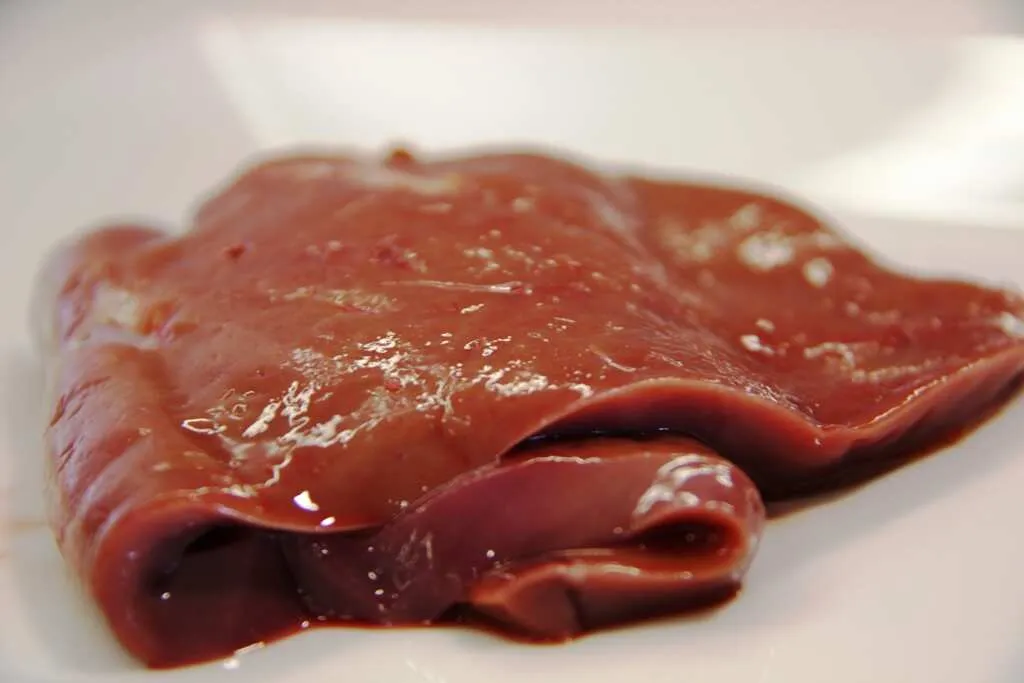 Photo: Javier Lastras, CC BY 2.0, via Wikimedia Commons
Serving size: Because of its retinol content, the UK NHS advises adults not to eat liver or liver products more than once a week, and not to take vitamin A supplements if they eat liver weekly.
Cooking methods: Beef liver is typically pan-fried, broiled, or braised. Overcooking results in a dry, grainy texture; internal temperature should reach 71°C (160°F), the USDA FSIS guidance for organ and variety meats. Soaking sliced liver in cold water or milk for 30–60 minutes before cooking is a traditional technique reported to reduce bitterness.
Sourcing considerations: Liver from grass-fed, pasture-raised cattle is commonly preferred by consumers concerned about fat-soluble compound accumulation, though peer-reviewed evidence directly comparing the micronutrient profile of grass-fed vs. grain-fed liver is sparse. Liver does concentrate some environmental contaminants more than muscle: in Czech cattle monitoring, liver cadmium was higher than muscle cadmium and rose with the animal’s age, though kidney accumulated the most (Drapal et al., 2021). Liver from younger animals may therefore carry less cadmium.
Desiccated liver supplements: Freeze-dried liver capsules are commercially available as an alternative to consuming fresh liver. Retinol content varies by brand and dose; consumers should calculate total retinol intake across all supplement and dietary sources when using these products.
For how zinc, vitamin A, and other micronutrient cofactors fit into immune nutrition more broadly, see our guide to immune-supporting foods.
Safety, Interactions, and Contraindications
Retinol toxicity (hypervitaminosis A): The tolerable upper intake level (UL) for preformed vitamin A (retinol) in adults is 3,000 mcg/day (2,800 mcg for ages 14–18), as established by the Institute of Medicine and covering food and supplements combined (NIH ODS). A 100 g serving of pan-fried beef liver provides about 7,700 mcg, roughly 2.5 times this amount. Chronic excess retinol intake — from regular high-dose liver consumption combined with supplement use — can cause acute and chronic toxicity. Acute symptoms include headache, nausea, and vomiting; chronic toxicity may manifest as bone pain, liver damage, hair loss, and dry skin. Consuming 100 g of liver daily, every day, would represent a chronic excess and is not recommended.
Pregnancy: Total preformed vitamin A intakes above the UL can cause birth defects, including malformations of the eye, skull, lungs, and heart; beta-carotene is not known to be teratogenic (NIH ODS). In a cohort of 22,748 pregnancies, defects of cranial-neural-crest origin were more common among women taking more than 10,000 IU (3,000 mcg) of supplemental vitamin A per day, with the excess concentrated in intake before the seventh week of gestation (Rothman et al., 1995). The UK NHS advises pregnant women to avoid liver and liver products because of their vitamin A content. Because a single serving exceeds the UL, liver is not a practical food during pregnancy.
Iron overload (hemochromatosis): The UK NHS says people having treatment for haemochromatosis do not need major dietary changes, but should avoid iron-fortified cereals and iron and vitamin C supplements. Some dietary reviews go further and advise avoiding offal (Milman, 2021). People with iron-loading conditions should ask their doctor how much iron-rich food, including liver, suits them.
Copper toxicity: People starting treatment for Wilson disease (impaired copper excretion) may be advised to avoid high-copper foods, with liver and shellfish named specifically (NIDDK). In healthy adults, a 100 g serving (about 14.6 mg) exceeds the copper UL of 10 mg/day, which the Institute of Medicine set to protect against liver damage (Linus Pauling Institute). The UL refers to habitual daily intake, so an occasional serving is not the same as chronic excess, but daily liver consumption would exceed it.
Drug interactions: High retinol intake may interact with isotretinoin and other retinoid medications, increasing toxicity risk. Beef liver is a minor source of vitamin K1 (phylloquinone), about 3.9 mcg per 100 g pan-fried (USDA FoodData Central), so an ordinary serving is unlikely to shift the vitamin K intake that people taking warfarin are asked to keep consistent.
Gout: Liver is a high-purine food. Individuals with gout or hyperuricemia may need to limit intake per physician guidance.
Frequently Asked Questions
Is beef liver good for you?
In small amounts, beef liver is one of the most concentrated food sources of vitamin B12, vitamin A, copper, riboflavin and folate, and it is a documented dietary source of iron. The drawback is the same density: a 100 g serving exceeds the adult upper limits for preformed vitamin A and copper, so it suits occasional rather than daily eating.
Does beef liver have iron?
Yes. A 100 g serving of pan-fried beef liver contains about 6 mg of iron, roughly 34% of the Daily Value. Unlike muscle meat, most of that iron is non-heme; a review of edible offal estimates the heme share at about 20–25%. Heme iron is absorbed more readily and is less affected by inhibitors such as phytates and tannins.
How much beef liver should you eat a week?
The UK NHS advises adults not to eat liver or liver products more than once a week, and not to take vitamin A supplements if they do. The reason is retinol: 100 g supplies about 7,740 mcg, against an adult upper limit of 3,000 mcg/day. People who are pregnant, take retinoid drugs or have liver or copper disorders should ask a clinician.
Are beef liver supplements as good as eating liver?
Desiccated (freeze-dried) liver capsules contain the same organ, but much less of it per serving than a portion of cooked liver, and their retinol content varies by brand and dose. No trials compare the two. Anyone using them alongside liver, multivitamins or other vitamin A sources should add up total retinol intake across all of them.
Is beef liver safe during pregnancy?
The UK NHS advises pregnant women to avoid liver and liver products because of their vitamin A content. Preformed vitamin A above the upper limit can cause birth defects, and in one cohort of 22,748 pregnancies, high supplemental vitamin A intake early in pregnancy was linked with more cranial-neural-crest defects. A single serving of beef liver already exceeds that limit.
References
Show all 17 referencesShow fewer
- U.S. Department of Agriculture, Agricultural Research Service. FoodData Central — Beef, variety meats and by-products, liver, cooked, pan-fried. FDC ID 168627. https://fdc.nal.usda.gov/food-details/168627/nutrients
- National Institutes of Health, Office of Dietary Supplements. (2023). Vitamin A: Fact Sheet for Health Professionals. https://ods.od.nih.gov/factsheets/VitaminA-HealthProfessional/
- Pawlak, R., Parrott, S. J., Raj, S., Cullum-Dugan, D., & Lucus, D. (2013). How prevalent is vitamin B12 deficiency among vegetarians? Nutrition Reviews, 71(2), 110–117.
- Latoch, A., Stasiak, D. M., & Siczek, P. (2024). Edible offal as a valuable source of nutrients in the diet — a review. Nutrients, 16(11), 1609.
- Rothman, K. J., Moore, L. L., Singer, M. R., Nguyen, U. S., Mannino, S., & Milunsky, A. (1995). Teratogenicity of high vitamin A intake. New England Journal of Medicine, 333(21), 1369–1373.
- Institute of Medicine, Food and Nutrition Board. (2001). Dietary Reference Intakes for Vitamin A, Vitamin K, Arsenic, Boron, Chromium, Copper, Iodine, Iron, Manganese, Molybdenum, Nickel, Silicon, Vanadium, and Zinc. National Academies Press. https://nap.nationalacademies.org/catalog/10026/dietary-reference-intakes-for-vitamin-a-vitamin-k-arsenic-boron-chromium-copper-iodine-iron-manganese-molybdenum-nickel-silicon-vanadium-and-zinc
- Pravst, I., Žmitek, K., & Žmitek, J. (2010). Coenzyme Q10 contents in foods and fortification strategies. Critical Reviews in Food Science and Nutrition, 50(4), 269–280.
- U.S. Preventive Services Task Force. (2023). Folic Acid Supplementation to Prevent Neural Tube Defects. https://www.uspreventiveservicestaskforce.org/uspstf/recommendation/folic-acid-for-the-prevention-of-neural-tube-defects-preventive-medication
- NHS. Vitamin A. https://www.nhs.uk/conditions/vitamins-and-minerals/vitamin-a/
- NHS. Foods to avoid in pregnancy. https://www.nhs.uk/pregnancy/keeping-well/foods-to-avoid/
- USDA Food Safety and Inspection Service. Beef From Farm to Table. https://www.fsis.usda.gov/food-safety/safe-food-handling-and-preparation/meat-catfish/beef-farm-table
- Linus Pauling Institute, Micronutrient Information Center. Vitamin B12. https://lpi.oregonstate.edu/mic/vitamins/vitamin-B12
- Linus Pauling Institute, Micronutrient Information Center. Copper. https://lpi.oregonstate.edu/mic/minerals/copper
- Drapal, J., Steinhauser, L., Stastny, K., & Faldyna, M. (2021). Cadmium concentration in cattle tissues in the Czech Republic. Veterinární Medicína, 66(9), 369–375.
- NHS. Haemochromatosis: treatment. https://www.nhs.uk/conditions/haemochromatosis/treatment/
- Milman, N. T. (2021). Managing genetic hemochromatosis: an overview of dietary measures, which may reduce intestinal iron absorption in persons with iron overload. Gastroenterology Research, 14(2), 66–80.
- National Institute of Diabetes and Digestive and Kidney Diseases. Eating, Diet, & Nutrition for Wilson Disease. https://www.niddk.nih.gov/health-information/liver-disease/wilson-disease/eating-diet-nutrition
More in Animal Foods
- Anchovies (Engraulis encrasicolus)
Anchovies vs sardines: how the two small oily fish compare on omega-3s, calcium, B12, sodium and mercury, plus anchovy nutrition, benefits and safety.
- Bone Broth
Is bone broth good for you? What a cup contains, how it compares with collagen supplements and chicken broth, and the evidence on joints, gut and sleep.
- Eggs
Are eggs good for you? Egg nutrition per large egg, whole eggs vs egg whites, what cohort studies show on cholesterol and heart risk, and egg safety.
- Grass-Fed Beef
Grass-fed vs grain-fed beef: how omega-3s, CLA, vitamin E, fat, protein, iron and zinc compare, what the USDA grass-fed label means, and red meat cautions.
- Oysters
Oyster benefits: zinc, B12, copper, selenium and omega-3s per serving, what the evidence shows, how many to eat, and the Vibrio risk of raw oysters.
- Pastured Chicken
Pasture-raised vs free-range chicken: what each USDA label and certifier requires, how the meat differs nutritionally, and chicken safety facts.

Curated by Superfoods Advisor Editors·Last updated