Bone Broth
By Superfoods Advisor Editors·July 3, 2026
Is bone broth good for you? What a cup contains, how it compares with collagen supplements and chicken broth, and the evidence on joints, gut and sleep.
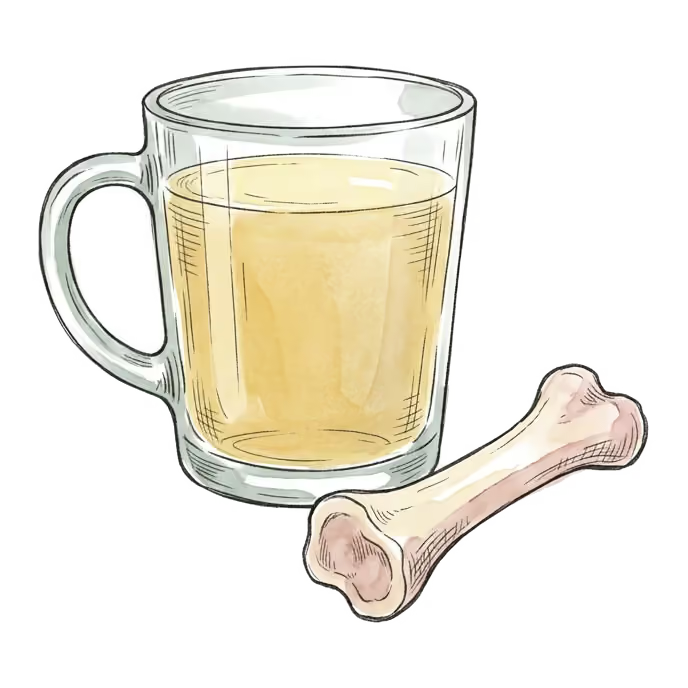
Bone broth is a liquid made by simmering animal bones and connective tissue, usually beef, chicken, pork or fish, for 4 to 48 hours, which releases gelatin and the amino acids glycine, proline and hydroxyproline. It is a modest source of protein (about 4.7 g per cup of home-made beef stock), but evidence that it improves joints, gut, skin or sleep is preliminary.
The long simmer partly breaks down collagen, so a good broth gels when cooled. Bone broth has a long history in cooking and has seen renewed commercial interest alongside collagen supplements. Most of the clinical research cited for it, however, tested purified hydrolyzed collagen, gelatin or glycine at set doses, not broth, and broth contains lower and far more variable amounts of those compounds.
Evidence at a glance
Active Compounds and Nutritional Profile
Bone broth is mostly water, gelatin and collagen-derived amino acids, with small amounts of minerals. Its composition varies considerably based on bone type, ratio of connective tissue to bone, cooking time, temperature, and whether an acid (such as apple cider vinegar) is used. USDA has no entry for bone broth as such; the closest, home-prepared beef stock, lists per 240 mL (1 cup) about 31 kcal, 4.7 g protein, 0.2 g fat and 475 mg sodium (USDA FoodData Central). Longer-simmered bone broths and commercial products vary widely, especially in protein and sodium. In an analysis of commercial, café and laboratory-prepared bone broths, levels of glycine, proline and hydroxyproline varied widely between non-standardized recipes and, in broth made to a standard recipe, were significantly lower than in a 20 g dose of a reference collagen supplement (Alcock et al., 2019):
- Protein: predominantly in the form of gelatin and partially hydrolyzed collagen peptides
- Glycine: the most abundant amino acid in collagen; a non-essential amino acid with roles in glutathione synthesis, neurotransmission, and one-carbon metabolism
- Proline: critical for collagen structural integrity; conditionally essential
- Hydroxyproline: a post-translationally modified form of proline found mainly in collagen, with smaller amounts in elastin; used as a biomarker of collagen turnover
- Gelatin: Variable; responsible for the gel texture; gelatin is denatured collagen
- Calcium: Low; one analysis found calcium and magnesium in home-made and commercial broths below 5% of daily recommended levels per serving, with longer cooking and added acid extracting more (Hsu et al., 2017)
- Magnesium, phosphorus, potassium: home-prepared beef stock lists about 17 mg magnesium, 74 mg phosphorus and 444 mg potassium per cup (USDA FoodData Central); commercial broths in Hsu et al. (2017) averaged roughly 6–9 mg magnesium per cup
- Lead: A small study found organic chicken broths contained several times the lead concentration of the water they were made with (Monro et al., 2013), while a later analysis measured lead and cadmium at a few micrograms per serving and judged the risk minimal (Hsu et al., 2017); this is a sourcing and quality consideration
Key limitation — concentration versus supplements: The collagen and gelatin trials discussed below used doses of 2.5–15 g, and Alcock et al. (2019) compared broth with a 20 g supplement dose; such supplements have standardized molecular weight distributions. A cup of bone broth provides substantially lower total collagen-derived amino acids, in gelatin form (which must be further digested before absorption), not pre-hydrolyzed peptide form. Bone broth is therefore not nutritionally equivalent to hydrolyzed collagen supplements, and clinical trial data from supplement studies cannot be directly extrapolated to bone broth.
Evidence for Purported Benefits
Joint Health and Osteoarthritis
Evidence:Preliminary Small trials used hydrolyzed collagen supplements, not bone broth; no broth-specific joint trials.
Several randomized controlled trials have examined hydrolyzed collagen supplementation (10 g/day) on joint pain and osteoarthritis symptoms with modest positive findings. In a small crossover study, Shaw et al. (American Journal of Clinical Nutrition, 2017) found that 8 healthy men who took 15 g of vitamin C-enriched gelatin an hour before brief rope-skipping showed double the blood marker of collagen I synthesis compared with placebo. Clark et al. (Current Medical Research and Opinion, 2008) reported reduced activity-related joint pain in athletes receiving 10 g/day collagen hydrolysate vs. placebo over 24 weeks, though only 97 of 147 enrolled participants could be evaluated. These findings are mechanistically plausible — collagen peptides have stimulated chondrocyte collagen synthesis in cell studies — but the effect sizes are modest and not all trials are positive. Whether bone broth provides collagen peptides in concentrations and molecular weights sufficient to replicate these effects has not been directly tested in adequately powered human trials.
Gut Barrier Integrity (“Leaky Gut”)
Evidence:Insufficient Glycine and glutamine data come from cell and piglet studies; no adequate human trials of bone broth on gut permeability.
Glycine and glutamine, amino acids present in bone broth, have demonstrated roles in intestinal epithelial cell function in cell culture and animal models. In weaned piglets challenged with bacterial lipopolysaccharide, dietary glycine reduced markers of intestinal injury and inflammation (Xu et al., 2018), and glutamine (not a major component of bone broth but present in small amounts) is a primary fuel source for enterocytes. The concept that bone broth “heals leaky gut” is widely promoted in popular health media, but there are no adequately powered randomized controlled trials specifically examining bone broth consumption and intestinal permeability biomarkers in humans. The proposed mechanism is biologically plausible but remains unconfirmed at the food level.
Sleep Quality and Glycine
Evidence:Preliminary Based on small trials of 3 g purified glycine; broth glycine content varies and is untested for sleep.
Glycine functions as an inhibitory neurotransmitter in the central nervous system and has been studied as a sleep aid in purified supplement form. Bannai et al. (Frontiers in Neurology, 2012) reported that 3 g of glycine before bed reduced next-day fatigue, tended to reduce sleepiness, and improved psychomotor vigilance in healthy volunteers whose sleep had been restricted by 25% for three nights. Whether a cup of bone broth reaches the 3 g dose studied is uncertain: its glycine content varies widely between preparations (Alcock et al., 2019), and absorption kinetics from gelatin differ from purified glycine. This remains an area of preliminary research; bone broth has not been independently studied for sleep outcomes.
Skin Appearance and Collagen
Evidence:Preliminary Short RCTs of specific collagen peptides report skin effects; these results do not transfer directly to bone broth.
Multiple short-duration RCTs of hydrolyzed collagen supplements have reported improvements in skin hydration, elasticity, and wrinkle appearance. A double-blind, placebo-controlled trial by Proksch et al. (Skin Pharmacology and Physiology, 2014) in 114 women aged 45–65 found that 2.5 g/day of a specific collagen peptide for 8 weeks reduced eye wrinkle volume by 20% and increased dermal procollagen I compared with placebo. The amino acids in bone broth are consistent with this mechanism, but, as noted, bone broth’s collagen peptide concentration and bioavailability profile are not equivalent to the supplements studied.
Typical Use and Preparation
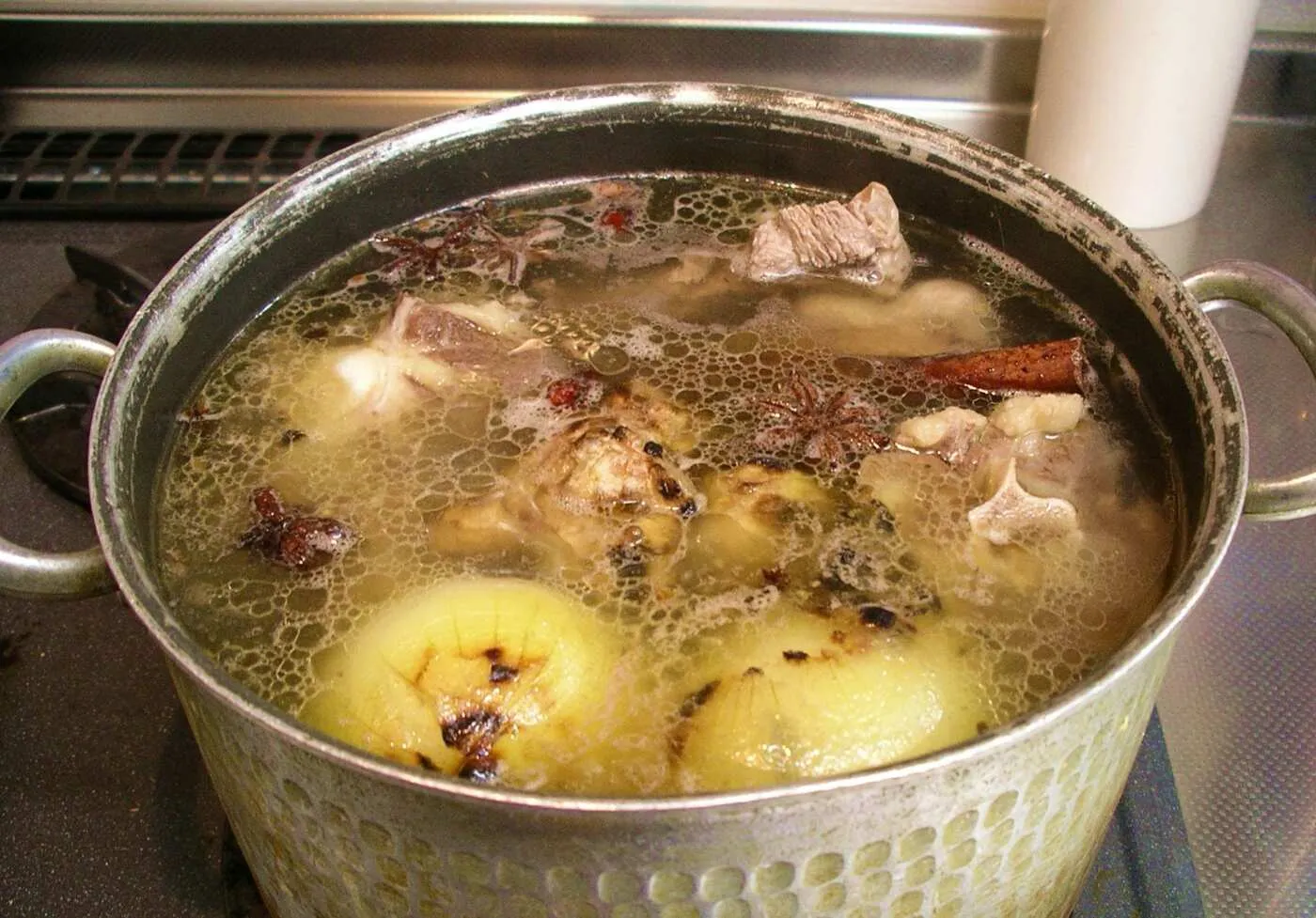 Photo: Blue Lotus, CC BY 2.0, via Wikimedia Commons
Homemade preparation: Bones (knuckle, marrow, and foot bones are preferred for gelatin yield) are typically roasted at 200–220°C for 30–45 minutes before simmering to develop flavor. The bones are then simmered in water (with optional apple cider vinegar to promote mineral extraction) for 8–24 hours for chicken bones or 12–48 hours for beef. The broth is strained, cooled, and the solidified fat layer removed. A well-made bone broth will gel firmly when refrigerated, indicating sufficient gelatin content.
Commercial products: Ready-to-drink and powdered bone broth products are commercially available. Protein content, collagen peptide concentration, and sodium levels vary significantly across brands. Consumers comparing products should examine total protein per serving and whether the product contains actual bone-derived collagen or added gelatin.
Culinary uses: Bone broth serves as a base for soups, sauces, and braises. Drinking it plain as a hot beverage is a common contemporary practice.
Storage: Cool large batches quickly, for example by dividing them into shallow containers, then refrigerate and use within a few days, or freeze for longer storage. An absence of off-odors is not a reliable sign that broth is safe.
The skin-health nutrition guide looks more closely at whether bone broth delivers collagen in a form the body can use, and the gut-health superfoods guide covers the foods with stronger human evidence for digestive health.
Safety, Interactions, and Contraindications
Heavy metal content: A small blinded study by Monro et al. (Medical Hypotheses, 2013) found that organic chicken broths contained several times the lead concentration of the tap water used to make them (up to 9.5 μg/L versus 0.89 μg/L), and the authors advised clinicians to consider lead risk when recommending bone broth diets. A later analysis by Hsu et al. (2017) measured lead and cadmium at a few micrograms per serving (about 1.5–2 µg lead per roughly 500 g commercial serving) and judged the risk minimal. Lead exposure is still worth noting for vulnerable populations (pregnant women, young children) and for those consuming large daily quantities. Sourcing from producers who test for heavy metals is advisable if bone broth is consumed frequently.
Sodium content: Commercial bone broths and heavily salted homemade preparations can be significant sodium sources. Individuals managing hypertension or following sodium-restricted diets should select low-sodium products or prepare unsalted broth.
Histamine sensitivity: Bone broth is often listed among foods to limit on low-histamine diets, but its histamine content has not been measured in published studies. Histamine in food forms mainly when bacteria convert free histidine, so broth held warm or stored for long periods is the more plausible concern than simmering time itself. In people with histamine intolerance, histamine-rich foods may provoke flushing, headache, or diarrhea (Maintz & Novak, 2007).
FODMAP considerations: Onion and garlic are common bone broth additives and are high-FODMAP. Individuals following low-FODMAP diets for irritable bowel syndrome (IBS) should prepare or source plain broth without these ingredients.
Frequently Asked Questions
What is bone broth?
Bone broth is a liquid made by simmering animal bones, cartilage and connective tissue, often with vegetables and aromatics, for roughly 4 to 48 hours. The long cooking partly breaks down collagen into gelatin and free amino acids, mainly glycine, proline and hydroxyproline, which is why a well-made broth sets into a gel when refrigerated.
Is bone broth good for you?
Bone broth is a low-calorie, savory source of some protein and fluid, and it can replace saltier or richer bases in cooking. Claims that it heals the gut, rebuilds joints or improves skin rest mainly on trials of collagen supplements, glycine or animal studies. Bone broth itself has not been tested for those outcomes in adequately powered human trials.
Does bone broth have protein?
Yes, though less than many people expect. USDA lists home-made beef stock at about 4.7 g of protein per 240 mL cup, mostly as gelatin and partly broken-down collagen. Longer-simmered and commercial bone broths can contain more; the label is the best guide. A cup provides less collagen-derived protein than the 10–20 g doses used in collagen research.
Is bone broth the same as chicken broth?
Not quite. Bone broth is simmered mainly from bones and connective tissue for many hours to extract gelatin, while ordinary broth is usually made from meat and cooked for a shorter time. Chicken bone broth is one kind of bone broth. Nutrient content varies more with recipe, cooking time and added salt than with the name on the carton.
How much bone broth should you drink a day?
There is no established daily amount, because bone broth has not been studied as a treatment. Most people drink it by the cup as a beverage or use it in soups. Sodium is the practical limit: home-made beef stock lists about 475 mg per cup, and commercial products vary. People on sodium-restricted diets should choose low-sodium versions or ask their clinician.
Can bone broth cause diarrhea?
Bone broth is not a common cause of diarrhea, but some ingredients can trigger symptoms in sensitive people. Onion and garlic, frequent broth additions, are high-FODMAP and can upset people with irritable bowel syndrome. In people with histamine intolerance, histamine-rich foods may cause flushing, headache or diarrhea, and broth held warm or stored for long periods is the likelier concern.
References
Show all 10 referencesShow fewer
- Alcock, R. D., Shaw, G. C., & Burke, L. M. (2019). Bone broth unlikely to provide reliable concentrations of collagen precursors compared with supplemental sources of collagen used in collagen research. International Journal of Sport Nutrition and Exercise Metabolism, 29(3), 265–272.
- Monro, J. A., Leon, R., & Puri, B. K. (2013). The risk of lead contamination in bone broth diets. Medical Hypotheses, 80(4), 389–390.
- Clark, K. L., Sebastianelli, W., Flechsenhar, K. R., et al. (2008). 24-week study on the use of collagen hydrolysate as a dietary supplement in athletes with activity-related joint pain. Current Medical Research and Opinion, 24(5), 1485–1496.
- Shaw, G., Lee-Barthel, A., Ross, M. L., Wang, B., & Baar, K. (2017). Vitamin C–enriched gelatin supplementation before intermittent activity augments collagen synthesis. American Journal of Clinical Nutrition, 105(1), 136–143.
- Bannai, M., Kawai, N., Ono, K., Nakahara, K., & Murakami, N. (2012). The effects of glycine on subjective daytime performance in partially sleep-restricted healthy volunteers. Frontiers in Neurology, 3, 61.
- Proksch, E., Schunck, M., Zague, V., Segger, D., Degwert, J., & Oesser, S. (2014). Oral intake of specific bioactive collagen peptides reduces skin wrinkles and increases dermal matrix synthesis. Skin Pharmacology and Physiology, 27(3), 113–119.
- Hsu, D. J., Lee, C. W., Tsai, W. C., & Chien, Y. C. (2017). Essential and toxic metals in animal bone broths. Food and Nutrition Research, 61(1), 1347478.
- U.S. Department of Agriculture. Soup, stock, beef, home-prepared (FDC ID 172883). FoodData Central.
- Xu, X., Wang, X., Wu, H., et al. (2018). Glycine relieves intestinal injury by maintaining mTOR signaling and suppressing AMPK, TLR4, and NOD signaling in weaned piglets after lipopolysaccharide challenge. International Journal of Molecular Sciences, 19(7), 1980.
- Maintz, L., & Novak, N. (2007). Histamine and histamine intolerance. American Journal of Clinical Nutrition, 85(5), 1185–1196.
Related content
More in Animal Foods
- Anchovies (Engraulis encrasicolus)
Anchovies vs sardines: how the two small oily fish compare on omega-3s, calcium, B12, sodium and mercury, plus anchovy nutrition, benefits and safety.
- Beef Liver
Is beef liver good for you? Its B12, vitamin A, copper and iron per 100 g, how often to eat it, liver supplements, and the vitamin A toxicity limit.
- Eggs
Are eggs good for you? Egg nutrition per large egg, whole eggs vs egg whites, what cohort studies show on cholesterol and heart risk, and egg safety.
- Grass-Fed Beef
Grass-fed vs grain-fed beef: how omega-3s, CLA, vitamin E, fat, protein, iron and zinc compare, what the USDA grass-fed label means, and red meat cautions.
- Oysters
Oyster benefits: zinc, B12, copper, selenium and omega-3s per serving, what the evidence shows, how many to eat, and the Vibrio risk of raw oysters.
- Pastured Chicken
Pasture-raised vs free-range chicken: what each USDA label and certifier requires, how the meat differs nutritionally, and chicken safety facts.




Curated by Superfoods Advisor Editors·Last updated