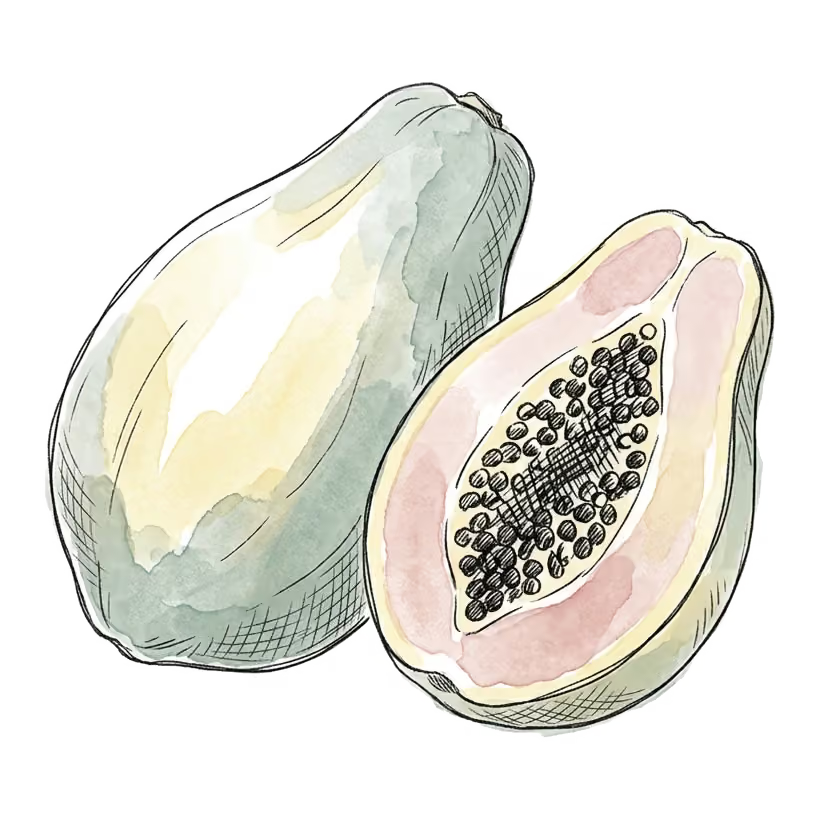
Papaya (Carica papaya)
Carica papaya · also known as pawpaw, papaw, lechosa, mamão
By Superfoods Advisor Editors·July 3, 2026
Is papaya good for you? Ripe papaya is low in calories and rich in vitamin C and lycopene, but unripe fruit and leaf extracts carry real cautions.
Ripe papaya is a nutritious, low-calorie fruit. Papaya (Carica papaya, also called pawpaw) is a tropical fruit whose flesh provides 43 kcal and about 61 mg of vitamin C per 100 g, more than orange, and red-fleshed types are a good source of lycopene. Unripe papaya, its latex and leaf extracts behave differently and carry pregnancy and allergy cautions.
The species is native to southern Mexico and Central America, where it was used as food and medicine before European contact. Spanish and Portuguese explorers spread it through the tropics in the 16th century, and India is the largest producer today.
Unripe green papaya has a folk reputation in parts of Asia as an abortifacient (Adebiyi et al., 2002). Crude papaya latex contracts rat uterine tissue, an effect one study attributed to a mix of enzymes, alkaloids and other substances rather than papain alone (Cherian, 2000); human data are lacking.
The ripe fruit and seeds have also been used as digestive aids, to expel intestinal parasites and for wound healing. Scientific interest has centered on papain, a protein-digesting enzyme extracted from the latex of unripe fruit for food, pharmaceutical and cosmetic use.
Evidence at a glance
Active Compounds
Papain: The defining phytochemical of papaya, papain is a cysteine endopeptidase concentrated in the latex of unripe fruit, leaves, and skin. It cleaves peptide bonds in proteins and remains stable across a broad pH range in laboratory assays. Papain is commercially used as a meat tenderizer, in digestive enzyme supplements, in wound-debridement ointments (sold in the US without FDA approval until the agency ordered them off the market in 2008), and in certain skin-exfoliating cosmetics. Enzyme activity in ripe fruit flesh is substantially lower than in unripe latex.
Beta-carotene and lycopene: Ripe red-fleshed papaya is a notable dietary source of lycopene: in red cultivars it is the predominant carotenoid, while yellow-fleshed fruit contains only trace amounts (Schweiggert et al., 2011). USDA FoodData Central lists about 1.8 mg lycopene per 100 g for raw papaya, without separating flesh colours. In a small crossover trial, lycopene was about 2.6 times more bioavailable from papaya than from tomato (Schweiggert et al., 2014). Both carotenoids are studied as antioxidants; lycopene in particular has been associated with cardiovascular and prostate health in epidemiological studies.
Vitamin C (ascorbic acid): Fresh papaya provides about 61 mg of vitamin C per 100 g (USDA FoodData Central), slightly more by weight than raw orange at about 53 mg (USDA FoodData Central).
Chymopapain: A related cysteine protease co-occurring with papain in papaya latex. Chymopapain was injected into herniated lumbar discs (chemonucleolysis) in the 1980s and 1990s until it was discontinued in the US in 1999 (Deer et al., 2025); US postmarketing reports included fatal anaphylaxis (Nordby et al., 1993).
Benzyl isothiocyanate (BITC): Found primarily in papaya seeds, BITC is formed from benzyl glucosinolate, which is abundant in the seed but undetectable in the pulp (Nakamura et al., 2007). It has shown antiproliferative and antimicrobial activity in laboratory models. Seeds are edible in small quantities with a peppery flavor.
Carpaine: A macrocyclic alkaloid found mainly in papaya leaves. Papaya leaf preparations are used traditionally for fever and platelet support; clinical evidence for efficacy is limited, and a systematic review noted concerns about liver and reproductive toxicity with long-term use, based on animal studies (Lim et al., 2021).
Flavonoids: Kaempferol, quercetin, and caffeic acid derivatives are present in the peel and flesh.
Nutritional Profile
The following values represent raw ripe papaya flesh per 100 g (USDA FoodData Central, FDC ID 169926):
| Nutrient | Amount | % DV |
|---|---|---|
| Energy | 43 kcal | — |
| Water | 88.1 g | — |
| Carbohydrates | 10.8 g | — |
| Sugars | 7.82 g | — |
| Dietary fiber | 1.7 g | — |
| Protein | 0.47 g | — |
| Total fat | 0.26 g | — |
| Vitamin C | 60.9 mg | 68% |
| Vitamin A (RAE) | 47 µg | 5% |
| Folate | 37 µg | 9% |
| Vitamin K | 2.6 µg | 2% |
| Potassium | 182 mg | 4% |
| Magnesium | 21 mg | 5% |
| Lycopene | 1.83 mg | — |
Papaya is low in calories (43 kcal/100 g) with a relatively modest sugar content for a tropical fruit. Its vitamin C density is notable, and red-fleshed varieties can be significant lycopene sources.
Evidence for Purported Benefits
Digestive Enzyme Support
Evidence:Preliminary A single small trial of a proprietary papaya preparation; no trials of the whole fruit.
Human evidence is thin. A double-blind, placebo-controlled study by Muss et al. (2013) in Neuro Endocrinology Letters tested a proprietary papaya preparation (Caricol), not isolated papain, in volunteers with chronic indigestion and gastrointestinal dysfunction. Taking 20 ml daily for 40 days was associated with significant improvements in constipation and bloating; the change in heartburn did not reach significance, and none of the benefits persisted after a washout period. The trial was small, limiting interpretation.
The activity of papain in ripe whole fruit is considerably lower than in unripe latex or enzyme supplements. Anecdotal reports of improved digestion from eating ripe papaya may reflect the fruit’s fiber and water content rather than enzymatic activity. Controlled trials using ripe whole fruit for digestive outcomes are lacking.
Antioxidant and Anti-inflammatory Activity
Evidence:Lab & animal only In vitro antioxidant assays; controlled human trials of whole papaya are scarce.
Papaya’s combination of vitamin C, lycopene, and beta-carotene gives it high in vitro antioxidant capacity in standard assays. Controlled human trials testing whole papaya against inflammatory or oxidative-stress markers are scarce, so in vitro antioxidant capacity should not be read as a demonstrated clinical effect.
Immune Support
Evidence:Moderate Papaya is a rich vitamin C source; no papaya-specific immune trials exist.
Papaya’s vitamin C provision (approximately 68% of the adult DV per 100 g) supports adequate vitamin C status, which is important for normal immune function. No randomized controlled trials have tested papaya-specific effects on infection incidence, severity, or duration in humans.
Dengue Fever and Thrombocytopenia (Platelet Support)
Evidence:Limited Nine small, low-quality controlled studies of leaf extract, not the fruit, mostly raised platelet counts; clinical benefit is unclear.
Papaya leaf extract has gained significant popular attention in South and Southeast Asia as a purported remedy to increase platelet counts in patients with dengue fever-associated thrombocytopenia. Several small clinical trials have been published since. A 2019 systematic review and meta-analysis by Rajapakse et al. (BMC Complementary and Alternative Medicine) identified nine controlled studies, most from India; seven reported higher platelet counts with papaya extract, and pooled low-quality evidence suggested a shorter hospital stay. The authors concluded that the clinical value of these changes is unclear and that current evidence is insufficient to define a role for papaya extract in dengue, calling for well-designed trials with clinically meaningful outcomes.
In anaesthetized rats, carpaine from papaya leaves lowered blood pressure and cardiac output (Hornick et al., 1978); leaf preparations should not be used without medical supervision.
Skin Health (Topical Papain)
Evidence:Insufficient The FDA found topical papain’s effectiveness unsupported by sound studies; cosmetic claims lack controlled evidence.
Topical papain-based preparations have been used in wound care as enzymatic debriders. Papain-urea ointments for wound debridement were marketed in the US for decades without ever being FDA-approved; in 2008 the FDA ordered them off the market, citing serious hypersensitivity reactions including anaphylaxis. The FDA also stated that the products’ effectiveness was not supported by scientifically sound studies. Consumer cosmetic claims for anti-aging or brightening effects of papaya-containing skin products are largely unsupported by controlled clinical evidence.
Typical Use and Preparation
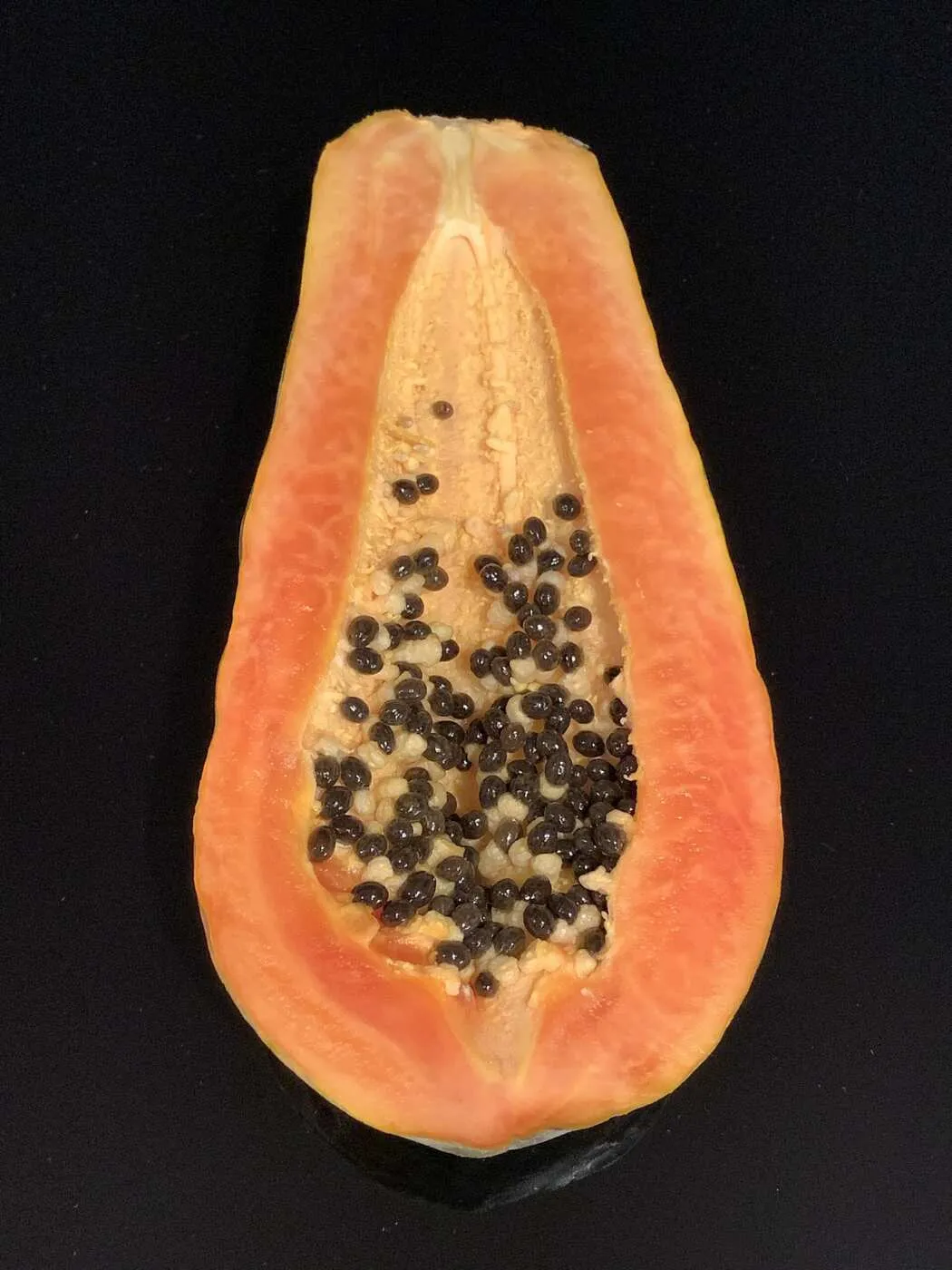 Photo: OKJaguar, CC BY-SA 4.0, via Wikimedia Commons
Ripe papaya is eaten fresh, with the flesh scooped from halved fruit. The seeds are edible and have a peppery flavor sometimes used as a condiment or spice. Green unripe papaya is a key ingredient in Southeast Asian cuisine — most famously Thai green papaya salad (som tam) — and is also used in South Asian curries and chutneys. Papaya is available as fresh fruit, dried slices, frozen chunks, juice, and commercial papain enzyme supplements.
Papaya leaf extract is sold in health-food markets as a liquid or tablet preparation, particularly in tropical regions where dengue is endemic. These preparations have a different compound profile from ripe fruit and should not be assumed equivalent.
To maximize lycopene content, red-fleshed cultivars such as ‘Maradol’ and ‘Sunrise’ are preferred over yellow-fleshed types. Brief heat treatment (e.g., as in cooking) may slightly improve lycopene bioavailability through disruption of food matrices, paralleling observations with tomato.
Papaya is listed among the foods that exceed oranges in vitamin C per gram in our guide to immune-supporting foods. Mango is a comparable tropical fruit with more research on bowel regularity, and pineapple supplies a different protein-digesting enzyme, bromelain.
Safety, Interactions, and Contraindications
Ripe fruit at dietary intakes: Ripe papaya is a widely eaten food; the main cautions for it are the latex-allergy and pregnancy points below.
Pregnancy — avoid unripe papaya and latex: Unripe and semi-ripe papaya are rich in latex. In rat studies, crude papaya latex caused strong contractions of isolated uterine muscle, comparable to oxytocin and spasmodic in late-pregnancy tissue, whereas ripe papaya juice had no contractile effect, and pregnant rats drinking blended ripe papaya showed no fetal or maternal toxicity (Adebiyi et al., 2002; Cherian, 2000). This evidence is from animals only; no human studies have measured the risk. Traditional systems also use unripe papaya as an emmenagogue or abortifacient. Pregnant individuals should avoid unripe or semi-ripe papaya, concentrated papaya latex, and papaya leaf products. Ripe papaya flesh in normal food amounts has not shown harm in this animal research.
Latex-fruit syndrome: IgE antibodies to natural rubber latex can cross-react with papaya allergens (Brehler et al., 1997), and papaya is among the fruits most often implicated in latex-fruit syndrome alongside banana, avocado and kiwifruit (Gromek et al., 2024). Individuals with latex allergy are at elevated risk of allergic reactions to papaya and papaya-latex products. Reactions ranging from oral symptoms to anaphylaxis have been reported.
Papain and hypersensitivity: Papain is a recognized allergen; occupational exposure has caused IgE-mediated asthma, rhinitis and contact urticaria (Quiñones et al., 1999). The FDA removed unapproved topical papain products from the US market in 2008 following reports of serious hypersensitivity. Oral enzyme supplement use should be approached with caution in atopic individuals.
Drug interactions: Papain degraded fibrin and fibrinogen and prolonged clotting times in laboratory and rat experiments (Yang et al., 2023), which raises a theoretical concern about added bleeding risk alongside anticoagulant or antiplatelet medications (warfarin, aspirin, clopidogrel). No controlled human studies have tested this interaction, so the concern remains theoretical, but caution is warranted. Individuals on anticoagulant therapy should consult a healthcare provider before taking high-dose papain supplements.
Carotenodermia: Excessive intake of lycopene and beta-carotene from any dietary source (including papaya in large quantities) can cause carotenodermia — a yellowish-orange skin discoloration. This is reversible upon reducing intake and is not harmful, but it may mimic jaundice.
This entry is for informational purposes only and does not constitute medical advice. Consult a qualified healthcare provider before using any supplement or making dietary changes to manage a health condition.
Frequently Asked Questions
Is papaya good for you?
Ripe papaya is a good choice for most people. It is low in calories and one of the richer fruit sources of vitamin C, about 61 mg per 100 g, with folate, potassium and, in red-fleshed varieties, lycopene. Most other health claims, including digestive and anti-inflammatory benefits, lack controlled trials of the whole fruit. Unripe papaya and papaya latex need more caution.
Does papaya help with digestion or constipation?
The evidence is limited. In one small placebo-controlled trial, a proprietary papaya preparation taken for 40 days improved constipation and bloating, but the benefits did not last after stopping. No trials have tested ripe whole papaya. Ripe flesh contains far less of the enzyme papain than unripe latex, so any effect of eating the fruit may come from its fiber and water.
Can you eat papaya seeds?
Yes, in small amounts. Papaya seeds are edible and have a peppery flavor, and some cuisines use them as a condiment. They are rich in benzyl glucosinolate, which forms benzyl isothiocyanate, a compound with antimicrobial and antiproliferative activity in laboratory studies; that compound is absent from the flesh. There are no human trials on eating papaya seeds regularly.
Is papaya safe during pregnancy?
Ripe papaya flesh in normal food amounts has not shown harm in animal studies. Unripe and semi-ripe papaya are different: their latex caused strong uterine contractions in rat tissue, comparable to oxytocin. No human studies have measured the risk, so pregnant people are advised to avoid unripe papaya, papaya latex and papaya leaf products, and to ask their clinician about anything else.
How much papaya can you eat a day?
There is no official limit for ripe papaya. A 100 g serving supplies about two-thirds of the vitamin C Daily Value for 43 kcal. Eating very large amounts of carotenoid-rich foods, papaya included, can cause carotenodermia, a harmless, reversible yellow-orange skin tint. People with latex allergy or on anticoagulants taking papain supplements should be more careful.
Is papaya a fruit or a melon?
Papaya is a fruit, and it is generally not classified as a melon. It grows on a large herbaceous plant in the family Caricaceae, while melons are usually placed in the gourd family. Papaya’s soft orange flesh and central cavity of seeds resemble a melon’s, which is why the two are often compared. Per 100 g, ripe papaya flesh provides about 43 kcal and 61 mg of vitamin C.
References
Show all 17 referencesShow fewer
- Muss, C., Mosgoeller, W., & Endler, T. (2013). Papaya preparation (Caricol) in digestive disorders. Neuro Endocrinology Letters, 34(1), 38–46.
- Rajapakse, S., de Silva, N. L., Weeratunga, P., Rodrigo, C., Sigera, C., & Fernando, S. D. (2019). Carica papaya extract in dengue: a systematic review and meta-analysis. BMC Complementary and Alternative Medicine, 19(1), 265.
- Schweiggert, R. M., Steingass, C. B., Heller, A., Esquivel, P., & Carle, R. (2011). Characterization of chromoplasts and carotenoids of red- and yellow-fleshed papaya (Carica papaya L.). Planta, 234(5), 1031–1044.
- USDA FoodData Central. Papayas, raw. FDC ID 169926. U.S. Department of Agriculture.
- Schweiggert, R. M., et al. (2014). Carotenoids are more bioavailable from papaya than from tomato and carrot in humans: a randomised cross-over study. British Journal of Nutrition.
- Adebiyi, A., Adaikan, P. G., & Prasad, R. N. (2002). Papaya (Carica papaya) consumption is unsafe in pregnancy: fact or fable? Scientific evaluation of a common belief in some parts of Asia using a rat model. British Journal of Nutrition, 88(2), 199–203.
- Cherian, T. (2000). Effect of papaya latex extract on gravid and non-gravid rat uterine preparations in vitro. Journal of Ethnopharmacology, 70(3), 205–212.
- Brehler, R., Theissen, U., Mohr, C., & Luger, T. (1997). “Latex-fruit syndrome”: frequency of cross-reacting IgE antibodies. Allergy.
- Gromek, W., et al. (2024). Revisiting latex-fruit syndrome after 30 years of research: a comprehensive literature review and description of two cases. Journal of Clinical Medicine.
- Yang, H. R., et al. (2023). Unveiling the potent fibrino(geno)lytic, anticoagulant, and antithrombotic effects of papain, a cysteine protease from Carica papaya latex using κ-carrageenan rat tail thrombosis model. International Journal of Molecular Sciences, 24(23), 16770.
- U.S. Food and Drug Administration. (2008). Questions and answers about FDA’s enforcement action regarding unapproved topical drug products containing papain.
- Nakamura, Y., et al. (2007). Papaya seed represents a rich source of biologically active isothiocyanate. Journal of Agricultural and Food Chemistry, 55(11), 4407–4413.
- Deer, T. R., et al. (2025). Chemonucleolysis for lumbar disc herniation: history and current state of the technology. Journal of Pain Research, 18, 5555–5565.
- Nordby, E. J., Wright, P. H., & Schofield, S. R. (1993). Safety of chemonucleolysis: adverse effects reported in the United States, 1982–1991. Clinical Orthopaedics and Related Research, (293), 122–134.
- Lim, X. Y., et al. (2021). Carica papaya L. leaf: a systematic scoping review on biological safety and herb-drug interactions. Evidence-Based Complementary and Alternative Medicine, 2021, 5511221.
- Hornick, C. A., Sanders, L. I., & Lin, Y. C. (1978). Effect of carpaine, a papaya alkaloid, on the circulatory function in the rat. Research Communications in Chemical Pathology and Pharmacology, 22(2), 277–289.
- Quiñones, D., et al. (1999). Contact urticaria, rhinoconjunctivitis and bronchial asthma from occupational use of papain. Allergologia et Immunopathologia, 27(5), 273–275.
More in Fruits
- Apple (Malus domestica)
Are apples good for you? Apples supply pectin fiber and quercetin, and large cohort studies link regular intake to lower heart disease and diabetes risk.
- Avocado (Persea americana)
Is avocado good for you? Avocado is high in monounsaturated fat, fiber and potassium, and small trials link a daily avocado to lower LDL cholesterol.
- Banana (Musa acuminata)
Are bananas good for you? Bananas supply potassium, vitamin B6 and fiber, and green bananas add resistant starch. The evidence, and who should limit them.
- Cherry (Prunus avium / Prunus cerasus)
Tart cherry juice benefits, weighed: small trials suggest faster muscle recovery and longer sleep, and gout data are early. Sweet vs tart cherry nutrition.
- Grapefruit (Citrus × paradisi)
Is grapefruit good for you? It is low in calories and rich in vitamin C, but it interacts with statins and 85+ other drugs. Benefits, nutrition and risks.
- Grapes (Vitis vinifera)
Are grapes good for you? Grapes supply skin polyphenols and vitamin K but little fiber and plenty of sugar. What the vascular and resveratrol data show.

Curated by Superfoods Advisor Editors·Last updated