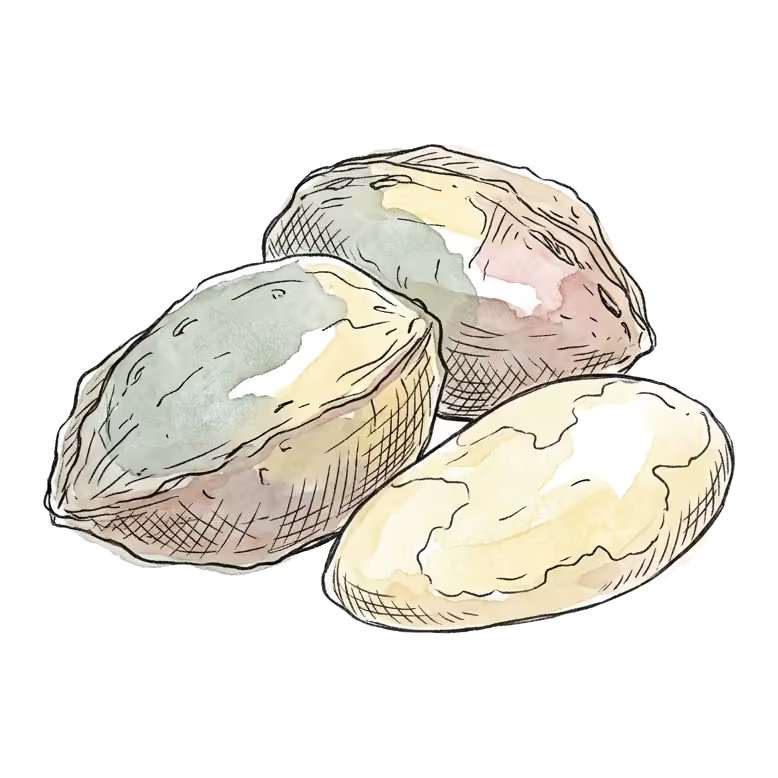
Brazil Nuts (Bertholletia excelsa)
Bertholletia excelsa · also known as Para nut, cream nut, Bolivian nut, castanha-do-pará
By Superfoods Advisor Editors·July 3, 2026
Brazil nuts benefits come down to selenium: one nut can hold 8 to 200 mcg. How many to eat per day, what the research shows, and the toxicity limit.
Brazil nuts (Bertholletia excelsa, also sold as Para nuts) are the richest known food source of selenium, a mineral needed for antioxidant and thyroid enzymes. Depending on its origin, one nut supplies roughly 8 to 200 mcg, against an adult RDA of 55 mcg. One to three nuts a day is usual; the toxicity ceiling is not far above.
The nuts are the seeds of a long-lived canopy tree endemic to the Amazon rainforest of Bolivia, Brazil, Peru, Colombia and Venezuela. Unlike most commercial tree nuts, they are harvested almost entirely from wild trees; the species has resisted domestication because it depends on a specialized pollinator (large-bodied bees such as orchid bees, Eulaema spp., and carpenter bees, Xylocopa spp.) and on agoutis (Dasyprocta spp.) for seed dispersal. This ecological dependence makes the Brazil nut industry a concrete economic incentive for Amazon forest conservation.
Indigenous Amazonian peoples have consumed Brazil nuts for millennia as a calorie-dense staple. European traders encountered them after colonial contact, and they later entered global commerce. Today Bolivia is the leading exporter.
Evidence at a glance
Active Compounds
Brazil nuts are nutritionally noteworthy primarily for one reason: their extraordinary selenium concentration.
- Selenium: USDA FoodData Central lists about 1,920 mcg selenium per 100 g, but values vary enormously with geographic origin and soil. Across the Brazilian Amazon, median concentrations ranged from about 2 mg/kg (Mato Grosso) to 68 mg/kg (Amazonas), so a single nut can supply roughly 8 to 200 mcg (Silva Junior et al., 2017). Even at the low end, Brazil nuts are the richest known food source of selenium. Selenomethionine, a highly bioavailable organic form, is the most abundant of the selenium amino acids identified in the nut (Vonderheide et al., 2002).
- Monounsaturated fatty acids: Oleic acid comprises approximately 35% of the fat fraction (USDA FoodData Central). Palmitoleic acid is also present.
- Polyunsaturated fatty acids: Linoleic acid (omega-6) contributes approximately 36% of total fat.
- Ellagic acid and other polyphenols: Phenolics identified include catechin, epicatechin, gallic acid, and ellagic acid (Vasquez-Rojas et al., 2021).
- Magnesium: Approximately 376 mg/100 g (89% DV).
- Thiamine (B1): Approximately 0.62 mg/100 g (52% DV).
- Zinc: Approximately 4.1 mg/100 g (37% DV).
- Phytosterols: Beta-sitosterol is the primary sterol, at roughly 64 mg/100 g.
Nutritional Profile
Per 100 g dried, unblanched Brazil nuts (USDA FoodData Central, SR Legacy):
| Nutrient | Amount | % DV |
|---|---|---|
| Energy | 659 kcal | — |
| Protein | 14.3 g | — |
| Total fat | 67.1 g | — |
| — Saturated fat | 16.1 g | — |
| — Monounsaturated fat | 23.9 g | — |
| — Polyunsaturated fat | 24.4 g | — |
| Carbohydrate | 11.7 g | — |
| Dietary fiber | 7.5 g | — |
| Total sugars | 2.3 g | — |
| Selenium | ~1,920 mcg* | 3,490% |
| Magnesium | 376 mg | 89% |
| Phosphorus | 725 mg | 58% |
| Copper | 1.7 mg | 190% |
| Thiamine | 0.62 mg | 52% |
| Zinc | 4.1 mg | 37% |
| Calcium | 160 mg | 12% |
*Selenium values vary substantially by growing region; depending on origin, a single nut supplies roughly 8 to 200 mcg (Silva Junior et al., 2017).
Evidence for Purported Benefits
Selenium Status Improvement
Evidence:Strong Two nuts a day raised plasma selenium as much as a 100 mcg supplement in a 12-week trial.
Selenium status is improved reliably by Brazil nut consumption. A 2008 study by Thomson et al. (American Journal of Clinical Nutrition) found in 59 New Zealand adults that two Brazil nuts daily for 12 weeks (averaging 53 mcg selenium/day) raised plasma selenium by 64%, comparable to 100 mcg/day of selenomethionine (61%), and increased whole-blood glutathione peroxidase activity more than the supplement did. This has direct relevance to populations in selenium-poor regions (including parts of Europe and Sub-Saharan Africa where soil selenium is low).
Antioxidant Defense and Oxidative Stress
Evidence:Limited A few trials show higher selenium and glutathione peroxidase activity; biomarkers only, no clinical endpoints.
Selenium is an essential cofactor for glutathione peroxidase (GPx) and thioredoxin reductase, two of the body’s major enzymatic antioxidant systems. Supplementing selenium-deficient individuals raises GPx activity measurably. In a randomized crossover trial in 91 hypertensive and dyslipidemic adults, Huguenin et al. (2015, Nutrition Journal) found that 13 g/day of partially defatted Brazil nut flour for 12 weeks roughly doubled plasma selenium, raised plasma GPx activity by about 25%, and modestly lowered oxidized LDL from baseline. Whether these biomarker changes translate to reduced disease incidence at typical dietary intake levels has not been established in large clinical trials.
Thyroid Hormone Metabolism
Evidence:Limited Selenium supplements lowered thyroid antibodies in a meta-analysis; Brazil nuts themselves have not been tested in thyroid disease.
Deiodinase enzymes that convert thyroxine (T4) to active triiodothyronine (T3) are selenoproteins. Selenium deficiency impairs thyroid function and may exacerbate autoimmune thyroiditis. A 2024 meta-analysis of randomized trials in Hashimoto thyroiditis found that selenium supplements lowered thyroid peroxidase antibody levels, with moderate certainty of evidence (Huwiler et al., 2024), though Brazil nuts specifically have not been tested in large thyroid-disease RCTs.
Cardiovascular Risk Markers
Evidence:Limited Two small, short trials; results conflict, and the larger one found no lipid difference versus placebo.
A small crossover study by Colpo et al. (2013, Journal of Nutrition and Metabolism; n = 10 healthy volunteers) found that a single 20 g or 50 g serving of Brazil nuts lowered LDL cholesterol and raised HDL cholesterol within 9 hours. In a 90-day placebo-controlled trial in 77 dyslipidemic and hypertensive patients already on lipid-lowering drugs, Carvalho et al. (2015, Nutrition Journal) found within-group reductions in total and non-HDL cholesterol with 13 g/day of partially defatted Brazil nut flour, but no statistically significant difference in serum lipids versus placebo. Proposed mechanisms, none confirmed in these trials, include MUFA content displacing saturated fat, selenium’s antioxidant role reducing oxidized LDL, and phytosterol-mediated cholesterol absorption inhibition. Replication in larger trials is needed.
Typical Use and Preparation
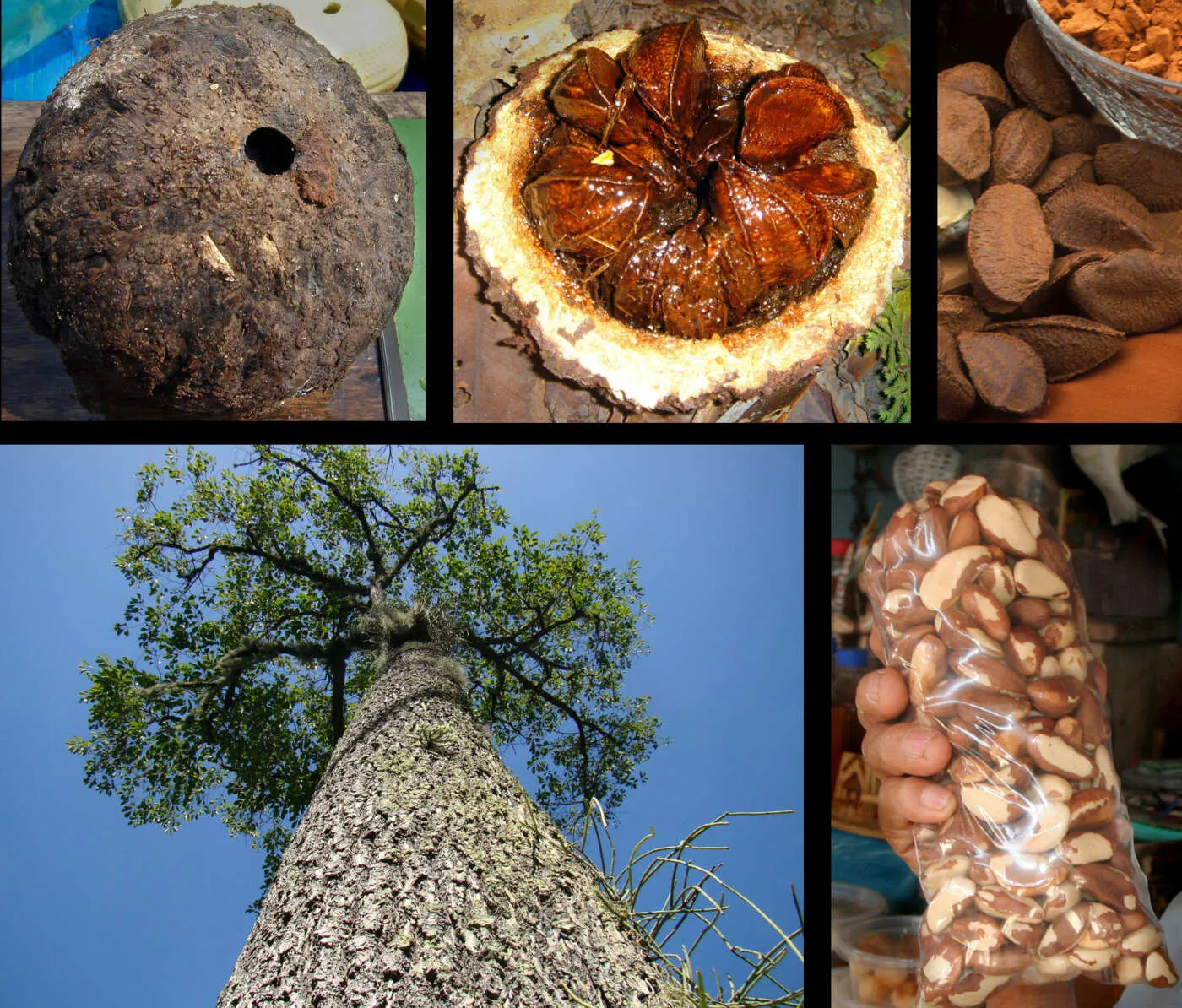 Photo: Lior Golgher and others, CC BY-SA 4.0, via Wikimedia Commons
Brazil nuts are consumed raw or dry-roasted. Their large size (approximately 5 g each) and rich, creamy texture make them a standalone snack. They are also chopped into baked goods, chocolate confections, and granola. Brazil nut milk and butter are available in specialty markets.
Portion guidance is critical given the selenium content. A common recommendation is 1–3 nuts per day. At the USDA average of about 1,920 mcg/100 g and roughly 5 g per nut, that is about 95–290 mcg of selenium, already above the Recommended Dietary Allowance (RDA: 55 mcg/day) from nuts alone. Consuming large handfuls regularly risks exceeding the Tolerable Upper Intake Level (see Safety section).
Storage in an airtight container away from light is recommended, as the high polyunsaturated fat content makes Brazil nuts susceptible to rancidity.
Our guide to immune-supporting foods has a section on selenium from Brazil nuts, including why a few nuts go a long way.
Safety, Interactions, and Contraindications
Selenium toxicity (selenosis) — the primary safety concern:
The Tolerable Upper Intake Level (UL) for selenium established by the Institute of Medicine is 400 mcg/day for adults. Because a single nut averages roughly 95 mcg of selenium by USDA figures, and nuts from high-selenium soils can carry about 200 mcg (Silva Junior et al., 2017), consuming more than about four nuts per day on a regular basis may push total selenium intake above the UL when combined with dietary selenium from other sources (seafood, grains, meat).
Chronic selenosis presents with: hair loss (alopecia), brittle nails, garlic-odored breath (from exhaled dimethylselenide), nervous system abnormalities, fatigue, and gastrointestinal disturbance. Acute toxicity from extremely high intake can include severe gastrointestinal and neurological symptoms and cardiovascular effects (NIH Office of Dietary Supplements).
Individuals who should exercise particular caution:
- Those already taking selenium supplements — combining supplements with regular Brazil nut consumption may readily exceed the UL.
- Individuals with selenium-rich diets (high seafood or fortified food intake).
Aflatoxin risk:
Brazil nuts are prone to contamination with aflatoxins (mycotoxins produced by Aspergillus molds) during harvesting and storage in humid conditions. The European Union sets specific maximum aflatoxin levels for Brazil nuts (Regulation (EU) 2023/915). Consumers should purchase from reputable suppliers and avoid nuts with visible mold, discoloration, or off odors.
Tree nut allergy:
Allergy to Brazil nuts is possible. Cross-reactivity with other tree nuts may occur.
Barium content:
Brazil nuts also concentrate barium. A 2025 review of 24 publications found a mean of about 1.27 mg/g (range 0.03–5.89 mg/g) and estimated that two nuts a day stays under the suggested tolerable daily intake for most adults, though it may exceed it in a few sampled regions or for people under 60 kg (Koeder & Keller, 2025). Human data on barium absorption from Brazil nuts are lacking.
Frequently Asked Questions
How many Brazil nuts should you eat in a day?
One to three nuts a day is the common guidance. At the USDA average of about 1,920 mcg of selenium per 100 g and roughly 5 g per nut, that is about 95 to 290 mcg, already above the adult RDA of 55 mcg. In a 12-week trial, just two nuts a day raised selenium status as effectively as a 100 mcg supplement.
What happens if you eat too many Brazil nuts?
Eating many Brazil nuts regularly can push selenium intake past the adult upper limit of 400 mcg a day. A handful of 20 nuts could hold well over 1,000 mcg. Chronic excess causes selenosis, with hair loss, brittle nails, garlic-smelling breath, fatigue and digestive upset. An occasional large serving is less of a concern than a daily habit.
Can Brazil nuts kill you?
A few nuts a day are well within safe limits for most adults. The main risk of eating too many is chronic selenosis from intake above 400 mcg a day, not sudden poisoning. Acute toxicity from extremely high selenium intakes can cause severe digestive, nervous system and heart effects, according to the NIH Office of Dietary Supplements. Anyone who has eaten a very large amount and feels unwell should contact poison control or a doctor.
Are Brazil nuts good for you?
In small amounts, they are an efficient way to meet selenium needs, which matters most in regions with selenium-poor soil. They also provide magnesium (376 mg per 100 g), copper and thiamine. Beyond selenium status, the benefits are less certain: trials on cholesterol and antioxidant markers are small and inconsistent.
Are Brazil nuts good for the thyroid?
The thyroid uses selenium-dependent enzymes to activate its hormones, and a 2024 meta-analysis found selenium supplements lowered thyroid antibody levels in Hashimoto thyroiditis. Brazil nuts themselves have not been tested in thyroid-disease trials, and their selenium dose is hard to predict. People with thyroid conditions should discuss selenium intake with their clinician rather than self-dose with nuts.
Are there other good food sources of selenium?
Yes, at far lower and more predictable levels. Seafood, meat and grains supply most dietary selenium, and sunflower seeds are a moderate plant source. Brazil nuts stand apart because a single nut can exceed a day’s requirement, which is why their portion matters more than for any other nut.
References
Show all 13 referencesShow fewer
- Thomson, C. D., Chisholm, A., McLachlan, S. K., & Campbell, J. M. (2008). Brazil nuts: an effective way to improve selenium status. American Journal of Clinical Nutrition, 87(2), 379–384.
- Colpo, E., Vilanova, C. D., Brenner Reetz, L. G., Medeiros Frescura Duarte, M. M., Farias, I. L., Muller, E. I., Moraes Flores, E. M., Gustavo Moresco, R., Rocha, J. B., & da Rocha, M. I. (2013). A single consumption of high amounts of the Brazil nuts improves lipid profile of healthy volunteers. Journal of Nutrition and Metabolism, 2013, 653185.
- Institute of Medicine. (2000). Dietary Reference Intakes for Vitamin C, Vitamin E, Selenium, and Carotenoids. National Academies Press.
- USDA FoodData Central. (2019). Nuts, brazilnuts, dried, unblanched. FDC ID: 170569. U.S. Department of Agriculture.
- Huguenin, G. V., Oliveira, G. M., Moreira, A. S., et al. (2015). Improvement of antioxidant status after Brazil nut intake in hypertensive and dyslipidemic subjects. Nutrition Journal, 14, 54.
- Carvalho, R. F., Huguenin, G. V., Luiz, R. R., Moreira, A. S., Oliveira, G. M., & Rosa, G. (2015). Intake of partially defatted Brazil nut flour reduces serum cholesterol in hypercholesterolemic patients — a randomized controlled trial. Nutrition Journal, 14, 59.
- Silva Junior, E. C., Wadt, L. H. O., Silva, K. E., et al. (2017). Natural variation of selenium in Brazil nuts and soils from the Amazon region. Chemosphere, 188, 650–658.
- Koeder, C., & Keller, M. (2025). Barium levels in Brazil nuts: a global review of the literature. Journal of Food Science, 90(11), e70643.
- Vonderheide, A. P., Wrobel, K., Kannamkumarath, S. S., et al. (2002). Characterization of selenium species in Brazil nuts by HPLC-ICP-MS and ES-MS. Journal of Agricultural and Food Chemistry, 50(20), 5722–5728.
- Vasquez-Rojas, W. V., et al. (2021). Composition of Brazil nut (Bertholletia excelsa HBK), its beverage and by-products: a healthy food and potential source of ingredients. Foods, 10(12), 3007.
- Huwiler, V. V., et al. (2024). Selenium supplementation in patients with Hashimoto thyroiditis: a systematic review and meta-analysis of randomized clinical trials. Thyroid, 34(3), 295–313.
- NIH Office of Dietary Supplements. Selenium: Fact Sheet for Health Professionals.
- European Commission. (2023). Commission Regulation (EU) 2023/915 on maximum levels for certain contaminants in food. Official Journal of the European Union.
Related content
More in Nuts & Seeds
- Almonds (Prunus dulcis)
Almonds benefits and nutrition: what trials show for LDL cholesterol, blood sugar and weight, plus serving size, vitamin E, oxalate and allergy risks.
- Cashews (Anacardium occidentale)
Cashews benefits and nutrition: copper, magnesium and iron per serving, what trials show for blood pressure and blood sugar, and allergy and oxalate risks.
- Chia Seeds (Salvia hispanica)
How to eat chia seeds: soaked, ground or in pudding, with serving size, nutrition and what trials show for blood sugar, blood pressure and weight loss.
- Flaxseed (Linum usitatissimum)
Flaxseed benefits explained: what trials show for blood pressure, cholesterol and constipation, why ground beats whole, daily amounts and side effects.
- Hazelnuts (Corylus avellana)
Hazelnuts benefits and nutrition: oleic acid, vitamin E and folate per serving, what trials show for cholesterol, and how birch-pollen allergy works.
- Hemp Seeds (Cannabis sativa var. sativa)
Hemp seeds benefits and nutrition: 31.6 g protein per 100 g, omega-3 and GLA, hemp seeds vs hemp hearts, daily amounts, and whether they contain THC.

Curated by Superfoods Advisor Editors·Last updated