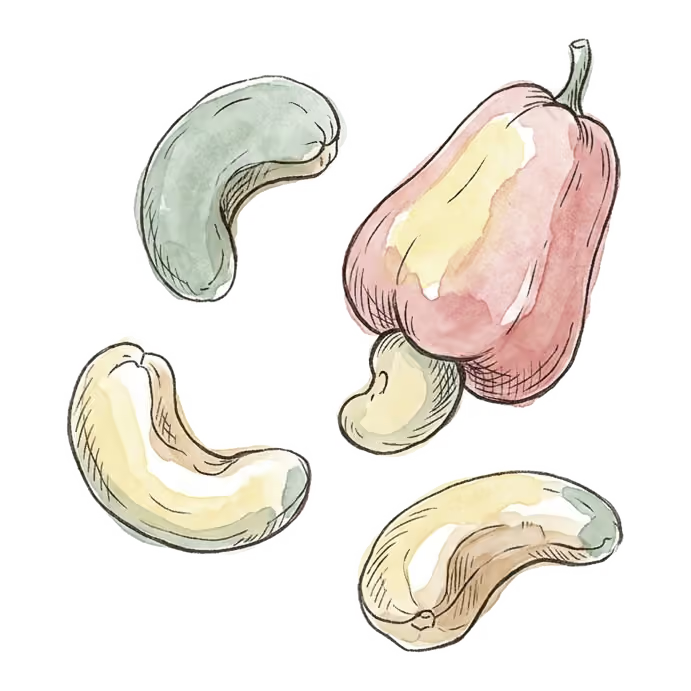
Cashews (Anacardium occidentale)
Anacardium occidentale · also known as cashew nut, caju, maranon
By Superfoods Advisor Editors·July 3, 2026
Cashews benefits and nutrition: copper, magnesium and iron per serving, what trials show for blood pressure and blood sugar, and allergy and oxalate risks.
Cashews (Anacardium occidentale, also called caju) are kidney-shaped tree nuts with a mild, creamy taste. They are one of the richest common foods in copper, at about 2.2 mg per 100 g (244% DV), and also supply magnesium, zinc and iron. Trials link them to a small drop in systolic blood pressure, with little effect on cholesterol.
The tree is native to northeastern Brazil. Portuguese colonizers carried it to Goa, India and East Africa in the 16th century, and today Côte d’Ivoire, India and Vietnam are among the largest producers and processors.
The cashew’s botany is unusual: the nut grows at the base of a swollen, fleshy pseudofruit called the cashew apple (caju), which is edible and widely consumed as juice in Brazil and parts of Africa and Asia, though it is highly perishable and rarely exported. The true nut is enclosed in a double shell containing caustic anacardic acids and cardol — compounds related to urushiol found in poison ivy — that require high-temperature processing to neutralize before the kernel is safe to handle and eat. This is why truly raw (unprocessed) cashews are not commercially available; what is sold as “raw cashews” has undergone steam or dry roasting to eliminate the shell toxins.
Parts of the tree, including the bark, leaves, and cashew apple, have a history of use in folk medicine, though these uses have not been tested in clinical trials. The nut’s modern commercial value derives primarily from its creamy texture, mild flavor, and nutritional density.
Evidence at a glance
Active Compounds
- Monounsaturated fatty acids (MUFAs): Oleic acid (18:1n-9) makes up a little over half of the total fat fraction (about 23.5 g of 43.8 g total fat per 100 g raw cashews, USDA FoodData Central), although cashew trials have not shown a consistent effect on blood lipids (Jalali et al., 2020).
- Copper: Cashews are exceptionally rich in copper at approximately 2.2 mg per 100 g (~244% DV), one of the highest concentrations in commonly consumed foods. Copper is a cofactor for ceruloplasmin, cytochrome c oxidase, and dopamine beta-hydroxylase, and is essential for iron metabolism.
- Magnesium: Approximately 292 mg/100 g (70% DV), supporting neuromuscular function, bone density, and insulin signaling.
- Zinc: Approximately 5.8 mg/100 g (53% DV), supporting immune function and wound healing.
- Iron: Approximately 6.7 mg/100 g (37% DV), present as non-heme iron with absorption enhanced by co-consumed vitamin C.
- Anacardic acids: Bioactive compounds present in the shell (removed during processing) with antimicrobial and anti-inflammatory properties in preclinical research. Trace amounts may remain in the kernel. These should not be confused with therapeutic dosing; concentrations in the edible nut are low.
- Phytosterols: Beta-sitosterol at approximately 113 mg/100 g raw (USDA FoodData Central).
- Polyphenols: Relatively modest compared to almonds; proanthocyanidins and catechins are present in small quantities.
Nutritional Profile
Per 100 g raw cashews (USDA FoodData Central, SR Legacy):
| Nutrient | Amount | % DV |
|---|---|---|
| Energy | 553 kcal | — |
| Protein | 18.2 g | — |
| Total fat | 43.8 g | — |
| — Saturated fat | 7.8 g | — |
| — Monounsaturated fat | 23.8 g | — |
| — Polyunsaturated fat | 7.8 g | — |
| Carbohydrate | 30.2 g | — |
| Dietary fiber | 3.3 g | — |
| Total sugars | 5.9 g | — |
| Copper | 2.2 mg | 244% |
| Magnesium | 292 mg | 70% |
| Phosphorus | 593 mg | 47% |
| Zinc | 5.8 mg | 53% |
| Iron | 6.7 mg | 37% |
| Thiamine | 0.42 mg | 35% |
| Vitamin K | 34.1 mcg | 28% |
| Selenium | 19.9 mcg | 36% |
Note: Cashews have a higher carbohydrate content than most other tree nuts, and a lower fat-to-carbohydrate ratio.
Evidence for Purported Benefits
Cardiovascular Risk Reduction
Evidence:Limited A meta-analysis and one 300-person RCT found a modest blood pressure effect and little or no lipid effect.
A 2020 meta-analysis of randomized controlled trials by Jalali et al. (Complementary Therapies in Medicine), covering 392 participants, found that cashew consumption significantly reduced systolic blood pressure (−3.4 mmHg) but had no significant effect on blood lipids or diastolic blood pressure. A 12-week RCT by Mohan et al. (2018, Journal of Nutrition) in 300 Asian Indian adults with type 2 diabetes, found that adding 30 g of cashews a day to standard diabetic diet advice produced a greater fall in systolic blood pressure (−4.9 vs −1.7 mmHg) and a small rise in HDL cholesterol compared with diet advice alone, with no differences in body weight, glycemia, or other lipids.
Glycemic Response
Evidence:Limited Results conflict: one small trial lowered insulin, while a larger trial and a six-trial meta-analysis found no glycemic effect.
Cashews have a relatively low glycemic index despite their higher carbohydrate content compared to other nuts. Fiber, fat, and protein slow gastric emptying and blunt postprandial glucose excursion. An 8-week controlled-feeding trial in 50 adults with type 2 diabetes reported lower serum insulin with cashews providing 10% of calories (Darvish Damavandi et al., 2019), but the larger 12-week Mohan trial found no change in glycemic variables, and a 2021 meta-analysis of six trials (521 participants) found no significant effect on fasting glucose, insulin, or HOMA-IR (Jamshidi et al., 2021).
Bone Health (Copper and Magnesium)
Evidence:Insufficient No cashew studies on bone; the case rests on the known roles of copper and magnesium.
Cashews provide substantial amounts of both copper and magnesium, two micronutrients with established roles in bone matrix formation and mineralization. Copper is required for lysyl oxidase activity, the enzyme that cross-links collagen and elastin in bone. Magnesium is a structural component of bone crystal and influences osteoblast function. No clinical trials have tested cashews for bone outcomes.
Iron-Deficiency Anemia (Supportive Role)
Evidence:Preliminary Based on iron content alone; no trials of cashews in people with anemia.
Cashews are a comparatively good plant source of iron at 6.7 mg/100 g. Because this is non-heme iron, it is absorbed less efficiently than heme iron from animal sources but is enhanced by concurrent vitamin C intake. Regular cashew consumption may contribute meaningfully to iron intake in vegetarian and vegan populations, though clinical trials specifically testing cashews in anemic individuals are not available.
Typical Use and Preparation
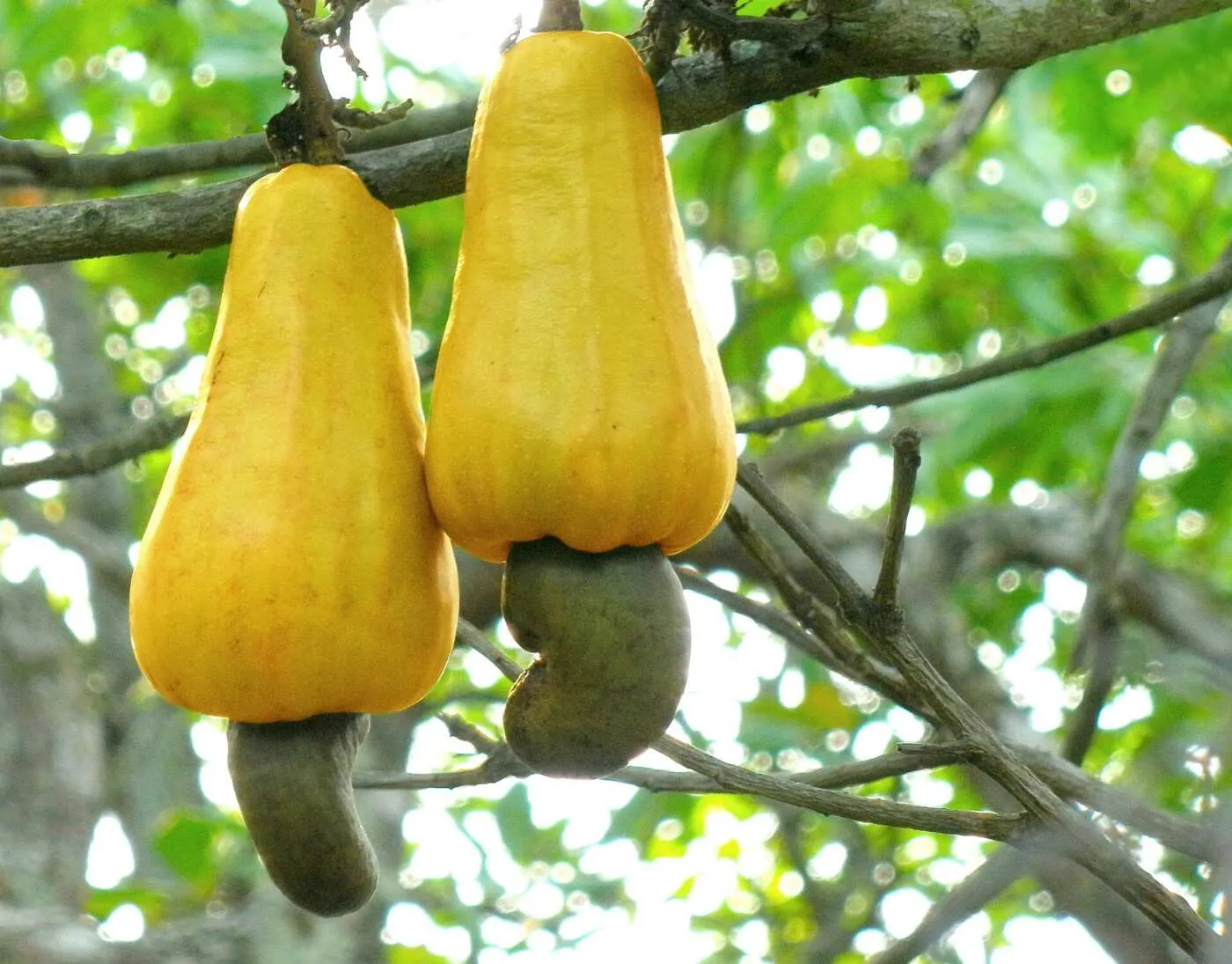 Photo: Abhishek Jacob, CC BY-SA 3.0, via Wikimedia Commons
Cashews are consumed raw (commercially: heat-processed to remove shell toxins), dry-roasted, or salted. They are a common ingredient in South and Southeast Asian curries and stir-fries, where they are added whole or ground into creamy sauces. Cashew butter has gained popularity as a nut butter alternative. Soaked and blended cashews produce a neutral-tasting cream (“cashew cream”) used as a dairy substitute in sauces, desserts, and coffee.
Commercially “raw” cashews have been steamed or minimally heat-treated; the true unprocessed cashew kernel contains residual anacardic acid and is not consumed.
A standard serving is 28 g (approximately 18 whole kernels), providing about 155 kcal.
Cashews are among the plant zinc sources compared in our guide to immune-supporting foods, and they appear with other nuts in the guide to foods for insulin resistance.
Safety, Interactions, and Contraindications
Tree nut allergy: Cashew allergy is one of the most clinically significant tree nut allergies, capable of triggering severe anaphylaxis. Cashew and pistachio (both in the family Anacardiaceae) share closely related seed storage proteins, including the 2S albumin Ana o 3 in cashew, so co-sensitization and clinical co-reactivity are frequent (Tworowska et al., 2026); among tree nuts, the overlap in clinical allergy is highest between cashew and pistachio (Jeong & Lee, 2025). Individuals with cashew allergy should avoid pistachio unless advised otherwise by an allergist.
Urushiol cross-reactivity: Cashew shell oil contains cardol and anacardic acids, which are related to poison ivy urushiol. In a 1982 Pennsylvania outbreak, 54 people developed a poison ivy-like rash after eating imported cashews; cardol was detected in shell material from the nuts, and everyone who reacted to cashew shell extract on patch testing also reacted to urushiol (Marks et al., 1984). Mango, in the same plant family, also cross-reacts with urushiol (Oka et al., 2004). Properly shelled kernels rarely cause this reaction.
Kidney stones and oxalate: Cashews contain oxalate, and case reports have linked heavy daily cashew intake to oxalate nephropathy (Bernardino & Parmar, 2017). Individuals with a history of calcium-oxalate kidney stones or chronic kidney disease may want to limit intake and ask their doctor.
Vitamin K and anticoagulants: Cashews provide 34 mcg vitamin K per 100 g. Patients on warfarin (Coumadin) are advised to keep dietary vitamin K intake consistent rather than avoid it, since sudden increases in vitamin K can lower INR (Violi et al., 2016); dramatic changes in cashew consumption could affect INR stability. This concern is minor at typical serving sizes but warranted with very high intake.
Copper accumulation: In individuals with Wilson’s disease (impaired copper excretion), doctors may recommend avoiding high-copper foods, including nuts, when treatment starts (NIDDK).
Frequently Asked Questions
Are cashews good for you?
In normal portions, cashews are a nutrient-dense food: 100 g supplies 18.2 g protein, most of a day’s copper and about 70% of the Daily Value for magnesium. Evidence for specific health benefits is limited. A meta-analysis found a modest fall in systolic blood pressure, while trials found no consistent effect on cholesterol, blood sugar or body weight.
How many cashews should you eat a day?
A standard serving is 28 g, roughly 18 kernels and about 155 kcal. The largest cashew trial used 30 g a day. No official upper limit exists, but case reports have linked heavy daily intake to oxalate kidney damage, so people with kidney stones, kidney disease or Wilson’s disease should ask their clinician what amount suits them.
Are cashews good for people with diabetes?
The evidence is limited and mixed. In a 12-week trial of 300 adults with type 2 diabetes, 30 g of cashews a day lowered systolic blood pressure and slightly raised HDL cholesterol but did not change blood sugar. A six-trial meta-analysis also found no glycemic effect. Cashews have more carbohydrate than most nuts, which is worth counting in a meal plan.
Cashews vs almonds: which is healthier?
They have different strengths. Cashews contain more copper, zinc and iron and have a softer texture, but more carbohydrate (30.2 g per 100 g) and less fiber (3.3 g). Almonds have far more vitamin E and fiber, and stronger trial evidence for lowering LDL cholesterol. Either fits a balanced diet.
Are cashews a nut, and why are raw cashews not sold?
Botanically, the cashew is a seed that grows from the bottom of a fleshy cashew apple; for allergy labeling it counts as a tree nut. Its shell contains anacardic acids and cardol, irritants related to poison ivy urushiol, so every commercial kernel is steamed or roasted first. “Raw” cashews in shops have simply not been roasted for flavor.
References
Show all 12 referencesShow fewer
- Jalali, M., Karamizadeh, M., Ferns, G. A., Zare, M., Moosavian, S. P., & Akbarzadeh, M. (2020). The effects of cashew nut intake on lipid profile and blood pressure: a systematic review and meta-analysis of randomized controlled trials. Complementary Therapies in Medicine, 50, 102387.
- Mohan, V., Gayathri, R., Jaacks, L. M., Lakshmipriya, N., Anjana, R. M., Spiegelman, D., … Willett, W. C. (2018). Cashew nut consumption increases HDL cholesterol and reduces systolic blood pressure in Asian Indians with type 2 diabetes: a 12-week randomized controlled trial. Journal of Nutrition, 148(1), 63–69.
- USDA FoodData Central. (2019). Nuts, cashew nuts, raw. FDC ID: 170162. U.S. Department of Agriculture.
- Darvish Damavandi, R., Mousavi, S. N., Shidfar, F., et al. (2019). Effects of daily consumption of cashews on oxidative stress and atherogenic indices in patients with type 2 diabetes: a randomized, controlled-feeding trial. International Journal of Endocrinology and Metabolism, 17(1), e70744.
- Jamshidi, S., Moradi, Y., Nameni, G., Mohsenpour, M. A., & Vafa, M. (2021). Effects of cashew nut consumption on body composition and glycemic indices: a meta-analysis and systematic review of randomized controlled trials. Diabetes & Metabolic Syndrome, 15(2), 605–613.
- Tworowska, J., Sobieska-Poszwa, O., & Kowalczyk, A. (2026). Pistachio allergy: integrating molecular diagnostics and clinical phenotypes. Diagnostics, 16(4), 513.
- Jeong, K., & Lee, S. (2025). Update on tree nut and seed allergies: prevalence, clinical characteristics, diagnosis, and management. Allergy, Asthma & Immunology Research, 17(6), 672–691.
- Marks, J. G. Jr., DeMelfi, T., McCarthy, M. A., et al. (1984). Dermatitis from cashew nuts. Journal of the American Academy of Dermatology, 10(4), 627–631.
- Oka, K., Saito, F., Yasuhara, T., & Sugimoto, A. (2004). A study of cross-reactions between mango contact allergens and urushiol. Contact Dermatitis, 51(5-6), 292–296.
- Bernardino, M., & Parmar, M. S. (2017). Oxalate nephropathy from cashew nut intake. CMAJ, 189(10), E405–E408.
- Violi, F., Lip, G. Y., Pignatelli, P., & Pastori, D. (2016). Interaction between dietary vitamin K intake and anticoagulation by vitamin K antagonists: is it really true? A systematic review. Medicine, 95(10), e2895.
- National Institute of Diabetes and Digestive and Kidney Diseases. Eating, diet, and nutrition for Wilson disease.
More in Nuts & Seeds
- Almonds (Prunus dulcis)
Almonds benefits and nutrition: what trials show for LDL cholesterol, blood sugar and weight, plus serving size, vitamin E, oxalate and allergy risks.
- Brazil Nuts (Bertholletia excelsa)
Brazil nuts benefits come down to selenium: one nut can hold 8 to 200 mcg. How many to eat per day, what the research shows, and the toxicity limit.
- Chia Seeds (Salvia hispanica)
How to eat chia seeds: soaked, ground or in pudding, with serving size, nutrition and what trials show for blood sugar, blood pressure and weight loss.
- Flaxseed (Linum usitatissimum)
Flaxseed benefits explained: what trials show for blood pressure, cholesterol and constipation, why ground beats whole, daily amounts and side effects.
- Hazelnuts (Corylus avellana)
Hazelnuts benefits and nutrition: oleic acid, vitamin E and folate per serving, what trials show for cholesterol, and how birch-pollen allergy works.
- Hemp Seeds (Cannabis sativa var. sativa)
Hemp seeds benefits and nutrition: 31.6 g protein per 100 g, omega-3 and GLA, hemp seeds vs hemp hearts, daily amounts, and whether they contain THC.

Curated by Superfoods Advisor Editors·Last updated