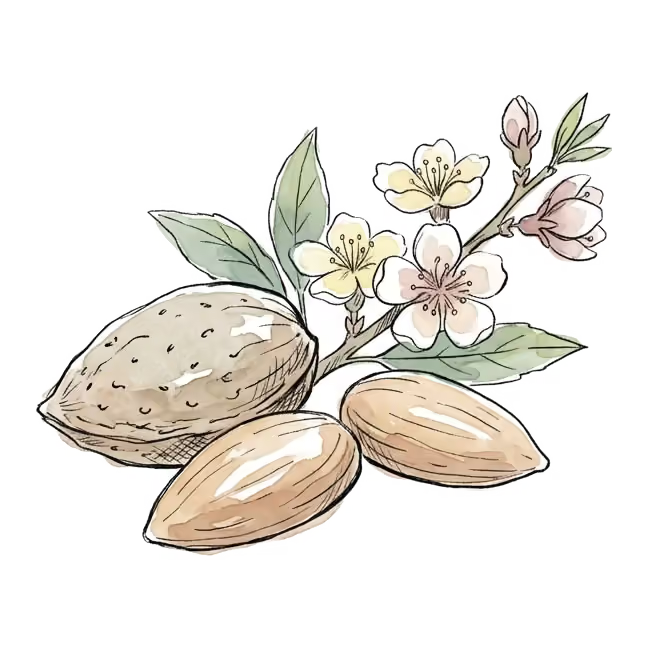
Almonds (Prunus dulcis)
Prunus dulcis · also known as sweet almond, Amygdalus communis, badam
By Superfoods Advisor Editors·July 3, 2026
Almonds benefits and nutrition: what trials show for LDL cholesterol, blood sugar and weight, plus serving size, vitamin E, oxalate and allergy risks.
Almonds (Prunus dulcis, also called sweet almonds or badam) are tree nuts rich in vitamin E, magnesium, fiber and monounsaturated fat. A 28 g serving, about 23 almonds, supplies roughly 167 kcal and 6 g of protein. Their best-supported benefit is a modest drop in LDL cholesterol, seen in a meta-analysis of 15 randomized trials.
The tree is native to the Middle East and South Asia, and cultivation in the Fertile Crescent goes back several thousand years. Trade spread almonds into the Mediterranean basin, where they became a staple of Levantine, Persian and later European cooking. California now grows most of the commercial supply, followed by Spain, Iran, Morocco and Australia. Ayurveda and Unani medicine used almonds for memory, reproductive health and vitality; controlled trials have tested only some of those uses.
Evidence at a glance
Active Compounds
The nutritional and bioactive profile of almonds is unusually diverse for a single food:
- Vitamin E (alpha-tocopherol): Almonds are among the richest dietary sources, providing approximately 23.9 mg per 100 g of dry-roasted almonds — about 160% of the US Daily Value (USDA FoodData Central). Alpha-tocopherol is the primary lipid-soluble antioxidant protecting cell membranes from oxidative damage.
- Monounsaturated fatty acids (MUFAs): Oleic acid (18:1n-9) makes up about 62% of the total fat in dry-roasted almonds (USDA FoodData Central), making it the dominant fatty acid, as in olive oil. MUFAs are associated with favorable LDL-cholesterol profiles.
- Fiber: Approximately 10.9 g per 100 g (dry-roasted; USDA FoodData Central), concentrated in the brown skin (seed coat) and the cell walls of the kernel. In a small 6-week trial in 48 healthy adults, roasted almonds and almond skins both increased fecal bifidobacteria and lactobacilli, which suggests prebiotic effects (Liu et al., 2014, Anaerobe).
- Magnesium: At ~279 mg per 100 g (dry-roasted), almonds provide about 66% DV (USDA FoodData Central). Magnesium is a cofactor in more than 300 enzyme systems, including those for energy production and blood glucose control (NIH Office of Dietary Supplements).
- Polyphenols: The brown skin contains flavonoids (catechin, epicatechin, kaempferol) and phenolic acids concentrated in the testa. Blanching and skin removal consistently reduce almond polyphenol content (Bolling, 2017).
- Plant sterols: Beta-sitosterol (about 122 mg/100 g dry-roasted; USDA FoodData Central) competitively inhibits intestinal cholesterol absorption.
- Arginine: A conditionally essential amino acid serving as substrate for endothelial nitric oxide synthase, relevant to vascular tone.
Nutritional Profile
Per 100 g dry-roasted almonds (USDA FoodData Central, SR Legacy):
| Nutrient | Amount | % DV |
|---|---|---|
| Energy | 598 kcal | — |
| Protein | 21.0 g | — |
| Total fat | 52.5 g | — |
| — Saturated fat | 4.0 g | — |
| — Monounsaturated fat | 33.0 g | — |
| — Polyunsaturated fat | 13.0 g | — |
| Carbohydrate | 21.0 g | — |
| Dietary fiber | 10.9 g | — |
| Total sugars | 4.9 g | — |
| Vitamin E | 23.9 mg | 159% |
| Magnesium | 279 mg | 66% |
| Calcium | 268 mg | 21% |
| Phosphorus | 471 mg | 38% |
| Potassium | 713 mg | 15% |
| Riboflavin (B2) | 1.2 mg | 92% |
| Iron | 3.7 mg | 21% |
Evidence for Purported Benefits
Cardiovascular Risk Reduction
Evidence:Moderate A meta-analysis of 15 RCTs and a feeding study show modest LDL reductions; trials vary considerably.
A 2019 meta-analysis of 15 randomized controlled trials (Lee-Bravatti et al., 2019, Advances in Nutrition, 534 participants) found that almond consumption reduced total cholesterol (net change −10.69 mg/dL), LDL-cholesterol (−5.83 mg/dL), apolipoprotein B, and body weight compared with control diets. HDL-cholesterol fell slightly (−1.26 mg/dL), and triglycerides, systolic blood pressure, and C-reactive protein did not differ. Effect sizes were modest, and the authors noted substantial heterogeneity between trials. The proposed mechanisms include MUFA-driven displacement of dietary saturated fat, plant-sterol-mediated inhibition of cholesterol absorption, and antioxidant protection of LDL particles by vitamin E.
In a randomized crossover feeding study by Sabaté et al. (2003, American Journal of Clinical Nutrition), 25 healthy and mildly hypercholesterolemic adults ate each of three diets for four weeks. Compared with a Step I diet, the diet in which almonds supplied 20% of energy (about 68 g/day) reduced LDL-cholesterol by 7.0% and the LDL:HDL ratio by 8.8%.
Glycemic Control and Insulin Sensitivity
Evidence:Preliminary One small meal test and one uncontrolled 24-week study in type 2 diabetes.
Almonds contain little digestible carbohydrate, and their fiber, protein, and fat may blunt the glucose response to a meal they are eaten with. In a small meal-test study (Jenkins et al., 2006, Journal of Nutrition, 15 healthy adults), a carbohydrate-matched meal of almonds with white bread had a glycemic index of about 55, against 100 for the white-bread reference meal. A 24-week pre-post study by Gulati et al. (2017, Metabolic Syndrome and Related Disorders) in Asian Indians with type 2 diabetes, in which raw almonds supplied 20% of energy intake, reported improvements in HbA1c, total and LDL-cholesterol, triglycerides, waist circumference, and hs-CRP. The study had no parallel control group, so larger randomized trials are needed to confirm the size of the effect.
Body Weight and Satiety
Evidence:Moderate RCTs consistently show no weight gain with almonds; long-term data are sparser.
Despite their caloric density, almonds did not cause weight gain in randomized trials; in the Lee-Bravatti meta-analysis, almond groups lost slightly more weight than controls (net −1.39 kg) (Lee-Bravatti et al., 2019). In a 23-week crossover study in 20 women (Hollis & Mattes, 2007, British Journal of Nutrition), adding a daily 1,440 kJ (about 344 kcal) serving of almonds for 10 weeks did not change body weight, largely because participants compensated by eating less from other sources; the researchers also documented incomplete absorption of energy from the almonds. Part of this effect is attributed to the physical structure of almonds: chewing ruptures only the cells at the fractured surface, and intact almond cells with their fat still enclosed have been found in human stool (Ellis et al., 2004).
Cognitive Function
Evidence:Limited Few small human trials, and results conflict: one null crossover trial, one industry-funded open-label trial reporting benefit.
Human trials are few and disagree. In a 5-month randomized crossover trial in 43 overweight or obese adults with prediabetes, 50 g/day of almonds did not change cognitive performance or cerebral blood flow, consistent with earlier null trials in healthier populations (Adams et al., 2026). An open-label 24-week trial in 60 Asian Indian adults with prediabetes, funded by the Almond Board of California, reported improvements in executive function and processing speed (Gulati et al., 2026). These results do not establish a cognitive benefit.
Typical Use and Preparation
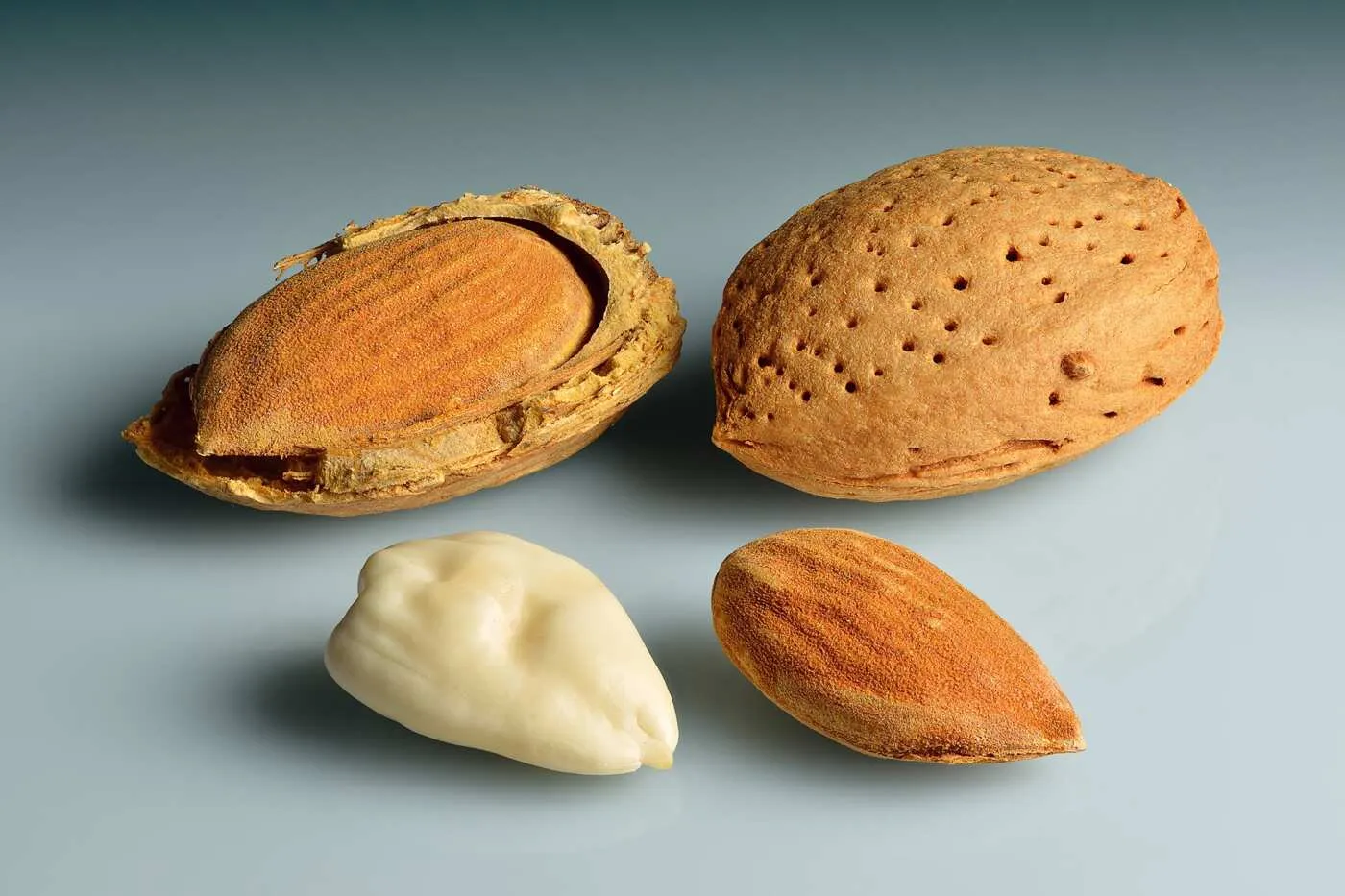 Photo: Ivar Leidus, CC BY-SA 4.0, via Wikimedia Commons
Raw almonds are consumed whole as a snack, sliced into salads, ground into almond flour for baking, or processed into almond butter. Almond milk is produced by blending soaked almonds with water and straining the solids; note that commercial almond milk typically contains only a small proportion of almonds by weight, substantially diluting the nutritional profile compared to whole nuts.
Blanching (brief immersion in boiling water followed by skin removal) eliminates the testa and with it much of the polyphenol content. Roasting has had inconsistent effects on almond polyphenols across studies (Bolling, 2017); high-heat roasting may generate Maillard products and accelerate lipid oxidation.
A standard serving is 28 g (approximately 23 whole almonds), providing about 167 kcal dry-roasted.
Almond milk and almond butter turn up in several of the superfood smoothie recipes, and whole almonds are one of the nuts covered in the guide to foods for heart health.
Safety, Interactions, and Contraindications
Tree nut allergy: Almond is one of the tree nuts more likely to trigger allergy. Reactions range from mild oral symptoms to anaphylaxis. Recognized almond allergens include a lipid transfer protein (Pru du 3, related to the peach allergen Pru p 3), a profilin (Pru du 4), and the seed-storage protein prunin (Pru du 6) (Zhang et al., 2020). Individuals with known tree nut allergy should avoid almonds unless confirmed safe under clinical supervision.
Oxalate content: Almonds are relatively high in oxalate. In a small study of seven healthy volunteers, eating 150 g of almonds consistently raised 24-hour urinary oxalate (De Mul et al., 2025), and oxalate nephropathy has been reported in a woman eating five handfuls of almonds and six tablespoons of chia seeds daily (Garland et al., 2020). Individuals with a history of calcium-oxalate kidney stones should discuss a suitable intake with their clinician.
Caloric density: At approximately 600 kcal/100 g, almonds can contribute meaningfully to excess energy intake if portion control is not observed.
Bitter almonds: Wild or bitter almonds (Prunus dulcis var. amara) contain amygdalin, a cyanogenic glycoside that releases hydrogen cyanide upon enzymatic hydrolysis. Commercial California varieties are nonbitter and contain only trace amygdalin, roughly 600 times less on average than bitter almonds (Lee et al., 2013). Eating bitter almonds has caused serious cyanide poisoning (Arabizadeh et al., 2024).
Frequently Asked Questions
Are almonds good for you?
For most people, yes, in normal portions. Almonds supply vitamin E, magnesium, fiber, protein and mostly monounsaturated fat. In a meta-analysis of 15 randomized trials, eating almonds modestly lowered total and LDL cholesterol and did not cause weight gain. The main exceptions are people with a tree nut allergy and people advised to limit oxalate.
How many almonds should you eat per day?
A standard serving is 28 g, about 23 almonds, which provides around 167 kcal. Cholesterol trials used larger amounts: in one feeding study almonds supplied 20% of energy, about 68 g a day. No official upper limit exists. Because of their calorie density and oxalate content, people with kidney stones or calorie targets should agree on an amount with a clinician or dietitian.
Do almonds have protein?
Yes. Dry-roasted almonds contain about 21 g of protein per 100 g, or roughly 6 g in a 28 g handful. That is a useful amount for a snack, though less than peanuts (about 26 g per 100 g). Almonds also contain arginine, the amino acid the body uses to make nitric oxide in blood vessel walls.
Are almonds good for people with diabetes?
The evidence is preliminary. In a small meal test, adding almonds to white bread lowered the meal’s glycemic index from 100 to about 55. A 24-week study in adults with type 2 diabetes reported better HbA1c and cholesterol, but it had no control group. Almonds can fit a diabetes eating plan; they do not replace treatment.
Which is better, almonds or walnuts?
Neither is better overall; they differ. Almonds have more vitamin E (23.9 mg per 100 g), magnesium and fiber. Walnuts are the richest nut source of the plant omega-3 ALA, at about 9 g per 100 g, which almonds barely contain. Both have lowered LDL cholesterol in randomized trials, so rotating the two is a reasonable choice.
Are almonds a tree nut?
Botanically, an almond is the seed of a stone fruit related to the peach, but for food labeling and allergy purposes almonds are classed as tree nuts. People with a diagnosed tree nut allergy should avoid them unless an allergist has confirmed they are safe. Almond allergens include proteins related to peach allergens.
References
Show all 17 referencesShow fewer
- Lee-Bravatti, M. A., Wang, J., Avendano, E. E., King, L., Johnson, E. J., & Raman, G. (2019). Almond consumption and risk factors for cardiovascular disease: a systematic review and meta-analysis of randomized controlled trials. Advances in Nutrition, 10(6), 1076–1088.
- Sabaté, J., Haddad, E., Tanzman, J. S., Jambazian, P., & Rajaram, S. (2003). Serum lipid response to the graduated enrichment of a Step I diet with almonds: a randomized feeding trial. American Journal of Clinical Nutrition, 77(6), 1379–1384.
- Gulati, S., Misra, A., & Pandey, R. M. (2017). Effect of almond supplementation on glycemia and cardiovascular risk factors in Asian Indians in North India with type 2 diabetes mellitus: a 24-week study. Metabolic Syndrome and Related Disorders, 15(2), 98–105.
- Jenkins, D. J. A., Kendall, C. W. C., Josse, A. R., Salvatore, S., Brighenti, F., Augustin, L. S. A., … Rao, A. V. (2006). Almonds decrease postprandial glycemia, insulinemia, and oxidative damage in healthy individuals. Journal of Nutrition, 136(12), 2987–2992.
- Hollis, J., & Mattes, R. (2007). Effect of chronic consumption of almonds on body weight in healthy humans. British Journal of Nutrition, 98(3), 651–656.
- USDA FoodData Central. (2019). Nuts, almonds, dry roasted, without salt added (SR Legacy, FDC ID 170158). U.S. Department of Agriculture.
- Liu, Z., Lin, X., Huang, G., Zhang, W., Rao, P., & Ni, L. (2014). Prebiotic effects of almonds and almond skins on intestinal microbiota in healthy adult humans. Anaerobe, 26, 1–6.
- Bolling, B. W. (2017). Almond polyphenols: methods of analysis, contribution to food quality, and health promotion. Comprehensive Reviews in Food Science and Food Safety, 16(3), 346–368.
- National Institutes of Health, Office of Dietary Supplements. Magnesium: Fact Sheet for Health Professionals.
- Ellis, P. R., Kendall, C. W. C., Ren, Y., et al. (2004). Role of cell walls in the bioaccessibility of lipids in almond seeds. American Journal of Clinical Nutrition, 80(3), 604–613.
- Adams, M. S., Mensink, R. P., Plat, J., Gravesteijn, E., & Joris, P. J. (2026). Long-term effects of almond consumption on cognitive performance and brain vascular function: a randomized crossover trial in overweight/obese adults with prediabetes. European Journal of Clinical Nutrition, 80(3), 293–298.
- Gulati, S., Misra, A., Tiwari, R., Pandey, R. M., & Sharma, M. (2026). Effects of 24-week almond supplementation on executive function and processing speed in middle-aged Asian Indians with prediabetes: an open-label randomized controlled trial. Journal of Nutrition, 156(5), 101484.
- Zhang, Y., et al. (2020). Almond allergens: update and perspective on identification and characterization. Journal of the Science of Food and Agriculture, 100(13).
- De Mul, A., et al. (2025). Snacks and urinary oxalate: which wins, almonds or chocolate? French Journal of Urology.
- Garland, V., Herlitz, L., & Regunathan-Shenk, R. (2020). Diet-induced oxalate nephropathy from excessive nut and seed consumption. BMJ Case Reports, 13(11), e237212.
- Lee, J., Zhang, G., Wood, E., Rogel Castillo, C., & Mitchell, A. E. (2013). Quantification of amygdalin in nonbitter, semibitter, and bitter almonds (Prunus dulcis) by UHPLC-(ESI)QqQ MS/MS. Journal of Agricultural and Food Chemistry, 61(32), 7754–7759.
- Arabizadeh, N., Mahmoudi, M., Gandomani, L. M., & Eizadi-Mood, N. (2024). Cyanide poisoning after bitter almond ingestion: a rare case report. Clinical Case Reports, 12(1), e8418.
Related content



More in Nuts & Seeds
- Brazil Nuts (Bertholletia excelsa)
Brazil nuts benefits come down to selenium: one nut can hold 8 to 200 mcg. How many to eat per day, what the research shows, and the toxicity limit.
- Cashews (Anacardium occidentale)
Cashews benefits and nutrition: copper, magnesium and iron per serving, what trials show for blood pressure and blood sugar, and allergy and oxalate risks.
- Chia Seeds (Salvia hispanica)
How to eat chia seeds: soaked, ground or in pudding, with serving size, nutrition and what trials show for blood sugar, blood pressure and weight loss.
- Flaxseed (Linum usitatissimum)
Flaxseed benefits explained: what trials show for blood pressure, cholesterol and constipation, why ground beats whole, daily amounts and side effects.
- Hazelnuts (Corylus avellana)
Hazelnuts benefits and nutrition: oleic acid, vitamin E and folate per serving, what trials show for cholesterol, and how birch-pollen allergy works.
- Hemp Seeds (Cannabis sativa var. sativa)
Hemp seeds benefits and nutrition: 31.6 g protein per 100 g, omega-3 and GLA, hemp seeds vs hemp hearts, daily amounts, and whether they contain THC.


Curated by Superfoods Advisor Editors·Last updated