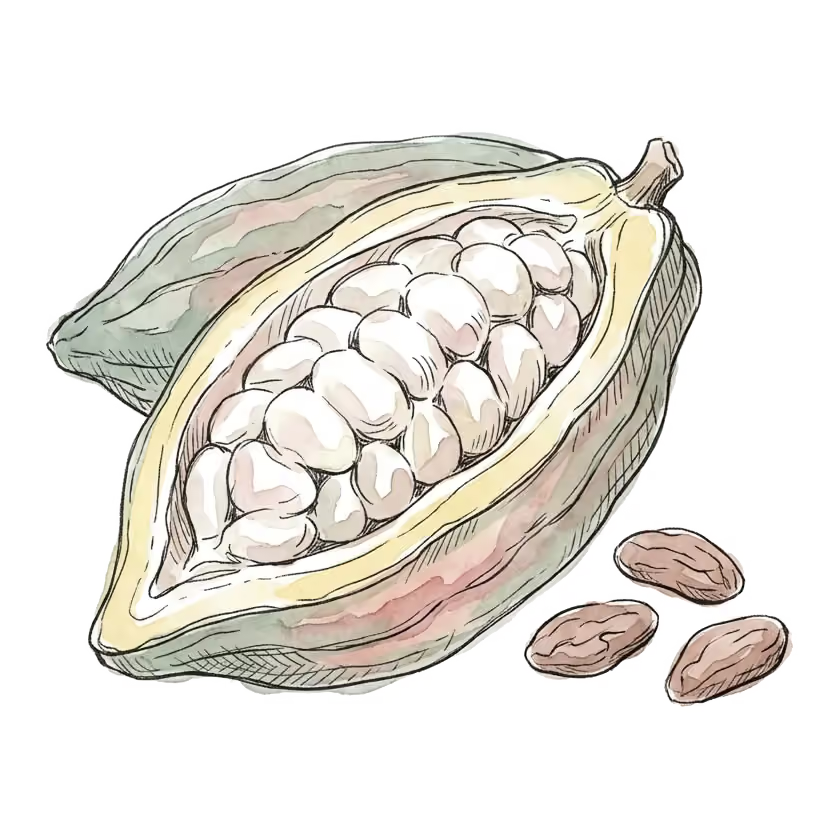
Raw Cacao (Theobroma cacao)
Theobroma cacao · also known as raw cocoa, cacao powder, cacao nibs, cacao beans, raw cacao powder
By Superfoods Advisor Editors·July 3, 2026
Cacao vs cocoa: same Theobroma cacao bean, different processing. How roasting and Dutching change flavanols, plus cacao benefits, caffeine and safety.
Cacao and cocoa come from the same seeds of the cacao tree, Theobroma cacao. “Raw cacao” usually means beans that were fermented and dried but not roasted; “cocoa” means roasted beans, often also alkalized (Dutch-processed). The larger nutritional gap is between natural and Dutch-processed cocoa: alkalizing removed up to 98% of epicatechin in one analysis.
The cacao-versus-cocoa distinction matters less than the label suggests. Fermentation, which raw cacao also undergoes, removes most of the bean’s epicatechin and catechin, while drying has little effect; roasting above about 70 °C degrades and converts some of what remains, and Dutch processing causes the largest further loss (Payne et al., 2010).
The name Theobroma translates literally as “food of the gods,” a reflection of the cultural and ceremonial status cacao held among Mesoamerican civilizations for millennia. Modern nutritional science has identified a set of bioactive compounds in cacao — particularly the monomeric flavanol epicatechin and its oligomeric forms — that have been studied for effects on vascular, metabolic, and neurological pathways. Non-alkalized forms, whether raw cacao or natural cocoa powder, retain far more of these compounds than Dutch-processed cocoa. Cacao that has been made into a bar with added sugar and cocoa butter is covered under dark chocolate.
Evidence at a glance
Active Compounds
Flavanols: epicatechin and catechin. Monomeric flavanols — principally (-)-epicatechin and (+)-catechin — are the primary bioactive compounds in cacao associated with vascular benefit. Epicatechin content varies widely with variety, ripeness, and processing; fermentation in particular cut catechin and epicatechin levels by more than 80% versus unfermented beans in one analysis, while drying had little effect (Payne et al., 2010). These compounds are potent antioxidants in vitro. In healthy men, the vascular response to flavanol-rich cocoa tracked plasma epicatechin, pure epicatechin reproduced the acute effect, and blocking nitric oxide synthase abolished it, which points to increased nitric oxide (NO) production and vasodilation as a mechanism (Schroeter et al., 2006). Oligomeric procyanidins (chains of epicatechin units) show additional antioxidant and anti-inflammatory activity in laboratory studies.
Theobromine. The predominant methylxanthine in cacao, theobromine, is structurally related to caffeine but has milder stimulant effects and a longer half-life (about 7 hours in a small pharmacokinetic study; Lelo et al., 1986). It acts as a phosphodiesterase inhibitor and adenosine receptor antagonist. USDA lists about 2,060 mg theobromine per 100 g of unsweetened cocoa powder (USDA FoodData Central). At a pharmacological dose of 10 mg/kg, theobromine produced bronchodilation in a small study of young people with asthma, though not always significantly (Simons et al., 1985); dietary amounts are far lower. Note: theobromine is toxic to dogs and cats, which cannot metabolize it efficiently.
Caffeine. USDA lists about 230 mg per 100 g of unsweetened cocoa powder (USDA FoodData Central) — considerably lower than in coffee but sufficient to be relevant for caffeine-sensitive individuals.
Magnesium. Raw cacao is one of the most concentrated dietary sources of magnesium, with unsweetened cocoa powder providing about 499 mg per 100 g (USDA FoodData Central) — exceeding 100% of the adult reference daily intake per 100 g. Magnesium is a cofactor for more than 300 enzyme systems, including those involved in energy metabolism, protein synthesis, and neuromuscular function.
Iron and zinc. Unsweetened cocoa powder provides non-heme iron (~13.9 mg/100 g) and zinc (~6.8 mg/100 g) (USDA FoodData Central). Bioavailability of these minerals from cacao may be limited by the presence of phytic acid and oxalate; co-consumption with vitamin C-rich foods may improve iron absorption.
Phenylethylamine (PEA) and anandamide. Cacao contains trace amounts of PEA (a neuroamine sometimes linked to mood) and N-acylethanolamines related to the endocannabinoid anandamide. These are present in small quantities, and much is metabolized rapidly; their functional significance in humans at dietary doses is uncertain.
ORAC and antioxidant capacity. Cacao is often marketed on its ORAC (oxygen radical absorbance capacity) score, but ORAC is an in-vitro assay that does not reflect antioxidant effects in the body, and the USDA withdrew its ORAC database in 2012 for that reason.
Evidence for Purported Benefits
Vascular function and blood pressure
Evidence:Moderate Cochrane meta-analysis of 35 RCTs: flavanol-rich cocoa lowers blood pressure about 2 mmHg; most chocolate has far fewer flavanols.
The most robust evidence for cacao concerns its effect on endothelial function and blood pressure. A Cochrane meta-analysis (Ried et al., 2017) pooled 35 randomized controlled trials (1,804 mainly healthy participants, two to 18 weeks) and found moderate-quality evidence that flavanol-rich cocoa products produce a small blood pressure reduction of about 2 mmHg, with a somewhat larger effect of borderline significance in people with prehypertension or hypertension. The proposed mechanism is epicatechin-driven nitric oxide production and vasodilation. In a separate meta-analysis, blood pressure fell more at intakes above 50 mg epicatechin per day (Hooper et al., 2012), and many commercial chocolates and processed cocoa powders contain far fewer flavanols than the trial products.
Cardiovascular risk markers
Evidence:Limited Short-term trials show better arterial dilation; cholesterol changes are marginal, and trial products carry more flavanols than typical cacao.
A meta-analysis of 42 short-term randomized trials found consistent improvements in flow-mediated dilation (FMD) of the brachial artery and lower insulin resistance, with only marginally significant changes in LDL and HDL cholesterol; GRADE rated the evidence low to moderate quality (Hooper et al., 2012). A randomized, double-blind study by Flammer et al. (2007) (Circulation; n = 22 heart transplant recipients) found that 40 g of 70% dark chocolate increased coronary artery diameter, improved endothelium-dependent coronary vasomotion, and reduced platelet adhesion two hours after eating it, compared with cocoa-free control chocolate. However, many studies use standardized high-flavanol preparations not representative of typical commercial raw cacao products.
Insulin sensitivity and metabolic markers
Evidence:Limited A few short crossover trials, one of 19 adults, report lower insulin resistance; no long-term data.
Several short-duration crossover trials have suggested that high-flavanol cacao consumption may improve insulin sensitivity and reduce fasting insulin; the mechanism is not established. In a 15-day crossover trial by Grassi et al. (2008) (Journal of Nutrition; n = 19 hypertensive adults with impaired glucose tolerance), 100 g/day of flavanol-rich dark chocolate lowered insulin resistance and blood pressure compared with flavanol-free white chocolate, but longer-term studies and clearer dose-response data are needed before clinical recommendations can be made.
Cognitive function
Evidence:Insufficient A small brain-imaging study found no performance change; a three-year trial of 2,262 adults found no cognitive benefit.
In a small fMRI study (Francis et al., 2006; Journal of Cardiovascular Pharmacology; n = 16 healthy young adults), five days of flavanol-rich cocoa increased the brain’s blood-oxygen signal response during a cognitive task, and a pilot arm suggested increased cerebral blood flow, but reaction times and task performance did not change. In the much larger COSMOS-Mind trial (Baker et al., 2023; Alzheimer’s & Dementia; n = 2,262 adults aged 65 and older), a cocoa extract supplement providing 500 mg of flavanols per day for three years had no effect on global cognition compared with placebo. Current evidence does not show that cocoa flavanols protect cognition.
Mood
Evidence:Insufficient No rigorous randomized trials of cacao and mood; reported effects may reflect taste and expectation.
The combination of theobromine, PEA, anandamide-related compounds, and magnesium in cacao is often cited as a basis for mood-elevating effects. However, rigorous randomized trials showing clinically meaningful mood improvement from raw cacao specifically are lacking. Any observed mood effects may reflect palatability, expectation, and mild stimulant effects rather than specific pharmacological action.
Typical Use and Culinary Applications
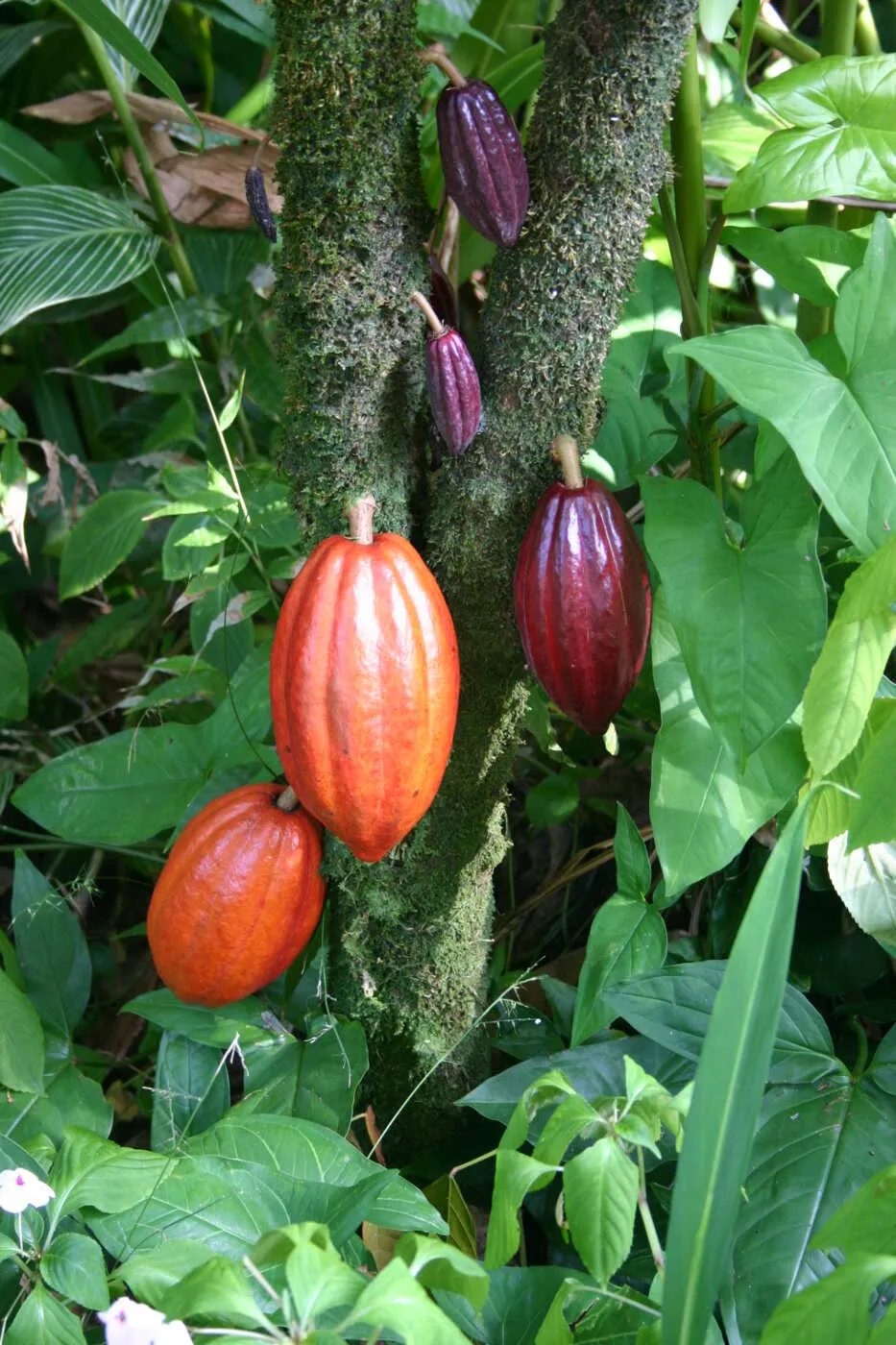 Photo: Photo by Medicaster ., public domain, via Wikimedia Commons
Raw cacao powder. Ground from cold-pressed cacao beans (with fat partially removed), raw cacao powder can be used in smoothies, oatmeal, baking, or hot beverages. It has a more intensely bitter, complex flavor than Dutch-processed cocoa. When used in baking without heat (e.g., raw desserts), flavanol content is better preserved.
Cacao nibs. Crushed cacao beans with no added ingredients; provide the full complement of cacao fiber, fat (cacao butter), flavanols, and minerals. Well-suited for adding to yogurt, granola, or trail mix.
Cacao paste/mass. Pure ground cacao with its natural fat content intact; the least processed form for making beverages or raw chocolate.
Temperature considerations. In controlled roasting, beans lost epicatechin once their temperature exceeded about 70 °C (Payne et al., 2010). Raw cacao added to hot drinks or baked goods will lose some flavanol content; adding to warm (not boiling) liquids is a practical compromise.
Flavor pairing. Raw cacao pairs well with vanilla, cinnamon, cayenne, and citrus. Its bitterness is more pronounced than Dutch-process cocoa and may require more sweetener in recipes designed for the latter.
Cacao powder appears in the chocolate-cherry version among the overnight oats recipes, and the anti-inflammatory pantry guide covers cacao-derived foods alongside other polyphenol sources.
Safety, Interactions, and Contraindications
Stimulant effects. The combination of caffeine and theobromine in raw cacao can cause insomnia, palpitations, or anxiety in caffeine-sensitive individuals, particularly when consumed in large quantities or close to bedtime.
Migraine. Chocolate is the most commonly self-reported food trigger for migraine, but in a double-blind provocation study of 63 women with chronic headache, chocolate was no more likely than carob to bring on a headache (Marcus et al., 1997), and a 2020 review found all provocation studies negative; chocolate craving may be an early symptom of an attack rather than its cause (Nowaczewska et al., 2020). Individuals with migraine history can still note their own response.
Oxalate content. Cacao is relatively high in oxalate, which may be a concern for individuals with a history of calcium oxalate kidney stones. Consultation with a physician is advisable for such individuals before consuming large quantities.
Drug interactions. Caffeine in cacao can interact with stimulant medications (e.g., amphetamines, ephedrine) and may potentiate the effect of monoamine oxidase inhibitors (MAOIs). Theobromine’s mild diuretic effect is unlikely to be clinically significant at dietary doses but warrants awareness in patients on diuretic medications.
Pregnancy. The American College of Obstetricians and Gynecologists considers caffeine intake below 200 mg/day moderate during pregnancy (ACOG, 2010). At USDA’s figure of about 230 mg per 100 g, roughly 85–90 g of unsweetened cocoa powder would supply 200 mg on its own, so cacao should be counted toward total daily caffeine intake.
Lead and cadmium. Cacao plants can accumulate cadmium from soil, particularly in South American growing regions. Consumer Reports (2022) detected cadmium and lead in all 28 dark chocolate bars it tested, with 23 exceeding its level of concern for at least one of the two metals, raising concerns about heavy metal exposure for regular, high-dose consumers. Varying cacao sources and moderating intake are practical risk-reduction strategies.
Product Selection Criteria
Processing method. Look for “raw” or “cold-pressed” on the label, which is meant to indicate the cacao was not roasted and that heat during oil removal was minimized. “Natural” (non-alkalized) cocoa may retain somewhat less epicatechin than unroasted cacao, but far more than Dutch-processed cocoa.
Certifications. Organic certification reduces pesticide residue exposure. Fair-trade certification and direct-trade sourcing claims address supply-chain ethics. For heavy metal concerns, prefer brands that publish batch-level, third-party lab results (certificates of analysis) for lead and cadmium, especially if consuming high daily quantities; NSF Certified for Sport includes heavy-metal limits through the underlying NSF/ANSI 173 standard, while Informed Sport screens only for banned substances.
Flavanol content disclosure. A small number of manufacturers disclose flavanol content per serving. When available, prefer products with verified flavanol content rather than relying on ORAC values alone.
Origin. Cadmium is taken up from the soil, and beans from parts of Latin America often carry more of it: in a nationwide Ecuadorian survey, 45% of bean samples exceeded 0.6 mg/kg, with levels driven mainly by soil cadmium and pH (Argüello et al., 2019). Lead behaves differently: beans themselves contain very little, and contamination appears to be picked up after harvest, adsorbed by the shells during fermentation and sun-drying on bare soil and possibly during later processing (Rankin et al., 2005; Manton, 2010). No single origin is categorically safest; diversity of sourcing is prudent for high-volume consumers.
Packaging. Airtight, opaque packaging preserves flavanol content and prevents oxidative rancidity of the cacao fat.
Frequently Asked Questions
Is cacao a superfood?
“Superfood” is a marketing term with no legal definition, and cacao’s evidence is narrower than its reputation. The strongest finding is a Cochrane review of 35 trials in which flavanol-rich cocoa lowered blood pressure by about 2 mmHg, a small effect. Unsweetened cocoa powder is also rich in magnesium. Cognitive claims have not held up: a three-year trial of 2,262 older adults found no benefit from a cocoa flavanol supplement. Processing matters too: Dutching removed up to 98% of epicatechin in one analysis.
Is cacao the same as cocoa?
Botanically, yes: both come from Theobroma cacao seeds. On labels, “cacao” usually means unroasted beans and “cocoa” means roasted ones, sometimes alkalized. The terms are not regulated consistently, so the processing statement matters more than the word. Natural cocoa keeps much of its flavanol content, while Dutch-processed cocoa lost up to 98% of epicatechin in one analysis.
Does cacao have caffeine?
Yes, though less than coffee. USDA lists about 230 mg of caffeine per 100 g of unsweetened cocoa powder, or roughly 23 mg per 10 g, along with about 2,060 mg of theobromine, a milder stimulant. People who are sensitive to caffeine, or who are pregnant and tracking intake, should count cacao toward their daily total.
Can cacao lower blood pressure?
Possibly, by a small amount. A Cochrane meta-analysis of 35 randomized trials found that flavanol-rich cocoa products lowered blood pressure by about 2 mmHg, with a somewhat larger effect in people with raised blood pressure. Most trials used high-flavanol products, and ordinary cacao or chocolate often contains far fewer flavanols.
How much cacao powder per day?
There is no established amount. In one meta-analysis, blood pressure fell more at intakes above 50 mg of epicatechin a day, but few products state their epicatechin content. Caffeine, oxalate and heavy-metal content argue for moderate daily amounts, and people with kidney stones or on stimulant medications should check with a clinician.
Is cacao good for you?
Cacao is a concentrated source of magnesium, iron and flavanols, and short trials of flavanol-rich cocoa report small improvements in blood pressure and arterial function. Larger and longer trials, such as COSMOS-Mind, have not shown wider benefits. Its value depends on processing, and its cadmium and lead content are worth checking.
References
Show all 18 referencesShow fewer
- Ried, K., Fakler, P., & Stocks, N. P. (2017). Effect of cocoa on blood pressure. Cochrane Database of Systematic Reviews, (4), CD008893.
- Flammer, A. J., Hermann, F., Sudano, I., Spieker, L., Hermann, M., Cooper, K. A., Serafini, M., Lüscher, T. F., Ruschitzka, F., Noll, G., & Corti, R. (2007). Dark chocolate improves coronary vasomotion and reduces platelet reactivity. Circulation, 116(21), 2376–2382.
- Grassi, D., Desideri, G., Necozione, S., Lippi, C., Casale, R., Properzi, G., Blumberg, J. B., & Ferri, C. (2008). Blood pressure is reduced and insulin sensitivity increased in glucose-intolerant, hypertensive subjects after 15 days of consuming high-polyphenol dark chocolate. Journal of Nutrition, 138(9), 1671–1676.
- Francis, S. T., Head, K., Morris, P. G., & Macdonald, I. A. (2006). The effect of flavanol-rich cocoa on the fMRI response to a cognitive task in healthy young people. Journal of Cardiovascular Pharmacology, 47(Suppl 2), S215–S220.
- Baker, L. D., Manson, J. E., Rapp, S. R., Sesso, H. D., Gaussoin, S. A., Shumaker, S. A., & Espeland, M. A. (2023). Effects of cocoa extract and a multivitamin on cognitive function: A randomized clinical trial. Alzheimer’s & Dementia, 19(4), 1308–1319.
- Consumer Reports. (2022). Lead and cadmium could be in your dark chocolate. Consumer Reports investigative report, December 2022.
- Payne, M. J., Hurst, W. J., Miller, K. B., Rank, C., & Stuart, D. A. (2010). Impact of fermentation, drying, roasting, and Dutch processing on epicatechin and catechin content of cacao beans and cocoa ingredients. Journal of Agricultural and Food Chemistry, 58(19), 10518–10527.
- Lelo, A., Birkett, D. J., Robson, R. A., & Miners, J. O. (1986). Comparative pharmacokinetics of caffeine and its primary demethylated metabolites paraxanthine, theobromine and theophylline in man. British Journal of Clinical Pharmacology, 22(2), 177–182.
- American College of Obstetricians and Gynecologists. (2010). Committee Opinion No. 462: Moderate caffeine consumption during pregnancy. Obstetrics & Gynecology, 116(2 Pt 1), 467–468.
- U.S. Department of Agriculture. FoodData Central: Cocoa, dry powder, unsweetened (FDC ID 169593).
- Argüello, D., Chavez, E., Lauryssen, F., Vanderschueren, R., Smolders, E., & Montalvo, D. (2019). Soil properties and agronomic factors affecting cadmium concentrations in cacao beans: A nationwide survey in Ecuador. Science of the Total Environment, 649, 120–127.
- Rankin, C. W., Nriagu, J. O., Aggarwal, J. K., Arowolo, T. A., Adebayo, K., & Flegal, A. R. (2005). Lead contamination in cocoa and cocoa products: Isotopic evidence of global contamination. Environmental Health Perspectives, 113(10), 1344–1348.
- Manton, W. I. (2010). Determination of the provenance of cocoa by soil protolith ages and assessment of anthropogenic lead contamination by Pb/Nd and lead isotope ratios. Journal of Agricultural and Food Chemistry, 58(2), 713–721.
- Schroeter, H., Heiss, C., Balzer, J., et al. (2006). (-)-Epicatechin mediates beneficial effects of flavanol-rich cocoa on vascular function in humans. Proceedings of the National Academy of Sciences, 103(4), 1024–1029.
- Hooper, L., Kay, C., Abdelhamid, A., Kroon, P. A., Cohn, J. S., Rimm, E. B., & Cassidy, A. (2012). Effects of chocolate, cocoa, and flavan-3-ols on cardiovascular health: A systematic review and meta-analysis of randomized trials. American Journal of Clinical Nutrition, 95(3), 740–751.
- Simons, F. E., Becker, A. B., Simons, K. J., & Gillespie, C. A. (1985). The bronchodilator effect and pharmacokinetics of theobromine in young patients with asthma. Journal of Allergy and Clinical Immunology, 76(5), 703–707.
- Marcus, D. A., Scharff, L., Turk, D., & Gourley, L. M. (1997). A double-blind provocative study of chocolate as a trigger of headache. Cephalalgia, 17(8), 855–862.
- Nowaczewska, M., Wiciński, M., Kaźmierczak, W., & Kaźmierczak, H. (2020). To eat or not to eat: A review of the relationship between chocolate and migraines. Nutrients, 12(3), 608.
Related content


More in Oils & Fats
- Avocado Oil (Persea americana)
Avocado oil vs olive oil: how the two compare on fat profile, smoke point and vitamin E, plus avocado oil benefits, nutrition, uses and side effects.
- Coconut (Cocos nucifera)
Is coconut oil good for you? What trials show on LDL, HDL, weight and MCTs, how it compares with olive and MCT oil, plus coconut flesh, milk and water.
- Dark Chocolate (Theobroma cacao ≥70%)
Is dark chocolate good for you? What trials show for blood pressure, cholesterol and the brain, plus how much a day, caffeine, sugar and heavy metals.
- Extra Virgin Olive Oil (Olea europaea)
Extra virgin olive oil benefits weighed against the evidence: PREDIMED heart data, oleocanthal and other polyphenols, nutrition, daily amounts and safety.
- Ghee / Clarified Butter (Bos taurus, milk fat)
Ghee vs butter: how clarifying removes water, lactose and casein and raises the smoke point, plus ghee benefits, nutrition, storage and saturated fat.

Curated by Superfoods Advisor Editors·Last updated