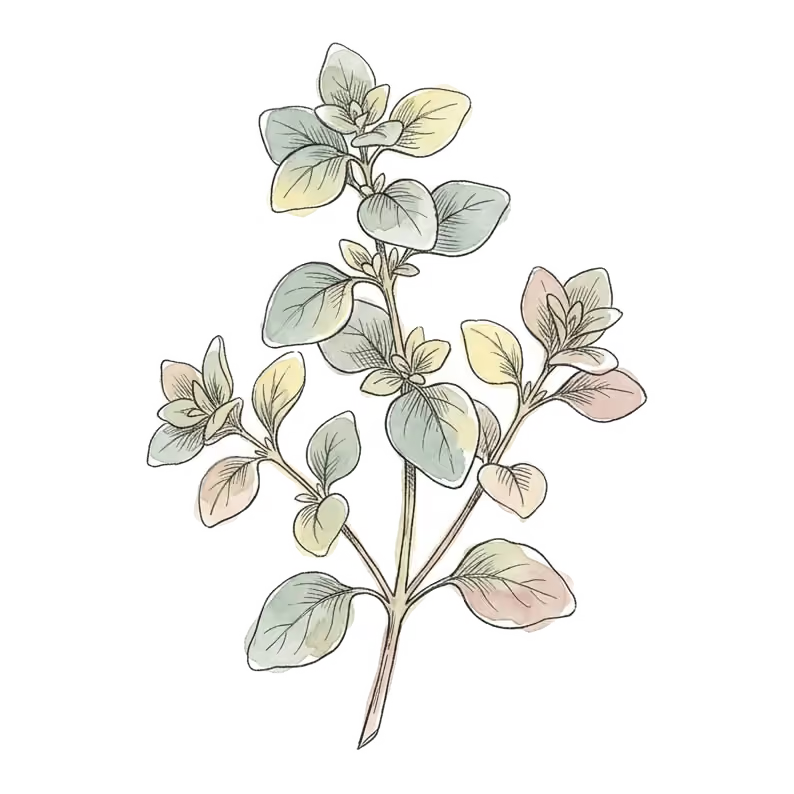
Oregano (Origanum vulgare)
Origanum vulgare · also known as wild marjoram, common oregano, Greek oregano, oil of oregano
By Superfoods Advisor Editors·July 3, 2026
Oil of oregano benefits: what lab, animal and human studies show for infections, parasites and gut health, plus carvacrol content, dosing and safety.
Oil of oregano is the concentrated essential oil of oregano (Origanum vulgare), a Mediterranean herb in the mint family, often distilled from high-carvacrol Greek oregano. Its antimicrobial activity is well documented in lab studies, but no human trial has tested it as a treatment for bacterial or fungal infection, and the only parasite study was a 14-person uncontrolled pilot.
The plant, also called wild marjoram, is a perennial native to the Mediterranean basin and western Asia and widely cultivated across temperate regions worldwide. Its genus name derives from the Greek oros (mountain) and ganos (joy or brightness), reflecting its prevalence on Greek hillsides and its association with cheerfulness in ancient culture. Oregano was used medicinally in ancient Greece and Rome for digestive complaints, respiratory conditions, and as a topical antiseptic long before it became a culinary staple.
Modern interest in oregano extends beyond its role in Mediterranean cuisine. The essential oil derived from oregano leaves — particularly from high-carvacrol cultivars such as Origanum vulgare subsp. hirtum (usually sold as Greek oregano) — is commercially marketed for immune support, antimicrobial activity, and gut health. The spectrum of purported uses ranges from credible (food preservation in model foods (Gutiérrez et al., 2009), in vitro antimicrobial) to speculative (systemic antifungal treatment, cure for intestinal parasites). Careful separation of well-supported from poorly-supported claims is warranted given the herb’s widespread supplemental use.
Evidence at a glance
Active Compounds
The biological activity of oregano is attributed primarily to its volatile oil fraction, though polyphenol compounds in the whole herb also contribute:
Carvacrol (2-methyl-5-(1-methylethyl)phenol): A phenolic monoterpenoid that commonly makes up 60–90% of the essential oil in high-carvacrol oregano such as Greek oregano (Leyva-López et al., 2017). Carvacrol is the primary compound responsible for oregano’s antimicrobial and antifungal activity in vitro. Like other hydrophobic essential-oil phenols, it partitions into bacterial cell membranes and makes them leaky (Burt, 2004). It has also inhibited biofilm formation by several pathogenic bacteria in lab studies.
Thymol (2-isopropyl-5-methylphenol): The second major phenol in oregano essential oil, thymol is usually a minor component of carvacrol-type oils but is the dominant phenol in thymol chemotypes, where it can exceed 30% of the oil (Leyva-López et al., 2017). It has similar antimicrobial activity and is used commercially as a disinfectant and in oral care products. In vitro, carvacrol has acted synergistically with its precursor p-cymene (Burt, 2004), and oregano and thyme oils had additive effects against spoilage bacteria in food model media (Gutiérrez et al., 2009).
Rosmarinic acid: A polyphenolic ester found in the whole herb (not just the essential oil), rosmarinic acid has antioxidant activity in lab assays and anti-inflammatory effects in preclinical studies. It is a major contributor to oregano’s antioxidant activity in in-vitro assays such as ORAC (oxygen radical absorbance capacity), though the USDA withdrew its ORAC database in 2012 because such test-tube values do not reflect effects in the body.
Flavonoids: Apigenin, luteolin, and quercetin are present in whole oregano leaf and show anti-inflammatory, antioxidant, and antimicrobial activity in lab studies. These are shared with many other herbs in the Lamiaceae family, including basil and rosemary.
Terpenes and sesquiterpenes: β-Caryophyllene, γ-terpinene, and p-cymene contribute to the essential oil profile and may contribute anti-inflammatory activity; β-caryophyllene binds selectively to cannabinoid receptor 2 (CB2) and acts as an agonist in cell and mouse studies (Gertsch et al., 2008).
The chemical composition of oregano essential oil varies substantially by subspecies, geographic origin, harvest time, and extraction method. Carvacrol content ranges from less than 10% in some O. vulgare varieties to over 80% in O. vulgare subsp. hirtum (Leyva-López et al., 2017). Products sold as “oil of oregano” vary enormously in carvacrol concentration, making dose standardization and cross-study comparison difficult.
Evidence for Purported Benefits
Antimicrobial Activity (In Vitro)
Evidence:Lab & animal only Extensive lab data and one mouse infection study; no human trials of oregano for infection.
The most robustly documented property of oregano essential oil is its in vitro antimicrobial activity against a broad spectrum of bacteria and fungi. Laboratory studies have shown activity against common food pathogens (Burt, 2004) including Staphylococcus aureus, Escherichia coli, Salmonella spp., Listeria monocytogenes, and Candida albicans. Potency depends on oil composition: in one comparison, Greek oregano oil inhibited test bacteria at minimum inhibitory concentrations (MICs) of 0.25–1 mg/mL, while a low-carvacrol common oregano oil needed 2–8 mg/mL (Kosakowska et al., 2021).
Importantly, in vitro antimicrobial results do not directly translate to systemic therapeutic efficacy in humans. Oral ingestion of oregano essential oil results in dilution, metabolism, and absorption kinetics that are poorly characterized, and the concentrations achievable in human tissues are likely far below effective in vitro MICs for most systemic infections. Animal data are sparse: in one mouse study, 6 of 14 mice injected with S. aureus survived 30 days on daily oral oregano oil, against none of 14 untreated mice (Preuss et al., 2005).
Gut Microbiome and Intestinal Symptoms
Evidence:Preliminary One 14-person uncontrolled pilot study; human microbiome data are lacking.
A small human pilot study (Force et al., 2000, Phytotherapy Research) enrolled 14 adults with evidence of intestinal parasites (blastocystis, entamoeba, or endolimax) and administered emulsified oregano oil (600 mg/day of Origanum vulgare oil emulsified in vegetable oil) for 6 weeks. Parasite resolution was reported in a subset of participants with accompanying improvements in GI symptoms. The study lacked a placebo arm and had no control for natural resolution.
Feeding studies in livestock, mostly poultry, report changes in gut microbiota with dietary oregano or its essential oil, but human microbiome data are lacking. As a culinary herb, oregano does count toward the plant diversity discussed in the fiber and microbiome research review.
Antioxidant Activity
Evidence:Limited Two small human trials conflict on oxidative-stress markers; none links oregano to clinical outcomes.
Oregano’s antioxidant activity in vitro is attributed largely to rosmarinic acid and other phenolics in the whole herb; its non-polar fraction also contains tocopherols, mainly γ-tocopherol (Lagouri & Boskou, 1996). However, high in vitro antioxidant scores (ORAC values) do not reliably predict in vivo antioxidant effects in humans due to differences in bioavailability and the complexity of endogenous antioxidant systems. In a 4-week randomized trial in 45 healthy men, juice enriched with oregano extract raised urinary phenolic excretion but did not change serum lipids or lipid-peroxidation markers (Nurmi et al., 2006). A 24-soldier trial reported lower oxidative-stress markers after a single 500 mg dose taken post-exercise (Shirvani et al., 2022), but no trial has linked oregano’s antioxidant activity to clinical outcomes.
Anti-Inflammatory Effects
Evidence:Lab & animal only Cell culture and rodent models; no human trials.
Carvacrol has reduced inflammatory signalling, including the NF-κB pathway, in cell culture and rodent models, and β-caryophyllene reduced cytokine expression in human monocytes and inflammation in mice (Gertsch et al., 2008). No adequate RCTs in humans have confirmed anti-inflammatory clinical outcomes.
Typical Use and Dosing
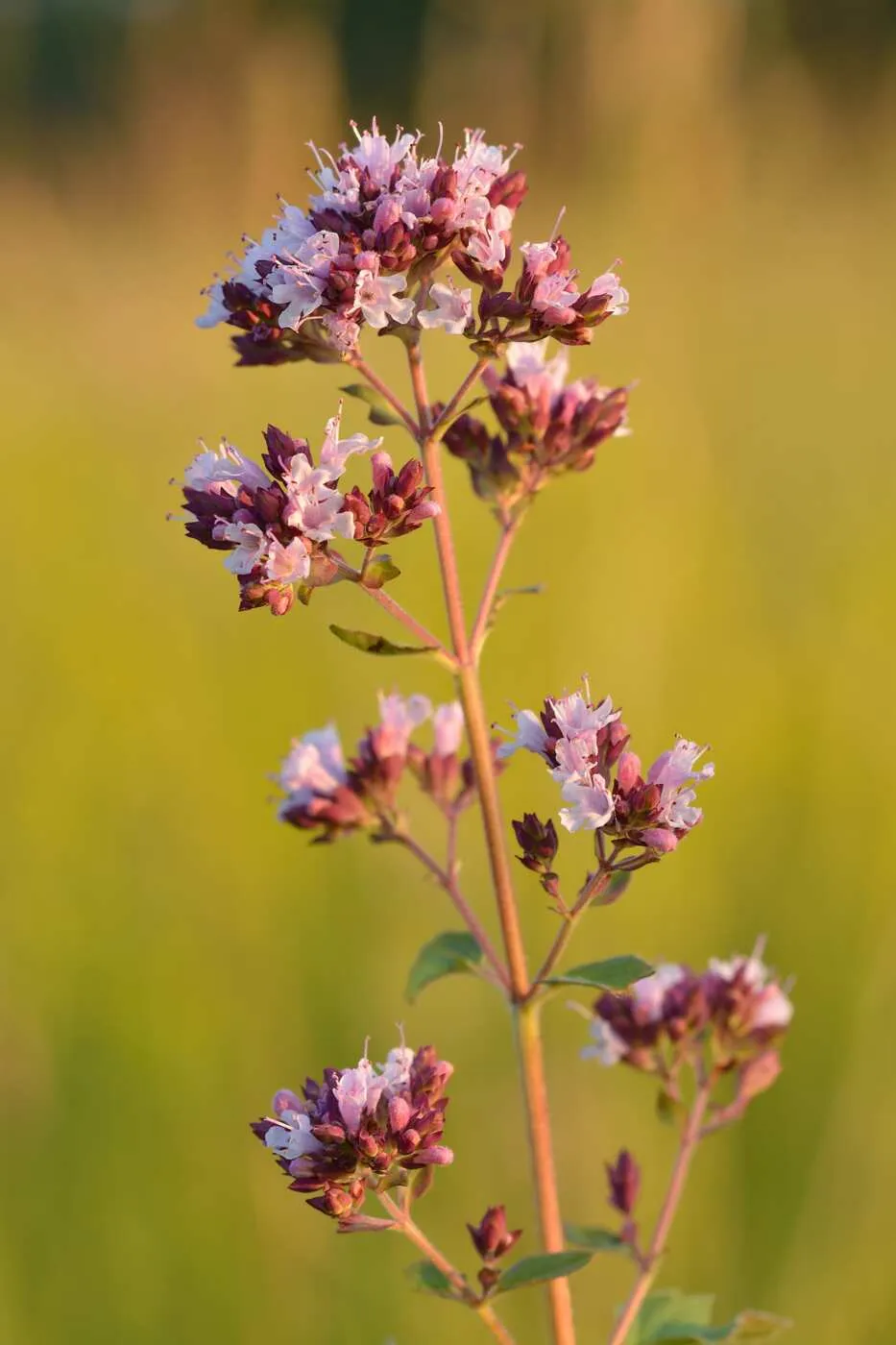 Photo: Ivar Leidus, CC BY-SA 3.0, via Wikimedia Commons
Culinary use: Dried or fresh oregano leaf is used liberally in Mediterranean and Latin American cooking. Standard culinary quantities (0.5–2 teaspoons of dried herb per serving) contribute rosmarinic acid and flavonoids. Oregano has a long history of food use, and Origanum essential oils and extracts are generally recognized as safe (GRAS) as food flavorings in the US (21 CFR 182.20).
Oregano essential oil (dietary supplement):
- Commercial products vary widely in the amount of oil per dose and in carvacrol content
- No effective or safe dose has been established in controlled trials; the one human pilot study used 600 mg/day of emulsified oil for 6 weeks (Force et al., 2000)
- Essential oil should never be applied undiluted to mucous membranes or consumed in large quantities; concentrated carvacrol is toxic at high doses
- Emulsified or enteric-coated preparations are intended to improve tolerability, though comparative data are lacking
Dried herb supplements: Whole herb extracts are available but are less commonly studied than essential oil preparations.
Dried oregano seasons the dressing in the olive-and-feta variation of the superfood salad bowl.
Safety, Side Effects, and Interactions
At culinary doses, oregano is a common food ingredient with GRAS flavoring status in the US (21 CFR 182.20). Risks are primarily associated with concentrated essential oil use:
GI irritation: Undiluted or high-dose oregano essential oil can irritate GI mucosa, causing nausea, heartburn, or diarrhea. Enteric-coated or emulsified forms are marketed to reduce this, but have not been compared in trials.
Skin and mucous membrane irritation: Direct contact with undiluted essential oil can cause chemical burns or allergic contact dermatitis. Always dilute in a carrier oil for topical use.
Allergy: Oregano allergy appears rare. A 1996 case report described systemic allergic reactions to oregano and thyme in one patient, who also had positive skin tests and specific IgE to several other Lamiaceae herbs (Benito et al., 1996). People with known allergy to mint-family herbs should be cautious.
Anticoagulation: Dried oregano is rich in vitamin K per gram (USDA FoodData Central), though a teaspoon contributes little; essential oil is not a meaningful source. Evidence for a clinically significant interaction with warfarin or other anticoagulants is lacking, but people on these drugs should talk to their doctor before using concentrated supplements.
Iron absorption: Polyphenol-rich herb teas (peppermint, chamomile and others, though not oregano) reduced non-heme iron absorption from a meal in a human study (Hurrell et al., 1999). Whether oregano has a similar effect is untested; any effect would be most relevant at supplemental doses, not typical culinary intakes.
Pregnancy: Oregano in normal food quantities is not a recognized concern. Medicinal doses of the essential oil have not been studied in pregnancy or breastfeeding and are best avoided without medical supervision.
Medication interactions: Carvacrol inhibited cytochrome P450 in a mouse study (Khan et al., 2019), but clinical significance at food or typical supplement doses has not been established.
Product Selection Criteria
- Carvacrol content: For essential oil products, prioritize those specifying carvacrol percentage. High-carvacrol Greek and Turkish oregano oils commonly contain more than 60% carvacrol; a much lower figure suggests a different subspecies or chemotype (Leyva-López et al., 2017).
- Species identification: Ensure the product specifies Origanum vulgare subsp. hirtum or explicitly identifies high-carvacrol content. Generic “wild oregano oil” from undisclosed subspecies may have substantially lower potency.
- Dilution form: Essential oil sold neat (100% concentration) should be diluted by the user; emulsified preparations or softgels are more user-friendly and reduce GI irritation risk. Check the carrier oil used (olive oil is traditional and appropriate).
- Third-party testing: NSF or USP certification verifies label accuracy and that pesticide residues and heavy metals are below set limits (Informed Sport screens only for banned substances), which are particularly relevant for wild-harvested products.
- Organic certification: Certified organic products are produced without most synthetic pesticides, which offers some assurance on residues.
Frequently Asked Questions
What is oil of oregano good for?
Its best-documented property is killing bacteria and fungi in lab tests, which is why carvacrol-rich oregano oil is studied for food preservation. Benefits in people are unproven: no human trial has tested it for bacterial or fungal infections, the gut evidence is a single uncontrolled pilot, and two small antioxidant trials disagree. It is not a substitute for medical treatment of an infection.
Can oregano oil kill parasites?
The evidence is very thin. In a 2000 pilot study, 14 adults with intestinal parasites took 600 mg a day of emulsified oregano oil for six weeks, and some cleared the parasites. There was no placebo group and no control for natural clearance, so the result cannot show that the oil worked. Suspected parasites need testing and treatment by a clinician.
How much oil of oregano should you take?
No effective or safe dose has been established in controlled trials. The one human pilot used 600 mg a day of emulsified oil, and products differ widely in oil per dose and in carvacrol content, so drop counts on labels are not comparable. Concentrated carvacrol is toxic at high doses. Anyone considering it, especially when pregnant or on medication, should ask a clinician first.
Is oil of oregano safe?
In food amounts oregano is generally recognized as safe. The oil is different: undiluted, it can irritate the gut, causing nausea, heartburn or diarrhea, and can burn skin or mucous membranes. It has not been studied in pregnancy or breastfeeding. Allergy appears rare but has been reported in people sensitive to other mint-family herbs.
Is oregano good for you?
As a culinary herb, oregano adds rosmarinic acid, flavonoids and, per gram, notable vitamin K to food, though a teaspoon of dried herb supplies little. Its high antioxidant scores in test tubes have not been shown to translate into health effects in people. Used in cooking it is a flavorful, low-risk ingredient.
What are oregano leaves used for?
Dried or fresh oregano leaf is used mainly as a seasoning in Mediterranean and Latin American cooking, typically 0.5 to 2 teaspoons of dried herb per serving, in sauces, dressings and grilled dishes. Traditionally the leaves were also used for digestive and respiratory complaints and as a topical antiseptic, uses that have not been confirmed in modern trials.
References
Show all 15 referencesShow fewer
- Burt, S. (2004). Essential oils: Their antibacterial properties and potential applications in foods — a review. International Journal of Food Microbiology, 94(3), 223–253.
- Preuss, H. G., Echard, B., Dadgar, A., Talpur, N., Manohar, V., Enig, M., Bagchi, D., & Ingram, C. (2005). Effects of essential oils and monolaurin on Staphylococcus aureus: In vitro and in vivo studies. Toxicology Mechanisms and Methods, 15(4), 279–285.
- Force, M., Sparks, W. S., & Ronzio, R. A. (2000). Inhibition of enteric parasites by emulsified oil of oregano in vivo. Phytotherapy Research, 14(3), 213–214.
- Lagouri, V., & Boskou, D. (1996). Nutrient antioxidants in oregano. International Journal of Food Sciences and Nutrition, 47(6), 493–497.
- Gutiérrez, J., Barry-Ryan, C., & Bourke, P. (2009). Antimicrobial activity of plant essential oils using food model media: Efficacy, synergistic potential and interactions with food components. Food Microbiology, 26(2), 142–150.
- Leyva-López, N., Gutiérrez-Grijalva, E. P., Vazquez-Olivo, G., & Heredia, J. B. (2017). Essential oils of oregano: Biological activity beyond their antimicrobial properties. Molecules, 22(6), 989.
- Kosakowska, O., Węglarz, Z., Pióro-Jabrucka, E., Przybył, J. L., Kraśniewska, K., Gniewosz, M., & Bączek, K. (2021). Antioxidant and antibacterial activity of essential oils and hydroethanolic extracts of Greek oregano and common oregano. Molecules, 26(4), 988.
- Gertsch, J., Leonti, M., Raduner, S., et al. (2008). Beta-caryophyllene is a dietary cannabinoid. Proceedings of the National Academy of Sciences, 105(26), 9099–9104.
- Nurmi, A., Mursu, J., Nurmi, T., et al. (2006). Consumption of juice fortified with oregano extract markedly increases excretion of phenolic acids but lacks short- and long-term effects on lipid peroxidation in healthy nonsmoking men. Journal of Agricultural and Food Chemistry, 54(16), 5790–5796.
- Shirvani, H., Bazgir, B., Shamsoddini, A., et al. (2022). Oregano (Origanum vulgare) consumption reduces oxidative stress and markers of muscle damage after combat readiness tests in soldiers. Nutrients, 15(1), 137.
- Benito, M., Jorro, G., Morales, C., Peláez, A., & Fernández, A. (1996). Labiatae allergy: Systemic reactions due to ingestion of oregano and thyme. Annals of Allergy, Asthma & Immunology, 76(5), 416–418.
- Hurrell, R. F., Reddy, M., & Cook, J. D. (1999). Inhibition of non-haem iron absorption in man by polyphenolic-containing beverages. British Journal of Nutrition, 81(4), 289–295.
- Khan, I., Bhardwaj, M., Shukla, S., et al. (2019). Carvacrol inhibits cytochrome P450 and protects against binge alcohol-induced liver toxicity. Food and Chemical Toxicology, 131, 110582.
- U.S. Food and Drug Administration. 21 CFR 182.20 — Essential oils, oleoresins, and natural extractives generally recognized as safe.
- USDA FoodData Central. Spices, oregano, dried (FDC 171328).
Related content
More in Roots & Herbs
- Ashwagandha (Withania somnifera)
Ashwagandha side effects, who should avoid it, and drug interactions, plus what trials show for stress, sleep and strength at clinical doses.
- Basil (Ocimum basilicum)
Basil benefits: what lab and human studies show, vitamin K per serving, sweet basil vs holy basil, and the estragole and warfarin cautions.
- Black Pepper (Piper nigrum)
Black pepper benefits: how piperine raises absorption of curcumin and some drugs, what human studies show, side effects, and drug interactions.
- Cilantro / Coriander (Coriandrum sativum)
Cilantro vs parsley: how the two herbs differ in flavor, vitamin K and vitamin C, plus what the evidence says about cilantro benefits and safety.
- Cinnamon (Cinnamomum verum / C. cassia)
Ceylon cinnamon vs cassia: coumarin levels and liver risk, how much is safe per day, and what trials show for blood sugar and cholesterol.
- Garlic (Allium sativum)
Garlic benefits for blood pressure, cholesterol and colds: what trials show, how much raw garlic or supplement they used, and bleeding risks.

Curated by Superfoods Advisor Editors·Last updated