The Ultimate Superfood Salad: Ingredients, Nutrition Breakdown, and 3 Variations
By Superfoods Advisor Editors·July 4, 2026
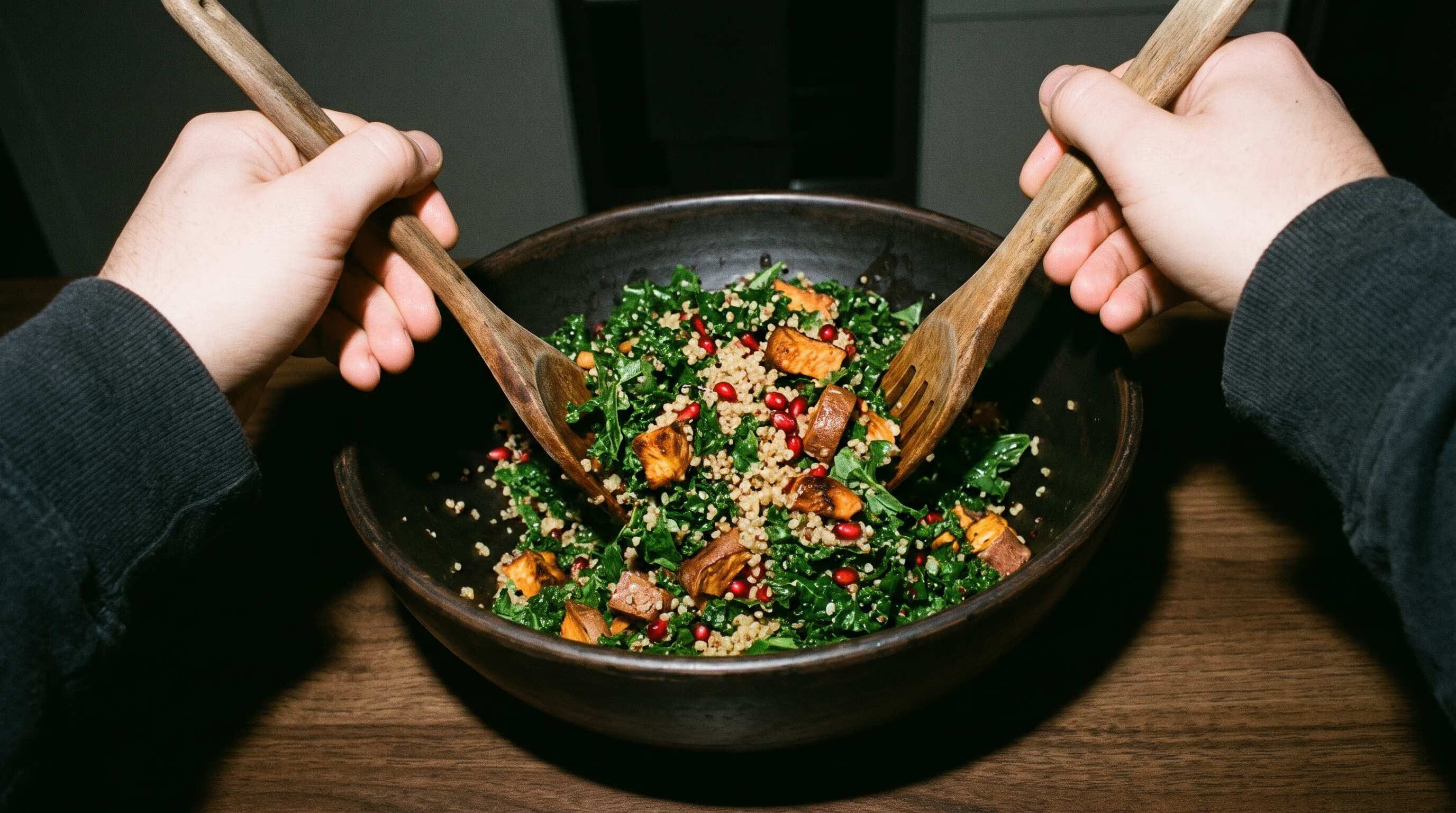
A superfood salad of massaged kale, spinach, arugula, avocado, pumpkin seeds and walnuts: about 440 kcal and 10 g fiber, plus 3 variations and prep tips.
A superfood salad is a bowl built from nutrient-dense whole foods. This one combines massaged kale, spinach and arugula with avocado, pumpkin seeds, walnuts and a lemon-olive oil dressing. One serving comes to about 440 calories, 11 g of protein and 10 g of fiber, and covers roughly 290% of the daily value for vitamin K.
The combination is deliberate, partly because of absorption: fat-soluble nutrients such as carotenoids are absorbed better when a meal includes more fat (Goltz et al., Molecular Nutrition & Food Research, 2012). A salad that pairs kale and spinach with avocado and olive oil gives the greens’ carotenoids that fat to travel with.
The sections that follow explain why each ingredient is there, give approximate nutrition per full serving, and describe three variations on the base for different goals.
What Makes Each Base Ingredient Worth Including?
The ingredients here are not decorative. Each one contributes a specific nutritional function, and several pairs work together to make the other more bioavailable. Understanding why each ingredient is present makes it easier to swap smartly without losing the nutritional logic.
Leafy Greens: Kale, Spinach, and Arugula
Kale is among the most vitamin K-dense foods available, with 100 g of raw kale providing roughly 390 mcg of vitamin K1 (USDA FoodData Central) - more than three times the 120 mcg adequate intake for adult men (NIH Office of Dietary Supplements). It also supplies calcium and glucosinolates, mainly sinigrin and glucobrassicin rather than the glucoraphanin that yields sulforaphane (Kushad et al., Journal of Agricultural and Food Chemistry, 1999); the sulforaphane and cruciferous vegetables review explains why that difference matters.
Spinach contributes iron, folate, and lutein. Its non-heme iron is less bioavailable than heme sources, but pairing it with the vitamin C in lemon dressing can partly offset that. In a study of 234 women, non-heme iron absorption from a rice meal rose with the vitamin C content of the juice served alongside it (Ballot et al., British Journal of Nutrition, 1987).
Arugula adds a different glucosinolate profile and dietary nitrate. In a small crossover study of 18 healthy adults, a rocket (arugula) drink delivering 800 mg of nitrate, far more than a salad portion, lowered systolic blood pressure for a few hours (Jonvik et al., Journal of Nutrition, 2016). It’s peppery and assertive, which helps balance the richer elements.
A 50/30/20 split of kale, spinach, and arugula by weight balances flavor without giving up the micronutrient spread of any of the three: the kale carries the vitamin K, the spinach the folate and iron, and the arugula keeps the bowl from tasting flat.
Healthy Fats: Avocado and Olive Oil
Avocado provides monounsaturated fatty acids (MUFA), vitamin E, and potassium - roughly 485 mg of potassium per 100 g, or about 365 mg in the 75 g half used here (USDA FoodData Central). The fat content is the mechanism: a study in the Journal of Nutrition found that adding avocado to a salad significantly increased absorption of carotenoids including beta-carotene and lutein from the greens (Unlu et al., Journal of Nutrition, 2005).
Olive oil in the dressing serves a similar function. Beyond enabling fat-soluble vitamin uptake, it delivers oleocanthal, a phenolic compound that inhibited COX enzymes in laboratory tests (Beauchamp et al., Nature, 2005). One to two tablespoons covers the absorption role without excess calories.
Seeds and Nuts: Pumpkin Seeds and Walnuts
Pumpkin seeds are among the most concentrated whole-food sources of magnesium and a useful plant source of zinc, though far below oysters or beef for zinc. A 28 g serving of dried kernels provides approximately 2.2 mg of zinc (20% DV) and 166 mg of magnesium (40% DV) (USDA FoodData Central).
Walnuts contribute alpha-linolenic acid (ALA), the plant-form omega-3, along with manganese. A 14 g portion (about 7 halves) adds roughly 1.3 g of ALA (USDA FoodData Central). They also add textural contrast that makes the salad more satisfying as a meal.
Nutrition Breakdown Per Full Serving
The table below reflects the core recipe at its written quantities: roughly 90 g mixed greens, half an avocado, 14 g walnuts, 14 g pumpkin seeds, and a lemon-olive oil dressing (1 tbsp olive oil). Values are approximations derived from USDA FoodData Central entries for each ingredient.
| Nutrient | Amount per Serving | % Daily Value |
|---|---|---|
| Calories | ~440 kcal | - |
| Protein | ~11 g | 22% |
| Total Fat | ~41 g | 53% |
| Saturated Fat | ~5.5 g | 28% |
| Carbohydrates | ~15 g | 6% |
| Dietary Fiber | ~10 g | 34% |
| Vitamin K | ~350 mcg | 292% |
| Vitamin E | ~4.9 mg | 32% |
| Folate | ~180 mcg | 46% |
| Iron | ~3.9 mg | 22% |
| Magnesium | ~170 mg | 41% |
| Zinc | ~2.5 mg | 22% |
| Potassium | ~940 mg | 20% |
Note: Adding a protein topping (salmon or hemp seeds + edamame) raises protein to roughly 30-33 g and calories to roughly 650-700 kcal at the portions given below. All values are estimates; actual figures vary with exact ingredient weights and brands.
Three Variations for Different Goals
All three variations start from the core recipe and add to it. The Mediterranean and Protein versions add only a few minutes of prep; the Warm Bowl adds 20 minutes in the oven.
The Mediterranean Variation
Add 30 g Kalamata olives (pitted, halved), 60 g chopped English cucumber, and 30 g crumbled feta cheese to the base recipe. Replace the plain lemon dressing with a version that includes 1/2 tsp dried oregano and 1 tsp red wine vinegar alongside the olive oil and lemon. This variation raises sodium meaningfully (feta and olives both contribute), so it’s best suited for people who are not monitoring sodium intake. Approximate calorie adjustment: +120 kcal.
The Warm Bowl Variation
Roast 80 g of canned chickpeas (drained, dried, tossed in 1/2 tsp smoked paprika and 1 tsp olive oil) at 200°C for 20 minutes until crisp. Roast 80 g cubed sweet potato alongside in the same pan. Add both warm to the dressed greens base just before serving. The warm components slightly wilt the arugula and spinach, which is desirable here. Chickpeas add roughly 7 g of additional plant protein and 6 g of fiber per 80 g cooked portion (USDA FoodData Central). Approximate calorie adjustment: +240 kcal.
The Protein Variation
This variation targets people using the salad as a primary post-training meal. Two options, roughly equivalent in protein contribution.
Option A - Grilled salmon: Add 100 g of grilled or baked Atlantic salmon, flaked over the dressed greens. This adds approximately 22 g of complete protein and 2.2 g of EPA + DHA omega-3 fatty acids (USDA FoodData Central), for about 210 kcal. Fatty fish such as salmon are the main whole-food source of preformed long-chain omega-3s.
Option B - Hemp seeds and edamame: Scatter 3 tbsp (30 g) of hemp seeds over the base and add 80 g of shelled edamame (thawed from frozen). Hemp seeds contain all nine essential amino acids, though lysine is limiting: dehulled hemp seed scored a PDCAAS of about 0.63 to 0.66 (House et al., Journal of Agricultural and Food Chemistry, 2010). This option adds roughly 19 g of protein (USDA FoodData Central: hemp seeds, edamame) while keeping the meal fully plant-based, for about 260 kcal.
The salmon option and the hemp/edamame option are nearly interchangeable on protein but very different on omega-3 form. EPA and DHA from salmon are directly usable by the body. ALA from hemp seeds converts to EPA only to a limited extent in adults, and further conversion to DHA is very low (Burdge & Calder, Reproduction Nutrition Development, 2005). For people without omega-3 supplementation, Option A delivers meaningfully more usable long-chain omega-3s.
Making It Ahead: Meal Prep Tips
Salads fail at meal prep when they’re stored assembled. The solution is to store components separately and combine at serving time. Dressed greens become waterlogged and unpleasant within hours. Avocado oxidizes quickly once cut.
Storage strategy:
- Massaged kale holds well dressed for up to 24 hours because its structure is more robust than spinach or arugula. Spinach and arugula should go in dry.
- Keep dressing in a small sealed jar in the refrigerator. Because it contains raw garlic in oil, use it within 4 days, the limit extension services give for homemade garlic-in-oil mixtures (Oregon State University Extension), or leave the garlic out and add it fresh.
- Store avocado as a whole half (pit in, wrapped tightly) for up to 2 days. Slice at serving.
- Pumpkin seeds and walnuts can be pre-portioned into small containers and stay crisp for 4-5 days.
- For the Warm Bowl variation, roasted chickpeas and sweet potato reheat well in a skillet for 3-4 minutes.
This approach supports 3-4 days of weekday lunches with about 20 minutes of Sunday prep.
The recipes
Frequently Asked Questions
Can I use pre-washed bagged spinach and kale?
Yes. Bagged greens keep most of their nutrients over a typical shelf life. A USDA study of retail-packaged spinach kept at 4 °C for up to nine days found its vitamins C, K and E, folate and carotenoids held steady or declined in the dark, while most of them (except beta-carotene and violaxanthin) rose under retail-style lighting (Lester et al., Journal of Agricultural and Food Chemistry, 2010). The main practical difference is texture: whole kale leaves, once massaged, tend to hold up better over a few days than pre-cut pieces.
Is it safe to eat raw kale every day?
Preliminary evidence suggests that very high daily intake of raw cruciferous greens may affect thyroid function in people with iodine deficiency, due to goitrogenic compounds. A review of goitrin content found that kale, broccoli and broccoli rabe contain little goitrin per serving and can be considered minimal risk, while collards, Brussels sprouts and some Russian kale contain enough to potentially reduce thyroid iodine uptake (Felker et al., Nutrition Reviews, 2016). Varying greens across the week is a reasonable precaution. People taking warfarin should note the bowl’s high vitamin K: the usual advice is to keep vitamin K intake steady from day to day rather than avoid it, since sudden large increases can blunt the drug’s effect (Linus Pauling Institute).
Is kale salad healthy?
For most people, yes. Raw kale is among the most vitamin K-dense foods, at about 390 mcg per 100 g, and it supplies calcium and glucosinolates. Pairing it with fat, as this bowl does with avocado and olive oil, raised carotenoid absorption from salad in controlled studies. The caveats are the warfarin and thyroid notes above, which matter mainly at very high daily intakes or with medication.
Is this superfood salad vegan?
The base recipe is: greens, avocado, seeds, walnuts, olive oil, lemon and garlic, with no animal products. The Mediterranean variation adds feta and the Protein variation’s Option A adds salmon, so use Option B (hemp seeds and edamame) to keep it plant-based. If you avoid tree nuts, replace the walnuts with extra pumpkin seeds.
How do I make the dressing without olive oil?
The avocado, walnuts and pumpkin seeds still supply plenty of fat; as little as 3 to 5 g of fat in a meal appears sufficient for carotenoid absorption (Linus Pauling Institute), though more fat raised absorption further in a controlled study (Goltz et al., 2012). A workable alternative is tahini thinned with lemon juice and water: it provides fat (primarily MUFA and linoleic acid) and maintains a creamy consistency. A fat-free dressing works, but it gives up some of that extra absorption.
Will this salad work for someone tracking macros?
The base recipe is easy to track: about 440 kcal, 11 g protein, 41 g fat, 15 g carbohydrate. Use a kitchen scale for avocado and seeds, as these are calorie-dense and portion estimates vary widely by volume. The protein variations bring the meal into a range suitable as a post-training lunch (roughly 650-700 kcal, 30-33 g protein), which many people find useful for hitting daily targets.
This content is for informational purposes only and does not constitute medical advice, diagnosis, or treatment. Consult a qualified healthcare professional before making significant dietary changes, particularly if you manage a chronic condition or take medications.
References
Show all 10 referencesShow fewer
-
Goltz, S. R., Campbell, W. W., Chitchumroonchokchai, C., Failla, M. L., & Ferruzzi, M. G. (2012). Meal triacylglycerol profile modulates postprandial absorption of carotenoids in humans. Molecular Nutrition & Food Research, 56(6), 866-877. https://pubmed.ncbi.nlm.nih.gov/22707262/
-
Ballot, D., Baynes, R. D., Bothwell, T. H., Gillooly, M., MacFarlane, B. J., MacPhail, A. P., … & Mayet, F. (1987). The effects of fruit juices and fruits on the absorption of iron from a rice meal. British Journal of Nutrition, 57(3), 331-343. https://pubmed.ncbi.nlm.nih.gov/3593665/
-
Unlu, N. Z., Bohn, T., Clinton, S. K., & Schwartz, S. J. (2005). Carotenoid absorption from salad and salsa by humans is enhanced by the addition of avocado or avocado oil. Journal of Nutrition, 135(3), 431-436. https://pubmed.ncbi.nlm.nih.gov/15735074/
-
Felker, P., Bunch, R., & Leung, A. M. (2016). Concentrations of thiocyanate and goitrin in human plasma, their precursor concentrations in brassica vegetables, and associated potential risk for hypothyroidism. Nutrition Reviews, 74(4), 248-258. https://pubmed.ncbi.nlm.nih.gov/26946249/
-
Burdge, G. C., & Calder, P. C. (2005). Conversion of alpha-linolenic acid to longer-chain polyunsaturated fatty acids in human adults. Reproduction Nutrition Development, 45(5), 581-597. https://pubmed.ncbi.nlm.nih.gov/16188209/
-
Kushad, M. M., Brown, A. F., Kurilich, A. C., Juvik, J. A., Klein, B. P., Wallig, M. A., & Jeffery, E. H. (1999). Variation of glucosinolates in vegetable crops of Brassica oleracea. Journal of Agricultural and Food Chemistry, 47(4), 1541-1548. https://pubmed.ncbi.nlm.nih.gov/10564014/
-
Jonvik, K. L., Nyakayiru, J., Pinckaers, P. J., Senden, J. M., van Loon, L. J., & Verdijk, L. B. (2016). Nitrate-rich vegetables increase plasma nitrate and nitrite concentrations and lower blood pressure in healthy adults. Journal of Nutrition, 146(5), 986-993. https://pubmed.ncbi.nlm.nih.gov/27075914/
-
Beauchamp, G. K., Keast, R. S., Morel, D., Lin, J., Pika, J., Han, Q., … & Breslin, P. A. (2005). Phytochemistry: ibuprofen-like activity in extra-virgin olive oil. Nature, 437(7055), 45-46. https://pubmed.ncbi.nlm.nih.gov/16136122/
-
House, J. D., Neufeld, J., & Leson, G. (2010). Evaluating the quality of protein from hemp seed (Cannabis sativa L.) products through the use of the protein digestibility-corrected amino acid score method. Journal of Agricultural and Food Chemistry, 58(22), 11801-11807. https://pubmed.ncbi.nlm.nih.gov/20977230/
-
Lester, G. E., Makus, D. J., & Hodges, D. M. (2010). Relationship between fresh-packaged spinach leaves exposed to continuous light or dark and bioactive contents: effects of cultivar, leaf size, and storage duration. Journal of Agricultural and Food Chemistry, 58(5), 2980-2987. https://pubmed.ncbi.nlm.nih.gov/20131793/
Read next

Written by Superfoods Advisor Editors·Published July 4, 2026