The Best Berberine Supplements (2026): HCl and Dihydroberberine Compared
By Superfoods Advisor Editors·October 23, 2026
Top-ranked
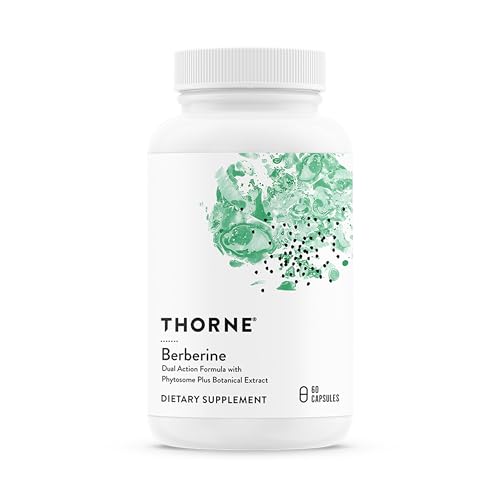 Check price on Amazon on Amazon for Thorne Berberine, Dual Action Phytosome & HCl Formula, 60 Capsules (opens in a new tab)
 Check price on Amazon on Amazon for Genex Formulas Berberine HCl 500 mg, NSF Certified, 90 Capsules (opens in a new tab)
 Check price on Amazon on Amazon for Integrative Therapeutics Berberine 500 mg, 60 Capsules (opens in a new tab)
Compare all 5 picks →Affiliate links. Disclosure.
The best berberine supplements compared on form (HCl, phytosome, dihydroberberine), dose against 900 to 1,500 mg trial doses and third-party testing.
Top-ranked · 5 products compared
We earn a commission on purchases made through these links. It does not affect our rankings. See our affiliate disclosure.
| # | Product | Score | Details |
|---|---|---|---|
| 1 | | ||
| 2 | | ||
| 3 | | ||
| 4 |  | ||
| 5 |  |
1Thorne
Berberine, Dual Action Phytosome & HCl Formula, 60 Capsules
NSF Contents Certified, with a named Berberis aristata root source and both berberine forms quantified on the label. One of two NSF-certified picks, and the most expensive per daily dose.
Strengths
- NSF Contents Certified, per the listing
- States 450 mg HCl + 550 mg phytosome per 2 capsules
- Named source: Berberis aristata root
Trade-offs
- Highest cost per daily dose in this comparison
- Phytosome weight is not all berberine
Thorne reformulated its long-running Berberine-500 into a "dual action" capsule. A two-capsule serving lists 450 mg of berberine HCl from Berberis aristata (Indian barberry) root plus 550 mg of a berberine phytosome, a complex of the same extract bound to phospholipids from pea, sunflower and grape seed. The label directions are one to two capsules twice daily. The phytosome figure is the weight of the whole complex, carrier included, so a serving delivers less than 1,000 mg of berberine itself. Two to four capsules a day still lands near the low end of the 900 to 1,500 mg a day used in most trials (Wang et al. 2024, Frontiers in Pharmacology).
The reason to pay more is verification. The listing and label carry the NSF Contents Certified mark: NSF tests the product against its label claims and for contaminants (NSF). That is a different program from NSF Certified for Sport, which adds banned-substance screening. Independent testers keep finding bottles short on berberine (see "How we chose" below), and this is one of two products here, with the Genex Formulas, that carry a third-party seal on the bottle itself.
Amazon shows about 4.4 out of 5 across roughly 5,700 ratings (October 2026). Amazon's review summary reports positive comments on blood sugar readings and appetite, mixed reports on energy, a minority describing nausea, diarrhea or heartburn, and plenty of reviewers who find it overpriced. On r/PCOS, Thorne comes up when users ask which brand to trust: one user in a brand-recommendation thread says "I use Thorne and have no issues", while another reported headaches and anxiety on it.
2Genex Formulas
Berberine HCl 500 mg, NSF Certified, 90 Capsules
A plain 500 mg berberine HCl capsule that carries NSF certification, confirmed in NSF's public listings. Three capsules reach 1,500 mg, the top of the trial range, and it was one of the two cheapest ways to a trial-range dose here.
Strengths
- NSF certified; listed in NSF's public database
- Single ingredient, 500 mg HCl per capsule
- Among the lowest cost per trial-range dose
Trade-offs
- Plant species not named, only "root extract"
- Small rating base, about 350 ratings
Each capsule holds 500 mg of berberine HCl, with no cinnamon, chromium or blend alongside it. The listing describes the extract only as "globally sourced root extract", bottled and tested in Georgia, and doesn't name the plant species, which is the main disclosure gap.
Its case is the certification. Genex Berberine appears in NSF's public listings for NSF/ANSI 173, the dietary supplement standard, under which NSF tests that a product contains the declared amount of each dietary ingredient and no unacceptable levels of contaminants. That makes it one of two products here, with the Thorne, that have an independent check of the bottle's contents rather than a brand-published claim. The listing also links a certificate of analysis. One caution about the listing copy: its NSF bullet mistakenly names the brand's resveratrol. That is a copy error; NSF's database lists the berberine itself.
The listing suggests one capsule a day, which is below the 900 to 1,500 mg used in trials, and allows up to three capsules for 1,500 mg; NSF's listing records the manufacturer's recommended daily serving as three capsules. At three a day, a 90-capsule bottle lasts a month, and this and the NOW softgels were the two cheapest ways to a trial-range daily intake here, based on listings at the time of writing.
Amazon shows about 4.6 out of 5 across roughly 350 ratings (October 2026), a much smaller base than the other picks. The reviews visible on the listing are mostly positive about glucose readings and appetite; one reviewer mentions a foul taste and smell. We found no Reddit discussion of this specific product, so the usual HCl caveat applies: take it with food, because 500 mg at once gives some people GI side effects.
3Integrative Therapeutics
Berberine 500 mg, 60 Capsules
A clinician-channel brand with a clean, single-ingredient 500 mg HCl capsule. Directions match the trial range, and the label carries a clear diabetes and medication warning. The botanical source and the third-party lab aren't named.
Strengths
- Directions of 2-3 capsules match 1,000-1,500 mg/day trials
- Label warns diabetics and medication users
- Single ingredient; gluten-, soy- and dairy-free
Trade-offs
- Botanical source not stated on the label
- Third-party testing claimed but no seal shown
Integrative Therapeutics sells mainly through practitioners, and its berberine reads like a clinician's product. Each capsule contains 500 mg of berberine HCl with only hypromellose, cellulose, calcium laurate and silica as other ingredients. The brand states it contains no wheat, gluten, corn, soy or dairy. Its directions, one capsule two to three times daily, match the 500 mg regimens used in trials such as Yin et al. 2008 (Metabolism). Unlike most competitors, it also tells anyone with diabetes, or on any medication, to consult a clinician and monitor blood glucose while taking it.
What it lacks is disclosure. The label doesn't name the plant source, and while the brand's FAQ says it is third-party tested by SuppCo, no seal appears on the bottle. Don't confuse it with the brand's separate Berberine Complex, a barberry, Oregon grape and goldenseal blend.
Amazon shows about 4.5 out of 5 across roughly 3,800 ratings (October 2026). Amazon's review summary reports positive comments on blood sugar, cholesterol and easy-to-swallow capsules, mixed views on value, some mentions of a chemical aftertaste, and multiple reports of diarrhea or GI distress.
4NOW Foods
Berberine Glucose Support with MCT Oil, 90 Softgels
Berberine HCl from Berberis aristata bark in an MCT-oil softgel, 400 mg each, with directions of three a day for 1,200 mg. A large, long-established listing and one of the two cheapest ways to a trial-range dose. No independent seal.
Strengths
- 1,200 mg/day at the labeled 3 softgels
- Named source: Berberis aristata bark
- Among the lowest cost per trial-range dose
Trade-offs
- MCT-oil absorption claim not trial-tested
- No independent certification seal
Each softgel contains 400 mg of berberine HCl from Berberis aristata bark suspended in MCT oil. The label directions are one softgel three times daily with food, for 1,200 mg a day, which sits in the middle of the trial range. NOW markets the MCT oil as an absorption aid. Plausible, given berberine's poor oral bioavailability, but we found no trial showing this softgel produces better blood levels or outcomes than a standard capsule. Treat it as a format choice, not a proven upgrade.
NOW is a large, long-established brand, and this bottle was one of the two cheapest ways to a trial-range daily dose in this comparison (with Genex Formulas), based on listings at the time of writing. It carries no NSF, USP or similar seal; if you want independent label verification, the Thorne or the Genex Formulas is the one.
Amazon showed about 4.5 out of 5 across roughly 6,000 ratings in October 2026, the largest rating base in this comparison.
5Nutricost
Dihydroberberine 100 mg (GlucoVantage), 60 Capsules
The patented GlucoVantage dihydroberberine at 100 mg a capsule, sourced from Berberis aristata root, with no other active ingredient. Absorption data are promising, but no published trial yet shows better blood sugar outcomes than plain berberine HCl.
Strengths
- Branded GlucoVantage ingredient, 100 mg per capsule
- Named source: Berberis aristata root
- Single ingredient; brand says every batch is tested
Trade-offs
- Outcome evidence limited to a 5-person pilot
- No published COA or independent seal
Dihydroberberine is a reduced form of berberine that the gut absorbs more readily and the body converts back to berberine. Each capsule holds 100 mg of GlucoVantage, the patented ingredient used in the main human study, which the label traces to Berberis aristata root. The only other ingredients are rice flour and a cellulose capsule. The label suggests one capsule a day, the same single 100 mg dose tested in the pilot below, and says nothing about splitting doses across meals.
Nutricost states that its products are tested by an independent, accredited lab, and the Amazon listing says every batch is tested and that this product is made in an NSF-certified, GMP-compliant facility. That facility claim is not NSF certification of the bottle itself, and we found no certificate of analysis published for this product, so it sits a tier below the Thorne and the Genex Formulas on verification. The brand page also carries a California Proposition 65 warning for lead. Such warnings are common on botanical supplements and give no amount, but without a published certificate there is no way to check the figure.
The case for dihydroberberine rests on one small study. In a randomized crossover pilot of five healthy young men, 100 mg of dihydroberberine produced substantially higher blood berberine levels than 500 mg of berberine HCl, but glucose and insulin responses did not differ between conditions (Moon et al. 2021, Nutrients). Better absorption makes a lower dose with fewer GI effects a reasonable hypothesis. It is not evidence of better results, which is why this ranks last.
Amazon shows about 4.5 out of 5 across roughly 210 ratings (October 2026), a small base. Amazon's review summary reports positive comments on fasting glucose readings and sugar cravings, mixed results on appetite, and a split on side effects: some reviewers find it easier on the stomach than plain berberine, while others report nausea, indigestion or constipation. We found no Reddit discussion of this specific product. On r/Supplements, the consensus in a berberine vs. dihydroberberine thread was summed up as "Same thing. One is just easier on the stomach". A long-term HCl user said plain berberine works for them with meals and that DHB is pricier. One DHB user reported going "a bit hypoglycemic": fewer milligrams does not mean a weaker product.
The best berberine supplement in this comparison is Thorne’s Berberine Dual Action Phytosome & HCl Formula: NSF Contents Certified, with a named Berberis aristata root source and both berberine forms quantified on the label. Genex Formulas, the other NSF-certified pick, is one of the two cheapest routes to a trial-range dose, and Nutricost is the dihydroberberine pick.
Berberine is a yellow alkaloid extracted mainly from Berberis species (barberry, Indian barberry) and goldenthread. Few botanical supplements have as many randomized trials on blood sugar and lipids, though most come from China, use small groups and run one to three months. Buyers face two practical problems: commercial products often don’t contain what the label says, and berberine interacts with common medications. This roundup ranks five Amazon products first on what can be checked (form, dose per capsule, independent testing, source), then on customer sentiment.
Talk to a clinician first if you take medication
Berberine lowers blood glucose. That is why people buy it, and it is also why it stacks with glucose-lowering drugs. In a 2024 meta-analysis of 50 trials, berberine taken with diabetes medication lowered fasting glucose and HbA1c further than the medication alone (Wang et al. 2024, Frontiers in Pharmacology). Anyone on metformin, sulfonylureas, insulin or GLP-1 medication should involve their prescriber before starting, so doses and monitoring can be adjusted. Berberine also changes how the body clears other drugs. In a crossover study of healthy men, two weeks of 300 mg three times daily reduced the activity of the liver enzymes CYP2D6, CYP2C9 and CYP3A4, which process many common prescriptions (Guo et al. 2012, European Journal of Clinical Pharmacology). Product labels, including Integrative Therapeutics’, advise against use during pregnancy or breastfeeding, and NCCIH notes that berberine can be harmful to newborns (NCCIH). Serious reactions appear rare, but a 2026 case report described recurrent torsades de pointes, a dangerous heart rhythm, in a man taking berberine, dihydroberberine and other supplements (Mohammadi et al. 2026, JACC: Case Reports). All of this makes berberine a supplement to discuss with a pharmacist or doctor rather than add quietly to a medication list.
How we chose
The ranking weighs, in order:
- Independent testing. Potency failures are well documented in this category. In a 2018 analysis of 15 U.S. berberine products, 9 of 15 contained less than 90% of their labeled amount, with content ranging from 33% to 100% of the claim (Funk et al. 2018, Journal of Dietary Supplements). The paper names every product it tested. In its results, Thorne’s Berberine-500 and Integrative Therapeutics’ Berberine Metabolic Support assayed within 90 to 110% of label. Those were lots bought several years ago, and Thorne’s product has since been reformulated, so treat the results as history rather than a current pass or fail. ConsumerLab has reported repeated problems since then, including an October 2025 update in which 7 of 13 brands tested had little or no berberine. Its product-level results are paywalled, and we have not seen them. A third-party seal on the bottle (NSF, USP) ranked above a brand-published certificate of analysis, which ranked above a bare “third-party tested” claim.
- Form. Berberine HCl is the form used in most trials. Phytosome and dihydroberberine forms are marketed for better absorption, which has some pharmacokinetic support (including a manufacturer-run phytosome study, Petrangolini et al. 2021) but little outcome data (see below).
- Milligrams per capsule against trial doses. The most common trial dose in a 50-study meta-analysis was 0.9 to 1.5 g a day, usually split across meals, for one to three months (Wang et al. 2024). We favored labels that make that dose reachable in a few capsules and say how.
- Source and standardization. A named plant source (Berberis aristata root or bark) and a stated purity counted for a product. Not naming them counted against it.
- No unnecessary blends. We excluded berberine sold with cinnamon, chromium, piperine, inositol or “proprietary metabolic blends”. Extra ingredients make effects and side effects impossible to attribute, and they often dilute the berberine.
- Cost per daily dose. Compared from listings at the time of writing but not printed here; prices change faster than this page does.
- Customer and Reddit sentiment. Amazon averages and approximate rating counts were read from the listings in October 2026 and will drift. We also read threads in r/Supplements, r/PCOS and r/prediabetes.
We did not run lab assays. Every dose, source and testing claim above comes from a label, a brand statement or a cited study, and is attributed in each product’s write-up.
Berberine HCl vs. dihydroberberine
Berberine HCl is berberine as a hydrochloride salt and the form behind the clinical literature. In a pilot trial in newly diagnosed type 2 diabetes, 500 mg three times daily lowered HbA1c and fasting glucose to a degree comparable with metformin over three months (Yin et al. 2008, Metabolism). A 2025 meta-analysis of placebo-controlled trials in metabolic syndrome reported modest reductions in fasting glucose, triglycerides, LDL cholesterol and waist circumference, with no significant effect on blood pressure or HDL. The authors called for larger, better-designed trials (Liu et al. 2025, Frontiers in Pharmacology). Its weaknesses are poor oral absorption and GI side effects: about a third of participants in the Yin study had transient digestive complaints.
Dihydroberberine (DHB) is a reduced form that crosses the gut wall more easily and is converted back to berberine. The one published human comparison found much higher blood berberine levels from 100 mg of DHB than from 500 mg of HCl, but in five healthy young men and with no difference in glucose response (Moon et al. 2021, Nutrients). Reddit reports of DHB being gentler on the stomach are common but anecdotal.
Berberine phytosome binds the extract to phospholipids for the same purpose. A study by its manufacturer, Indena, reported roughly tenfold higher blood levels than unformulated berberine in healthy volunteers, with no outcome data (Petrangolini et al. 2021). The milligram figure on the label includes the carrier, so it can’t be compared one-to-one with an HCl figure.
Our reading: if you tolerate berberine HCl with meals, it is the evidence-backed default. DHB is a defensible alternative if the GI effects won’t settle, as long as you accept that its advantage so far shows up in blood levels, not outcomes.
What Reddit users report
Threads across r/Supplements, r/PCOS and r/prediabetes keep returning to three points:
- Results vary by person. In r/prediabetes some users credit berberine, alongside diet changes, with noticeably better glucose readings, while others report it didn’t seem to affect their blood sugar. One r/PCOS user noted that diet changes and meal timing mattered more than the supplement.
- GI effects are the main complaint, and the common workaround is a smaller dose taken with food. One r/Supplements user dropped from 500 mg to 250 mg twice daily to get past it.
- Buy from the brand’s own storefront. In the r/PCOS brand thread, users advise checking that the Amazon seller is the brand itself and that the product is third-party tested. Given the potency data above, that is sensible.
A note on health claims
Nothing on this page diagnoses, treats, prevents or cures any condition. Berberine is not a substitute for prescribed diabetes, cholesterol or PCOS treatment, and stopping or reducing a medication because of a supplement should only happen with the prescriber involved. The evidence is real but uneven: many trials are small, short and from a single country, and long-term safety data are limited.
FAQ
What is the best form of berberine?
Berberine HCl has by far the most human research behind it. Dihydroberberine is better absorbed in a small pilot study but has no outcome trials showing it works better. Choose HCl unless GI side effects stop you taking it.
How much berberine should I take?
Most trials used 900 to 1,500 mg a day, split into two or three doses with meals, for one to three months. With a 500 mg capsule that means two to three a day. Labels that suggest a single capsule a day are below the studied range. Agree on a dose with a clinician if you take any medication.
Can I take berberine with metformin?
Only with your prescriber’s involvement. The two lower glucose together, and trials combining them showed larger reductions than medication alone. Under supervision that can be useful; without it, it is a hypoglycemia risk. Berberine also slows the clearance of some other drugs.
When should I take berberine?
With meals. This matches how trials dosed it and is the most common advice for reducing stomach upset.
Is berberine “nature’s Ozempic”?
No. They are different substances with different mechanisms, and the weight changes in berberine trials are modest: the 2025 metabolic-syndrome meta-analysis found a BMI reduction of under half a point (Liu et al. 2025).
Is there a supplement that works like metformin?
Berberine is the one most often compared with it. In a small pilot trial in newly diagnosed type 2 diabetes, 500 mg three times daily lowered HbA1c and fasting glucose to a degree comparable with metformin over three months (Yin et al. 2008). That is one small study, not grounds to swap a prescribed drug, and any change to diabetes treatment belongs with the prescriber.
What is the downside to taking berberine?
Digestive side effects are the most common: about a third of participants in the Yin trial had transient GI complaints. Berberine also reduces the activity of liver enzymes that clear many prescriptions, adds to the effect of glucose-lowering drugs, and is not advised in pregnancy or breastfeeding. Long-term safety data are limited.
Why do some berberine products seem not to work?
Some may be underdosed. In an independent analysis, 9 of 15 U.S. products contained less than 90% of the labeled berberine (Funk et al. 2018). A third-party seal or a published certificate of analysis reduces that risk.
Related
- Encyclopedia: Berberine: sources, mechanisms, the trial evidence and safety in more depth.
- Guide: Blood sugar and metabolic superfoods: where diet fits alongside any supplement.
- Roundup: The best turmeric curcumin supplements
- Policy: Affiliate disclosure
References
Show all 8 referencesShow fewer
- Yin J, Xing H, Ye J. (2008). Efficacy of berberine in patients with type 2 diabetes mellitus. Metabolism.
- Wang J, Bi C, Xi H, Wei F. (2024). Effects of administering berberine alone or in combination on type 2 diabetes mellitus: a systematic review and meta-analysis. Frontiers in Pharmacology.
- Liu D, et al. (2025). Efficacy and safety of berberine on the components of metabolic syndrome: a systematic review and meta-analysis of randomized placebo-controlled trials. Frontiers in Pharmacology.
- Moon JM, et al. (2021). Absorption kinetics of berberine and dihydroberberine and their impact on glycemia: a randomized, controlled, crossover pilot trial. Nutrients.
- Guo Y, et al. (2012). Repeated administration of berberine inhibits cytochromes P450 in humans. European Journal of Clinical Pharmacology.
- Petrangolini G, et al. (2021). Development of an innovative berberine food-grade formulation with an ameliorated absorption. Evidence-Based Complementary and Alternative Medicine.
- Mohammadi A, et al. (2026). Recurrent torsades de pointes precipitated by berberine supplement. JACC: Case Reports.
- Funk RS, et al. (2018). Variability in potency among commercial preparations of berberine. Journal of Dietary Supplements.
Read the underlying research in the encyclopedia entry.
By Superfoods Advisor Editors·Published October 23, 2026