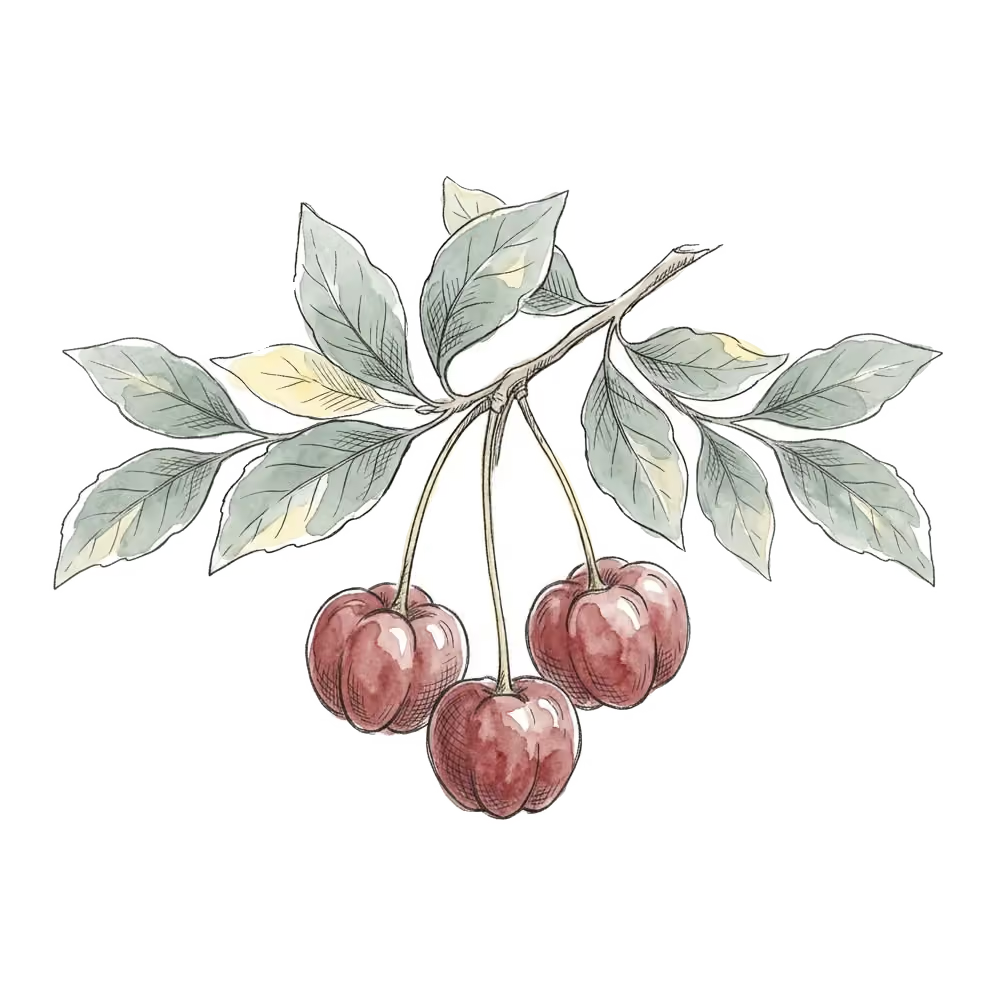
Acerola Cherry (Malpighia emarginata)
Malpighia emarginata · also known as Barbados cherry, West Indian cherry, acerola, Puerto Rican cherry
By Superfoods Advisor Editors·July 3, 2026
Acerola cherry benefits come mostly from its vitamin C, about 1,680 mg per 100 g. What the evidence shows for immunity, skin and antioxidants, and safety.
Acerola cherry (Malpighia emarginata), also called Barbados or West Indian cherry, is a small red tropical fruit best known for its vitamin C: about 1,680 mg per 100 g in USDA data, and up to 4,500 mg in some analyses. Most acerola cherry benefits rest on that vitamin C, since trials of the fruit itself are scarce.
The plant is a shrub or small tree in the family Malpighiaceae (formerly classified as M. punicifolia and long confused with M. glabra), bearing cherry-like drupes 1–3 cm across. It is native to the Lesser Antilles and northern South America, later naturalized in the Caribbean (Morton, 1987), and is now grown in Brazil, India and Florida.
Reported ascorbic acid content ranges from about 1,500 to 4,500 mg per 100 g of fruit (Prakash & Baskaran, 2018), compared with about 50 mg per 100 g in raw orange juice (USDA FoodData Central). The range is wide partly because vitamin C declines as the fruit ripens, with immature green fruit containing the most (Oliveira et al., 2012), and it is further lost to storage, heat and oxidation. This is why acerola extract is sold as a natural-source alternative to synthetic ascorbic acid.
Evidence at a glance
Active Compounds
Acerola’s bioactive profile is dominated by ascorbic acid, with supporting polyphenols and carotenoids:
- Ascorbic acid (vitamin C) — the primary bioactive, reported at roughly 1,500–4,500 mg per 100 g (Prakash & Baskaran, 2018). Concentration declines markedly with ripening (Oliveira et al., 2012) and processing.
- Anthocyanins — including cyanidin-3-rhamnoside and pelargonidin-3-rhamnoside (Hanamura et al., 2005), which contribute antioxidant activity independent of vitamin C.
- Carotenoids — including beta-carotene, supporting vitamin A activity and additional antioxidant capacity.
- Flavonoids — mostly glycosides of quercetin and kaempferol (Alvarez-Suarez et al., 2017); potential anti-inflammatory and antiproliferative activity in vitro.
- Organic acids — citric and malic acids contributing to the fruit’s tart flavor profile.
- Minerals — modest amounts of magnesium, potassium, and calcium.
Nutritional Profile
Values below are for raw acerola fruit per 100 g (USDA FoodData Central, FDC 171686, “Acerola, (west indian cherry), raw”):
| Nutrient | Amount per 100 g | % DV |
|---|---|---|
| Energy | 32 kcal | — |
| Total fat | 0.3 g | — |
| Total carbohydrates | 7.7 g | — |
| Dietary fiber | 1.1 g | — |
| Protein | 0.4 g | — |
| Vitamin C (ascorbic acid) | 1,680 mg | — |
| Vitamin A (RAE) | 38 µg | — |
| Thiamine (B1) | 0.02 mg | — |
| Riboflavin (B2) | 0.06 mg | — |
| Niacin (B3) | 0.4 mg | — |
| Calcium | 12 mg | — |
| Magnesium | 18 mg | — |
| Potassium | 146 mg | — |
Note: Vitamin C values in the literature span roughly 1,500–4,500 mg/100 g depending on cultivar and ripeness stage (Prakash & Baskaran, 2018); the USDA figure sits near the low end of that range.
Evidence for Purported Benefits
Research on acerola has focused primarily on its vitamin C content, with a smaller literature on its anthocyanins and flavonoids. Because much of the evidence is extrapolated from the well-characterized pharmacology of ascorbic acid, this section distinguishes between evidence specifically for acerola and evidence derived from vitamin C research generally.
Antioxidant Activity
Evidence:Limited Vitamin C’s antioxidant role is well established; acerola’s own polyphenols have been tested only in vitro.
Ascorbic acid is a well-characterized water-soluble antioxidant that scavenges reactive oxygen species, regenerates tocopherol (vitamin E), and maintains cofactor pools for collagen-synthesizing enzymes. Clinical trials on vitamin C itself are extensive; evidence specifically on acerola as an antioxidant delivery vehicle is more limited. Hanamura and colleagues (2005) isolated acerola’s main polyphenols (two anthocyanins and quercitrin) and found strong radical-scavenging activity in vitro for cyanidin-3-rhamnoside and quercitrin. This suggests the polyphenol fraction may contribute antioxidant activity beyond ascorbic acid alone, though this has not been tested in human trials.
Immune Function Support
Evidence:Moderate A rich vitamin C source; vitamin C trials show modestly shorter colds. No trial has tested acerola itself.
Vitamin C supports several innate and adaptive immune-cell functions, and deficiency impairs immunity (Carr & Maggini, 2017). A Cochrane meta-analysis of vitamin C supplementation (Hemilä & Chalker, 2013) suggests that regular vitamin C supplementation (at least 0.2 g/day) modestly shortens colds (by about 8% in adults and 14% in children) but does not reduce their incidence in the general population; in five trials of marathon runners, skiers and soldiers under extreme physical stress, it roughly halved cold risk. Taking vitamin C only after symptoms start showed no consistent effect. No RCT has tested acerola fruit or extract specifically for immune endpoints.
Skin Health and Collagen Synthesis
Evidence:Limited Rests on vitamin C’s role in collagen; human skin data on vitamin C have gaps, and acerola is untested.
Vitamin C is an obligate cofactor for prolyl and lysyl hydroxylases, which stabilize collagen and enable its cross-linking. Dietary inadequacy results in impaired wound healing. Vitamin C’s roles in collagen synthesis and in antioxidant protection against UV photodamage are well described, but a 2017 review found that gaps in the evidence still limit what can be said about the skin benefits of extra vitamin C, taken orally or applied topically (Pullar et al., 2017). Acerola’s extremely high vitamin C content makes it a plausible delivery vehicle, but no trials have compared acerola extract to synthetic ascorbic acid for dermatological endpoints.
Antimicrobial and Antiproliferative Effects
Evidence:Lab & animal only One in vitro study and one mouse study; no human trials.
In one in vitro study, some acerola extract fractions inhibited the Gram-positive bacterium Staphylococcus epidermidis but were inactive against E. coli, Pseudomonas aeruginosa, Helicobacter pylori and two Candida species; several fractions were more toxic to oral cancer cell lines than to normal cells (Motohashi et al., 2004). In mice exposed to a tobacco carcinogen, acerola extract pretreatment reduced markers of lung-cell proliferation (Nagamine et al., 2002). These findings have not been evaluated in human trials and should not be interpreted as evidence of clinical efficacy.
Typical Use and Preparation
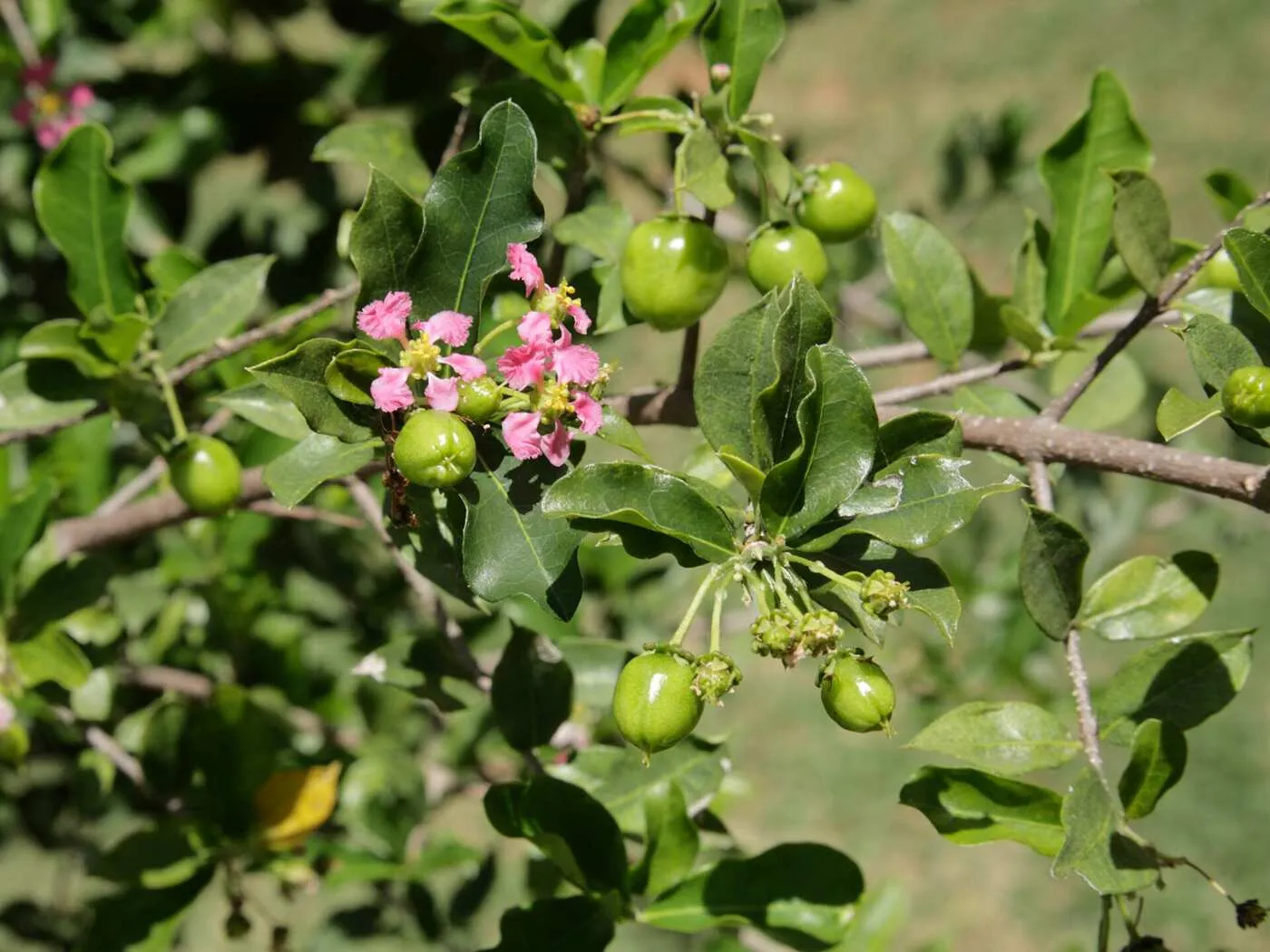 Photo: Eric Gaba ( Sting - fr:Sting ), CC BY-SA 3.0, via Wikimedia Commons
Fresh acerola fruit is highly perishable and rarely found outside producing regions. Common commercial forms include:
- Freeze-dried powder — the most concentrated form; vitamin C content per gram depends heavily on the starting material and processing.
- Juice and juice concentrate — widely sold in Brazil; vitamin C content varies significantly by brand.
- Capsules and tablets — marketed as “natural vitamin C” supplements; the amount of acerola extract and of vitamin C per serving varies widely between products.
- Cosmetic preparations — incorporated into serums and creams for topical antioxidant use, though dermal bioavailability of vitamin C is highly formulation-dependent.
There is no established clinical dose for acerola extract. The US recommended dietary allowance for vitamin C is 75 mg/day for adult women and 90 mg/day for adult men, and intakes above 2,000 mg/day are not recommended (MedlinePlus).
Two other berries in this encyclopedia are sold for the same reason: camu camu, which can carry even more vitamin C, and rose hip. The immune-nutrition guide covers what the research shows for vitamin C intake in general, which is the evidence base most acerola claims rest on.
Safety, Interactions, and Contraindications
Most safety considerations for acerola stem from its vitamin C content and apply mainly at supplement doses.
- High-dose vitamin C: acerola supplements delivering several grams of ascorbic acid per day may cause gastrointestinal symptoms (diarrhea, nausea, cramping). The tolerable upper intake level for vitamin C in adults is 2,000 mg/day (MedlinePlus).
- Kidney stones: high-dose ascorbic acid can increase urinary oxalate excretion; 2 g/day raised urinary oxalate in a controlled feeding study of stone formers and non-stone formers (Chai et al., 2004). Individuals with a history of calcium oxalate nephrolithiasis should use caution with high-dose acerola supplementation.
- Drug interactions: evidence that large doses of vitamin C reduce warfarin’s anticoagulant effect is limited and contested, but people on warfarin are advised to keep vitamin C below 1 g/day and have clotting monitored. Whether high-dose vitamin C, particularly given intravenously, alters the efficacy of some chemotherapy drugs is unclear, so patients are advised to talk to their oncologist before taking supplements (Linus Pauling Institute).
- Hemochromatosis: vitamin C enhances non-heme iron absorption, and people with iron overload are advised to avoid vitamin C supplements (NHS).
- Pregnancy: dietary acerola intake is unlikely to pose risk. Supplemental doses above the tolerable upper intake should be avoided.
This article is for informational purposes only. It does not constitute medical advice, and acerola should not be used to diagnose, treat, prevent, or cure any condition.
Frequently Asked Questions
What is acerola cherry?
Acerola cherry is the fruit of Malpighia emarginata, a tropical shrub native to the Lesser Antilles and northern South America. The bright-red fruit is 1–3 cm across, tart and highly perishable, so outside growing regions it is sold mainly as freeze-dried powder, juice concentrate or “natural vitamin C” capsules. It is also called Barbados cherry or West Indian cherry.
Is acerola cherry the same as tart cherry?
No. Acerola (Malpighia emarginata) belongs to the family Malpighiaceae, while tart cherries (Prunus cerasus) are stone fruits in the rose family. They share a red color and sour taste, but acerola carries far more vitamin C, and tart cherry research focuses on exercise recovery and sleep. See the cherry entry for tart cherry evidence.
What is acerola cherry powder?
Acerola cherry powder is dried, ground acerola fruit or juice, sold as a natural vitamin C supplement. Its vitamin C content per gram depends on the starting fruit (unripe fruit contains the most) and on processing, since heat and oxidation destroy vitamin C. Some powders are blended with carriers such as maltodextrin, so the label’s vitamin C figure is the useful number to compare.
Is acerola cherry sweet?
Acerola is mostly tart rather than sweet. Raw fruit contains about 7.7 g of carbohydrate per 100 g, and citric and malic acids give it a sharp, sour flavor. Ripe fruit is sweeter but holds less vitamin C than unripe fruit. In Brazil it is usually drunk as juice, often sweetened.
Is acerola cherry safe during pregnancy?
Eating acerola as food is unlikely to pose a risk in pregnancy. Concentrated supplements are another matter, because a small amount of powder can supply more vitamin C than needed, and doses above the tolerable upper intake level should be avoided. Anyone pregnant who is considering an acerola supplement should check the dose with a clinician.
References
Show all 11 referencesShow fewer
- Hanamura, T., Hagiwara, T., & Kawagishi, H. (2005). Structural and functional characterization of polyphenols isolated from acerola (Malpighia emarginata DC.) fruit. Bioscience, Biotechnology, and Biochemistry, 69(2), 280–286.
- Hemilä, H., & Chalker, E. (2013). Vitamin C for preventing and treating the common cold. Cochrane Database of Systematic Reviews, (1), CD000980.
- Prakash, A., & Baskaran, R. (2018). Acerola, an untapped functional superfruit: A review on latest frontiers. Journal of Food Science and Technology, 55(9), 3373–3384.
- Carr, A. C., & Maggini, S. (2017). Vitamin C and immune function. Nutrients, 9(11), 1211.
- Oliveira, L. de S., Moura, C. F., De Brito, E. S., Mamede, R. V., & De Miranda, M. R. (2012). Antioxidant metabolism during fruit development of different acerola (Malpighia emarginata D.C) clones. Journal of Agricultural and Food Chemistry, 60(32), 7957–7964.
- Morton, J. F. (1987). Barbados cherry. In Fruits of Warm Climates (pp. 204–207). Miami, FL.
- Alvarez-Suarez, J. M., et al. (2017). The protective effect of acerola (Malpighia emarginata) against oxidative damage in human dermal fibroblasts through the improvement of antioxidant enzyme activity and mitochondrial functionality. Food & Function, 8(9), 3250–3258.
- Pullar, J. M., Carr, A. C., & Vissers, M. C. M. (2017). The roles of vitamin C in skin health. Nutrients, 9(8), 866.
- Motohashi, N., et al. (2004). Biological activity of barbados cherry (acerola fruits, fruit of Malpighia emarginata DC) extracts and fractions. Phytotherapy Research, 18(3), 212–223.
- Nagamine, I., et al. (2002). Effect of acerola cherry extract on cell proliferation and activation of ras signal pathway at the promotion stage of lung tumorigenesis in mice. Journal of Nutritional Science and Vitaminology, 48(1), 69–72.
- Chai, W., Liebman, M., Kynast-Gales, S., & Massey, L. (2004). Oxalate absorption and endogenous oxalate synthesis from ascorbate in calcium oxalate stone formers and non-stone formers. American Journal of Kidney Diseases, 44(6), 1060–1069.
More in Berries
- Acai Berry (Euterpe oleracea)
Is acai good for you? What small human trials show on acai benefits for antioxidants, lipids and blood sugar, plus nutrition, acai bowls and safety.
- Blackberry (Rubus fruticosus)
What are blackberries good for? Fiber (5.3 g per 100 g), vitamin C, vitamin K and anthocyanins. Blackberry benefits, nutrition and what research shows.
- Blackcurrant (Ribes nigrum)
Blackcurrant benefits: a tart berry with 181 mg vitamin C per 100 g and dense anthocyanins. Small trials on eye fatigue, exercise recovery and cognition.
- Blueberry (Vaccinium corymbosum)
Are blueberries good for you? Trials suggest a daily cup (150 g) may help blood-vessel function; memory and blood-sugar data are early. Nutrition, safety.
- Camu Camu (Myrciaria dubia)
What is camu camu, and what are its benefits? An Amazonian berry with 1,800–3,000 mg vitamin C per 100 g, small trials on inflammation, and safety notes.
- Cranberry (Vaccinium macrocarpon)
Is cranberry juice good for you? Cranberry products modestly cut repeat UTIs in trials, but juice cocktail is sweetened and low in PACs. Benefits, safety.

Curated by Superfoods Advisor Editors·Last updated