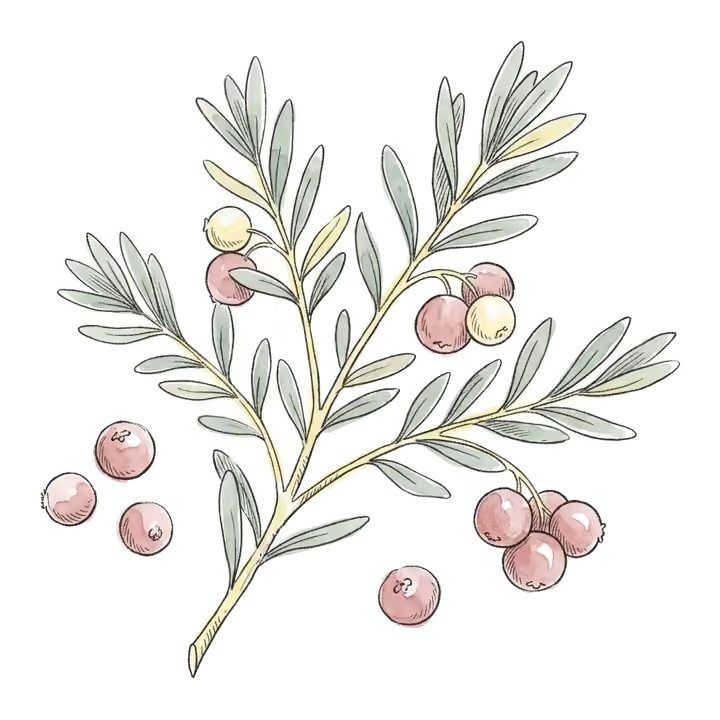
Cranberry (Vaccinium macrocarpon)
Vaccinium macrocarpon · also known as large cranberry, American cranberry, cranberry juice
By Superfoods Advisor Editors·July 3, 2026
Is cranberry juice good for you? Cranberry products modestly cut repeat UTIs in trials, but juice cocktail is sweetened and low in PACs. Benefits, safety.
Cranberry juice can be good for you in a narrow sense: cranberry products, juice included, modestly reduced repeat urinary tract infections in a 2023 Cochrane review of 50 trials. But most bottled juice cocktail is diluted, sweetened and low in the berry’s proanthocyanidins (PACs), and cranberry does not treat an active infection.
The American cranberry (Vaccinium macrocarpon Aiton) is a low-growing, trailing evergreen shrub native to eastern North America, from southeastern Canada to the Carolinas. A member of the heath family (Ericaceae) and close relative of the blueberry, the plant produces bright-red, tart berries with a thick, waxy skin. The fruit was a dietary and medicinal staple of numerous Indigenous North American peoples — Algonquin-speaking nations used cranberry in pemmican as a preservative, and various peoples used cranberry preparations for wounds, urinary complaints, and fever, practices recorded by European colonists as early as the 17th century.
Commercial cultivation began in Massachusetts in the early 19th century, and the United States and Canada are the leading producers (US production is concentrated in Massachusetts, Wisconsin, New Jersey, Oregon, and Washington). The berry’s extreme acidity makes it nearly unpalatable without sweetening; the majority of commercial production is processed into juice cocktail, sweetened dried cranberries, and dietary supplements. This processing significantly alters the berry’s nutritional composition relative to the fresh fruit.
Evidence at a glance
Active Compounds
Cranberry’s most studied bioactives are its unique A-type proanthocyanidins, which distinguish it from most other berry fruits:
- A-type proanthocyanidins (PACs) — the distinguishing feature of cranberry; most dietary fruits contain B-type procyanidins, but cranberry is one of the few foods known to contain A-type linkages (particularly A-2 type). These structural differences appear relevant to their anti-adhesion activity against uropathogenic Escherichia coli (UPEC). Raw cranberries contain roughly 355 mg of PACs per 100 g, most of it as polymers larger than ten units (USDA Proanthocyanidin Database, 2015); reported values vary considerably with the analytical method.
- Quercetin and myricetin glycosides — flavonol content among the highest in common fruits, about 17 mg quercetin and 8 mg myricetin per 100 g, expressed as aglycones (USDA Flavonoid Database, 2018).
- Anthocyanins — cyanidin, peonidin, and their glucosides and galactosides; approximately 140 mg per 100 g fresh weight (Wu et al., 2006).
- Hydroxycinnamic acids — chlorogenic acid and caffeic acid derivatives.
- Ursolic acid and oleanolic acid — pentacyclic triterpenoids from the skin; potential anti-inflammatory activity.
- Benzoic acid — a naturally occurring preservative compound.
- Vitamin C — approximately 14 mg per 100 g fresh weight (USDA FoodData Central).
Nutritional Profile
Values below are for raw cranberries per 100 g (USDA FoodData Central, “Cranberries, raw”, FDC 171722):
| Nutrient | Amount per 100 g | % DV |
|---|---|---|
| Energy | 46 kcal | — |
| Total fat | 0.1 g | — |
| Total carbohydrates | 12.0 g | — |
| Dietary fiber | 3.6 g | — |
| Total sugars | 4.3 g | — |
| Protein | 0.5 g | — |
| Vitamin C | 14 mg | — |
| Vitamin K | 5 µg | — |
| Vitamin E | 1.3 mg | — |
| Manganese | 0.27 mg | — |
| Potassium | 80 mg | — |
| Copper | 0.06 mg | — |
Note: sweetened dried cranberries and commercial cranberry juice cocktail differ substantially from the raw berry. Sweetened dried cranberries contain about 73 g of total sugars per 100 g, most of it added (USDA FoodData Central), and bottled juice cocktail carries a small fraction of the raw berry’s flavonols and PACs (USDA Flavonoid Database, 2018; USDA Proanthocyanidin Database, 2015).
Evidence for Purported Benefits
Cranberry has the most extensively studied specific health claim of any berry — the prevention of urinary tract infections. Other areas of investigation are more preliminary.
Urinary Tract Infection Prevention
Evidence:Moderate A 2023 Cochrane review of 50 RCTs found fewer UTIs in several groups; an earlier review did not. Prevention only.
The proposed mechanism is inhibition of UPEC adherence to uroepithelial cells via A-type PACs, preventing bacterial colonization. A-type PAC trimers isolated from cranberry blocked adherence of P-fimbriated UPEC to receptor-bearing cell surfaces in the laboratory, while the B-type dimer was inactive (Foo et al., 2000). In vitro evidence for this mechanism is strong and reproducible.
Human clinical evidence is more mixed. A 2012 Cochrane systematic review by Jepson and colleagues (24 RCTs, n=4,473) found that cranberry products did not significantly reduce symptomatic UTI overall (RR 0.86, 95% CI 0.71–1.04) or in women with recurrent infections (RR 0.74, 95% CI 0.42–1.31). A 2023 updated Cochrane review by Williams and colleagues (50 RCTs, n=8,857) found, with moderate certainty, that cranberry products reduced symptomatic, culture-verified UTIs overall (RR 0.70, 95% CI 0.58–0.84), with benefit in women with recurrent UTIs, children, and people susceptible to UTIs after a medical intervention, but little or no benefit in elderly institutionalized adults, pregnant women, or adults with neuromuscular bladder dysfunction.
Current evidence supports cranberry supplementation as a reasonable adjunct for recurrent UTI prevention; it is not an established treatment for active UTI. Antibiotics remain the standard of care for treatment.
Cardiovascular Risk Markers
Evidence:Limited A few short-term RCTs, partly industry-linked, show modest marker changes; no outcome trials.
Several short-term trials have found improvements in cardiovascular risk markers with cranberry supplementation. A narrative review by Blumberg and colleagues (2013, Advances in Nutrition), supported by an honorarium from the Cranberry Institute, described the evidence for a cardioprotective effect of cranberries, acting through antioxidant capacity and lipoprotein profiles, as encouraging but limited. A 2019 RCT by Chew and colleagues (European Journal of Nutrition, n=78 overweight adults) found that 450 ml/day of a low-calorie, high-polyphenol cranberry beverage for eight weeks lowered fasting CRP and serum insulin and raised HDL cholesterol compared to placebo; two of the authors were employees of the beverage’s manufacturer. Effect sizes are modest; large-scale cardiovascular outcome trials have not been conducted.
Blood Glucose and Metabolic Effects
Evidence:Preliminary One eight-week RCT showing lower fasting insulin, plus in vitro enzyme data.
Preliminary studies suggest cranberry may influence glucose regulation; in vitro, a phenolic-enriched cranberry powder inhibited alpha-glucosidase, an activity the authors linked to its phenolic acids and quercetin derivatives rather than PACs (Pinto et al., 2010). In the Chew et al. (2019) trial described above, eight weeks of a low-calorie cranberry beverage reduced fasting serum insulin compared to placebo in overweight adults. Larger adequately powered trials are needed.
Anti-adhesion Effects in Oral Health
Evidence:Preliminary Lab adhesion studies and one small mouthwash trial that lowered bacteria counts but not plaque.
Laboratory studies suggest high-molecular-weight cranberry constituents may inhibit adhesion of oral bacteria such as mutans streptococci to tooth-like surfaces. Human evidence is limited to small trials: in one, six weeks of a cranberry mouthwash lowered salivary mutans streptococci counts versus placebo but did not change plaque or gingival indices (Weiss et al., 2004); commercial mouthwash or supplement claims in this area substantially outpace the evidence.
Typical Use and Preparation
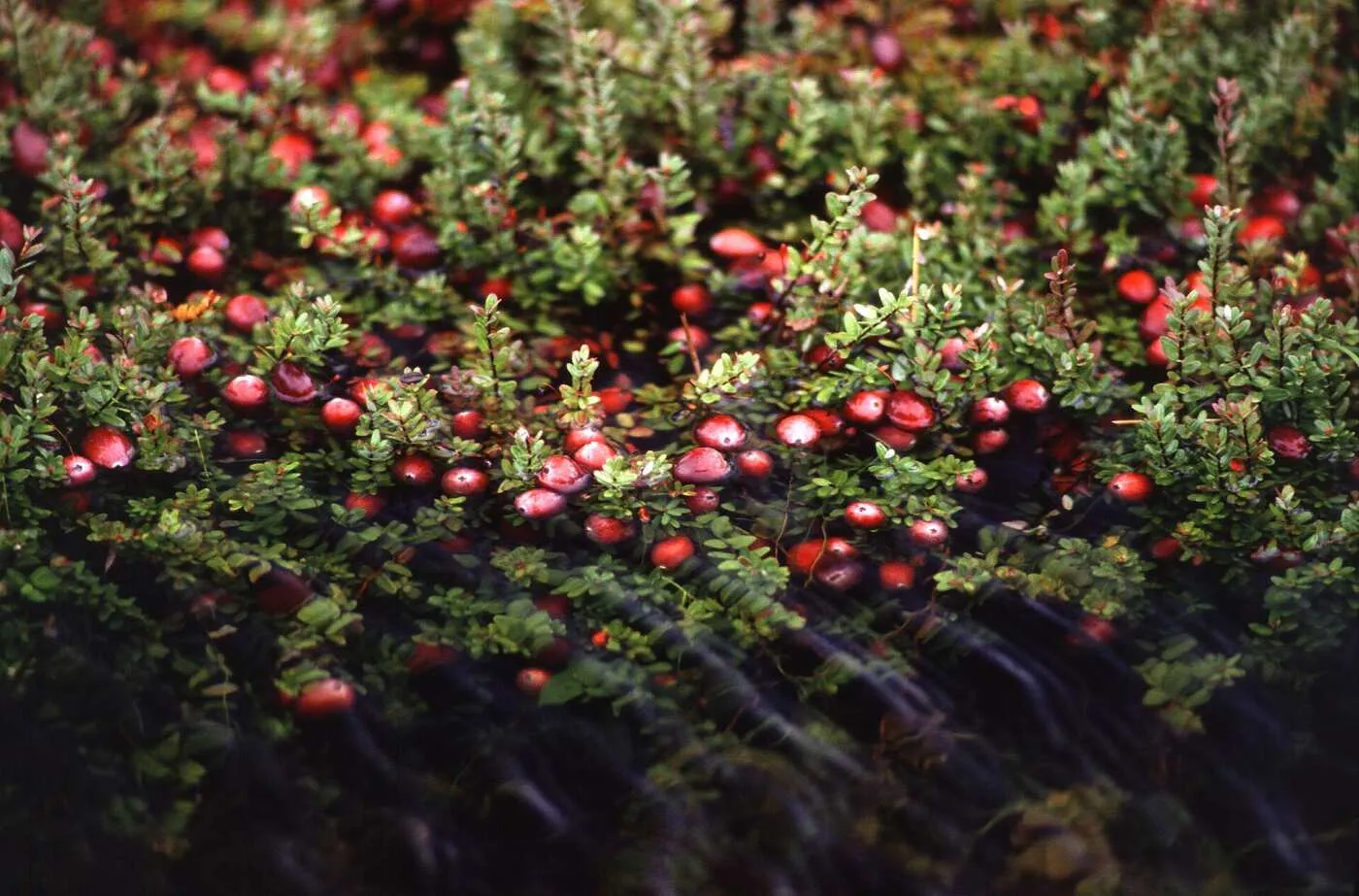 Photo: Photo by Keith Weller, public domain, via Wikimedia Commons
Due to extreme tartness, raw cranberries are rarely consumed directly. Common forms:
- Cranberry juice cocktail — the dominant commercial product; cranberry juice is a minority ingredient, diluted with water and sweetened; the label states the juice percentage. Low polyphenol content relative to supplements.
- 100% cranberry juice — unsweetened; significantly higher PAC content than cocktail but still lower than standardized supplements.
- Dried sweetened cranberries — high in added sugar; some PAC content retained depending on processing.
- Capsule and tablet supplements — standardized to PAC content. Extract weight per capsule says little on its own; the PAC amount, and the assay used to measure it, matter more.
- Juice concentrate in capsules — standardized PAC content allows consistent dosing.
A 2024 meta-analysis of ten RCTs found a reduced UTI risk only when products supplied at least 36 mg PAC per day (RR 0.82, 95% CI 0.69–0.98), with no significant effect below that intake (Xiong et al., 2024). In a small randomized study of urine samples, anti-adhesion activity rose with dose and persisted up to 24 hours at 72 mg PAC per day (Howell et al., 2010).
The anti-inflammatory pantry guide cites a meta-analysis of blueberry and cranberry supplementation and places both berries among other everyday staples.
Safety, Interactions, and Contraindications
Cranberry taken by mouth is generally thought to be safe; very large amounts can cause stomach upset and diarrhea, particularly in young children (NCCIH).
- Warfarin (Coumadin) interaction: case reports to the UK Committee on Safety of Medicines associated cranberry juice with raised INR and bleeding, prompting a UK regulatory warning (Suvarna et al., 2003). Controlled studies are conflicting. In healthy men, two weeks of cranberry raised the warfarin INR response without changing warfarin blood levels (Mohammed Abdul et al., 2008), while a randomized trial in 30 patients on stable warfarin found no clinically important effect of daily cranberry juice (Ansell et al., 2009). CYP2C9 inhibition, once proposed as the mechanism, is not supported in humans: cranberry juice did not alter clearance of the CYP2C9 probe flurbiprofen (Greenblatt et al., 2006). NCCIH describes the evidence as conflicting (NCCIH); people taking warfarin should talk to their prescriber before using cranberry supplements and have INR monitored if intake changes.
- Kidney stones: small studies disagree. A 2001 study by Terris and colleagues found that in five healthy volunteers, 7 days of cranberry concentrate tablets at the manufacturer’s recommended dose increased urinary oxalate excretion by an average of 43%. A crossover study of cranberry juice reported higher urinary calcium and oxalate and an overall increase in calcium oxalate stone risk (Gettman et al., 2005), whereas another found that diluted cranberry juice lowered oxalate excretion (McHarg et al., 2003). Patients with calcium oxalate nephrolithiasis should use caution with supplemental cranberry and consult a healthcare provider.
- Aspirin sensitivity: drinking 750 mL of cranberry juice daily for two weeks raised salicylic acid in urine and, slightly, in plasma (Duthie et al., 2005); salicylate-sensitive individuals may wish to use caution.
- Urinary acidification: cranberry was historically thought to inhibit bacteria by acidifying urine. Even 1 L of juice a day lowered urine pH only modestly, from 5.97 to 5.67 (Gettman et al., 2005), and the PAC anti-adhesion mechanism is now considered more relevant.
- Pregnancy and lactation: some studies suggest cranberry is safe in amounts commonly found in food, but the evidence is not conclusive for larger amounts; NCCIH advises talking with a healthcare provider first (NCCIH).
This article is for informational purposes only. It does not constitute medical advice, and cranberry should not be used to diagnose, treat, prevent, or cure any condition.
Frequently Asked Questions
What is cranberry juice good for?
Cranberry juice is best known for urinary tract health. Cranberry’s A-type proanthocyanidins stop E. coli sticking to urinary tract cells in the laboratory, and a 2023 Cochrane review found cranberry products reduced symptomatic UTIs in women with recurrent infections, children and people after medical procedures. Evidence for heart and blood-sugar benefits comes from a few small, short trials.
Is cranberry juice full of sugar?
Juice cocktail usually is. Cranberries are so tart that cocktail is mostly water and added sugar, with cranberry juice as a minority ingredient; the label states the juice percentage. Unsweetened 100% cranberry juice has no added sugar and more PACs, but is very sour. Raw cranberries contain only about 4.3 g of sugar per 100 g.
Can cranberry juice cure a UTI?
No. Cranberry has been studied for preventing urinary tract infections, not treating them, and antibiotics remain the standard treatment for an active infection. Anyone with UTI symptoms such as burning, urgency, fever or back pain should see a clinician rather than rely on cranberry juice or supplements.
Is cranberry juice good for your kidneys?
No trial shows cranberry juice benefits kidney function. For kidney stones, the small studies disagree: cranberry tablets and one juice study raised urinary oxalate and calcium oxalate stone risk, while diluted juice lowered oxalate in another. People with a history of calcium oxalate stones should talk to a healthcare provider before regular cranberry use.
Does cranberry juice make you poop?
It can in large amounts. According to NCCIH, very large amounts of cranberry can cause stomach upset and diarrhea, particularly in young children. Ordinary servings are generally well tolerated. Anyone whose diarrhea persists should stop drinking it and see a clinician.
Does cranberry juice have fiber?
Raw cranberries provide about 3.6 g of fiber per 100 g in the USDA figures on this page. Juice is pressed from the fruit and is generally described as keeping little of that fiber, though products differ. The Nutrition Facts panel shows how much a given bottle contains. For the fiber, whole, frozen or unsweetened dried cranberries are the usual choice rather than juice.
References
Show all 22 referencesShow fewer
- Jepson, R. G., Williams, G., & Craig, J. C. (2012). Cranberries for preventing urinary tract infections. Cochrane Database of Systematic Reviews, (10), CD001321.
- Williams, G., Hahn, D., Stephens, J. H., Craig, J. C., & Hodson, E. M. (2023). Cranberries for preventing urinary tract infections. Cochrane Database of Systematic Reviews, 4(4), CD001321.
- Blumberg, J. B., Camesano, T. A., Cassidy, A., Kris-Etherton, P., Howell, A., Manach, C., … & Vita, J. A. (2013). Cranberries and their bioactive constituents in human health. Advances in Nutrition, 4(6), 618–632.
- Chew, B., Mathison, B., Kimble, L., McKay, D., Kaspar, K., Khoo, C., … & Blumberg, J. (2019). Chronic consumption of a low calorie, high polyphenol cranberry beverage attenuates inflammation and improves glucoregulation and HDL cholesterol in healthy overweight humans: A randomized controlled trial. European Journal of Nutrition, 58(3), 1223–1235.
- Terris, M. K., Issa, M. M., & Tacker, J. R. (2001). Dietary supplementation with cranberry concentrate tablets may increase the risk of nephrolithiasis. Urology, 57(1), 26–29.
- Wu, X., Beecher, G. R., Holden, J. M., Haytowitz, D. B., Gebhardt, S. E., & Prior, R. L. (2006). Concentrations of anthocyanins in common foods in the United States and estimation of normal consumption. Journal of Agricultural and Food Chemistry, 54(11), 4069–4075.
- Xiong, Z., Gao, Y., Yuan, C., Jian, Z., & Wei, X. (2024). Preventive effect of cranberries with high dose of proanthocyanidins on urinary tract infections: a meta-analysis and systematic review. Frontiers in Nutrition, 11, 1422121.
- Howell, A. B., Botto, H., Combescure, C., et al. (2010). Dosage effect on uropathogenic Escherichia coli anti-adhesion activity in urine following consumption of cranberry powder standardized for proanthocyanidin content: a multicentric randomized double blind study. BMC Infectious Diseases, 10, 94.
- USDA FoodData Central. Cranberries, raw (FDC 171722).
- Bhagwat, S., & Haytowitz, D. B. (2015). USDA Database for the Proanthocyanidin Content of Selected Foods, Release 2.
- Haytowitz, D. B., Wu, X., & Bhagwat, S. (2018). USDA Database for the Flavonoid Content of Selected Foods, Release 3.3.
- Foo, L. Y., Lu, Y., Howell, A. B., & Vorsa, N. (2000). A-type proanthocyanidin trimers from cranberry that inhibit adherence of uropathogenic P-fimbriated Escherichia coli. Journal of Natural Products, 63(9), 1225–1228.
- Pinto, M. da S., et al. (2010). Potential of cranberry powder for management of hyperglycemia using in vitro models. Journal of Medicinal Food, 13(5), 1036–1044.
- Weiss, E. I., et al. (2004). A high molecular mass cranberry constituent reduces mutans streptococci level in saliva and inhibits in vitro adhesion to hydroxyapatite. FEMS Microbiology Letters, 232(1), 89–92.
- Suvarna, R., Pirmohamed, M., & Henderson, L. (2003). Possible interaction between warfarin and cranberry juice. BMJ, 327(7429), 1454.
- Mohammed Abdul, M. I., et al. (2008). Pharmacodynamic interaction of warfarin with cranberry but not with garlic in healthy subjects. British Journal of Pharmacology, 154(8), 1691–1700.
- Ansell, J., et al. (2009). The absence of an interaction between warfarin and cranberry juice: a randomized, double-blind trial. Journal of Clinical Pharmacology, 49(7), 824–830.
- Greenblatt, D. J., et al. (2006). Interaction of flurbiprofen with cranberry juice, grape juice, tea, and fluconazole: in vitro and clinical studies. Clinical Pharmacology & Therapeutics, 79(1), 125–133.
- Gettman, M. T., et al. (2005). Effect of cranberry juice consumption on urinary stone risk factors. Journal of Urology, 174(2), 590–594.
- McHarg, T., Rodgers, A., & Charlton, K. (2003). Influence of cranberry juice on the urinary risk factors for calcium oxalate kidney stone formation. BJU International, 92(7), 765–768.
- Duthie, G. G., et al. (2005). Increased salicylate concentrations in urine of human volunteers after consumption of cranberry juice. Journal of Agricultural and Food Chemistry, 53(8), 2897–2900.
- National Center for Complementary and Integrative Health. Cranberry.
Related content
More in Berries
- Acai Berry (Euterpe oleracea)
Is acai good for you? What small human trials show on acai benefits for antioxidants, lipids and blood sugar, plus nutrition, acai bowls and safety.
- Acerola Cherry (Malpighia emarginata)
Acerola cherry benefits come mostly from its vitamin C, about 1,680 mg per 100 g. What the evidence shows for immunity, skin and antioxidants, and safety.
- Blackberry (Rubus fruticosus)
What are blackberries good for? Fiber (5.3 g per 100 g), vitamin C, vitamin K and anthocyanins. Blackberry benefits, nutrition and what research shows.
- Blackcurrant (Ribes nigrum)
Blackcurrant benefits: a tart berry with 181 mg vitamin C per 100 g and dense anthocyanins. Small trials on eye fatigue, exercise recovery and cognition.
- Blueberry (Vaccinium corymbosum)
Are blueberries good for you? Trials suggest a daily cup (150 g) may help blood-vessel function; memory and blood-sugar data are early. Nutrition, safety.
- Camu Camu (Myrciaria dubia)
What is camu camu, and what are its benefits? An Amazonian berry with 1,800–3,000 mg vitamin C per 100 g, small trials on inflammation, and safety notes.

Curated by Superfoods Advisor Editors·Last updated