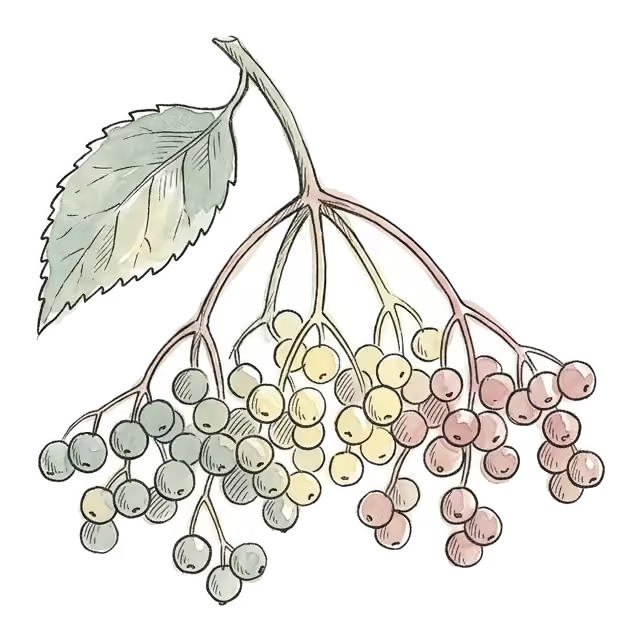
Elderberry (Sambucus nigra)
Sambucus nigra · also known as black elderberry, European elderberry, elder, sambucus, elderflower berry
By Superfoods Advisor Editors·July 3, 2026
What is elderberry good for? Small trials suggest shorter cold and flu symptoms, but reviews call it uncertain. Syrup, gummies and raw-berry toxicity.
Elderberry is mostly used for colds and flu. Black elderberry (Sambucus nigra), the dark-purple fruit of a European shrub, is sold as syrup, gummies and capsules, and a few small trials reported shorter or milder cold and influenza symptoms. A 2021 systematic review judged that evidence uncertain (Wieland et al., 2021), and raw berries are toxic.
The plant is a deciduous shrub or small tree in the family Adoxaceae (formerly Caprifoliaceae), native across Europe, North Africa and southwestern Asia and naturalized in North America and Australasia. It bears small drupes in flattened clusters. Pliny the Elder described its medicinal uses in the first century CE, and medieval herbalists used nearly every part of the plant.
The berry must be cooked before eating: raw or unripe berries, leaves and stems contain cyanide-producing compounds such as sambunigrin that can cause nausea, vomiting and severe diarrhea, and cooking eliminates this toxin (NCCIH).
Evidence at a glance
Active Compounds
Elderberry’s bioactive profile is characterized by high anthocyanin content, particularly cyanidin-based compounds, alongside diverse flavonoids and phenolic acids:
- Cyanidin-3-glucoside and cyanidin-3-sambubioside — the two dominant anthocyanins; together they typically account for about 85–90% of total anthocyanin content (Merecz-Sadowska et al., 2024). Reported total anthocyanin content in fresh berries ranges from roughly 270 to over 1,400 mg per 100 g depending on cultivar and harvest year (Osman et al., 2023), placing elderberry among the richest temperate fruit sources.
- Cyanidin-3-rutinoside and cyanidin-3,5-diglucoside — minor anthocyanin contributors.
- Quercetin, kaempferol, and isorhamnetin — flavonols, present in the berry mainly as glycosides such as rutin; anti-inflammatory and antiviral activity has been reported in laboratory studies.
- Rutin — quercetin-3-rutinoside; found in both berries and flowers; historically used for capillary fragility.
- Chlorogenic acid and neochlorogenic acid — hydroxycinnamic acid derivatives contributing antioxidant capacity and potential antiviral activity.
- Sambunigrin — a cyanogenic glycoside found in seeds, bark, leaves, stems, and unripe berries; potentially toxic in sufficient quantities; eliminated by cooking (NCCIH).
- Vitamin C — approximately 36 mg per 100 g fresh weight (USDA FoodData Central).
- Dietary fiber — approximately 7 g per 100 g, notably high (USDA FoodData Central).
Nutritional Profile
Values below are for raw elderberries per 100 g (USDA FoodData Central, FDC 171727):
| Nutrient | Amount per 100 g | % DV |
|---|---|---|
| Energy | 73 kcal | — |
| Total fat | 0.5 g | — |
| Total carbohydrates | 18.4 g | — |
| Dietary fiber | 7.0 g | — |
| Protein | 0.7 g | — |
| Vitamin C | 36 mg | — |
| Vitamin A (RAE) | 30 µg | — |
| Vitamin B6 | 0.23 mg | — |
| Folate | 6 µg | — |
| Iron | 1.6 mg | — |
| Potassium | 280 mg | — |
| Phosphorus | 39 mg | — |
Note: commercial elderberry preparations differ substantially from fresh berry values due to concentration, added ingredients (honey, sugar, citric acid), and heat processing.
Evidence for Purported Benefits
Elderberry has a more developed clinical trial base for immune-related endpoints than most berry-based supplements, though individual trials remain small, publication bias cannot be excluded, and a 2021 systematic review of five randomized trials judged the evidence on both benefits and harms uncertain (Wieland et al., 2021).
Upper Respiratory Infection (Cold and Influenza) Symptom Duration
Evidence:Limited A few small RCTs suggest shorter symptoms; pooled data cover only 180 people, and a later review called the effect uncertain.
A randomized, double-blind, placebo-controlled trial by Zakay-Rones and colleagues (2004, Journal of International Medical Research, n=60) found that adults with influenza-like symptoms of 48 hours or less, enrolled during the 1999–2000 Norwegian flu season, who took 15 ml of elderberry syrup (Sambucol) four times daily for 5 days had symptom relief on average four days earlier, and used less rescue medication, than those receiving placebo; the authors called for a larger confirmatory study. An earlier small placebo-controlled study from the same lead author (1995, Journal of Alternative and Complementary Medicine), conducted during an influenza B outbreak on an Israeli kibbutz, also reported faster symptom improvement with elderberry extract.
A 2016 RCT by Tiralongo and colleagues (Nutrients, n=312) of economy-class passengers flying from Australia overseas found that colds were not significantly less frequent with elderberry extract (12 vs 17 episodes, p = 0.4), but the placebo group had significantly more total cold-episode days (117 vs 57) and higher symptom scores. The study is notable for its larger sample size and relevance to a realistic exposure scenario.
A 2019 meta-analysis of randomized controlled trials by Hawkins and colleagues (Complementary Therapies in Medicine) pooled data from only 180 participants and reported a large effect of elderberry in reducing upper respiratory symptoms. The small total sample limits confidence; no trial was adequately powered to detect effects on disease incidence or complications. A later systematic review concluded that elderberry may not reduce the risk of catching a cold and that any effect on cold or influenza duration is uncertain (Wieland et al., 2021).
Immune Modulation and Cytokine Activity
Evidence:Limited Mostly cell and mouse work; human data come from a few small studies measuring cytokines ex vivo.
In laboratory studies, elderberry extracts increased production of IL-1β, TNF-α, IL-6, and IL-8 by human blood monocytes (Barak et al., 2001), reduced hemagglutination by influenza viruses (Zakay-Rones et al., 1995), and blocked H1N1 entry into cells (Roschek et al., 2009). In infected mice, concentrated elderberry juice suppressed influenza replication and raised antibody levels (Kinoshita et al., 2012). Human data on cytokine changes are limited to a few small studies measuring cytokines ex vivo (Wieland et al., 2021). A theoretical concern has been raised that elderberry-driven cytokine upregulation could, in theory, worsen inflammatory disease or potentially contribute to cytokine storm in severe respiratory infections. A 2021 systematic review found no studies linking elderberry to clinical inflammatory outcomes and no evidence that it overstimulates the immune system, though the evidence base is small (Wieland et al., 2021); most published trials studied mild-to-moderate infections in otherwise healthy adults.
Antioxidant Activity
Evidence:Limited Clear in vitro activity; human studies of antioxidant status are few and small.
Elderberry fruit preparations show antioxidant activity in vitro (Vlachojannis et al., 2010). Studies measuring plasma antioxidant status in humans following elderberry consumption are limited and small; no adequately controlled human trial has specifically examined elderberry’s effects on systemic oxidative stress in clinical populations.
Cardiovascular Risk Markers
Evidence:Insufficient One small placebo-controlled RCT found no significant effect on cholesterol or LDL oxidation.
A 2004 randomized, placebo-controlled trial by Murkovic and colleagues (European Journal of Clinical Nutrition, n=34) found that 2 weeks of a low-dose elderberry extract produced only a small, non-significant drop in cholesterol, and resistance of LDL to oxidation did not change over 3 weeks. The authors concluded the extract had only a minor effect on serum lipids and antioxidant capacity at that dose. Formal cardiovascular outcomes research has not been conducted.
Typical Use and Preparation
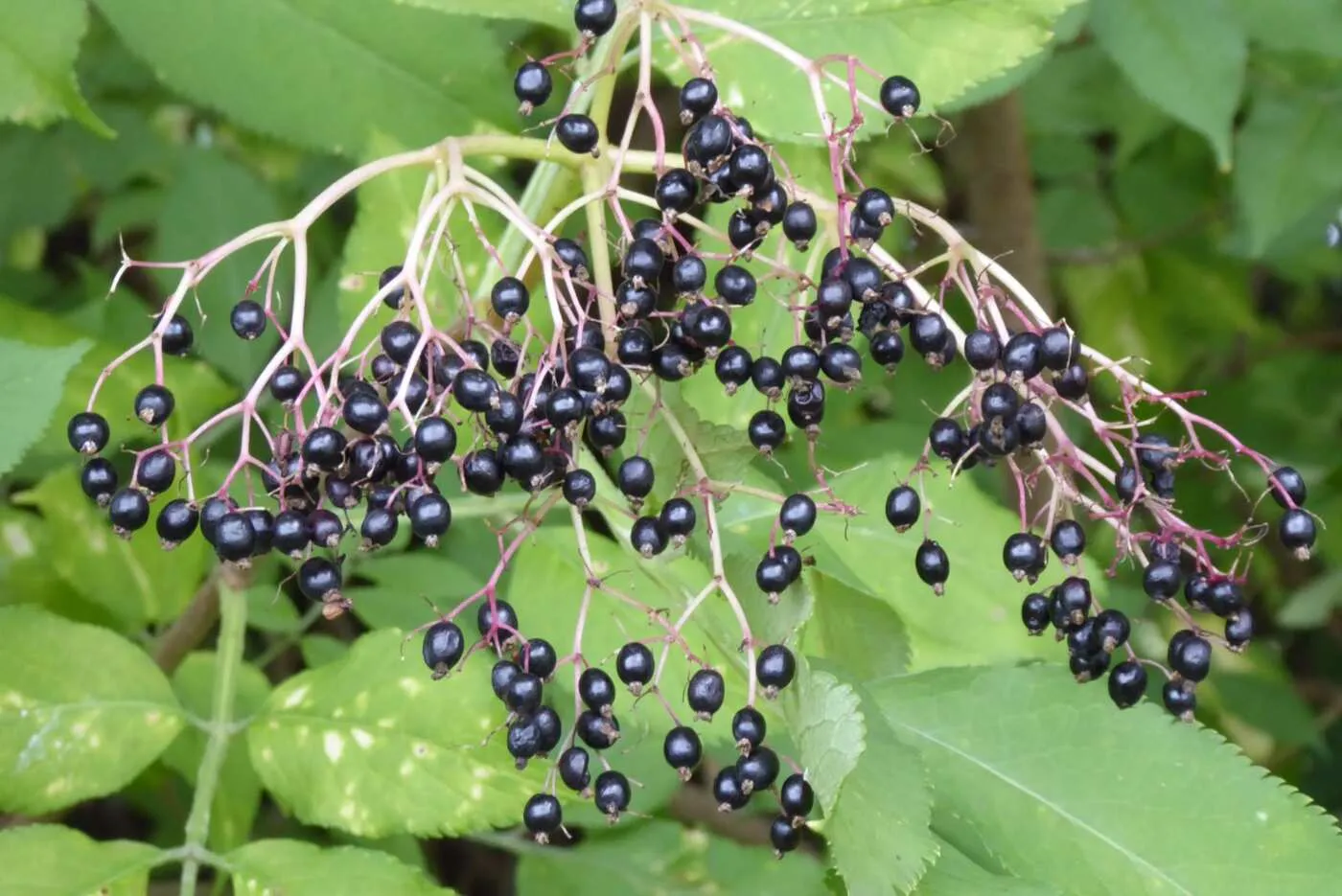 Photo: Philip Halling, CC BY-SA 2.0, via Wikimedia Commons
Important: raw elderberries, including seeds, leaves, bark, and unripe fruit, should not be consumed directly. They contain sambunigrin and related cyanogenic glycosides that can cause nausea, vomiting, and diarrhea; cooking eliminates this toxin (NCCIH). Reputable commercial products are made from cooked or heat-treated berries; homemade preparations should be thoroughly cooked.
Common forms:
- Elderberry syrup — the most traditional prepared form; serving sizes vary by product (the 2004 influenza trial used 15 ml four times daily), and some syrups are standardized to cyanidin-3-glucoside content. DIY preparations using home-cooked dried berries are widely practiced.
- Capsules and tablets — elderberry extract standardized to anthocyanin content; extract strength and recommended doses vary widely between products.
- Lozenges and gummies — popular for palatability, particularly in children; polyphenol content varies markedly by brand.
- Elderberry tea — made from dried berries or flowers; tea was not the form tested in the clinical trials.
Most RCTs used proprietary standardized extracts (Sambucol in the influenza trials, a membrane-filtered extract in the air-travel trial) in specific doses; results may not generalize to all commercial preparations.
The immune-support guide discusses elderberry alongside other foods and supplements studied for colds and influenza, including vitamin C sources such as acerola cherry.
Safety, Interactions, and Contraindications
Few adverse effects were reported for properly prepared elderberry products in the published trials, though a 2021 systematic review judged the evidence on harms uncertain (Wieland et al., 2021). Several safety considerations warrant attention:
- Raw berry toxicity: raw or unripe berries, leaves, and stems contain cyanide-producing compounds that can cause nausea, vomiting, and severe diarrhea; large quantities may cause serious illness (NCCIH). In American elderberry, cyanogenic potential was highest in stems and green berries, and none was quantifiable in commercial juice (Appenteng et al., 2021), so the concern applies mainly to raw berries and home preparation.
- Autoimmune conditions: because elderberry may stimulate cytokine production and immune activity, individuals with autoimmune diseases (lupus, rheumatoid arthritis, multiple sclerosis, Crohn’s disease) or those on immunosuppressive therapy should consult a healthcare provider before use. The risk of disease flare is theoretical; a 2021 systematic review found no studies linking elderberry to clinical inflammatory outcomes (Wieland et al., 2021).
- Immunosuppressant drug interactions: theoretical concern about reduced efficacy of immunosuppressants (tacrolimus, cyclosporine, corticosteroids) with concurrent elderberry use, extrapolated from its immune-stimulating effects in laboratory studies rather than from human data. NCCIH advises anyone taking medication to check with a health care provider before using elderberry (NCCIH).
- Cytokine storm concern: some clinicians have raised the theoretical possibility that elderberry’s cytokine-stimulating effects could exacerbate the cytokine storm seen in severe COVID-19 or influenza. A 2021 systematic review found no evidence that elderberry overstimulates the immune system, but the trials it reviewed studied mild-to-moderate infections (Wieland et al., 2021). NCCIH states there is no good evidence to support elderberry for COVID-19 (NCCIH). The risk-benefit profile in severe infection remains uncertain.
- Children: the published trials enrolled mainly adults, and safety data in children are limited.
- Pregnancy and lactation: little is known about whether it is safe to use elderberry for health purposes during pregnancy or while breastfeeding (NCCIH).
- Allergic reactions: uncommon. In an Austrian allergy clinic, 0.6% of 3,668 patients tested were sensitized to elderberry; the main allergen occurs in its pollen, flowers, and berries, and IgE binding was not meaningfully inhibited by birch, grass, or mugwort pollen extracts (Förster-Waldl et al., 2003).
This article is for informational purposes only. It does not constitute medical advice, and elderberry should not be used to diagnose, treat, prevent, or cure any condition.
Frequently Asked Questions
What is elderberry?
Elderberry is the small dark-purple fruit of the elder shrub, most often black elderberry (Sambucus nigra) from Europe. The berries grow in flat clusters and are rich in anthocyanins, with about 36 mg of vitamin C and 7 g of fiber per 100 g raw. Because raw berries are toxic, elderberry is eaten cooked or taken as syrup, extract, gummies or lozenges.
Does elderberry help with colds and flu?
It may shorten symptoms, but the evidence is thin. Small randomized trials reported faster recovery from influenza-like illness and shorter colds in air travelers, and a 2019 meta-analysis found a large effect, but across only 180 people. A 2021 systematic review concluded elderberry may not prevent colds and that its effect on duration is uncertain.
Is elderberry poisonous?
Raw elderberries can be. Unripe or raw berries, seeds, leaves, bark and stems contain sambunigrin and related compounds that release cyanide and can cause nausea, vomiting and severe diarrhea; large amounts may cause serious illness. Cooking eliminates the toxin, and an analysis of American elderberry found no quantifiable cyanogenic potential in commercial juice.
How much elderberry syrup should you take per day?
There is no established dose, and products differ in strength. The 2004 influenza trial used 15 ml of a standardized syrup four times daily for five days, started within 48 hours of symptoms. That dose applies to that product only. Following the label, and checking with a clinician for children or anyone on medication, is the practical approach.
Is elderberry safe during pregnancy?
Little is known. According to NCCIH, there is not enough research to say whether elderberry is safe to use for health purposes during pregnancy or while breastfeeding. The published trials enrolled mainly non-pregnant adults. Anyone pregnant or breastfeeding should talk to a healthcare provider before using elderberry products.
References
Show all 15 referencesShow fewer
- Zakay-Rones, Z., Thom, E., Wollan, T., & Wadstein, J. (2004). Randomized study of the efficacy and safety of oral elderberry extract in the treatment of influenza A and B virus infections. Journal of International Medical Research, 32(2), 132–140.
- Tiralongo, E., Wee, S. S., & Lea, R. A. (2016). Elderberry supplementation reduces cold duration and symptoms in air-travellers: A randomized, double-blind placebo-controlled clinical trial. Nutrients, 8(4), 182.
- Hawkins, J., Baker, C., Cherry, L., & Dunne, E. (2019). Black elderberry (Sambucus nigra) supplementation effectively treats upper respiratory symptoms: A meta-analysis of randomized, controlled clinical trials. Complementary Therapies in Medicine, 42, 361–365.
- Vlachojannis, J. E., Cameron, M., & Chrubasik, S. (2010). A systematic review on the sambuci fructus effect and efficacy profiles. Phytotherapy Research, 24(1), 1–8.
- Murkovic, M., Abuja, P. M., Bergmann, A. R., Zirngast, A., Adam, U., Winklhofer-Roob, B. M., & Toplak, H. (2004). Effects of elderberry juice on fasting and postprandial serum lipids and low-density lipoprotein oxidation in healthy volunteers: A randomized, double-blind, placebo-controlled study. European Journal of Clinical Nutrition, 58(2), 244–249.
- Kinoshita, E., Hayashi, K., Katayama, H., Hayashi, T., & Obata, A. (2012). Anti-influenza virus effects of elderberry juice and its fractions. Bioscience, Biotechnology, and Biochemistry, 76(9), 1633–1638.
- Zakay-Rones, Z., Varsano, N., Zlotnik, M., Manor, O., Regev, L., Schlesinger, M., & Mumcuoglu, M. (1995). Inhibition of several strains of influenza virus in vitro and reduction of symptoms by an elderberry extract (Sambucus nigra L.) during an outbreak of influenza B Panama. Journal of Alternative and Complementary Medicine, 1(4), 361–369.
- Osman, A. G., Avula, B., Katragunta, K., Ali, Z., Chittiboyina, A. G., & Khan, I. A. (2023). Elderberry extracts: Characterization of the polyphenolic chemical composition, quality consistency, safety, adulteration, and attenuation of oxidative stress- and inflammation-induced health disorders. Molecules, 28(7), 3148.
- Merecz-Sadowska, A., Sitarek, P., Zajdel, K., Sztandera, W., & Zajdel, R. (2024). Genus Sambucus: Exploring its potential as a functional food ingredient with neuroprotective properties mediated by antioxidant and anti-inflammatory mechanisms. International Journal of Molecular Sciences, 25(14), 7843.
- Wieland, L. S., Piechotta, V., Feinberg, T., Ludeman, E., Hutton, B., Kanji, S., Seely, D., & Garritty, C. (2021). Elderberry for prevention and treatment of viral respiratory illnesses: A systematic review. BMC Complementary Medicine and Therapies, 21(1), 112.
- Barak, V., Halperin, T., & Kalickman, I. (2001). The effect of Sambucol, a black elderberry-based, natural product, on the production of human cytokines: I. Inflammatory cytokines. European Cytokine Network, 12(2), 290–296.
- Roschek, B., Jr., Fink, R. C., McMichael, M. D., Li, D., & Alberte, R. S. (2009). Elderberry flavonoids bind to and prevent H1N1 infection in vitro. Phytochemistry, 70(10), 1255–1261.
- Förster-Waldl, E., Marchetti, M., Schöll, I., et al. (2003). Type I allergy to elderberry (Sambucus nigra) is elicited by a 33.2 kDa allergen with significant homology to ribosomal inactivating proteins. Clinical & Experimental Allergy, 33(12), 1703–1710.
- Appenteng, M. K., Krueger, R., Johnson, M. C., Ingold, H., Bell, R., Thomas, A. L., & Greenlief, C. M. (2021). Cyanogenic glycoside analysis in American elderberry. Molecules, 26(5), 1384.
- National Center for Complementary and Integrative Health. European Elder.
Related content
More in Berries
- Acai Berry (Euterpe oleracea)
Is acai good for you? What small human trials show on acai benefits for antioxidants, lipids and blood sugar, plus nutrition, acai bowls and safety.
- Acerola Cherry (Malpighia emarginata)
Acerola cherry benefits come mostly from its vitamin C, about 1,680 mg per 100 g. What the evidence shows for immunity, skin and antioxidants, and safety.
- Blackberry (Rubus fruticosus)
What are blackberries good for? Fiber (5.3 g per 100 g), vitamin C, vitamin K and anthocyanins. Blackberry benefits, nutrition and what research shows.
- Blackcurrant (Ribes nigrum)
Blackcurrant benefits: a tart berry with 181 mg vitamin C per 100 g and dense anthocyanins. Small trials on eye fatigue, exercise recovery and cognition.
- Blueberry (Vaccinium corymbosum)
Are blueberries good for you? Trials suggest a daily cup (150 g) may help blood-vessel function; memory and blood-sugar data are early. Nutrition, safety.
- Camu Camu (Myrciaria dubia)
What is camu camu, and what are its benefits? An Amazonian berry with 1,800–3,000 mg vitamin C per 100 g, small trials on inflammation, and safety notes.

Curated by Superfoods Advisor Editors·Last updated