Kombucha
By Superfoods Advisor Editors·July 3, 2026
Is kombucha good for you? What the fermented tea contains (sugar, caffeine, alcohol, live microbes) and what the few human trials show about its benefits.
Kombucha (also called tea mushroom or kombucha tea) is a fizzy, tart fermented tea made by culturing sweetened black or green tea with a SCOBY, a symbiotic culture of bacteria and yeasts. It is low in calories but contains some sugar, caffeine and alcohol, and human evidence for its health benefits comes from only a few small trials.
The SCOBY is a rubbery, pancake-shaped biofilm that floats on the liquid and is passed from batch to batch. The drink’s origins are commonly traced to northeastern China (Manchuria), though early dates repeated in popular accounts rest on tradition rather than records, and documentation of widespread consumption emerges more clearly in Russia and Eastern Europe in the 19th century, from where it spread globally. The name “kombucha” is often traced to a legendary physician, Dr. Kombu, said to have brought the drink from Korea to Japan around 414 CE, though this etymology is contested (Antolak et al., 2021).
Fermentation proceeds in two phases. During primary fermentation (typically one to two weeks at room temperature), yeasts hydrolyze sucrose into glucose and fructose and ferment these sugars to ethanol, while acetic acid bacteria oxidize ethanol to acetic acid and glucose to gluconic acid. The resulting beverage is strongly acidic and still retains part of its sugar; USDA’s generic kombucha entry lists about 4 g of sugars per 100 mL (USDA FoodData Central). Ethanol is a normal by-product: a survey of 684 kombucha samples in British Columbia found a median of 0.62% alcohol by volume, ranging from undetectable to 3.62% (Jang et al., 2021). Secondary fermentation (3–7 days in sealed bottles) carbonates the beverage and may further develop flavor.
Evidence at a glance
Microbial Profile and Active Compounds
The SCOBY cellulose matrix harbors a community that varies considerably across geographic regions, household batches, and commercial producers, though certain genera consistently predominate; in one 21-day fermentation study, Komagataeibacter made up about half of the bacteria and Candida dominated the yeasts (Chakravorty et al., 2016).
Bacteria (primarily acetic acid bacteria): Acetobacter xylinum (now Komagataeibacter xylinus), Acetobacter pasteurianus, Gluconobacter oxydans. Lactic acid bacteria (Lactobacillus spp., Leuconostoc spp.) may also be present, particularly in mixed or older SCOBYs, though they are not always dominant.
Yeasts: Saccharomyces cerevisiae, Brettanomyces bruxellensis, Zygosaccharomyces bailii, Candida spp. These provide the fermentative drive and carbonation.
Viable cell counts in finished kombucha vary widely between products; in a survey of 12 US retail kombuchas, all but one contained detectable viable cells, and three relied on added Bacillus probiotic cultures (O’Sullivan & O’Sullivan, 2024). The organisms present are primarily acetic acid bacteria rather than the Lactobacillus and Bifidobacterium species that dominate research on probiotic benefits. Some commercial kombuchas are pasteurized, eliminating viable microorganisms.
Key bioactive compounds generated during fermentation include:
- Organic acids: acetic acid, gluconic acid, glucuronic acid, L-lactic acid, succinic acid
- B vitamins: reported in some laboratory ferments; USDA’s generic kombucha entry lists only trace thiamin and no vitamin B12
- Polyphenols: catechins, theaflavins, and thearubigins derived from tea, partially transformed by fermentation
- Ethanol: from undetectable to about 3.6% ABV across products in one survey (Jang et al., 2021); US non-alcoholic kombucha must stay below 0.5% ABV
Nutritional Profile
Kombucha is a low-calorie drink that still carries sugar and caffeine: about 38 kcal, 10 g of sugars and 26 mg of caffeine per 240 mL in USDA’s generic entry. Values per 240 mL (8 oz) serving, calculated from USDA’s generic “Tea, kombucha” entry (USDA FoodData Central); values vary widely by brand and fermentation:
| Nutrient | Amount | % DV |
|---|---|---|
| Energy | ~38 kcal | — |
| Total sugars | ~10 g | — |
| Caffeine | ~26 mg | — |
| Ethanol | under ~1 g if below 0.5% ABV | — |
| Vitamin B1 | ~0.007 mg | — |
| Vitamin B12 | 0 µg | — |
| Live cultures | highly variable; none if pasteurized | — |
Commercial kombuchas frequently contain added juice, flavors, or sweeteners that significantly alter the sugar and calorie profile.
Evidence for Purported Benefits
Human evidence for kombucha is thin. A 2019 systematic review found only one human study of any health outcome, and the small trials published since then have mixed results.
Antioxidant Activity
Evidence:Lab & animal only In vitro assays only; clinical significance is unestablished.
Multiple in vitro studies have measured antioxidant capacity of kombucha using DPPH, FRAP, and ABTS assays. Tea polyphenols (catechins, theaflavins) are the primary antioxidant contributors, and their concentrations may change during fermentation — some studies report partial degradation, while others report enhancement. Human clinical data measuring in vivo antioxidant outcomes from kombucha consumption are lacking; a 2019 systematic review found only one human study of any kombucha health outcome (Kapp & Sumner, 2019).
Gut Microbiome Effects
Evidence:Limited A few small, short human trials with mixed results; most other data are animal or in vitro.
Kombucha is frequently marketed as a probiotic beverage, but the bacterial species it delivers (primarily acetic acid bacteria) differ from those with established probiotic evidence (Lactobacillus, Bifidobacterium). A few small human trials have now looked at the gut microbiome, with mixed results. In a 10-week randomized trial of 59 adults with excess body weight on a calorie-restricted diet, green tea kombucha (200 mL/day) produced no between-group differences in gut microbiota or intestinal permeability, though the kombucha group reported fewer motility-related symptoms (Fraiz et al., 2024). A 4-week controlled study in 24 healthy adults, funded by a kombucha producer, reported only modest shifts in microbiome composition and no significant changes in inflammation markers (Ecklu-Mensah et al., 2024). Animal studies summarized in a review by Jayabalan et al. (2014) report hepatoprotective and antidiabetic effects in rodents, but these findings do not translate directly to human clinical benefit.
Blood Sugar Regulation
Evidence:Preliminary A single 12-person pilot crossover trial; larger independent trials are needed.
A small double-blind crossover pilot trial by Mendelson et al. (2023) in 12 adults with type 2 diabetes found that 4 weeks of kombucha (240 mL/day) lowered average fasting blood glucose from baseline (164 to 116 mg/dL), while the placebo beverage did not produce a statistically significant change; the two arms were not compared directly. The study was underpowered and of short duration, and results should be interpreted cautiously. Other foods studied for glucose control are compared in the blood sugar superfoods guide.
Antimicrobial Properties
Evidence:Lab & animal only In vitro pathogen inhibition; not shown to carry over to the body at normal intakes.
In vitro, kombucha inhibited the growth of a range of pathogens including Escherichia coli, Salmonella spp., and Helicobacter pylori; acetic acid accounted for much of the effect, but some activity against E. coli, Salmonella, Shigella, and Campylobacter persisted at neutral pH and after heat treatment, suggesting other antimicrobial compounds (Sreeramulu et al., 2000). These laboratory findings have not been shown to translate to antimicrobial effects in the body at consumed volumes.
Typical Use and Preparation
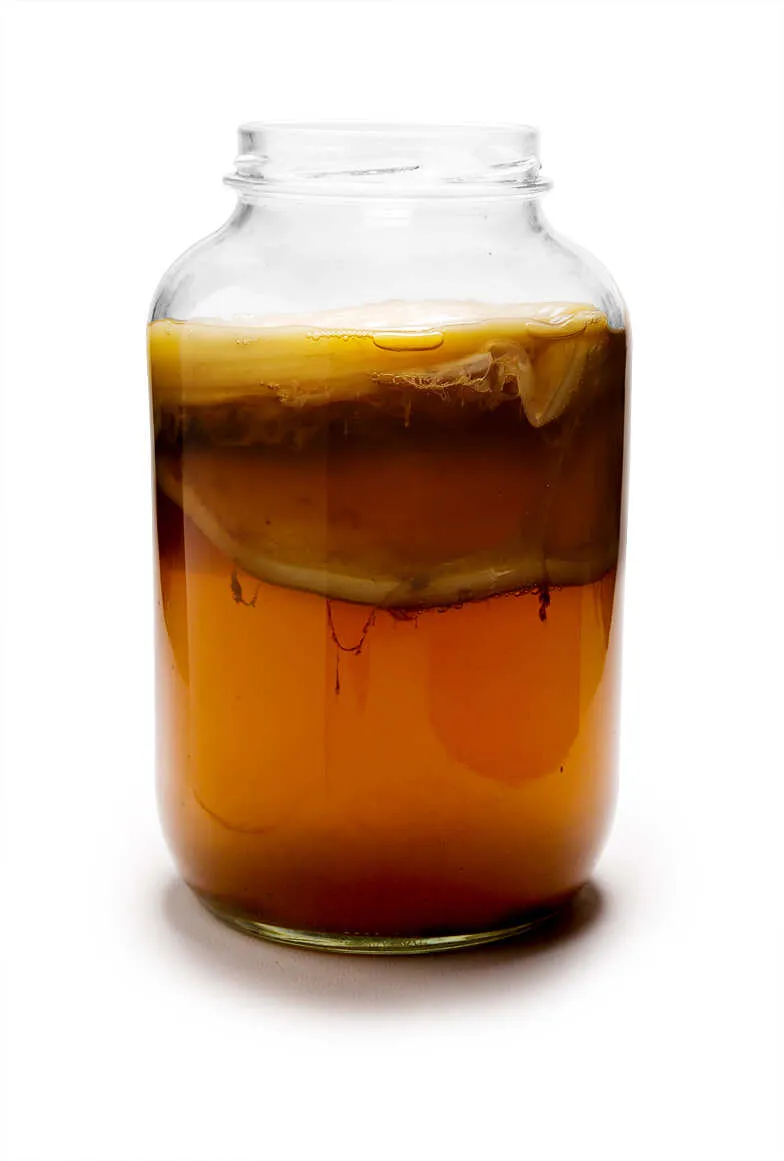 Photo: Mgarten at English Wikipedia, CC BY-SA 3.0, via Wikimedia Commons
Kombucha is consumed as a stand-alone beverage, often chilled. Home brewing requires a starter SCOBY, sweetened tea, and a clean fermentation vessel. Commercial kombucha is widely available in natural food stores; quality and microbial content vary substantially between brands.
How many of kombucha’s microbes survive passage through the stomach and small intestine has been little studied. Pasteurized commercial kombucha provides no live cultures. Consumers who want live cultures should select products labeled “raw” or “live cultures” and stored under refrigeration.
For how kombucha compares with other fermented options, see the guide to superfoods for gut health.
Safety, Interactions, and Contraindications
The main cautions with kombucha are its variable alcohol content, rare case reports of acidosis and liver injury, contamination of home brews, and its sugar and caffeine.
Alcohol content: Kombucha contains ethanol. In the US, kombucha that reaches 0.5% alcohol by volume or more at any point, including from continued fermentation after bottling, is regulated as an alcoholic beverage (TTB); “hard kombucha” is deliberately fermented to beer-like strength. Surveys show that products sold as non-alcoholic can exceed local limits: 31.5% of 684 samples in British Columbia exceeded the province’s 1% ABV limit, with a few above 3% (Jang et al., 2021), and 22% of nine New Zealand products exceeded that country’s 1.15% threshold (Nordstrom et al., 2026). Home-brewed kombucha with prolonged fermentation may also exceed these limits. This is relevant for individuals avoiding alcohol, pregnant women, and people in recovery from alcohol use disorder. A 2022 review notes that kombucha is generally considered contraindicated in pregnancy, in infants and children under 4, and in people with kidney failure or HIV (de Miranda et al., 2022); its caffeine also counts toward the under-200 mg/day limit ACOG advises in pregnancy (ACOG, 2010).
Acidosis risk: Several case reports document severe lactic acidosis and liver toxicity associated with kombucha consumption, including lactic acidosis in a man newly diagnosed with HIV (Kole et al., 2009; Holbourn & Hurdman, 2017; Gedela et al., 2016). A 1995 CDC report described two cases of unexplained severe illness, one fatal, in Iowa residents who had drunk kombucha daily for about two months; the Iowa health department had advised people to stop drinking it pending investigation. While causation was not definitively established and modern commercial production is better controlled, caution is warranted.
Contamination risk: Home-brewed kombucha prepared in unsanitary conditions or with contaminated SCOBYs can harbor mold or opportunistic pathogens. Immunocompromised individuals are generally advised to avoid home-brewed kombucha.
MAOI interactions: Fermented foods and drinks can contain tyramine, which can raise blood pressure dangerously in people taking MAOIs. Kombucha’s tyramine content has been little studied, so people taking MAOIs should check with their prescriber before drinking it.
Heavy metal contamination: Lead poisoning has been reported from kombucha brewed or stored in glazed ceramic vessels: a couple in Australia needed chelation therapy after six months of drinking tea brewed in a ceramic pot (Phan et al., 1998), and a 2023 family outbreak in Spain was traced to ceramic containers used to make and sell kombucha (Munilla García et al., 2023). Glass or other food-safe containers avoid this risk.
Sugar content: Kombucha retains residual sugar (about 10 g per 240 mL in USDA’s generic entry), which contributes to overall carbohydrate intake and is relevant for individuals managing blood glucose.
This information is educational and does not constitute medical advice. Consult a qualified healthcare provider before making dietary changes, particularly if you have an underlying health condition.
Frequently Asked Questions
Is kombucha good for you?
Kombucha is a low-calorie drink, with about 38 kcal and 10 g of sugars per 240 mL in USDA data, plus tea polyphenols and, if unpasteurized, live microbes. Its health benefits are not established: a 2019 review found only one human study, and later small trials on the microbiome and blood glucose report mixed or preliminary results.
Does kombucha have caffeine?
Yes. Kombucha is brewed from black or green tea, so it keeps some of the tea’s caffeine. USDA’s generic entry works out to about 26 mg per 240 mL serving, though brands vary with the tea used and the brewing time. Its caffeine counts toward the under-200 mg per day limit that ACOG advises during pregnancy.
Is kombucha alcoholic?
Kombucha contains some alcohol because its yeasts ferment sugar to ethanol. In the US, kombucha that reaches 0.5% ABV or more is regulated as an alcoholic beverage. Products sold as non-alcoholic do not always stay below local limits: in one survey of 684 samples, 31.5% exceeded British Columbia’s 1% limit. “Hard kombucha” is fermented to beer-like strength on purpose.
Why do I feel buzzed after drinking kombucha?
A buzz after kombucha may come from its caffeine, its alcohol, or both. Alcohol in one survey ranged from undetectable to 3.62% ABV, so a product that kept fermenting after bottling can be stronger than its label suggests. Anyone who feels unwell, is pregnant, or avoids alcohol for medical reasons should stop and check the product’s labeled strength.
What is the downside of kombucha?
The main downsides are residual sugar, variable alcohol, and caffeine. Case reports link kombucha to severe lactic acidosis and liver toxicity, though causation was not established. Home brews can grow mold or pathogens, and brewing in glazed ceramic has caused lead poisoning. A 2022 review lists pregnancy, children under 4, kidney failure and HIV as contraindications.
Is kombucha or kefir better for gut health?
Neither has strong human evidence for gut health. Kefir delivers lactic acid bacteria, measured at about 10⁸–10⁹ CFU/mL of lactobacilli in grain-fermented kefir, the group most studied as probiotics. Kombucha’s microbes are mainly acetic acid bacteria and yeasts, and two small trials found little change in the microbiome. See the kefir entry for its evidence.
References
Show all 21 referencesShow fewer
- Jayabalan, R., et al. (2014). A review on kombucha tea — microbiology, composition, fermentation, beneficial effects, toxicity, and tea fungus. Comprehensive Reviews in Food Science and Food Safety, 13(4), 538–550.
- Mendelson, C., et al. (2023). Kombucha tea as an anti-hyperglycemic agent in humans with diabetes: a randomized controlled pilot investigation. Frontiers in Nutrition, 10, 1190248.
- Chakravorty, S., et al. (2016). Kombucha tea fermentation: Microbial and biochemical dynamics. International Journal of Food Microbiology, 220, 63–72.
- Centers for Disease Control and Prevention. (1995). Unexplained severe illness possibly associated with consumption of kombucha tea — Iowa. MMWR, 44(48), 892–893, 899–900.
- Kapp, J. M., & Sumner, W. (2019). Kombucha: A systematic review of the empirical evidence of human health benefit. Annals of Epidemiology, 30, 66–70.
- Jang, S. S., et al. (2021). Ethanol concentration of kombucha teas in British Columbia, Canada. Journal of Food Protection, 84(11), 1878–1883.
- Nordstrom, K., et al. (2026). Comparing Alcolyzer and GC-FID for ethanol measurement in kombucha: insights from nutritional labeling and brewer practices in New Zealand. Journal of Food Science, 91(1), e70853.
- O’Sullivan, E. N., & O’Sullivan, D. J. (2024). Viability and diversity of the microbial cultures available in retail kombucha beverages in the USA. Foods, 13(11), 1707.
- Kole, A. S., et al. (2009). A case of kombucha tea toxicity. Journal of Intensive Care Medicine, 24(3), 205–207.
- Holbourn, A., & Hurdman, J. (2017). Kombucha: is a cup of tea good for you? BMJ Case Reports, bcr2017221702.
- Gedela, M., et al. (2016). A case of hepatotoxicity related to kombucha tea consumption. South Dakota Medicine, 69(1), 26–28.
- Phan, T. G., et al. (1998). Lead poisoning from drinking kombucha tea brewed in a ceramic pot. Medical Journal of Australia, 169(11–12), 644–646.
- Munilla García, Z., et al. (2023). Brote familiar de saturnismo asociado al consumo de kombucha fabricada y comercializada en envases cerámicos. Revista Española de Salud Pública, 97, e202305040.
- de Miranda, J. F., et al. (2022). Kombucha: a review of substrates, regulations, composition, and biological properties. Journal of Food Science, 87(2).
- U.S. Alcohol and Tobacco Tax and Trade Bureau. Kombucha.
- USDA FoodData Central. Tea, kombucha (FDC 2710509).
- ACOG Committee Opinion No. 462 (2010). Moderate caffeine consumption during pregnancy.
- Antolak, H., et al. (2021). Kombucha tea: a double power of bioactive compounds from tea and symbiotic culture of bacteria and yeasts (SCOBY). Antioxidants, 10(10), 1541.
- Sreeramulu, G., et al. (2000). Kombucha fermentation and its antimicrobial activity. Journal of Agricultural and Food Chemistry, 48(6), 2589–2594.
- Fraiz, G. M., et al. (2024). The impact of green tea kombucha on the intestinal health, gut microbiota, and serum metabolome of individuals with excess body weight in a weight loss intervention: a randomized controlled trial. Foods, 13(22), 3635.
- Ecklu-Mensah, G., et al. (2024). Modulating the human gut microbiome and health markers through kombucha consumption: a controlled clinical study. Scientific Reports, 14, 31647.
Related content
More in Fermented Foods
- Kefir
Kefir vs yogurt: how the fermented milk drink differs in microbes, protein and calcium, and what human studies show about kefir benefits and side effects.
- Kimchi
Is kimchi good for you? Korean fermented cabbage brings fiber, vitamin K and live cultures but a lot of sodium; what the limited human trials show.
- Miso
Is miso soup healthy? Miso, a Japanese koji-fermented soy paste, adds protein, isoflavones and umami but heavy sodium; what studies show for heart and gut.
- Sauerkraut
Is sauerkraut good for you? Fermented cabbage supplies fiber, vitamin C and, if raw, live bacteria, but plenty of sodium; what the human studies show.
- Tempeh
Tempeh vs tofu: what tempeh is, how this Rhizopus-fermented soy cake compares on protein, calcium and iron, and what studies show about its benefits.
- Yogurt
Is yogurt good for you? Nutrition of plain and Greek yogurt, what live cultures do for lactose digestion, and the evidence on gut, bone and diabetes risk.

Curated by Superfoods Advisor Editors·Last updated