
Yogurt
By Superfoods Advisor Editors·July 3, 2026
Is yogurt good for you? Nutrition of plain and Greek yogurt, what live cultures do for lactose digestion, and the evidence on gut, bone and diabetes risk.
Yogurt (also yoghurt, dahi or laban) is milk fermented by the bacteria Lactobacillus delbrueckii subsp. bulgaricus and Streptococcus thermophilus. Plain yogurt supplies protein, calcium, vitamin B12 and iodine, and its live cultures help people with lactose maldigestion digest its lactose, an effect EFSA recognises. Most of its other proposed benefits rest on observational data.
Yogurt is one of humanity’s oldest fermented foods, with origins likely in Central Asia or the Middle East several thousand years ago. A popular account holds that herders found milk carried in animal-skin bags soured into a thick, tangy product that kept far longer than fresh milk, though the exact origin is undocumented. The word derives from the Turkish yoğurt, and the product remains a dietary staple across Central Asia, the Middle East, South Asia, the Mediterranean, and increasingly worldwide.
Modern yogurt is produced by heating milk well above pasteurization temperature (to denature whey proteins and reduce competing microorganisms), cooling it to a warm incubation temperature, and inoculating it with a defined starter culture containing Lactobacillus delbrueckii subsp. bulgaricus (L. bulgaricus) and Streptococcus thermophilus — the two species that define yogurt in many countries, including the United States, where the FDA standard of identity (21 CFR 131.200) names them as the characterizing culture. These organisms ferment lactose into lactic acid, dropping pH and causing milk proteins (primarily casein) to coagulate into the characteristic gel structure. Fermentation typically takes several hours. Additional probiotic strains — most commonly Lactobacillus acidophilus, Bifidobacterium lactis, Lactobacillus casei, and Lactobacillus rhamnosus GG — are added to many commercial formulations and marketed for probiotic benefit.
Evidence at a glance
Microbial Profile and Active Compounds
US law sets no minimum live-culture count for yogurt: the FDA standard of identity allows yogurt to be heat-treated after culturing, in which case the label must say “does not contain live and active cultures.” A product may state “contains live and active cultures” only if it holds at least 10⁷ CFU/g at the time of manufacture, with a reasonable expectation of 10⁶ CFU/g through its shelf life. The voluntary Live & Active Cultures seal from the International Dairy Foods Association sets a higher bar of 100 million (10⁸) cultures per gram at manufacture, or 10 million per gram for frozen yogurt. A review of lactose digestion from yogurt describes commercial live-culture yogurts as carrying the two starter species at roughly 10⁸ bacteria/mL (Savaiano, 2014); counts of added probiotic strains vary by product and decline during storage.
Core starter strains:
- Lactobacillus bulgaricus: homofermentative; primary lactic acid producer; highly acid-tolerant
- Streptococcus thermophilus: thermophilic; produces formate and CO₂ that stimulate L. bulgaricus growth
Both starter species have been recovered alive in the feces of volunteers who ate commercial yogurt, so at least some survive gut transit (Elli et al., 2006).
Commonly added probiotic strains:
- Lactobacillus acidophilus NCFM
- Bifidobacterium animalis subsp. lactis Bb-12 and DN-173 010
- Lactobacillus rhamnosus GG (LGG)
- Lactobacillus casei Shirota
Fermentation generates bioactive metabolites including:
- Lactic acid: the end product of lactose fermentation; lowers pH and inhibits many spoilage organisms
- Bioactive peptides: ACE-inhibitory, opioid, and antimicrobial peptides released from casein hydrolysis (studied mainly in laboratory and animal work)
- Flavor volatiles: acetaldehyde (the main yogurt aroma compound), diacetyl, and small amounts of acetic acid
- B vitamins: riboflavin and B12 carried over from the milk; S. thermophilus synthesizes folate during fermentation, while lactobacilli tend to consume it (Crittenden et al., 2003)
Nutritional Profile
Plain whole-milk yogurt supplies calcium, vitamin B12, riboflavin and iodine for 61 kcal per 100 g. Values per 100 g of plain, whole-milk yogurt (USDA FoodData Central; iodine from the USDA/FDA/ODS-NIH Iodine Database, Release 4):
| Nutrient | Amount | % DV |
|---|---|---|
| Energy | 61 kcal | — |
| Protein | 3.5 g | — |
| Total fat | 3.3 g | — |
| Carbohydrates | 4.7 g | — |
| Calcium | 121 mg | 9% |
| Phosphorus | 95 mg | 8% |
| Potassium | 155 mg | 3% |
| Vitamin B12 | 0.37 µg | 15% |
| Riboflavin (B2) | 0.14 mg | 11% |
| Iodine | 32 µg | 21% |
| Live cultures | ≥10⁷ CFU/g at manufacture if labeled “live and active cultures” | — |
Low-fat and non-fat yogurt reduce calorie and fat content while preserving protein, calcium, and B12. Greek yogurt (strained) roughly triples protein, to about 10 g/100 g in USDA data for plain non-fat and low-fat versions (USDA FoodData Central), and reduces carbohydrates (lactose removed in whey). Flavored yogurts usually contain added sugar, often substantially more total sugar than plain varieties.
Regular vs. Greek Yogurt
Greek yogurt is regular yogurt strained to remove much of the liquid whey. Straining roughly triples protein, to about 10 g per 100 g in USDA data for plain non-fat and low-fat versions, and lowers lactose and carbohydrate. It also removes some calcium with the whey, so regular yogurt is the better calcium source of the two.
Which suits a person depends on the goal: Greek yogurt for protein and lower lactose, regular yogurt for calcium. Both carry the same starter cultures, and both come in high-sugar flavored versions. For the comparison with a drinkable fermented milk, see kefir vs. yogurt.
Evidence for Purported Benefits
Yogurt’s strongest evidence is for lactose digestion. Findings for diarrhea, bone, metabolic and immune outcomes are mixed, observational, or based on probiotic preparations rather than yogurt itself.
Gut Health and Diarrhea Prevention/Treatment
Evidence:Moderate For preventing C. difficile-associated diarrhea during antibiotics: a Cochrane review of 31 trials, on probiotic preparations rather than yogurt itself.
Evidence:Limited For treating acute infectious diarrhea: results conflict, and low-bias trials in a Cochrane review showed no detectable benefit.
Yogurt and specific added probiotic strains have a larger clinical literature than most other fermented foods. Lactobacillus rhamnosus GG (LGG) is one of the most-studied probiotic strains for acute infectious diarrhea in children. A Cochrane systematic review by Collinson et al. (Cochrane Database, 2020) of 82 RCTs (12,127 participants, mostly children) found that, in the trials at low risk of bias, probiotics made no detectable difference to the risk of diarrhea lasting 48 hours or longer, and the evidence on illness duration was of very low certainty; results were similar when the analysis was limited to LGG. For people taking antibiotics, a Cochrane review by Goldenberg et al. (Cochrane Database, 2017; 31 trials, 8,672 participants) found that probiotics reduced the risk of Clostridium difficile-associated diarrhea by about 60%, with the benefit concentrated in trials where baseline risk exceeded 5%. Both reviews assessed probiotic preparations rather than yogurt itself.
Lactose Digestion
Evidence:Strong Consistent across multiple RCTs; EFSA recognises improved lactose digestion from live yogurt cultures.
Yogurt is substantially better tolerated than milk by individuals with lactose maldigestion, because (a) lactose is partially hydrolyzed during fermentation and (b) S. thermophilus and L. bulgaricus produce microbial lactase (β-galactosidase) that remains active in the small intestine (Savaiano, 2014). This is one of the most robust findings in fermented dairy research. The EFSA Panel on Dietetic Products, Nutrition and Allergies (2010) concluded that a cause-and-effect relationship has been established between live yogurt cultures and improved digestion of the lactose in the product in individuals with lactose maldigestion.
Bone Health
Evidence:Preliminary Observational cohort data, with associations seen only in a subgroup; mechanistically plausible.
Yogurt provides an absorbable calcium and phosphorus matrix with co-factors (protein, riboflavin, B12, iodine, vitamin D in fortified versions) relevant to bone health. A prospective analysis by Sahni et al. (The Journal of Nutrition, 2017) in older adults from the original Framingham cohort (mean age 75; baseline BMD n = 862) found no association between dairy foods and bone mineral density in the full sample; among vitamin D supplement users only, higher milk, yogurt, and cheese intakes were associated with higher lumbar spine BMD and less trochanter bone loss over four years. These are observational findings.
Metabolic and Cardiovascular Effects
Evidence:Preliminary Prospective cohort meta-analysis; the FDA’s qualified claim notes limited evidence, and RCTs are lacking.
A meta-analysis by Gijsbers et al. (American Journal of Clinical Nutrition, 2016) of 22 prospective cohort studies found a nonlinear inverse association between yogurt intake and type 2 diabetes incidence: 80 g/day was associated with a 14% lower relative risk than no yogurt, with no additional benefit at higher intakes. Proposed, largely unproven mechanisms include improved gut barrier function, modulation of bile acid metabolism, and SCFAs influencing insulin sensitivity. In March 2024 the FDA announced that it would not object to a qualified health claim that eating at least 2 cups (3 servings) of yogurt per week “may reduce the risk of type 2 diabetes,” provided the label states that the supporting evidence is limited; a qualified claim falls short of the “significant scientific agreement” standard required for an authorized health claim. These are observational associations; RCT evidence for yogurt’s independent metabolic effects is limited. The blood sugar superfoods guide covers other foods studied for type 2 diabetes risk.
Immune Function
Evidence:Preliminary Modest, heterogeneous strain-specific trials (such as LGG in children); not established for older adults or plain yogurt.
Multiple small RCTs have examined yogurt’s effects on immune markers. In 281 children attending day care, LGG given in a fermented milk drink was associated with fewer upper respiratory infections over three months (Hojsak et al., 2010). In older adults the picture is weaker: a year-long trial of LGG plus Bb-12 capsules in 310 UK care home residents found no reduction in antibiotic use for infections (Butler et al., 2020). A meta-analysis of 20 RCTs by King et al. (British Journal of Nutrition, 2014) found that Lactobacillus and Bifidobacterium probiotics shortened acute respiratory infections in otherwise healthy children and adults by almost a day, without changing the number of episodes. Effect sizes are modest, and studies are heterogeneous in strain, dose, and outcome.
Typical Use and Preparation
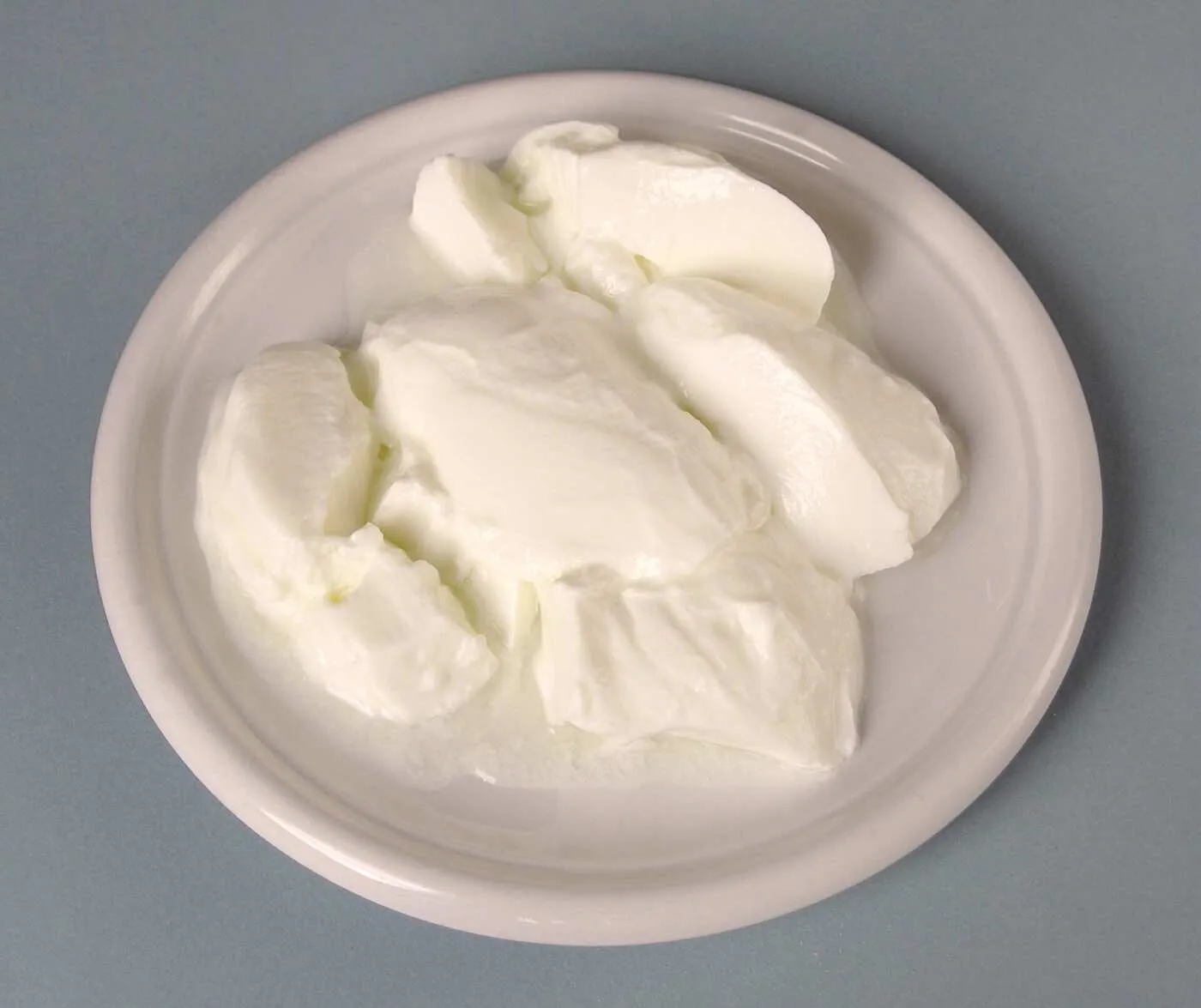 Photo: No machine-readable author provided. Rainer Zenz assumed (based on copyright cla, CC BY-SA 3.0, via Wikimedia Commons
Yogurt is one of the most versatile fermented foods in global cuisines:
- Eaten plain: with or without fruit, honey, nuts, or granola
- Cooking: as a base for dips (tzatziki, raita), marinades, curries, and salad dressings
- Baking: substituted for buttermilk or sour cream; adds moisture and slight tang
- Beverages: blended into smoothies; diluted as drinking yogurt (ayran, lassi, doogh)
Heat and live cultures: Yogurt used in cooked dishes (curry, baked goods) loses most of its live cultures when thoroughly heated. Nutritional value (calcium, protein, B vitamins) is preserved. For probiotic benefit, consume yogurt cold or at room temperature. Look for packaging stating “contains live and active cultures” — yogurt heat-treated after culturing must be labeled “does not contain live and active cultures,” and frozen yogurt can carry the industry seal at a tenfold lower count than refrigerated yogurt.
Strained (Greek) yogurt has roughly two to three times the protein of regular yogurt but lower calcium and carbohydrate content, as calcium and lactose are partially removed with the drained whey.
Greek yogurt is a common base in the overnight oats recipes, and the gut-health guide discusses yogurt among other fermented foods.
Safety, Interactions, and Contraindications
The main cautions with yogurt are milk protein allergy, added sugar in flavored products, and live cultures in people who are severely immunocompromised.
Dairy allergy: Yogurt is contraindicated in individuals with IgE-mediated cow’s milk protein allergy. Casein and whey proteins are not meaningfully reduced by fermentation.
Lactose intolerance: Most individuals with lactose maldigestion (not allergy) tolerate plain yogurt reasonably well due to reduced lactose content and active lactase from starter bacteria. Greek yogurt is lower in lactose than regular yogurt. Non-dairy yogurts (coconut, almond, oat, soy) provide similar textures with varying probiotic contents.
Immunocompromised individuals: Lactobacillus infections, including bacteremia and endocarditis, are rare and occur mostly in immunocompromised or diabetic patients with other risk factors; some reported cases involved probiotic strains such as LGG (Rossi et al., 2022). Very severely immunocompromised patients (e.g., bone marrow transplant recipients) may be advised to avoid products with live cultures per institutional protocols. Commercial pasteurized yogurt without live cultures is an alternative in these settings.
Added sugars: Flavored, fruit-on-the-bottom, and low-fat yogurt varieties often contain added sugar, sometimes several teaspoons per serving. Regular consumption of high-sugar yogurt varieties should be considered in the context of total dietary sugar intake.
Sodium in some varieties: Plain yogurt is naturally low in sodium (~46 mg/100 g in whole-milk plain yogurt; USDA FoodData Central), but savory, flavored, or processed yogurt products may contain added sodium.
MAOI interactions: Yogurt is not among the foods restricted in a widely used evidence-based MAOI diet, which targets aged cheese, cured meats, sauerkraut, soy condiments, and tap beer (Gardner et al., 1996). Tyramine levels in fermented dairy can still vary, so people taking MAOIs should follow their prescriber’s dietary guidance.
This information is educational and does not constitute medical advice. Consult a qualified healthcare provider before making dietary changes, particularly if you have an underlying health condition.
Frequently Asked Questions
Is yogurt good for you?
Plain yogurt is a nutritious dairy food, supplying protein, calcium, vitamin B12, riboflavin and iodine. Its best-supported benefit is easier lactose digestion for people with lactose maldigestion, recognised by EFSA. Links to lower type 2 diabetes risk and better bone density come from observational studies. Flavored versions can add several teaspoons of sugar per serving.
Does yogurt have protein?
Yes. Plain whole-milk yogurt provides about 3.5 g of protein per 100 g in USDA data, mostly casein and whey from the milk. Greek yogurt, strained to remove liquid whey, provides about 10 g per 100 g in its plain non-fat and low-fat versions. Low-fat and non-fat regular yogurts keep similar protein to whole-milk yogurt while cutting fat.
What type of yogurt has the most calcium?
Regular, unstrained yogurt has more calcium than Greek yogurt, because some calcium drains away with the whey during straining. USDA data list about 121 mg per 100 g for plain whole-milk yogurt. Low-fat and non-fat versions preserve calcium while cutting fat. Non-dairy yogurts vary widely and depend on fortification, so check the label.
How much yogurt should you eat a day?
No official daily amount exists. In cohort studies, about 80 g a day was associated with a 14% lower relative risk of type 2 diabetes, with no added benefit at higher intakes. The FDA’s qualified claim refers to at least 2 cups (3 servings) a week. These are observational findings; people with a medical condition should talk to a clinician.
What is yogurt made of?
Yogurt is made from milk that is heated, cooled to a warm incubation temperature and cultured with L. bulgaricus and S. thermophilus. The bacteria ferment lactose into lactic acid, which lowers the pH and sets the milk proteins into a gel over several hours. Many brands add probiotic strains such as L. acidophilus or Bifidobacterium lactis.
References
Show all 15 referencesShow fewer
- Collinson, S., et al. (2020). Probiotics for treating acute infectious diarrhoea. Cochrane Database of Systematic Reviews, 12, CD003048.
- Goldenberg, J. Z., et al. (2017). Probiotics for the prevention of Clostridium difficile-associated diarrhea in adults and children. Cochrane Database of Systematic Reviews, 12, CD006095.
- EFSA Panel on Dietetic Products, Nutrition and Allergies. (2010). Scientific opinion on the substantiation of health claims related to live yoghurt cultures and improved lactose digestion (ID 1143, 2976) pursuant to Article 13(1) of Regulation (EC) No 1924/2006. EFSA Journal, 8(10), 1763.
- Sahni, S., et al. (2017). Dairy intake is protective against bone loss in older vitamin D supplement users: the Framingham Study. The Journal of Nutrition, 147(4), 645–652.
- Gijsbers, L., et al. (2016). Consumption of dairy foods and diabetes incidence: a dose-response meta-analysis of observational studies. American Journal of Clinical Nutrition, 103(4), 1111–1124.
- King, S., et al. (2014). Effectiveness of probiotics on the duration of illness in healthy children and adults who develop common acute respiratory infectious conditions: a systematic review and meta-analysis. British Journal of Nutrition, 112(1), 41–54.
- Savaiano, D. A. (2014). Lactose digestion from yogurt: mechanism and relevance. American Journal of Clinical Nutrition, 99(5 Suppl), 1251S–1255S.
- U.S. Food and Drug Administration. 21 CFR 131.200 — Yogurt (standard of identity).
- U.S. Food and Drug Administration. (2024). FDA announces qualified health claim for yogurt and reduced risk of type 2 diabetes.
- Elli, M., et al. (2006). Survival of yogurt bacteria in the human gut. Applied and Environmental Microbiology, 72(7), 5113–5117.
- Crittenden, R. G., et al. (2003). Synthesis and utilisation of folate by yoghurt starter cultures and probiotic bacteria. International Journal of Food Microbiology, 80(3), 217–222.
- Hojsak, I., et al. (2010). Lactobacillus GG in the prevention of gastrointestinal and respiratory tract infections in children who attend day care centers. Clinical Nutrition, 29(3), 312–316.
- Butler, C. C., et al. (2020). Effect of probiotic use on antibiotic administration among care home residents: a randomized clinical trial. JAMA, 324(1), 47–56.
- Rossi, F., et al. (2022). Lactobacilli infection case reports in the last three years and safety implications. Nutrients, 14(6), 1178.
- Gardner, D. M., et al. (1996). The making of a user friendly MAOI diet. Journal of Clinical Psychiatry, 57(3), 99–104.
Related content




More in Fermented Foods
- Kefir
Kefir vs yogurt: how the fermented milk drink differs in microbes, protein and calcium, and what human studies show about kefir benefits and side effects.
- Kimchi
Is kimchi good for you? Korean fermented cabbage brings fiber, vitamin K and live cultures but a lot of sodium; what the limited human trials show.
- Kombucha
Is kombucha good for you? What the fermented tea contains (sugar, caffeine, alcohol, live microbes) and what the few human trials show about its benefits.
- Miso
Is miso soup healthy? Miso, a Japanese koji-fermented soy paste, adds protein, isoflavones and umami but heavy sodium; what studies show for heart and gut.
- Sauerkraut
Is sauerkraut good for you? Fermented cabbage supplies fiber, vitamin C and, if raw, live bacteria, but plenty of sodium; what the human studies show.
- Tempeh
Tempeh vs tofu: what tempeh is, how this Rhizopus-fermented soy cake compares on protein, calcium and iron, and what studies show about its benefits.







Curated by Superfoods Advisor Editors·Last updated