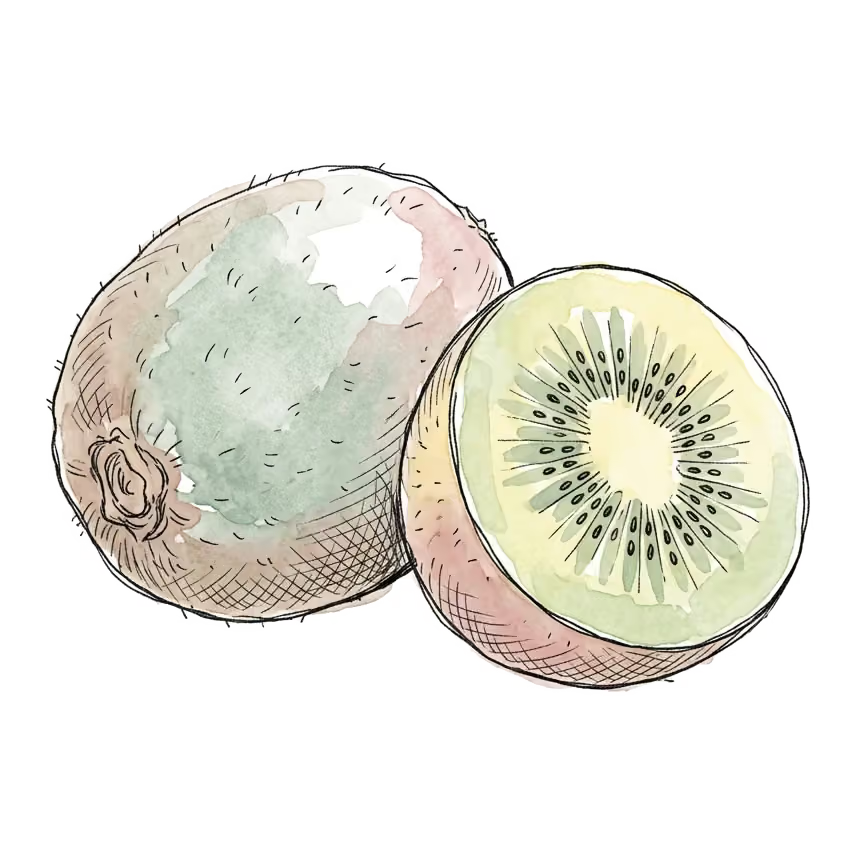
Kiwi (Actinidia deliciosa)
Actinidia deliciosa · also known as kiwifruit, Chinese gooseberry, yang tao, green kiwi
By Superfoods Advisor Editors·July 3, 2026
Is kiwi good for you? Kiwifruit has more vitamin C than orange, plus fiber and vitamin K, and trials show two kiwis a day can ease constipation.
Kiwi is a nutrient-dense fruit with one well-tested use. Kiwifruit (Actinidia deliciosa, also called Chinese gooseberry; golden kiwi is A. chinensis) provides 92.7 mg of vitamin C per 100 g, more than orange, plus 3.0 g of fiber and 40.3 µg of vitamin K. Several trials found that two green kiwifruit a day increased bowel movements in people with constipation.
Kiwifruit is the edible berry of a woody vine native to south-central China, where wild plants were gathered for over a thousand years. It reached New Zealand in 1904, where growers developed the Hayward cultivar, now dominant worldwide, and the name “kiwifruit” replaced “Chinese gooseberry” for export in the 1950s.
In Traditional Chinese Medicine, kiwifruit (yang tao) and related Actinidia species were used for digestive support and as a tonic. Research has since focused on its vitamin C, its protease enzyme actinidin and its effects on gut transit.
Evidence at a glance
Active Compounds
- Vitamin C (ascorbic acid) — Raw green kiwifruit contains approximately 92.7 mg per 100 g (USDA FoodData Central), more than raw oranges at 53.2 mg per 100 g (USDA FoodData Central). A medium fruit of about 70–75 g therefore supplies roughly 65–70 mg, most of the adult RDA of 75–90 mg/day (NIH Office of Dietary Supplements). Vitamin C is essential for collagen hydroxylation, iron absorption, and antioxidant defense at aqueous compartment interfaces.
- Actinidin — A cysteine protease unique to Actinidia species and one of the most abundant proteins in green kiwifruit, although its level varies widely between varieties and is much lower in some gold types (Maddumage et al., 2013). Actinidin has a substrate specificity profile distinct from other food proteases (bromelain, papain) and in a simulated gastric digestion model improved the breakdown of some, but not all, food proteins, including the caseins in sodium caseinate (Kaur et al., 2010).
- Vitamin K1 (phylloquinone) — Approximately 40.3 µg per 100 g (USDA FoodData Central); one of the higher concentrations among commonly consumed fruits. Vitamin K1 is required for hepatic carboxylation of coagulation factors (II, VII, IX, X) and osteocalcin.
- Folate — 25 µg per 100 g (USDA FoodData Central); contributes to one-carbon metabolism, nucleotide synthesis, and neural tube development.
- Lutein and zeaxanthin — Approximately 122 µg per 100 g (USDA FoodData Central); accumulated in retinal macula and associated with reduced risk of age-related macular degeneration in observational studies.
- Quercetin and kaempferol — Flavonols present in the skin and flesh. Both compounds exhibit anti-inflammatory activity by inhibiting COX-2 and NF-κB pathways in experimental models.
- Pectin and insoluble fiber — Total dietary fiber of approximately 3.0 g per 100 g (USDA FoodData Central). The specific fiber composition — soluble (pectin) and insoluble fractions — contributes to effects on gastrointestinal motility.
- Serotonin — Kiwifruit is a notable dietary source of serotonin (5-HT): one assay of 80 foods measured about 5.8 µg per gram, below plantain, pineapple, and banana (Feldman & Lee, 1985). Dietary serotonin does not cross the blood-brain barrier; any effect would be local, on serotonin receptors in the gut, and its influence on gut motility has not been demonstrated.
- Potassium — 312 mg per 100 g (USDA FoodData Central); relevant to blood pressure regulation.
- Copper — 0.13 mg per 100 g (USDA FoodData Central); a cofactor for ceruloplasmin, dopamine beta-hydroxylase, and lysyl oxidase involved in collagen cross-linking.
Nutritional Profile
Per 100 g of raw green kiwifruit (USDA FoodData Central, SR Legacy):
| Nutrient | Amount | % DV |
|---|---|---|
| Energy | 61 kcal | — |
| Total fat | 0.5 g | — |
| Carbohydrate | 14.7 g | — |
| — Dietary fiber | 3.0 g | — |
| — Sugars | 9.0 g | — |
| Protein | 1.1 g | — |
| Vitamin C | 92.7 mg | — |
| Vitamin K | 40.3 µg | — |
| Folate | 25 µg | — |
| Potassium | 312 mg | — |
| Copper | 0.13 mg | — |
| Vitamin E | 1.46 mg | — |
| Lutein + zeaxanthin | 122 µg | — |
Golden kiwifruit (A. chinensis ‘Hort16A’ and ‘SunGold’) has a sweeter flavor and a different nutrient balance: raw SunGold contains about 161 mg vitamin C per 100 g, against 92.7 mg for green kiwifruit, but less fiber (1.4 g) and far less vitamin K (6.1 µg) (USDA FoodData Central).
Evidence for Purported Benefits
Gastrointestinal Transit and Constipation
Evidence:Moderate Several trials, including a 184-person multicentre crossover RCT, consistently report more frequent bowel movements.
The fiber, serotonin, and actinidin content of kiwifruit collectively contribute to effects on gastrointestinal motility that have been evaluated in controlled trials. In an uncontrolled before-and-after study by Chan et al. (2007, World Journal of Gastroenterology, n = 33 constipated patients and 20 healthy volunteers), eating kiwifruit twice daily for four weeks increased complete spontaneous bowel movements in the constipated group (from a mean of 2.2 to 4.4 per week), shortened colonic transit time, and reduced laxative use compared with baseline, with no change in healthy volunteers. A randomized crossover study by Rush et al. (2002, Asia Pacific Journal of Clinical Nutrition) in 38 healthy adults over 60 found that one kiwifruit per 30 kg of body weight daily for three weeks increased stool frequency and produced bulkier, softer stools. A larger international multicentre randomized crossover trial by Gearry et al. (2023, American Journal of Gastroenterology, n = 184 healthy controls and patients with functional constipation or IBS-C) compared two green kiwifruits daily with 7.5 g psyllium, each for four weeks; kiwifruit increased complete spontaneous bowel movements by about 1.5 or more per week in both constipated groups and improved gastrointestinal comfort scores, with no significant adverse events. The proposed multi-mechanism explanation — fiber bulking, serotonin-stimulated peristalsis, and actinidin-assisted protein digestion — would distinguish kiwifruit mechanistically from single-fiber interventions, though the relative contribution of each has not been established.
Immune Function
Evidence:Preliminary A single crossover trial (n=32 older adults) shortened some cold symptoms but did not reduce infections.
The high vitamin C content of kiwifruit has generated interest in its immune-supporting potential. A randomized crossover study by Hunter et al. (2012, British Journal of Nutrition, n = 32 community-dwelling adults aged 65 and over) compared the equivalent of four gold kiwifruit daily with two bananas daily, each for four weeks. Gold kiwifruit did not reduce the overall incidence of upper respiratory tract infections, but it reduced the severity and duration of head congestion and the duration of sore throat, and raised plasma vitamin C; no changes in innate immune function markers were detected. Vitamin C contributes to normal immune function (NIH Office of Dietary Supplements); attributing these effects specifically to kiwifruit versus equivalent vitamin C from other sources requires further study.
Platelet Aggregation and Cardiovascular Risk Markers
Evidence:Preliminary A single crossover trial in healthy volunteers plus lab extract work; no cardiovascular event data.
A randomized crossover study by Duttaroy and Jørgensen (2004, Platelets) in healthy volunteers found that eating two or three kiwifruits daily for 28 days reduced the platelet aggregation response to collagen and ADP by 18% and lowered plasma triglycerides by 15% compared with control, with no effect on cholesterol. In laboratory tests, a sugar-free, heat-stable aqueous kiwifruit extract of small molecules inhibited platelet aggregation partly by reducing thromboxane A2 synthesis; the active compounds have not been identified (Dizdarevic et al., 2014). These findings require replication in larger trials and have not been evaluated in cardiovascular event outcomes.
Sleep Quality
Evidence:Preliminary A single four-week study (n=24) with no placebo arm.
A study by Lin et al. (2011, Asia Pacific Journal of Clinical Nutrition, n = 24 adults with sleep complaints) found that consuming two kiwifruits one hour before bedtime for four weeks significantly improved total sleep time (13.4%), sleep onset latency (35.4% reduction), and sleep efficiency (5.4%) compared with baseline. The authors pointed to kiwifruit’s antioxidant and serotonin content as possible contributors. The study lacked a placebo control arm, limiting causal inference.
Typical Use and Preparation
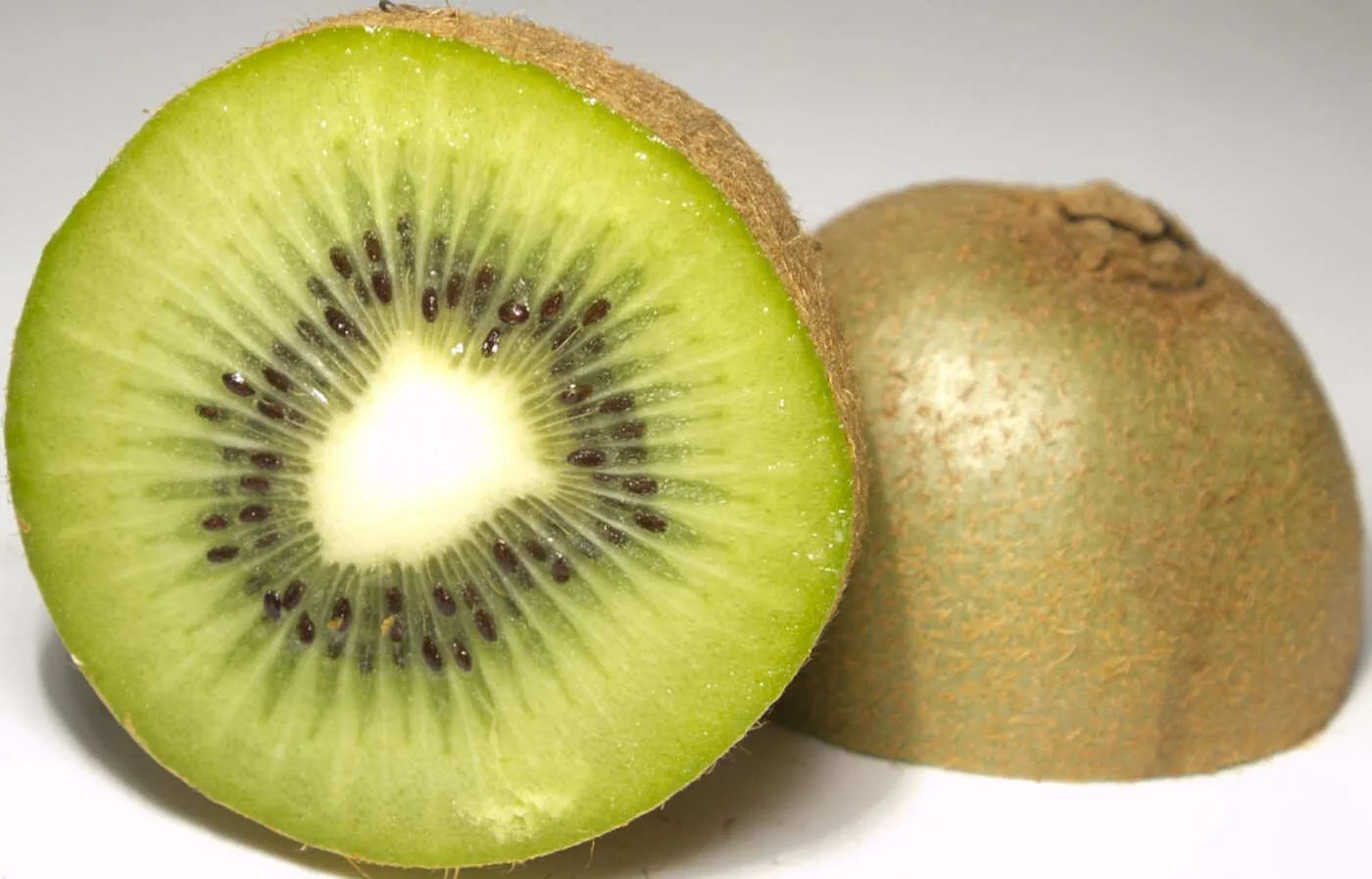 Photo: Tiia Monto, CC BY-SA 3.0, via Wikimedia Commons
Green kiwifruit are most commonly halved and scooped with a spoon, or peeled and sliced into fruit salads, smoothies, yogurt parfaits, or desserts. The skin of kiwifruit is edible despite its fuzzy texture and contains a higher concentration of certain fiber and flavonoids than the flesh; “kiwi skin smoothies” are practiced by some consumers seeking to maximize fiber intake.
Actinidin’s protease activity makes kiwifruit useful as a natural meat tenderizer in marinades. However, the same enzymatic activity prevents kiwifruit from being incorporated into gelatin-based desserts (such as Jell-O) without prior heat inactivation, as actinidin degrades the collagen-derived gelatin proteins that form the gel matrix. Cooking kiwifruit deactivates actinidin and reduces vitamin C concentration through thermal degradation.
Gold kiwifruit (A. chinensis SunGold) is smoother-skinned, tropical-flavored (mango/vanilla notes), and commands a premium over green varieties. It is grown under a Plant Variety Right (PVR) license held by Zespri International, and only licensed growers may cultivate it commercially.
Kiwi turns up as a vitamin C source in the skin-health nutrition guide, which explains the vitamin’s role in collagen synthesis, and in the immune-boosting superfoods guide. For other fiber sources and how they act in the gut, see the gut health superfoods guide. For a direct vitamin C comparison, see orange.
Safety, Interactions, and Contraindications
Kiwifruit is well tolerated by the majority of consumers at typical serving sizes. Specific considerations include:
Kiwifruit allergy: Kiwifruit has become one of the more common causes of food allergy worldwide; of the thirteen allergens identified in green kiwifruit, Act d 1 (actinidin), Act d 2, Act d 8 (a PR-10 protein cross-reactive with birch pollen), Act d 11, and Act d 12 are classed as major allergens (Wang et al., 2019). Symptoms range from oral allergy syndrome (oral tingling, throat tightness) to generalized urticaria and, rarely, anaphylaxis. Latex-kiwifruit cross-reactivity is also documented, attributed mainly to class I chitinases. Individuals with latex allergy, oral allergy syndrome to birch pollen, or known kiwifruit sensitivity should exercise caution.
Vitamin K and anticoagulation: The vitamin K1 content of green kiwifruit (40.3 µg per 100 g) is significant relative to the adult adequate intake of 90–120 µg/day (NIH Office of Dietary Supplements). Patients on warfarin (vitamin K antagonist) should maintain consistent kiwifruit intake and inform their clinician. A large or abrupt increase in kiwifruit intake while on warfarin may reduce anticoagulation effect and lower the INR.
Oxalate content: Green kiwifruit pulp contains about 19 mg total oxalate per 100 g, with higher concentrations in the skin and seeds (Nguyễn & Savage, 2013). People following a low-oxalate diet for kidney stones may wish to discuss portion sizes with their clinician.
Drug interactions: Other drug interactions with kiwifruit have not been well studied. The antiplatelet effect observed by Duttaroy and Jørgensen (2004) is theoretically additive with anticoagulant and antiplatelet medications, but this interaction has not been confirmed in clinical trials.
Frequently Asked Questions
Is kiwi good for you?
For most people, yes. Kiwifruit is one of the richest common fruit sources of vitamin C, with 92.7 mg per 100 g, and also supplies fiber, vitamin K, folate and potassium. Its best-supported benefit is digestive: several trials, including one with 184 participants, found two green kiwifruit daily eased constipation. Kiwi is a common allergen, so people with known sensitivity should avoid it.
Is kiwi skin edible?
Yes. The fuzzy skin of kiwifruit is edible and holds more of certain fibers and flavonoids than the flesh. The skin and seeds also contain more oxalate than the pulp, which matters for people on a low-oxalate diet for kidney stones. Washing the fruit first and choosing smoother-skinned gold kiwi can make the skin easier to eat.
Does kiwi have fiber?
Yes. Green kiwifruit contains about 3.0 g of dietary fiber per 100 g, according to USDA FoodData Central, as a mix of soluble pectin and insoluble fiber. Golden SunGold kiwi has less, about 1.4 g per 100 g. That fiber is one of several proposed reasons kiwi softens stools and increases bowel frequency in trials.
How many kiwis should you eat a day?
There is no official amount. The constipation trials used two green kiwifruit a day, and an older study used one kiwifruit per 30 kg of body weight. One medium kiwi supplies roughly 65 to 70 mg of vitamin C. People taking warfarin should avoid large, sudden increases because of kiwi’s vitamin K and should talk to their clinician.
Does kiwi help with constipation?
Moderate evidence suggests it does. In a multicentre randomized crossover trial of 184 adults, two green kiwifruit daily for four weeks increased complete spontaneous bowel movements by about 1.5 or more per week in people with functional constipation or IBS-C, with no significant adverse events. The effect was compared with 7.5 g of psyllium, a standard fiber supplement.
What is the difference between green and golden kiwi?
Golden kiwi (Actinidia chinensis, sold as SunGold) is sweeter and smoother-skinned. Per 100 g it contains about 161 mg of vitamin C versus 92.7 mg in green kiwi, but less fiber (1.4 g versus 3.0 g) and far less vitamin K (6.1 µg versus 40.3 µg). Most constipation trials used green kiwifruit, which also has more actinidin.
References
Show all 12 referencesShow fewer
- Gearry, R., Fukudo, S., Barbara, G., Kuhn-Sherlock, B., Ansell, J., Blatchford, P., et al. (2023). Consumption of 2 green kiwifruits daily improves constipation and abdominal comfort — results of an international multicentre randomised controlled trial. American Journal of Gastroenterology, 118(6), 1058–1068.
- Duttaroy, A. K., & Jørgensen, A. (2004). Effects of kiwi fruit consumption on platelet aggregation and plasma lipids in healthy human volunteers. Platelets, 15(5), 287–292.
- Hunter, D. C., Skinner, M. A., Wolber, F. M., Booth, C. L., Loh, J. M., Wohlers, M., Stevenson, L. M., & Kruger, M. C. (2012). Consumption of gold kiwifruit reduces severity and duration of selected upper respiratory tract infection symptoms and increases plasma vitamin C concentration in healthy older adults. British Journal of Nutrition, 108(7), 1235–1245.
- Lin, H. H., Tsai, P. S., Fang, S. C., & Liu, J. F. (2011). Effect of kiwifruit consumption on sleep quality in adults with sleep problems. Asia Pacific Journal of Clinical Nutrition, 20(2), 169–174.
- Chan, A. O. O., Leung, G., Tong, T., & Wong, N. Y. H. (2007). Increasing dietary fiber intake in terms of kiwifruit improves constipation in Chinese patients. World Journal of Gastroenterology, 13(35), 4771–4775.
- Rush, E. C., Patel, M., Plank, L. D., & Ferguson, L. R. (2002). Kiwifruit promotes laxation in the elderly. Asia Pacific Journal of Clinical Nutrition, 11(2), 164–168.
- Feldman, J. M., & Lee, E. M. (1985). Serotonin content of foods: effect on urinary excretion of 5-hydroxyindoleacetic acid. American Journal of Clinical Nutrition, 42(4), 639–643.
- Maddumage, R., Nieuwenhuizen, N. J., Bulley, S. M., Cooney, J. M., Green, S. A., & Atkinson, R. G. (2013). Diversity and relative levels of actinidin, kiwellin, and thaumatin-like allergens in 15 varieties of kiwifruit (Actinidia). Journal of Agricultural and Food Chemistry, 61(3), 728–739.
- Nguyễn, H. V., & Savage, G. P. (2013). Total, soluble and insoluble oxalate contents of ripe green and golden kiwifruit. Foods, 2(1), 76–82.
- Kaur, L., Rutherfurd, S. M., Moughan, P. J., Drummond, L., & Boland, M. J. (2010). Actinidin enhances gastric protein digestion as assessed using an in vitro gastric digestion model. Journal of Agricultural and Food Chemistry, 58(8), 5068–5073.
- Dizdarevic, L. L., Biswas, D., Uddin, M. D., Jørgensen, A., Falch, E., Bastani, N. E., & Duttaroy, A. K. (2014). Inhibitory effects of kiwifruit extract on human platelet aggregation and plasma angiotensin-converting enzyme activity. Platelets, 25(8), 567–575.
- Wang, J., Vanga, S. K., McCusker, C., & Raghavan, V. (2019). A comprehensive review on kiwifruit allergy: pathogenesis, diagnosis, management, and potential modification of allergens through processing. Comprehensive Reviews in Food Science and Food Safety, 18(2), 500–513.
Related content

More in Fruits
- Apple (Malus domestica)
Are apples good for you? Apples supply pectin fiber and quercetin, and large cohort studies link regular intake to lower heart disease and diabetes risk.
- Avocado (Persea americana)
Is avocado good for you? Avocado is high in monounsaturated fat, fiber and potassium, and small trials link a daily avocado to lower LDL cholesterol.
- Banana (Musa acuminata)
Are bananas good for you? Bananas supply potassium, vitamin B6 and fiber, and green bananas add resistant starch. The evidence, and who should limit them.
- Cherry (Prunus avium / Prunus cerasus)
Tart cherry juice benefits, weighed: small trials suggest faster muscle recovery and longer sleep, and gout data are early. Sweet vs tart cherry nutrition.
- Grapefruit (Citrus × paradisi)
Is grapefruit good for you? It is low in calories and rich in vitamin C, but it interacts with statins and 85+ other drugs. Benefits, nutrition and risks.
- Grapes (Vitis vinifera)
Are grapes good for you? Grapes supply skin polyphenols and vitamin K but little fiber and plenty of sugar. What the vascular and resveratrol data show.

Curated by Superfoods Advisor Editors·Last updated