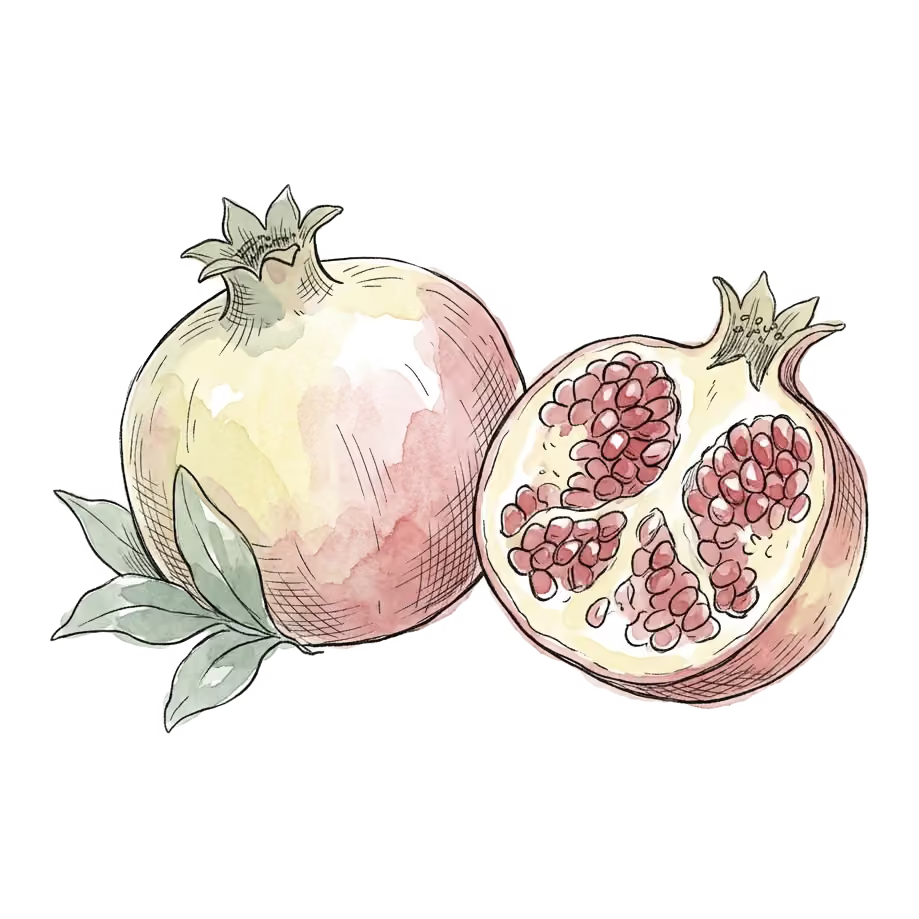
Pomegranate (Punica granatum)
Punica granatum · also known as granada, anar, grenade, punic apple
By Superfoods Advisor Editors·July 3, 2026
Pomegranate juice benefits, weighed: trial meta-analyses link it to lower blood pressure and CRP, not cholesterol; prostate claims failed.
Pomegranate juice’s best-supported benefit is a modest drop in blood pressure: a meta-analysis of 8 placebo-controlled trials found systolic pressure about 5 mmHg lower and diastolic about 2 mmHg lower. Pomegranate (Punica granatum, also called granada or anar) is rich in ellagitannin polyphenols called punicalagins. Trials found no overall effect on cholesterol, and a placebo-controlled prostate trial was negative.
The plant is a shrub or small tree in the family Lythraceae, native to the region spanning Iran, Afghanistan and northwestern India. Archaeological evidence from Jericho and Cyprus suggests cultivation for at least 5,000 years, and the fruit appears in Egyptian tomb paintings, Homeric texts and the Hebrew Bible. Spanish missionaries brought it to the Americas in the 16th century.
Ayurveda, Unani and Greco-Roman medicine used pomegranate rind, bark, seeds and juice for intestinal and gum complaints and as a heart tonic. Modern interest grew after a 2000 laboratory study found commercial juice had about three times the antioxidant activity of red wine or green tea in chemical assays, largely because industrial pressing extracts punicalagin from the rind.
Evidence at a glance
Active Compounds
Punicalagins: The quantitatively dominant polyphenols in pomegranate juice and peel, and in one analysis the likely main reason commercial whole-fruit juices outscored aril-only juices in antioxidant assays (Gil et al., 2000). Punicalagins are large hydrolysable tannins (ellagitannins) composed of ellagic acid and gallic acid moieties linked to a glucose core. Pomegranate contains two major punicalagin isomers (alpha and beta). They are found at highest concentrations in the peel and mesocarp; commercial juice preparations that include peel extraction retain significantly more than whole-aril juices.
Ellagic acid: A dilactone of hexahydroxydiphenic acid released from punicalagins upon hydrolysis (in the gut and during food processing). Ellagic acid has demonstrated antioxidant, anti-inflammatory, and antiproliferative activity in cell culture and animal models. However, ellagic acid per se has poor oral bioavailability due to rapid metabolism in the gut.
Urolithin A (UA): The most studied metabolite arising from pomegranate polyphenols, produced by the gut microbiome from ellagic acid and ellagitannins through sequential reduction steps. Urolithin A is a 3,8-dihydroxy-6H-dibenzo[b,d]pyran-6-one that is absorbed after production in the colon. Critically, the capacity to produce urolithin A varies dramatically among individuals based on gut microbiome composition; in a Spanish cohort of 839 people aged 5 to 90, about 10% produced no urolithins at all (so-called metabotype 0), and the proportion producing only urolithin A fell with age as producers of urolithin B and isourolithin A became more common (Cortés-Martín et al., 2018). Non-producers derive little urolithin A exposure from pomegranate consumption. Urolithin A has attracted research attention because it induced mitophagy (selective autophagy of damaged mitochondria) and improved muscle function in worm and rodent studies (Ryu et al., 2016).
Anthocyanins: Delphinidin-3-glucoside, cyanidin-3-glucoside, and pelargonidin-3-glucoside are the predominant anthocyanins in pomegranate arils, contributing to the characteristic ruby-red color. Concentrated in the arils (juice sacs) rather than the peel.
Punicalin and granatin B: Minor ellagitannins co-occurring with punicalagins.
Gallic acid: A phenolic acid found both free and as part of ellagitannin structures; a potent antioxidant.
Conjugated fatty acids (in seeds): Pomegranate seed oil contains an unusual fatty acid called punicic acid (conjugated linolenic acid, c9,t11,c13-18:3), a conjugated triene with structural similarity to conjugated linoleic acid (CLA). Punicic acid has demonstrated anti-inflammatory and antidiabetic effects in animal studies; human clinical evidence is limited.
Nutritional Profile
The following values represent raw pomegranate arils (juice sacs) per 100 g (USDA FoodData Central, FDC ID 169134):
| Nutrient | Amount | % DV |
|---|---|---|
| Energy | 83 kcal | — |
| Water | 77.9 g | — |
| Carbohydrates | 18.70 g | — |
| Sugars | 13.67 g | — |
| Dietary fiber | 4.0 g | — |
| Protein | 1.67 g | — |
| Total fat | 1.17 g | — |
| Vitamin C | 10.2 mg | 11% |
| Vitamin K | 16.4 µg | 14% |
| Folate | 38 µg | 10% |
| Potassium | 236 mg | 5% |
| Copper | 0.158 mg | 18% |
| Phosphorus | 36 mg | 3% |
Pomegranate is calorie-moderate with a meaningful fiber content (4 g/100 g), notable vitamin K and copper contributions, and reasonable folate. Its vitamin C content is lower than citrus or papaya. The fruit’s nutritional value is substantially enhanced by its polyphenol content, which is not captured in standard macronutrient profiles.
Commercial pomegranate juices vary widely in polyphenol content depending on extraction method; juices made with peel extraction (like Wonderful variety commercial juice) scored higher in in-vitro antioxidant assays than aril-only juice in one analysis, which found punicalagin at 1,500–1,900 mg/L in commercial juices and only traces in juice pressed from arils (Gil et al., 2000).
Evidence for Purported Benefits
Cardiovascular Health
Evidence:Moderate A meta-analysis of 8 RCTs found lower blood pressure; lipid effects were null across 12 trials.
Pomegranate juice and extracts have been evaluated in multiple randomized controlled trials targeting cardiovascular risk markers. Key findings include:
A widely cited study by Aviram et al. (2004) gave pomegranate juice to 10 patients with carotid artery stenosis for 1 year, 5 of whom continued for up to 3 years, and compared them with an untreated control group; it was not a randomized placebo-controlled trial. Carotid intima-media thickness (CIMT) fell by up to 30% after 1 year in the juice group, while it rose by 9% in the controls, and systolic blood pressure fell by 12%. No further improvement occurred after the first year. The very small sample and non-randomized design mean these results are preliminary.
A 2017 systematic review and meta-analysis by Sahebkar et al. pooled 8 placebo-controlled RCTs of pomegranate juice and blood pressure. Pomegranate juice was associated with significant reductions in systolic blood pressure (weighted mean difference: −4.96 mmHg; 95% CI: −7.67 to −2.25) and diastolic blood pressure (−2.01 mmHg; 95% CI: −3.71 to −0.31). The systolic effect held in trials shorter and longer than 12 weeks and at intakes above and below 240 mL/day.
Effects on LDL cholesterol and total cholesterol have been inconsistent across trials; a 2016 meta-analysis by Sahebkar et al. of 12 RCTs (545 participants) found no significant overall effect of pomegranate on plasma lipids.
Antioxidant Activity
Evidence:Moderate A meta-analysis of 33 RCTs found improved oxidative-stress biomarkers; no clinical outcome data.
In one head-to-head study using four chemical assays (ABTS, DPPH, DMPD, and FRAP), commercial pomegranate juice showed roughly three times the antioxidant activity of red wine or green tea (Gil et al., 2000). Such assays are in vitro only; the USDA withdrew its ORAC database in 2012 because test-tube values do not reflect effects in the body. In humans, small studies report changes in oxidative stress markers: in Rosenblat et al. (2006), 10 people with type 2 diabetes who drank 50 mL of pomegranate juice daily for 3 months had lower serum lipid peroxides (by 56%) and TBARS (by 28%), with no change in glucose or cholesterol. The study had no placebo group, and a 2023 meta-analysis of 33 RCTs also reported lower malondialdehyde and higher total antioxidant capacity with pomegranate. Biomarker improvements do not automatically translate to clinical disease outcomes, and the long-term health significance of changes in antioxidant biomarkers remains a subject of scientific debate.
Urolithin A and Muscle / Mitochondrial Health
Evidence:Preliminary Animal mitophagy data; two human trials tested synthetic urolithin A, not pomegranate, with mixed results.
Urolithin A, the gut-microbial metabolite of pomegranate polyphenols, has become a focus of interest because it induced mitophagy in animal models (Ryu et al., 2016). Mitophagy — the selective clearance of dysfunctional mitochondria via autophagy — declines with aging, and its stimulation has been proposed as a longevity-supporting mechanism.
A 2019 randomized controlled trial by Andreux et al. evaluated a synthetic urolithin A supplement (not pomegranate juice) in 60 healthy older adults over 4 weeks. Urolithin A had a favorable safety profile (the primary outcome), was detectable in plasma at all doses tested, and at 500 and 1,000 mg/day for 4 weeks modulated plasma acylcarnitines and mitochondrial gene expression in skeletal muscle. A subsequent 2022 randomized trial by Liu et al. in 66 adults aged 65 to 90 found that 1,000 mg/day of urolithin A for 4 months did not significantly improve the primary endpoints, six-minute walk distance and maximal muscle ATP production, versus placebo, though it improved hand and leg muscle endurance, a secondary outcome. The variability in urolithin A production from dietary pomegranate makes these supplement-based findings imperfectly applicable to food consumption.
Prostate Health
Evidence:Insufficient Early uncontrolled trials looked promising, but a placebo-controlled RCT (n=183) found no difference from placebo.
Following a 2006 phase II trial by Pantuck et al. in 46 men with rising PSA after prostatectomy or radiation, pomegranate attracted significant attention as a potential prostate cancer-supportive food. The trial reported a significant increase in PSA doubling time (from 15 to 54 months) during 8 oz/day pomegranate juice consumption. However, the study lacked a placebo control and was unblinded. A 2013 dose-comparison trial (Paller et al.) of pomegranate extract in 104 men also saw PSA doubling time lengthen, but again had no placebo arm. A 2015 randomized double-blind placebo-controlled trial (Pantuck et al.) in 183 men found that PSA doubling time lengthened in the placebo group too, with no significant difference between pomegranate extract and placebo. Based on these results, pomegranate cannot be recommended as a prostate cancer treatment or preventive measure.
Anti-inflammatory Effects
Evidence:Moderate A meta-analysis of 33 RCTs found modest reductions in CRP, IL-6 and TNF-alpha; most trials were short.
Pomegranate consumption has been associated with reductions in CRP, IL-6, and TNF-alpha in several small trials. A 2023 meta-analysis by Bahari et al. pooled 33 RCTs and found significant reductions in CRP (weighted mean difference: −0.50 mg/L; 95% CI: −0.79 to −0.20), IL-6, and TNF-alpha with pomegranate consumption. Effect sizes were modest and most trials were short-term.
The polyphenols and aging research review covers urolithin A, the gut-derived metabolite of pomegranate polyphenols, in more detail. For other foods studied for blood pressure and cholesterol, see the heart health superfoods guide. For a juice with well-documented drug interactions, compare grapefruit.
Typical Use and Preparation
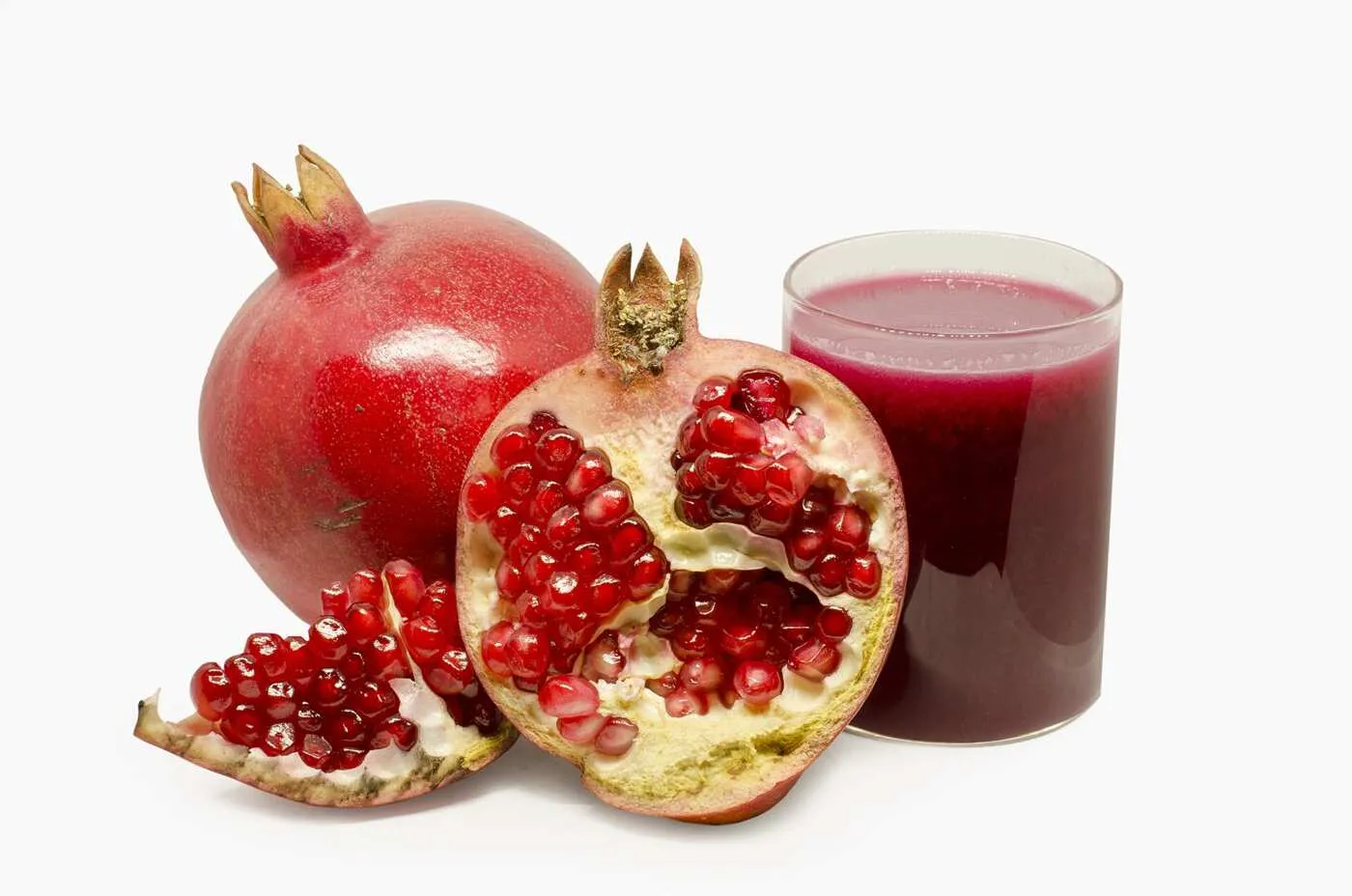 Photo: Augustus Binu : flickr, CC BY-SA 3.0, via Wikimedia Commons
Pomegranate arils (the fleshy juice sacs surrounding the seeds) are eaten fresh directly from the fruit, added to salads, grain dishes, yogurts, and used as a garnish. Pomegranate molasses (a thick reduction of pomegranate juice) is a staple in Middle Eastern and Iranian cuisines. Commercial pomegranate juices range from 100% pure juice to blends with apple, grape, or other juices; pure juices pressed from the whole fruit carry the most punicalagin (Gil et al., 2000).
To open a pomegranate, cutting the crown end, scoring through the skin along the natural sections, and submerging in water before separating the arils minimizes mess and staining. Pomegranate juice stains fabrics and surfaces durably due to its anthocyanin content.
Pomegranate peel extracts and concentrated whole-fruit powders are available as dietary supplements, often standardized to punicalagin content. Because peel extraction yields dramatically higher punicalagin concentrations than aril-only juice, many supplement products use whole-fruit or peel-predominant extracts.
Safety, Interactions, and Contraindications
Generally safe at dietary intakes: NCCIH describes pomegranate juice as believed to be safe and the extract as possibly safe; side effects are uncommon, though some people report digestive symptoms. The root, stem, and peel may not be safe in large amounts.
Drug interactions — CYP enzymes: Pomegranate juice inhibits CYP3A activity in human liver microsomes. A 2005 study by Hidaka et al. found that pomegranate juice nearly abolished CYP3A-mediated carbamazepine metabolism in vitro and raised carbamazepine AUC about 1.5-fold in rats. In 13 healthy volunteers, however, 8 oz of pomegranate juice did not change the clearance of the CYP3A probe drug midazolam, whereas grapefruit juice did (Farkas et al., 2007). Pomegranate juice also inhibited CYP2C9 in human liver microsomes and modestly raised tolbutamide exposure in rats (Nagata et al., 2007). Interactions with other CYP3A4 drugs (statins, calcium channel blockers, immunosuppressants) and CYP2C9 drugs (warfarin, NSAIDs) remain theoretical, based mainly on laboratory and animal data. While the magnitude of pomegranate-drug interactions appears smaller than the well-documented grapefruit-drug interaction, individuals taking narrow therapeutic-index medications should consult a pharmacist or physician before consuming large amounts of pomegranate juice or concentrated extracts.
Anticoagulant therapy: Pomegranate juice and extract reduced platelet activation in laboratory tests (Mattiello et al., 2009); whether this matters at dietary intakes is unknown. Concomitant use of large quantities of pomegranate products with warfarin or other anticoagulants warrants monitoring. A 2009 case report described a woman on stable warfarin whose INR fell below the therapeutic range after she stopped drinking pomegranate juice two to three times a week, rated only a “possible” interaction; INR fluctuation has many dietary and other causes.
Allergy: IgE-mediated allergy to pomegranate is uncommon but documented, with symptoms ranging from oral pruritus to urticaria and, rarely, anaphylaxis. A reported case of pomegranate anaphylaxis was attributed to cross-reactivity with the peach lipid transfer protein Pru p 3 (Almeida et al., 2015), so people with peach or other LTP allergy may react.
Blood pressure: Given evidence that pomegranate may lower blood pressure, individuals already taking antihypertensive medications should be aware of the potential for additive hypotensive effects, particularly at high consumption levels.
Diabetes management: Pomegranate has a relatively high natural sugar content (approximately 14 g/100 g arils). Whole arils also supply about 4 g of fiber per 100 g, which juice lacks. Individuals with diabetes monitoring carbohydrate intake should account for pomegranate juice, which concentrates sugars without fiber.
Pregnancy: NCCIH states that drinking pomegranate juice during pregnancy or breastfeeding may be safe, but little is known about other forms or plant parts. The roots contain piperidine alkaloids (pelletierines) (Bonacci et al., 2026); concentrated root, bark, or peel preparations are best avoided in pregnancy.
This entry is for informational purposes only and does not constitute medical advice. Consult a qualified healthcare provider before using any supplement or making dietary changes to manage a health condition.
Frequently Asked Questions
What are the benefits of pomegranate juice?
The most consistent finding is on blood pressure: across 8 placebo-controlled trials, pomegranate juice lowered systolic pressure by about 5 mmHg and diastolic by about 2 mmHg. Pooled trials also show modest reductions in inflammation and oxidative-stress markers. It did not improve cholesterol in a 12-trial meta-analysis, and a placebo-controlled trial in men with rising PSA found no benefit.
What happens if you drink pomegranate juice every day?
Trials of daily pomegranate juice, typically lasting weeks to a few months, report modestly lower blood pressure and lower inflammation markers on average. Juice also adds sugar without the fiber of whole arils, which matters for anyone managing blood glucose or weight. Daily juice is generally considered safe, but people on blood pressure drugs or warfarin should mention it to their clinician.
Who should not drink pomegranate juice?
People taking antihypertensive drugs should be aware of possible additive blood pressure lowering. Those on warfarin or other narrow-range medications should check with a pharmacist, since pomegranate inhibited CYP3A and CYP2C9 enzymes in lab and animal studies, though not in a human midazolam study. People with peach or other lipid transfer protein allergy may react, and people with diabetes should count its sugar.
Can you eat pomegranate seeds?
Yes. The edible parts are the arils, juicy red sacs that each surround a small seed, and both are eaten together. Whole arils supply about 4.0 g of fiber per 100 g, which juice lacks, plus vitamin K, folate and copper. The seeds also hold an oil rich in punicic acid, a fatty acid studied mainly in animals.
Is pomegranate juice better than eating the fruit?
It depends on the goal. Commercial juices pressed from the whole fruit carry far more punicalagin than juice from arils alone, about 1,500 to 1,900 mg per liter in one analysis, because pressing extracts it from the rind. Whole arils keep the fiber and are more filling. Most of the blood pressure trials used juice.
Does pomegranate juice interact with medications?
Possibly, but less than grapefruit. Pomegranate juice blocked the drug-metabolizing enzyme CYP3A in lab tests and raised carbamazepine levels in rats, yet in 13 healthy volunteers 8 oz of juice did not change clearance of midazolam, a standard CYP3A test drug. A single case report linked stopping pomegranate juice to a falling INR on warfarin. Ask a pharmacist about narrow-range drugs.
References
Show all 22 referencesShow fewer
- Aviram, M., Rosenblat, M., Gaitini, D., Nitecki, S., Hoffman, A., Dornfeld, L., … Hayek, T. (2004). Pomegranate juice consumption for 3 years by patients with carotid artery stenosis reduces common carotid intima-media thickness, blood pressure and LDL oxidation. Clinical Nutrition, 23(3), 423–433.
- Andreux, P. A., Blanco-Bose, W., Ryu, D., Burdet, F., Ibberson, M., Aebischer, P., … Rinsch, C. (2019). The mitophagy activator urolithin A is safe and induces a molecular signature of improved mitochondrial and cellular health in humans. Nature Metabolism, 1(6), 595–603.
- Sahebkar, A., Ferri, C., Giorgini, P., Bo, S., Nachtigal, P., & Grassi, D. (2017). Effects of pomegranate juice on blood pressure: A systematic review and meta-analysis of randomized controlled trials. Pharmacological Research, 115, 149–161.
- Pantuck, A. J., Leppert, J. T., Zomorodian, N., Aronson, W., Hong, J., Barnard, R. J., … Belldegrun, A. (2006). Phase II study of pomegranate juice for men with rising prostate-specific antigen following surgery or radiation for prostate cancer. Clinical Cancer Research, 12(13), 4018–4026.
- Paller, C. J., Ye, X., Wozniak, P. J., Gillespie, B. K., Sieber, P. R., Greengold, R. H., … Carducci, M. A. (2013). A randomized phase II study of pomegranate extract for men with rising PSA following initial therapy for localized prostate cancer. Prostate Cancer and Prostatic Diseases, 16(1), 50–55.
- Bahari, H., Rafiei, H., Goudarzi, K., Omidian, K., Asbaghi, O., Kolbadi, K. S. H., Naderian, M., & Hosseini, A. (2023). The effects of pomegranate consumption on inflammatory and oxidative stress biomarkers in adults: A systematic review and meta-analysis. Inflammopharmacology, 31(5), 2283–2301.
- Hidaka, M., Okumura, M., Fujita, K., Ogikubo, T., Yamasaki, K., Iwakiri, T., … Arimori, K. (2005). Effects of pomegranate juice on human cytochrome P450 3A (CYP3A) and carbamazepine pharmacokinetics in rats. Drug Metabolism and Disposition, 33(5), 644–648.
- USDA FoodData Central. (2019). Pomegranates, raw. FDC ID 169134. U.S. Department of Agriculture.
- Gil, M. I., Tomás-Barberán, F. A., Hess-Pierce, B., Holcroft, D. M., & Kader, A. A. (2000). Antioxidant activity of pomegranate juice and its relationship with phenolic composition and processing. Journal of Agricultural and Food Chemistry, 48(10), 4581–4589.
- Sahebkar, A., Simental-Mendía, L. E., Giorgini, P., Ferri, C., & Grassi, D. (2016). Lipid profile changes after pomegranate consumption: A systematic review and meta-analysis of randomized controlled trials. Phytomedicine, 23(11), 1103–1112.
- Rosenblat, M., Hayek, T., & Aviram, M. (2006). Anti-oxidative effects of pomegranate juice (PJ) consumption by diabetic patients on serum and on macrophages. Atherosclerosis, 187(2), 363–371.
- Liu, S., D’Amico, D., Shankland, E., … Marcinek, D. J. (2022). Effect of urolithin A supplementation on muscle endurance and mitochondrial health in older adults: A randomized clinical trial. JAMA Network Open, 5(1), e2144279.
- Pantuck, A. J., Pettaway, C. A., Dreicer, R., Corman, J., Katz, A., Ho, A., … Heber, D. (2015). A randomized, double-blind, placebo-controlled study of the effects of pomegranate extract on rising PSA levels in men following primary therapy for prostate cancer. Prostate Cancer and Prostatic Diseases, 18(3), 242–248.
- Farkas, D., Oleson, L. E., Zhao, Y., … Greenblatt, D. J. (2007). Pomegranate juice does not impair clearance of oral or intravenous midazolam, a probe for cytochrome P450-3A activity: Comparison with grapefruit juice. Journal of Clinical Pharmacology, 47(3), 286–294.
- Komperda, K. E. (2009). Potential interaction between pomegranate juice and warfarin. Pharmacotherapy, 29(8), 1002–1006.
- Cortés-Martín, A., García-Villalba, R., González-Sarrías, A., Romo-Vaquero, M., Loria-Kohen, V., Ramírez-de-Molina, A., Tomás-Barberán, F. A., Selma, M. V., & Espín, J. C. (2018). The gut microbiota urolithin metabotypes revisited: The human metabolism of ellagic acid is mainly determined by aging. Food & Function, 9(8), 4100–4106.
- Ryu, D., Mouchiroud, L., Andreux, P. A., … Auwerx, J. (2016). Urolithin A induces mitophagy and prolongs lifespan in C. elegans and increases muscle function in rodents. Nature Medicine, 22(8), 879–888.
- Nagata, M., Hidaka, M., Sekiya, H., Kawano, Y., Yamasaki, K., Okumura, M., & Arimori, K. (2007). Effects of pomegranate juice on human cytochrome P450 2C9 and tolbutamide pharmacokinetics in rats. Drug Metabolism and Disposition, 35(2), 302–305.
- Mattiello, T., Trifirò, E., Jotti, G. S., & Pulcinelli, F. M. (2009). Effects of pomegranate juice and extract polyphenols on platelet function. Journal of Medicinal Food, 12(2), 334–339.
- Almeida, E. M., Bartolomé, B., Faria, E. G., Sousa, N. G., & Luís, A. S. (2015). Pomegranate anaphylaxis due to cross-reactivity with peach LTP (Pru p 3). Allergologia et Immunopathologia, 43(1), 104–106.
- Bonacci, S., Scarano, P., Iriti, G., … Procopio, A. (2026). The truth behind the myth of pomegranate tree root: Proofs on anti-nematode and anti-feeding properties of pelletierine-like alkaloids. Molecules, 31(8), 1254.
- National Center for Complementary and Integrative Health. Pomegranate.
Related content
More in Fruits
- Apple (Malus domestica)
Are apples good for you? Apples supply pectin fiber and quercetin, and large cohort studies link regular intake to lower heart disease and diabetes risk.
- Avocado (Persea americana)
Is avocado good for you? Avocado is high in monounsaturated fat, fiber and potassium, and small trials link a daily avocado to lower LDL cholesterol.
- Banana (Musa acuminata)
Are bananas good for you? Bananas supply potassium, vitamin B6 and fiber, and green bananas add resistant starch. The evidence, and who should limit them.
- Cherry (Prunus avium / Prunus cerasus)
Tart cherry juice benefits, weighed: small trials suggest faster muscle recovery and longer sleep, and gout data are early. Sweet vs tart cherry nutrition.
- Grapefruit (Citrus × paradisi)
Is grapefruit good for you? It is low in calories and rich in vitamin C, but it interacts with statins and 85+ other drugs. Benefits, nutrition and risks.
- Grapes (Vitis vinifera)
Are grapes good for you? Grapes supply skin polyphenols and vitamin K but little fiber and plenty of sugar. What the vascular and resveratrol data show.

Curated by Superfoods Advisor Editors·Last updated