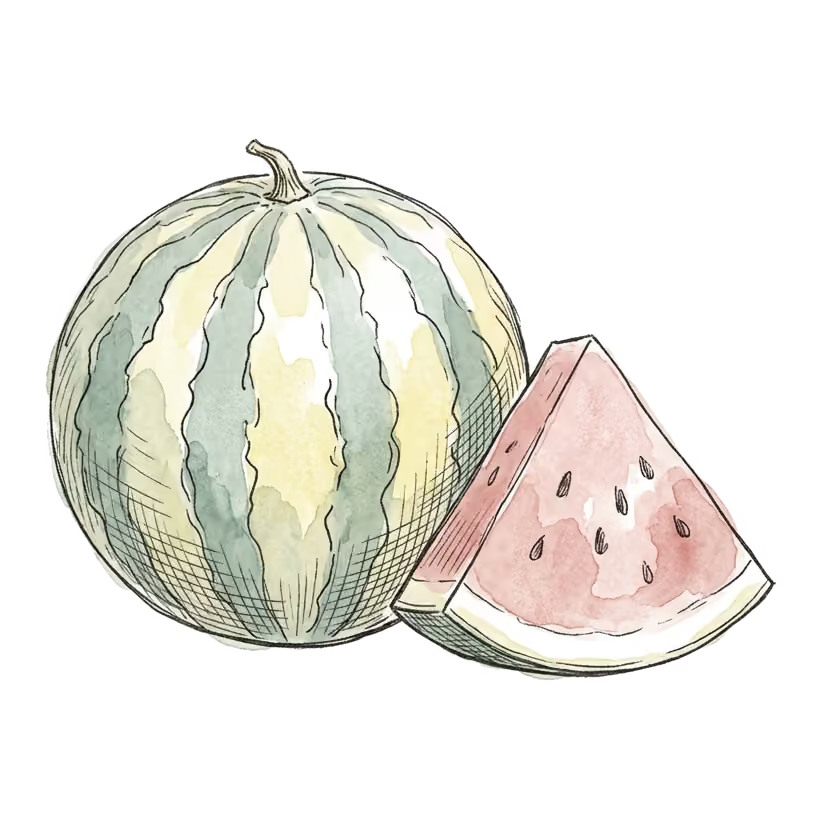
Watermelon (Citrullus lanatus)
Citrullus lanatus · also known as watermelon, Citrullus vulgaris, sandia, pasteque
By Superfoods Advisor Editors·July 3, 2026
Is watermelon good for you? It is 91% water, low in calories and rich in lycopene and citrulline; small trials suggest blood pressure effects.
For most people, watermelon is a hydrating, low-calorie fruit. Watermelon (Citrullus lanatus, a cucurbit related to melons and cucumbers) is about 91% water and provides 30 kcal per 100 g. Red-fleshed types supply about 4.5 mg of lycopene per 100 g, more than raw tomato, plus the amino acid L-citrulline, which small trials have linked to lower blood pressure.
The fruit is native to northeastern Africa; genomic work points to the Kordofan melon of Sudan as its closest living wild relative (Renner et al., 2021). Seed remains about 5,000 years old have been found in the region, and sweet dessert types had emerged in Mediterranean lands by roughly 2,000 years ago (Paris, 2015).
Hundreds of cultivars exist, from striped Crimson Sweet to small Sugar Baby and the seedless hybrids that dominate retail. Flesh ranges from deep red to orange, yellow and white; the red types are among the richest common sources of lycopene, and citrulline levels have drawn athletic interest.
Evidence at a glance
Active Compounds
Watermelon’s composition features several bioactive constituents with distinct physiological relevance:
- Lycopene: The carotenoid pigment responsible for the red color of the flesh. USDA analyses list about 4.5 mg of lycopene per 100 g of raw watermelon, against about 2.6 mg in raw red tomato (USDA FoodData Central; tomato); levels vary by cultivar. In a controlled feeding trial, unheated watermelon juice raised plasma lycopene about as much as heat-processed tomato juice (Edwards et al., 2003). Lycopene is a potent singlet oxygen quencher and has been associated in epidemiological research with lower prostate cancer risk (Giovannucci et al., 1995) and lower cardiovascular disease risk (Cheng et al., 2019).
- L-citrulline: A non-essential amino acid that serves as an arginine precursor: dietary L-citrulline is converted to arginine mainly in the kidneys, and arginine is the substrate nitric oxide synthase uses to produce nitric oxide (NO). In a crossover trial in 20 healthy volunteers, oral L-citrulline raised plasma arginine more effectively than L-arginine itself, which is extensively broken down by intestinal arginase before it reaches the circulation (Schwedhelm et al., 2008). Watermelon flesh contains roughly 190–230 mg of L-citrulline per 100 g fresh weight (Rimando & Perkins-Veazie, 2005; Tarazona-Díaz et al., 2011). The rind — the white-green inner portion typically discarded in Western culinary traditions — is richer on a dry-weight basis, but on a fresh-weight basis the two studies found it slightly lower or moderately higher than the flesh (about 130–330 mg/100 g).
- L-arginine: Present in watermelon at roughly a quarter to a third of the concentration of L-citrulline (about 59 mg/100 g flesh, per USDA FoodData Central), contributing to total arginine flux but less efficiently than citrulline for systemic arginine/NO status.
- Beta-carotene: Present alongside lycopene in red-fleshed varieties at approximately 0.3 mg/100 g (USDA FoodData Central); orange-fleshed cultivars that lack lycopene may have substantially higher beta-carotene.
- Vitamin C: Approximately 8 mg/100 g (USDA FoodData Central), a modest contribution to daily requirements.
- Potassium: Approximately 112 mg/100 g, contributing to electrolyte replenishment during sweating.
- Choline: Present at approximately 4 mg/100 g (USDA FoodData Central).
Nutritional Profile
Per 100 g raw watermelon flesh (USDA FoodData Central; L-citrulline from Rimando & Perkins-Veazie, 2005 and Tarazona-Díaz et al., 2011):
| Nutrient | Amount | % DV |
|---|---|---|
| Energy | 30 kcal | — |
| Water | 91.4 g | — |
| Carbohydrate | 7.6 g | — |
| Dietary fiber | 0.4 g | — |
| Sugars | 6.2 g | — |
| Protein | 0.6 g | — |
| Fat | 0.2 g | — |
| Vitamin C | 8.1 mg | 9% |
| Vitamin A (as beta-carotene) | 28 mcg RAE | 3% |
| Lycopene | 4,530 mcg (no DV established) | — |
| L-citrulline | approx. 190–230 mg (not in USDA data) | — |
| Potassium | 112 mg | 2% |
| Magnesium | 10 mg | 2% |
Despite its sweet taste, watermelon has a relatively low energy density (30 kcal/100 g) owing to its very high water content. Its glycemic index is high (76 ± 4 in the Atkinson et al., 2008 international tables), but a typical 120–150 g serving supplies only about 9–11 g of available carbohydrate, so the glycemic load per serving is low (roughly 6–8).
Evidence for Purported Benefits
Lycopene and Prostate Cancer Risk
Evidence:Preliminary Inconsistent observational data on lycopene and tomato intake; watermelon lycopene is bioavailable, but no watermelon cancer trials exist.
Lycopene is among the most extensively studied dietary carotenoids in the context of cancer risk. The landmark Giovannucci et al. (1995, Journal of the National Cancer Institute) analysis of 47,894 men in the Health Professionals Follow-Up Study found an inverse association between tomato product consumption (the primary dietary lycopene source) and prostate cancer risk, with a relative risk of 0.79 for the highest versus lowest quintile of lycopene intake. Subsequent prospective studies have been inconsistent. A meta-analysis of 21 observational studies by Etminan et al. (2004, Cancer Epidemiology, Biomarkers and Prevention) found a modest inverse association limited to high intakes, stronger for cooked tomato products (RR 0.81) than for raw tomato (RR 0.89). Clinical RCTs using lycopene supplements have not consistently confirmed tumor-reducing effects in prostate cancer patients. The evidence is sufficient to keep lycopene under study as a candidate compound for lower prostate cancer risk, but insufficient to support clinical recommendations for supplementation or specific lycopene intakes for cancer prevention.
Watermelon lycopene bioavailability has been tested directly: in a 19-week controlled-diet crossover trial in 23 healthy adults, Edwards et al. (2003, Journal of Nutrition) found that three weeks of fresh-frozen watermelon juice (about 20 mg lycopene per day) raised plasma lycopene to concentrations that did not differ from those achieved with a similar dose from canned tomato juice. Unlike tomato, watermelon delivered this without heat processing, which is otherwise known to improve lycopene uptake from tomato products.
Citrulline, Nitric Oxide, and Cardiovascular Function
Evidence:Limited Two very small crossover trials (n=9 and 13) of watermelon extract lowered aortic blood pressure.
L-citrulline’s conversion to L-arginine and subsequent nitric oxide production provides a rationale for effects on blood pressure and vascular function. Collins et al. (2007, Nutrition) found that three weeks of watermelon juice consumption raised fasting plasma arginine concentrations in healthy adults. Figueroa et al. (2011, American Journal of Hypertension) conducted a small crossover pilot trial (n=9) in which watermelon extract providing 2.7 g L-citrulline and 1.3 g L-arginine daily for six weeks reduced aortic systolic blood pressure compared to a placebo period in middle-aged subjects with prehypertension. A later crossover trial by the same group (Figueroa et al., 2014, American Journal of Hypertension, n=13 obese hypertensive adults) found that watermelon supplementation lowered aortic blood pressure at rest and during a cold pressor test, and blunted the cold-induced rise in wave reflection. These studies are very small and require replication, but the mechanistic pathway — citrulline to arginine to NO to vasodilation — is pharmacologically sound.
Citrulline and Exercise Performance
Evidence:Preliminary A single seven-athlete juice trial; the better-powered trials used high-dose citrulline supplements.
The premise that watermelon citrulline could improve exercise performance through NO-mediated vasodilation and improved muscle perfusion has been tested in several small trials. Perez-Guisado and Jakeman (2010, Journal of Strength and Conditioning Research) conducted a crossover RCT (n=41) using L-citrulline malate supplementation (8 g, not watermelon) and found significant improvements in repetitions to failure in weight training and reduced muscle soreness at 24 and 48 hours post-exercise.
A small watermelon juice trial by Tarazona-Diaz et al. (2013, Journal of Agricultural and Food Chemistry) tested seven athletes consuming 500 mL of watermelon juice (containing approximately 1.17 g L-citrulline) before a cycling bout and found lower 24-hour muscle soreness ratings versus placebo. These dosing levels (approximately 1 g citrulline from food) are substantially lower than the doses used in the supplement trials above (2.7 g L-citrulline plus arginine in Figueroa 2011; 8 g citrulline malate in Perez-Guisado 2010), and it is uncertain whether dietary watermelon consumption during normal eating provides sufficient citrulline to meaningfully influence exercise performance.
Hydration and Electrolyte Balance
Evidence:Moderate Watermelon is about 91% water; no trials show it hydrates better than water.
Watermelon’s roughly 91% water content and potassium and magnesium concentrations make it a reasonable food-based hydration source. The hydration value of watermelon as a water-containing food is not disputed; its superiority to water or other hydrating foods for athletic recovery has not been established in adequate clinical trials.
Typical Use and Preparation
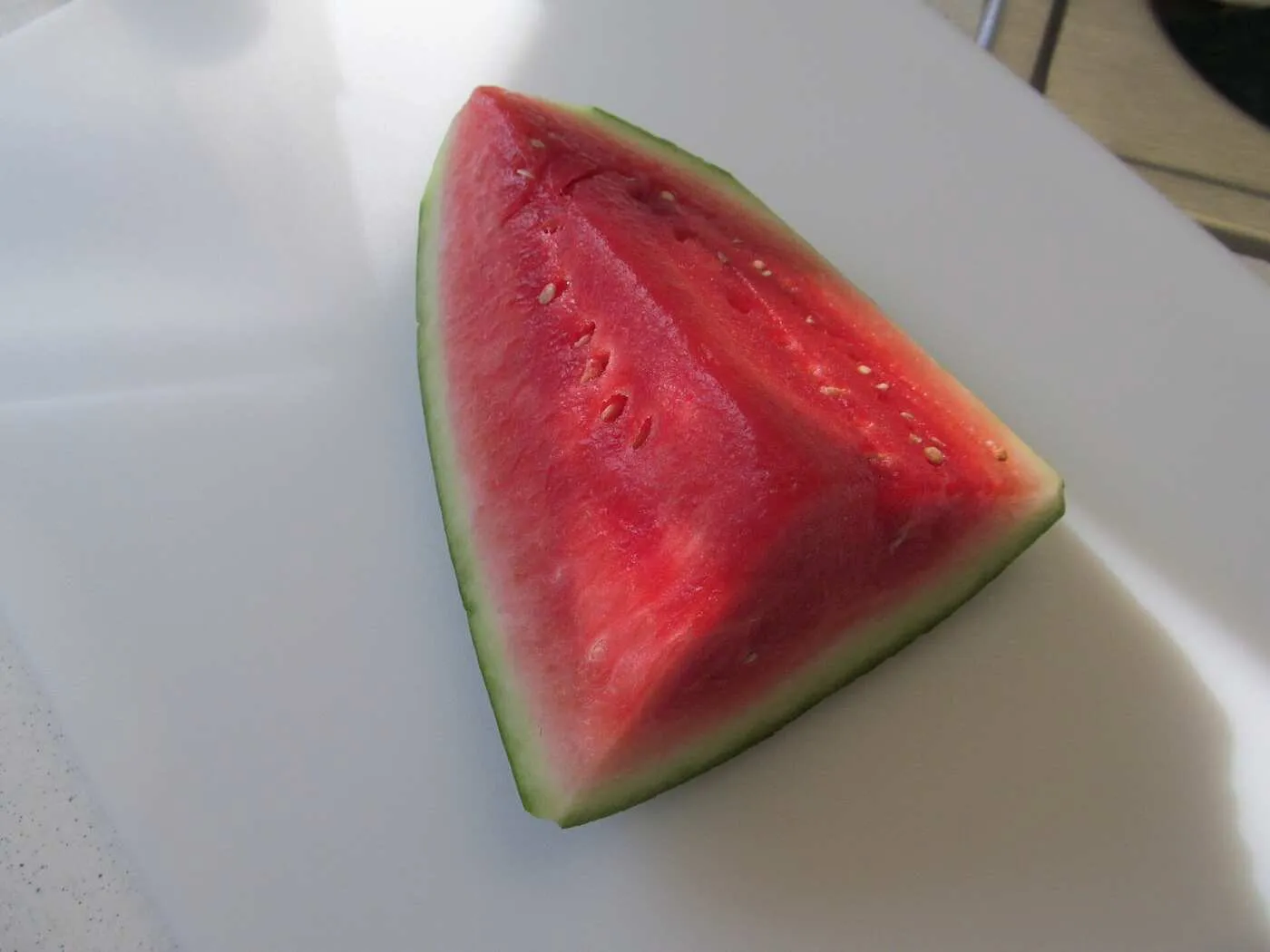 Photo: John Phelan, CC BY-SA 3.0, via Wikimedia Commons
Watermelon is consumed primarily fresh, as juice, or in granitas and sorbets. Preparation considerations:
- Fresh flesh: The form the composition values above refer to.
- Rind: The white-green inner rind contains citrulline at levels broadly similar to the flesh on a fresh-weight basis and is edible — used in pickled watermelon rind in Southern US culinary tradition and in Chinese stir-fry preparations. Western consumers typically discard it.
- Juice: In a cell-culture absorption model, citrulline from unheated watermelon juice was more bioavailable than citrulline from pasteurized juice (Tarazona-Díaz et al., 2013).
- Frozen: Fresh-frozen watermelon juice was the lycopene source in the Edwards et al. feeding trial; frozen flesh loses much of its texture on thawing because of its high water content.
- Seedless varieties: Dominate retail; nutritional profile is broadly comparable to seeded varieties. Seeds, when consumed, contain protein, zinc, and magnesium.
Lycopene’s other research thread, small trials on UV-induced skin redness, is covered in the skin-health nutrition guide. For other foods studied for blood pressure, see the heart health superfoods guide. Red-fleshed papaya and pink grapefruit are other fruit sources of lycopene.
Safety, Interactions, and Contraindications
Watermelon is safe for most people at normal dietary intake levels. Considerations include:
High glycemic index (GI about 76): The glycemic index is high relative to most other fruits. However, because of the high water content, the glycemic load per typical serving is low. Individuals with type 2 diabetes are generally advised to be mindful of serving size rather than avoid watermelon entirely.
Potassium: Individuals with chronic kidney disease who require potassium restriction should account for watermelon in their dietary potassium budget, particularly if consuming large portions.
FODMAPs: Watermelon contains fructose in excess of glucose (Muir et al., 2009), and Monash University lists it as a high-FODMAP fruit. Individuals following a low-FODMAP diet for IBS symptom management should limit portions; the Monash FODMAP app lists tested serving sizes.
Lycopene excess: Sustained, very high intakes of lycopene-rich foods can cause lycopenemia, a harmless yellow-orange skin discoloration (Tanaka et al., 2022). It is rare at normal intake levels.
Drug interactions with PDE5 inhibitors: Individuals taking erectile dysfunction medications (PDE5 inhibitors: sildenafil, tadalafil) should be aware that L-citrulline and arginine-mediated NO production can theoretically augment the vasodilatory effect of these drugs. The clinical significance of dietary citrulline from food at this interaction level is speculative but warrants caution with supplemental citrulline products.
Allergy: Oral allergy syndrome from melon and watermelon, usually mild oral tingling or itching, is documented in pollen-allergic people; in ragweed-allergic patients it was linked mainly to the plant pan-allergen profilin, which cross-reacts with grass pollen (Asero et al., 2011). Systemic reactions such as anaphylaxis are rarely reported.
Frequently Asked Questions
Is watermelon good for you?
For most people, yes. Watermelon is mostly water, low in calories at 30 kcal per 100 g, and red varieties are one of the richest food sources of lycopene. It also contains L-citrulline, which the body converts to arginine. Small trials link watermelon extract to lower blood pressure, but they used concentrated doses and very few participants.
Does watermelon have fiber?
Very little. Raw watermelon flesh contains about 0.4 g of dietary fiber per 100 g, according to USDA FoodData Central, far less than apples, pears or berries. Its bulk comes from water, about 91% by weight. That makes it hydrating and low in energy density, but not a meaningful fiber source.
Is watermelon good for diabetics?
Watermelon can fit a diabetes meal plan in measured portions. Its glycemic index is high, about 76, but because it is so watery, a typical 120 to 150 g serving supplies only about 9 to 11 g of available carbohydrate, a low glycemic load of roughly 6 to 8. Serving size matters more than avoiding it; a dietitian can help set portions.
How much watermelon is too much?
There is no fixed limit for healthy people. Large portions can cause bloating or loose stools in people sensitive to fructose, since watermelon is high-FODMAP. People with chronic kidney disease on potassium restriction should count it, and sustained very high intake of lycopene-rich foods can cause lycopenemia, a harmless yellow-orange skin tint.
Can watermelon cause diarrhea?
It can in some people. Watermelon contains more fructose than glucose and is listed as high-FODMAP by Monash University, so people with irritable bowel syndrome or fructose malabsorption may get gas, bloating or loose stools from larger servings. The Monash FODMAP app lists tested serving sizes for people following a low-FODMAP diet.
Can you eat watermelon rind and seeds?
Yes. The white-green inner rind is edible and contains L-citrulline at levels broadly similar to the flesh on a fresh-weight basis. It is pickled in Southern US cooking and stir-fried in Chinese dishes. The seeds are also edible and contain protein, zinc and magnesium, though seedless varieties now dominate retail.
References
Show all 20 referencesShow fewer
- Giovannucci, E., Ascherio, A., Rimm, E. B., Stampfer, M. J., Colditz, G. A., & Willett, W. C. (1995). Intake of carotenoids and retinol in relation to risk of prostate cancer. Journal of the National Cancer Institute, 87(23), 1767–1776.
- Edwards, A. J., Vinyard, B. T., Wiley, E. R., Brown, E. D., Collins, J. K., Perkins-Veazie, P., Baker, R. A., & Clevidence, B. A. (2003). Consumption of watermelon juice increases plasma concentrations of lycopene and beta-carotene in humans. Journal of Nutrition, 133(4), 1043–1050.
- Collins, J. K., Wu, G., Perkins-Veazie, P., Spears, K., Claypool, P. L., Baker, R. A., & Clevidence, B. A. (2007). Watermelon consumption increases plasma arginine concentrations in adults. Nutrition, 23(3), 261–266.
- Figueroa, A., Sanchez-Gonzalez, M. A., Perkins-Veazie, P. M., & Arjmandi, B. H. (2011). Effects of watermelon supplementation on aortic blood pressure and wave reflection in individuals with prehypertension: a pilot study. American Journal of Hypertension, 24(1), 40–44.
- Tarazona-Diaz, M. P., Alacid, F., Carrasco, M., Martinez, I., & Aguayo, E. (2013). Watermelon juice: potential functional drink for sore muscle relief in athletes. Journal of Agricultural and Food Chemistry, 61(31), 7522–7528.
- Perez-Guisado, J., & Jakeman, P. M. (2010). Citrulline malate enhances athletic anaerobic performance and relieves muscle soreness. Journal of Strength and Conditioning Research, 24(5), 1215–1222.
- Figueroa, A., Wong, A., & Kalfon, R. (2014). Effects of watermelon supplementation on aortic hemodynamic responses to the cold pressor test in obese hypertensive adults. American Journal of Hypertension, 27(7), 899–906.
- Etminan, M., Takkouche, B., & Caamaño-Isorna, F. (2004). The role of tomato products and lycopene in the prevention of prostate cancer: a meta-analysis of observational studies. Cancer Epidemiology, Biomarkers & Prevention, 13(3), 340–345.
- Rimando, A. M., & Perkins-Veazie, P. M. (2005). Determination of citrulline in watermelon rind. Journal of Chromatography A, 1078(1–2), 196–200.
- Tarazona-Díaz, M. P., Viegas, J., Moldao-Martins, M., & Aguayo, E. (2011). Bioactive compounds from flesh and by-product of fresh-cut watermelon cultivars. Journal of the Science of Food and Agriculture, 91(5), 805–812.
- Atkinson, F. S., Foster-Powell, K., & Brand-Miller, J. C. (2008). International tables of glycemic index and glycemic load values: 2008. Diabetes Care, 31(12), 2281–2283.
- Paris, H. S. (2015). Origin and emergence of the sweet dessert watermelon, Citrullus lanatus. Annals of Botany, 116(2), 133–148.
- Renner, S. S., Wu, S., Pérez-Escobar, O. A., Silber, M. V., Fei, Z., & Chomicki, G. (2021). A chromosome-level genome of a Kordofan melon illuminates the origin of domesticated watermelons. PNAS, 118(23), e2101486118.
- U.S. Department of Agriculture. FoodData Central: Watermelon, raw (FDC 167765).
- Schwedhelm, E., Maas, R., Freese, R., Jung, D., Lukacs, Z., Jambrecina, A., Spickler, W., Schulze, F., & Böger, R. H. (2008). Pharmacokinetic and pharmacodynamic properties of oral L-citrulline and L-arginine: impact on nitric oxide metabolism. British Journal of Clinical Pharmacology, 65(1), 51–59.
- Cheng, H. M., Koutsidis, G., Lodge, J. K., Ashor, A. W., Siervo, M., & Lara, J. (2019). Lycopene and tomato and risk of cardiovascular diseases: a systematic review and meta-analysis of epidemiological evidence. Critical Reviews in Food Science and Nutrition, 59(1), 141–158.
- Muir, J. G., Rose, R., Rosella, O., Liels, K., Barrett, J. S., Shepherd, S. J., & Gibson, P. R. (2009). Measurement of short-chain carbohydrates in common Australian vegetables and fruits by high-performance liquid chromatography (HPLC). Journal of Agricultural and Food Chemistry, 57(2), 554–565.
- Monash University. High and low FODMAP foods.
- Tanaka, A., Miyauchi, T., Kitamura, S., Iwata, H., Hata, H., & Ujiie, H. (2022). Carotenoderma due to lycopenemia: a case report and evaluation of lycopene deposition in the skin. Journal of Dermatology, 49(12), 1320–1324.
- Asero, R., Mistrello, G., & Amato, S. (2011). The nature of melon allergy in ragweed-allergic subjects: a study of 1000 patients. Allergy and Asthma Proceedings, 32(1), 64–67.
More in Fruits
- Apple (Malus domestica)
Are apples good for you? Apples supply pectin fiber and quercetin, and large cohort studies link regular intake to lower heart disease and diabetes risk.
- Avocado (Persea americana)
Is avocado good for you? Avocado is high in monounsaturated fat, fiber and potassium, and small trials link a daily avocado to lower LDL cholesterol.
- Banana (Musa acuminata)
Are bananas good for you? Bananas supply potassium, vitamin B6 and fiber, and green bananas add resistant starch. The evidence, and who should limit them.
- Cherry (Prunus avium / Prunus cerasus)
Tart cherry juice benefits, weighed: small trials suggest faster muscle recovery and longer sleep, and gout data are early. Sweet vs tart cherry nutrition.
- Grapefruit (Citrus × paradisi)
Is grapefruit good for you? It is low in calories and rich in vitamin C, but it interacts with statins and 85+ other drugs. Benefits, nutrition and risks.
- Grapes (Vitis vinifera)
Are grapes good for you? Grapes supply skin polyphenols and vitamin K but little fiber and plenty of sugar. What the vascular and resveratrol data show.

Curated by Superfoods Advisor Editors·Last updated