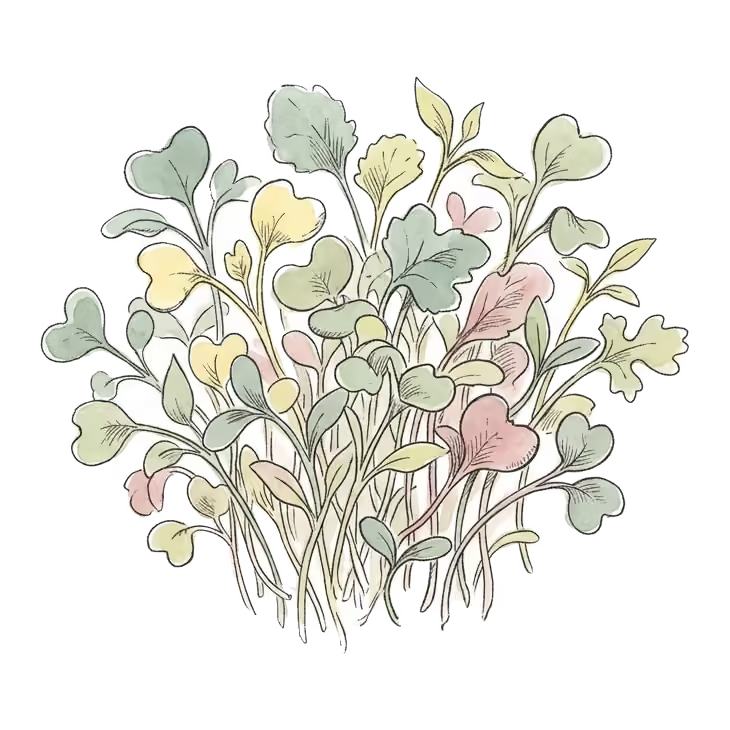
Microgreens (various species)
By Superfoods Advisor Editors·July 3, 2026
Microgreens benefits and nutrition: how 7–21-day seedlings compare with mature vegetables, what human studies show, microgreens vs sprouts, and safety.
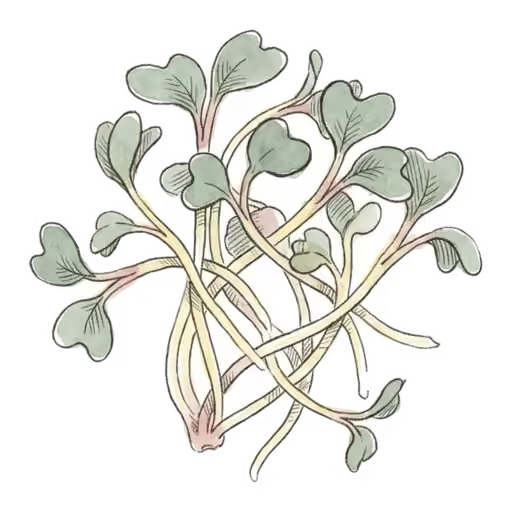
Microgreens are vegetable, herb and grain seedlings harvested 7 to 21 days after germination, once the seed leaves (cotyledons) open. Their main documented benefit is nutrient density: in a USDA-affiliated analysis of 25 varieties, many held 4 to 40 times the vitamin and carotenoid concentrations of the mature plant. Human health outcomes have barely been studied.
They differ from sprouts, which are germinated seeds eaten whole, root included, usually within 4–6 days, and from baby greens, which are harvested at 20–40 days with true leaves. Common microgreens include radish, sunflower, pea shoots, beet, arugula, amaranth, basil, cilantro, broccoli, red cabbage, buckwheat and wheatgrass.
Chefs used seedlings as garnishes before researchers took notice. Scientific attention grew after Xiao and colleagues (2012) systematically analyzed 25 commercial microgreen varieties for vitamins and carotenoids.
Because microgreens span many unrelated species, generalizations about them are approximate. Content depends on species, seed variety, growing medium (soil or hydroponic), lighting, harvest timing and post-harvest handling.
Evidence at a glance
Active Compounds
Microgreens do not have a single characteristic active compound; rather, they concentrate the compounds that are most active in their parent plant species at a stage of maximum metabolic activity in the seedling.
Carotenoids: The 2012 study by Xiao et al. found that red cabbage microgreens contained 40 times more vitamin E and six times more vitamin C per gram than mature red cabbage. Cilantro microgreens contained three times more beta-carotene. Carotenoid density at the seedling stage reflects the plant’s investment in photosynthetic pigment before the true leaf canopy is established.
Glucosinolates and isothiocyanates (cruciferous microgreens): Microgreens of cruciferous species — broccoli, radish, red cabbage, arugula, mustard — retain the glucosinolate-myrosinase system characteristic of mature cruciferous vegetables. Broccoli microgreens had glucoraphanin content similar to values reported for broccoli sprouts in one analysis (Bouranis et al., 2023). Radish microgreens are dominated by glucoraphasatin (dehydroerucin), the precursor of 4-methylthio-3-butenyl isothiocyanate, and some cultivars also yield substantial sulforaphene (Silva et al., 2025).
Polyphenols, flavonoids, and betalains: Amaranth and red beet microgreens contain betalains rather than anthocyanins (Belošević et al., 2024); red and purple varieties of basil and red cabbage microgreens concentrate anthocyanins.
Vitamins: In the Xiao et al. analysis, the microgreens generally held vitamin K1, vitamin E, provitamin A carotenoids, and vitamin C at higher concentrations than USDA values for the mature leaves.
Minerals: Mineral content in microgreens reflects the seed’s mineral reserves plus uptake from the growing medium. Mineral concentration relative to mature plants varies with species and growing medium: broccoli microgreens grown in compost had higher concentrations of most measured minerals than the mature vegetable, while hydroponic ones were higher in only some (Weber, 2017), and lettuce microgreens were richer in most minerals than mature lettuce (Pinto et al., 2015).
Enzymes: As living plant tissue, freshly harvested microgreens contain active enzymes, including myrosinase in cruciferous species. Cooking inactivates these enzymes.
Nutritional Profile
Because microgreens encompass many species, a unified nutritional table is not meaningful. The data below are from Xiao et al. (2012), comparing selected microgreens (fresh weight) to USDA values for mature vegetables.
| Species | Notable Nutrients Elevated vs. Mature Plant |
|---|---|
| Red cabbage microgreens | Vitamin C (~6x), vitamin E (~40x), vitamin K1 (~69x) |
| Cilantro microgreens | Beta-carotene (~3x), lutein + zeaxanthin (~5x) |
| Garnet amaranth microgreens | Vitamin C, vitamin E, vitamin K1, beta-carotene |
| Green daikon radish microgreens | Vitamin E, vitamin C, carotenoids |
| Sunflower microgreens | Vitamin C, vitamin E, folate |
| Pea shoots | Vitamin C, folate, carotenoids |
| Broccoli microgreens | Glucoraphanin (similar to reported broccoli sprout values; Bouranis et al., 2023) |
These comparisons are on a gram-for-gram basis; serving sizes of microgreens (typically 20–50 g) are smaller than mature vegetable servings (typically 80–150 g), meaning absolute daily nutrient delivery depends on portion size.
Evidence for Purported Benefits
Concentrated Phytochemical and Nutrient Delivery
Evidence:Moderate Compositional analyses consistently show high nutrient levels; human absorption data come from one 11-person feeding study.
The finding that microgreens contain substantially higher concentrations of certain vitamins and phytochemicals than mature vegetables is well-supported analytically. Xiao et al. (2012) provided systematic compositional data for 25 microgreen varieties; later work has reported high carotenoid, polyphenol, and glucosinolate concentrations across multiple species (Ebert, 2022). However, concentration in plant tissue does not automatically translate to superior bioavailability or health outcomes in humans. Human data are limited: an 11-person feeding study detected sulforaphane metabolites in urine after a single serving of broccoli microgreens (Bouranis et al., 2023).
Cardiovascular Risk Modulation
Evidence:Preliminary One mouse study; the only human trial, a two-week feasibility study in 24 adults, found no blood-pressure change.
Huang et al. (2016) randomized 60 male C57BL/6 mice (a diet-induced obesity model) to low- or high-fat diets with or without red cabbage microgreens or mature red cabbage for 8 weeks. In mice on the high-fat diet, microgreen supplementation attenuated weight gain, lowered circulating LDL, and reduced liver cholesterol esters, triglycerides, and inflammatory cytokine expression. The only human trial found was a 2-week crossover feasibility study in 24 healthy middle-aged and older adults eating red beet or red cabbage microgreens daily; it found no change in blood pressure or other hemodynamic measures (Lee et al., 2025). Extrapolation from mouse models is speculative.
Antioxidant Capacity
Evidence:Lab & animal only Test-tube antioxidant assays only, which do not predict effects in the body.
DPPH and FRAP assays on microgreen extracts and juices commonly report high in vitro antioxidant capacity (Belošević et al., 2024). This is consistent with elevated concentrations of vitamins C and E, carotenoids, flavonoids, and glucosinolate hydrolysis products. In vitro antioxidant capacity does not reliably predict antioxidant effects in humans after digestion, absorption, and hepatic metabolism.
Glycemic Response Modulation
Evidence:Lab & animal only Only cell-culture work on fenugreek microgreens; no animal or human studies of glucose response.
Fenugreek seed has been studied for blood sugar effects, but no animal or human studies of fenugreek microgreens and glycemic response were found; published work on fenugreek microgreens is limited to cell-culture experiments. No human trials have examined microgreen consumption and glycemic outcomes.
Typical Use and Preparation
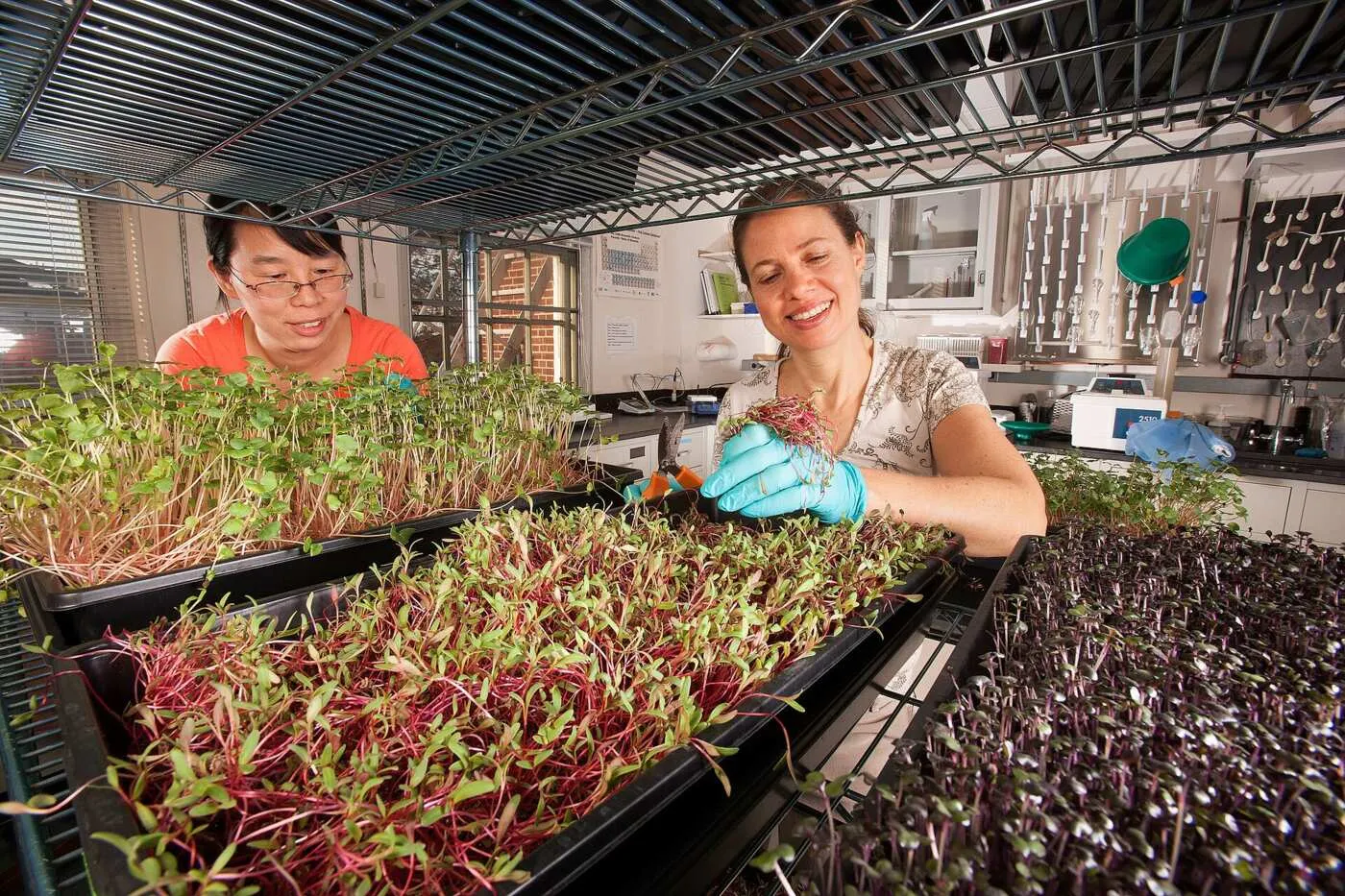 Photo: Peggy Greb, public domain, via Wikimedia Commons
Raw consumption: Microgreens are most commonly consumed raw as salad components, garnishes, or sandwich additions. Raw consumption maximizes enzymatic activity (including myrosinase in cruciferous microgreens) and preserves heat-labile vitamins. Microgreens should be consumed shortly after harvest, as nutrient levels decline with storage.
Smoothies: Blending activates myrosinase in cruciferous microgreens and releases phytonutrients from intact cells. Consuming with a fat source enhances fat-soluble vitamin and carotenoid absorption.
Juicing: Microgreens can be cold-pressed to concentrate water-soluble vitamins and phytochemicals. Juicing removes dietary fiber.
Lightly cooked: Microgreens are occasionally wilted briefly into hot dishes (soups, pastas, stir-fries). Brief wilting reduces myrosinase activity and vitamin C content but is acceptable for palatability. Extended cooking destroys most of the distinct phytochemical value.
Storage: Microgreens are highly perishable. Fresh-cut microgreens lose moisture and nutrient content rapidly; refrigeration at 4 °C in sealed containers extends shelf life to 5–7 days. Washing immediately before use (rather than before storage) reduces microbial growth and sogginess.
Home growing: Microgreens are commercially available but also widely grown at home. Seeds are broadcast densely on a shallow growing medium (soil, coconut coir, or hydroponic mat) and germinate under light over 1–3 weeks. Food-safety considerations apply: contaminated seeds are a recognized route for pathogens in microgreen production (Riggio et al., 2019). Seeds should be sourced from suppliers with food-safety testing protocols.
There are no established dietary reference values or supplemental dosing guidelines for microgreens. Typical culinary use involves 20–50 g per serving as a salad base or garnish.
Broccoli and other brassica seedlings are the best-studied of these foods, and our article on cruciferous vegetables and sulforaphane explains why their sulforaphane yield draws so much attention. The younger, root-on stage has its own entry: broccoli sprouts.
Safety, Interactions, and Contraindications
Species-specific considerations: Because microgreens encompass many different plant species, safety considerations are species-dependent. Users of cruciferous microgreens should note the following:
- Vitamin K and anticoagulants: Microgreens, cruciferous or not, can be rich in vitamin K1; garnet amaranth had the highest level of the 25 varieties Xiao et al. tested. Patients on warfarin should maintain consistent intake and monitor INR. Large portions of vitamin K-rich microgreens can destabilize anticoagulation control.
- Thyroid/goitrogen concerns: Cruciferous microgreens contain glucosinolate hydrolysis products that may suppress thyroid iodine uptake at very high intakes, particularly in iodine-deficient individuals. Routine culinary portions in iodine-sufficient individuals carry low risk. Individuals with thyroid conditions consuming microgreens in supplement-like quantities should consult their physician.
Foodborne illness risk: Raw microgreens, like raw sprouts, can be contaminated with Salmonella, pathogenic E. coli, and Listeria monocytogenes (Xavier et al., 2025). Unlike sprouts, microgreens grown in soil or on a substrate are harvested above the soil line (the seed and root are not consumed), which may reduce but does not eliminate contamination risk (Riggio et al., 2019). The FDA advises people more vulnerable to foodborne illness (including pregnant people, older adults, young children, and those with weakened immune systems) to avoid raw or lightly cooked sprouts; it issues no separate advice for microgreens, so the same groups may prefer to cook them or skip them. Producers and home growers should use food-safe seeds and substrates.
Oxalate content: Mature beet greens and spinach are high in oxalate. Oxalate data for their microgreens are scarce; an analysis of ten culinary microgreens from eight plant families reported low oxalate levels (Ghoora et al., 2020). Individuals with a history of calcium oxalate kidney stones may still want to moderate beet and spinach microgreens.
Allergies: Individuals with known allergies to any plant species should avoid microgreens of that species. Cross-reactivity within plant families (e.g., Apiaceae/carrot family: cilantro, parsley, dill, fennel) is possible.
Pesticide and contamination residues: Many commercial microgreens are sold unwashed, so check the label and rinse before eating if needed. Organic seeds and growing media reduce pesticide exposure. Home growers should avoid seeds treated with fungicide or pesticide coatings not intended for food production.
This entry is informational. It does not constitute medical advice, diagnosis, or treatment. Individuals with health conditions or dietary restrictions should consult a qualified healthcare provider or registered dietitian.
Frequently Asked Questions
Are microgreens good for you?
Gram for gram, many microgreens are more concentrated in vitamins and carotenoids than the mature vegetable; red cabbage microgreens held about 40 times the vitamin E of mature red cabbage in one analysis. Whether that translates into health benefits has hardly been tested in people. Because servings are small, 20–50 g, they work best as an addition to vegetables, not a replacement.
Microgreens vs sprouts: what is the difference?
Sprouts are germinated seeds eaten whole, root and seed included, usually after 4–6 days. Microgreens grow for 7–21 days in soil or on a mat under light and are cut above the growing medium, so the root is not eaten. That may lower, but does not remove, the contamination risk that sprouts carry.
Can microgreens make you sick?
They can. Raw microgreens have been contaminated with Salmonella, pathogenic E. coli and Listeria monocytogenes, and contaminated seed is a known route. The FDA’s advice for vulnerable groups covers raw sprouts and has no separate microgreen guidance, so pregnant people, older adults, young children and anyone immunocompromised may prefer to cook microgreens or skip them. Buy from growers who use tested seed.
How many microgreens should you eat a day?
There is no established amount. Typical culinary use is 20–50 g per serving as a salad base or garnish. People taking warfarin should keep intake consistent, since some varieties are rich in vitamin K1; garnet amaranth had the highest level of the 25 tested. Anyone eating supplement-sized amounts of cruciferous microgreens with a thyroid condition should check with their clinician.
Are microgreens safe during pregnancy?
Microgreens are not studied in pregnancy specifically. The main concern is foodborne illness: pregnant people are among the groups the FDA advises to avoid raw or lightly cooked sprouts, and microgreens share some of the same contamination risk. Cooking them, or choosing growers with food-safety testing, reduces that risk. A clinician or midwife can advise on individual diets.
References
Show all 13 referencesShow fewer
- Xiao, Z., Lester, G. E., Luo, Y., & Wang, Q. (2012). Assessment of vitamin and carotenoid concentrations of emerging food products: edible microgreens. Journal of Agricultural and Food Chemistry, 60(31), 7644–7651.
- Huang, H., Jiang, X., Xiao, Z., Yu, L., Pham, Q., Sun, J., Chen, P., Yokoyama, W., Yu, L. L., Luo, Y. S., & Wang, T. T. Y. (2016). Red cabbage microgreens lower circulating low-density lipoprotein (LDL), liver cholesterol, and inflammatory cytokines in mice fed a high-fat diet. Journal of Agricultural and Food Chemistry, 64(48), 9161–9171.
- Ebert, A. W. (2022). Sprouts and microgreens — novel food sources for healthy diets. Plants, 11(4), 571.
- Weber, C. F. (2017). Broccoli microgreens: a mineral-rich crop that can diversify food systems. Frontiers in Nutrition, 4, 7.
- Pinto, E., Almeida, A. A., Aguiar, A. A. R. M., & Ferreira, I. M. P. L. V. O. (2015). Comparison between the mineral profile and nitrate content of microgreens and mature lettuces. Journal of Food Composition and Analysis, 37, 38–43.
- Bouranis, J. A., et al. (2023). Sulforaphane bioavailability in healthy subjects fed a single serving of fresh broccoli microgreens. Foods, 12(20), 3784.
- Silva, M., et al. (2025). Digestion of organosulfur compounds of two radish microgreen cultivars grown under different light treatments. Food Research International.
- Belošević, S. D., et al. (2024). Broccoli, amaranth, and red beet microgreen juices: the influence of cold-pressing on the phytochemical composition and the antioxidant and sensory properties. Foods, 13(5), 757.
- Lee, S. Y., et al. (2025). Feasibility and tolerability of daily microgreen consumption in healthy middle-aged/older adults: a randomized, open-label, controlled crossover trial. Nutrients, 17(3), 467.
- Riggio, G. M., Wang, Q., Kniel, K. E., & Gibson, K. E. (2019). Microgreens: a review of food safety considerations along the farm to fork continuum. International Journal of Food Microbiology, 290, 76–85.
- Xavier, I. B., et al. (2025). Understanding food safety on sprouts and microgreens: contamination routes, outbreaks and challenges. Food Research International, 214, 116589.
- Ghoora, M. D., Babu, D. R., & Srividya, N. (2020). Nutrient composition, oxalate content and nutritional ranking of ten culinary microgreens. Journal of Food Composition and Analysis, 91, 103495.
- U.S. Food and Drug Administration. Selecting and serving produce safely.
More in Leafy Greens
- Arugula (Eruca vesicaria ssp. sativa)
Is arugula good for you? Nutrition per 100 g, nitrate and blood pressure, vitamin K, cancer research and safety for this peppery cruciferous green.
- Barley Grass (Hordeum vulgare)
Barley grass benefits weighed against the evidence: antioxidant and blood sugar research, whether it contains gluten, vitamin K, dosing and safety.
- Bok Choy (Brassica rapa subsp. chinensis)
Bok choy benefits and nutrition: well-absorbed calcium, vitamin C and K per 100 g, glucosinolates, the raw-intake thyroid caveat, and how to cook it.
- Broccoli Sprouts (Brassica oleracea var. italica sprouts)
Broccoli sprouts benefits: why 3-day sprouts carry 10–100x more glucoraphanin than broccoli, what human trials found, how to eat them, and sprout safety.
- Collard Greens (Brassica oleracea var. viridis)
Health benefits of collard greens: vitamin K, calcium and fiber per 100 g, what research shows for bones and heart, cooking tips, and warfarin cautions.
- Kale (Brassica oleracea var. sabellica)
Is kale good for you? Kale nutrition per 100 g, what research shows for heart, eyes and bones, kale vs spinach, how much is too much, and safety.

Curated by Superfoods Advisor Editors·Last updated