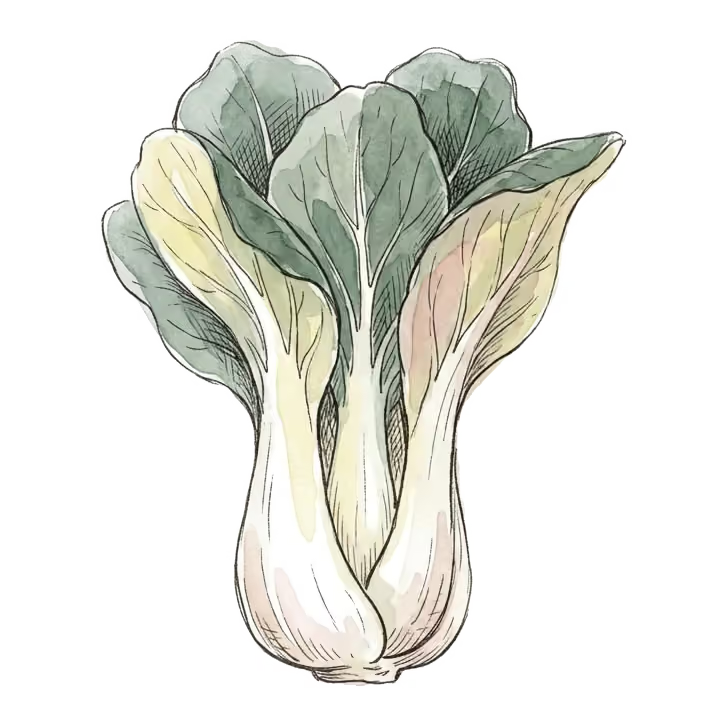
Bok Choy (Brassica rapa subsp. chinensis)
Brassica rapa subsp. chinensis · also known as pak choi, Chinese white cabbage, Chinese chard, white celery mustard, petsai
By Superfoods Advisor Editors·July 3, 2026
Bok choy benefits and nutrition: well-absorbed calcium, vitamin C and K per 100 g, glucosinolates, the raw-intake thyroid caveat, and how to cook it.
Bok choy (Brassica rapa subsp. chinensis), also called pak choi, is a non-heading Chinese cabbage and a cruciferous leafy green. Its main benefit is calcium the body can actually absorb: about 105 mg per 100 g raw, with roughly 52% absorbed in isotope studies, plus 45 mg of vitamin C, for only 13 kcal.
The plant grows as a rosette of smooth, dark-green leaf blades on crisp, pale stalks. Cultivars range from baby bok choy, harvested at 4–6 inches, to the larger heads used in home cooking. It has a long history of cultivation in China and reached the United States and Europe mainly through Chinese immigrant communities from the 19th century onward.
Nutritionally, bok choy stands out among calcium sources because its oxalate content is very low. Spinach has a similar amount of calcium on paper, but oxalate binds most of it in the gut.
Evidence at a glance
Active Compounds
- Calcium: Bok choy contains approximately 105 mg of calcium per 100 g of raw weight (USDA FoodData Central), about the same as the 99 mg in raw spinach (USDA FoodData Central). The critical distinction lies in fractional absorption: in isotope studies, about 52% of the calcium in bok choy stems and leaves was absorbed (Heaney et al., 1993), compared with about 5% from spinach (Heaney et al., 1988), where oxalate forms insoluble calcium oxalate in the gut, and roughly 30% from cow’s milk in comparable studies (Heaney & Weaver, 1990). Bok choy’s low oxalate content accounts for this difference; raw spinach, by contrast, has measured around 1,100 mg of oxalate per 100 g (Chai & Liebman, 2005).
- Glucosinolates: In an analysis of fresh pak choi, the principal glucosinolates were the aliphatic glucobrassicanapin and gluconapin (which yield 4-pentenyl and 3-butenyl isothiocyanate), with smaller amounts of 4-methoxyglucobrassicin, glucoalyssin, and glucobrassicin (a precursor to indole-3-carbinol and 3,3’-diindolylmethane, or DIM) (Nieto et al., 2025). Profiles vary widely between cultivars; a survey of genebank accessions found some high in sinigrin and many high in progoitrin (Kim et al., 2023). As with all Brassica vegetables, these compounds are hydrolyzed to active isothiocyanates by the enzyme myrosinase upon tissue damage. The isothiocyanate profile of bok choy differs from broccoli (which is higher in glucoraphanin/sulforaphane) and from arugula (which is higher in glucoerucin).
- Vitamin K (phylloquinone): Bok choy provides approximately 45 mcg per 100 g raw (approximately 38% DV; USDA FoodData Central), making it a meaningful source though lower than arugula or kale.
- Folate: Approximately 66 mcg/100 g (approximately 17% DV), relevant for one-carbon metabolism, neural tube development during pregnancy, and cardiovascular methionine cycle function.
- Vitamin C: Approximately 45 mg/100 g (50% DV), among the higher concentrations in leafy greens, though below the 53 mg/100 g of raw orange (USDA FoodData Central).
- Vitamin A (beta-carotene): Approximately 223 mcg RAE/100 g (25% DV), from beta-carotene in the leaf blades; the pale petioles contain less carotenoid.
- Potassium: Approximately 252 mg/100 g.
- Indole-3-carbinol (I3C) and 3,3’-diindolylmethane (DIM): Produced from glucobrassicin hydrolysis; these compounds have been studied for their modulation of estrogen metabolism (the balance of 2-hydroxyestrogen vs. 16-alpha-hydroxyestrogen), with proposed relevance to hormone-sensitive cancer risk. Human clinical evidence remains preliminary.
Nutritional Profile
Per 100 g raw bok choy (USDA FoodData Central):
| Nutrient | Amount | % DV |
|---|---|---|
| Energy | 13 kcal | — |
| Water | 95.3 g | — |
| Carbohydrate | 2.2 g | — |
| Dietary fiber | 1.0 g | — |
| Sugars | 1.2 g | — |
| Protein | 1.5 g | — |
| Fat | 0.2 g | — |
| Vitamin C | 45.0 mg | 50% |
| Vitamin K | 45.5 mcg | 38% |
| Vitamin A (beta-carotene) | 223 mcg RAE | 25% |
| Folate | 66 mcg | 17% |
| Calcium | 105 mg | 8% |
| Potassium | 252 mg | 5% |
| Iron | 0.8 mg | 4% |
Note: The DV for calcium is calculated on the basis of total calcium content, not absorbed calcium. Because bok choy calcium is absorbed at least as well as milk calcium in isotope studies, the label percentage does not overstate its contribution the way it does for high-oxalate greens such as spinach.
Evidence for Purported Benefits
Calcium Bioavailability and Bone Health
Evidence:Moderate Isotope studies show calcium from low-oxalate brassicas is well absorbed; no bok choy trials on bone outcomes.
Calcium absorption from low-oxalate Brassica vegetables has been measured in isotope-labelling studies. Heaney and Weaver (1990) found that in 11 women, fractional calcium absorption from intrinsically labelled kale averaged about 41%, versus about 32% from milk in the same subjects. A 1999 review by Weaver and colleagues in the same journal noted that some plants, including low-oxalate greens such as bok choy, provide well-absorbed calcium, but that the quantity of vegetables needed to meet calcium requirements makes an exclusively plant-based approach impractical for most people without fortified foods or supplements. The mechanism is straightforward: in spinach and other high-oxalate vegetables, oxalic acid binds calcium in the intestinal lumen to form insoluble calcium oxalate, which is not absorbed and is excreted in feces. Bok choy’s low oxalate content leaves its calcium in a soluble, absorbable form.
The practical implication is that bok choy can make a meaningful contribution to calcium intake for dairy-free individuals (vegans, lactose-intolerant individuals), though it is unlikely to cover requirements on its own. However, long-term RCT data specifically demonstrating improved bone mineral density from bok choy consumption — as opposed to calcium and vitamin K supplementation, which have been more extensively studied — are not available. The evidence for the calcium mechanism is strong; the extrapolation to bone outcomes is biologically plausible but not directly established from bok choy-specific trials.
Glucosinolates and Cancer Risk Reduction
Evidence:Preliminary Observational studies of cruciferous vegetables as a group, with modest, inconsistent associations; no bok choy-specific data.
As with other cruciferous vegetables, bok choy’s glucosinolate profile links it to the body of research on isothiocyanates and cancer biology. Observational studies of cruciferous vegetable consumption often report inverse associations with several cancers, though effect sizes are modest and heterogeneity across studies is substantial. Lam et al. (2009), in a systematic review of 30 studies on lung cancer, found 22% lower risk with the highest intake in case-control studies (OR 0.78) and a smaller, non-significant reduction in cohort studies (RR 0.83, 95% CI 0.62–1.08). A network of Italian and Swiss case-control studies (Bosetti et al., 2012) found that eating cruciferous vegetables at least weekly was associated with significantly lower odds of oral/pharyngeal, esophageal, colorectal, breast, and kidney cancer, but not of several other cancers. The proposed mechanisms — phase II enzyme induction via Nrf2, histone deacetylase inhibition (by sulforaphane and DIM), induction of apoptosis — are consistent across Brassica species but have not been studied with bok choy specifically as the exposure.
Estrogen Metabolism (Indole-3-Carbinol and DIM)
Evidence:Preliminary Two small trials of isolated I3C or DIM supplements measured urinary estrogen metabolites; no bok choy trials or clinical outcomes.
Glucobrassicin-derived I3C and its condensation product DIM have been the subject of clinical trials for their potential to shift estrogen metabolism toward less potent 2-hydroxyestrogen metabolites and away from 16-alpha-hydroxyestrogen, which has greater estrogenic activity. Small trials have found such shifts. In Bradlow et al. (1994), 400 mg/day of I3C for 3 months raised the urinary 2-hydroxyestrone:estriol ratio in a 60-woman, three-arm randomized trial, while fiber and placebo did not. In a 19-woman pilot RCT (Dalessandri et al., 2004), 108 mg/day of DIM for 30 days significantly increased urinary 2-hydroxyestrone, while the rise in the 2-hydroxy:16-alpha-hydroxyestrone ratio fell just short of significance (P = 0.059). Whether this metabolic shift translates to reduced breast cancer incidence has not been established in adequately powered RCTs. The doses used in I3C/DIM supplement trials (for example, 400 mg I3C daily) are substantially higher than what would be obtained from normal bok choy consumption.
Vitamin C and Immune Function
Evidence:Moderate Bok choy is a rich vitamin C source; vitamin C’s roles in immune function are well established.
At 45 mg per 100 g, bok choy provides approximately 50% of the daily value for vitamin C per 100 g raw, or about 35% in a 70 g cup of shredded raw leaves (USDA FoodData Central). The role of vitamin C in immune cell function, collagen synthesis, and iron absorption is well-established; bok choy’s vitamin C content makes it a meaningful dietary contributor, particularly in populations that rely on vegetables rather than citrus as a primary source.
Typical Use and Preparation
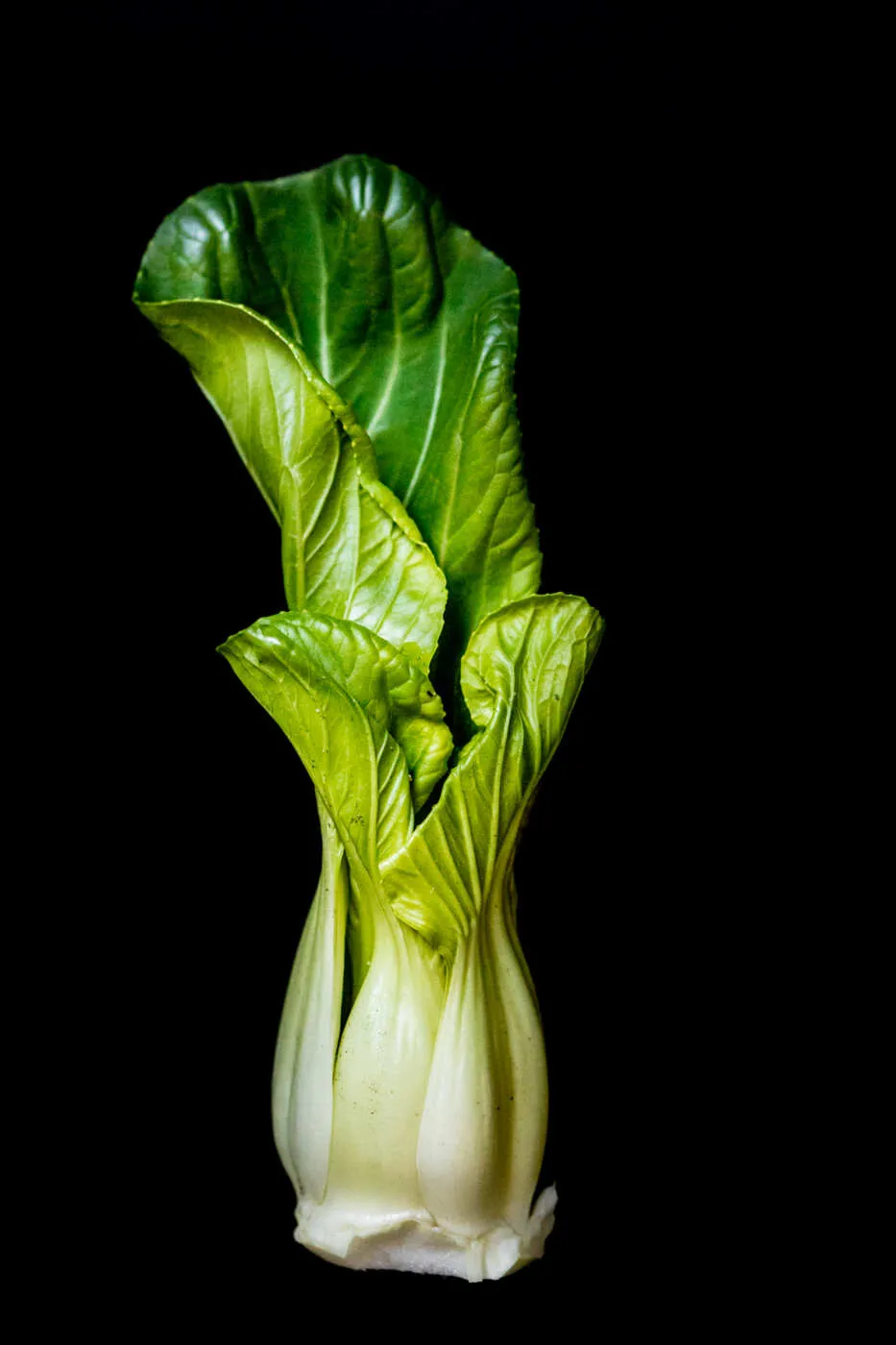 Photo: spurekar, CC BY 2.0, via Wikimedia Commons
Bok choy is a staple of East and Southeast Asian cuisines and has been adopted globally. Common preparations:
- Stir-frying: The most common preparation in Chinese cooking; high heat, short time. Stir-frying partially inactivates myrosinase, which loses activity progressively from roughly 45–60 °C (Van Eylen et al., 2007), reducing isothiocyanate yield, but preserves mineral content. Some vitamin C is lost, more with longer cooking times.
- Blanching: Briefly immersing in boiling water (30–60 seconds) and then cooling in ice water; retains color and some crispness. Glucosinolates leach into the cooking water (Verkerk et al., 2009).
- Steaming: Preserves more glucosinolates than boiling (Linus Pauling Institute); moderate vitamin C retention. Myrosinase is partially inactivated.
- Raw in salads: Baby bok choy leaves are mild enough for raw consumption; myrosinase remains active, so glucosinolates are hydrolyzed as the leaves are cut and chewed. Less common in traditional preparations.
- Braised or in soups: Long cooking times reduce glucosinolate content and vitamin C substantially; mineral content (calcium, potassium) is largely retained in the cooking liquid.
- Pairing with myrosinase-active foods: Adding a source of active myrosinase to cooked crucifers can increase isothiocyanate formation. In a 12-person crossover trial, 1 g of powdered brown mustard added to cooked broccoli raised urinary sulforaphane metabolites more than fourfold (Okunade et al., 2018); the approach has not been tested with bok choy specifically.
Bok choy’s place among other crucifers is covered in the sulforaphane research review. For other low-oxalate calcium greens, see kale and collard greens.
Safety, Interactions, and Contraindications
Goitrogens and thyroid function: Glucosinolate breakdown can release thiocyanate (mainly from indole glucosinolates), which competes with iodine for uptake by the thyroid, and goitrin (from progoitrin), which may interfere with thyroid hormone synthesis (Linus Pauling Institute). A widely cited case report by Chu and Seltzer (2010) described myxedema coma (severe hypothyroidism) in an elderly Chinese woman who had consumed approximately 1–1.5 kg of raw bok choy daily for several months. Eating it raw likely mattered, since myrosinase is active in raw bok choy and largely inactivated by cooking. This case is not representative of normal dietary consumption. Thiocyanate exposure from cruciferous vegetables does not appear to raise hypothyroidism risk unless iodine intake is also deficient, and in one small human study, 150 g/day of cooked Brussels sprouts for four weeks had no adverse effect on thyroid function (Linus Pauling Institute). A typical cooked serving of bok choy is one cup, approximately 170 g (USDA FoodData Central). Individuals with pre-existing hypothyroidism or borderline iodine status should not consume very large quantities of raw cruciferous vegetables daily and should discuss their diet with a healthcare provider.
Vitamin K and warfarin: Bok choy’s vitamin K content (approximately 45 mcg/100 g raw; a cup of cooked bok choy carries more than a cup of raw because the leaves wilt down, about 58 mcg vs. 32 mcg per USDA FoodData Central) is relevant for patients on warfarin. While lower in vitamin K than kale or spinach, consistent, moderate intake is preferable to large and variable servings.
Oxalate and kidney stones: Bok choy’s oxalate content is very low, so for people advised to limit oxalate because of calcium oxalate kidney stones, it is a lower-oxalate calcium source than spinach, beet greens, or Swiss chard.
Washing: As with all produce, the FDA advises washing bok choy thoroughly under running water before preparation, without soap or commercial produce washes (FDA).
Pregnancy: Bok choy supplies folate, calcium, and vitamin C, nutrients of particular interest during pregnancy.
Allergy: Bok choy allergy is seldom reported in the medical literature. People with mustard allergy should be cautious: in one study of 38 mustard-allergic patients, all were sensitized to other Brassicaceae members and cross-reactivity among them was confirmed (Figueroa et al., 2005).
Frequently Asked Questions
Is bok choy good for you?
Bok choy is a low-calorie source of several nutrients: per 100 g raw it has 13 kcal, about 45 mg of vitamin C, 45 mcg of vitamin K, 66 mcg of folate and 105 mg of calcium that is unusually well absorbed. Claims about cancer protection come from observational studies of cruciferous vegetables in general, which show modest and inconsistent associations.
Is bok choy a cabbage?
Yes, a non-heading one. Bok choy is Brassica rapa subsp. chinensis, the same species as turnip and napa cabbage, and it is often sold as Chinese white cabbage. Unlike head cabbage, it grows as a loose rosette of dark leaves on thick white or pale-green stalks. Both are cruciferous vegetables in the Brassicaceae family.
Can you eat bok choy raw?
Yes. Baby bok choy is mild enough for salads, and eating it raw keeps myrosinase active, so more glucosinolates convert to isothiocyanates. The one caution concerns very large raw amounts: a case report described severe hypothyroidism in a woman who ate 1–1.5 kg of raw bok choy daily for months. Ordinary servings, raw or cooked, have not been linked to thyroid problems.
Does bok choy have fiber?
A little. Raw bok choy has about 1.0 g of dietary fiber per 100 g, according to USDA FoodData Central, and is about 95% water. A cup of shredded raw leaves weighs about 70 g, so it adds well under a gram of fiber. Its stronger points are vitamin C, vitamin K, folate and well-absorbed calcium rather than fiber.
How much bok choy is a serving?
A cup of shredded raw bok choy weighs about 70 g and supplies roughly 35% of the daily value for vitamin C and about 32 mcg of vitamin K. Because the leaves wilt down, a cup of cooked bok choy carries more, about 58 mcg of vitamin K. People taking warfarin are advised to keep their intake of such greens steady from week to week.
References
Show all 18 referencesShow fewer
- Weaver, C. M., Proulx, W. R., & Heaney, R. (1999). Choices for achieving adequate dietary calcium with a vegetarian diet. American Journal of Clinical Nutrition, 70(3 Suppl), 543S–548S.
- Lam, T. K., Gallicchio, L., Lindsley, K., Shiels, M., Hammond, E., Tao, X.-G., et al. (2009). Cruciferous vegetable consumption and lung cancer risk: a systematic review. Cancer Epidemiology, Biomarkers and Prevention, 18(1), 184–195.
- Bradlow, H. L., Michnovicz, J. J., Halper, M., Miller, D. G., Wong, G. Y., & Osborne, M. P. (1994). Long-term responses of women to indole-3-carbinol or a high fiber diet. Cancer Epidemiology, Biomarkers and Prevention, 3(7), 591–595.
- Chu, M., & Seltzer, T. F. (2010). Myxedema coma induced by ingestion of raw bok choy. New England Journal of Medicine, 362(20), 1945–1946.
- Verkerk, R., Schreiner, M., Krumbein, A., Ciska, E., Holst, B., Rowland, I., & Dekker, M. (2009). Glucosinolates in Brassica vegetables: the influence of the food supply chain on intake, bioavailability and human health. Molecular Nutrition and Food Research, 53(S2), S219–S265.
- Heaney, R. P., & Weaver, C. M. (1990). Calcium absorption from kale. American Journal of Clinical Nutrition, 51(4), 656–657.
- Bosetti, C., Filomeno, M., Riso, P., Polesel, J., Levi, F., Talamini, R., Montella, M., Negri, E., Franceschi, S., & La Vecchia, C. (2012). Cruciferous vegetables and cancer risk in a network of case-control studies. Annals of Oncology, 23(8), 2198–2203.
- Dalessandri, K. M., Firestone, G. L., Fitch, M. D., Bradlow, H. L., & Bjeldanes, L. F. (2004). Pilot study: effect of 3,3’-diindolylmethane supplements on urinary hormone metabolites in postmenopausal women with a history of early-stage breast cancer. Nutrition and Cancer, 50(2), 161–167.
- Heaney, R. P., Weaver, C. M., & Recker, R. R. (1988). Calcium absorbability from spinach. American Journal of Clinical Nutrition, 47(4), 707–709.
- Heaney, R. P., Weaver, C. M., Hinders, S. M., Martin, B., & Packard, P. T. (1993). Absorbability of calcium from brassica vegetables: broccoli, bok choy, and kale. Journal of Food Science, 58(6), 1378–1380.
- Chai, W., & Liebman, M. (2005). Effect of different cooking methods on vegetable oxalate content. Journal of Agricultural and Food Chemistry, 53(8), 3027–3030.
- USDA FoodData Central. Cabbage, chinese (pak-choi), raw (FDC 170390).
- Nieto, G., Hellín, P., Valverde, M., Pérez, D., Viadel, B., & Agudelo, A. (2025). Pak choi (Brassica rapa ssp. Chinensis) glucosinolates profile and bioaccessibility through in vitro dynamic digestion model. European Food Research and Technology, 251, 205–212.
- Kim, S. H., Ochar, K., Hwang, A., Lee, Y. J., & Kang, H. J. (2023). Variability of glucosinolates in pak choy (Brassica rapa subsp. chinensis) germplasm. Plants, 13(1), 9.
- Van Eylen, D., Oey, I., Hendrickx, M., & Van Loey, A. (2007). Kinetics of the stability of broccoli myrosinase and isothiocyanates in broccoli juice during pressure/temperature treatments. Journal of Agricultural and Food Chemistry, 55(6), 2163–2170.
- Okunade, O., Niranjan, K., Ghawi, S. K., Kuhnle, G., & Methven, L. (2018). Supplementation of the diet by exogenous myrosinase via mustard seeds to increase the bioavailability of sulforaphane in healthy human subjects after the consumption of cooked broccoli. Molecular Nutrition and Food Research, 62(18), e1700980.
- Figueroa, J., Blanco, C., Dumpiérrez, A. G., et al. (2005). Mustard allergy confirmed by double-blind placebo-controlled food challenges: clinical features and cross-reactivity with mugwort pollen and plant-derived foods. Allergy, 60(1), 48–55.
- Linus Pauling Institute. Cruciferous Vegetables. Micronutrient Information Center, Oregon State University.
Related content
More in Leafy Greens
- Arugula (Eruca vesicaria ssp. sativa)
Is arugula good for you? Nutrition per 100 g, nitrate and blood pressure, vitamin K, cancer research and safety for this peppery cruciferous green.
- Barley Grass (Hordeum vulgare)
Barley grass benefits weighed against the evidence: antioxidant and blood sugar research, whether it contains gluten, vitamin K, dosing and safety.
- Broccoli Sprouts (Brassica oleracea var. italica sprouts)
Broccoli sprouts benefits: why 3-day sprouts carry 10–100x more glucoraphanin than broccoli, what human trials found, how to eat them, and sprout safety.
- Collard Greens (Brassica oleracea var. viridis)
Health benefits of collard greens: vitamin K, calcium and fiber per 100 g, what research shows for bones and heart, cooking tips, and warfarin cautions.
- Kale (Brassica oleracea var. sabellica)
Is kale good for you? Kale nutrition per 100 g, what research shows for heart, eyes and bones, kale vs spinach, how much is too much, and safety.
- Microgreens (various species)
Microgreens benefits and nutrition: how 7–21-day seedlings compare with mature vegetables, what human studies show, microgreens vs sprouts, and safety.

Curated by Superfoods Advisor Editors·Last updated