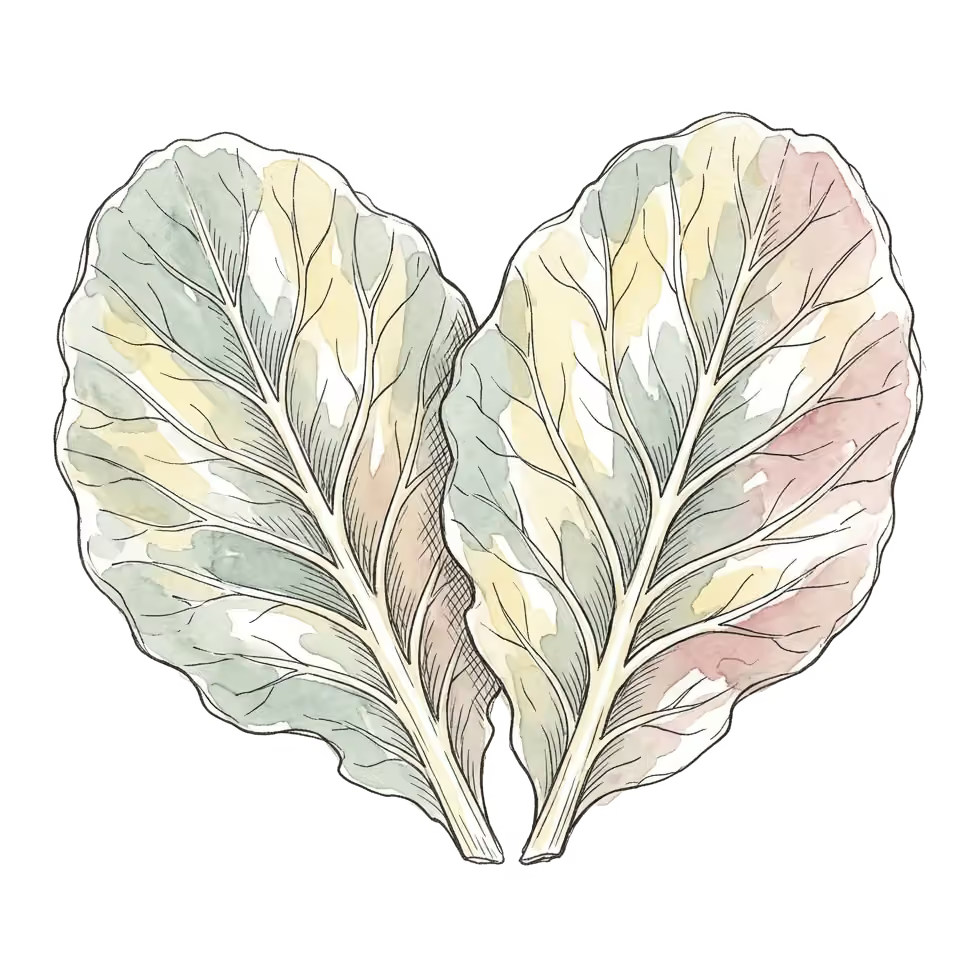
Collard Greens (Brassica oleracea var. viridis)
Brassica oleracea var. viridis · also known as collards, tree cabbage, non-heading cabbage
By Superfoods Advisor Editors·July 3, 2026
Health benefits of collard greens: vitamin K, calcium and fiber per 100 g, what research shows for bones and heart, cooking tips, and warfarin cautions.
Collard greens (Brassica oleracea var. viridis) are a cruciferous leafy green from the same species as kale and cabbage. Their clearest health benefits are nutritional: 100 g raw provides about 437 µg of vitamin K1, 232 mg of calcium and 4 g of fiber for 32 kcal. Links to heart and cancer outcomes come from observational studies of cruciferous vegetables.
Brassica oleracea also includes broccoli, Brussels sprouts and cauliflower. Collards form large, flat, paddle-shaped leaves on a central stalk rather than a head or crown, a leafy form often considered close to the earliest cultivated types. Genetic work points to cultivation beginning in the eastern Mediterranean, with the Aegean wild cabbage B. cretica as its closest living relative (Mabry et al., 2021).
In the Americas, collards became a cornerstone of Southern and African American cooking, traditionally slow-simmered with pork fat or smoked meat. That method tenderizes the tough leaves but cuts heat-labile vitamins and myrosinase activity; quicker methods that keep more nutrients have gained ground without displacing the tradition. The plant is cold-tolerant, and growers commonly report that mild frost sweetens the leaves.
Evidence at a glance
Active Compounds
Collard greens, like all cruciferous vegetables, derive much of their health-relevant phytochemical activity from glucosinolates and their hydrolysis products.
Glucosinolates: Glucosinolates identified in collard leaves include indole types such as glucobrassicin and aliphatic types such as sinigrin, glucoiberin, glucoerucin, glucoraphanin, and progoitrin (Đulović et al., 2023). Upon cell disruption (chewing or chopping), myrosinase catalyzes their hydrolysis to biologically active isothiocyanates and indoles.
Myrosinase (β-thioglucosidase): The enzyme responsible for glucosinolate hydrolysis. Heat inactivates myrosinase progressively; in broccoli juice, activity was lost over roughly 45–60 °C (Van Eylen et al., 2007). In a small study in which three men ate 13 cruciferous vegetables and six condiments, isothiocyanate bioavailability was considerably higher after raw vegetables and condiments (8–113%) than after cooked vegetables (1.8–43%) (Vermeulen et al., 2006). Chopping collards and letting them rest before cooking is often recommended so that hydrolysis can proceed while myrosinase is still active, though this practice has not been tested in collards specifically.
Indole-3-carbinol (I3C) and diindolylmethane (DIM): Products of glucobrassicin hydrolysis. I3C and its acid condensation product DIM modulate estrogen metabolism, particularly by promoting the 2-hydroxylation pathway over the more potent 16α-hydroxylation pathway. In small human studies, I3C supplements (6–7 mg/kg per day) raised urinary 2-hydroxylated estrogens and lowered 16α-hydroxyestrone (Michnovicz et al., 1997); whether dietary amounts from collards do the same is unclear.
Sulforaphane and other isothiocyanates: Collards contain glucoraphanin (sulforaphane precursor) and sinigrin (allyl isothiocyanate precursor), though at lower concentrations than broccoli or broccoli sprouts.
Vitamin K1 (phylloquinone): Among the highest concentrations of any commonly consumed vegetable. Vitamin K1 is essential for the carboxylation of coagulation factors (II, VII, IX, X) and bone matrix proteins (osteocalcin, matrix Gla protein).
Beta-carotene and lutein/zeaxanthin: Carotenoids present in the dark green leaf pigment. These lipid-soluble compounds are absorbed more efficiently when consumed with dietary fat.
Calcium: Collard greens have a notably high calcium content. Calcium from kale-family brassicas is described as being as bioavailable as calcium from milk, whereas high-oxalate spinach yields little absorbable calcium (Linus Pauling Institute). Absorption studies of low-oxalate brassicas such as kale and broccoli have measured fractional calcium absorption of roughly 50–60%, compared with about 32% from milk, although the lower calcium concentration of vegetables means larger servings are needed to match milk (Weaver et al., 1999).
Folate: A significant source of dietary folate, important for one-carbon metabolism, DNA synthesis, and neural tube development.
Nutritional Profile
Values below are for raw collard greens (per 100 g), based on USDA FoodData Central (“Collards, raw”).
| Nutrient | Amount (per 100 g raw) | % DV |
|---|---|---|
| Energy | 32 kcal | — |
| Protein | 3.0 g | — |
| Total carbohydrate | 5.4 g | — |
| Dietary fiber | 4.0 g | — |
| Total fat | 0.6 g | — |
| Vitamin K1 | 437 µg | — |
| Vitamin C | 35 mg | — |
| Vitamin A (RAE) | 251 µg | — |
| Folate | 129 µg | — |
| Calcium | 232 mg | — |
| Potassium | 213 mg | — |
| Magnesium | 27 mg | — |
| Iron | 0.5 mg | — |
Cooking significantly affects nutrient content. Boiling substantially reduces water-soluble vitamins (vitamin C, folate) and causes minerals to leach into cooking water. Steaming or sautéing retains more nutrients than extended boiling. Vitamin K1 is relatively stable to heat: USDA lists about 407 µg per 100 g for boiled, drained collards versus 437 µg raw, while folate falls from 129 µg to 16 µg (USDA FoodData Central, “Collards, cooked, boiled, drained, without salt”).
Evidence for Purported Benefits
Bone Health
Evidence:Preliminary Cohort data link vitamin K intake to fewer hip fractures; vitamin K supplement trials are mixed; no collard-specific studies.
Vitamin K1 serves as a cofactor for gamma-glutamyl carboxylase, which activates osteocalcin, a bone matrix protein involved in calcium binding. Adequate dietary vitamin K intake is associated with lower rates of hip fracture in epidemiological studies. Booth et al. (2000) analyzed Framingham Heart Study data from 888 elderly men and women and found that those in the highest quartile of vitamin K intake had a 65% lower risk of hip fracture compared to those in the lowest quartile, although vitamin K intake was not associated with bone mineral density. However, randomized controlled trials of vitamin K supplementation have yielded mixed results: one 2019 meta-analysis found fewer clinical fractures but no benefit for vertebral fractures or bone mineral density (Linus Pauling Institute). Collards also supply well-absorbed calcium, though no study has tested collard intake against bone outcomes.
Cardiovascular Health
Evidence:Preliminary Large cohort studies of cruciferous vegetables as a group; no intervention trials of collard greens.
Cruciferous vegetable consumption has been associated with reduced cardiovascular risk in prospective cohort studies; in two Shanghai cohorts of 134,796 adults, higher intake was associated with lower total mortality, driven mainly by cardiovascular deaths (Zhang et al., 2011). Blekkenhorst et al. (2018) analyzed carotid ultrasound data from 954 older Australian women and found that each additional 10 g/day of cruciferous vegetable intake was associated with a 0.8% lower common carotid artery intima-media thickness, a marker of subclinical atherosclerosis. Causation cannot be inferred from observational data, as cruciferous vegetable consumers may differ systematically from non-consumers in other health behaviors.
Cancer Risk Reduction
Evidence:Preliminary Observational meta-analyses of cruciferous vegetables, with heterogeneous results, plus lab studies; no randomized trials of collards.
Cruciferous vegetable intake has been associated with reduced risk of several cancers in meta-analyses of observational studies. An umbrella review of 41 such meta-analyses rated the evidence as suggestive for gastric, lung, and endometrial cancer and weak for others, including bladder and colon cancer (Li et al., 2022). In laboratory studies, isothiocyanates and indoles activate Nrf2-regulated detoxification pathways, and volatile extracts from collard roots were cytotoxic to bladder and breast cancer cell lines (Đulović et al., 2023). However, the epidemiological associations are heterogeneous and subject to confounding, and no large randomized controlled trials have tested collard green consumption as a cancer preventive intervention. The evidence supports including cruciferous vegetables in a varied diet but does not support specific health claims about cancer prevention.
Glycemic Management
Evidence:Lab & animal only One rat study of collard powder; no human trials of collard greens and glucose control.
No human trials appear to have tested collard greens for glucose control. In an 8-week study in obese Zucker rats, diets with collard powder or extract improved blood lipids and some inflammatory markers (Yeboah et al., 2026). Any effect on post-meal glucose in people is extrapolated from general dietary fiber research and remains speculative.
Typical Use and Preparation
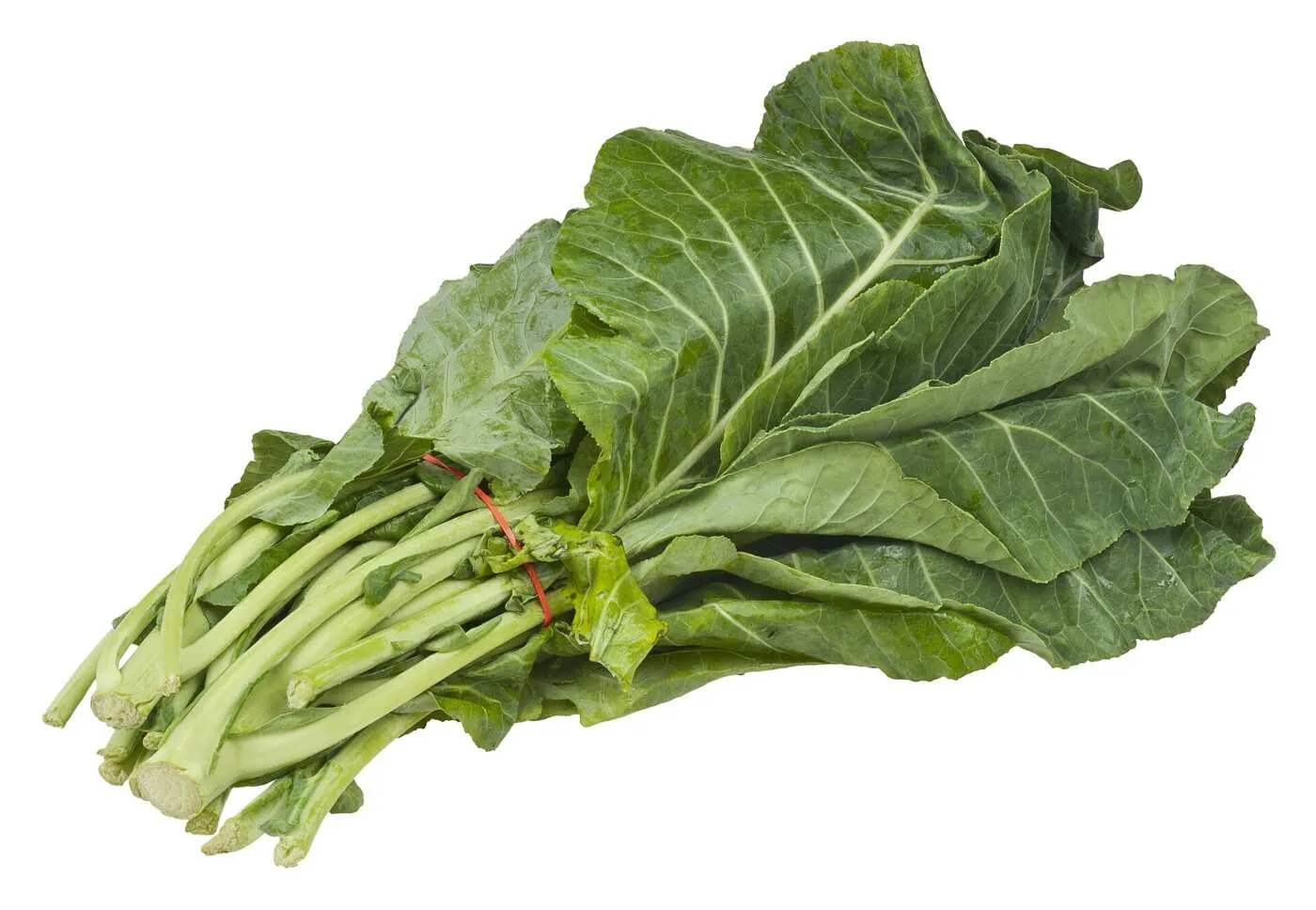 Photo: Evan-Amos, public domain, via Wikimedia Commons
Raw: Young, tender collard leaves can be eaten raw in salads or used as wraps. Raw consumption maximizes myrosinase activity and vitamin C content but may be less palatable due to bitterness and tough texture.
Chop-and-wait method: To preserve isothiocyanate production even through cooking, chop or finely slice collard greens and allow them to rest at room temperature before applying heat. The rest gives myrosinase time to hydrolyze glucosinolates before cooking inactivates it; no optimal resting time has been established for collards.
Sautéing: Sautéing in olive or avocado oil with garlic for 5–10 minutes preserves more vitamins than boiling while also enhancing the absorption of fat-soluble carotenoids (beta-carotene, lutein). Adding a small amount of healthy fat is recommended for maximizing carotenoid bioavailability.
Braising: Traditional slow-braising (30–90 minutes) tenderizes the leaf significantly but degrades heat-labile vitamins and deactivates myrosinase. Adding raw mustard seed powder after cooking may partially restore isothiocyanate availability by providing active myrosinase; in a crossover study of 12 adults, 1 g of brown mustard powder raised sulforaphane bioavailability from cooked broccoli more than fourfold (Okunade et al., 2018). It has not been tested with collards.
Blanching and freezing: Brief blanching (2–3 minutes) before freezing preserves color and some nutrients while inactivating enzymes that degrade flavor. Vitamin K1 is largely retained.
Collards are a brassica, and our article on cruciferous vegetables and sulforaphane covers their glucosinolates as well as the thyroid question. They also appear among the fiber-rich greens in the guide to superfoods for blood sugar and metabolic health.
Safety, Interactions, and Contraindications
Vitamin K and anticoagulant therapy: Collard greens are one of the richest dietary sources of vitamin K1. Individuals taking warfarin (a vitamin K antagonist) are advised to keep vitamin K intake reasonably constant and avoid large fluctuations that can interfere with dose adjustment (Linus Pauling Institute). Abrupt increases or decreases in collard green consumption can shift anticoagulation control. Patients on warfarin should not necessarily avoid collards but should consume them consistently and monitor INR regularly. Consultation with the prescribing clinician is advised before making dietary changes.
Thyroid/goitrogen concerns: Glucosinolate breakdown products — mainly thiocyanate (from indole glucosinolates) and goitrin (from progoitrin) — can interfere with thyroid iodine uptake at high intakes. A review judged thiocyanate from indole glucosinolates a minimal risk, but listed collards among the few brassicas with enough goitrin precursor to potentially decrease thyroid iodine uptake, unlike kale, broccoli, and turnip tops (Felker et al., 2016). The risk is most relevant at very high intakes, particularly in individuals with subclinical hypothyroidism or iodine deficiency. Cooking inactivates myrosinase and may reduce goitrin formation. Individuals with thyroid conditions who consume large amounts of raw collards should discuss this with their healthcare provider.
Oxalate content: Spinach is a high-oxalate green, while calcium from kale-family brassicas is absorbed about as well as milk calcium (Linus Pauling Institute); published oxalate measurements for collards specifically are sparse. Those with a history of oxalate kidney stones should consult a dietitian regarding total oxalate load.
Digestive tolerance: The high fiber content can cause bloating and flatulence, particularly when intake is increased rapidly. Gradual introduction and thorough cooking can mitigate these effects.
Pregnancy: Collard greens supply folate and calcium. No toxicity is known for vitamin K1 from food or supplements, and no tolerable upper intake level has been set (Linus Pauling Institute).
This entry is informational. It does not constitute medical advice, diagnosis, or treatment. Individuals with health conditions should consult a qualified healthcare provider.
Frequently Asked Questions
Are collard greens good for you?
Collards are one of the most nutrient-dense leafy greens. Per 100 g raw they provide 437 µg of vitamin K1, 232 mg of calcium, 129 µg of folate, 35 mg of vitamin C and 4 g of fiber for 32 kcal. Cohort studies link cruciferous vegetables, collards among them, with lower cardiovascular mortality, though those studies cannot prove cause and effect.
Collard greens vs kale: which is healthier?
They are the same species, Brassica oleracea, and are broadly similar. Raw collards are especially high in vitamin K1 and calcium, at 437 µg and 232 mg per 100 g. Kale has its own profile and a milder raw texture. One difference concerns goitrin: a review listed collards, unlike kale, among the few brassicas with enough of its precursor to potentially affect thyroid iodine uptake at very high intakes.
Do collard greens have iron?
Only a little. USDA FoodData Central lists about 0.5 mg of iron per 100 g of raw collards, a small share of daily needs, and plant (non-heme) iron is absorbed less efficiently than iron from meat. Collards are a better source of vitamin K1, calcium and folate. Eating them with a vitamin C source is a common way to help non-heme iron absorption.
Can you eat collard greens raw?
Yes. Young, tender leaves work in salads or as wraps, and eating them raw keeps myrosinase active and vitamin C intact. Mature leaves are tough and bitter, which is why most recipes cook them. If you cook collards, chopping them and letting them rest first gives myrosinase time to act, though no ideal resting time has been established.
Are collard greens good for weight loss?
No study has tested collards for weight loss. They are low in energy, 32 kcal per 100 g raw, and supply 4 g of fiber, so they add volume to meals for few calories. Traditional preparations change that picture: slow-simmering with pork fat or smoked meat adds fat and sodium. Sautéing with a little oil is a lighter option.
References
Show all 15 referencesShow fewer
- U.S. Department of Agriculture, Agricultural Research Service. FoodData Central: Collards, raw (FDC ID 170406) and Collards, cooked, boiled, drained, without salt (FDC ID 170407).
- Booth, S. L., Tucker, K. L., Chen, H., Hannan, M. T., Gagnon, D. R., Cupples, L. A., Wilson, P. W. F., Ordovas, J., Schaefer, E. J., Dawson-Hughes, B., & Kiel, D. P. (2000). Dietary vitamin K intakes are associated with hip fracture but not with bone mineral density in elderly men and women. American Journal of Clinical Nutrition, 71(5), 1201–1208.
- Blekkenhorst, L. C., Bondonno, C. P., Lewis, J. R., Woodman, R. J., Devine, A., Bondonno, N. P., Lim, W. H., Zhu, K., Kogawa, M., & Prince, R. L. (2018). Cruciferous and total vegetable intakes are inversely associated with subclinical atherosclerosis in older adult women. Journal of the American Heart Association, 7(8), e008391.
- Vermeulen, M., van den Berg, R., Freidig, A. P., van Bladeren, P. J., & Vaes, W. H. (2006). Association between consumption of cruciferous vegetables and condiments and excretion in urine of isothiocyanate mercapturic acids. Journal of Agricultural and Food Chemistry, 54(15), 5350–5358.
- Weaver, C. M., Proulx, W. R., & Heaney, R. (1999). Choices for achieving adequate dietary calcium with a vegetarian diet. American Journal of Clinical Nutrition, 70(3 Suppl), 543S–548S.
- Van Eylen, D., Oey, I., Hendrickx, M., & Van Loey, A. (2007). Kinetics of the stability of broccoli (Brassica oleracea cv. Italica) myrosinase and isothiocyanates in broccoli juice during pressure/temperature treatments. Journal of Agricultural and Food Chemistry, 55(6), 2163–2170.
- Mabry, M. E., et al. (2021). The evolutionary history of wild, domesticated, and feral Brassica oleracea (Brassicaceae). Molecular Biology and Evolution, 38(10), 4419–4434.
- Đulović, A., Burčul, F., Čikeš Čulić, V., Rollin, P., & Blažević, I. (2023). Glucosinolates and cytotoxic activity of collard volatiles obtained using microwave-assisted extraction. Molecules, 28(4), 1657.
- Michnovicz, J. J., Adlercreutz, H., & Bradlow, H. L. (1997). Changes in levels of urinary estrogen metabolites after oral indole-3-carbinol treatment in humans. Journal of the National Cancer Institute, 89(10), 718–723.
- Zhang, X., et al. (2011). Cruciferous vegetable consumption is associated with a reduced risk of total and cardiovascular disease mortality. American Journal of Clinical Nutrition, 94(1), 240–246.
- Li, Y. Z., et al. (2022). Cruciferous vegetable consumption and multiple health outcomes: an umbrella review of 41 systematic reviews and meta-analyses of 303 observational studies. Food & Function, 13(8), 4247–4259.
- Yeboah, J. A., et al. (2026). Effects of blueberry and collard greens dietary intervention on metabolic and inflammatory biomarkers in Zucker obese rats. Nutrients, 18(19), 3246.
- Okunade, O., et al. (2018). Supplementation of the diet by exogenous myrosinase via mustard seeds to increase the bioavailability of sulforaphane in healthy human subjects after the consumption of cooked broccoli. Molecular Nutrition & Food Research, 62(18), e1700980.
- Linus Pauling Institute Micronutrient Information Center. Vitamin K.
- Linus Pauling Institute Micronutrient Information Center. Calcium.
Related content

More in Leafy Greens
- Arugula (Eruca vesicaria ssp. sativa)
Is arugula good for you? Nutrition per 100 g, nitrate and blood pressure, vitamin K, cancer research and safety for this peppery cruciferous green.
- Barley Grass (Hordeum vulgare)
Barley grass benefits weighed against the evidence: antioxidant and blood sugar research, whether it contains gluten, vitamin K, dosing and safety.
- Bok Choy (Brassica rapa subsp. chinensis)
Bok choy benefits and nutrition: well-absorbed calcium, vitamin C and K per 100 g, glucosinolates, the raw-intake thyroid caveat, and how to cook it.
- Broccoli Sprouts (Brassica oleracea var. italica sprouts)
Broccoli sprouts benefits: why 3-day sprouts carry 10–100x more glucoraphanin than broccoli, what human trials found, how to eat them, and sprout safety.
- Kale (Brassica oleracea var. sabellica)
Is kale good for you? Kale nutrition per 100 g, what research shows for heart, eyes and bones, kale vs spinach, how much is too much, and safety.
- Microgreens (various species)
Microgreens benefits and nutrition: how 7–21-day seedlings compare with mature vegetables, what human studies show, microgreens vs sprouts, and safety.


Curated by Superfoods Advisor Editors·Last updated