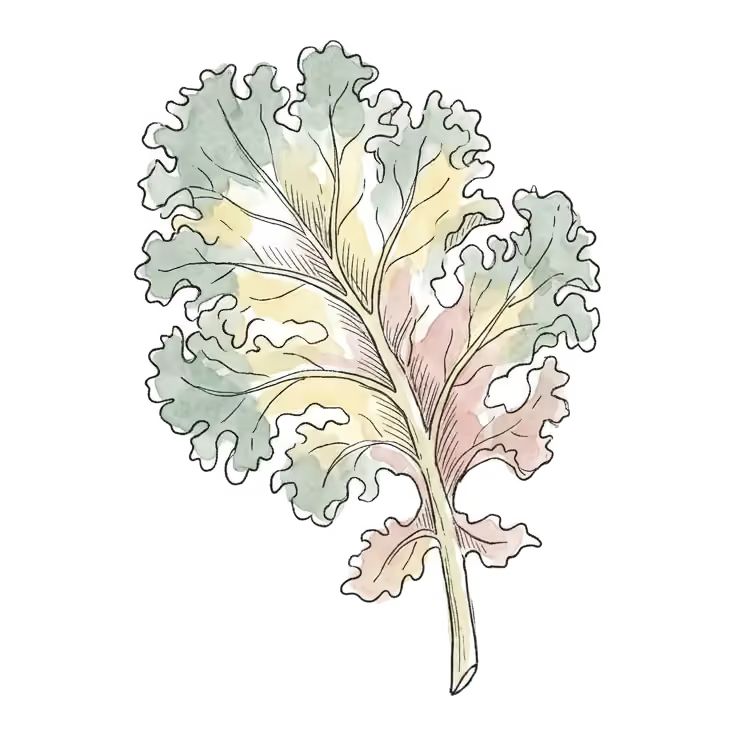
Kale (Brassica oleracea var. sabellica)
Brassica oleracea var. sabellica · also known as curly kale, Scots kale, borecole, leaf cabbage
By Superfoods Advisor Editors·July 3, 2026
Is kale good for you? Kale nutrition per 100 g, what research shows for heart, eyes and bones, kale vs spinach, how much is too much, and safety.
Kale (Brassica oleracea var. sabellica) is a cruciferous leafy green from the same species as cabbage and broccoli. It is nutrient-dense: 100 g raw has about 390 µg of vitamin K1, 93 mg of vitamin C, 4.1 g of fiber and 6,260 µg of lutein plus zeaxanthin for 35 kcal. Links to heart and cancer outcomes are observational.
Kale is a non-heading form of Brassica oleracea with curled or frilled leaves on an unbranched stem. Along with collard greens, it is one of the most ancestral cultivated forms of the species, and it has been grown in the British Isles and northern Europe since at least the Middle Ages, where its cold hardiness made it a winter staple.
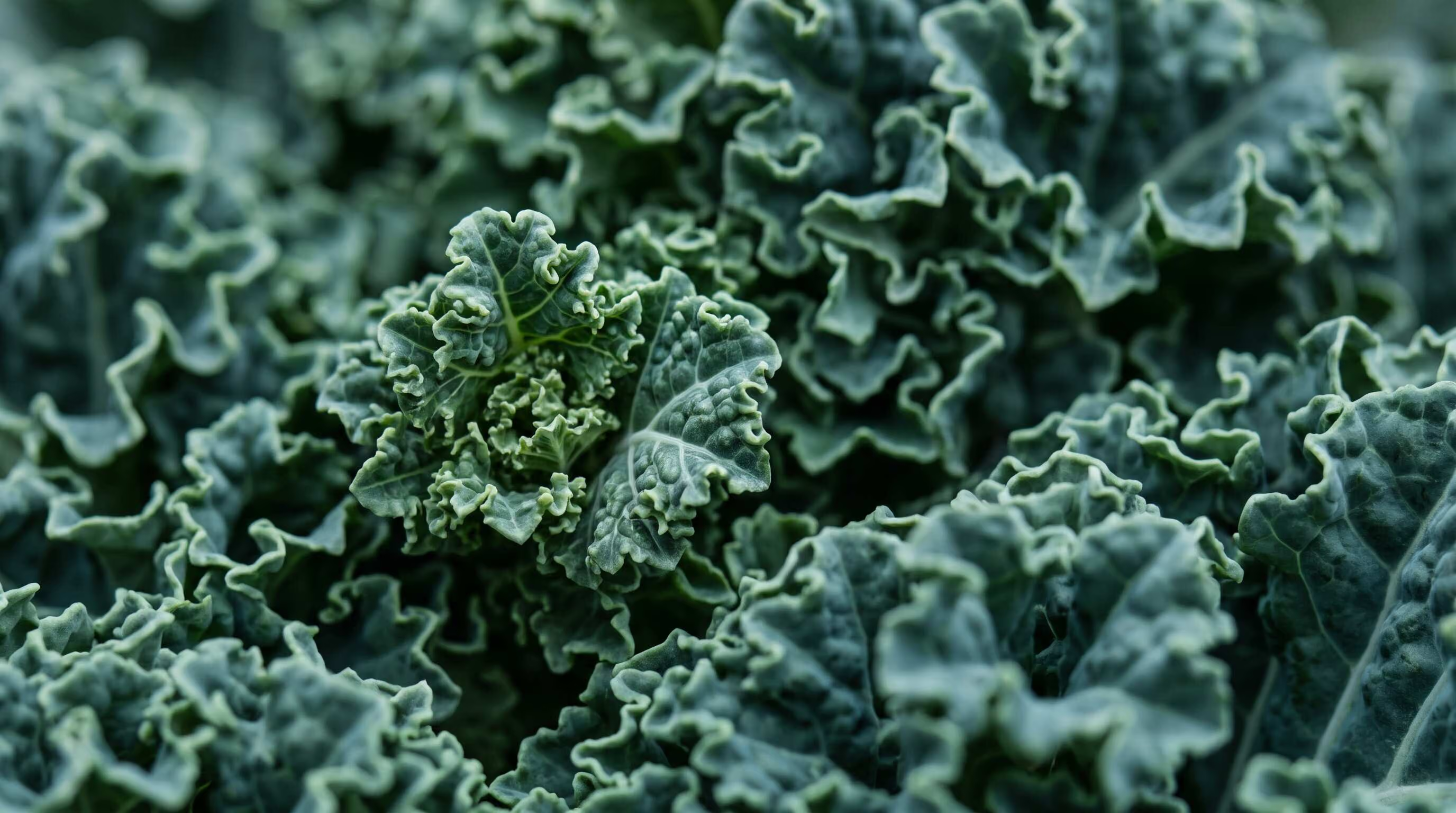
Several varieties are sold today. Curly kale, the most common, has tightly frilled leaves and a robust, slightly bitter flavor. Lacinato kale (Tuscan kale, dinosaur kale, cavolo nero) has dark blue-green, pebbled, strap-shaped leaves and a sweeter taste. Red Russian kale has flat, jagged leaves with purple-red veins, and baby kale is young leaves picked for salads.
Kale entered the mainstream Western diet quickly in the 2000s and 2010s, driven by “superfood” marketing, and the popularity brought closer nutritional scrutiny with it.
Evidence at a glance
Active Compounds
Glucosinolate-Isothiocyanate System
Glucosinolates: Kale contains a range of glucosinolates, mainly sinigrin and glucobrassicin, with glucoiberin, progoitrin, and smaller amounts of glucoraphanin in some cultivars; the exact profile varies by cultivar, plant age, and growing conditions (Kushad et al., 1999; Velasco et al., 2007). Upon cell disruption, myrosinase hydrolyzes these compounds to isothiocyanates and indoles.
Myrosinase: The compartmentalized enzyme that activates glucosinolates upon tissue disruption. Cooking denatures myrosinase, and human feeding trials show greater isothiocyanate absorption from raw than from cooked brassicas (Rungapamestry et al., 2007). The “chop and wait” strategy — finely cutting or massaging kale and letting it rest before cooking — is intended to allow isothiocyanate formation while the enzyme is still active. In a broccoli study, letting chopped florets sit for 90 minutes before stir-frying left about 2.8 times more sulforaphane than cooking them straight away (Wu et al., 2018); kale has not been tested this way.
Sulforaphane: Derived from glucoraphanin hydrolysis. Activates the Nrf2 transcription factor and downstream phase II detoxification enzymes. Kale contains some glucoraphanin, the sulforaphane precursor, but its glucosinolates are dominated by sinigrin and glucobrassicin, whereas glucoraphanin predominates in broccoli (Kushad et al., 1999).
Indole-3-carbinol (I3C) and DIM: Derived from glucobrassicin. These compounds modulate estrogen metabolism in vitro and in animal studies; human clinical significance is debated.
Micronutrients and Antioxidants
Vitamin K1 (phylloquinone): Kale is one of the richest dietary sources of vitamin K1. A 100 g portion of raw kale provides about 390 µg (USDA FoodData Central), several times the adult Adequate Intake. Vitamin K1 is a cofactor for coagulation factor activation and bone matrix protein carboxylation.
Vitamin C: Raw kale provides substantial vitamin C, though cooking degrades a significant proportion. One cup of chopped raw kale (about 21 g) provides roughly 20 mg of vitamin C, from about 93 mg per 100 g (USDA FoodData Central).
Beta-carotene and vitamin A: The dark green pigment contains high concentrations of beta-carotene (provitamin A). Carotenoid absorption is enhanced by simultaneous consumption of dietary fat — a practical reason to dress kale salads with oil-based dressings.
Lutein and zeaxanthin: Carotenoids concentrated in the macula of the eye. Dietary intake of lutein and zeaxanthin is associated with reduced risk of age-related macular degeneration in epidemiological research. Kale is among the richest dietary sources of both compounds.
Quercetin and kaempferol: Flavonoid glycosides present in substantial quantities. Quercetin exhibits anti-inflammatory activity in vitro, and dietary quercetin intake has been associated with reduced cardiovascular disease risk in observational studies, though causation is not established.
Calcium: Kale provides well-absorbed calcium. In a small isotope study of 11 women, fractional absorption from kale averaged about 41% versus about 32% from milk, attributed to kale’s low oxalate content (Heaney & Weaver, 1990). However, a typical serving of a leafy vegetable weighs little, so larger portions are needed to match the calcium in a glass of milk (Weaver et al., 1999).
Nutritional Profile
Values below are for raw kale (per 100 g) from USDA FoodData Central (SR Legacy, “Kale, raw”); flavonol values are means from the USDA Flavonoid Database, Release 3.3, with wide variation between samples.
| Nutrient | Amount (per 100 g raw) | % DV |
|---|---|---|
| Energy | 35 kcal | — |
| Protein | 2.9 g | — |
| Total carbohydrate | 4.4 g | — |
| Dietary fiber | 4.1 g | — |
| Total fat | 1.5 g | — |
| Vitamin K1 | 390 µg | — |
| Vitamin C | 93 mg | — |
| Vitamin A (RAE) | 241 µg | — |
| Beta-carotene | 2,870 µg | — |
| Lutein + zeaxanthin | 6,260 µg | — |
| Folate | 62 µg | — |
| Calcium | 254 mg | — |
| Potassium | 348 mg | — |
| Magnesium | 33 mg | — |
| Iron | 1.6 mg | — |
| Quercetin | ~23 mg | — |
| Kaempferol | ~47 mg | — |
Cooking reduces water-soluble vitamins and myrosinase activity. Steaming or brief sautéing preserves more nutrients than boiling.
Evidence for Purported Benefits
Cardiovascular Disease Risk Reduction
Evidence:Preliminary Large cohort studies of cruciferous and leafy vegetables; no randomized trials of kale on cardiovascular outcomes.
Cruciferous vegetable consumption has been inversely associated with cardiovascular outcomes in large prospective cohorts; in two Shanghai cohorts of about 135,000 adults, higher intake was associated with lower total and cardiovascular mortality (Zhang et al., 2011). In the Nurses’ Health Study and Health Professionals Follow-up Study, higher fruit and vegetable intake was associated with lower coronary heart disease risk, with green leafy vegetables among the subgroups contributing most (Joshipura et al., 2001); an earlier analysis of the same cohorts linked higher intake to lower ischemic stroke risk, with cruciferous and green leafy vegetables contributing most to the association (Joshipura et al., 1999). A 2018 analysis by Blekkenhorst et al. in Australian women found that cruciferous vegetable intake was specifically and inversely associated with carotid artery intima-media thickness, independent of total vegetable intake. The fiber, potassium, folate, and vitamin K content of kale each have independent theoretical or observed associations with cardiovascular benefit.
Eye Health (Age-Related Macular Degeneration)
Evidence:Preliminary Observational links for dietary lutein; the large AREDS2 supplement trial missed its primary outcome, and kale itself is untested.
Kale’s exceptionally high lutein and zeaxanthin content is relevant to macular health. The Age-Related Eye Disease Study 2 (AREDS2), a large randomized clinical trial (n = 4,203), found that adding lutein (10 mg/day) and zeaxanthin (2 mg/day) to the standard AREDS supplement did not significantly reduce progression to advanced age-related macular degeneration in its primary analysis over about five years (Age-Related Eye Disease Study 2 Research Group, 2013); exploratory secondary analyses suggested a possible benefit in people with the lowest dietary intake. While this trial used supplements rather than kale specifically, the dietary lutein and zeaxanthin from kale are the same compounds.
Cancer Risk Reduction
Evidence:Preliminary Inconsistent observational meta-analyses of cruciferous vegetables plus cell studies; no randomized trials of kale.
Meta-analyses of observational studies have associated higher cruciferous vegetable intake with lower risks of several cancers, including lung, gastric, and prostate cancer, but results have been inconsistent and evidence quality is limited (Guo et al., 2024). In laboratory studies, glucosinolate-derived isothiocyanates and indoles activate phase II detoxification enzymes that facilitate the elimination of potential carcinogens and have shown antiproliferative effects in cancer cell lines. Preliminary research has also documented direct effects on apoptosis pathways in cancer cell models. No large randomized controlled trials have tested kale-specific consumption as a cancer preventive intervention.
Bone Health
Evidence:Preliminary Mixed observational data on vitamin K intake and fractures; vitamin K1 supplement trials are weak; no kale-specific studies.
Kale supplies two nutrients relevant to bone: vitamin K1 and well-absorbed calcium. Vitamin K is needed for the γ-carboxylation that gives osteocalcin, a bone matrix protein made by osteoblasts, its calcium-binding capacity (Linus Pauling Institute). Some but not all observational studies link higher vitamin K intake to lower fracture risk; a meta-analysis of five cohort and case-control studies found a modest inverse association (Hao et al., 2017), while evidence from vitamin K1 supplementation trials is considered weak. The bioavailable calcium in kale provides a meaningful contribution to skeletal mineral homeostasis for individuals who do not consume dairy.
Anti-inflammatory Activity
Evidence:Lab & animal only Cell-based assays of kale compounds; no controlled human trials.
Quercetin, kaempferol, and sulforaphane from kale demonstrate anti-inflammatory activity in cell-based assays, including inhibition of NF-κB signaling and pro-inflammatory cytokine production. The relevance of these mechanisms to chronic low-grade inflammation in humans eating dietary amounts of kale has not been adequately tested in controlled human trials.
Typical Use and Preparation
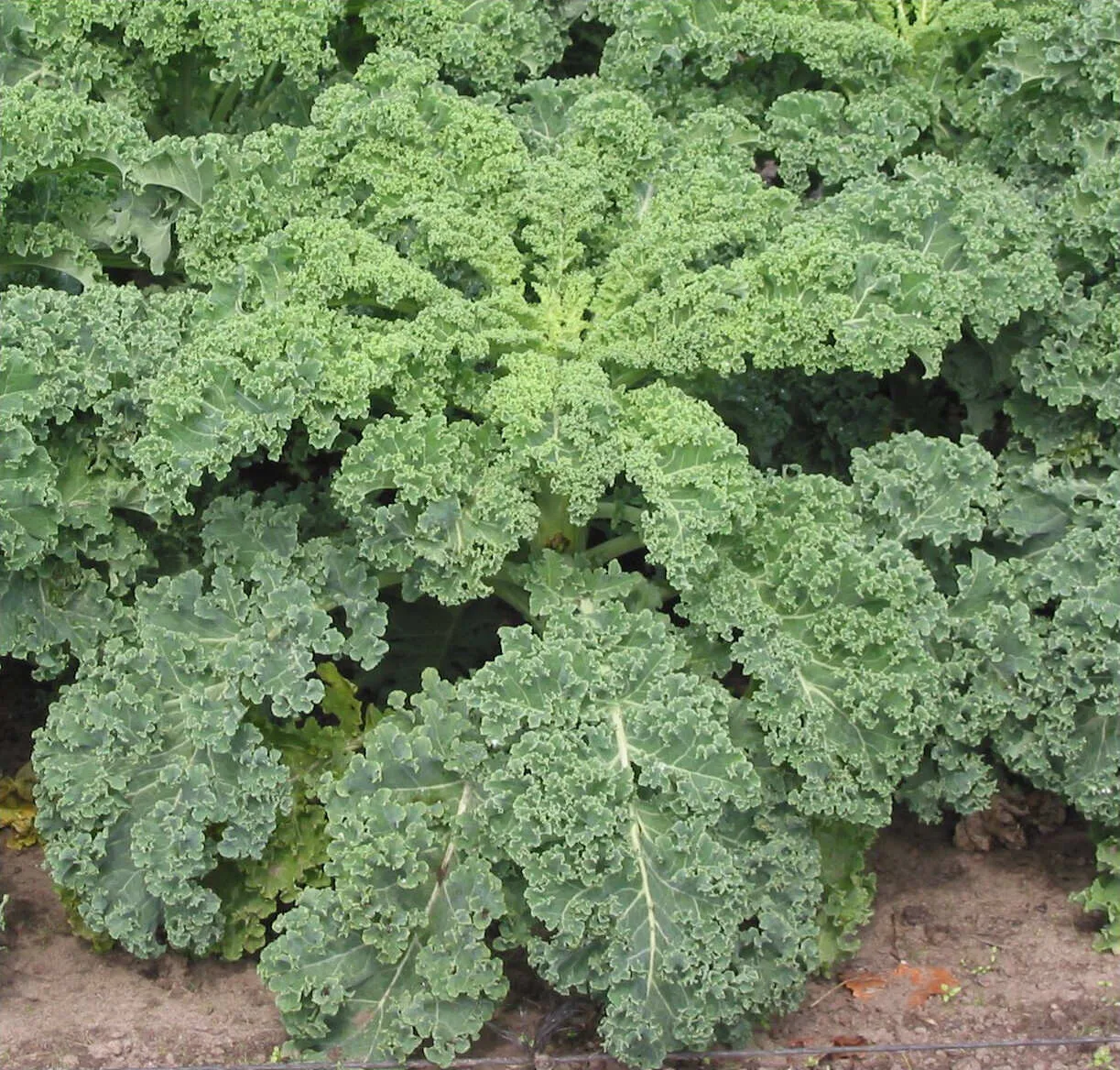 Photo: Rasbak, CC BY-SA 3.0, via Wikimedia Commons
Raw in salads: Raw kale retains the most vitamin C and folate and keeps its myrosinase active, but the tough texture and bitterness can be improved by massaging the leaves with a small amount of oil and acid (lemon juice or vinegar) for 2–3 minutes, which mechanically breaks down cell structure and softens the bitter compounds.
Chop-and-wait method: For cooked applications, chop kale finely and let it rest at room temperature before applying heat, so that some isothiocyanate forms before myrosinase is denatured.
Sautéing: Brief sautéing (5–8 minutes) in oil with garlic is one of the most nutrient-preserving cooking methods and enhances fat-soluble carotenoid absorption. Avoid overcooking, which degrades vitamin C and intensifies bitterness through glucosinolate breakdown products.
Steaming: Steaming for 3–5 minutes preserves more vitamins than boiling while tenderizing the leaf. Adding a raw source of myrosinase such as mustard seed powder may partially restore isothiocyanate yield: in a 12-person crossover trial, 1 g of powdered brown mustard added to cooked broccoli raised urinary sulforaphane metabolites about fourfold (Okunade et al., 2018).
Smoothies: Blending raw kale into smoothies effectively disrupts cell walls and activates myrosinase. Consuming with a fat source (avocado, nut butter) improves carotenoid absorption.
Chips: Baking kale at low temperatures (120–150 °C) creates a shelf-stable snack. Higher-temperature baking degrades vitamin C and myrosinase but retains minerals and vitamin K1.
Juicing: Kale juice concentrates micronutrients and phytochemicals but removes fiber. Juicing large quantities of raw kale concentrates its glucosinolates; people with thyroid conditions may wish to discuss this with their clinician.
Massaged kale is the base of the superfood salad bowl. Kale’s lutein content is discussed alongside other foods in the guide to brain health superfoods, and its glucosinolates in the research review on cruciferous vegetables and sulforaphane.
Safety, Interactions, and Contraindications
Vitamin K and anticoagulant therapy: Kale’s very high vitamin K1 content makes it a clinically significant food for patients on warfarin. Large or highly variable vitamin K intake can blunt warfarin, so people on vitamin K antagonists are advised to keep vitamin K intake reasonably constant and avoid large fluctuations (Linus Pauling Institute). Abruptly adding large amounts of kale, as when starting a new diet or juicing regimen, may shift INR. This is a drug-food interaction requiring healthcare provider guidance.
Thyroid/goitrogen concerns: Some glucosinolates break down to goitrogens: progoitrin to goitrin and indole glucosinolates to thiocyanate, both of which may reduce thyroid hormone production. A review estimated that kale belonging to Brassica oleracea supplies less than 10 µmol of goitrin per 100 g serving and can be considered of minimal risk, and that thiocyanate from indole glucosinolates is small next to background plasma levels; some Russian kales, which are Brassica napus, contain more goitrin (Felker et al., 2016). Any risk is most relevant for people with iodine deficiency eating very large amounts of raw kale. Individuals with diagnosed thyroid conditions should discuss their cruciferous vegetable intake with their healthcare provider.
Oxalate content: Kale is low in oxalate; in one absorption study, a 300 g kale meal contained about 0.1 mmol oxalate against 6.6 mmol in the same weight of spinach (Bohn et al., 2004). People with hyperoxaluria or a history of kidney stones should still discuss their diet with a clinician or dietitian.
Digestive tolerance: Kale’s high fiber and glucosinolate content can cause bloating and flatulence, particularly when introduced rapidly into the diet or consumed in large amounts. Increasing intake gradually may help.
Kidney disease: Kale is relatively high in potassium. Individuals with chronic kidney disease and impaired potassium excretion should discuss potassium-rich foods with their nephrologist or dietitian.
This entry is informational. It does not constitute medical advice, diagnosis, or treatment. Individuals with health conditions should consult a qualified healthcare provider.
Frequently Asked Questions
Is kale a superfood?
“Superfood” is a marketing term with no legal definition, but kale is one of the most nutrient-dense vegetables per calorie: 100 g raw supplies about 390 µg of vitamin K1, 93 mg of vitamin C and 254 mg of well-absorbed calcium for 35 kcal. Its best-supported health link comes from large cohort studies tying cruciferous and leafy vegetables to lower cardiovascular risk. The limit is that those studies show association, and no randomized trial has tested kale itself on heart disease, cancer or eye health.
Is kale good for you?
Kale is one of the most nutrient-dense vegetables per calorie. Per 100 g raw it supplies about 390 µg of vitamin K1, 93 mg of vitamin C, 254 mg of well-absorbed calcium and 4.1 g of fiber for 35 kcal. Large cohort studies link cruciferous and leafy vegetables with lower cardiovascular risk, though those studies show association rather than proof that kale causes the benefit.
Does kale have a lot of fiber?
Kale has about 4.1 g of dietary fiber per 100 g raw, according to USDA FoodData Central, which is high for a leafy green. A cup of chopped raw kale weighs only about 21 g, so a single cup supplies under 1 g. Large salads or cooked portions, which shrink down, add up to more. Increasing intake gradually can limit bloating.
How much kale should you eat a day?
There is no specific recommended amount of kale. It counts toward general vegetable intake, and a cup of chopped raw kale is about 21 g. The main reasons to watch the amount are warfarin, where intake should stay consistent, and thyroid conditions, where people juicing large quantities of raw kale may want to discuss it with their clinician.
How much kale is too much?
No upper limit has been set for kale. Problems reported are tied to specific situations: sudden large increases can shift INR in people on warfarin, high intakes of fiber can cause bloating, and kale’s potassium matters for people with chronic kidney disease. For most people, kale in normal food amounts poses little risk, and a review rated Brassica oleracea kale of minimal goitrogen risk.
Kale vs spinach: which is better?
Each has strengths. Kale is low in oxalate, so its calcium is well absorbed; a 300 g kale meal had about 0.1 mmol of oxalate against 6.6 mmol in the same weight of spinach. Spinach is a non-cruciferous green with its own profile, including high nitrate and folate. Using both, and rotating other greens, gives a broader mix of nutrients.
References
Show all 16 referencesShow fewer
- Age-Related Eye Disease Study 2 Research Group. (2013). Lutein + zeaxanthin and omega-3 fatty acids for age-related macular degeneration: the Age-Related Eye Disease Study 2 (AREDS2) randomized clinical trial. JAMA, 309(19), 2005–2015.
- Blekkenhorst, L. C., Bondonno, C. P., Lewis, J. R., Woodman, R. J., Devine, A., Bondonno, N. P., Lim, W. H., Zhu, K., Kogawa, M., & Prince, R. L. (2018). Cruciferous and total vegetable intakes are inversely associated with subclinical atherosclerosis in older adult women. Journal of the American Heart Association, 7(8), e008391.
- Bohn, T., Davidsson, L., Walczyk, T., & Hurrell, R. F. (2004). Fractional magnesium absorption is significantly lower in human subjects from a meal served with an oxalate-rich vegetable, spinach, as compared with a meal served with kale, a vegetable with a low oxalate content. British Journal of Nutrition, 91(4), 601–606.
- Felker, P., Bunch, R., & Leung, A. M. (2016). Concentrations of thiocyanate and goitrin in human plasma, their precursor concentrations in brassica vegetables, and associated potential risk for hypothyroidism. Nutrition Reviews, 74(4), 248–258.
- Guo, C., Liu, Y., Fu, H., Zhang, X., & Li, M. (2024). Effect of cruciferous vegetable intake on cancer: An umbrella review of meta-analysis. Journal of Food Science, 89(9), 5230–5244.
- Hao, G., Zhang, B., Gu, M., Chen, C., Zhang, Q., Zhang, G., & Cao, X. (2017). Vitamin K intake and the risk of fractures: A meta-analysis. Medicine (Baltimore), 96(17), e6725.
- Heaney, R. P., & Weaver, C. M. (1990). Calcium absorption from kale. American Journal of Clinical Nutrition, 51(4), 656–657.
- Joshipura, K. J., Ascherio, A., Manson, J. E., Stampfer, M. J., Rimm, E. B., Speizer, F. E., Hennekens, C. H., Spiegelman, D., & Willett, W. C. (1999). Fruit and vegetable intake in relation to risk of ischemic stroke. JAMA, 282(13), 1233–1239.
- Joshipura, K. J., Hu, F. B., Manson, J. E., Stampfer, M. J., Rimm, E. B., Speizer, F. E., Colditz, G., Ascherio, A., Rosner, B., Spiegelman, D., & Willett, W. C. (2001). The effect of fruit and vegetable intake on risk for coronary heart disease. Annals of Internal Medicine, 134(12), 1106–1114.
- Kushad, M. M., Brown, A. F., Kurilich, A. C., Juvik, J. A., Klein, B. P., Wallig, M. A., & Jeffery, E. H. (1999). Variation of glucosinolates in vegetable crops of Brassica oleracea. Journal of Agricultural and Food Chemistry, 47(4), 1541–1548.
- Okunade, O., Niranjan, K., Ghawi, S. K., Kuhnle, G., & Methven, L. (2018). Supplementation of the diet by exogenous myrosinase via mustard seeds to increase the bioavailability of sulforaphane in healthy human subjects after the consumption of cooked broccoli. Molecular Nutrition & Food Research, 62(18), e1700980.
- Rungapamestry, V., Duncan, A. J., Fuller, Z., & Ratcliffe, B. (2007). Effect of cooking brassica vegetables on the subsequent hydrolysis and metabolic fate of glucosinolates. Proceedings of the Nutrition Society, 66(1), 69–81.
- Velasco, P., Cartea, M. E., González, C., Vilar, M., & Ordás, A. (2007). Factors affecting the glucosinolate content of kale (Brassica oleracea acephala group). Journal of Agricultural and Food Chemistry, 55(3), 955–962.
- Weaver, C. M., Proulx, W. R., & Heaney, R. (1999). Choices for achieving adequate dietary calcium with a vegetarian diet. American Journal of Clinical Nutrition, 70(3 Suppl), 543S–548S.
- Wu, Y., Shen, Y., Wu, X., Zhu, Y., Mupunga, J., Bao, W., Huang, J., Mao, J., Liu, S., & You, Y. (2018). Hydrolysis before stir-frying increases the isothiocyanate content of broccoli. Journal of Agricultural and Food Chemistry, 66(6), 1509–1515.
- Zhang, X., Shu, X. O., Xiang, Y. B., Yang, G., Li, H., Gao, J., Cai, H., Gao, Y. T., & Zheng, W. (2011). Cruciferous vegetable consumption is associated with a reduced risk of total and cardiovascular disease mortality. American Journal of Clinical Nutrition, 94(1), 240–246.
Related content
More in Leafy Greens
- Arugula (Eruca vesicaria ssp. sativa)
Is arugula good for you? Nutrition per 100 g, nitrate and blood pressure, vitamin K, cancer research and safety for this peppery cruciferous green.
- Barley Grass (Hordeum vulgare)
Barley grass benefits weighed against the evidence: antioxidant and blood sugar research, whether it contains gluten, vitamin K, dosing and safety.
- Bok Choy (Brassica rapa subsp. chinensis)
Bok choy benefits and nutrition: well-absorbed calcium, vitamin C and K per 100 g, glucosinolates, the raw-intake thyroid caveat, and how to cook it.
- Broccoli Sprouts (Brassica oleracea var. italica sprouts)
Broccoli sprouts benefits: why 3-day sprouts carry 10–100x more glucoraphanin than broccoli, what human trials found, how to eat them, and sprout safety.
- Collard Greens (Brassica oleracea var. viridis)
Health benefits of collard greens: vitamin K, calcium and fiber per 100 g, what research shows for bones and heart, cooking tips, and warfarin cautions.
- Microgreens (various species)
Microgreens benefits and nutrition: how 7–21-day seedlings compare with mature vegetables, what human studies show, microgreens vs sprouts, and safety.



Curated by Superfoods Advisor Editors·Last updated