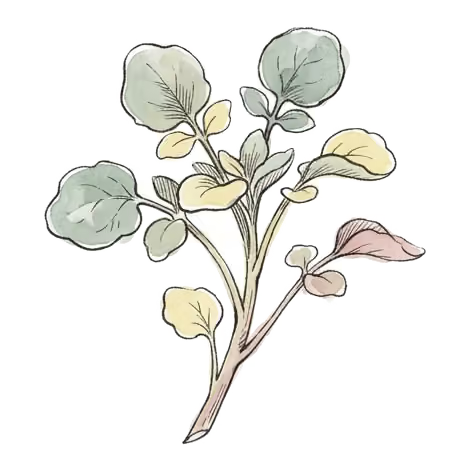
Watercress (Nasturtium officinale)
Nasturtium officinale · also known as common watercress, true watercress
By Superfoods Advisor Editors·July 3, 2026
Watercress benefits and nutrition: vitamin K and C per 100 g, what the DNA-damage and smoker trials found, PEITC, how to eat it, and wild-harvest risks.
Watercress (Nasturtium officinale) is a semi-aquatic cruciferous leafy green in the mustard family. It ranked first of 41 “powerhouse” fruits and vegetables for nutrient density: 100 g raw has 11 kcal, 250 µg of vitamin K and 43 mg of vitamin C. In small human trials, eating 85 g a day reduced markers of DNA damage, especially in smokers.
Native to Europe and Asia and naturalized in temperate regions worldwide, watercress grows in and around slow-moving streams, springs and ditches. It is one of the oldest known leaf vegetables; ancient Greeks, Romans and Persians ate it and credited it with medicinal properties, although the story that Hippocrates built his first hospital beside a watercress stream is of uncertain accuracy.
Commercial cultivation began in early 19th-century England, where bunches were sold as street food, and Hampshire is still a major growing region. Watercress is unrelated to garden nasturtium (Tropaeolum majus); the shared name is a historical misnomer.
Evidence at a glance
Active Compounds
As a cruciferous vegetable, watercress belongs to the same botanical family as broccoli, kale, and cabbage and shares the glucosinolate-isothiocyanate biochemical pathway that defines this group’s most studied bioactivities:
Phenethyl isothiocyanate (PEITC): The principal bioactive isothiocyanate derived from watercress. PEITC is generated when the glucosinolate gluconasturtiin is hydrolyzed by the enzyme myrosinase upon plant cell disruption (chewing, chopping, or blending). PEITC has been more extensively studied than most other dietary isothiocyanates for its effects on phase I and phase II detoxification enzyme systems, carcinogen metabolism, and cancer cell biology. In laboratory systems it inhibits cytochrome P450 1A2 (CYP1A2), an enzyme that activates the tobacco carcinogen NNK (Smith et al., 1996), and it is studied for inducing glutathione S-transferases and other phase II enzymes that conjugate and eliminate electrophilic carcinogens. In small human pharmacokinetic studies, a single 50 g serving of watercress slowed the CYP2E1-dependent metabolism of the probe drug chlorzoxazone (Leclercq et al., 1998) and reduced the oxidative metabolites of acetaminophen (Chen et al., 1996). These effects provide part of the biological rationale for epidemiological interest in cruciferous vegetable consumption.
Gluconasturtiin: The parent glucosinolate from which PEITC is derived. Intact gluconasturtiin is biologically inert; conversion to PEITC requires myrosinase activity. Cooking at high temperatures inactivates myrosinase, reducing PEITC yield; however, gut microbiota possess their own limited myrosinase-like activity, producing some isothiocyanate from glucosinolates that survive cooking intact. In one study of nine volunteers, conversion after eating cooked watercress was considerably lower than after eating it raw (Getahun & Chung, 1999).
Lutein and beta-carotene: Watercress contains meaningful amounts of these carotenoids. As with other leafy greens, fat-soluble carotenoid bioavailability is enhanced by concurrent fat consumption.
Vitamin C: Watercress is a concentrated source of ascorbic acid (approximately 43 mg/100 g, per USDA FoodData Central), comparable to citrus fruits gram for gram, and significantly higher in vitamin C density relative to calorie content.
Hydroxycinnamic acids: Watercress contains phenolic acids, including sinapic acid derivatives, that contribute to its overall antioxidant capacity and may play roles in the modulation of oxidative stress biomarkers observed in some human studies.
Calcium and vitamin K: Watercress provides calcium (120 mg/100 g; USDA FoodData Central). Vitamin K content is high (250 µg/100 g), which is clinically relevant for anticoagulant users.
Nutritional Profile
Values for raw watercress per 100 g edible portion (USDA FoodData Central, SR Legacy, “Watercress, raw”):
| Nutrient | Amount | % DV |
|---|---|---|
| Energy | 11 kcal | — |
| Protein | 2.3 g | — |
| Total fat | 0.1 g | — |
| Carbohydrates | 1.3 g | — |
| Dietary fiber | 0.5 g | — |
| Vitamin K | 250 µg | 208% |
| Vitamin C | 43 mg | 48% |
| Vitamin A (RAE) | 160 µg | 18% |
| Calcium | 120 mg | 9% |
| Iron | 0.2 mg | 1% |
| Manganese | 0.24 mg | 11% |
| Potassium | 330 mg | 7% |
Watercress ranked first of 41 “powerhouse” fruits and vegetables in a nutrient-density scoring exercise by Di Noia (2014): at only 11 kcal per 100 g, it delivers substantial vitamin K, vitamin C, and provitamin A relative to energy content.
Evidence for Purported Benefits
DNA Damage Reduction and Carcinogen Detoxification
Evidence:Limited Two small human studies, in 60 adults and 11 smokers, measured DNA damage and carcinogen biomarkers, not cancer outcomes.
The strongest human clinical evidence for watercress specifically involves biomarkers of DNA damage and carcinogen detoxification. A single-blind, randomized crossover trial by Gill et al. (2007, American Journal of Clinical Nutrition, 85(2):504–510) in 60 adults (30 smokers, 30 non-smokers) found that consuming 85 g raw watercress daily for 8 weeks was associated with a statistically significant 17% reduction in basal DNA damage (measured by the comet assay in lymphocytes) and a 23.9% reduction in basal plus oxidative purine DNA damage; the 9.4% reduction in damage after an ex vivo hydrogen peroxide challenge was not statistically significant. Effects were greater and more significant in smokers.
An earlier mechanistic study by Hecht et al. (1995, Cancer Epidemiology, Biomarkers & Prevention; n = 11 smokers) found that urinary excretion of NNAL and its glucuronide, detoxification products of the tobacco carcinogen NNK, rose by about 33% during a period of watercress consumption and tracked PEITC intake, consistent with PEITC inhibiting NNK’s oxidative activation. These pharmacodynamic studies represent unusually direct human evidence for a food’s effect on carcinogen metabolism, though they were conducted in a specific population (smokers) and clinical endpoints (cancer incidence) were not assessed.
Antioxidant Biomarker Improvement
Evidence:Preliminary One 60-person crossover trial raised blood carotenoid levels; these are not validated markers of disease risk.
Multiple small trials have measured blood antioxidant biomarkers before and after watercress consumption. In the Gill et al. (2007) trial described above, 85 g of raw watercress daily for 8 weeks significantly increased plasma lutein and beta-carotene concentrations, by 100% and 33% respectively. These biomarker outcomes are not validated surrogate endpoints for disease risk and should be interpreted accordingly.
Thyroid and Iodine Considerations
This is a theoretical concern that applies only at extreme intakes.
As a cruciferous vegetable, watercress contains glucosinolates whose breakdown products can interfere with the thyroid: thiocyanate ions compete with iodine for uptake, and goitrin may interfere with thyroid hormone synthesis. Very high intakes of cruciferous vegetables such as cabbage and turnips have caused hypothyroidism in animals, but in humans thiocyanate exposure does not appear to raise hypothyroidism risk unless iodine intake is also deficient (Linus Pauling Institute). Individuals with hypothyroidism or iodine deficiency who consume large quantities of watercress should discuss this with their endocrinologist.
Exercise-Induced Oxidative Stress
Evidence:Preliminary A single crossover study in 10 healthy young men, measuring oxidative-stress markers.
A small crossover study by Fogarty et al. (2013, British Journal of Nutrition; n = 10 healthy young men) found that both a single dose and 8 weeks of daily watercress attenuated exercise-induced DNA damage and lipid peroxidation in blood cells. The sample was very small and the endpoints are oxidative-stress markers, so the finding requires confirmation in larger trials.
Typical Use and Preparation
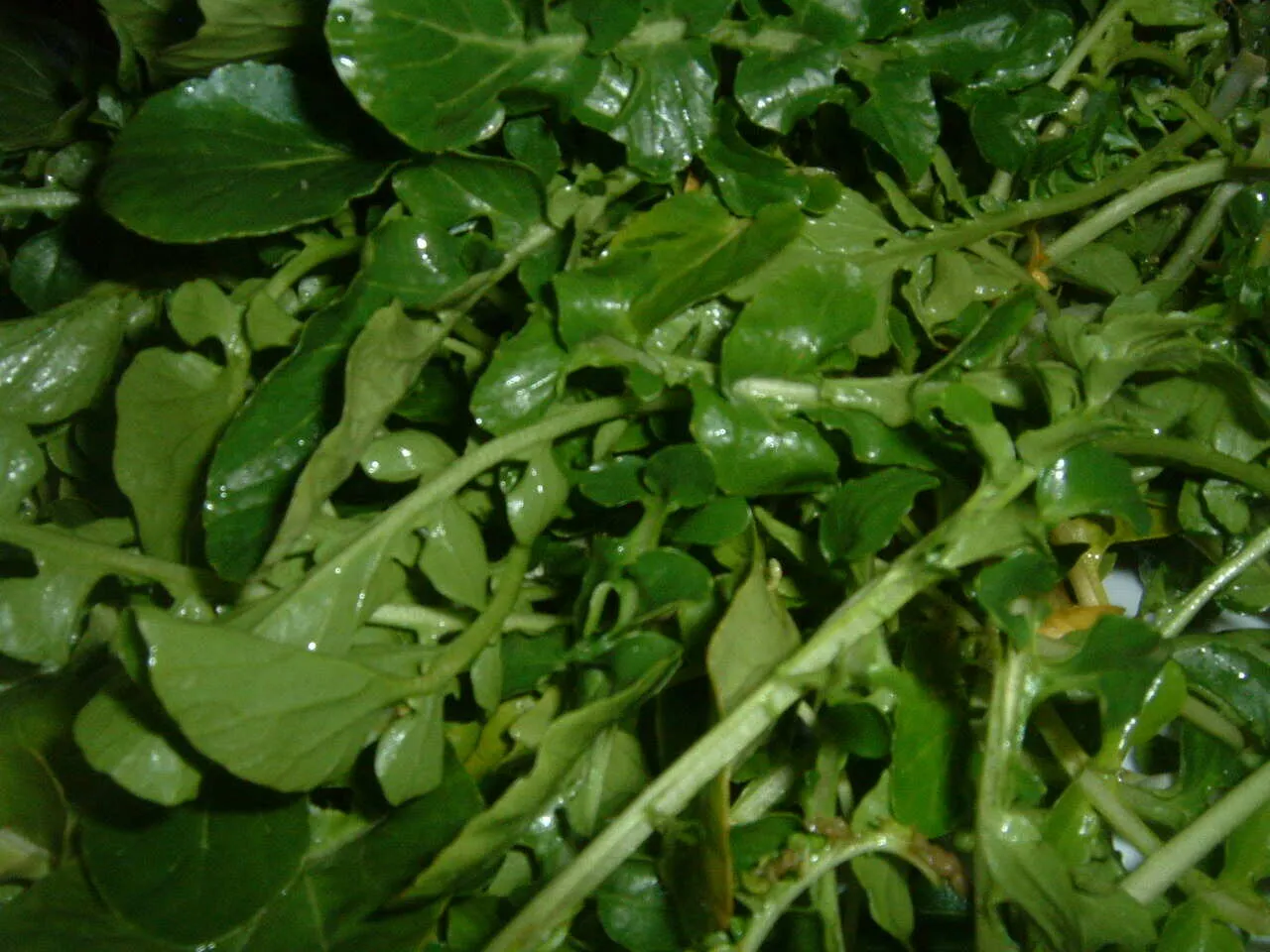 Photo: Masparasol, CC BY 3.0, via Wikimedia Commons
Watercress is most commonly consumed raw, which maximizes myrosinase activity and thereby PEITC yield. The peppery, slightly bitter flavor is well-suited to green salads, sandwich fillings, and garnishes. Watercress soup (a traditional British and French preparation) involves brief blending with cooked ingredients; short cooking times preserve some isothiocyanate content, while prolonged simmering substantially degrades both the glucosinolate precursor and myrosinase.
For maximal isothiocyanate production, watercress should be chopped or chewed thoroughly before any heat is applied, allowing myrosinase to act on gluconasturtiin. If watercress is to be lightly cooked (wilted into pasta or briefly sautéed), the isothiocyanate yield is partially preserved because some PEITC is already formed before the enzyme is heat-inactivated.
Watercress wilts quickly after harvest; ideally it should be stored upright with stems in water, refrigerated, and consumed within 2–3 days of purchase. Vitamin C content diminishes with extended storage.
Wild-harvested watercress from streams or rivers poses food safety risks: contamination with Fasciola hepatica (liver fluke) from waterways used by livestock is a documented hazard, since fascioliasis is acquired by eating aquatic vegetables carrying the parasite larvae (WHO; see also a 2021 case report after raw wild watercress). Only commercially grown watercress from controlled water sources should be consumed.
Watercress is a crucifer, and our article on cruciferous vegetables and sulforaphane covers the glucosinolate chemistry it shares with broccoli and kale. Among salad crucifers, its closest culinary match is the equally peppery arugula.
Safety, Interactions, and Contraindications
Vitamin K and anticoagulants: Watercress contains approximately 250 µg vitamin K per 100 g — well above the daily adequate intake (90–120 µg; Linus Pauling Institute). Individuals taking vitamin K-antagonist anticoagulants (warfarin, acenocoumarol, phenprocoumon) must maintain consistent dietary vitamin K intake. Significant changes in watercress consumption should be discussed with the prescribing clinician and may require INR monitoring adjustments.
CYP enzyme interactions: A single serving of watercress inhibited CYP2E1 in small human studies (chlorzoxazone, acetaminophen; see above), although it had no major effect on ethanol clearance (Desager et al., 2002). For CYP1A2 the direction differs from the laboratory findings: a meta-analysis of human dietary trials found that cruciferous-vegetable-rich diets increased CYP1A2 activity by roughly 20–40% (Eagles et al., 2020), which could lower blood levels of CYP1A2-metabolized drugs such as theophylline, clozapine, and olanzapine. The clinical significance of such diet-drug interactions remains unclear. Individuals taking such medications should inform their prescriber of consistent high watercress consumption.
Thyroid medications: As noted above, glucosinolate breakdown products may affect thyroid function at very high intakes, mainly when iodine intake is low. Individuals on levothyroxine should maintain consistent cruciferous vegetable intake and consult their endocrinologist if making large dietary changes.
Wild-harvested watercress and foodborne risk: Consumption of wild watercress carries risk of Fasciola hepatica infection (liver fluke) and microbial contamination. Only commercially cultivated watercress from certified water sources should be consumed raw.
This content is for educational purposes only and does not constitute medical advice, diagnosis, or treatment. Consult a qualified healthcare provider before making changes to your diet or supplement regimen.
Frequently Asked Questions
What are the benefits of watercress?
Watercress is extremely nutrient-dense for its calories, with 250 µg of vitamin K and 43 mg of vitamin C per 100 g raw at 11 kcal. In small human trials, 85 g a day for 8 weeks reduced lymphocyte DNA damage and raised blood lutein and beta-carotene, and in 11 smokers it increased excretion of detoxified tobacco-carcinogen products. Disease outcomes have not been studied.
Is watercress good for you?
For most people, yes. It is low in energy and high in vitamins K, C and A, and its PEITC is among the most studied dietary isothiocyanates. The cautions are specific: people on warfarin should keep vitamin K intake consistent, people on CYP1A2-metabolized drugs should tell their prescriber about high intake, and wild-harvested watercress should be avoided.
How much watercress should you eat daily?
There is no official recommendation. The main human trials used 85 g of raw watercress a day for 8 weeks. That amount supplies well above the daily adequate intake for vitamin K, so people on warfarin should agree any regular habit with their clinician. Normal salad portions are not known to cause problems in healthy people.
Can you eat watercress raw?
Yes, and raw is the usual way. Eating it raw keeps myrosinase active, so more gluconasturtiin becomes PEITC; in one study of nine volunteers, conversion was much lower after cooked watercress. Buy commercially grown watercress for raw use. Wild plants from streams can carry Fasciola hepatica, a liver fluke, if livestock use the water.
Watercress vs arugula: what is the difference?
Both are peppery cruciferous salad greens, but they differ in chemistry. Watercress gets its bite from PEITC, formed from gluconasturtiin, and is lower in energy at 11 kcal per 100 g. Arugula’s main glucosinolate is glucosativin, and it is notably high in nitrate. Watercress has more vitamin K (250 µg versus about 109 µg per 100 g raw) and vitamin C.
References
Show all 15 referencesShow fewer
- Gill, C. I., Haldar, S., Boyd, L. A., Bennett, R., Whiteford, J., Butler, M., … Rowland, I. R. (2007). Watercress supplementation in diet reduces lymphocyte DNA damage and alters blood antioxidant status in healthy adults. American Journal of Clinical Nutrition, 85(2), 504–510.
- Hecht, S. S., Chung, F. L., Richie, J. P., Akerkar, S. A., Borukhova, A., Skowronski, L., & Carmella, S. G. (1995). Effects of watercress consumption on metabolism of a tobacco-specific lung carcinogen in smokers. Cancer Epidemiology, Biomarkers & Prevention, 4(8), 877–884.
- Fogarty, M. C., Hughes, C. M., Burke, G., Brown, J. C., & Davison, G. W. (2013). Acute and chronic watercress supplementation attenuates exercise-induced peripheral mononuclear cell DNA damage and lipid peroxidation. British Journal of Nutrition, 109(2), 293–301.
- Smith, T. J., Guo, Z., Guengerich, F. P., & Yang, C. S. (1996). Metabolism of 4-(methylnitrosamino)-1-(3-pyridyl)-1-butanone (NNK) by human cytochrome P450 1A2 and its inhibition by phenethyl isothiocyanate. Carcinogenesis, 17(4), 809–813.
- Leclercq, I., Desager, J. P., & Horsmans, Y. (1998). Inhibition of chlorzoxazone metabolism, a clinical probe for CYP2E1, by a single ingestion of watercress. Clinical Pharmacology & Therapeutics, 64(2), 144–149.
- Chen, L., Mohr, S. N., & Yang, C. S. (1996). Decrease of plasma and urinary oxidative metabolites of acetaminophen after consumption of watercress by human volunteers. Clinical Pharmacology & Therapeutics, 60(6), 651–660.
- Getahun, S. M., & Chung, F. L. (1999). Conversion of glucosinolates to isothiocyanates in humans after ingestion of cooked watercress. Cancer Epidemiology, Biomarkers & Prevention, 8(5), 447–451.
- Desager, J. P., Golnez, J. L., De Buck, C., & Horsmans, Y. (2002). Watercress has no importance for the elimination of ethanol by CYP2E1 inhibition. Pharmacology & Toxicology, 91(3), 103–105.
- Eagles, S. K., Gross, A. S., & McLachlan, A. J. (2020). The effects of cruciferous vegetable-enriched diets on drug metabolism: a systematic review and meta-analysis of dietary intervention trials in humans. Clinical Pharmacology & Therapeutics, 108(2), 212–227.
- Di Noia, J. (2014). Defining powerhouse fruits and vegetables: a nutrient density approach. Preventing Chronic Disease, 11, E95.
- Brown, J. D. (2021). Human fascioliasis (liver fluke disease) in Hawai’i: case report and review of human fascioliasis acquired in the United States. Hawai’i Journal of Health & Social Welfare, 80(9), 212–217.
- U.S. Department of Agriculture, Agricultural Research Service. Watercress, raw (FDC ID 170068). FoodData Central, SR Legacy.
- Linus Pauling Institute, Micronutrient Information Center. Cruciferous Vegetables.
- Linus Pauling Institute, Micronutrient Information Center. Vitamin K.
- World Health Organization. Foodborne trematode infections (fact sheet).
Related content
More in Leafy Greens
- Arugula (Eruca vesicaria ssp. sativa)
Is arugula good for you? Nutrition per 100 g, nitrate and blood pressure, vitamin K, cancer research and safety for this peppery cruciferous green.
- Barley Grass (Hordeum vulgare)
Barley grass benefits weighed against the evidence: antioxidant and blood sugar research, whether it contains gluten, vitamin K, dosing and safety.
- Bok Choy (Brassica rapa subsp. chinensis)
Bok choy benefits and nutrition: well-absorbed calcium, vitamin C and K per 100 g, glucosinolates, the raw-intake thyroid caveat, and how to cook it.
- Broccoli Sprouts (Brassica oleracea var. italica sprouts)
Broccoli sprouts benefits: why 3-day sprouts carry 10–100x more glucoraphanin than broccoli, what human trials found, how to eat them, and sprout safety.
- Collard Greens (Brassica oleracea var. viridis)
Health benefits of collard greens: vitamin K, calcium and fiber per 100 g, what research shows for bones and heart, cooking tips, and warfarin cautions.
- Kale (Brassica oleracea var. sabellica)
Is kale good for you? Kale nutrition per 100 g, what research shows for heart, eyes and bones, kale vs spinach, how much is too much, and safety.

Curated by Superfoods Advisor Editors·Last updated