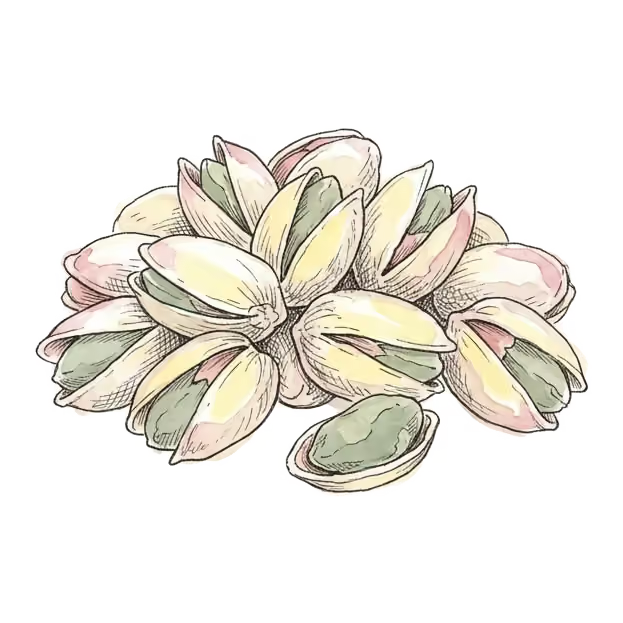
Pistachios (Pistacia vera)
Pistacia vera · also known as pistachio nut, green almond
By Superfoods Advisor Editors·July 3, 2026
Pistachios benefits and nutrition: what trials show for cholesterol and blood sugar, how many to eat a day, lutein, and allergy and sodium cautions.
Pistachios (Pistacia vera) are Central Asian tree nuts and among the lower-calorie nuts: a 28 g serving, about 49 kernels, provides roughly 160 kcal, 6 g protein and 3 g fiber, plus unusual amounts of lutein. A meta-analysis of 12 randomized trials found modest drops in total and LDL cholesterol, and eaten alone they barely raise blood sugar.
The tree is native to arid parts of Iran, Afghanistan and Turkmenistan, where wild populations still persist in rocky, calcareous soils. Pistachios were gathered and later cultivated in the ancient Near East long before they reached Europe. The nuts spread westward through Persia and into the Mediterranean basin; Pliny the Elder records that the tree was brought to Italy from Syria in the first century CE. Today the leading producers are the United States (California’s San Joaquin Valley), Iran, and Turkey, which together supply most of the world’s crop.
In traditional Persian medicine, Avicenna listed pistachios among the foods he recommended for male fertility (Sadogh et al., 2021). Modern nutritional science has examined pistachios as a functional food with meaningful concentrations of carotenoids, polyphenols, and favorable macronutrient ratios — while noting that their caloric density requires mindful portion control.
Evidence at a glance
Active Compounds
Lutein and zeaxanthin: Pistachios are among the highest-lutein tree nuts analyzed to date, providing about 1,160 µg of lutein and zeaxanthin per 100 g of dry-roasted kernels (USDA FoodData Central) and about 2,900 µg per 100 g raw (USDA FoodData Central) — a concentration comparable to some green vegetables. Both xanthophyll carotenoids selectively accumulate in the macular pigment of the human retina, where they are thought to filter high-energy blue light and quench reactive oxygen species. They are also present in the lens, and higher dietary intakes have been associated in observational studies with reduced risk of age-related macular degeneration (AMD) and nuclear cataracts.
Resveratrol: Pistachio kernels contain measurable amounts of trans-resveratrol, at levels similar to peanuts in an analysis of Turkish varieties (Tokuşoğlu et al., 2005). Resveratrol is a stilbenoid polyphenol associated in laboratory research with antioxidant and anti-inflammatory properties.
Anthocyanins and flavonoids: The reddish-purple pigmentation of pistachio inner skins reflects their anthocyanin content, mainly cyanidin-3-galactoside, alongside flavonoids such as quercetin, luteolin, and eriodictyol (Seeram et al., 2006). These compounds exhibit antioxidant activity in vitro and may modulate inflammatory signaling pathways, though human bioavailability data specifically for pistachio polyphenols remain limited.
Phytosterols: USDA lists about 214 mg of phytosterols per 100 g of raw pistachios, principally beta-sitosterol (USDA FoodData Central). An analysis that also counted steryl glycosides measured 270–289 mg/100 g and found pistachios among the richest snack nuts (Phillips et al., 2005). In a meta-analysis of 124 trials, phytosterol intakes of about 0.6–3.3 g/day lowered LDL cholesterol by an average of 6–12% (Ras et al., 2014), through competitive inhibition of intestinal cholesterol absorption — doses far above what a serving of pistachios supplies.
Gamma-tocopherol: The primary form of vitamin E in pistachios is gamma-tocopherol, and pistachios rank among the richest nuts in it (Dreher, 2012). Gamma-tocopherol has shown anti-inflammatory activity distinct from alpha-tocopherol in laboratory studies; whether this matters for cardiovascular risk in humans is not established.
Arginine: Pistachios are relatively rich in the amino acid L-arginine (about 2.2 g per 100 g dry-roasted; USDA FoodData Central), a precursor to nitric oxide synthesis in vascular endothelium, potentially contributing to vasodilatory effects.
Nutritional Profile
Per 100 g of dry-roasted pistachios, unsalted (USDA FoodData Central FDC ID 170185):
| Nutrient | Amount | % DV |
|---|---|---|
| Energy | 572 kcal | — |
| Protein | 21.0 g | — |
| Total fat | 45.8 g | — |
| — Saturated fat | 5.6 g | — |
| — Monounsaturated fat | 24.5 g | — |
| — Polyunsaturated fat | 13.3 g | — |
| Carbohydrates | 28.3 g | — |
| Dietary fiber | 10.3 g | — |
| Sugars | 7.7 g | — |
| Potassium | 1010 mg | 21% |
| Phosphorus | 469 mg | 38% |
| Magnesium | 109 mg | 26% |
| Zinc | 2.3 mg | 21% |
| Copper | 1.3 mg | 143% |
| Manganese | 1.2 mg | 54% |
| Vitamin B6 | 1.12 mg | 66% |
| Thiamine | 0.70 mg | 58% |
| Lutein + zeaxanthin | ~1,160 µg | — |
Pistachios provide all nine essential amino acids and have one of the higher protein contents among tree nuts. Their relatively lower fat content compared to macadamias or pecans means a 28 g serving (~49 kernels) delivers approximately 160 kcal.
Evidence for Purported Benefits
Cardiovascular Risk Factors
Evidence:Moderate A meta-analysis of 12 RCTs found modest, consistent lipid reductions; no event trials.
Pistachios have been studied in multiple randomized controlled trials for their effects on blood lipids. A meta-analysis by Hadi et al. (Critical Reviews in Food Science and Nutrition, 2023) pooling 12 RCTs found that pistachio consumption reduced total cholesterol (about −7.5 mg/dL), LDL cholesterol (about −3.8 mg/dL), and triglycerides (about −11 mg/dL) compared with control diets, while HDL cholesterol did not change significantly. Effect sizes were modest. Phytosterols, monounsaturated fat, and fiber are the components usually proposed to explain these effects.
Blood Glucose and Insulin Response
Evidence:Moderate For post-meal glucose: several acute studies consistently show a blunted response.
Evidence:Preliminary For longer-term glucose metabolism: a single four-month crossover trial in 54 adults with prediabetes.
A notable characteristic of pistachios is that, eaten alone, they produce very little rise in blood glucose. Several studies have explored their effect on postprandial glycemia. Kendall et al. (European Journal of Clinical Nutrition, 2011) found that pistachios alone had a minimal effect on post-prandial glycemia and that including them with white bread dose-dependently reduced the postprandial blood glucose response in healthy adults. A randomized crossover trial by Hernández-Alonso et al. (Diabetes Care, 2014) in 54 adults with prediabetes found that 4 months of a pistachio-supplemented diet (57 g/day) lowered fasting glucose, insulin, and insulin resistance (HOMA-IR), along with several other metabolic markers, compared with an isocaloric control diet.
Eye Health (Macular Protection)
Evidence:Insufficient No pistachio eye studies; lutein and zeaxanthin data come from supplements.
The macular carotenoid hypothesis for lutein and zeaxanthin is supported by substantial observational and some interventional data, though most research uses lutein/zeaxanthin supplements, not pistachios specifically. In the Age-Related Eye Disease Study 2 (AREDS2; JAMA, 2013), adding 10 mg/day lutein and 2 mg/day zeaxanthin to the AREDS supplement formula did not further reduce progression to advanced AMD in the primary analysis, although the investigators judged lutein + zeaxanthin an appropriate substitute for beta-carotene in the formula because of a possible lung cancer risk from beta-carotene in former smokers. Pistachios as a dietary source of these carotenoids are biologically plausible contributors to intake, but direct pistachio-specific eye-outcome trials have not been conducted.
Body Weight and Satiety
Evidence:Limited Short-term trials and cohort data suggest weight neutrality; long-term pistachio RCTs are few.
Epidemiological data and short-term trials suggest nut consumption, including pistachios, is not associated with weight gain despite their caloric density. A review by Mattes et al. (Journal of Nutrition, 2008) attributed this mainly to the satiety effect of nuts, which leads people to compensate by eating less of other foods, along with limited energy absorption from intact nut tissue and, in limited data, higher resting energy expenditure.
Typical Use and Preparation
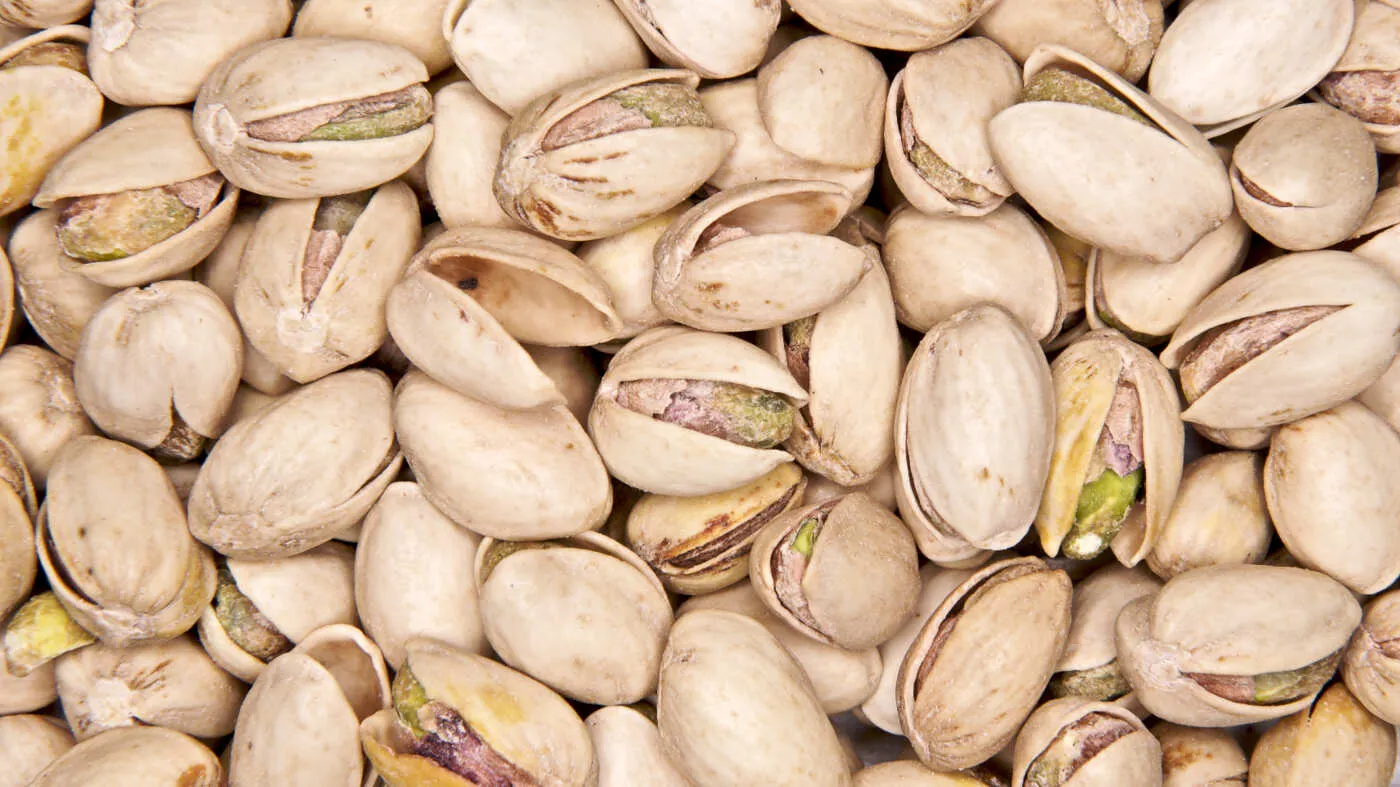 Photo: THOR, CC BY 2.0, via Wikimedia Commons
Pistachios are sold in-shell (roasted or raw) and as pre-shelled kernels. In-shell presentation may slow eating: in one classroom study, students offered in-shell pistachios ate fewer calories than those offered shelled kernels, with similar fullness ratings (Honselman et al., 2011).
Raw vs. roasted: Roasting generates Maillard reaction products, enhancing flavor, and changes the phytochemical profile. A comparison of raw and roasted American pistachios by Yuan et al. (Nutrients, 2022) found similar total antioxidant activity (ORAC); the roasted nuts contained more vitamin E, while the raw nuts contained more carotenoids. Raw or lightly roasted pistachios may therefore retain more lutein and zeaxanthin. Sodium content in salted commercial pistachios can be substantial (about 430 mg/100 g in USDA’s dry-roasted salted entry; USDA FoodData Central); unsalted varieties are preferable for cardiovascular management.
Culinary applications: Pistachios are used in confectionery (baklava, halva, ice cream), pesto variants, ground nut pastes, grain salads, and as garnishes in Persian rice dishes. Pistachio butter made from ground kernels delivers concentrated nutrition in a form similar to almond or peanut butter.
Serving suggestion: A standard portion of 28 g (approximately 49 in-shell kernels or 1 oz shelled) provides approximately 160 kcal, 6 g protein, and 3 g fiber.
Pistachios are among the nuts discussed in the guide to foods for heart health, alongside walnuts, almonds, and hazelnuts.
Safety, Interactions, and Contraindications
Tree nut allergy: Pistachio allergy has a relatively low prevalence in the general population but can cause severe systemic reactions (Tworowska et al., 2026). The identified allergens include Pis v 1 (a 2S albumin), Pis v 2 (an 11S globulin) (Ahn et al., 2009), and related storage proteins. Cross-reactivity with cashews (both members of the family Anacardiaceae) is well documented; among tree nuts, cashew and pistachio show the highest overlap in clinical co-allergy (Jeong & Lee, 2025) — individuals allergic to cashews should be evaluated for pistachio allergy and vice versa, under medical supervision. Reactions can range from mild oral symptoms to systemic anaphylaxis.
Aflatoxin contamination: Pistachios are susceptible to contamination by Aspergillus mold species producing aflatoxins, the most common mycotoxins in pistachios (Soares Mateus et al., 2021), particularly when stored in warm, humid conditions post-harvest. Regulatory agencies (EU, FDA) set maximum aflatoxin limits for commercial nuts. Consumers should purchase from reputable sources and discard any kernels with visible mold, unusual color, or shriveled appearance.
Kidney disease: Pistachios are high in potassium (about 1,010 mg/100 g dry-roasted; USDA FoodData Central) and phosphorus. Individuals with chronic kidney disease (CKD) requiring dietary potassium restriction should limit or avoid pistachio consumption and consult their nephrologist or registered dietitian.
Warfarin interactions: No direct pharmacokinetic interaction between pistachios and warfarin has been established, but pistachios contain modest vitamin K (approximately 13 µg/100 g dry-roasted; USDA FoodData Central) and people on warfarin are generally advised to keep vitamin K intake consistent.
Fructose and FODMAPs: Pistachios contain moderate amounts of fructans and are classified as high-FODMAP in some reference databases. Individuals with irritable bowel syndrome (IBS) following a low-FODMAP protocol should restrict pistachio intake during the elimination phase and reassess tolerance individually.
This entry is for informational purposes only and does not constitute medical advice, diagnosis, or treatment.
Frequently Asked Questions
How many pistachios should you eat a day?
A standard serving is 28 g, about 49 kernels, which provides roughly 160 kcal. The four-month prediabetes trial used 57 g a day within a calorie-matched diet. No official limit exists. Buying them in the shell may help with portions: in one classroom study, people offered in-shell pistachios ate fewer calories than those given shelled kernels.
Are pistachios good for you?
In normal portions, yes for most people. They provide protein, fiber, potassium, vitamin B6 and carotenoids for relatively few calories among nuts. A meta-analysis of 12 trials found modest cholesterol and triglyceride reductions, and short-term trials suggest they do not cause weight gain. Unsalted pistachios are the better choice, since salted ones carry about 430 mg sodium per 100 g.
Are pistachios good for people with diabetes?
Early evidence is encouraging but limited. Pistachios alone cause little rise in blood glucose, and adding them to a carbohydrate meal blunted its glucose spike. In a four-month crossover trial in 54 adults with prediabetes, 57 g a day lowered fasting glucose, insulin and insulin resistance. That is one trial, and pistachios are not a substitute for diabetes treatment.
Pistachios vs almonds: which is healthier?
They are close. Per 100 g, both have about 21 g protein and similar fiber. Pistachios have fewer calories (572 vs 598 kcal), far more lutein and potassium, and stronger evidence for post-meal blood sugar. Almonds have much more vitamin E and magnesium. Both lowered LDL cholesterol modestly in meta-analyses.
Are pistachios good for your eyes?
Possibly, but it has not been tested. Pistachios are among the richest nuts in lutein and zeaxanthin, the carotenoids that collect in the retina. Most evidence on these carotenoids comes from supplements, and in the AREDS2 trial, adding them to the standard formula did not further slow advanced macular degeneration. No study has measured eye outcomes from eating pistachios.
Can you eat pistachios if you are allergic to cashews?
Usually not without an allergist’s advice. Pistachios and cashews belong to the same plant family and share closely related storage proteins, and among tree nuts they show the highest overlap in clinical allergy. People allergic to one should be evaluated for the other under medical supervision before eating it.
References
Show all 18 referencesShow fewer
- Hadi, A., Asbaghi, O., Kazemi, M., et al. (2023). Consumption of pistachio nuts positively affects lipid profiles: A systematic review and meta-analysis of randomized controlled trials. Critical Reviews in Food Science and Nutrition, 63(21), 5358–5371.
- Kendall, C. W. C., Josse, A. R., Esfahani, A., & Jenkins, D. J. A. (2011). The impact of pistachio intake alone or in combination with high-carbohydrate foods on post-prandial glycemia. European Journal of Clinical Nutrition, 65(6), 696–702.
- Hernández-Alonso, P., Salas-Salvadó, J., Baldrich-Mora, M., Juanola-Falgarona, M., & Bulló, M. (2014). Beneficial effect of pistachio consumption on glucose metabolism, insulin resistance, inflammation, and related metabolic risk markers: A randomized clinical trial. Diabetes Care, 37(11), 3098–3105.
- Age-Related Eye Disease Study 2 (AREDS2) Research Group. (2013). Lutein + zeaxanthin and omega-3 fatty acids for age-related macular degeneration. JAMA, 309(19), 2005–2015.
- Mattes, R. D., Kris-Etherton, P. M., & Foster, G. D. (2008). Impact of peanuts and tree nuts on body weight and healthy weight loss in adults. Journal of Nutrition, 138(9), 1741S–1745S.
- Dreher, M. L. (2012). Pistachio nuts: composition and potential health benefits. Nutrition Reviews, 70(4), 234–240.
- Yuan, W., Zheng, B., Li, T., & Liu, R. H. (2022). Quantification of phytochemicals, cellular antioxidant activities and antiproliferative activities of raw and roasted American pistachios (Pistacia vera L.). Nutrients, 14(15), 3002.
- Phillips, K. M., Ruggio, D. M., & Ashraf-Khorassani, M. (2005). Phytosterol composition of nuts and seeds commonly consumed in the United States. Journal of Agricultural and Food Chemistry, 53(24), 9436–9445.
- Ras, R. T., Geleijnse, J. M., & Trautwein, E. A. (2014). LDL-cholesterol-lowering effect of plant sterols and stanols across different dose ranges: a meta-analysis of randomised controlled studies. British Journal of Nutrition, 112(2), 214–219.
- Ahn, K., Bardina, L., Grishina, G., Beyer, K., & Sampson, H. A. (2009). Identification of two pistachio allergens, Pis v 1 and Pis v 2, belonging to the 2S albumin and 11S globulin family. Clinical and Experimental Allergy, 39(6), 926–934.
- USDA FoodData Central: Nuts, pistachio nuts, dry roasted, without salt added (FDC ID 170185).
- Tokuşoglu, O., Unal, M. K., & Yemiş, F. (2005). Determination of the phytoalexin resveratrol in peanuts and pistachios by HPLC-DAD and GC-MS. Journal of Agricultural and Food Chemistry, 53(12), 5003–5009.
- Seeram, N. P., Zhang, Y., Henning, S. M., et al. (2006). Pistachio skin phenolics are destroyed by bleaching resulting in reduced antioxidative capacities. Journal of Agricultural and Food Chemistry, 54(19), 7036–7040.
- Honselman, C. S., Painter, J. E., Kennedy-Hagan, K. J., et al. (2011). In-shell pistachio nuts reduce caloric intake compared to shelled nuts. Appetite, 57(2), 414–417.
- Tworowska, J., Sobieska-Poszwa, O., & Kowalczyk, A. (2026). Pistachio allergy: integrating molecular diagnostics and clinical phenotypes. Diagnostics, 16(4), 513.
- Jeong, K., & Lee, S. (2025). Update on tree nut and seed allergies: prevalence, clinical characteristics, diagnosis, and management. Allergy, Asthma & Immunology Research, 17(6), 672–691.
- Soares Mateus, A. R., et al. (2021). Mycotoxins in pistachios (Pistacia vera L.): methods for determination, occurrence, decontamination. Toxins, 13(10), 682.
- Sadogh, A., et al. (2021). Herbal foodstuffs in Avicenna’s recommended diet to improve sperm quality and increase male fertility; an evidence-based approach. Journal of Complementary and Integrative Medicine.
More in Nuts & Seeds
- Almonds (Prunus dulcis)
Almonds benefits and nutrition: what trials show for LDL cholesterol, blood sugar and weight, plus serving size, vitamin E, oxalate and allergy risks.
- Brazil Nuts (Bertholletia excelsa)
Brazil nuts benefits come down to selenium: one nut can hold 8 to 200 mcg. How many to eat per day, what the research shows, and the toxicity limit.
- Cashews (Anacardium occidentale)
Cashews benefits and nutrition: copper, magnesium and iron per serving, what trials show for blood pressure and blood sugar, and allergy and oxalate risks.
- Chia Seeds (Salvia hispanica)
How to eat chia seeds: soaked, ground or in pudding, with serving size, nutrition and what trials show for blood sugar, blood pressure and weight loss.
- Flaxseed (Linum usitatissimum)
Flaxseed benefits explained: what trials show for blood pressure, cholesterol and constipation, why ground beats whole, daily amounts and side effects.
- Hazelnuts (Corylus avellana)
Hazelnuts benefits and nutrition: oleic acid, vitamin E and folate per serving, what trials show for cholesterol, and how birch-pollen allergy works.

Curated by Superfoods Advisor Editors·Last updated