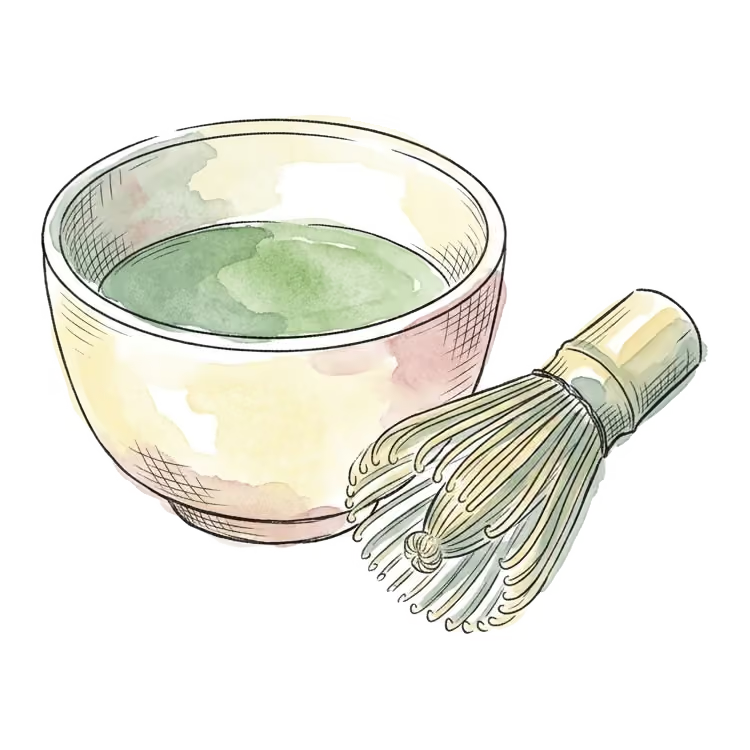
Matcha Green Tea (Camellia sinensis, powdered)
Camellia sinensis · also known as match green tea, powdered green tea, ceremonial matcha, matcha powder
By Superfoods Advisor Editors·July 3, 2026
Is matcha good for you? Matcha caffeine (38–88 mg a serving), EGCG and L-theanine, how it compares with green tea, the evidence on focus, and safety.
Matcha is powdered green tea made from shade-grown Camellia sinensis leaves that are steamed, dried and stone-ground, then whisked into water so the whole leaf is drunk. A 2 g serving supplies roughly 38–88 mg of caffeine, 100–175 mg of EGCG and anywhere from under 10 to about 90 mg of L-theanine. Small trials suggest its caffeine–L-theanine pairing may sharpen attention.
Whisking powdered tea into hot water was a Song Dynasty (960–1279) Chinese practice; Zen monks brought it to Japan in the late 12th century, where it later became the basis of chado (the way of tea). In Japan, shade cultivation — covering plants for three to four weeks before harvest to restrict light exposure — emerged as the defining production step, inducing biochemical changes that increase chlorophyll content (producing the vivid green color), lower some catechins (epicatechin and epigallocatechin), and raise L-theanine and caffeine relative to open-field tea (Sano et al., 2018).
The key distinction between matcha and brewed green tea is consumption format: when brewing whole-leaf or bagged green tea, the leaf is an infusion vessel, and a fraction of its water-soluble compounds are extracted into the liquid; the leaf is then discarded. When drinking matcha, the entire leaf is consumed in powdered form. This means matcha delivers a higher dose of catechin polyphenols, chlorophyll, and L-theanine per gram of plant material consumed, though the absolute intake still depends on dose, water temperature, and whisking technique. The green tea entry covers steeped green tea, which has the larger body of trial evidence that matcha claims mostly borrow from.
Evidence at a glance
Active Compounds
Matcha delivers the same compounds as brewed green tea, but in larger amounts per serving because nothing is left behind in spent leaves.
Epigallocatechin gallate (EGCG) is the most abundant and pharmacologically active catechin in green tea; in six commercial matcha powders analyzed by Unno et al., 2018 it made up roughly half to 70% of the four main catechins. EGCG is a polyphenol with multiple proposed mechanisms of action studied in cell culture and animal models:
- NF-κB pathway inhibition: EGCG has been shown to suppress nuclear factor kappa B (NF-κB), a transcription factor that coordinates inflammatory gene expression. Inhibition of NF-κB reduces downstream production of pro-inflammatory cytokines including TNF-α, IL-6, and COX-2.
- eNOS activation: EGCG activates endothelial nitric oxide synthase (eNOS), the enzyme responsible for producing nitric oxide (NO) in vascular endothelium. Increased NO bioavailability promotes vasodilation and may contribute to observed blood pressure effects.
- PI3K/Akt pathway modulation: EGCG interferes with phosphoinositide 3-kinase (PI3K) and downstream Akt signaling, which plays roles in cell proliferation and survival, relevant to carcinogenesis research in cell models.
- COMT inhibition: EGCG inhibits catechol-O-methyltransferase (COMT), an enzyme involved in catecholamine metabolism, in vitro. In 24 healthy volunteers, however, a single 750 mg EGCG dose did not impair red-blood-cell COMT activity (Lorenz et al., 2014).
In the same analysis, EGCG ranged from about 48 to 87 mg per gram of powder (Unno et al., 2018), so a standard 2 g serving whisked with 60–80 mL of water provides roughly 100–175 mg. A higher EGCG figure is not a marker of grade: Unno et al. found catechin content tended to rise as theanine fell, consistent with leaves that were less fully shaded. Because the whole leaf is consumed, the EGCG available per gram of leaf has been measured at several times the highest values reported for brewed green teas (Weiss & Anderton, 2003).
L-theanine is a non-protein amino acid that accumulates in Camellia sinensis far more than in other plants (Cheng et al., 2017). It is well absorbed and can cross the blood-brain barrier (Dashwood et al., 2025). In animal studies it raised brain serotonin, dopamine and GABA levels and bound glutamate receptors (Nathan et al., 2006); in people, a small EEG study found 50 mg increased alpha-wave activity, a pattern associated with relaxed alertness (Nobre et al., 2008), though alpha-wave findings across studies are inconsistent (Dashwood et al., 2025). Shade-grown matcha leaves contain substantially more L-theanine than sun-grown green tea, but content varies widely between products: across six commercial matcha powders it ranged from about 4 to 45 mg per gram, and 50 of 76 matcha samples sold in Japan, against 6 of 67 sold overseas, exceeded 17 mg/g (Unno et al., 2018). A 2 g serving therefore provides anywhere from under 10 mg to roughly 90 mg of L-theanine.
Caffeine is present at approximately 19–44 mg per gram of matcha (Kochman et al., 2020), yielding roughly 38–88 mg per 2 g serving — higher than a brewed cup of standard green tea (about 29 mg per 245 mL cup, per USDA FoodData Central) and similar to a single espresso (about 63 mg per 1 fl oz shot, per USDA FoodData Central). The combination of L-theanine and caffeine has been the subject of considerable research interest, as small trials suggest the two compounds together may produce attention effects that differ from either alone, a phenomenon sometimes described as “attentional synergy.”
Additional catechins in matcha include epicatechin gallate (ECG), epigallocatechin (EGC), and epicatechin (EC), contributing to a total catechin profile that is broader than EGCG alone.
Chlorophyll (a and b) gives matcha its vivid green color. High chlorophyll content is a visual indicator of shade growing and high-quality processing.
Nutritional Profile
Per 2 g serving whisked in 70 mL water (standard preparation):
| Component | Amount per serving |
|---|---|
| Protein | ~0.35–0.7 g |
| Dietary fiber | ~1.1 g |
| Total catechins | ~140–270 mg |
| EGCG | ~100–175 mg |
| L-theanine | ~8–90 mg |
| Caffeine | ~38–88 mg |
Per 100 g dried matcha powder (reference):
| Component | Amount |
|---|---|
| Protein | ~17–35 g |
| Dietary fiber | ~56 g |
| Total catechins | ~6,900–13,300 mg |
| EGCG | ~4,800–8,700 mg |
| L-theanine | ~400–4,500 mg |
| Caffeine | ~1,900–4,400 mg |
| Vitamin C | ~160–400 mg |
Sources: protein from Koláčková et al., 2020 and Kika et al., 2024; fiber from Kika et al.; catechins, EGCG and L-theanine from six commercial powders in Unno et al., 2018; caffeine and vitamin C as summarized by Kochman et al., 2020. Matcha has no USDA FoodData Central entry, and values vary widely by product.
Evidence for Purported Benefits
Cognitive Function and Focused Attention
Evidence:Moderate Multiple small RCTs of the caffeine–L-theanine combination agree in direction; most used doses above a typical matcha serving.
The L-theanine–caffeine combination has been evaluated in several small randomized controlled trials. A widely cited 2008 placebo-controlled crossover trial by Owen et al. (Nutritional Neuroscience, n=27) found that 100 mg L-theanine combined with 50 mg caffeine improved both speed and accuracy on an attention-switching task at 60 minutes and reduced susceptibility to distracting information in a memory task; 50 mg caffeine alone improved alertness and attention-switching accuracy. A 2017 review of 49 human intervention studies by Dietz and Dekker (Current Pharmaceutical Design) concluded that the combination particularly improves attention-switching performance and alertness, though to a lesser extent than caffeine alone, and that L-theanine appears to reduce caffeine-induced arousal. Absolute doses of L-theanine in matcha at typical serving sizes (from under 10 mg to roughly 90 mg, depending on the product) are generally below the 100–200 mg doses used in most trials; optimal dose–response relationships for whole-matcha preparations require further study.
Cardiovascular Risk Markers
Evidence:Preliminary Data come from green tea trials, with small effects that were not stable; no matcha-specific outcome trials.
A 2014 meta-analysis by Onakpoya et al. (Nutrition, Metabolism and Cardiovascular Diseases, 20 RCTs, 1,536 participants) found small statistically significant reductions in systolic blood pressure (approximately −1.94 mmHg), total cholesterol, and LDL cholesterol (approximately −0.19 mmol/L) with green tea. A 2013 Cochrane review by Hartley et al. of green and black tea for primary prevention of cardiovascular disease found that no included trial reported cardiovascular events; the limited evidence suggested favorable effects on risk factors, but the green tea results were based on few trials and were not stable to sensitivity analysis. The blood pressure reduction, if genuine, may relate to EGCG-mediated eNOS activation and increased nitric oxide bioavailability.
Cancer Risk (Preclinical and Epidemiological)
Evidence:Insufficient Laboratory findings and inconsistent observational data; no human trial shows green tea catechins prevent cancer.
EGCG’s ability to modulate NF-κB, PI3K/Akt, and related cell-signaling pathways has generated extensive laboratory research into cancer prevention. Epidemiological studies — particularly from Japan, where green tea consumption is high — have produced inconsistent findings on associations with breast, prostate, and colorectal cancer risk. A 2020 Cochrane review found the trial and observational evidence inconsistent and limited, and concluded that well-conducted, adequately powered RCTs would be needed to draw conclusions (Filippini et al., 2020). No human clinical trial has established that green tea catechins prevent any cancer, and matcha should not be characterized or marketed in terms of cancer prevention.
Blood Glucose Regulation
Evidence:Preliminary Small glucose and HbA1c reductions come from green tea and extract trials, not matcha itself.
Multiple small trials have examined green tea catechins’ effects on insulin sensitivity and fasting blood glucose. A 2013 meta-analysis by Liu et al. (The American Journal of Clinical Nutrition, 17 RCTs) found modest but statistically significant reductions in fasting glucose (−0.09 mmol/L) and HbA1c (−0.30%) with green tea or green tea extract; fasting insulin fell (−1.16 µIU/mL) only in the subgroup of higher-quality trials. Effect sizes are small and clinical significance for individuals without diabetes is unclear.
Shopping for matcha green tea?
Top-ranked of 6 products compared.
Compare all 6 picks →Affiliate links. Disclosure.
Typical Use and Preparation
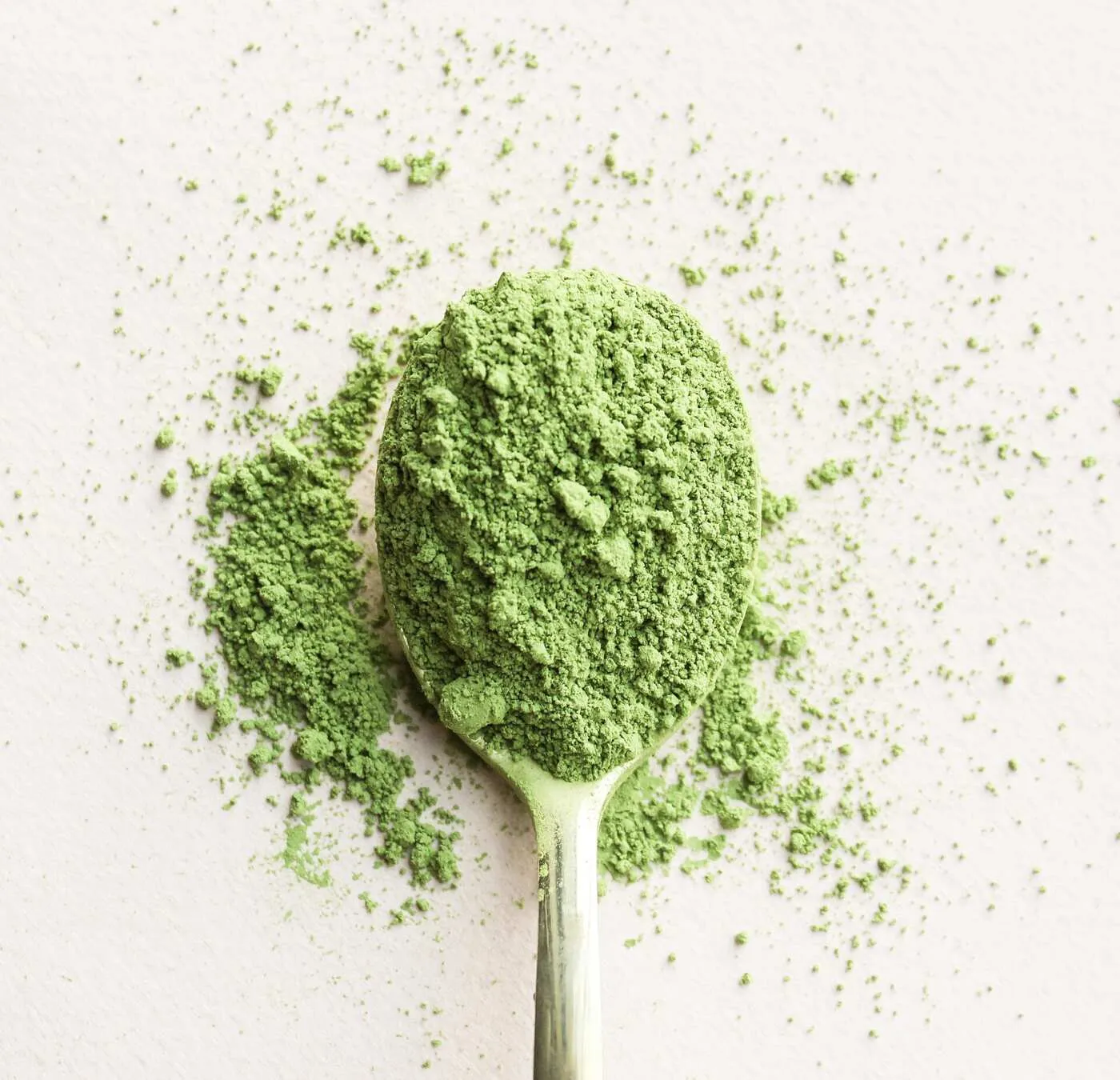 Photo: Evanhoever, CC BY-SA 4.0, via Wikimedia Commons
Traditional Japanese preparation (usucha, “thin tea”):
- Sift 1–2 g (approximately ½–1 teaspoon) of matcha through a fine mesh sieve into a bowl (chawan)
- Add 60–80 mL of water heated to approximately 70–80°C (not boiling, to preserve catechin stability and reduce bitterness)
- Whisk briskly in a W-shaped motion with a bamboo whisk (chasen) until a uniform froth forms (30–60 seconds)
- Consume immediately
Modern culinary preparations include adding matcha powder to lattes (mixing with heated milk or milk alternatives), incorporating into baked goods, blending into smoothies, and dissolving in cold water (cold brew matcha, which extracts catechins more slowly and may modestly reduce bitter taste).
Temperature matters: catechins degrade faster with prolonged exposure to near-boiling water, and very hot water also extracts more bitter polyphenols, reducing palatability.
Matcha latte preparations with milk: dairy proteins can bind EGCG, but the effect on absorption is contested. In a simulated-digestion study, adding bovine, soy or rice milk to green tea increased the share of catechins recovered after digestion rather than lowering it, and citrus juice raised recovery the most (Green et al., 2007).
For a blended preparation, see the matcha smoothie recipe.
Safety, Interactions, and Contraindications
Liver toxicity with high-dose EGCG supplements — important caution: Case reports have linked high-dose green tea extract supplements with hepatotoxicity, ranging from transient liver enzyme elevations to acute liver failure requiring transplantation. Liver injury has been reported mainly with green tea extracts in tablet or capsule form (NCCIH). The European Food Safety Authority (EFSA, 2018) concluded that intervention trials show EGCG doses of 800 mg/day or more taken as a food supplement significantly raise serum liver enzymes (transaminases) compared with controls. NCCIH reports no safety concerns for green tea drunk as a beverage by adults. Matcha delivers more EGCG than brewed tea, but 2–3 servings a day still stays below the 800 mg/day level at which EFSA found liver-enzyme rises. Individuals with hepatic conditions or taking hepatotoxic medications should consult their physician before using green tea extract supplements.
Caffeine-sensitive individuals: Matcha contains meaningful caffeine (38–88 mg per serving). Individuals sensitive to caffeine, those with anxiety disorders, cardiac arrhythmias, or insomnia, pregnant individuals, and children should moderate intake accordingly. The European Food Safety Authority considers habitual caffeine intakes up to 200 mg/day in pregnancy to raise no safety concern for the fetus (EFSA, 2015).
Iron absorption: Catechins, particularly EGCG and ECG, form poorly soluble complexes with non-heme iron (the plant-based form), and a green tea extract added to a meal reduced non-heme iron absorption in young women (Samman et al., 2001). In a small trial, drinking tea one hour after an iron-containing meal rather than with it roughly halved tea’s inhibitory effect (Ahmad Fuzi et al., 2017). Individuals with iron deficiency or iron-deficiency anemia may prefer to drink matcha between meals rather than with them.
Drug interactions:
- Warfarin: In a case report, a patient’s INR fell from 3.79 to 1.37 after he began drinking half a gallon to a gallon of green tea a day, and rose again when he stopped; the authors attributed this to the vitamin K in green tea, which counteracts warfarin (Taylor & Wilt, 1999). Because matcha is the whole leaf, people on warfarin should keep their intake steady and tell their clinician about large changes.
- Stimulant medications: Caffeine in matcha may add to the effects of amphetamines, methylphenidate, and other stimulants.
- Statins: In human studies, EGCG and green tea extract lowered blood levels of rosuvastatin (by about 19% with a single 300 mg EGCG dose; Kim et al., 2017) and atorvastatin (Abdelkawy et al., 2020), most likely by reducing their uptake in the gut. Patients on statins should mention green tea supplement use to their prescriber.
- Nadolol: In a small crossover study of 10 healthy volunteers, drinking 700 mL of green tea daily for 14 days cut plasma concentrations of the beta-blocker nadolol by about 85% and blunted its blood-pressure effect, possibly through inhibition of intestinal OATP1A2 uptake (Misaka et al., 2014).
Pregnancy and lactation: Moderate green tea or matcha consumption that keeps total caffeine under 200 mg/day is generally considered compatible with pregnancy, though data are limited; caffeine also passes into breast milk (NCCIH). Safety data for high-dose green tea extract supplements in pregnancy are lacking. In pregnant rats, catechins from green tea extract reached the placenta and fetus (Chu et al., 2006). EGCG inhibits the folate enzyme dihydrofolate reductase in lab assays, but about 670 mg/day of green tea catechins for three weeks did not lower plasma folate in a small trial in healthy men (Augustin et al., 2009).
Anxiety: The L-theanine in matcha may modulate caffeine-induced anxiety for some users, but individuals with significant anxiety disorders should be aware that caffeine content remains a potential trigger.
Product Selection Criteria
Grade and origin: “Ceremonial” and “culinary” are trade labels rather than standardized grades. Ceremonial-grade matcha (usually first harvest, ichibancha, from the shaded top leaves) tends to have more L-theanine and less bitterness; catechin content tends to be lower in well-shaded leaves. Culinary-grade matcha often uses later harvests or less-shaded leaves, producing a stronger, more astringent powder suitable for baking and lattes where a mild tea character is not required. For drinking straight, ceremonial or high-grade culinary matcha from reputable Japanese producers (Uji, Kyushu, Nishio) is preferable.
Color: High-quality matcha is a vivid, bright green. A dull, yellow-green, or brown tint suggests oxidation or lower chlorophyll content.
Packaging: Matcha oxidizes on exposure to air, light, and heat. Sealed tins with nitrogen flushing or vacuum packaging are preferred over bags without airtight closures. Refrigerate after opening and use within a few weeks.
Contaminant testing: Matcha can carry pesticide residues and heavy metals such as lead, and because the whole leaf is eaten, none of it is left behind with spent leaves as it is with brewed tea. USDA Organic certification addresses pesticide use but not heavy metals, so frequent consumers should look for published third-party lead results. For scale, FDA’s interim reference level for dietary lead is 8.8 µg/day for females of childbearing age and 2.2 µg/day for children (FDA).
Authenticity: Matcha is traditionally produced in Japan, though powdered green tea sold as matcha is also made in other countries, notably China. Products labeled “matcha flavor” or “matcha blend” may not contain authentic stone-ground shade-grown powder. Verify that the ingredient statement reads “matcha” or “green tea powder (matcha).”
For specific ceremonial, latte and culinary picks compared on origin, harvest and lead-testing disclosure, see the best matcha powder.
Frequently Asked Questions
What is matcha?
Matcha is a Japanese powdered green tea. The plants are shaded for three to four weeks before harvest, which raises chlorophyll, L-theanine and caffeine, and the leaves are then steamed, dried and stone-ground. Instead of being steeped and discarded, the powder is whisked into water or milk, so the entire leaf is consumed.
Does matcha have caffeine?
Yes. Matcha contains about 19–44 mg of caffeine per gram, or roughly 38–88 mg in a standard 2 g serving. That is more than a 200 mL cup of brewed green tea (about 24 mg) and similar to a single espresso shot (about 63 mg). Lattes made with two or more servings of powder contain proportionally more.
Is matcha good for you?
Matcha is a concentrated source of EGCG, L-theanine and caffeine. Small trials suggest the caffeine–L-theanine combination improves attention and alertness, and green tea meta-analyses show small reductions in LDL, blood pressure and fasting glucose. Matcha itself has few outcome trials, so most claims rest on green tea research, and effects are modest.
Is it OK to drink matcha every day?
For most healthy adults, daily matcha is generally considered compatible with a normal diet; NCCIH reports no safety concerns for green tea drunk as a beverage. Two to three servings a day stay below the 800 mg/day EGCG level where EFSA found liver-enzyme rises with supplements. Caffeine is the usual limit, especially in pregnancy (under 200 mg/day in total).
Is matcha better than green tea?
Matcha delivers more caffeine per serving and, because the whole leaf is consumed, more of the leaf’s compounds per gram of tea. Brewed green tea at standard strength, though, can supply a similar amount of catechins per cup. Green tea has the larger body of clinical research. Matcha also retains any lead or pesticide residue in the leaf.
How should you store matcha?
Matcha oxidizes on contact with air, light and heat, which dulls its color and flavor. Choose sealed tins with nitrogen flushing or vacuum packaging, refrigerate after opening, and use it within a few weeks. A vivid green color is a sign of freshness; a dull, yellowish or brown tint suggests oxidation.
References
Show all 30 referencesShow fewer
- Owen, G. N., Parnell, H., De Bruin, E. A., & Rycroft, J. A. (2008). The combined effects of L-theanine and caffeine on cognitive performance and mood. Nutritional Neuroscience, 11(4), 193–198.
- Dietz, C., & Dekker, M. (2017). Effect of green tea phytochemicals on mood and cognition. Current Pharmaceutical Design, 23(19), 2876–2905.
- Onakpoya, I., Spencer, E., Heneghan, C., & Thompson, M. (2014). The effect of green tea on blood pressure and lipid profile: a systematic review and meta-analysis of randomized clinical trials. Nutrition, Metabolism and Cardiovascular Diseases, 24(8), 823–836.
- Hartley, L., Flowers, N., Holmes, J., et al. (2013). Green and black tea for the primary prevention of cardiovascular disease. Cochrane Database of Systematic Reviews, (6), CD009934.
- EFSA Panel on Food Additives and Nutrient Sources added to Food (ANS), Younes, M., Aggett, P., et al. (2018). Scientific opinion on the safety of green tea catechins. EFSA Journal, 16(4), e05239.
- Liu, K., Zhou, R., Wang, B., et al. (2013). Effect of green tea on glucose control and insulin sensitivity: a meta-analysis of 17 randomized controlled trials. The American Journal of Clinical Nutrition, 98(2), 340–348.
- Misaka, S., Yatabe, J., Müller, F., et al. (2014). Green tea ingestion greatly reduces plasma concentrations of nadolol in healthy subjects. Clinical Pharmacology & Therapeutics, 95(4), 432–438.
- Unno, K., Furushima, D., Hamamoto, S., et al. (2018). Stress-reducing function of matcha green tea in animal experiments and clinical trials. Nutrients, 10(10), 1468.
- Kochman, J., Jakubczyk, K., Antoniewicz, J., Mruk, H., & Janda, K. (2020). Health benefits and chemical composition of matcha green tea: a review. Molecules, 26(1), 85.
- Weiss, D. J., & Anderton, C. R. (2003). Determination of catechins in matcha green tea by micellar electrokinetic chromatography. Journal of Chromatography A, 1011(1–2), 173–180.
- Koláčková, T., Kolofiková, K., Sytařová, I., et al. (2020). Matcha tea: analysis of nutritional composition, phenolics and antioxidant activity. Plant Foods for Human Nutrition, 75(1), 48–53.
- Kika, J., Jakubczyk, K., Ligenza, A., et al. (2024). Matcha green tea: chemical composition, phenolic acids, caffeine and fatty acid profile. Foods, 13(8), 1167.
- EFSA Panel on Dietetic Products, Nutrition and Allergies (NDA). (2015). Scientific opinion on the safety of caffeine. EFSA Journal, 13(5), 4102.
- Kim, T. E., et al. (2017). Effect of epigallocatechin-3-gallate, major ingredient of green tea, on the pharmacokinetics of rosuvastatin in healthy volunteers. Drug Design, Development and Therapy.
- Abdelkawy, K. S., et al. (2020). Effects of green tea extract on atorvastatin pharmacokinetics in healthy volunteers. European Journal of Drug Metabolism and Pharmacokinetics.
- Sano, T., Horie, H., Matsunaga, A., & Hirono, Y. (2018). Effect of shading intensity on morphological and color traits and on chemical components of new tea (Camellia sinensis L.) shoots under direct covering cultivation. Journal of the Science of Food and Agriculture.
- Lorenz, M., Paul, F., Moobed, M., et al. (2014). The activity of catechol-O-methyltransferase (COMT) is not impaired by high doses of epigallocatechin-3-gallate (EGCG) in vivo. European Journal of Pharmacology.
- Cheng, S., et al. (2017). Studies on the biochemical formation pathway of the amino acid L-theanine in tea (Camellia sinensis) and other plants. Journal of Agricultural and Food Chemistry.
- Dashwood, R., et al. (2025). L-theanine: from tea leaf to trending supplement — does the science match the hype for brain health and relaxation? Nutrition Research.
- Nathan, P. J., et al. (2006). The neuropharmacology of L-theanine (N-ethyl-L-glutamine): a possible neuroprotective and cognitive enhancing agent. Journal of Herbal Pharmacotherapy.
- Nobre, A. C., et al. (2008). L-theanine, a natural constituent in tea, and its effect on mental state. Asia Pacific Journal of Clinical Nutrition.
- Filippini, T., et al. (2020). Green tea (Camellia sinensis) for the prevention of cancer. Cochrane Database of Systematic Reviews.
- Green, R. J., et al. (2007). Common tea formulations modulate in vitro digestive recovery of green tea catechins. Molecular Nutrition & Food Research.
- Samman, S., et al. (2001). Green tea or rosemary extract added to foods reduces nonheme-iron absorption. The American Journal of Clinical Nutrition.
- Ahmad Fuzi, S. F., et al. (2017). A 1-h time interval between a meal containing iron and consumption of tea attenuates the inhibitory effects on iron absorption. The American Journal of Clinical Nutrition.
- Taylor, J. R., & Wilt, V. M. (1999). Probable antagonism of warfarin by green tea. Annals of Pharmacotherapy, 33(4), 426–428.
- Chu, K. O., et al. (2006). Pharmacokinetic studies of green tea catechins in maternal plasma and fetuses in rats. Journal of Pharmaceutical Sciences.
- Augustin, K., et al. (2009). Green tea extracts lower serum folates in rats at very high dietary concentrations only and do not affect plasma folates in a human pilot study. Journal of Physiology and Pharmacology.
- National Center for Complementary and Integrative Health. Green tea.
- U.S. Food and Drug Administration. Lead in food and foodwares.
Reviews
Product recommendations tied to this entry, selected by the criteria in our affiliate disclosure.
The Best Matcha Powder (2026): Ceremonial and Culinary Picks Compared
 Check price on Amazon on Amazon for Naoki Matcha Superior Blend, Ceremonial Grade, 100 g (opens in a new tab)
 Check price on Amazon on Amazon for Encha Organic Ceremonial Grade Matcha, First Harvest, 60 g (opens in a new tab)
 Check price on Amazon on Amazon for Ippodo Tea Hatsu Matcha, 40 g (opens in a new tab)
Compare all 6 picks →Affiliate links. Disclosure.
Related content
More in Teas & Beverages
- Black Tea (Camellia sinensis, fully oxidized)
Black tea vs green tea: how caffeine, catechins and L-theanine compare per cup, black tea benefits for heart health and alertness, and side effects.
- Green Tea (Camellia sinensis, unoxidized)
Does green tea have caffeine? Yes, about 24 mg per cup. How it compares with black tea and matcha, and the evidence on weight loss, blood sugar and heart.



Curated by Superfoods Advisor Editors·Last updated