
Green Tea (Camellia sinensis, unoxidized)
Camellia sinensis · also known as green tea, sencha, gyokuro, dragonwell, longjing, gunpowder tea, genmaicha, hojicha
By Superfoods Advisor Editors·July 3, 2026
Does green tea have caffeine? Yes, about 24 mg per cup. How it compares with black tea and matcha, and the evidence on weight loss, blood sugar and heart.
Yes, green tea has caffeine: USDA lists brewed green tea at about 24 mg per 200 mL cup, a little over half the roughly 40 mg in brewed black tea and below a single espresso shot (about 63 mg). Green tea is unoxidized tea from Camellia sinensis, and its other defining compounds are catechins, chiefly EGCG, and the amino acid L-theanine.
Green tea is produced from the leaves of Camellia sinensis var. sinensis or var. assamica, processed in a way that prevents the enzymatic oxidation that transforms green leaves into black tea. Immediately after harvest, the leaves are heated — either by pan-firing (the predominant Chinese method, producing teas such as Longjing and Gunpowder) or by steam treatment (the Japanese method, producing Sencha, Gyokuro, and the powdered form known as matcha) — which inactivates the polyphenol oxidases responsible for catechin polymerization. The resulting dried leaves retain a predominantly green color and a catechin-rich phytochemical profile that has made green tea one of the most extensively studied dietary plant compounds in biomedical research.
Green tea should be distinguished from matcha, which is a powdered shade-grown green tea in which the entire leaf is consumed in suspension rather than as a steeped infusion. Matcha’s catechin and L-theanine concentrations per serving are substantially higher than in brewed green tea (see the matcha encyclopedia entry for detailed coverage of matcha-specific evidence). This entry covers traditionally brewed green tea in its loose-leaf and bagged forms; for how it differs from the fully oxidized version of the same leaf, see the black tea entry.
Evidence at a glance
How Much Caffeine Is in Green Tea?
Green tea usually has less caffeine than black tea, matcha or espresso, but the amount varies widely with leaf, water temperature and steeping time. Shade-grown teas such as Gyokuro tend to run higher, and a second infusion of the same leaves carries less.
| Drink | Approximate caffeine |
|---|---|
| Brewed green tea, 200 mL (USDA) | ~24 mg (one 2025 analysis: ~11 mg) |
| Brewed black tea, 200 mL (USDA) | ~40 mg |
| Matcha, 2 g serving | ~38–88 mg |
| Espresso, 1 fl oz shot (USDA) | ~63 mg |
Black tea figures are from USDA as cited below; matcha and espresso figures are cited in the matcha entry.
Active Compounds
Green tea’s main bioactive compounds are catechins, L-theanine and caffeine, all extracted into the cup in amounts that depend heavily on brewing.
The defining characteristic of green tea is the preservation of its catechin pool — a subclass of flavanols (flavan-3-ols) that are largely destroyed by oxidation in black tea production.
EGCG (epigallocatechin-3-gallate) is the most abundant and most studied catechin in green tea, accounting for roughly half or more of total catechin content. USDA flavonoid data compiled by EFSA (2018), standardized to 1 g leaf per 100 mL of boiling water, average about 70 mg EGCG per 100 mL (roughly 140 mg per 200 mL cup), but individual samples ranged from about 2 to 203 mg per 100 mL depending on cultivar, growing region, season, and brewing conditions. EGCG carries a gallate ester group that imparts strong antioxidant capacity and, in laboratory studies, modulates multiple signaling pathways, including NF-κB (pro-inflammatory transcription factor), the PI3K/Akt/mTOR pathway implicated in cell proliferation, and AMPK (cellular energy sensor relevant to metabolic function).
Other catechins: In addition to EGCG, green tea contains epicatechin (EC), epigallocatechin (EGC), and epicatechin-3-gallate (ECG), as well as smaller amounts of their non-epi stereoisomers. In the same USDA data the major catechins together average about 130 mg per 100 mL, or roughly 260 mg per 200 mL cup brewed at that strength (EFSA, 2018), with wide variation by leaf and brewing method.
L-theanine is a non-protein amino acid found abundantly in tea leaves (Dashwood & Visioli, 2025). Theanine makes up about 2% of dry green tea leaf (EFSA, 2018), but only part of it reaches the cup: one HPLC analysis measured about 12.5 mg per 200 mL of brewed green tea (Ayakdaş et al., 2025). Shade-grown teas such as Gyokuro contain notably more (Unno et al., 2026). L-theanine can cross the blood-brain barrier, and some studies suggest it may increase alpha-wave brain activity associated with relaxation and attention, though findings are inconsistent; combined with caffeine, it may improve alertness and focus (Dashwood & Visioli, 2025).
Caffeine in brewed green tea averages about 24 mg per 200 mL cup in USDA FoodData Central, a little over half the roughly 40 mg in brewed black tea (USDA FoodData Central), but varies substantially by cultivar and brewing parameters; one 2025 analysis measured about 11 mg per 200 mL (Ayakdaş et al., 2025). Shade cultivation, as used for Gyokuro, raised both caffeine and theanine in new tea shoots in a Japanese field study (Sano et al., 2018).
Tannins in green tea bind to non-heme iron in the gastrointestinal tract and reduce its absorption when consumed with iron-containing foods. In a small isotope study, green tea extract added to a meal lowered non-heme iron absorption from 12.1% to 8.9%, a relative drop of about a quarter (Samman et al., 2001). The effect matters most for individuals at risk for iron deficiency.
Chlorophyll and amino acids: Green tea leaves contain chlorophyll, theanine, glutamate, and a range of volatile aroma compounds (including cis-3-hexenol and other green-note compounds) that contribute to flavor. Black tea processing degrades much of the chlorophyll and reshapes the aroma profile, but theanine survives: one analysis found similar amounts in brewed black and green tea (Ayakdaş et al., 2025).
Nutritional Profile
Per 200 mL brewed cup (about 2 g leaf). Values vary widely with leaf and brewing; sources are given in the text above:
| Component | Approximate Amount |
|---|---|
| Calories | ~2 kcal |
| Total catechins | ~260 mg (wide range) |
| EGCG | ~140 mg (wide range) |
| L-theanine | ~12 mg (more in shade-grown teas) |
| Caffeine | ~24 mg |
| Potassium | ~16 mg |
| Vitamin C | 0 mg |
Calories, caffeine, potassium, and vitamin C: USDA FoodData Central, “Beverages, tea, green, brewed, regular,” scaled from 100 g to 200 mL.
Evidence for Purported Benefits
Weight Management and Metabolic Rate
Evidence:Limited Meta-analyses of RCTs conflict; pooled effects are small and clinically minor as a sole intervention.
Green tea catechins — particularly EGCG — and caffeine are proposed to act together by inhibiting catechol-O-methyltransferase (COMT), an enzyme that breaks down norepinephrine, thereby prolonging adrenergic stimulation of thermogenesis and fat oxidation. A 2009 meta-analysis by Hursel et al. (International Journal of Obesity, 11 studies) found that catechins produced a small but significant reduction in body weight (approximately −1.31 kg) and helped maintain weight after a weight-loss period, with habitual caffeine intake and ethnicity possibly moderating the effect. A 2011 respiration-chamber meta-analysis by the same group (Obesity Reviews, 6 studies) found catechin–caffeine mixtures raised 24-hour energy expenditure by about 428 kJ (roughly 100 kcal) versus placebo, an increase matched by caffeine alone, while only the catechin–caffeine mixtures significantly increased fat oxidation (by about 16%). A 2012 Cochrane review by Jurgens et al. found that in trials conducted outside Japan, green tea preparations produced no meaningful weight loss over 12–13 weeks (−0.04 kg), while Japanese trials were too heterogeneous to pool.
Effect sizes are modest and unlikely to produce meaningful weight loss without concurrent dietary and physical activity changes. The caffeine component contributes meaningfully to thermogenic effects, making it difficult to isolate green tea polyphenols’ independent contribution. Green tea extract supplements can deliver far more EGCG than brewed tea (EFSA reports supplement doses ranging from 5 to 1,000 mg/day; EFSA, 2018), which introduces the safety concerns discussed in the contraindications section.
Blood Glucose and Insulin Sensitivity
Evidence:Moderate A meta-analysis of 17 RCTs found consistent but small reductions in fasting glucose and HbA1c.
A 2013 meta-analysis by Liu et al. (American Journal of Clinical Nutrition, 17 RCTs, n=1,133) found that green tea or green tea extract produced statistically significant reductions in fasting blood glucose (−0.09 mmol/L) and HbA1c (−0.30%); fasting insulin fell (−1.16 μIU/mL) only in the subgroup of higher-quality trials. Proposed mechanisms include EGCG-mediated GLUT4 translocation to muscle cell membranes (enhancing glucose uptake), inhibition of intestinal α-glucosidase (reducing postprandial glucose excursions), and reduction of hepatic gluconeogenesis via AMPK activation. The pooled human effects are small.
Cognitive Function and Neuroprotection
Evidence:Limited For acute attention: small crossover RCTs, at caffeine and L-theanine doses above what brewed tea supplies.
Evidence:Preliminary For neuroprotection: one cross-sectional study plus cell and animal work; no adequately powered human trials.
The caffeine–L-theanine combination in green tea may produce acute improvements in attention, working memory, and reaction time, as reported in small crossover RCTs. A 2008 double-blind crossover study by Haskell et al. (Biological Psychology) found that 150 mg caffeine combined with 250 mg L-theanine improved visual information processing accuracy, simple reaction time, numeric working memory speed, and sentence verification accuracy, and raised alertness ratings; L-theanine alone did not improve performance. These doses are well above what a few cups of brewed green tea provide, particularly for L-theanine.
A cross-sectional analysis of 1,003 Japanese adults aged 70 and older from the Tsurugaya Project (Kuriyama et al., 2006) found that drinking 2 or more cups of green tea daily was associated with a lower prevalence of cognitive impairment (odds ratio 0.46), with no comparable association for black or oolong tea or coffee. As a single-timepoint observational study, it cannot show cause and effect and is subject to confounding by diet and lifestyle.
EGCG’s preclinical profile — including protection against amyloid-beta aggregation (relevant to Alzheimer’s pathology) and inhibition of alpha-synuclein aggregation (relevant to Parkinson’s) in cell and animal models — has not been validated in adequately powered human RCTs.
Cardiovascular Risk Markers
Evidence:Moderate RCT meta-analyses show consistent modest LDL lowering and smaller blood pressure effects; no trial reported cardiovascular events.
A 2014 meta-analysis by Onakpoya et al. (Nutrition, Metabolism and Cardiovascular Diseases, 20 RCTs, 1,536 participants) found green tea intake reduced LDL cholesterol by approximately 0.19 mmol/L, total cholesterol by 0.13 mmol/L, and systolic blood pressure by 1.94 mmHg. A 2013 Cochrane review by Hartley et al. found larger reductions in LDL cholesterol (−0.64 mmol/L) and blood pressure with green tea, but only a few small trials contributed, the results were not stable in sensitivity analyses, and no trial reported cardiovascular events, so the authors judged the evidence limited.
Cancer Risk (Epidemiological)
Evidence:Insufficient Extensive cell work, but human data are inconsistent observational associations, and no trial has shown prevention.
Laboratory studies consistently show EGCG inhibiting proliferation and inducing apoptosis in a wide range of cancer cell lines via multiple pathways including PI3K/Akt, MAPK, and NF-κB. Population-level epidemiological data from East Asia — where green tea intake is highest — show some inverse associations with gastric, prostate, and colorectal cancer risk, but results are inconsistent across populations and study designs, and a 2020 Cochrane review judged the overall evidence limited (Filippini et al., 2020). The large gap between in vitro EGCG concentrations (often micromolar) and achievable plasma concentrations from dietary consumption remains a fundamental challenge in interpreting this literature.
Typical Use and Preparation
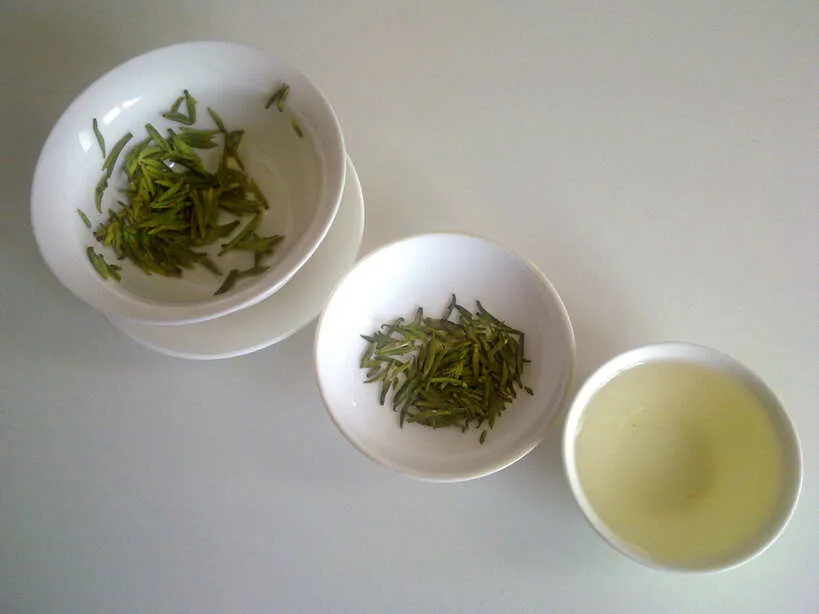 Photo: Alessandro Martini, CC0, via Wikimedia Commons
Brewed green tea is highly preparation-sensitive — overheating water is the most common quality mistake, because near-boiling water extracts catechins, especially the bitter gallated ones, faster (Mika et al., 2026) and produces a more astringent cup.
Japanese sencha: 70–80°C water, 1.5–2 g per 100 mL, steeped 60–90 seconds. Produces a grassy, umami-forward cup with moderate catechin extraction.
Chinese longjing / dragonwell: 75–85°C water, 2 g per 200 mL, steeped 2 minutes. Pan-firing gives a toasty, nutty profile.
Gyokuro: 50–60°C water, 4–5 g per 100 mL, steeped 60–90 seconds. Extreme shade-growing produces very high L-theanine (Unno et al., 2026) and a deeply savory, low-astringency cup.
Multiple infusions: High-quality loose-leaf green tea can be re-steeped 2–4 times. In an analysis of 17 loose-leaf green teas, a second infusion contained roughly the same EGCG and ECG as the first, while EGC, EC, caffeine, and especially theanine were lower (Zimmermann, 2025).
Addition of lemon or other vitamin C sources improves catechin stability (Mika et al., 2026); in a simulated-digestion study, citrus juice gave the highest catechin recovery of any additive, and milk also raised recovery (Green et al., 2007). Whether milk proteins reduce catechin absorption in people is debated.
The polyphenols and aging research review discusses green tea catechins alongside other dietary polyphenols, and the blood sugar and metabolic superfoods guide places green tea’s glucose findings next to other foods studied for metabolic markers.
Safety, Interactions, and Contraindications
Hepatotoxicity risk from concentrated extracts: High-dose green tea extract supplements have been associated with rare but serious hepatotoxicity in case reports. The European Food Safety Authority (EFSA, 2018) concluded that interventional trials show doses of 800 mg EGCG per day or more, taken as a food supplement, significantly raise serum liver enzymes compared with control. These concerns are substantially less relevant to normal dietary consumption of brewed tea, which EFSA estimates provides 90–300 mg EGCG per day for typical adult drinkers; EFSA considered traditionally prepared infusions generally safe, though rare, probably idiosyncratic, cases of liver injury have been reported.
Drug transporter interactions: Green tea catechins can inhibit intestinal drug-uptake transporters (OATPs), and in human studies this has lowered blood levels of some drugs rather than raised them. The largest documented effect is with the beta-blocker nadolol: in a small trial in healthy volunteers, drinking green tea (700 mL/day for 14 days) cut nadolol’s peak plasma concentration and overall exposure by about 85% and blunted its blood-pressure-lowering effect (Misaka et al., 2014). Smaller reductions have been reported for two statins. In a crossover trial, a single 300 or 600 mg dose of green tea extract lowered atorvastatin exposure by roughly a quarter (Abdelkawy et al., 2020). For rosuvastatin, 300 mg EGCG taken with the drug reduced exposure by 19% (Kim et al., 2017), and a green tea extract supplying 800 mg EGCG daily for 14 days significantly reduced it in another small trial (Zeng et al., 2022). These studies used extracts or large amounts of tea, so the effect of a cup or two is uncertain, but people taking these or other prescription medications should discuss regular green tea or extract use with their prescriber.
Iron absorption: Drinking green tea with iron-containing meals reduces non-heme iron absorption; in small isotope studies the drop was roughly a quarter to a third (Samman et al., 2001; Ahmad Fuzi et al., 2017). Individuals with iron deficiency, particularly those relying on plant-based iron sources, are advised to consume tea between rather than with meals.
Caffeine interactions: Green tea’s caffeine (about 24 mg per 200 mL cup) may add to the effects of theophylline, a related methylxanthine, and is often flagged for caution with monoamine oxidase inhibitors (MAOIs). The antibiotic ciprofloxacin inhibits caffeine’s breakdown by the liver enzyme CYP1A2; in healthy volunteers it lengthened caffeine’s half-life by more than half (Healy et al., 1989). Multiple cups per day may contribute meaningfully to total daily caffeine intake.
Pregnancy: Caffeine intake from green tea should be counted within the recommended limit of 200 mg/day during pregnancy (ACOG, 2010).
Anemia: The tannin-mediated reduction in non-heme iron absorption is clinically relevant for individuals with iron deficiency or those dependent on plant-based iron sources. In a small trial, drinking tea one hour after an iron-containing meal roughly halved tea’s inhibitory effect compared with drinking it with the meal (Ahmad Fuzi et al., 2017).
Frequently Asked Questions
How much caffeine is in a cup of green tea?
USDA lists brewed green tea at about 24 mg of caffeine per 200 mL cup, though one 2025 laboratory analysis measured about 11 mg. Hotter water, longer steeping, more leaf and shade-grown cultivars all raise the amount. Matcha, where the whole powdered leaf is drunk, supplies about 38–88 mg per 2 g serving.
Which tea has the least caffeine?
Among teas from Camellia sinensis, brewed green tea is usually lower in caffeine than black tea (about 24 mg versus 40 mg per 200 mL in USDA data), and matcha is usually the highest. Herbal infusions not made from the tea plant are usually sold as caffeine-free, but some blends add tea leaves, yerba mate or guarana, so check the label.
Can green tea help you lose weight?
Only slightly, if at all. A meta-analysis of 11 studies found catechins reduced body weight by about 1.3 kg, and catechin–caffeine mixtures raised 24-hour energy expenditure by about 100 kcal. A Cochrane review, however, found no meaningful weight loss in trials outside Japan. Green tea is not a substitute for changes to diet and activity.
Does green tea affect blood pressure?
Modestly. A meta-analysis of 20 randomized trials found green tea lowered systolic blood pressure by about 1.94 mmHg, along with small drops in LDL and total cholesterol. A Cochrane review found larger effects, but from few small trials, and no trial reported cardiovascular events. People on the beta-blocker nadolol should know green tea sharply lowered its blood levels in one trial.
Is green tea extract safe?
Brewed green tea is generally considered safe for adults. Concentrated extracts are different: EFSA concluded that 800 mg or more of EGCG a day as a supplement significantly raised liver enzymes in trials, and rare cases of serious liver injury have been reported. Typical tea drinkers get about 90–300 mg EGCG a day. People with liver conditions should consult their physician before using extracts.
References
Show all 26 referencesShow fewer
- Hursel, R., et al. (2009). The effects of green tea on weight loss and weight maintenance: A meta-analysis. International Journal of Obesity, 33(9), 956–961.
- Liu, K., et al. (2013). Effect of green tea on glucose control and insulin sensitivity: A meta-analysis of 17 randomized controlled trials. American Journal of Clinical Nutrition, 98(2), 340–348.
- Onakpoya, I., et al. (2014). The effect of green tea on blood pressure and lipid profile: A systematic review and meta-analysis of randomized clinical trials. Nutrition, Metabolism and Cardiovascular Diseases, 24(8), 823–836.
- Haskell, C. F., et al. (2008). The effects of L-theanine, caffeine, and their combination on cognition and mood. Biological Psychology, 77(2), 113–122.
- Kuriyama, S., et al. (2006). Green tea consumption and cognitive function: A cross-sectional study from the Tsurugaya project. American Journal of Clinical Nutrition, 83(2), 355–361.
- EFSA Panel on Food Additives and Nutrient Sources added to Food. (2018). Scientific opinion on the safety of green tea catechins. EFSA Journal, 16(4), e05239.
- Hartley, L., et al. (2013). Green and black tea for the primary prevention of cardiovascular disease. Cochrane Database of Systematic Reviews, (6), CD009934.
- Hursel, R., et al. (2011). The effects of catechin rich teas and caffeine on energy expenditure and fat oxidation: A meta-analysis. Obesity Reviews, 12(7), e573–e581.
- Jurgens, T. M., et al. (2012). Green tea for weight loss and weight maintenance in overweight or obese adults. Cochrane Database of Systematic Reviews, (12), CD008650.
- Samman, S., et al. (2001). Green tea or rosemary extract added to foods reduces nonheme-iron absorption. American Journal of Clinical Nutrition, 73(3).
- Ahmad Fuzi, S. F., et al. (2017). A 1-h time interval between a meal containing iron and consumption of tea attenuates the inhibitory effects on iron absorption. American Journal of Clinical Nutrition, 106(6), 1413–1421.
- Ayakdaş, G., et al. (2025). Determination of L-theanine and caffeine contents in tea infusions with different fermentation degrees and brewing conditions using the chromatographic method. Foods, 14(13), 2313.
- Zimmermann, B. F. (2025). Let’s have another cup of green tea! Heliyon.
- Mika, M., et al. (2026). Brewing conditions and post-brewing handling shape the catechin profile and stability of tea infusions. Food Chemistry.
- Unno, K., et al. (2026). Compositional diversity and functional interactions of bioactive compounds in Japanese green tea: Focus on matcha, sencha, and gyokuro. Molecules, 31(16), 2934.
- USDA FoodData Central. Beverages, tea, green, brewed, regular (FDC ID 171917).
- American College of Obstetricians and Gynecologists. (2010). Committee Opinion No. 462: Moderate caffeine consumption during pregnancy. Obstetrics & Gynecology, 116(2).
- Misaka, S., et al. (2014). Green tea ingestion greatly reduces plasma concentrations of nadolol in healthy subjects. Clinical Pharmacology & Therapeutics, 95(4).
- Abdelkawy, K. S., et al. (2020). Effects of green tea extract on atorvastatin pharmacokinetics in healthy volunteers. European Journal of Drug Metabolism and Pharmacokinetics.
- Kim, T. E., et al. (2017). Effect of epigallocatechin-3-gallate, major ingredient of green tea, on the pharmacokinetics of rosuvastatin in healthy volunteers. Drug Design, Development and Therapy.
- Zeng, W., et al. (2022). Effect of green tea extract and soy isoflavones on the pharmacokinetics of rosuvastatin in healthy volunteers. Frontiers in Nutrition.
- Dashwood, R., & Visioli, F. (2025). l-Theanine: From tea leaf to trending supplement - does the science match the hype for brain health and relaxation? Nutrition Research, 134, 39–48.
- Sano, T., et al. (2018). Effect of shading intensity on morphological and color traits and on chemical components of new tea (Camellia sinensis L.) shoots under direct covering cultivation. Journal of the Science of Food and Agriculture.
- Filippini, T., et al. (2020). Green tea (Camellia sinensis) for the prevention of cancer. Cochrane Database of Systematic Reviews.
- Green, R. J., et al. (2007). Common tea formulations modulate in vitro digestive recovery of green tea catechins. Molecular Nutrition & Food Research.
- Healy, D. P., et al. (1989). Interaction between oral ciprofloxacin and caffeine in normal volunteers. Antimicrobial Agents and Chemotherapy, 33(4).
Related content

More in Teas & Beverages
- Black Tea (Camellia sinensis, fully oxidized)
Black tea vs green tea: how caffeine, catechins and L-theanine compare per cup, black tea benefits for heart health and alertness, and side effects.
- Matcha Green Tea (Camellia sinensis, powdered)
Is matcha good for you? Matcha caffeine (38–88 mg a serving), EGCG and L-theanine, how it compares with green tea, the evidence on focus, and safety.


Curated by Superfoods Advisor Editors·Last updated