The Best Matcha Powder (2026): Ceremonial and Culinary Picks Compared
By Superfoods Advisor Editors·October 23, 2026
Top-ranked
 Check price on Amazon on Amazon for Naoki Matcha Superior Blend, Ceremonial Grade, 100 g (opens in a new tab)
 Check price on Amazon on Amazon for Encha Organic Ceremonial Grade Matcha, First Harvest, 60 g (opens in a new tab)
 Check price on Amazon on Amazon for Ippodo Tea Hatsu Matcha, 40 g (opens in a new tab)
Compare all 6 picks →Affiliate links. Disclosure.
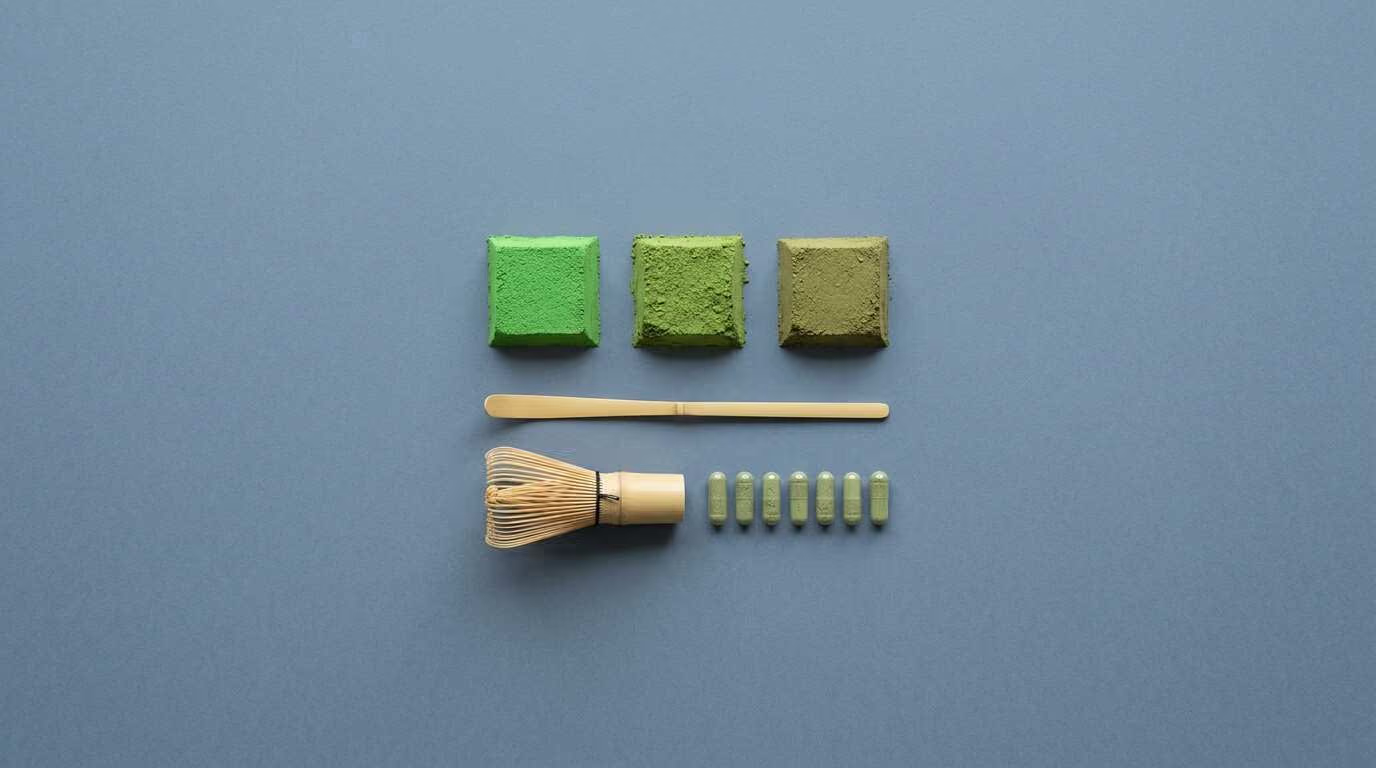
The best matcha powders compared on Japanese origin, honest grading, lead and radiation testing and freshness, from Uji ceremonial to culinary grade.
Top-ranked · 6 products compared
We earn a commission on purchases made through these links. It does not affect our rankings. See our affiliate disclosure.
| # | Product | Score | Details |
|---|---|---|---|
| 1 | | ||
| 2 | | ||
| 3 | | ||
| 4 |  Jade Leaf Matcha Jade Leaf Organic Ceremonial Matcha, Teahouse Edition, 30 g TinBest widely stocked organic | ||
| 5 |  | ||
| 6 |  Jade Leaf Matcha Jade Leaf Organic Culinary Grade Matcha, Second Harvest, 100 gBest for baking & smoothies |
1Naoki Matcha
Naoki Matcha Superior Blend, Ceremonial Grade, 100 g
First-harvest Uji matcha, milled shortly before it leaves Japan, in a 100 g bag that brings the per-gram cost down to latte-habit territory. Smooth enough to whisk straight, sturdy enough for milk. Testing is disclosed in words rather than numbers.
Strengths
- First-harvest leaf from Uji, Kyoto
- Milled shortly before export, then sealed
- 100 g bag lowers the per-serving cost
Trade-offs
- Lead and radiation results on request only
- Not certified organic
Ask where to start with matcha and Naoki's Superior Blend is the usual answer. The listing states shade-grown, first-harvest leaf from Uji, Kyoto, and says the tencha (the dried leaf before grinding) is milled shortly before it ships to the U.S., then sealed into airtight packets. Timing matters more for matcha than for most teas. Ground powder oxidizes fast, and a long gap between milling and opening is the usual reason a bag arrives dull and bitter.
Testing: Naoki says every crop is tested by third-party laboratories for radiation and heavy metals, with consistently negative results, and in an Amazon Q&A the brand named lead, cadmium, arsenic and mercury among the panel. A 2026 review by Balance Journal reports that Naoki rejects any lot above 0.25 µg of lead per gram (250 parts per billion), a limit it attributes to California's Prop 65. What Naoki does not do is publish the lab reports; you have to ask customer support. That is the main reason it does not score higher.
Grade and cost: the Superior Blend is not organic (Naoki's organic line is the separate First Spring Blend from Kagoshima). The 100 g bag is the size worth buying for daily use; at the brand's suggested 2 g per cup it is roughly 50 servings, which puts it among the lowest per-serving costs for a first-harvest Uji matcha on Amazon.
Amazon sentiment: about 4.5 stars across roughly 7,500 ratings for this bag size at the time of writing.
Reddit consensus: in r/Matcha, Naoki Superior is a common everyday tea. One member uses it "for my everyday lattes and it works well", another rotates it with Naoki's Yame blend for lattes and usucha because it is "approachable price wise", and a third called it "decent" before moving up to Ippodo. The picture is a solid daily matcha, not a showpiece, and that is what most buyers are shopping for.
2Encha
Encha Organic Ceremonial Grade Matcha, First Harvest, 60 g
USDA Organic first-harvest matcha from Uji farms Encha has bought from for over a decade. The brand publishes a lead and radiation statement; an independent single-bag test found lead at levels far below that threshold but still detectable.
Strengths
- USDA Organic first harvest from Uji
- Published lead and radiation statement
- Long-standing farm relationships in Uji
Trade-offs
- Independent test detected lead, cadmium, arsenic
- Brand statement is old and has no current numbers
Encha is for buyers who want organic and first harvest in the same bag, a pairing rarer than the labels in this category suggest. The listing says the leaf is picked each spring from certified organic farms in Uji that Encha has worked with for over a decade, then shade-grown and stone-ground. Plenty of organic matcha on Amazon is later-harvest powder, so an organic first harvest from a named region stands out.
Testing: Encha's safety page states that radioactivity has never been detected and that lead is not detected at the California Prop 65 level it cites (0.5 ppm). The statement is old, though, and comes with no current, numeric certificate of analysis. And in 2025 Tamara Rubin of Lead Safe Mama sent one bag to an independent lab and reported detectable lead, cadmium and arsenic. The two findings don't contradict each other. A test that reports "not detected" below 0.5 ppm cannot see lead at a few dozen parts per billion, and Rubin judges every result against the lead, cadmium, mercury and arsenic limits proposed for baby food in the Baby Food Safety Act of 2021, a bill that never became law. Those limits are far stricter than the ones usually applied to adult foods. Her result is also a single bag.
Amazon sentiment: about 4.4 stars across roughly 6,300 ratings at the time of writing.
Reddit consensus: Encha comes up far less in r/Matcha than Naoki or Ippodo; it is better known among buyers who shop by organic certification first.
3Ippodo Tea
Ippodo Tea Hatsu Matcha, 40 g
A light, brisk blend from a Kyoto tea house operating since 1717, the brand r/Matcha regulars tend to graduate to. Built for lattes and thin tea. The radiation record is long; heavy-metal results are not published.
Strengths
- Kyoto tea house, in business since 1717
- Radiation-tested every year from 2011
- Light, astringent blend made for lattes
Trade-offs
- Heavy-metal checks are random; no numbers
- Smaller rating base than the other picks
Ippodo is the reference point for r/Matcha: the tea house has blended in Kyoto since 1717, and its higher blends (Sayaka, Ummon) are the ones members talk about trading up to. Hatsu is the lightest of the range on Amazon. Ippodo describes it as refreshingly astringent, with the shortest, sharpest aftertaste in its lineup, and recommends it for lattes, thin tea (usucha) and baking. Skip it if you want a sweet, rich bowl of straight matcha. Under milk it holds up better than a delicate high-grade tea would.
Testing: Ippodo began testing its matcha, gyokuro, sencha and bancha for radiation through a third-party laboratory after the 2011 nuclear accident, once per harvest year, and states that nothing was found in any test after 2011; after roughly a decade it stopped the annual tests, noting that its plantations have not changed. For heavy metals, Ippodo's California page says a third party tests its teas at random for pesticide residue and heavy metals including lead, and the products carry a Prop 65 lead warning. No numbers are published.
It is not organic, and the 40 g size makes it the most expensive per gram of the latte-oriented picks. You are paying for the blender.
Amazon sentiment: about 4.2 stars across roughly 260 ratings. The Amazon base is small because most of Ippodo's buyers order direct.
Reddit consensus: loyalty is strong enough that a r/Matcha thread asking for Ippodo alternatives opens with "it pains me to ask". The recurring complaint is that the popular blends are often out of stock, which is one reason the Amazon listing for Hatsu is worth knowing about.
Check price on Amazon on Amazon for Ippodo Tea Hatsu Matcha, 40 g (opens in a new tab)
4Jade Leaf Matcha
Jade Leaf Organic Ceremonial Matcha, Teahouse Edition, 30 g Tin
One of the most widely stocked organic ceremonial matchas in the U.S., sourced from Uji and Kagoshima partner farms and tested by two U.S. labs. Easy to find and consistent; its stated lead detection limit is the loosest in this roundup.
Strengths
- USDA Organic, first-harvest ceremonial blend
- Two U.S. labs test each imported crop
- Included in ConsumerLab's 2024 tea review
Trade-offs
- Lead reported as not detected at 1 ppm
- 30 g tin is small for a daily habit
Jade Leaf is the matcha many Americans have already seen on a shelf, and the Teahouse Edition tin is its organic ceremonial tier. The brand buys from family-owned partner farms in Uji and Kagoshima, and the tin is certified USDA Organic. The listing describes the blend as first harvest with light, nutty notes.
Testing: in an Amazon Q&A, a Jade Leaf representative said each crop is tested by the farms and the imported matcha again by two independent U.S. labs (Anresco and Certified Laboratories), with lead, arsenic, cadmium and mercury "not detected" and radiation screens passed. The detail that matters is the detection limit of 1 ppm, the highest reported by any brand in this roundup. A 2 g serving of matcha at just under that limit could still carry close to 2 µg of lead, so "not detected" at that threshold says less than it sounds. ConsumerLab's 2024 green tea review included this exact product and reported that some green teas harbored small amounts of lead and arsenic, though the product-level results are members-only. Separately, a single-bag independent test of Jade Leaf's Barista Edition, a different product, detected lead, cadmium, mercury and arsenic.
Amazon sentiment: about 4.5 stars across roughly 8,000 ratings at the time of writing.
Reddit consensus: Jade Leaf comes up often in lead discussions, for example in this r/MatchaEverything thread. In taste threads it is usually framed as a reliable starter rather than a destination tea.
5DoMatcha
DoMatcha Organic Summer Harvest Matcha, Latte Grade, 80 g
An honestly labeled summer-harvest latte grade, Kagoshima-grown and JAS/JONA organic, packed in a vacuum-sealed tin with an oxygen absorber. Radiation-tested in Japan and again in a U.S. lab; lead stated as undetectable at 0.4 ppm.
Strengths
- Labeled summer harvest, not dressed up
- Radiation-tested in Japan and the U.S.
- Vacuum tin with an oxygen absorber
Trade-offs
- Earthier, more astringent than a ceremonial
- No lab reports posted; on request by email
DoMatcha is here for grade honesty. Plenty of latte matcha gets labeled "ceremonial" because the word sells. DoMatcha calls this one what it is: a summer harvest (formerly sold as "Organic 2nd Harvest"), picked later in the season, with more catechins and a more astringent, earthier flavor than a spring first harvest. Under milk, that astringency is what keeps the tea from disappearing.
Origin and certification: DoMatcha's FAQ says most of its matcha is grown in Kagoshima or Kyoto, with the organic line from Kagoshima. That puts it on Kyushu, roughly 1,150 km (about 700 miles) in a straight line from the Fukushima plant. The organic certification is JAS/JONA, which the brand describes as equivalent to U.S. and Canadian organic rules.
Testing: the producers test in Japan, and DoMatcha then sends the matcha to an Illinois lab that specializes in radiation testing; results are available by emailing the company. On lead, the FAQ states it is undetectable, "which means it's at most 0.4 parts per million". That is a tighter stated limit than Jade Leaf's 1 ppm, but it is still a ceiling, not a measurement.
Freshness: the tin is vacuum-sealed with an oxygen-absorbing pouch, and the brand recommends moving opened matcha out of the tin into the fridge.
Amazon sentiment: about 4.6 stars across roughly 890 ratings, the highest average in this roundup on a modest rating base.
Reddit consensus: we found little recent r/Matcha discussion of DoMatcha specifically; it is an older brand that predates the current wave of Uji-focused buyers.
6Jade Leaf Matcha
Jade Leaf Organic Culinary Grade Matcha, Second Harvest, 100 g
A labeled second-harvest culinary matcha, USDA Organic by CCOF, from Uji and Kagoshima farms. Too astringent to enjoy whisked with water, which is the point: it keeps its flavor in baking, smoothies and sweetened drinks.
Strengths
- Honestly labeled second harvest
- USDA Organic (CCOF), Uji and Kagoshima
- By far the largest Amazon rating base
Trade-offs
- Too astringent to drink with water alone
- Same 1 ppm lead detection limit as the tin
For baking, smoothies and anything sweetened, buy culinary matcha. Ceremonial prices there mostly pay for flavor the other ingredients bury. Jade Leaf's culinary grade gets the slot because it says second harvest on the label. The listing also states USDA Organic certification by CCOF and partner farms in Uji and Kagoshima.
What to expect: later-harvest leaf is more astringent and less sweet. Analysis of graded matcha bears this out. Toniolo et al. (2025, Plants) found amino acids (theanine among them) and caffeine falling from ceremonial to food grade while polyphenols rose. In a smoothie with banana or in a matcha cookie, that stronger, bitter-edged flavor is what stays noticeable.
Testing: the same brand-level disclosure as the Teahouse tin above. The farms test each crop, two U.S. labs test again, and lead is reported "not detected" at a 1 ppm limit. Culinary grades are often used generously (more than a teaspoon in a smoothie, or a tablespoon or more in a batch of baking), so the loose detection limit matters slightly more here than for a single 2 g bowl of thin tea.
Amazon sentiment: about 4.5 stars across roughly 84,000 ratings, far more than any other matcha in this roundup.
Reddit consensus: in r/Matcha, culinary grades are discussed as ingredients rather than teas. Members generally steer people to a ceremonial for straight drinking and accept a culinary grade like this one for baking.
The best matcha powder for most people is the Naoki Superior Blend: first-harvest Uji matcha in a 100 g bag that keeps daily use affordable, from a brand that says what it tests for. Encha is the organic option for drinking straight, Ippodo Hatsu the Kyoto tea-house blend for lattes, and Jade Leaf Culinary the one for baking and smoothies.
How we chose
Every product listing was confirmed live through Amazon’s product API, and every claim below comes from the brand’s own disclosures, the product listing, or a linked independent source. We did not run our own lab assays. We ranked the candidates on six criteria:
- Japanese origin and a named region. The established matcha regions are Uji (Kyoto), Nishio (Aichi), Yame (Fukuoka) and Kagoshima. A named region does not guarantee quality, but a missing one usually means a blend sourced wherever was cheapest. Every pick here names its origin.
- Harvest and grade honesty. “Ceremonial” is not a regulated term in the U.S., so we gave credit to brands that state the harvest (first, summer, second) and penalized latte-grade powder sold as ceremonial.
- Lead, heavy-metal and radiation testing disclosure. Matcha needs this more than other tea; the next section explains why. We looked for what is tested, how often, the detection limit, and whether numbers are published.
- Organic certification. USDA Organic or JAS/JONA. It addresses pesticide residue, not heavy metals.
- Freshness signals. Milling date relative to export, airtight or oxygen-absorber packaging, and a bag size you will finish before the powder fades.
- Cost per serving and customer sentiment. Amazon rating and approximate rating count at the time of writing, plus discussion in r/Matcha and related subreddits.
Why lead testing matters more for matcha
With loose-leaf or bagged green tea, the leaf is steeped and thrown away, and only part of what it holds ends up in the cup. With matcha you eat the whole leaf. Whatever the leaf took up from the soil comes along with the catechins, and tea plants do take up lead. In Schwalfenberg et al. (2013, J Toxicol), every one of 30 brewed bagged teas contained measurable lead, and most exceeded the authors’ preferred limits for pregnancy and lactation. ConsumerLab’s 2024 review likewise found small amounts of lead and arsenic in some green teas, which it described as minimal risk for most adults but a reason for pregnant women to be cautious.
The practical problem is that brand claims and independent tests are measuring different things. Brands in this roundup report lead as “not detected” at limits of 0.4 to 1 ppm (parts per million). Independent ICP-MS testing of single bags, such as Lead Safe Mama’s matcha series, measures down to parts per billion, judges results against limits proposed for baby food in a 2021 bill, and has reported detectable lead in single bags of brands including Encha and Jade Leaf; it has not yet found a matcha that tests non-detect for all four metals it screens. Both can be true at once. A reasonable reading: matcha from established Japanese growing regions is not lead-free. If a brand’s “not detected at 1 ppm” holds, a 2 g serving carries at most about 2 µg of lead, under a quarter of the FDA’s interim reference level of 8.8 µg a day for women of childbearing age but close to its 2.2 µg level for children. Anyone pregnant, breastfeeding or preparing matcha for children has good reason to limit intake and favor brands that publish numbers. A brand that will send you a numeric certificate of analysis is telling you more than one that says “not detected”.
Radiation is the other question buyers ask about, because of the 2011 Fukushima accident. Kyoto and Kagoshima are hundreds of miles from Fukushima, and the brands here that report radiation screening (Ippodo, DoMatcha, Naoki, Jade Leaf, Encha) all report no detections.
Ceremonial vs. culinary matcha
The difference comes down to chemistry. All matcha comes from shade-grown Camellia sinensis leaf, and shading raises theanine and chlorophyll, which is where the sweetness, umami and bright green color come from (Kochman et al. 2020, Molecules). The first spring harvest has the most of those compounds. Later harvests have more catechins and are more bitter and astringent. When Toniolo et al. (2025, Plants) compared a ceremonial grade, a mid grade and a food grade, amino acids and caffeine fell steadily from ceremonial to food grade while polyphenols rose.
- Ceremonial (first harvest): for drinking whisked with water. Sweeter, less bitter, vivid green. Naoki, Encha and the Jade Leaf Teahouse tin.
- Latte grade: built to keep its flavor under milk. Ippodo Hatsu and DoMatcha Summer Harvest.
- Culinary (later harvest): for baking, smoothies and sweetened drinks. Jade Leaf Culinary.
The cheaper grade is not simply a worse version: it has less theanine but more polyphenols, which is why it tastes stronger and is harder to drink straight.
On color and freshness: good matcha is a bright, almost electric green. Yellow, olive or brownish powder has oxidized or came from older leaf. Buy no more than you will use in about two months, keep opened matcha sealed in the fridge, and let it reach room temperature before opening so moisture does not condense on the powder.
How to prepare matcha (briefly)
- Thin tea (usucha): sift about 2 g (1 level teaspoon) into a bowl, add 60–80 mL of water at about 70–80 °C (not boiling), and whisk in a quick zigzag until foamy.
- Latte: whisk the matcha with a small amount of hot water first to dissolve the clumps, then add 150–200 mL of milk, hot or iced.
- Smoothie or baking: add culinary grade straight to the blender or dry ingredients. Our matcha smoothie for sustained morning energy uses about a teaspoon.
A note on health claims
Matcha contains caffeine, the amino acid L-theanine, and catechins such as EGCG. Because you consume the whole leaf, the catechin dose per gram is much higher than from steeped green tea: one analysis estimated EGCG availability from matcha at well above that of a brewed green tea (Weiss & Anderton 2003, J Chromatogr A), and composition varies widely between products (Koláčková et al. 2020, Plant Foods Hum Nutr). Human evidence on effects is limited and small-scale. A single-blind study of 23 adults reported modest improvements in attention speed after 4 g of matcha (Dietz et al. 2017, Food Res Int), and a randomized trial funded by a Japanese tea company reported better work performance under mild stress with daily matcha than with caffeine alone (Baba et al. 2021, Nutrients). None of this means matcha treats or prevents any condition. At roughly 19–44 mg of caffeine per gram (Kochman et al. 2020, Molecules), a 2 g serving carries about 38–88 mg, so count it toward your daily total.
FAQ
What is the best matcha powder for beginners?
A smooth first-harvest powder that also works in a latte. The Naoki Superior Blend fits that description and is a common starting point among r/Matcha members.
Is ceremonial grade worth it for lattes?
Only partly. A light or latte-grade blend (Ippodo Hatsu, DoMatcha Summer Harvest) is designed to hold its flavor under milk, and a delicate high-end ceremonial is mostly wasted there.
Does matcha contain lead?
Measurably, yes, as most tea does. Brands report it as “not detected” at limits between 0.4 and 1 ppm, while independent single-bag tests at parts-per-billion sensitivity have detected it in brands including Encha and Jade Leaf. Even at a 1 ppm limit, a 2 g serving stays well under the FDA’s interim reference level for adults (8.8 µg a day for women of childbearing age), but it comes close to the 2.2 µg level set for children, so pregnant people and children have more reason to limit intake.
Is organic matcha safer?
Organic certification addresses synthetic pesticides. It does not address heavy metals, which come mainly from the soil and the growing environment. Check the testing disclosure separately.
How long does matcha stay fresh?
Sealed and cold, months. Once opened, it is best used within about four to eight weeks. A bright green color is the simplest freshness check.
Is matcha powder green tea?
Yes. Matcha is green tea leaf (Camellia sinensis) that is shaded before harvest and then stone-milled into powder. Shading raises theanine and chlorophyll, which is where the sweetness and bright color come from. Because you whisk in and drink the whole leaf rather than steeping it, a cup of matcha delivers more catechins and caffeine per gram than brewed green tea.
How does matcha compare to coffee?
A 2 g serving of matcha carries roughly 38 to 88 mg of caffeine, against about 95 mg in an 8 oz cup of brewed coffee (USDA FoodData Central). Matcha also contains L-theanine. Small studies report modest effects on attention with matcha, but none show that it treats or prevents any condition.
Is Chinese matcha the same as Japanese matcha?
Not necessarily. Powdered green tea is made in several countries, but shading, grading and stone-milling standards differ. Every pick here is Japanese and names its growing region.
Related
- Encyclopedia: Matcha
- Encyclopedia: Green tea
- Recipe: Matcha smoothie for sustained morning energy
- Roundup: The best mushroom coffee
- Policy: Affiliate disclosure
References
Show all 9 referencesShow fewer
- Kochman J, Jakubczyk K, Antoniewicz J, et al. (2020). Health benefits and chemical composition of matcha green tea: a review. Molecules, 26(1), 85.
- Toniolo C, Patriarca A, De Vita D, et al. (2025). A comparative multianalytical approach to the characterization of different grades of matcha tea. Plants (Basel), 14(11), 1631.
- Koláčková T, Kolofiková K, Sytařová I, et al. (2020). Matcha tea: analysis of nutritional composition, phenolics and antioxidant activity. Plant Foods for Human Nutrition, 75(1), 48–53.
- Weiss DJ, Anderton CR. (2003). Determination of catechins in matcha green tea by micellar electrokinetic chromatography. Journal of Chromatography A, 1011(1–2), 173–180.
- Schwalfenberg G, Genuis SJ, Rodushkin I. (2013). The benefits and risks of consuming brewed tea: beware of toxic element contamination. Journal of Toxicology, 2013, 370460.
- Dietz C, Dekker M, Piqueras-Fiszman B. (2017). An intervention study on the effect of matcha tea, in drink and snack bar formats, on mood and cognitive performance. Food Research International, 99(Pt 1), 72–83.
- Baba Y, Inagaki S, Nakagawa S, et al. (2021). Effects of daily matcha and caffeine intake on mild acute psychological stress-related cognitive function in middle-aged and older adults: a randomized placebo-controlled study. Nutrients, 13(5), 1700.
- ConsumerLab.com (2024). ConsumerLab tests identify less EGCG and lead and arsenic in some green tea products.
- U.S. Food and Drug Administration. Lead in food and foodwares (interim reference levels for dietary lead).
Read the underlying research in the encyclopedia entry.
By Superfoods Advisor Editors·Published October 23, 2026