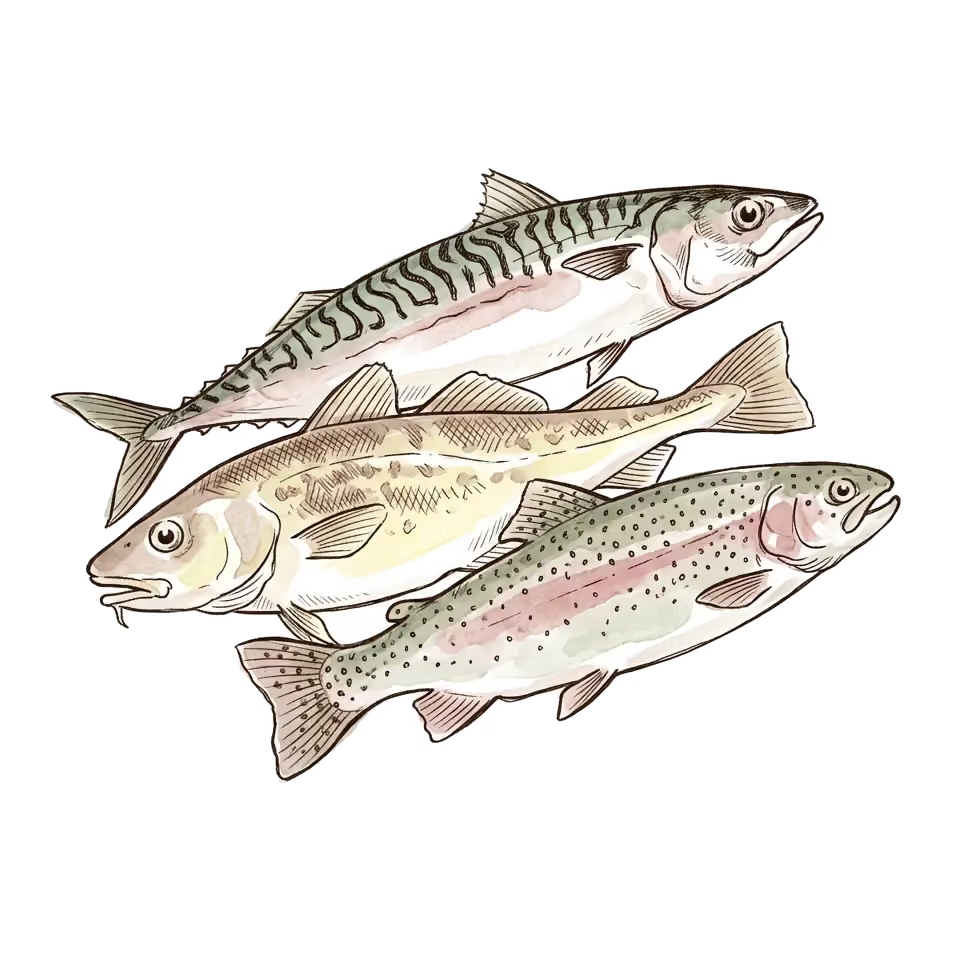
Wild-Caught Fish
By Superfoods Advisor Editors·July 3, 2026
Wild-caught vs farm-raised fish: omega-3s by species, FDA mercury tiers from swordfish to sardines, PCBs, sustainability and how much fish to eat a week.
Wild-caught fish are finfish harvested from oceans, estuaries, rivers and lakes rather than raised in aquaculture. Neither wild nor farm-raised fish is uniformly healthier: species matters more. Farmed Atlantic salmon carries more EPA and DHA than wild Atlantic salmon (about 2.0 g vs 1.4 g per 100 g raw), while mercury ranges from 0.013 ppm in sardines to about 1 ppm in swordfish.
The category encompasses an enormous diversity of species — from pelagic schooling fish such as herring, sardines, and mackerel that feed on plankton near the ocean surface, to large apex predators such as tuna, swordfish, and shark that occupy the top of the marine food chain, to bottom-dwelling demersal species such as cod, halibut, and sole. Global capture fisheries have landed roughly 86–93 million tonnes of aquatic animals a year since the late 1980s (90.3 million tonnes in 2020, finfish making up about 85% of the marine catch), with China, Indonesia, Peru, India, Russia, and the United States among the largest producers (FAO, 2022). Counting wild and farmed seafood together, aquatic foods supply at least 20% of animal-protein intake for about 3.3 billion people, making them one of the most important single food categories in human nutrition.
From a nutritional perspective, wild-caught fish as a category shares several characteristics: they are complete protein sources, they provide varying amounts of the long-chain omega-3 fatty acids EPA (eicosapentaenoic acid) and DHA (docosahexaenoic acid) depending on species and fat content, they are important sources of selenium and iodine, and they represent one of the few non-meat dietary sources of vitamin D. At the same time, the category presents nuances that matter for frequent consumers: mercury content varies by orders of magnitude across species; persistent organic pollutants (PCBs, dioxins) accumulate in fatty fish to concentrations that warrant monitoring; and global fisheries sustainability varies widely by species, region, and certification status. This overview entry covers the key nutritional, safety, and sustainability considerations for wild-caught fish as a category. Individual species have their own entries: salmon, sardines and anchovies.
Evidence at a glance
Active Compounds and Nutritional Profile
EPA and DHA — by species category
The defining nutritional feature of oily fish is their content of long-chain omega-3 fatty acids (LC-PUFAs) EPA and DHA, which are synthesized by marine phytoplankton and algae and bioconcentrate up the food chain. The amount of EPA+DHA per 100 g varies dramatically by species and fat content. Figures below are USDA FoodData Central values for raw fish unless noted:
Very high (>2.0 g EPA+DHA per 100 g): Atlantic mackerel (~2.3 g; USDA FoodData Central).
High (1.0–2.0 g EPA+DHA per 100 g): farmed Atlantic salmon (~2.0 g; USDA), Atlantic herring (~1.6 g; USDA), European anchovy (~1.5 g; USDA), wild Atlantic salmon (~1.4 g; USDA), sablefish/black cod (~1.4 g; USDA), bluefin tuna (~1.2 g; USDA), wild coho salmon (~1.1 g; USDA).
Moderate (0.3–1.0 g EPA+DHA per 100 g): Atlantic sardines canned in oil, drained (~1.0 g; USDA), albacore (white) tuna canned in water (~0.9 g; USDA), sockeye salmon (~0.7 g; USDA), rainbow trout (~0.6–0.7 g; USDA wild, farmed), pink salmon (~0.5 g; USDA), Atlantic pollock (~0.4 g; USDA), snapper (~0.3 g; USDA).
Low (<0.3 g EPA+DHA per 100 g): flounder/sole (~0.24 g; USDA), light tuna canned in water (~0.2 g; USDA), halibut (~0.2 g; USDA), Atlantic cod (~0.2 g; USDA), Alaska pollock (~0.2 g; USDA), haddock (~0.1 g; USDA), tilapia (~0.1 g; USDA).
This variability means that choosing species matters significantly when fish is consumed specifically for omega-3 intake. Fatty, small-to-medium-sized pelagic fish — sardines, mackerel, herring, anchovies — deliver among the highest EPA+DHA per serving at the lowest environmental contaminant burden (see mercury section).
Protein and amino acid profile: All finfish are complete protein sources providing all essential amino acids. Protein content of common white-fleshed fish is approximately 16–20 g/100 g raw (haddock ~16 g, cod ~18 g, tilapia ~20 g); oily fish are similar in protein (about 18–20 g/100 g for mackerel, herring, and salmon) but higher in total fat, yielding higher caloric density (USDA FoodData Central). Fish muscle protein is highly digestible and is generally regarded as high-quality protein.
Selenium: Seafood and organ meats are the richest food sources of selenium (Linus Pauling Institute). Content varies by species and ocean origin but ranges from roughly 25–35 µg/100 g in lean whitefish such as haddock and cod to about 65–90 µg/100 g in tuna (canned albacore ~66 µg, fresh yellowfin ~91 µg; USDA). Selenium and mercury may interact in a biologically relevant way: selenium binds mercury with high affinity and may partially offset mercury toxicity by reducing bioavailable methylmercury. The molar selenium-to-mercury ratio (Se:Hg) has been proposed as a more meaningful safety metric than mercury concentration alone for species with both high selenium and high mercury (e.g., some tuna species have Se:Hg ratios substantially above 1.0, which may partially mitigate mercury risk — though this hypothesis remains under research and does not override established mercury exposure guidelines for vulnerable populations).
Vitamin D: Wild-caught fatty fish are among the few naturally occurring dietary sources of vitamin D3 (cholecalciferol). USDA lists raw salmon at roughly 9–14 µg (360–565 IU) per 100 g, with sockeye at the higher end (USDA); Atlantic mackerel at about 16 µg (USDA); canned sardines at about 5 µg (USDA); and Atlantic herring at about 4 µg (USDA). Lean whitefish vary, from under 1 µg in cod and haddock to roughly 3–5 µg in tilapia and halibut. Fatty fish are one of the few foods that supply meaningful vitamin D without fortification.
Iodine: Fish are a major dietary iodine source. Lean whitefish such as cod are particularly iodine-rich: a 3-ounce serving of cod provides about 146 µg, close to the adult RDA of 150 µg, though iodine content varies considerably between samples (Linus Pauling Institute). Oily fish tend to contain less iodine per gram than lean species. Iodine is essential for thyroid hormone synthesis; dietary deficiency causes goiter, hypothyroidism, and developmental impairment.
B12, niacin, phosphorus: Most fish are good sources of vitamin B12 (about 1–14 µg/100 g raw across the species listed above), niacin (from under 1 mg in snapper to about 18 mg/100 g in yellowfin tuna), and phosphorus (roughly 170–280 mg/100 g raw for most species), per USDA FoodData Central. These nutrients contribute meaningfully to B-vitamin and mineral adequacy within diets that include regular fish consumption.
Evidence for Purported Benefits
Cardiovascular Risk Reduction
Evidence:Moderate Cohorts consistently link fish to lower cardiac death; trials agree on triglyceride reduction but conflict on cardiac events.
The prospective observational evidence linking fish consumption to reduced cardiovascular mortality is among the most consistent in nutritional epidemiology. A 2006 review and meta-analysis by Mozaffarian and Rimm (JAMA), drawing on prospective studies and randomized trials, concluded that modest fish consumption (one to two servings per week), especially of species higher in EPA and DHA, was associated with a 36% lower risk of coronary death (95% CI 20–50%) and a 17% lower total mortality compared to little or no fish consumption, with the greatest benefit in the transition from no consumption to modest consumption. A meta-analysis of 13 cohorts found a similar inverse association between fish intake and coronary death (He et al., 2004).
The mechanisms are plausible and partially confirmed by clinical trials: EPA and DHA at 4 g/day reduce triglycerides by 30% or more in people with very high triglycerides (Skulas-Ray et al., 2019); reduce platelet aggregation; modestly lower blood pressure (systolic reduction of ~2 mmHg at a median 3.7 g/day of fish oil in a meta-regression of 36 trials; Geleijnse et al., 2002); and compete with arachidonic acid for eicosanoid synthesis, shifting the prostaglandin/thromboxane profile toward less pro-aggregatory and less vasoconstrictive products.
The REDUCE-IT trial (Bhatt et al., 2019, New England Journal of Medicine, n=8,179 statin-treated patients with elevated triglycerides) found a 25% relative risk reduction in major adverse cardiovascular events with high-dose icosapent ethyl (purified EPA ethyl ester, 4 g/day), though some researchers have argued the mineral oil placebo may have inflated the apparent benefit. The STRENGTH trial (Nicholls et al., 2020, JAMA, n=13,078), which used 4 g/day of a mixed EPA/DHA carboxylic acid formulation against a corn oil comparator, found no benefit (HR 0.99) and was stopped early for futility. The American Heart Association advises one to two seafood meals per week for cardiovascular health (Rimm et al., 2018).
Cognitive Function and Neurodevelopment
Evidence:Moderate For fetal brain development: DHA is required, and regulators advise regular low-mercury fish in pregnancy.
Evidence:Insufficient For extra prenatal supplementation and adult cognitive decline: randomized trials show few or no benefits despite favourable cohort data.
DHA is the predominant omega-3 fatty acid in the central nervous system and retina (Singh, 2005). DHA supply during the third trimester and early infancy is needed for normal brain and visual development, and the FDA/EPA and the European Food Safety Authority (EFSA, 2014) both advise pregnant women to eat low-mercury fish regularly. DHA accumulates in the fetal brain primarily during the third trimester, and some prospective cohort studies have associated lower maternal DHA status with poorer cognitive and visual outcomes in children. Randomized trials of omega-3 supplements in pregnancy, however, found few differences in child cognition, IQ, vision, or other neurodevelopmental outcomes (Middleton et al., 2018).
For cognitive aging in adults, prospective cohort studies have associated higher fish consumption with slower cognitive decline and reduced dementia risk; in the Chicago Health and Aging Project, for example, adults 65 and older who ate fish once a week or more declined 10–13% more slowly over six years than those eating fish less than weekly, though omega-3 intake itself was not clearly associated with cognitive change (Morris et al., 2005, Archives of Neurology), but randomized controlled trials of omega-3 supplementation in cognitively normal older adults have generally shown modest or non-significant effects on cognition. The observational-interventional gap may reflect confounding in observational studies, the importance of lifelong dietary patterns versus short-term supplementation, or inadequate duration of trials.
Depression and Mental Health
Evidence:Limited Fish intake links to lower depression risk in observational data; omega-3 trials in major depression show modest, heterogeneous effects.
A cross-national ecological analysis found an inverse correlation between fish consumption and depression prevalence (Hibbeln, 1998), and a meta-analysis of 26 observational studies associated the highest fish intake with lower depression risk (Li et al., 2016). A meta-analysis of 13 omega-3 supplementation trials in major depressive disorder found a modest reduction in depressive symptoms, with larger effects at higher EPA doses and in people already taking antidepressants; heterogeneity between trials was high (Mocking et al., 2016, Translational Psychiatry). Omega-3s are not established antidepressants but may have an adjunctive role.
Mercury — Understanding the Hierarchy
Mercury in fish depends mainly on species size, lifespan and position in the food chain, not on whether the fish is wild or farmed. Mercury enters aquatic ecosystems mainly as inorganic mercury from industrial emissions (coal combustion, artisanal gold mining) and natural sources; microbes in low-oxygen sediments and waters convert part of it to methylmercury (Driscoll et al., 2013), which bioaccumulates in fish through the food chain, concentrating in species that are large, long-lived, and top predators. The U.S. FDA and EPA classify fish into three mercury tiers for public health guidance (FDA/EPA advice). Mercury figures below are mean total mercury from FDA monitoring, 1990–2012 (FDA):
Choices to Avoid (highest mercury; FDA/EPA advise those covered by the advice, including pregnant women and children, to avoid them):
- Swordfish (~1.0 ppm)
- Shark (~0.98 ppm)
- King mackerel (~0.73 ppm)
- Tilefish from the Gulf of Mexico (~1.12 ppm, the highest mean in the FDA table)
- Orange roughy (~0.57 ppm)
- Bigeye tuna (~0.69 ppm)
Good Choices (moderate mercury — limit to 1 serving per week for pregnant women/children):
- Albacore/white tuna, canned (~0.35 ppm)
- Yellowfin tuna (~0.35 ppm)
- Halibut (~0.24 ppm)
- Grouper (~0.45 ppm)
- Chilean sea bass (~0.35 ppm)
Best Choices (lowest mercury — 2–3 servings per week acceptable):
- Salmon (wild and farmed) — (~0.022 ppm)
- Sardines (~0.013 ppm)
- Anchovies (~0.016 ppm)
- Atlantic mackerel (~0.050 ppm)
- Herring (~0.078 ppm)
- Pollock (~0.031 ppm)
- Tilapia (~0.013 ppm)
- Catfish (~0.024 ppm)
- Cod (~0.111 ppm)
The physiological concern with methylmercury is its neurotoxicity, particularly for the developing fetal and infant brain. Methylmercury crosses the blood-brain barrier and blood-placental barrier, and prenatal exposure above threshold levels is associated with measurable deficits in cognitive development. The FDA/EPA guidance is therefore most stringent for pregnant women, women of childbearing age, nursing mothers, and young children.
For adults, the health effects of low-level methylmercury are not clearly established, and a 2006 review concluded that the benefits of fish intake exceed the potential risks; it advised people eating five or more servings a week to limit the highest-mercury species (Mozaffarian & Rimm, 2006). Prudent dietary strategy favors frequent consumption from the low-mercury “Best Choices” category rather than relying on high-mercury species for omega-3 intake.
Wild-Caught vs. Farm-Raised Fish: PCBs and Dioxins
The wild-versus-farmed contaminant gap is real for some species but has narrowed: farmed Atlantic salmon carried more PCBs and dioxins than wild Pacific salmon in a 2004 analysis, and later surveillance found those levels falling as feed changed. Omega-3 content and vitamin D also differ between wild and farmed salmon; the salmon entry covers those figures.
Polychlorinated biphenyls (PCBs) and dioxins are persistent organic pollutants that bioaccumulate in fatty tissues of fish. Farmed Atlantic salmon in particular has been highlighted in analyses as having higher PCB concentrations than wild Pacific salmon, attributed to PCB contamination in the fishmeal used as feed in aquaculture operations. A frequently cited 2004 analysis (Hites et al., 2004, Science) found that farmed salmon contained significantly higher concentrations of PCBs, toxaphene, and other organochlorine compounds than wild Pacific salmon, and proposed that these levels could limit safe consumption frequency.
The picture has become more complex with time. In more than 2,300 Norwegian surveillance samples from 1999 to 2011, dioxins, dioxin-like PCBs, mercury, and DDT in farmed salmon fell, while the indicator PCB6 group stayed stable; at 2011 levels, dioxin and dioxin-like PCB intake would reach the tolerable weekly intake only at about 1.3 kg of salmon a week (Nøstbakken et al., 2015). The decline is commonly attributed to replacing fishmeal and fish oil in feed with plant ingredients. Wild-caught small pelagic fish — sardines, herring, anchovies — generally carry lower PCB concentrations than long-lived predators because of their short lifespan and lower trophic position, though levels depend on where they are caught.
For consumers, the practical guidance is:
- Wild-caught, small oily fish (sardines, anchovies, herring, mackerel) present the best combination of high omega-3 content, very low mercury, and low PCB burden.
- Wild Pacific salmon offers good omega-3 content (higher in coho than in sockeye or pink) with low mercury, though some PCB and dioxin content is detectable.
- The AHA recommendation of at least two servings of fatty fish per week for cardiovascular benefit was formulated on the basis that the cardiovascular benefit of omega-3 fatty acids from fish outweighs contaminant risks for most adults when consumption patterns emphasize lower-mercury, lower-PCB species.
Sustainability Considerations and MSC Certification
About 35% of assessed global fish stocks were fished at biologically unsustainable levels in 2019, according to the Food and Agriculture Organization (FAO, 2022). Several commercially important species — Atlantic bluefin tuna, many shark species, orange roughy, and some Pacific groundfish — have been significantly depleted by overfishing. Conversely, well-managed stocks exist: Alaskan pollock, Atlantic mackerel (in some regions), and various salmon species managed under the Pacific Salmon Treaty. Stocks also swing naturally: the U.S. Pacific sardine stock is currently classed as overfished and its directed fishery is closed (NOAA Fisheries).
The Marine Stewardship Council (MSC) certification provides the most widely recognized independent standard for sustainable wild fisheries. MSC-certified fish have been assessed against criteria including stock sustainability, ecosystem impact, and effective fisheries management. Choosing MSC-certified products when available provides some assurance of sustainable sourcing, though coverage of global fisheries by MSC certification is incomplete and some critics have raised concerns about MSC certification rigor in specific cases.
From both sustainability and nutritional perspectives, small pelagic fish (sardines, anchovies, herring, mackerel) occupy an optimized position: they feed low in the marine food chain, reproduce rapidly, are typically more sustainable than apex predators, and offer the highest EPA+DHA content per unit of mercury exposure.
Typical Use and Preparation
 Photo: User:Mattes, public domain, via Wikimedia Commons
Two servings per week recommendation: The American Heart Association (AHA) recommends eating fish (particularly fatty fish) at least two times per week, with a serving defined as approximately 100 g (3.5 oz) of cooked fish. The FDA echoes this guidance for the general population and specifically encourages pregnant women to consume 8–12 ounces (227–340 g) of lower-mercury fish per week for fetal development benefits (FDA/EPA advice).
Oily vs. lean fish: Oily fish (salmon, mackerel, herring, sardines, anchovies, trout) are the primary dietary delivery vehicles for EPA and DHA. Lean white fish (cod, halibut, sole, tilapia, pollock) are excellent protein sources and provide iodine and selenium but contribute minimally to omega-3 intake; two weekly servings of only lean whitefish would not meet the omega-3 targets associated with cardiovascular benefit.
Cooking methods: Most cooking methods (baking, broiling, grilling, steaming, poaching) preserve omega-3 content well. Deep frying in high-omega-6 vegetable oils may partially oxidize omega-3s and replaces their caloric contribution with omega-6-rich fats; breaded and fried fish preparations are less favorable for omega-3 delivery.
Canned and preserved options: Canned sardines, anchovies, salmon, and tuna represent accessible, affordable, and shelf-stable ways to meet fish intake targets. Wild-caught specifications apply: canned wild Pacific salmon (including bones, which are edible and provide calcium) is a cost-effective option. Canned light tuna (skipjack) has lower mercury than albacore/white tuna and is in the “Best Choices” category.
Raw preparations: Sushi, sashimi, ceviche, and other raw or minimally cooked fish preparations carry risk of bacterial contamination (Vibrio, Salmonella, Listeria) and parasite transmission (Anisakis and related nematodes). Fish intended for raw consumption is typically frozen beforehand, which kills most parasites. Pregnant women, immunocompromised individuals, and young children should avoid raw or undercooked fish.
Our review of EPA and DHA research goes through the trial evidence for the omega-3s that oily fish supply.
Safety, Interactions, and Contraindications
Mercury and vulnerable populations: Pregnant women, women planning pregnancy, nursing mothers, and young children (up to age 11) should follow the FDA/EPA guidance to consume 8–12 oz (adults) or 4–6 oz (children age 4–7) per week from the “Best Choices” category, limit “Good Choices” to 1 serving per week, and avoid the species on the FDA/EPA “Choices to Avoid” list (king mackerel, marlin, orange roughy, shark, swordfish, tilefish from the Gulf of Mexico, and bigeye tuna). These guidelines reflect the priority of protecting fetal and infant neurological development from methylmercury exposure.
Anticoagulant interactions: At high supplemental doses, omega-3 fatty acids can inhibit platelet aggregation and may add to the effects of warfarin and other blood thinners. Dietary fish intake is far below supplemental doses, and a small trial of 3–6 g/day fish oil found no significant change in INR in patients on stable warfarin (Bender et al., 1998). Patients on anticoagulants who wish to substantially increase fish intake or use fish oil supplements should notify their prescribing clinician.
Fish allergy: Finfish allergy is distinct from shellfish allergy; a nationally representative US survey estimated it at about 0.9% of adults (Gupta et al., 2019). The primary allergen is parvalbumin, highly conserved across bony fish species, meaning cross-reactivity among different fish species is common. Individuals with documented fish allergy may react to multiple species. Finfish allergy can cause anaphylaxis and should be managed with epinephrine autoinjector availability in documented cases.
Gout and hyperuricemia: Some oily fish, notably anchovies, sardines, and herring, are high in purines. In a 12-year cohort of 47,150 men, the highest quintile of seafood intake was associated with a higher risk of gout (RR 1.51), similar to the association for meat (RR 1.41) (Choi et al., 2004). Individuals with gout or hyperuricemia are often advised to limit high-purine seafood.
Oxidation of omega-3-rich fish: The high PUFA content of fatty fish makes them susceptible to lipid oxidation, which generates off-flavors and rancid odors and may produce pro-oxidant compounds. Fresh fish should be consumed promptly and stored at proper refrigeration temperatures. Canned fish stored beyond the best-by date may have oxidized fats.
Frequently Asked Questions
What is wild-caught fish?
Wild-caught fish are finfish harvested from natural waters (oceans, estuaries, rivers and lakes) rather than raised on fish farms. The label covers everything from small plankton-eating species such as sardines and herring to large predators such as tuna and swordfish, so nutrition and mercury vary widely within the category.
Is wild-caught fish better than farm-raised?
Not across the board. Farmed Atlantic salmon is fattier and lists more EPA and DHA per 100 g than wild Atlantic salmon, though, as the salmon entry details, farmed salmon’s omega-3 levels have fallen as plant oils replaced fish oil in feed. Farmed salmon historically carried more PCBs and dioxins, which declined in later Norwegian surveillance. Choosing low-mercury species matters more than the wild or farmed label.
Does wild-caught fish have mercury?
All fish contain some mercury, but levels differ by orders of magnitude. FDA monitoring found means of about 0.013 ppm in sardines, 0.016 ppm in anchovies and 0.022 ppm in salmon, against roughly 1 ppm in swordfish and 1.12 ppm in Gulf of Mexico tilefish. Large, long-lived predators accumulate the most.
Which fish are lowest in mercury?
The FDA/EPA “Best Choices” list includes salmon, sardines, anchovies, Atlantic mackerel, herring, pollock, tilapia, catfish and cod, among others. FDA/EPA advise people who are pregnant or breastfeeding to eat 2 to 3 servings a week from that list and to avoid king mackerel, marlin, orange roughy, shark, swordfish, Gulf tilefish and bigeye tuna.
How much fish should you eat per week?
An American Heart Association advisory suggests one to two seafood meals a week, and the FDA encourages 8 to 12 ounces (227 to 340 g) a week of lower-mercury fish during pregnancy. Oily species supply most of the EPA and DHA; two weekly servings of only lean whitefish such as cod would not meet the omega-3 amounts linked with cardiovascular benefit in cohort studies.
References
Show all 26 referencesShow fewer
- Mozaffarian, D., & Rimm, E. B. (2006). Fish intake, contaminants, and human health: Evaluating the risks and the benefits. JAMA, 296(15), 1885–1899.
- Bhatt, D. L., Steg, P. G., Miller, M., et al. (2019). Cardiovascular risk reduction with icosapent ethyl for hypertriglyceridemia. New England Journal of Medicine, 380(1), 11–22.
- U.S. Food and Drug Administration & U.S. Environmental Protection Agency. (2024). Advice about eating fish. https://www.fda.gov/food/consumers/advice-about-eating-fish
- Hites, R. A., Foran, J. A., Carpenter, D. O., et al. (2004). Global assessment of organic contaminants in farmed salmon. Science, 303(5655), 226–229.
- Morris, M. C., Evans, D. A., Tangney, C. C., et al. (2005). Fish consumption and cognitive decline with age in a large community study. Archives of Neurology, 62(12), 1849–1853.
- Mocking, R. J. T., Harmsen, I., Assies, J., et al. (2016). Meta-analysis and meta-regression of omega-3 polyunsaturated fatty acid supplementation for major depressive disorder. Translational Psychiatry, 6(3), e756.
- Food and Agriculture Organization of the United Nations. (2022). The state of world fisheries and aquaculture 2022. https://www.fao.org/3/cc0461en/cc0461en.pdf
- Nicholls, S. J., Lincoff, A. M., Garcia, M., et al. (2020). Effect of high-dose omega-3 fatty acids vs corn oil on major adverse cardiovascular events in patients at high cardiovascular risk: the STRENGTH randomized clinical trial. JAMA, 324(22), 2268–2280.
- Skulas-Ray, A. C., Wilson, P. W. F., Harris, W. S., et al. (2019). Omega-3 fatty acids for the management of hypertriglyceridemia: A science advisory from the American Heart Association. Circulation, 140(12), e673–e691.
- Geleijnse, J. M., Giltay, E. J., Grobbee, D. E., et al. (2002). Blood pressure response to fish oil supplementation: Metaregression analysis of randomized trials. Journal of Hypertension, 20(8), 1493–1499.
- Singh, M. (2005). Essential fatty acids, DHA and human brain. Indian Journal of Pediatrics, 72(3), 239–242.
- Gupta, R. S., Warren, C. M., Smith, B. M., et al. (2019). Prevalence and severity of food allergies among US adults. JAMA Network Open, 2(1), e185630.
- U.S. Food and Drug Administration. Mercury levels in commercial fish and shellfish (1990–2012). https://www.fda.gov/food/environmental-contaminants-food/mercury-levels-commercial-fish-and-shellfish-1990-2012
- U.S. Department of Agriculture, Agricultural Research Service. FoodData Central (SR Legacy). https://fdc.nal.usda.gov/
- Linus Pauling Institute, Micronutrient Information Center. Iodine. https://lpi.oregonstate.edu/mic/minerals/iodine
- He, K., Song, Y., Daviglus, M. L., et al. (2004). Accumulated evidence on fish consumption and coronary heart disease mortality: a meta-analysis of cohort studies. Circulation, 109(22), 2705–2711.
- Middleton, P., Gomersall, J. C., Gould, J. F., et al. (2018). Omega-3 fatty acid addition during pregnancy. Cochrane Database of Systematic Reviews, CD003402.
- EFSA NDA Panel. (2014). Scientific opinion on health benefits of seafood (fish and shellfish) consumption in relation to health risks associated with exposure to methylmercury. EFSA Journal, 12(7), 3761.
- Hibbeln, J. R. (1998). Fish consumption and major depression. The Lancet, 351(9110), 1213.
- Li, F., Liu, X., & Zhang, D. (2016). Fish consumption and risk of depression: a meta-analysis. Journal of Epidemiology and Community Health, 70(3), 299–304.
- Driscoll, C. T., Mason, R. P., Chan, H. M., et al. (2013). Mercury as a global pollutant: sources, pathways, and effects. Environmental Science & Technology, 47(10), 4967–4983.
- Nøstbakken, O. J., Hove, H. T., Duinker, A., et al. (2015). Contaminant levels in Norwegian farmed Atlantic salmon (Salmo salar) in the 13-year period from 1999 to 2011. Environment International, 74, 274–280.
- NOAA Fisheries. Pacific sardine. https://www.fisheries.noaa.gov/species/pacific-sardine
- Bender, N. K., Kraynak, M. A., Chiquette, E., et al. (1998). Effects of marine fish oils on the anticoagulation status of patients receiving chronic warfarin therapy. Journal of Thrombosis and Thrombolysis, 5(3), 257–261.
- Choi, H. K., Atkinson, K., Karlson, E. W., et al. (2004). Purine-rich foods, dairy and protein intake, and the risk of gout in men. New England Journal of Medicine, 350(11), 1093–1103.
- Linus Pauling Institute, Micronutrient Information Center. Selenium. https://lpi.oregonstate.edu/mic/minerals/selenium
More in Animal Foods
- Anchovies (Engraulis encrasicolus)
Anchovies vs sardines: how the two small oily fish compare on omega-3s, calcium, B12, sodium and mercury, plus anchovy nutrition, benefits and safety.
- Beef Liver
Is beef liver good for you? Its B12, vitamin A, copper and iron per 100 g, how often to eat it, liver supplements, and the vitamin A toxicity limit.
- Bone Broth
Is bone broth good for you? What a cup contains, how it compares with collagen supplements and chicken broth, and the evidence on joints, gut and sleep.
- Eggs
Are eggs good for you? Egg nutrition per large egg, whole eggs vs egg whites, what cohort studies show on cholesterol and heart risk, and egg safety.
- Grass-Fed Beef
Grass-fed vs grain-fed beef: how omega-3s, CLA, vitamin E, fat, protein, iron and zinc compare, what the USDA grass-fed label means, and red meat cautions.
- Oysters
Oyster benefits: zinc, B12, copper, selenium and omega-3s per serving, what the evidence shows, how many to eat, and the Vibrio risk of raw oysters.



Curated by Superfoods Advisor Editors·Last updated