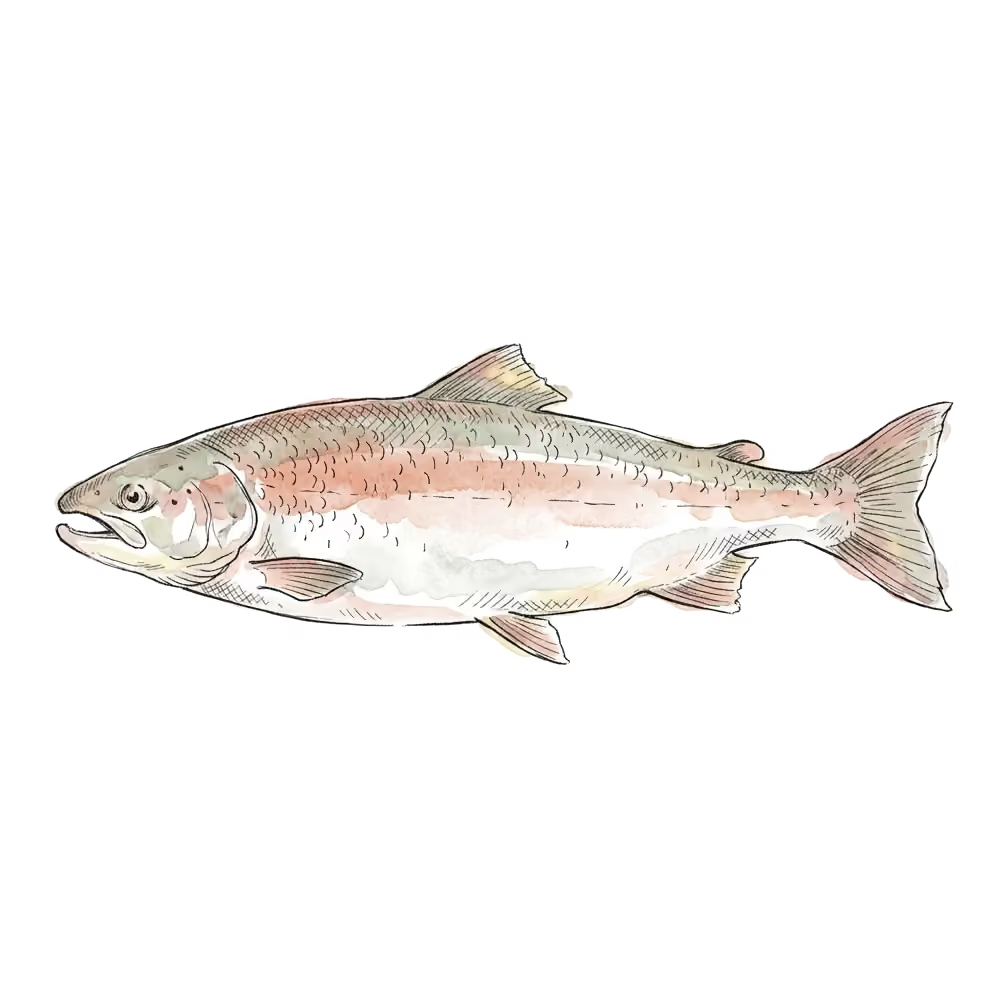
Salmon
Oncorhynchus spp. / Salmo salar · also known as Atlantic salmon, sockeye salmon, Chinook salmon, king salmon, wild salmon, farmed salmon
By Superfoods Advisor Editors·July 3, 2026
Is salmon good for you? What the evidence says on its omega-3s, vitamin D and protein, wild vs farmed differences, mercury, and eating it raw.
Salmon is an oily fish of the family Salmonidae, covering Pacific species (Oncorhynchus spp.: sockeye, Chinook or king, coho, pink, chum) and Atlantic salmon (Salmo salar). It is widely regarded as a nutritious food: 100 g of cooked sockeye provides about 26.5 g of protein, 0.9 g of EPA and DHA omega-3s and about 670 IU of vitamin D, with low mercury.
Salmon is eaten raw (sashimi, gravlax), smoked, baked, grilled and poached. Most commercial supply is now farmed Atlantic salmon; wild-caught Pacific species make up the rest. The two differ in fat, omega-3 content, vitamin D and contaminants, as set out below and in the broader wild-caught vs farm-raised fish entry.
Evidence at a glance
Active Compounds and Nutritional Profile
Salmon combines complete protein with long-chain omega-3s and vitamin D, a nutrient few foods supply in meaningful amounts. The following values are per 100 g cooked (dry heat) sockeye salmon, a wild Pacific species, from USDA FoodData Central; %DV uses the FDA Daily Values:
- Calories: ~156 kcal
- Protein: ~26.5 g (complete; contains all essential amino acids)
- Total fat: ~5.6 g
- Saturated fat: ~1.0 g
- EPA (eicosapentaenoic acid): ~0.30 g
- DHA (docosahexaenoic acid): ~0.56 g
- Total EPA + DHA: ~0.9 g in sockeye. Across cooked wild species in FoodData Central it runs from about 0.6 g (pink) to about 1.7–1.8 g (Chinook, wild Atlantic) (pink, Chinook, wild Atlantic); cooked farmed Atlantic salmon is listed at about 2.2 g (USDA FoodData Central), an older figure that predates the feed changes described below
- ALA (alpha-linolenic acid): ~0.06 g (a minor omega-3 precursor; the major omega-3 contribution is direct EPA/DHA)
- Vitamin D: ~670 IU (16.7 µg) per 100 g; FoodData Central lists ~526 IU for cooked farmed Atlantic (USDA FoodData Central), but one analysis found farmed salmon had only about 25% of the vitamin D of wild salmon, with wide variation even within a species (Lu et al., 2007); one of the highest food sources of vitamin D
- Vitamin B12: ~4.5 mcg (~186% DV)
- Selenium: ~36 mcg (~65% DV)
- Niacin (B3): ~10 mg (~63% DV)
- Phosphorus: ~305 mg (~24% DV)
- Potassium: ~436 mg (~9% DV)
- Astaxanthin: a carotenoid antioxidant responsible for the characteristic orange-pink flesh color; wild fish obtain it from krill and other crustaceans in their diet, while farmed salmon receive astaxanthin (often synthetic) in feed
Wild vs. farmed comparison: Wild Pacific salmon are leaner than farmed Atlantic salmon and have omega-3 content that reflects their natural diet of krill, shrimp, and small fish. Farmed Atlantic salmon have higher total fat due to commercial feed composition, which also means higher absolute EPA+DHA per serving in some farmed varieties. However, the omega-6:omega-3 ratio in farmed salmon has been shifting over time as aquaculture increasingly substitutes plant-based oils (soy, canola) for fish oil in feed, reducing the omega-3 concentration relative to historical levels. An analysis of more than 3,000 farmed Scottish Atlantic salmon found EPA and DHA levels fell between 2006 and 2015 as terrestrial ingredients replaced fish oil, to the point that roughly double the 2006 portion size was needed to meet recommended EPA+DHA intakes, although the fish still supplied more EPA+DHA than most other fish species (Sprague et al., 2016). Both wild and farmed salmon remain among the highest dietary sources of EPA+DHA of any commonly consumed food.
Evidence for Purported Benefits
Cardiovascular Disease Risk Reduction
Evidence:Limited Cohorts consistently link fish intake to lower heart risk; omega-3 supplement trials on cardiac events conflict.
At pharmacological doses, EPA and DHA lower plasma triglycerides mainly by reducing the liver’s production of triglyceride-rich VLDL and secondarily by speeding VLDL clearance; proposed contributors include increased fatty acid oxidation in liver and muscle and reduced delivery of free fatty acids to the liver, and the full mechanism is not settled (Shearer et al., 2012). High-dose omega-3 supplementation (typically 4 g/day EPA+DHA) is FDA-approved for the treatment of severe hypertriglyceridemia. According to an American Heart Association science advisory, prescription EPA+DHA at 4 g/day lowers triglycerides by 30% or more in people with very high triglycerides (≥500 mg/dL) (Skulas-Ray et al., 2019). Two to three servings of fatty fish per week supply far less EPA+DHA than these pharmacological doses, so a similar effect from diet alone should not be assumed.
Beyond triglycerides, EPA and DHA are precursors to specialized pro-resolving mediators, including resolvins, protectins, and maresins, which help resolve inflammation rather than only suppressing it; EPA and DHA also partly inhibit the production of inflammatory eicosanoids and cytokines (Calder, 2015). How much these pathways contribute to cardiovascular outcomes in people is not established. The REDUCE-IT trial (Bhatt et al., 2019) reported that high-dose icosapentaenoic acid (EPA; 4 g/day as icosapent ethyl) reduced major adverse cardiovascular events by 25% relative to placebo in high-cardiovascular-risk patients already on statin therapy. This was a pharmacological dose, not a dietary amount, and the same trial reported more hospitalizations for atrial fibrillation or flutter in the EPA group. A Cochrane review of 86 trials, mostly of supplements, concluded with moderate- to low-certainty evidence that increasing long-chain omega-3s slightly reduces coronary heart disease deaths and events (Abdelhamid et al., 2020).
Prospective cohort studies generally associate fish consumption with lower cardiovascular mortality; a JAMA review estimated that 1–2 servings a week, especially of fish high in EPA and DHA, was associated with a 36% lower risk of coronary death (Mozaffarian & Rimm, 2006). In the GISSI-Prevenzione randomized trial (GISSI-Prevenzione Investigators, 1999), 11,324 patients who had recently had a myocardial infarction were assigned 1 g/day of n-3 PUFA, vitamin E, both, or neither for 3.5 years. Omega-3 supplementation modestly lowered the combined risk of death, non-fatal heart attack, and stroke (10–15% relative reduction, depending on the analysis), driven by fewer deaths (14–20% reduction) and cardiovascular deaths (17–30% reduction); vitamin E had no benefit.
Neurological Function and DHA
Evidence:Limited DHA’s structural role is well mapped and cohort data are favourable; supplement trials on cognition have been largely negative.
DHA is the predominant structural omega-3 fatty acid in the cerebral cortex and retina. DHA accumulates in the brain during fetal development and infancy, and adequate maternal DHA intake is associated with improved infant neurodevelopmental outcomes in prospective studies. In the UK ALSPAC cohort of 11,875 pregnant women, maternal seafood intake below 340 g per week was associated with a higher risk of the child scoring in the lowest quartile for verbal IQ and with less optimal behavioral and developmental scores, after adjustment for 28 potential confounders (Hibbeln et al., 2007). This is observational evidence, and residual confounding by socioeconomic factors remains a methodological challenge in this literature.
In adults, higher plasma DHA has been associated with lower dementia risk in some cohort studies; in the Framingham Heart Study, people in the top quartile of plasma DHA had about half the risk of developing all-cause dementia over nine years (Schaefer et al., 2006). Trials of supplementation after decline has begun have generally been negative: 2 g/day of DHA for 18 months did not slow cognitive or functional decline in mild to moderate Alzheimer’s disease (Quinn et al., 2010). Some researchers have proposed that intake over the lifespan, rather than late supplementation, may matter more, but this remains a hypothesis.
Vitamin D Adequacy
Evidence:Moderate Salmon is one of the few rich food sources of vitamin D; benefit depends on baseline status.
Low vitamin D status is common: in NHANES 2005–2006 data, 41.6% of US adults had serum 25-hydroxyvitamin D at or below 50 nmol/L (20 ng/mL), with higher rates among Black and Hispanic adults (Forrest & Stuhldreher, 2011); rates also tend to be higher in populations with limited sun exposure. Very few foods naturally contain meaningful amounts of vitamin D; fatty fish, including salmon, are among the rare exceptions. A 100 g serving of cooked sockeye salmon provides approximately 670 IU of vitamin D (USDA FoodData Central), slightly more than the RDA of 600 IU for adults aged 19–70 (Linus Pauling Institute). That makes salmon one of the few foods that can contribute meaningfully to vitamin D intake from diet alone.
Typical Use and Preparation
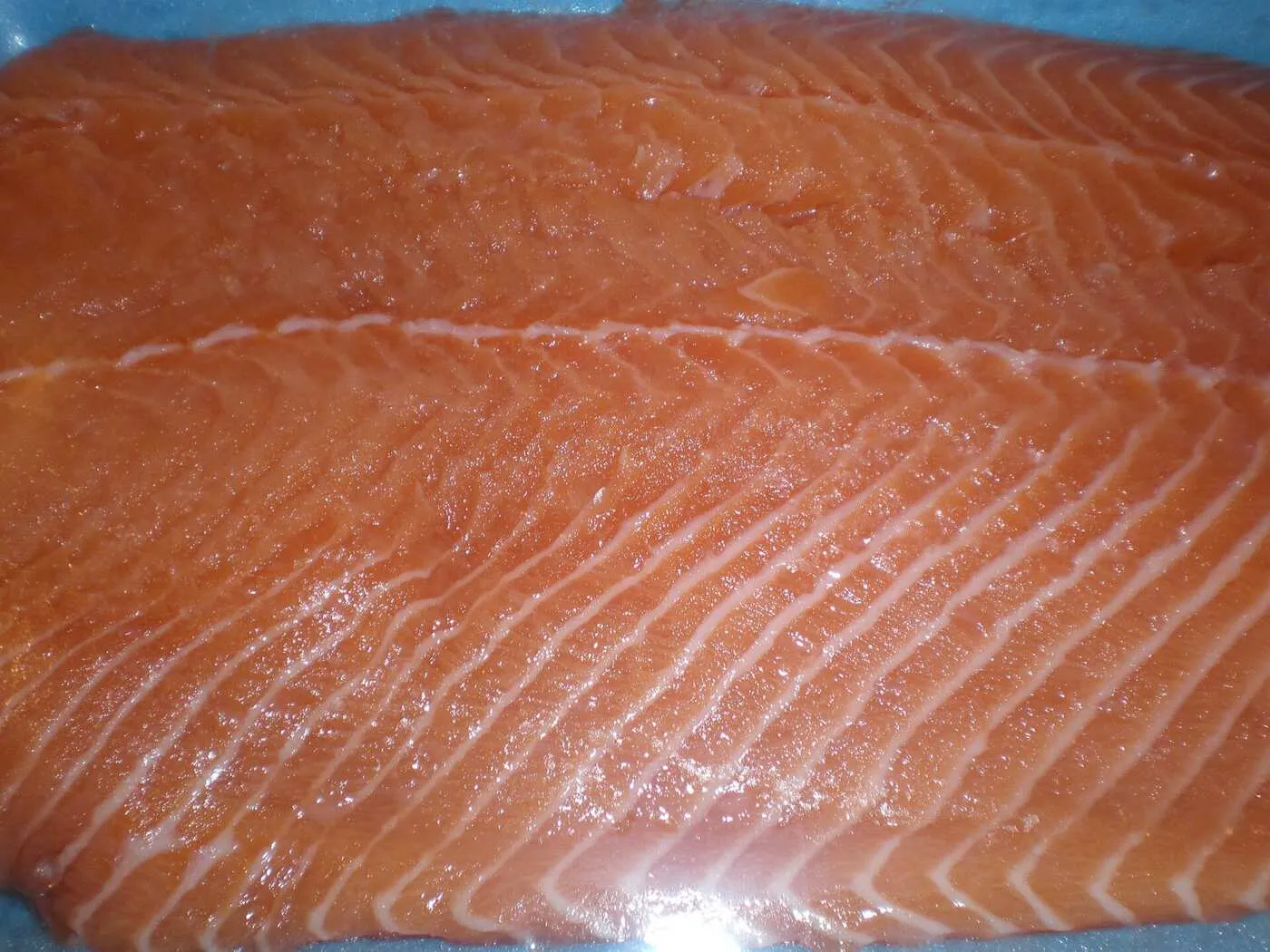 Photo: BrokenSphere, CC BY-SA 3.0, via Wikimedia Commons
Cooking methods: Baking, grilling, broiling, pan-searing, and poaching are all appropriate methods. Internal temperature should reach 63°C (145°F), per FDA seafood safety guidance. Overcooked salmon loses moisture rapidly; removing from heat when slightly translucent in the center and allowing carryover cooking is a practical approach.
Raw consumption: Sushi and sashimi preparations use raw salmon. Prior freezing lowers the parasite risk: FDA guidance treats freezing at -20°C (-4°F) or below for 7 days, or freezing solid at -35°C (-31°F) and holding at that temperature for 15 hours, as sufficient to kill parasites (FDA Fish and Fishery Products Hazards and Controls, Ch. 5). The same guidance does not treat aquacultured fish raised only on pelleted feed as a parasite hazard; wild salmon carries some parasite risk and benefits from prior freezing. Freezing does not kill all harmful bacteria, so FDA notes that cooking remains the safest route and advises pregnant women, children, older adults, and people with weakened immune systems to avoid raw or undercooked seafood entirely (FDA).
Smoked salmon: Cold-smoked salmon (lox) is cured but not cooked and poses a low but non-zero Listeria risk. Hot smoking cooks the fish, but refrigerated smoked fish can be contaminated after processing, so FDA advises the same at-risk groups to avoid all refrigerated smoked seafood (labeled “nova-style,” “lox,” “kippered,” or “smoked”) unless it is cooked in a dish such as a casserole; canned or shelf-stable smoked seafood is acceptable (FDA). Smoked salmon is often very high in sodium, which is a relevant consideration.
Dietary guidelines: The 2020–2025 Dietary Guidelines for Americans recommended at least 8 oz (about 227 g) of seafood per week on a 2,000-calorie diet (the 2025–2030 edition names omega-3–rich seafood among healthy protein and fat sources without a weekly amount) (FDA), and an American Heart Association science advisory suggests 1 to 2 seafood meals per week (Rimm et al., 2018).
For the EPA and DHA research that salmon is most often cited for, see what the omega-3 research shows. Sardines are a cheaper, lower-mercury canned alternative with edible bones, and the heart-health superfoods guide covers oily fish alongside other foods studied for cardiovascular markers.
Safety, Interactions, and Contraindications
Mercury: Salmon is low in mercury relative to large predatory fish. The FDA/EPA fish advice places salmon in the “Best Choices” category, the lowest-mercury tier, and advises people who are pregnant or breastfeeding to eat 2 to 3 servings (4 oz each) a week from that list, and children aged 1–11 2 servings a week in smaller, age-based portions (FDA). In FDA monitoring from 1991–2009, fresh or frozen salmon averaged 0.022 ppm mercury and canned salmon 0.014 ppm (FDA), far below the FDA action level of 1 ppm methylmercury in the edible portion (FDA).
PCBs and persistent organic pollutants: Farmed Atlantic salmon historically accumulated higher concentrations of polychlorinated biphenyls (PCBs) and dioxins than wild Pacific salmon, attributed to fish meal-based feed. A widely cited 2004 analysis of more than 2 metric tons of salmon (Hites et al., Science) found organochlorine contaminant concentrations significantly higher in farmed than in wild salmon, with European-raised fish carrying the greatest loads, and its authors’ risk analysis suggested that farmed Atlantic salmon consumption may carry risks that detract from the benefits of eating fish. Feed composition has since shifted toward plant ingredients. Norwegian surveillance of more than 2,300 farmed salmon found dioxin and dioxin-like PCB levels declined between 1999 and 2011 (Nøstbakken et al., 2015); that study’s estimate that 2011 levels allowed up to 1.3 kg of salmon per week before reaching the tolerable weekly intake rested on the tolerable intake then in force, and EFSA later lowered the tolerable weekly intake for dioxins and dioxin-like PCBs to 2 pg TEQ/kg body weight, noting that it is already widely exceeded by European diets as a whole (EFSA CONTAM Panel, 2018). A JAMA review concluded that dioxin and PCB levels in fish are low and that potential risks are outweighed by the benefits of modest fish intake (Mozaffarian & Rimm, 2006).
Fish allergy: Salmon allergy, mediated by parvalbumin proteins, can cause severe allergic reactions including anaphylaxis. Fish is one of the major food allergens that US law requires to be declared on labels, including the species (FDA).
Drug interactions: High-dose omega-3 supplementation (not typical dietary intake) may have antiplatelet effects; individuals on anticoagulants (warfarin, newer oral anticoagulants) or antiplatelet therapy should tell their prescriber about high-dose fish oil use. In a small randomized trial of patients on stable warfarin, 3–6 g/day of fish oil did not significantly change INR (Bender et al., 1998). Separately, a meta-analysis of cardiovascular trials associated omega-3 supplements with a higher risk of atrial fibrillation, with the risk greater at doses above 1 g/day (Gencer et al., 2021). The amounts supplied by two servings of fish per week are far lower than these supplement doses.
Frequently Asked Questions
Is salmon good for you?
For most people, salmon is a nutrient-dense choice. A 100 g serving of cooked sockeye provides about 26.5 g of complete protein, 0.9 g of EPA and DHA, about 670 IU of vitamin D and a large share of the B12 Daily Value. Cohort studies associate regular fish intake with lower cardiovascular mortality, though omega-3 supplement trials have produced mixed results.
Is it OK to eat salmon every day?
There is no salmon-specific daily limit. FDA/EPA advice lists salmon among its “Best Choices” for low mercury and suggests 2 to 3 servings a week for people who are pregnant or breastfeeding; an AHA advisory suggests 1 to 2 seafood meals a week. Daily salmon intake has not been studied as its own question; varying the fish you eat limits exposure to any single contaminant, and a clinician can advise on specific needs.
Is wild or farmed salmon healthier?
Each has trade-offs. Farmed Atlantic salmon is fattier and can carry more EPA and DHA per serving, though its omega-3 levels fell between 2006 and 2015 in one Scottish analysis. One study found farmed salmon had only about 25% of the vitamin D of wild salmon. Farmed fish historically carried more PCBs and dioxins, and those levels declined in Norwegian surveillance from 1999 to 2011.
Can salmon be eaten raw?
Raw salmon is eaten as sushi, sashimi and gravlax. FDA guidance treats freezing at -20°C (-4°F) for 7 days as sufficient to kill parasites, which mainly concern wild fish. Freezing does not kill all bacteria, so the FDA advises pregnant women, young children, older adults and people with weakened immunity to avoid raw or undercooked seafood.
Does salmon have mercury?
Salmon is low in mercury. FDA monitoring from 1991 to 2009 found an average of 0.022 ppm in fresh or frozen salmon and 0.014 ppm in canned salmon, far below the FDA action level of 1 ppm. The FDA and EPA place salmon in their “Best Choices” tier, the lowest-mercury group of fish.
References
Show all 24 referencesShow fewer
- U.S. Department of Agriculture, Agricultural Research Service. FoodData Central — Fish, salmon, sockeye, cooked, dry heat (FDC 173692). https://fdc.nal.usda.gov/food-details/173692/nutrients
- Bhatt, D. L., Steg, P. G., Miller, M., et al. (2019). Cardiovascular risk reduction with icosapentaenoic acid for hypertriglyceridemia. New England Journal of Medicine, 380(1), 11–22.
- GISSI-Prevenzione Investigators. (1999). Dietary supplementation with n-3 polyunsaturated fatty acids and vitamin E after myocardial infarction: results of the GISSI-Prevenzione trial. Lancet, 354(9177), 447–455.
- Skulas-Ray, A. C., Wilson, P. W. F., Harris, W. S., et al. (2019). Omega-3 fatty acids for the management of hypertriglyceridemia: a science advisory from the American Heart Association. Circulation, 140(12), e673–e691.
- Calder, P. C. (2015). Marine omega-3 fatty acids and inflammatory processes: effects, mechanisms and clinical relevance. Biochimica et Biophysica Acta, 1851(4), 469–484.
- Hites, R. A., Foran, J. A., Carpenter, D. O., Hamilton, M. C., Knuth, B. A., & Schwager, S. J. (2004). Global assessment of organic contaminants in farmed salmon. Science, 303(5655), 226–229.
- Hibbeln, J. R., Davis, J. M., Steer, C., Emmett, P., Rogers, I., Williams, C., & Golding, J. (2007). Maternal seafood consumption in pregnancy and neurodevelopmental outcomes in childhood (ALSPAC study): an observational cohort study. Lancet, 369(9561), 578–585.
- U.S. Food and Drug Administration. (2024). Advice about eating fish: For women who are or might become pregnant, breastfeeding mothers, and young children. https://www.fda.gov/food/consumers/advice-about-eating-fish
- Sprague, M., Dick, J. R., & Tocher, D. R. (2016). Impact of sustainable feeds on omega-3 long-chain fatty acid levels in farmed Atlantic salmon, 2006–2015. Scientific Reports, 6, 21892.
- Lu, Z., Chen, T. C., Zhang, A., et al. (2007). An evaluation of the vitamin D3 content in fish: Is the vitamin D content adequate to satisfy the dietary requirement for vitamin D? Journal of Steroid Biochemistry and Molecular Biology, 103(3–5), 642–644.
- Forrest, K. Y., & Stuhldreher, W. L. (2011). Prevalence and correlates of vitamin D deficiency in US adults. Nutrition Research, 31(1), 48–54.
- Nøstbakken, O. J., Hove, H. T., Duinker, A., et al. (2015). Contaminant levels in Norwegian farmed Atlantic salmon (Salmo salar) in the 13-year period from 1999 to 2011. Environment International, 74, 274–280.
- EFSA Panel on Contaminants in the Food Chain. (2018). Risk for animal and human health related to the presence of dioxins and dioxin-like PCBs in feed and food. EFSA Journal, 16(11), e05333.
- Mozaffarian, D., & Rimm, E. B. (2006). Fish intake, contaminants, and human health: evaluating the risks and the benefits. JAMA, 296(15), 1885–1899.
- Rimm, E. B., Appel, L. J., Chiuve, S. E., et al. (2018). Seafood long-chain n-3 polyunsaturated fatty acids and cardiovascular disease: a science advisory from the American Heart Association. Circulation, 138(1), e35–e47.
- U.S. Food and Drug Administration. Fish and Fishery Products Hazards and Controls Guidance, Chapter 5: Parasites. https://www.fda.gov/media/80777/download
- Shearer, G. C., Savinova, O. V., & Harris, W. S. (2012). Fish oil — how does it reduce plasma triglycerides? Biochimica et Biophysica Acta, 1821(5), 843–851.
- Abdelhamid, A. S., Brown, T. J., Brainard, J. S., et al. (2020). Omega-3 fatty acids for the primary and secondary prevention of cardiovascular disease. Cochrane Database of Systematic Reviews, 2, CD003177.
- Schaefer, E. J., Bongard, V., Beiser, A. S., et al. (2006). Plasma phosphatidylcholine docosahexaenoic acid content and risk of dementia and Alzheimer disease: the Framingham Heart Study. Archives of Neurology, 63(11), 1545–1550.
- Quinn, J. F., Raman, R., Thomas, R. G., et al. (2010). Docosahexaenoic acid supplementation and cognitive decline in Alzheimer disease: a randomized trial. JAMA, 304(17), 1903–1911.
- Bender, N. K., Kraynak, M. A., Chiquette, E., et al. (1998). Effects of marine fish oils on the anticoagulation status of patients receiving chronic warfarin therapy. Journal of Thrombosis and Thrombolysis, 5(3), 257–261.
- Gencer, B., Djousse, L., Al-Ramady, O. T., et al. (2021). Effect of long-term marine omega-3 fatty acids supplementation on the risk of atrial fibrillation in randomized controlled trials of cardiovascular outcomes: a systematic review and meta-analysis. Circulation, 144(25), 1981–1990.
- U.S. Food and Drug Administration. Selecting and serving fresh and frozen seafood safely. https://www.fda.gov/food/buy-store-serve-safe-food/selecting-and-serving-fresh-and-frozen-seafood-safely
- U.S. Food and Drug Administration. Food allergies. https://www.fda.gov/food/nutrition-food-labeling-and-critical-foods/food-allergies
Related content



More in Animal Foods
- Anchovies (Engraulis encrasicolus)
Anchovies vs sardines: how the two small oily fish compare on omega-3s, calcium, B12, sodium and mercury, plus anchovy nutrition, benefits and safety.
- Beef Liver
Is beef liver good for you? Its B12, vitamin A, copper and iron per 100 g, how often to eat it, liver supplements, and the vitamin A toxicity limit.
- Bone Broth
Is bone broth good for you? What a cup contains, how it compares with collagen supplements and chicken broth, and the evidence on joints, gut and sleep.
- Eggs
Are eggs good for you? Egg nutrition per large egg, whole eggs vs egg whites, what cohort studies show on cholesterol and heart risk, and egg safety.
- Grass-Fed Beef
Grass-fed vs grain-fed beef: how omega-3s, CLA, vitamin E, fat, protein, iron and zinc compare, what the USDA grass-fed label means, and red meat cautions.
- Oysters
Oyster benefits: zinc, B12, copper, selenium and omega-3s per serving, what the evidence shows, how many to eat, and the Vibrio risk of raw oysters.




Curated by Superfoods Advisor Editors·Last updated