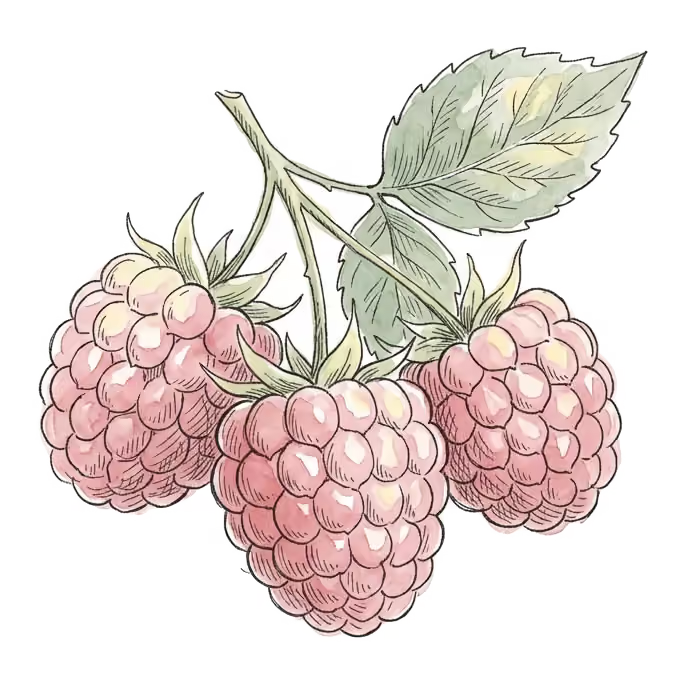
Raspberry (Rubus idaeus)
Rubus idaeus · also known as red raspberry, European raspberry, garden raspberry
By Superfoods Advisor Editors·July 3, 2026
Raspberries vs blackberries: how fiber, sugar, vitamins and anthocyanins compare, and what small trials show on raspberry benefits for blood sugar.
Red raspberries (Rubus idaeus) are a rose-family fruit with 52 kcal, 6.5 g of fiber and 4.4 g of sugar per 100 g. Compared with blackberries, they carry more fiber and vitamin C but less vitamin K and fewer anthocyanins. Human trials of raspberry benefits for blood sugar, inflammation and heart markers are small and mostly mixed.
The plant is a perennial shrub native to the temperate forests and mountains of Europe, northern Asia and North America. Greeks and Romans gathered wild raspberries, and the plant appears in texts attributed to Dioscorides. By the sixteenth century raspberries were cultivated across northern Europe, and R. idaeus now accounts for most commercial production.
Research interest centers on two polyphenol groups: ellagitannins, which gut bacteria turn into ellagic acid and urolithins, and a cyanidin-dominated anthocyanin profile. Both are active in cell and animal studies; the human trials so far are mostly small and short.
Evidence at a glance
Active Compounds
- Ellagitannins (sanguiin H-6, lambertianin C, and related compounds): One of the two dominant phenolic fractions in raspberries, alongside anthocyanins. Gut microbiota hydrolyze ellagitannins to ellagic acid, which is further metabolized to urolithins (urolithin A, B, C) — compounds with anti-inflammatory activity reported mostly in vitro (Espín et al., 2013) and mitophagy-promoting activity in preclinical models (Ryu et al., 2016). Urolithin production varies widely between individuals with gut microbiome composition (Tomás-Barberán et al., 2014).
- Anthocyanins (cyanidin-3-sophoroside, cyanidin-3-glucoside, cyanidin-3-rutinoside, pelargonidin-3-glucoside): Cyanidin glycosides predominate, imparting the characteristic red color; one analysis put total anthocyanins at about 92 mg/100 g fresh fruit, at a roughly 32:1 ratio of cyanidin- to pelargonidin-based forms, though content varies widely with cultivar, season, and analytical method (Burton-Freeman et al., 2016).
- Quercetin and kaempferol glycosides: A minor flavonol fraction, present at trace levels relative to anthocyanins and ellagitannins (Mullen et al., 2002).
- Ellagic acid: Present in free form and as glycosides in addition to the tannin-bound fraction.
- Raspberry ketone (4-(4-hydroxyphenyl)butan-2-one): A phenolic compound responsible for the characteristic aroma; present at low concentrations (up to about 4 mg/kg fresh fruit; Bredsdorff et al., 2015). Despite extensive popular marketing, no credible human evidence supports the metabolic claims associated with isolated raspberry ketone supplements.
- Vitamin C (ascorbic acid): ~26 mg/100 g (USDA FoodData Central); contributes to antioxidant capacity.
- Dietary fiber: ~6.5 g/100 g against ~4.4 g of sugars (USDA FoodData Central); the high fiber-to-sugar ratio distinguishes raspberries from many other sweet fruits.
Nutritional Profile
Values for fresh red raspberries, per 100 g (USDA FoodData Central, FDC ID 167755, “Raspberries, raw”):
| Nutrient | Amount | % DV |
|---|---|---|
| Energy | 52 kcal | — |
| Water | 85.8 g | — |
| Carbohydrates | 11.9 g | — |
| Dietary fiber | 6.5 g | — |
| Sugars | 4.4 g | — |
| Protein | 1.2 g | — |
| Total fat | 0.7 g | — |
| Vitamin C | 26.2 mg | 29% |
| Vitamin K | 7.8 µg | 7% |
| Manganese | 0.67 mg | 29% |
| Folate | 21 µg | 5% |
| Magnesium | 22 mg | 5% |
| Potassium | 151 mg | 3% |
The net carbohydrate content (total carbs minus fiber) is approximately 5.4 g per 100 g serving, among the lowest of commonly consumed fruits, making raspberries compatible with low-carbohydrate dietary patterns.
Raspberries vs Blackberries
Raspberries and blackberries are close relatives with similar nutrition: raspberries have more fiber and vitamin C, while blackberries have fewer calories, more vitamin K and a higher anthocyanin content. Both are aggregate fruits of small drupelets in the genus Rubus.
| Per 100 g, raw (USDA) | Raspberries | Blackberries |
|---|---|---|
| Energy | 52 kcal | 43 kcal |
| Total carbohydrates | 11.9 g | 9.6 g |
| Dietary fiber | 6.5 g | 5.3 g |
| Sugars | 4.4 g | 4.9 g |
| Protein | 1.2 g | 1.4 g |
| Vitamin C | 26.2 mg | 21 mg |
| Vitamin K | 7.8 µg | 20 µg |
| Manganese | 0.67 mg | 0.6 mg |
| Anthocyanins | ~92 mg (one analysis) | ~131–256 mg (11 cultivars, one study) |
Anthocyanin figures come from single studies and vary widely with cultivar and ripeness, so the gap is a tendency rather than a fixed difference. Neither berry has been compared with the other in a human trial; the practical choice comes down to taste, price and whether vitamin K intake matters, as it does for people taking warfarin.
Evidence for Purported Benefits
Postprandial Glycemia and Insulin Response
Evidence:Limited Small meal studies conflict, and a 2024 meta-analysis of RCTs found no effect on fasting glucose or HbA1c.
The high dietary fiber content may slow glucose absorption. In vitro, the tannin-rich fraction of raspberry extracts inhibits alpha-amylase and the anthocyanin-rich fraction inhibits alpha-glucosidase (McDougall et al., 2005). In a set of randomized crossover meal studies by Törrönen et al. (Journal of Nutrition, 2013) (n = 13–20 healthy women per study), 150 g of whole-berry purée was served with white wheat bread. Strawberries, bilberries, lingonberries, chokeberries, and a mixed-berry purée significantly reduced the postprandial insulin response, but raspberries did not produce a significant reduction in insulin or an improvement in the glycemic profile. In contrast, a small acute meal study in 32 adults by Xiao et al. (Obesity, 2019) reported that adding 125 g or 250 g of frozen red raspberries to a high-carbohydrate breakfast lowered the 2-hour insulin response in participants with prediabetes and insulin resistance, and the 250 g dose also lowered peak and 2-hour glucose. A 2024 meta-analysis of randomized controlled trials by Jazinaki et al. (Current Developments in Nutrition) found no significant effect of raspberry consumption on fasting glucose, HbA1c, glucose tolerance, or HOMA-IR, and called for larger trials. Any effect appears clinically modest; raspberries should not be considered a substitute for established glycemic interventions.
Cardiovascular Risk Markers
Evidence:Insufficient A 2024 meta-analysis of 11 RCTs found no effect on blood pressure or blood lipids.
Raspberry-specific cardiovascular trials remain small. A 2024 meta-analysis of 11 randomized controlled trials by Jazinaki et al. (Food Science & Nutrition) found no significant effect of raspberry consumption on blood pressure, total cholesterol, LDL-C, HDL-C, or triglycerides. A review by Basu et al. (Nutrition Reviews, 2010) found that human intervention studies with other berries (chokeberries, cranberries, blueberries, and strawberries) improved LDL oxidation, lipid peroxidation, and dyslipidemia; whether raspberries produce comparable effects has not been established in adequately powered trials.
Gut Microbiome and Urolithin Production
Evidence:Preliminary Human trials confirm variable urolithin production; health effects come from preclinical models only.
Ellagitannins in raspberries are metabolized by gut bacteria in several steps: Gordonibacter species convert ellagic acid as far as urolithin C (Selma et al., 2014), and Enterocloster species carry out the final dehydroxylation to urolithin A (Pidgeon et al., 2025). Urolithin A is a lactone that stimulates mitophagy (selective clearance of damaged mitochondria) in preclinical models and extended lifespan in C. elegans (Ryu et al., 2016). An analysis of human intervention trials by Tomás-Barberán et al. (Journal of Agricultural and Food Chemistry, 2014) found that urolithin production is highly variable and falls into three consistent phenotypes regardless of the ellagitannin source (raspberries included): phenotype A produces only urolithin A (25–80% of volunteers across trials), phenotype B also produces isourolithin A and/or urolithin B (10–50%), and phenotype 0 produces no detectable urolithins (5–25%). This inter-individual variability has important implications for whether the polyphenol content of the food translates into biologically active metabolites for a given individual. The clinical significance of urolithin production in the context of raspberry consumption has not been established in human trials.
Anti-Inflammatory Effects
Evidence:Limited A meta-analysis of small RCTs found a small TNF-α drop but no change in CRP or IL-6; results conflict.
Urolithins derived from ellagitannins have shown anti-inflammatory activity, mostly in vitro and in a limited number of animal studies (Espín et al., 2013). In humans, the 2024 meta-analysis by Jazinaki et al. reported a small reduction in tumor necrosis factor-α with raspberry consumption but no significant effect on C-reactive protein or interleukin-6; whether raspberries lower inflammatory biomarkers has not been established in adequately powered trials.
Weight Management
Evidence:Insufficient Raspberry ketone rests on one rodent and two cell studies; no human trial of the isolated compound.
Isolated raspberry ketone supplements have been heavily marketed for weight loss on the basis of one rodent study (Morimoto et al., 2005), two adipocyte cell studies, and mechanistically speculative arguments (lipolysis, adiponectin stimulation). Isolated raspberry ketone has not been tested for weight loss in published human trials. The human RCTs that exist used multi-ingredient products in which raspberry ketone was combined with caffeine, capsaicin, Citrus aurantium, and other ingredients alongside diet and exercise (Lopez et al., 2013), so any effect cannot be attributed to raspberry ketone. Whole raspberry consumption contributes fiber and low energy density, which may support satiety; this is an effect of food matrix and fiber content shared by many low-calorie, high-fiber foods, not specific to raspberries.
Typical Use and Preparation
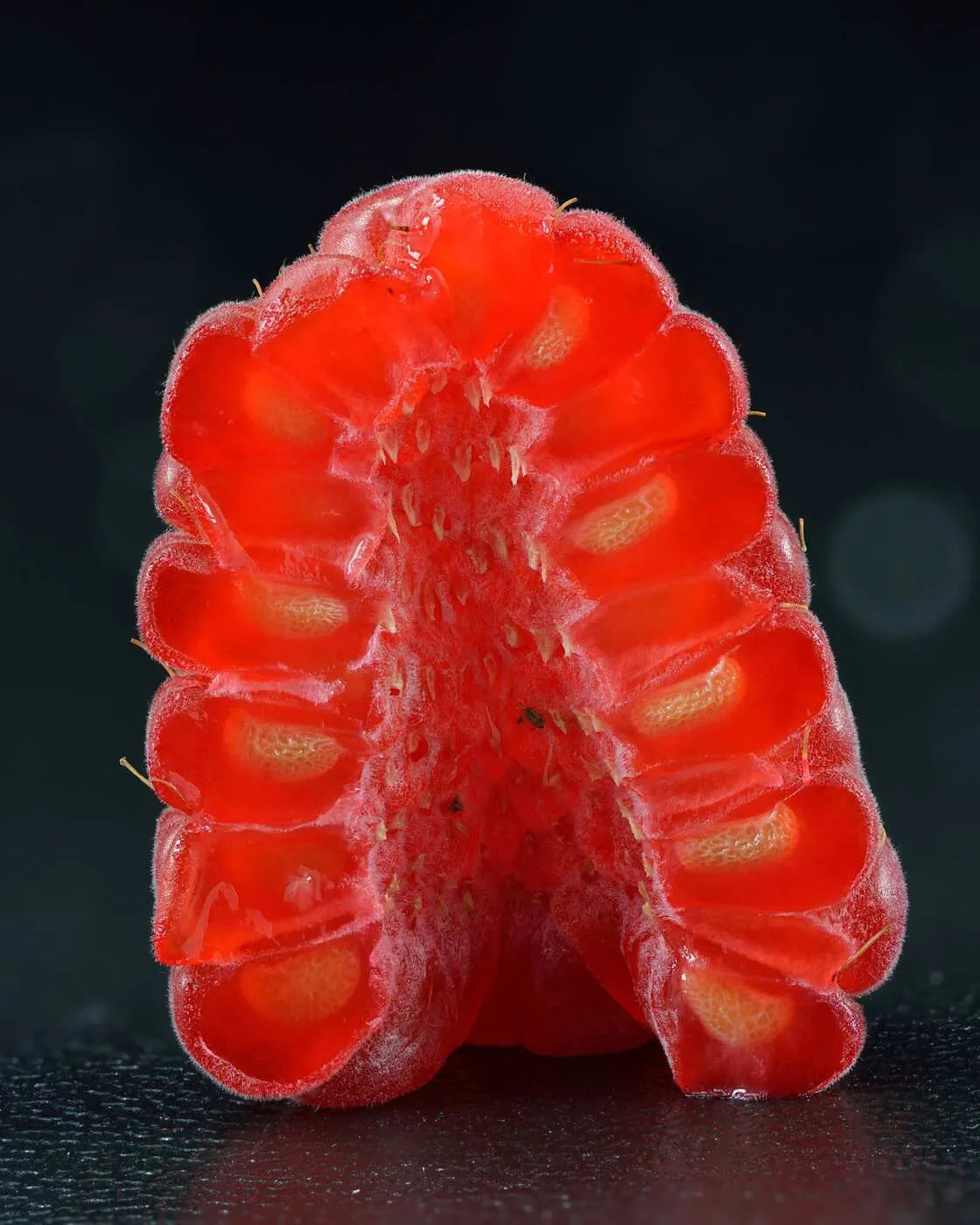 Photo: Ivar Leidus, CC BY-SA 4.0, via Wikimedia Commons
- Fresh: Peak season is summer (June–August in temperate zones). Best consumed promptly; fresh raspberries are highly perishable (2–3 days refrigerated).
- Frozen: Individual quick frozen (IQF) raspberries are a convenient year-round option; one analysis found freezing did not affect vitamin C, phenolic content, or antioxidant capacity (Mullen et al., 2002).
- Freeze-dried powder: Used in research formulations and commercially available. For scale, a meal trial of whole fruit used 125 g and 250 g of frozen raspberries (about one and two cups) per serving (Xiao et al., 2019).
- Culinary: Used in jams, preserves (where heating degrades some anthocyanins), desserts, sauces, smoothies, and baked goods.
- Raspberry leaf tea: Derived from R. idaeus leaves, not berries; leaf preparations have distinct phytochemistry (notably tannins) and are used in traditional herbalism for menstrual and uterine tone support — a distinct topic not covered here.
Frozen raspberries are used in one of the superfood smoothie recipes. The role of their fiber and ellagitannins in the gut is covered in the review of dietary fiber and microbiome research.
Safety, Interactions, and Contraindications
Whole raspberries are a common food and are well tolerated by most people at culinary intakes. Specific considerations:
- Vitamin K content: At 7.8 µg/100 g, moderate raspberry consumption is unlikely to significantly affect INR in patients on warfarin, but large or sudden changes in raspberry intake should be discussed with a healthcare provider managing anticoagulation.
- FODMAPs and irritable bowel syndrome: People following a low-FODMAP (fermentable oligosaccharides, disaccharides, monosaccharides, and polyols) diet should check raspberry serving sizes against a current FODMAP database, as fruit tolerance varies with portion size and between individuals.
- Allergic reactions: Raspberry belongs to the Rosaceae family, and people allergic to other Rosaceae fruits (peach, cherry, apple) may react to it. Rosaceae fruit allergy mostly occurs as pollen-food allergy syndrome, usually with mild oral symptoms, or as lipid transfer protein allergy, which can be more severe (Costa & Mafra, 2023).
- Oxalates: Raspberries contain oxalate; individuals with calcium oxalate kidney stone history may wish to moderate high-quantity intake.
- Isolated raspberry ketone supplements: These are distinct from whole fruit; marketed doses of 100–1,400 mg/day far exceed the amount in fruit, and toxicity data are limited to acute and subchronic rat studies (Bredsdorff et al., 2015). A 2022 case report described treatment-resistant ventricular tachycardia in a woman who had recently started a raspberry ketone weight-loss supplement, though no cause was established (Ansari et al., 2022). They are not endorsed by this entry. “Raspberry ketone” in isolation shares no established safety profile with whole raspberries.
Frequently Asked Questions
What are raspberries good for?
Raspberries are mainly good as a high-fiber, low-sugar fruit: 100 g provides 6.5 g of fiber, 4.4 g of sugar and 26 mg of vitamin C for 52 kcal. They also supply ellagitannins and anthocyanins. Small trials on blood sugar, inflammation and heart markers have produced mixed results, and a 2024 meta-analysis found no effect on fasting glucose or blood lipids.
How many raspberries is a serving?
A serving of fruit is usually taken as about one cup, which for raspberries is roughly 125 g. The meal trial by Xiao and colleagues used 125 g and 250 g of frozen raspberries, about one and two cups. One cup supplies about 8 g of fiber, a substantial share of a typical adult target.
Are raspberries good for diabetics?
Raspberries fit well in most diabetic eating plans because of their low net carbohydrate content, about 5.4 g per 100 g. One small meal study in adults with prediabetes found 250 g of raspberries lowered the glucose and insulin rise after breakfast, but another set of meal studies did not, and a 2024 meta-analysis found no effect on HbA1c. Medication and portion questions belong with a clinician.
Can raspberries cause diarrhea?
Large portions can. At 6.5 g of fiber per 100 g, raspberries may cause gas, bloating or loose stools in people not used to high-fiber foods. People following a low-FODMAP diet for irritable bowel syndrome should check raspberry portion sizes against a current FODMAP database, since tolerance depends on the amount eaten.
Are raspberries a fruit or a berry?
Raspberries are a fruit, but not a true berry in the botanical sense. Each raspberry is an aggregate fruit made of many small drupelets, each with its own seed, formed from a single flower. The same is true of blackberries. In cooking and nutrition, both are grouped with berries.
Why are raspberries hollow?
A ripe raspberry is usually described as slipping off its core, the receptacle, when picked, so the core stays on the plant and the fruit is left hollow. A blackberry is said to keep its core, which is a common way to tell the two apart. Both are aggregate fruits made of small drupelets in the genus Rubus, and they are close relatives with broadly similar nutrition.
References
Show all 19 referencesShow fewer
- Törrönen, R., Kolehmainen, M., Sarkkinen, E., Poutanen, K., Mykkänen, H., & Niskanen, L. (2013). Berries reduce postprandial insulin responses to wheat and rye breads in healthy women. Journal of Nutrition, 143(4), 430–436.
- Basu, A., Rhone, M., & Lyons, T. J. (2010). Berries: emerging impact on cardiovascular health. Nutrition Reviews, 68(3), 168–177.
- Espín, J. C., Larrosa, M., García-Conesa, M. T., & Tomás-Barberán, F. (2013). Biological significance of urolithins, the gut microbial ellagic acid–derived metabolites: the evidence so far. Evidence-Based Complementary and Alternative Medicine, 2013, 270418.
- Morimoto, C., Satoh, Y., Hara, M., Inoue, S., Tsujita, T., & Okuda, H. (2005). Anti-obese action of raspberry ketone. Life Sciences, 77(2), 194–204.
- USDA FoodData Central. (2019). Raspberries, raw. FDC ID 167755. U.S. Department of Agriculture.
- Tomás-Barberán, F. A., García-Villalba, R., González-Sarrías, A., Selma, M. V., & Espín, J. C. (2014). Ellagic acid metabolism by human gut microbiota: consistent observation of three urolithin phenotypes in intervention trials, independent of food source, age, and health status. Journal of Agricultural and Food Chemistry, 62(28), 6535–6538.
- Jazinaki, M. S., Nosrati, M., Chambari, M., Jamialahmadi, T., & Sahebkar, A. (2024). The effects of raspberry consumption on glycemic control and inflammation markers in adults: A systematic review and meta-analysis of randomized controlled trials. Current Developments in Nutrition, 8(6), 102161.
- Burton-Freeman, B. M., Sandhu, A. K., & Edirisinghe, I. (2016). Red raspberries and their bioactive polyphenols: cardiometabolic and neuronal health links. Advances in Nutrition, 7(1), 44–65.
- Bredsdorff, L., Wedebye, E. B., Nikolov, N. G., Hallas-Møller, T., & Pilegaard, K. (2015). Raspberry ketone in food supplements—high intake, few toxicity data—a cause for safety concern? Regulatory Toxicology and Pharmacology, 73(1), 196–200.
- Lopez, H. L., Ziegenfuss, T. N., Hofheins, J. E., et al. (2013). Eight weeks of supplementation with a multi-ingredient weight loss product enhances body composition, reduces hip and waist girth, and increases energy levels in overweight men and women. Journal of the International Society of Sports Nutrition, 10(1), 22.
- Xiao, D., Zhu, L., Edirisinghe, I., Fareed, J., Brailovsky, Y., & Burton-Freeman, B. (2019). Attenuation of postmeal metabolic indices with red raspberries in individuals at risk for diabetes: a randomized controlled trial. Obesity, 27(4), 542–550.
- Ryu, D., Mouchiroud, L., Andreux, P. A., et al. (2016). Urolithin A induces mitophagy and prolongs lifespan in C. elegans and increases muscle function in rodents. Nature Medicine, 22(8), 879–888.
- Mullen, W., Stewart, A. J., Lean, M. E., Gardner, P., Duthie, G. G., & Crozier, A. (2002). Effect of freezing and storage on the phenolics, ellagitannins, flavonoids, and antioxidant capacity of red raspberries. Journal of Agricultural and Food Chemistry, 50(18), 5197–5201.
- McDougall, G. J., Shpiro, F., Dobson, P., Smith, P., Blake, A., & Stewart, D. (2005). Different polyphenolic components of soft fruits inhibit alpha-amylase and alpha-glucosidase. Journal of Agricultural and Food Chemistry, 53(7), 2760–2766.
- Jazinaki, M. S., Bahari, H., Rashidmayvan, M., Arabi, S. M., Rahnama, I., & Malekahmadi, M. (2024). The effects of raspberry consumption on lipid profile and blood pressure in adults: A systematic review and meta-analysis. Food Science & Nutrition, 12(4), 2259–2278.
- Selma, M. V., Beltrán, D., García-Villalba, R., Espín, J. C., & Tomás-Barberán, F. A. (2014). Description of urolithin production capacity from ellagic acid of two human intestinal Gordonibacter species. Food & Function, 5(8), 1779–1784.
- Pidgeon, R., Mitchell, S., Shamash, M., et al. (2025). Diet-derived urolithin A is produced by a dehydroxylase encoded by human gut Enterocloster species. Nature Communications, 16, 999.
- Costa, J., & Mafra, I. (2023). Rosaceae food allergy: a review. Critical Reviews in Food Science and Nutrition, 63(25), 7423–7460.
- Ansari, S. A., Patel, F., Ashouri, D., Dhaliwal, J. S. S., & Desai, A. (2022). Resistant polymorphic ventricular tachycardia in a patient taking raspberry ketones weight loss supplement. Cureus, 14(12), e33089.
Related content

More in Berries
- Acai Berry (Euterpe oleracea)
Is acai good for you? What small human trials show on acai benefits for antioxidants, lipids and blood sugar, plus nutrition, acai bowls and safety.
- Acerola Cherry (Malpighia emarginata)
Acerola cherry benefits come mostly from its vitamin C, about 1,680 mg per 100 g. What the evidence shows for immunity, skin and antioxidants, and safety.
- Blackberry (Rubus fruticosus)
What are blackberries good for? Fiber (5.3 g per 100 g), vitamin C, vitamin K and anthocyanins. Blackberry benefits, nutrition and what research shows.
- Blackcurrant (Ribes nigrum)
Blackcurrant benefits: a tart berry with 181 mg vitamin C per 100 g and dense anthocyanins. Small trials on eye fatigue, exercise recovery and cognition.
- Blueberry (Vaccinium corymbosum)
Are blueberries good for you? Trials suggest a daily cup (150 g) may help blood-vessel function; memory and blood-sugar data are early. Nutrition, safety.
- Camu Camu (Myrciaria dubia)
What is camu camu, and what are its benefits? An Amazonian berry with 1,800–3,000 mg vitamin C per 100 g, small trials on inflammation, and safety notes.

Curated by Superfoods Advisor Editors·Last updated