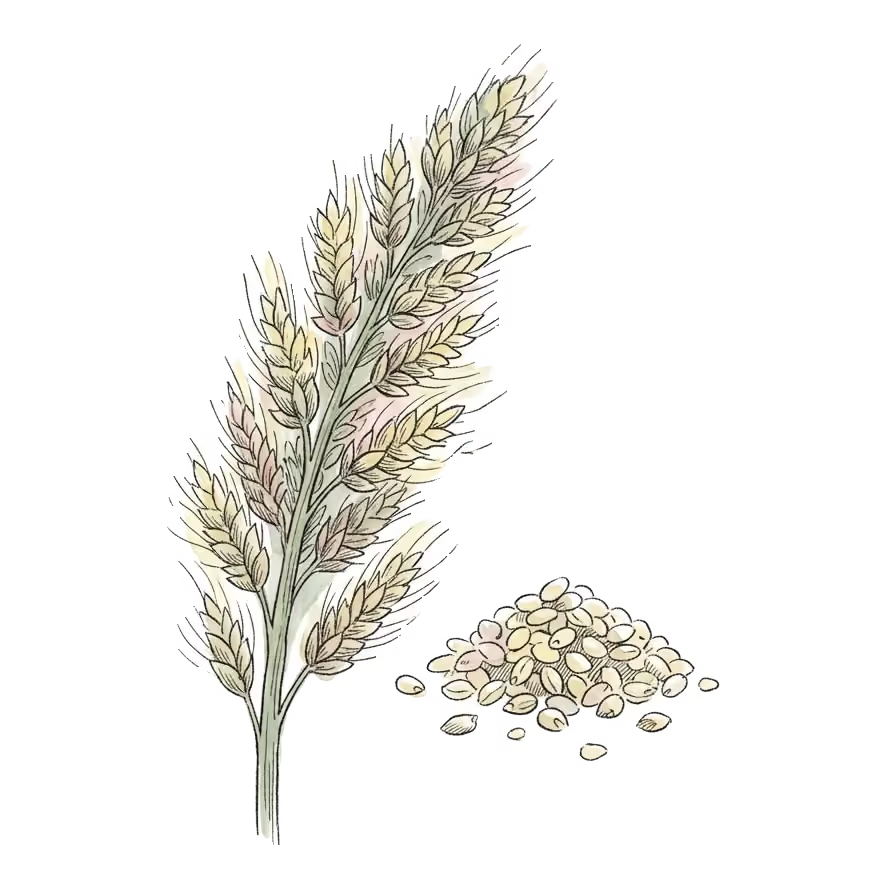
Millet (Pennisetum glaucum / Panicum miliaceum)
Pennisetum glaucum · also known as pearl millet, proso millet, foxtail millet, finger millet, bajra, ragi
By Superfoods Advisor Editors·July 3, 2026
What is millet? A group of small-seeded, gluten-free cereal grasses (pearl, proso, foxtail, finger). Nutrition, benefits, GI and thyroid cautions.
Millet is a group of small-seeded cereal grasses grown for grain, chiefly pearl millet (bajra), proso millet, foxtail millet and finger millet (ragi). It is a naturally gluten-free whole grain: 100 g cooked provides about 119 kcal, 3.5 g protein and 44 mg magnesium. It is a staple in Africa and South Asia and a rice or quinoa substitute elsewhere.
The name covers several botanically distinct species, most importantly pearl millet (Pennisetum glaucum, also classified as Cenchrus americanus), proso millet (Panicum miliaceum), foxtail millet (Setaria italica), and finger millet (Eleusine coracana). These are botanically distinct species grouped together by grain size and culinary tradition rather than close phylogenetic relationship. Pearl millet (called bajra in South Asia) is the most widely produced type globally, particularly across sub-Saharan Africa and South Asia, where it is a staple crop in arid and semi-arid regions where other cereals fail. Proso millet, the variety most commonly found in health-food retail in North America and Europe, is smaller-seeded and has a milder flavor.
Millet was among the first cereals domesticated by humans, with archaeological evidence of cultivation dating to approximately 10,000 years ago in northern China (proso, or common, millet; Lu et al., 2009) and about 4,500 years ago in West Africa (pearl millet; Manning et al., 2011). For centuries, millet was the primary grain of northern China before rice and wheat displaced it. Today it remains a nutritional foundation for hundreds of millions of people across the Sahel, East Africa, and the Indian subcontinent, where it is consumed as flatbreads (bajra roti), porridges (ugali, tuwo), and fermented beverages (opaque sorghum-millet beers). In Western markets, millet has gained attention as a gluten-free whole grain alternative.
Evidence at a glance
Active Compounds
- Magnesium: Millet is notably high in magnesium relative to other commonly consumed grains. Cooked millet provides approximately 44 mg magnesium per 100 g, roughly 10% of the Daily Value (USDA FoodData Central). Finger millet (Eleusine coracana, also known as ragi) is particularly high in calcium (about 380 mg per 100 g of grain; Devi et al., 2014), making it nutritionally distinct from other millet species. Magnesium is a cofactor for over 300 enzymatic reactions, including ATP synthesis, insulin signaling, and muscle relaxation.
- B vitamins: Millet is a meaningful source of niacin (B3), thiamine (B1), and pyridoxine (B6). As in other cereal grains, part of the niacin may be present in bound forms that are less bioavailable than free niacin.
- Phosphorus: Millet is relatively high in phosphorus (approximately 100 mg per 100 g cooked; USDA FoodData Central), a consideration for individuals with chronic kidney disease who must restrict dietary phosphorus.
- Dietary fiber: Provides approximately 1.3 g dietary fiber per 100 g cooked grain (USDA FoodData Central), predominantly insoluble fiber from the seed coat. This is lower than cooked pearled barley (3.8 g) and close to cooked brown rice (1.6 g) (USDA FoodData Central, brown rice).
- C-glycosylflavones (goitrogenic compounds): Pearl millet in particular contains C-glycosylflavones (principally glucosylvitexin, glucosylorientin, and vitexin) that inhibited thyroid peroxidase (TPO), an enzyme essential for thyroid hormone synthesis, in porcine thyroid assays, while C-glycosylflavone-rich bran fractions enlarged the thyroid in rats (Gaitan et al., 1989). Endemic goiter has been reported in Sudanese populations that eat pearl millet as a staple, including one area with adequate iodine intake (Elnour et al., 2000), but a 2024 systematic review judged the evidence too weak to conclude that pearl millet eaten as part of a balanced diet causes goiter (Anitha et al., 2024). The clinical significance in individuals consuming typical Western amounts of millet with adequate iodine intake is uncertain.
- Polyphenols: The seed coat of colored millet varieties contains phenolic acids (ferulic acid, caffeic acid), flavonoids, and tannins. Pearl millet bran has significant antioxidant capacity in vitro. Darker-colored millet varieties (such as finger millet) are higher in polyphenols and tannins; the tannins act as antinutrients by reducing protein and mineral digestibility.
- Phytic acid: Millet contains substantial phytic acid, concentrated in the bran and germ. Pearl millet phytate reduces zinc and iron absorption. Fermentation (traditional in many African preparations) reduces phytate, and in one laboratory study fermenting soaked, debranned, or germinated pearl millet eliminated phytic acid entirely in some samples (Sharma & Kapoor, 1996).
- Leucine and amino acid profile: Pearl millet is notably high in leucine (an essential amino acid that stimulates muscle protein synthesis), though overall protein quality is still limited by lysine, which gives it a low protein-quality score, as with other cereal grains.
Nutritional Profile
Per 100 g cooked millet (USDA FoodData Central, “Millet, cooked”; the USDA entry does not specify the species):
| Nutrient | Amount | % DV |
|---|---|---|
| Energy | 119 kcal | — |
| Protein | 3.5 g | — |
| Total fat | 1.0 g | — |
| Carbohydrate | 23.7 g | — |
| Dietary fiber | 1.3 g | — |
| Niacin (B3) | 1.33 mg | 8% |
| Thiamine (B1) | 0.11 mg | 9% |
| Magnesium | 44 mg | 10% |
| Phosphorus | 100 mg | 8% |
| Iron | 0.63 mg | 4% |
| Zinc | 0.91 mg | 8% |
| Manganese | 0.27 mg | 12% |
Note: Values for proso millet and finger millet differ meaningfully. Finger millet is substantially higher in calcium (~380 mg/100 g grain, per Devi et al., 2014) and has a distinctive micronutrient profile; consult separate food composition tables for Eleusine coracana.
Across 39 studies, millets had a mean glycemic index of about 53, compared with about 72 for milled rice and 74 for refined wheat; pearl and finger millet fell in the intermediate range (55–69), and values vary with variety, processing, and cooking method (Anitha et al., 2021).
Evidence for Purported Benefits
Gluten-Free Grain Adequacy
Evidence:Strong Compositional: millet has no gluten proteins, and celiac tissue studies show no cross-reactivity; cross-contamination is the practical risk.
Millet is naturally gluten-free, containing no gliadins or glutenins; its alcohol-soluble proteins showed no immune cross-reactivity with wheat gliadin in cells and duodenal tissue from people with celiac disease (Bergamo et al., 2011), so it is generally considered suitable for people with celiac disease when processed in certified gluten-free facilities. As a whole grain providing B vitamins and minerals, millet can partially address the micronutrient gaps common in gluten-free diets, which are often based on refined rice or corn flours with poorer nutritional profiles. Individuals following strict gluten-free diets should verify that millet products are certified gluten-free, as cross-contamination during milling and packaging can introduce gluten at biologically significant levels.
Cardiovascular Risk Markers
Evidence:Limited A meta-analysis of 19 small, short studies, mostly in South Asian and African populations, found 8–10% lipid drops.
A systematic review and meta-analysis of 19 studies (Anitha et al., 2021) reported that eating millets for periods of 21 days to 4 months was associated with reductions of roughly 8–10% in total cholesterol, triglycerides, and LDL-cholesterol. The authors proposed that these effects reflect the combined action of fiber (reducing bile acid reabsorption), polyphenols (antioxidant and lipid-modulating activity), and magnesium (vasodilatory effects). Most studies are small, short-term, and conducted in populations with specific dietary baselines (high-carbohydrate diets with limited alternative grain diversity), limiting generalizability to Western populations.
Blood Glucose Management
Evidence:Limited A meta-analysis of mostly small South Asian trials found lower GI and glucose; results vary by preparation.
Millet appears to raise blood glucose less than white rice or refined wheat, but most supporting trials are small. Millet’s glycemic index is generally lower than refined wheat and white rice but similar to or higher than legumes. Some whole-grain millet preparations (particularly pearl millet) show blunted postprandial glucose responses in short-term trials, potentially attributable to slowly digestible starch fractions. A separate meta-analysis by the same group (Anitha et al., 2021) found that millets had a lower mean glycemic index than milled rice and refined wheat, and that long-term millet consumption was associated with lower fasting and post-prandial blood glucose and lower HbA1c in pre-diabetic participants. Most included trials were small and conducted in South Asian populations, and the applicability to Western dietary contexts is uncertain.
Antioxidant and Anti-inflammatory Activity
Evidence:Lab & animal only Lab assays, cell culture and animal models only; no human anti-inflammatory data for millet.
The polyphenol content of colored millet varieties demonstrates significant antioxidant capacity in laboratory assays. Anti-inflammatory activity of millet phenolics such as ferulic acid and flavonoid glycosides has been studied mainly in cell culture and animal models. Human clinical evidence for systemic anti-inflammatory effects from millet consumption specifically is lacking, and in vivo antioxidant biomarker responses to whole grains in humans are generally modest due to tight endogenous antioxidant regulation.
Mineral Adequacy in Traditional Populations (Finger Millet)
Evidence:Moderate Finger millet is a documented rich calcium source; phytate cuts absorption, and population outcome data are scarce.
Finger millet (ragi) is a nutritionally distinct millet species with exceptionally high calcium content (about 380 mg/100 g grain; Devi et al., 2014) — higher than milk on a weight basis — and is historically recognized as an important calcium source in parts of southern India and East Africa where dairy consumption is limited. Phytate reduces how much of that calcium is absorbed, so the grain’s total calcium overstates what the body takes up.
Typical Use and Preparation
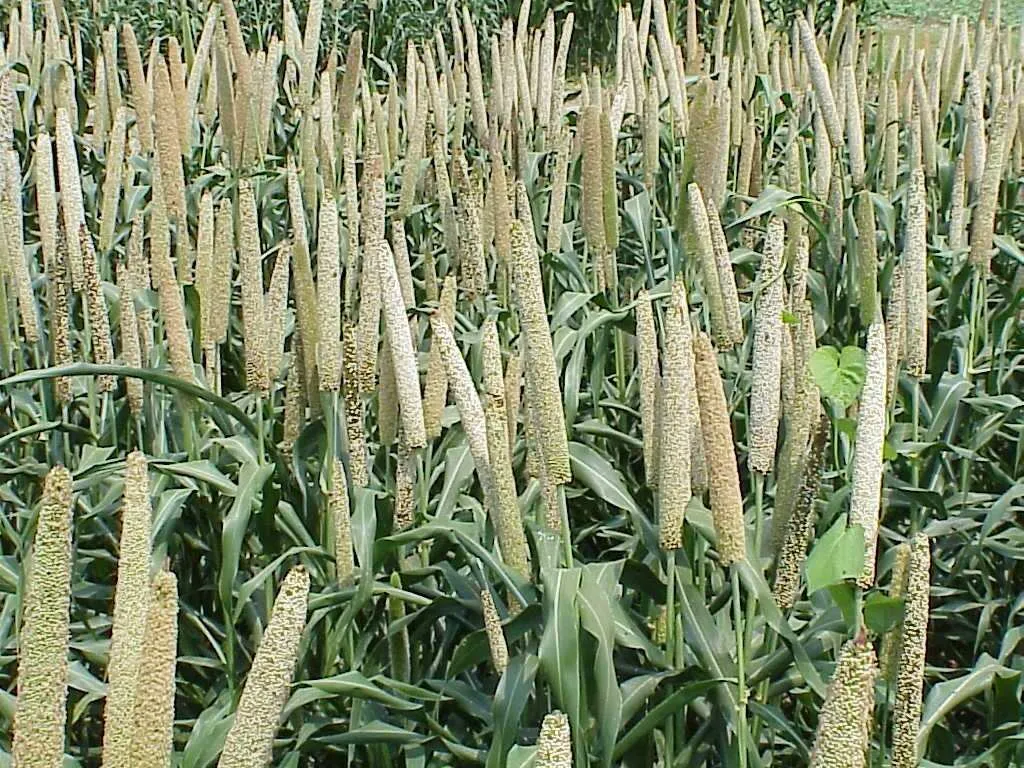 Photo: USDA, public domain, via Wikimedia Commons
Proso millet (the most common in Western retail) cooks similarly to quinoa: combine 1 cup rinsed millet with 2 cups water or broth, bring to a boil, then simmer covered for 18–20 minutes until water is absorbed and grains are fluffy. Toasting dry millet in a dry skillet for 3–4 minutes before cooking enhances its nutty flavor.
Pearl millet in South Asian cooking is stone-ground into flour for bajra roti (flatbread), a staple of Rajasthan and Gujarat. In West and East Africa, pearl millet is pounded or milled into flour for ugali, tuwo, and ogi porridge, or fermented for local beers. Fermentation (souring) reduces phytate, though in one study traditional fermentation of Sudanese pearl millet also removed over half of its magnesium and about a third of its zinc (Elnour et al., 1998).
Finger millet (ragi) is prepared as porridge, incorporated into breads, and used to make ragi mudde (balls) in Karnataka, India. It is increasingly found in health-food products marketed as a high-calcium, gluten-free alternative grain.
Millet can be used in place of quinoa in grain salads, as a rice substitute, as a breakfast porridge with fruit and nuts, or ground into flour for gluten-free baking. It stores well as an intact grain in an airtight container, but millet flour goes rancid more quickly due to the oil-containing germ.
Millet is one way to address the low fiber of many refined gluten-free products, a problem described in our review of fiber and microbiome research. Other gluten-free whole grains include buckwheat, amaranth and brown rice.
Safety, Interactions, and Contraindications
Thyroid/goitrogenic effects: The C-glycosylflavones in pearl millet inhibit thyroid peroxidase activity in vitro (Gaitan et al., 1989), and purified vitexin impaired thyroid hormone synthesis in rats at high doses (Gaitan et al., 1995). Millet has been linked to endemic goiter in parts of Sudan where it is a staple, but the human evidence is observational and a 2024 systematic review found it too weak to establish that millet causes goiter (Anitha et al., 2024); iodine deficiency and other nutritional factors are hard to disentangle. For individuals with normal thyroid function and adequate iodine intake consuming moderate amounts of millet, goitrogenic risk is likely low. Individuals with hypothyroidism, particularly those with autoimmune thyroiditis (Hashimoto’s), should discuss high millet consumption with a healthcare provider and ensure adequate iodine intake. Traditional fermentation does not remove the effect: in a rat study, fermented pearl millet had stronger effects on the thyroid than unfermented millet (Elnour et al., 1998).
Phytic acid and mineral absorption: The phytate in millet significantly reduces iron and zinc absorption. This matters most in populations where millet is a dietary staple and high-phytate diets contribute to low iron and zinc intake. Germination, debranning, and fermentation reduce phytate substantially; soaking and cooking reduce it partially (Sharma & Kapoor, 1996). Consuming millet with vitamin C-rich foods improves iron absorption.
Tannin content (dark varieties): Tannin-containing millet varieties (some finger millet types) have reduced protein digestibility due to tannin-protein complex formation. Traditional preparation methods (soaking, fermentation, roasting) partially address this.
Gluten-free certification: Millet is gluten-free by composition but may be contaminated with gluten during processing. Individuals with celiac disease should purchase certified gluten-free millet.
Kidney disease (CKD): The phosphorus content of millet is clinically relevant for individuals with CKD requiring dietary phosphorus restriction. Plant-based phosphorus has lower bioavailability than animal phosphorus, but high intake of phosphorus-rich grains still contributes meaningfully to total dietary phosphorus in CKD.
Frequently Asked Questions
Is millet gluten free?
Yes. Millet contains no gliadins or glutenins, and in laboratory studies its proteins did not cross-react with wheat gliadin in cells and gut tissue from people with celiac disease. Cross-contamination during milling and packing is the practical risk, so people with celiac disease should buy millet and millet flour certified gluten-free.
Is millet a grain?
Yes. Unlike quinoa, amaranth and buckwheat, which are pseudocereals, millets are true cereal grains: the seeds of grasses in the same family as wheat, rice and corn. The term covers several species with tiny round seeds, including pearl, proso, foxtail and finger millet. It is cooked like rice or quinoa, or ground into flour.
What is millet flour?
Millet flour is whole millet ground into a fine, slightly sweet flour. It is gluten-free, so it does not form a stretchy dough on its own; in gluten-free baking it is usually blended with starches or other flours. In India, pearl millet (bajra) flour is used for roti flatbread and finger millet (ragi) flour for porridges. Millet flour goes rancid faster than whole grain, so store it cool.
Is millet good for you?
Millet is a nutritious gluten-free whole grain with magnesium, phosphorus, B vitamins and, in finger millet, a lot of calcium. Meta-analyses of mostly small South Asian trials link eating millets to lower blood glucose and 8–10% lower cholesterol and triglycerides. Those studies were short, and its fiber (1.3 g per 100 g cooked) is modest.
Millet vs quinoa: which is healthier?
Both are gluten-free, but quinoa is the more nutrient-dense of the two per 100 g cooked: about 4.4 g protein, 2.8 g fiber and 64 mg magnesium, against 3.5 g, 1.3 g and 44 mg for millet, at similar calories. Quinoa also has more lysine. Millet is usually cheaper and milder in flavor, and finger millet is far higher in calcium.
Does millet affect the thyroid?
Possibly, in large amounts. Pearl millet contains C-glycosylflavones that inhibited thyroid peroxidase in laboratory assays and affected the thyroid in rats, and goiter has been reported where millet is a staple. A 2024 systematic review found the human evidence too weak to show millet causes goiter. People with hypothyroidism who eat a lot of millet should discuss it with a clinician.
References
Show all 13 referencesShow fewer
- Anitha, S., et al. (2021). Can millet consumption help manage hyperlipidemia and obesity?: A systematic review and meta-analysis. Frontiers in Nutrition, 8, 700778.
- Anitha, S., et al. (2021). A systematic review and meta-analysis of the potential of millets for managing and reducing the risk of developing diabetes mellitus. Frontiers in Nutrition, 8, 687428.
- Anitha, S., Upadhyay, S., Grando, S., & Kane-Potaka, J. (2024). Does consumption of pearl millet cause goiter? A systematic review of existing evidence. Frontiers in Nutrition, 11, 1323336.
- Gaitan, E., et al. (1989). Antithyroid and goitrogenic effects of millet: role of C-glycosylflavones. Journal of Clinical Endocrinology & Metabolism, 68(4), 707–714.
- Gaitan, E., Cooksey, R. C., Legan, J., & Lindsay, R. H. (1995). Antithyroid effects in vivo and in vitro of vitexin: a C-glucosylflavone in millet. Journal of Clinical Endocrinology & Metabolism, 80(4), 1144–1147.
- Elnour, A., et al. (1998). Traditional fermentation increases goitrogenic activity in pearl millet. Annals of Nutrition and Metabolism, 42(6), 341–349.
- Elnour, A., Hambraeus, L., Eltom, M., Dramaix, M., & Bourdoux, P. (2000). Endemic goiter with iodine sufficiency: a possible role for the consumption of pearl millet in the etiology of endemic goiter. American Journal of Clinical Nutrition, 71(1), 59–66.
- Sharma, A., & Kapoor, A. C. (1996). Levels of antinutritional factors in pearl millet as affected by processing treatments and various types of fermentation. Plant Foods for Human Nutrition, 49(3), 241–252.
- Bergamo, P., et al. (2011). Immunological evaluation of the alcohol-soluble protein fraction from gluten-free grains in relation to celiac disease. Molecular Nutrition & Food Research, 55(8), 1266–1270.
- Devi, P. B., Vijayabharathi, R., Sathyabama, S., Malleshi, N. G., & Priyadarisini, V. B. (2014). Health benefits of finger millet (Eleusine coracana L.) polyphenols and dietary fiber: a review. Journal of Food Science and Technology, 51(6), 1021–1040.
- Lu, H., et al. (2009). Earliest domestication of common millet (Panicum miliaceum) in East Asia extended to 10,000 years ago. Proceedings of the National Academy of Sciences, 106(18), 7367–7372.
- Manning, K., et al. (2011). 4500-Year old domesticated pearl millet (Pennisetum glaucum) from the Tilemsi Valley, Mali: new insights into an alternative cereal domestication pathway. Journal of Archaeological Science, 38(2), 312–322.
- U.S. Department of Agriculture. FoodData Central: Millet, cooked (FDC 168871).
More in Grains & Legumes
- Amaranth (Amaranthus spp.)
Amaranth benefits and nutrition: a gluten-free pseudocereal high in lysine, manganese and iron, what human studies show, and its side effects.
- Beans (Phaseolus spp.)
Beans benefits and nutrition: protein, fiber, folate and resistant starch in navy, pinto, black and kidney beans, what studies show, and side effects.
- Black Beans (Phaseolus vulgaris)
Black beans vs pinto beans compared, plus black beans nutrition and benefits: 8.9 g protein and 8.7 g fiber per 100 g cooked, and what studies show.
- Brown Rice (Oryza sativa)
Brown rice vs white rice: brown keeps the bran, with 4x the fiber and 3x the magnesium, a slightly lower GI and more arsenic. Benefits and evidence.
- Buckwheat (Fagopyrum esculentum)
Is buckwheat gluten free? Yes: it is a seed unrelated to wheat. Buckwheat nutrition, rutin, glycemic index, benefits, allergy and side effects.
- Chickpeas (Cicer arietinum)
Chickpeas (garbanzo beans) benefits and nutrition: 8.9 g protein, 7.6 g fiber and 43% DV folate per 100 g, a GI near 28, what studies show, side effects.

Curated by Superfoods Advisor Editors·Last updated