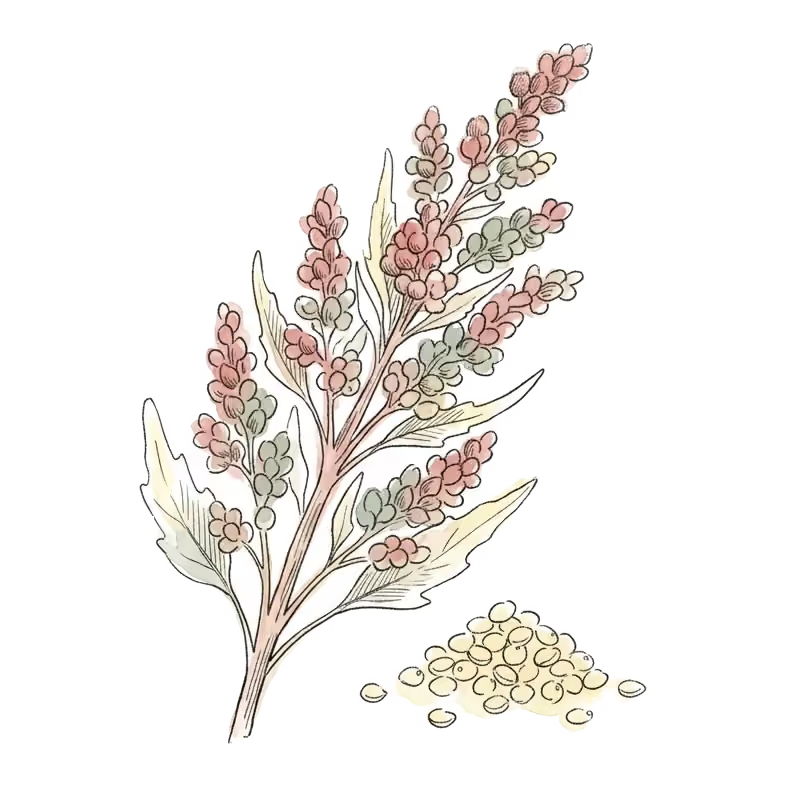
Quinoa (Chenopodium quinoa)
Chenopodium quinoa · also known as Andean grain, Inca rice, mother grain
By Superfoods Advisor Editors·July 3, 2026
Is quinoa good for you? This gluten-free seed has complete protein, 2.8 g fiber and 64 mg magnesium per 100 g cooked. Quinoa vs rice, benefits, safety.
Quinoa is good for most people: this gluten-free seed of Chenopodium quinoa, a plant in the amaranth family, provides complete protein with all nine essential amino acids, plus about 2.8 g fiber and 64 mg magnesium per 100 g cooked, for 120 kcal. Claims for blood sugar and heart health rest on small, preliminary studies.
Quinoa is native to the Andean plateau of South America and has been cultivated there for roughly 7,000 years (Vega-Gálvez et al., 2010), with the Lake Titicaca basin — spanning modern Peru and Bolivia — a center of its early cultivation. The Inca Empire elevated it to a sacred crop, calling it chisaya mama (“mother of all grains”), and its cultivation extended from Colombia to northern Chile and Argentina across a wide range of altitudes, temperatures, and soil conditions. Spanish colonization suppressed quinoa cultivation in the sixteenth century, but it persisted as a subsistence crop among Andean communities. A surge in global demand beginning in the 1990s and accelerating through the 2000s made quinoa an internationally traded commodity by the 2010s, with Bolivia and Peru remaining the dominant producers.
Like amaranth, quinoa is a pseudocereal — the botanical “seed” is an achene from a broadleaf plant rather than the grain of a grass. It is naturally gluten-free, extremely adaptable to difficult growing conditions (drought, salinity, frost), and has attracted scientific attention as a crop with potential for food security in the context of climate change. The United Nations declared 2013 the International Year of Quinoa, recognizing its nutritional properties and resilience.
Evidence at a glance
Active Compounds
- Complete amino acid profile: Raw quinoa contains roughly 9–16 g of protein per 100 g, depending on variety and data source (Nowak et al., 2016). The protein contains all nine essential amino acids and is relatively rich in lysine — the amino acid most limiting in cereal grains (Dakhili et al., 2019). In one analysis, lysine and the sulfur amino acids were relatively high; the aromatic amino acids were first-limiting, giving a chemical score of 86, and true protein digestibility in rats was about 92% (Ruales & Nair, 1992).
- Saponins: Bitter triterpenoid glycosides concentrated in the seed coat (pericarp) of quinoa. Quinoa saponins have emulsifying and foam-forming properties; they are antinutritional at high concentrations, reducing palatability and potentially irritating intestinal mucosa. Commercial quinoa is typically mechanically and/or water-washed to reduce saponin content. In an in vitro digestion model, quinoa saponin extracts inhibited pancreatic lipase, and hydrolyzed extracts also reduced the amount of cholesterol available for absorption (Navarro Del Hierro et al., 2021); whether this applies to eating quinoa is unknown.
- Polyphenols: Quinoa contains the flavonols quercetin and kaempferol, mainly as glycosides. Flavonoid glycoside content varied more than four-fold across 17 quinoa sources in one analysis (Graf et al., 2016).
- Phytoecdysteroids (20-hydroxyecdysone, ecdysone): Steroidal compounds involved in insect molting that are present in quinoa at significant concentrations, with total content varying about four-fold between sources (Graf et al., 2016). Emerging evidence suggests 20-hydroxyecdysone may influence protein synthesis pathways in mammals; a 10-week strength-training study in 46 young men (Isenmann et al., 2019) reported larger gains in muscle mass with supplemental ecdysterone. Research is preliminary and not yet translatable to dietary quinoa quantities.
- Fiber (soluble and insoluble): Quinoa provides approximately 2.8 g of dietary fiber per 100 g cooked (USDA FoodData Central) — lower than most legumes but more than cooked long-grain brown rice at 1.6 g (USDA FoodData Central).
- Betaines: Like other members of the amaranth family, quinoa accumulates glycine betaine, an osmolyte that helps the plant tolerate drought and salinity. In a survey of cereal foods, quinoa had the highest betaine content measured (Ross et al., 2014). Whether the amounts eaten in quinoa affect human health has not been established.
- Minerals: Quinoa is notably rich in magnesium, phosphorus, iron, zinc, and manganese — in all cases providing more than most refined cereal grains at equivalent serving sizes.
Nutritional Profile
Values are approximate per 100 g of cooked quinoa (USDA FoodData Central):
| Nutrient | Amount | % DV |
|---|---|---|
| Energy | 120 kcal | — |
| Protein | 4.4 g | — |
| Total fat | 1.9 g | — |
| Carbohydrate | 21.3 g | — |
| Dietary fiber | 2.8 g | — |
| Iron | 1.5 mg | 8% |
| Magnesium | 64 mg | 15% |
| Phosphorus | 152 mg | 12% |
| Zinc | 1.1 mg | 10% |
| Manganese | 0.63 mg | 27% |
| Copper | 0.19 mg | 21% |
| Folate | 42 µg | 11% |
| Thiamin (B1) | 0.11 mg | 9% |
| Riboflavin (B2) | 0.11 mg | 8% |
Human glycemic index data for quinoa are sparse; in one small study of healthy volunteers, quinoa’s GI was slightly lower than that of gluten-free pasta and bread (Berti et al., 2004). For comparison, white rice averages a GI of about 73 and white wheat bread about 75 (Atkinson et al., 2008). The protein content (4.4 g per 100 g cooked) is well above cooked white rice (2.7 g) (USDA FoodData Central), though below cooked wheat pasta (5.8 g) (USDA FoodData Central).
Quinoa vs Rice
Quinoa is more nutrient-dense than rice at nearly the same calories. Per 100 g cooked, it has about 4.4 g protein against 2.7 g in brown rice, 2.8 g fiber against 1.6 g, and 64 mg magnesium against 39 mg; enriched white rice is lower still in fiber and magnesium (USDA FoodData Central: quinoa, brown rice). Quinoa protein is also complete, while rice protein is limited by lysine. Rice is cheaper and milder, and both are gluten-free.
Evidence for Purported Benefits
Protein Quality and Amino Acid Completeness
Evidence:Strong Amino acid analysis and rat digestibility studies; human trials on muscle or growth outcomes are few.
Quinoa is one of the few plant foods that provides all essential amino acids in proportions approaching the reference pattern for human requirements (WHO/FAO reference amino acid scoring pattern). In rat feeding experiments its protein showed a true digestibility of about 92% and a biological value of about 83 (Ruales & Nair, 1992), and its essential amino acid content is generally higher than that of common cereals, and makes quinoa a valuable protein source in diets that are predominantly or wholly plant-based. Clinical trials demonstrating protein-quality superiority of quinoa over other plant proteins in terms of muscle protein synthesis or growth in free-living humans are limited in number but mechanistically plausible.
Glycemic Control
Evidence:Preliminary One small preload study, which measured appetite rather than glucose; the rest is mechanistic.
Quinoa has not been shown to improve blood sugar control; the human data are too thin to say. Human data on quinoa’s postprandial glycemic response are limited. A small within-subject preload study (Berti et al., 2005) focused on appetite rather than glucose: quinoa scored higher than rice on a satiating-efficiency index, but eating it did not reduce total energy intake at the following meal. Mechanisms proposed include the fiber content, protein-mediated gastric emptying delay, and starch encapsulation within intact seed tissue. Evidence is insufficient to recommend quinoa as a glycemic management intervention, but its fiber and protein make it a reasonable substitute for refined grains.
Cardiovascular Risk
Evidence:Preliminary In vitro saponin data, flavonol cohort studies not specific to quinoa, and one small uncontrolled study.
In an in vitro digestion model, hydrolyzed quinoa saponin extracts reduced cholesterol bioaccessibility (Navarro Del Hierro et al., 2021). Higher intakes of flavonols, and of quercetin and kaempferol individually, were associated with lower coronary heart disease or cardiovascular risk in a meta-analysis of prospective cohorts (Micek et al., 2021); evidence specific to quinoa is not available. An uncontrolled intervention study in 22 students aged 18–45 (Farinazzi-Machado et al., 2012) found that eating a quinoa cereal bar daily for 30 days was followed by lower total cholesterol, triglycerides, and LDL cholesterol in part of the group, but the study was small and had no control group.
Metabolic Syndrome and Antioxidant Status
Evidence:Preliminary One 12-week RCT in 50 adults found lower triglycerides at 50 g/day; replication is needed.
A 12-week single-blind RCT in 50 overweight and obese adults (Navarro-Perez et al., 2017) found that 50 g/day of quinoa lowered serum triglycerides and the prevalence of metabolic syndrome, while 25 g/day did not change triglycerides; body composition and total, LDL, and HDL cholesterol were unchanged. The trial was small and findings require replication in larger studies before clinical conclusions can be drawn.
Typical Use and Preparation
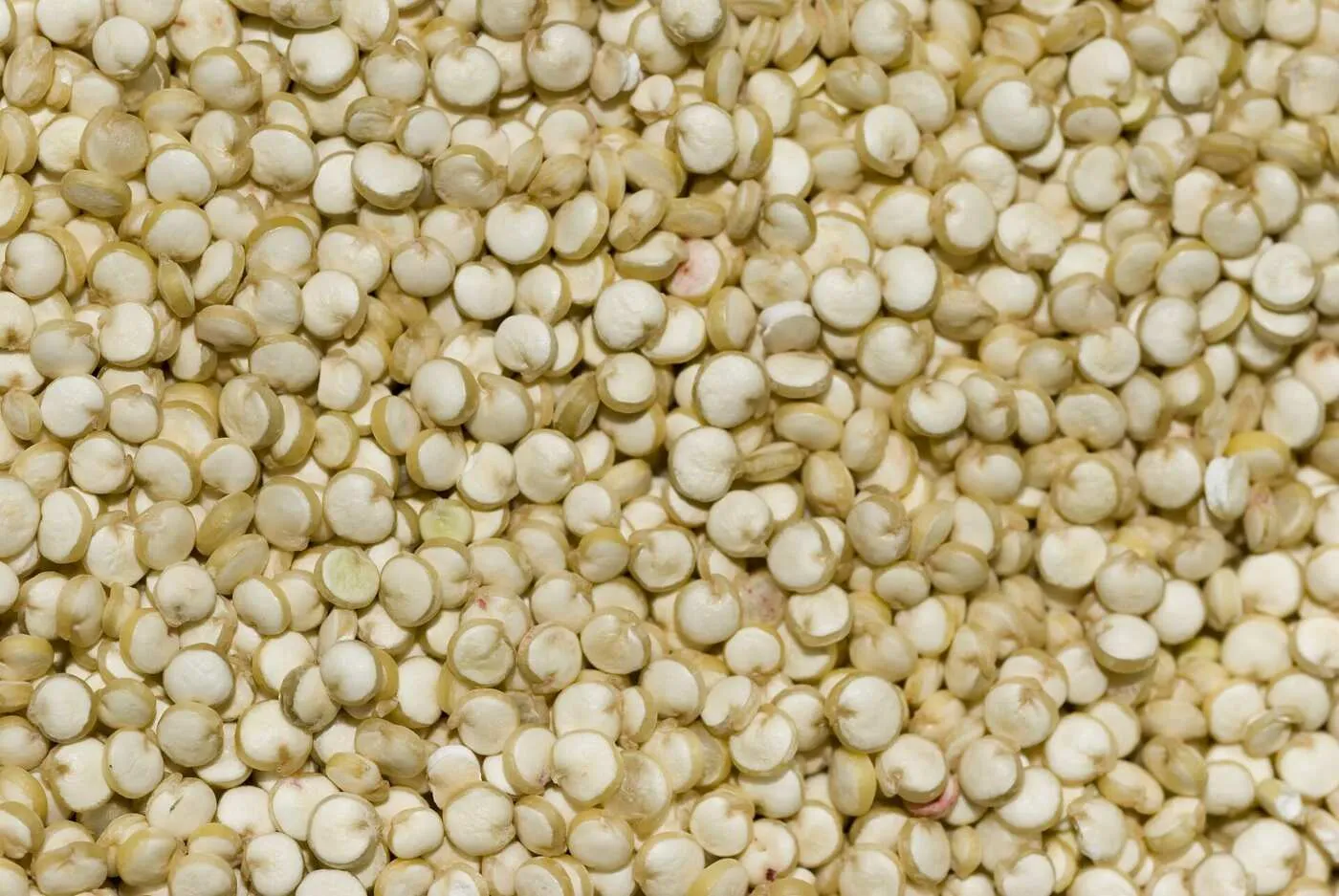 Photo: Pom², CC BY-SA 3.0, via Wikimedia Commons
Rinsing: Despite commercial pre-washing, quinoa should be thoroughly rinsed in cold water through a fine-mesh strainer before cooking to remove any residual saponins that may cause bitterness. Rinsing for 30–60 seconds under running water is typically sufficient. This is the most important preparatory step for palatability.
Cooking: Combine 1 part quinoa with 2 parts water or broth. Bring to a boil, reduce to a low simmer, cover, and cook for 12–15 minutes until the liquid is absorbed and the characteristic germ “spiral” (the tiny white tail) is visible. Let stand covered for 5 minutes, then fluff with a fork.
Toasting before cooking: Dry-toasting quinoa in a heavy pan over medium heat for 3–5 minutes before cooking intensifies its nutty flavor and slightly reduces cooking time.
Resistant starch: Cooling cooked starchy foods promotes resistant starch formation through retrogradation. Whether refrigerating cooked quinoa meaningfully lowers its glycemic response has not been tested.
Flour: Quinoa flour can replace part of the wheat flour in baked goods. As a gluten-free flour, it requires xanthan gum or other binding agents when used as the sole flour. It has a slightly bitter, earthy flavor that benefits from toasting before milling.
Sprouting: Germination degrades some antinutritional compounds in quinoa and other Andean seeds and can improve the availability of certain minerals and vitamins (Jiménez et al., 2024). The sprouted seeds can be eaten raw in salads or lightly cooked.
Quinoa is covered alongside hemp seeds and legumes in the plant-based protein guide. Its close relative amaranth and millet are other gluten-free alternatives.
Safety, Interactions, and Contraindications
Saponins and gastrointestinal irritation: Inadequately washed quinoa retains bitter-tasting saponins that can cause nausea or gastrointestinal discomfort in sensitive individuals. Thorough rinsing before cooking reduces residual saponins. In one in vitro study, natural saponins extracted from quinoa husk showed no hemolytic (red-cell-damaging) activity, while chemically hydrolyzed forms did (Savarino et al., 2022).
Oxalate content: Quinoa contains oxalate. Individuals with a history of calcium oxalate kidney stones or hyperoxaluria should be aware of this and consult a healthcare provider regarding intake.
Gluten cross-contamination: Quinoa is intrinsically gluten-free. Commercial quinoa is processed in facilities that may also handle gluten-containing grains. Individuals with celiac disease should choose products certified gluten-free by a recognized program. In vitro work had suggested some quinoa prolamins could stimulate immune responses in celiac patients, but in a small study 19 treated celiac patients tolerated 50 g of quinoa daily for 6 weeks without worsening of the condition (Zevallos et al., 2014).
Medication interactions: Drug interactions specific to quinoa have not been studied. The high fiber content may theoretically slow absorption of co-administered oral medications; general precautions apply (see lentils and oats entries).
Frequently Asked Questions
Is quinoa a superfood?
“Superfood” is a marketing term with no legal definition, but quinoa’s nutrition holds up better than most of the claims made for it. Its best-supported strength is protein quality: it provides all nine essential amino acids and is relatively rich in lysine, which most cereals lack. Per 100 g cooked it also supplies about 2.8 g of fiber and 64 mg of magnesium for 120 kcal. Evidence that it improves blood sugar or heart health comes only from small, preliminary studies.
Is quinoa a complete protein?
Yes. Quinoa contains all nine essential amino acids and is relatively rich in lysine, which most cereal grains lack. In one analysis its first-limiting amino acids were the aromatic ones, giving a chemical score of 86, and its protein was about 92% digestible in rats. Cooked quinoa supplies about 4.4 g protein per 100 g, roughly 8 g per cup.
Is quinoa ok for type 2 diabetes?
Quinoa can fit a diabetes eating plan as a higher-fiber, higher-protein swap for refined grains, but it is still a starchy food, and studies have not shown that it improves blood sugar control. The human data are limited to a small appetite study. People with type 2 diabetes should count quinoa portions as carbohydrate and plan changes with their care team.
Why is quinoa better for you than rice?
Per 100 g cooked, quinoa has more protein (4.4 g vs 2.7 g in brown rice), more fiber (2.8 g vs 1.6 g) and more magnesium (64 mg vs 39 mg), at similar calories, and its protein is complete. Whether this leads to better health outcomes has not been tested in trials comparing the two. For variety, swapping between them works well.
Is quinoa gluten free?
Yes. Quinoa is a pseudocereal, not a grass, and contains no gluten. In a small study, 19 people with treated celiac disease ate 50 g of quinoa daily for six weeks without their condition worsening. Because it may be processed alongside wheat, people with celiac disease should choose quinoa certified gluten-free.
Is quinoa high in calcium?
No. Cooked quinoa provides only about 17 mg calcium per 100 g, a small fraction of the daily value (USDA). It is a better source of magnesium, manganese, phosphorus and iron. For a grain-like food with more calcium, finger millet is unusually high, and amaranth has about 47 mg per 100 g cooked.
What are the side effects of quinoa?
Few for most people. Poorly rinsed quinoa can taste bitter and, in sensitive people, cause nausea or stomach upset from residual saponins, so rinse it before cooking. Quinoa contains oxalate, so people with a history of calcium oxalate kidney stones should ask a clinician about intake. Its fiber can cause gas if intake rises quickly.
References
Show all 18 referencesShow fewer
- Nowak, V., Du, J., & Charrondière, U. R. (2016). Assessment of the nutritional composition of quinoa (Chenopodium quinoa Willd.). Food Chemistry, 193, 47–54.
- Berti, C., et al. (2005). Effect on appetite control of minor cereal and pseudocereal products. British Journal of Nutrition, 94(5), 850–858.
- Farinazzi-Machado, F. M. V., et al. (2012). Use of cereal bars with quinoa (Chenopodium quinoa W.) to reduce risk factors related to cardiovascular diseases. Food Science and Technology (Campinas), 32(2), 239–244.
- Navarro-Perez, D., et al. (2017). Quinoa seed lowers serum triglycerides in overweight and obese subjects: A dose-response randomized controlled clinical trial. Current Developments in Nutrition, 1(9), e001321.
- Isenmann, E., et al. (2019). Ecdysteroids as non-conventional anabolic agent: Performance enhancement by ecdysterone supplementation in humans. Archives of Toxicology, 93(7), 1807–1816.
- USDA FoodData Central. Quinoa, cooked. FDC ID 168917. U.S. Department of Agriculture.
- Vega-Gálvez, A., et al. (2010). Nutrition facts and functional potential of quinoa (Chenopodium quinoa Willd.), an ancient Andean grain: A review. Journal of the Science of Food and Agriculture, 90(15), 2541–2547.
- Ruales, J., & Nair, B. M. (1992). Nutritional quality of the protein in quinoa (Chenopodium quinoa, Willd) seeds. Plant Foods for Human Nutrition, 42(1), 1–11.
- Dakhili, S., et al. (2019). Quinoa protein: Composition, structure and functional properties. Food Chemistry, 299, 125161.
- Berti, C., et al. (2004). In vitro starch digestibility and in vivo glucose response of gluten-free foods and their gluten counterparts. European Journal of Nutrition, 43(4), 198–204.
- Atkinson, F. S., Foster-Powell, K., & Brand-Miller, J. C. (2008). International tables of glycemic index and glycemic load values: 2008. Diabetes Care, 31(12), 2281–2283.
- Navarro Del Hierro, J., et al. (2021). The hydrolysis of saponin-rich extracts from fenugreek and quinoa improves their pancreatic lipase inhibitory activity and hypocholesterolemic effect. Food Chemistry, 338, 128113.
- Graf, B. L., et al. (2016). Phytoecdysteroids and flavonoid glycosides among Chilean and commercial sources of Chenopodium quinoa: variation and correlation to physico-chemical characteristics. Journal of the Science of Food and Agriculture, 96(2), 633–643.
- Ross, A. B., Zangger, A., & Guiraud, S. P. (2014). Cereal foods are the major source of betaine in the Western diet. Food Chemistry, 145, 859–865.
- Micek, A., et al. (2021). Dietary flavonoids and cardiovascular disease: A comprehensive dose-response meta-analysis. Molecular Nutrition & Food Research, 65(6), e2001019.
- Jiménez, M. D., et al. (2024). Andean crops germination: Changes in the nutritional profile, physical and sensory characteristics. A review. Plant Foods for Human Nutrition, 79(3), 551–562.
- Savarino, P., et al. (2022). Impact of the hydrolysis and methanolysis of bidesmosidic Chenopodium quinoa saponins on their hemolytic activity. Molecules, 27(10), 3211.
- Zevallos, V. F., et al. (2014). Gastrointestinal effects of eating quinoa (Chenopodium quinoa Willd.) in celiac patients. American Journal of Gastroenterology, 109(2), 270–278.
Related content
More in Grains & Legumes
- Amaranth (Amaranthus spp.)
Amaranth benefits and nutrition: a gluten-free pseudocereal high in lysine, manganese and iron, what human studies show, and its side effects.
- Beans (Phaseolus spp.)
Beans benefits and nutrition: protein, fiber, folate and resistant starch in navy, pinto, black and kidney beans, what studies show, and side effects.
- Black Beans (Phaseolus vulgaris)
Black beans vs pinto beans compared, plus black beans nutrition and benefits: 8.9 g protein and 8.7 g fiber per 100 g cooked, and what studies show.
- Brown Rice (Oryza sativa)
Brown rice vs white rice: brown keeps the bran, with 4x the fiber and 3x the magnesium, a slightly lower GI and more arsenic. Benefits and evidence.
- Buckwheat (Fagopyrum esculentum)
Is buckwheat gluten free? Yes: it is a seed unrelated to wheat. Buckwheat nutrition, rutin, glycemic index, benefits, allergy and side effects.
- Chickpeas (Cicer arietinum)
Chickpeas (garbanzo beans) benefits and nutrition: 8.9 g protein, 7.6 g fiber and 43% DV folate per 100 g, a GI near 28, what studies show, side effects.


Curated by Superfoods Advisor Editors·Last updated