Swiss Chard (Beta vulgaris subsp. vulgaris)
Beta vulgaris subsp. vulgaris · also known as chard, silverbeet, mangold, leaf beet, spinach beet, seakale beet
By Superfoods Advisor Editors·July 3, 2026
Swiss chard benefits and nutrition: vitamin K, magnesium and nitrate per 100 g, what research shows, its high oxalate and sodium, and how to cook it.
Swiss chard (Beta vulgaris subsp. vulgaris) is a leafy variety of the common beet, grown for its leaves and colored stalks. Per 100 g raw it provides 830 µg of vitamin K, 81 mg of magnesium and 30 mg of vitamin C for 19 kcal, and it is one of the more nitrate-rich greens. Health claims are untested in people.
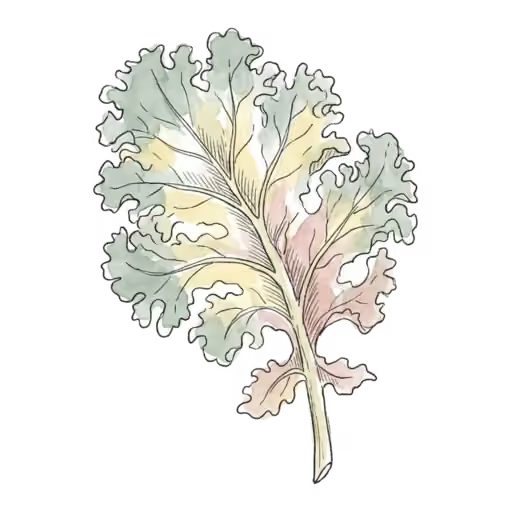
Chard belongs to the Cicla Group of the amaranth family (Amaranthaceae) and is closely related to beetroot, but was selected for its large edible leaves and fleshy stalks rather than its root. Despite the name, it did not originate in Switzerland, and how the “Swiss” label arose is unclear. It comes from the Mediterranean basin, has been grown since antiquity, and appears in ancient Greek texts.
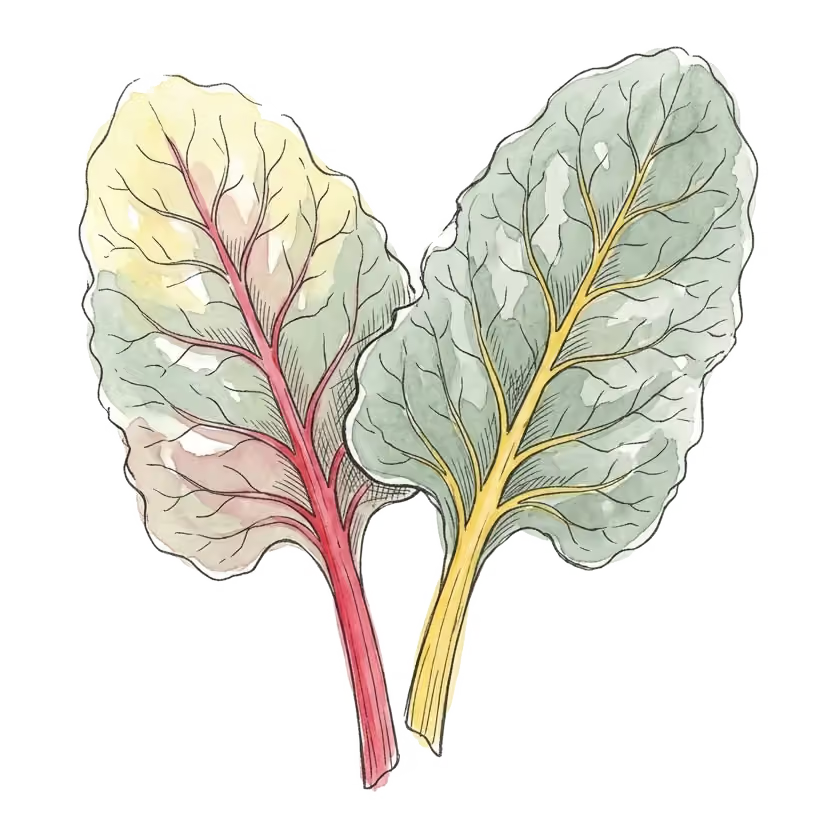
Cultivars differ mainly in stem color: white-stalked “Fordhook Giant,” red-stalked “Rhubarb Chard,” and the multicolored “Rainbow Chard” blend. The colors come from betalains, nitrogen-containing pigments also found in beets. Chard is grown across Europe, North America and parts of Asia.
Evidence at a glance
Active Compounds
Swiss chard’s phytochemical profile shares significant overlap with spinach, including a critically important nutritional limitation:
Betalains: The red, yellow, and orange coloration of chard stems is produced by betalains — specifically betacyanins (red-violet) and betaxanthins (yellow). These pigments are structurally distinct from anthocyanins and have demonstrated antioxidant and anti-inflammatory properties in vitro. Their bioavailability appears low: in a small pilot study of six women, only about 0.3% of the betalains in 500 mL of red beet juice were recovered intact in urine (Frank et al., 2005), though the authors noted that metabolism or non-renal elimination may account for some of the gap. Human evidence for clinical benefit from food-derived betalains is preliminary.
Kaempferol and quercetin: Flavonols reported in chard leaves, with kaempferol the most abundant flavonoid in one analysis (Pyo et al., 2004). Both have extensive in vitro evidence for antioxidant, anti-inflammatory, and anti-angiogenic effects. Higher kaempferol intake was associated with lower ovarian cancer incidence in the Nurses’ Health Study (Gates et al., 2007), though confounding by overall dietary pattern is substantial.
Syringic acid: The main phenolic acid measured in chard leaves by Pyo et al. (2004). It has shown antidiabetic and antioxidant activity in laboratory and animal studies (Srinivasulu et al., 2018). Human evidence is absent.
Oxalic acid (oxalate): Swiss chard contains very high concentrations of oxalate — published analyses report roughly 500–1,450 mg total oxalate per 100 g fresh weight, with far more in the leaves than the stems (Salgado et al., 2023) — comparable to spinach. As with spinach, oxalic acid forms insoluble mineral complexes in the gastrointestinal tract, sharply reducing the absorption of calcium from the same food: in spinach, which has similar oxalate levels, calcium absorption was about 5% versus 28% from milk (Heaney et al., 1988). The calcium value on food labels does not reflect the bioavailable amount. Iron is a different case: in an isotope study, adding spinach-level oxalate to a kale meal did not change non-heme iron absorption (Genannt Bonsmann et al., 2008), although non-heme iron from plant foods is poorly absorbed in general. Boiling and discarding the cooking water lowers oxalate: in an analysis of nine vegetables, boiling cut soluble oxalate by 30–87% versus 5–53% for steaming (Chai & Liebman, 2005). Individuals at risk for calcium oxalate kidney stones should moderate chard intake consistent with their urologist’s guidance.
Nutritional Profile
Values for raw Swiss chard per 100 g edible portion (USDA FoodData Central, SR Legacy):
| Nutrient | Amount | % DV |
|---|---|---|
| Energy | 19 kcal | — |
| Protein | 1.8 g | — |
| Total fat | 0.2 g | — |
| Carbohydrates | 3.7 g | — |
| Dietary fiber | 1.6 g | — |
| Vitamin K | 830 µg | 692% |
| Vitamin A (RAE) | 306 µg | 34% |
| Vitamin C | 30 mg | 33% |
| Vitamin E | 1.9 mg | 13% |
| Iron | 1.8 mg* | 10% |
| Calcium | 51 mg* | 4% |
| Magnesium | 81 mg | 19% |
| Potassium | 379 mg | 8% |
| Sodium | 213 mg | 9% |
*Bioavailable calcium from chard is substantially lower than this figure due to oxalate binding; non-heme iron from plant foods is also poorly absorbed, though oxalate does not appear to be the cause. See Active Compounds section.
Swiss chard has notably high natural sodium content for a leafy vegetable — a consideration for individuals on sodium-restricted diets.
Evidence for Purported Benefits
Antioxidant and Anti-inflammatory Activity
Evidence:Lab & animal only Cell culture and rodent studies of chard pigments and flavonoids; no human trials.
Betalains, kaempferol, and quercetin from chard have all demonstrated antioxidant and anti-inflammatory activity in cell culture and rodent models. A 2004 study by Kugler et al. identified 19 betaxanthins and 9 betacyanins in the differently coloured stalks of the ‘Bright Lights’ cultivar, mapping which pigments produce which colour; it did not measure biological activity. Translation of these findings to measurable health outcomes in humans has not been rigorously tested for chard specifically.
Blood Glucose Management
Evidence:Lab & animal only One study in diabetic rats; no human trials.
Extracts of Swiss chard have been studied in diabetic animal models. A 2000 study by Bolkent et al. in streptozotocin-induced diabetic rats found that aqueous Swiss chard extract produced statistically significant reductions in blood glucose and improvements in pancreatic beta-cell morphology. The authors attributed the effect to regeneration of pancreatic beta cells; no specific compound was tested. Human trials are absent; these findings cannot be extrapolated to clinical recommendations.
Bone and Connective Tissue Health
Evidence:Insufficient Vitamin K supplement trials are mixed and mostly used K2; dietary K1 from chard has not been studied for bone outcomes.
Swiss chard’s very high vitamin K content (830 µg/100 g per USDA FoodData Central, roughly 7× the 120 µg adequate intake for adult men) is frequently cited in relation to bone health, given vitamin K’s role in activating osteocalcin, a bone matrix protein. While vitamin K supplementation trials (predominantly using vitamin K₂/menaquinone) have shown mixed results for fracture reduction, the relevance of dietary vitamin K₁ from chard for bone outcomes has not been directly studied. The exceptionally high vitamin K content is clinically significant primarily as a concern for individuals on anticoagulant therapy (see Safety section).
Cardiovascular Function
Evidence:Preliminary Inferred from nitrate trials using beetroot or nitrate salts; a whole leafy-green trial found no effect, and chard itself is untested.
Chard is among the more nitrate-rich leafy vegetables; in a Croatian survey of 96 vegetable samples, only rocket had higher nitrate values (Luetic et al., 2023). The mechanistic evidence for dietary nitrate and blood pressure described for spinach is applicable to chard: a meta-analysis of 16 short crossover trials (254 participants, 2 hours to 15 days) found that inorganic nitrate and beetroot juice lowered systolic blood pressure by about 4.4 mmHg, with no significant diastolic effect (Siervo et al., 2013). Whole leafy greens have not reproduced this reliably: in a 7-day crossover trial in 38 adults with high-normal blood pressure, a diet adding at least 300 mg/day of nitrate from green leafy vegetables did not lower blood pressure (Bondonno et al., 2014). No trials have specifically used Swiss chard as the nitrate intervention. Potassium content (379 mg/100 g) also contributes to the evidence base for chard as part of a blood pressure-supportive dietary pattern, consistent with the DASH dietary approach.
Typical Use and Preparation
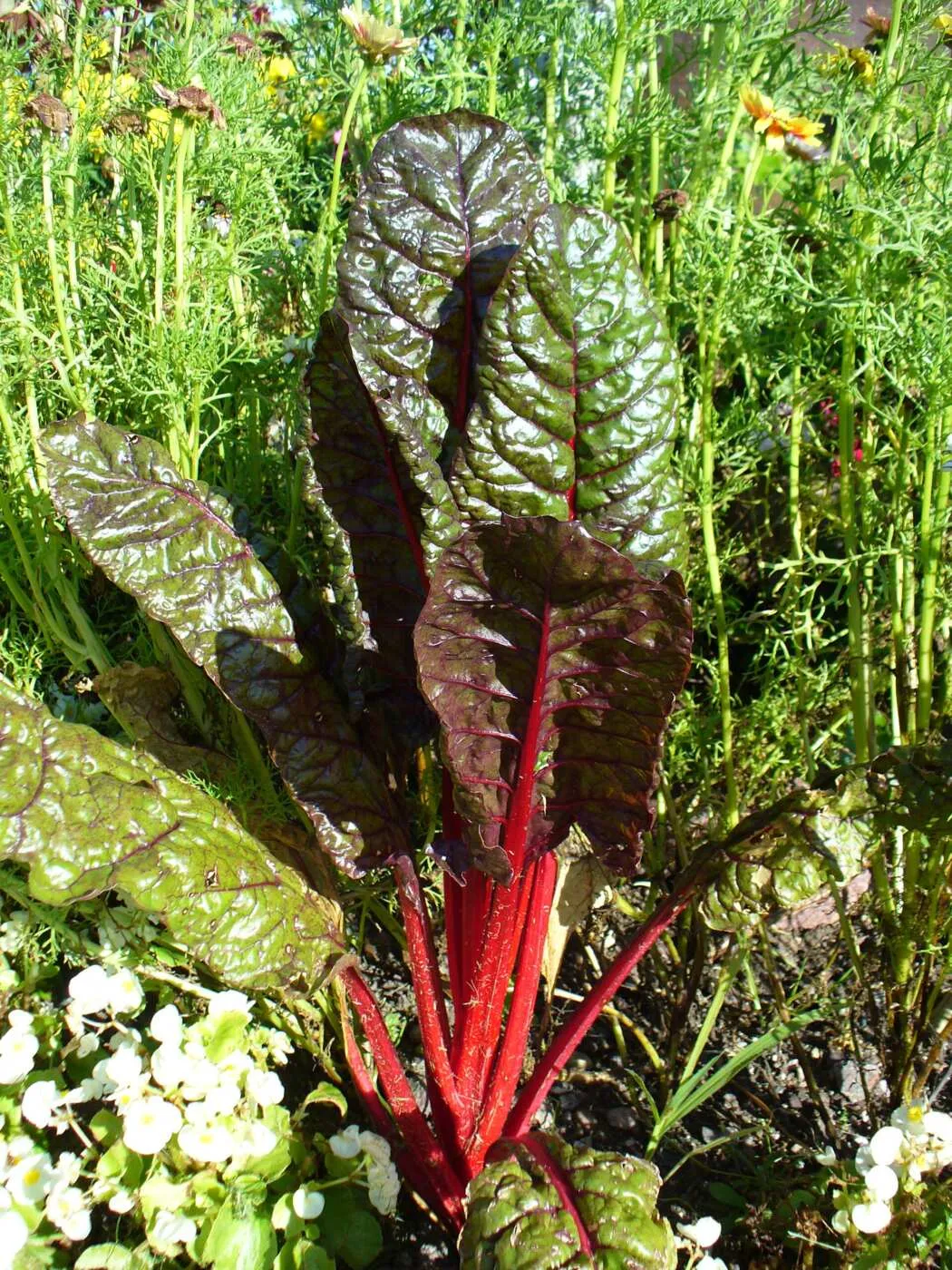 Photo: Neelix at English Wikipedia, public domain, via Wikimedia Commons
Swiss chard is consumed both raw and cooked. Young, tender leaves from chard can be used raw in salads but have a more assertive, slightly bitter taste compared to baby spinach. Mature leaves benefit from cooking, which mellows bitterness and reduces oxalate content. Common preparations include sautéing in olive oil with garlic, adding to soups and stews, blanching and squeezing dry for use in stuffed pasta or pastries, and incorporating into egg dishes.
The stems and leaves have different cooking times; stems require 3–5 minutes longer to become tender and are sometimes separated and cooked first, or used separately in preparations such as gratins. Boiling chard in a generous amount of water and discarding the cooking liquid is the most effective preparation method for reducing oxalate content, which is particularly relevant for individuals with kidney stone history or those seeking to maximize calcium absorption from the vegetable.
Vitamin C is substantially degraded by prolonged heating. Brief cooking (2–4 minutes of sautéing or steaming) preserves more vitamin C than longer boiling.
Swiss chard is named among the leading sources of dietary nitrate in the heart-health guide, which walks through the nitrate-nitric oxide pathway. Its closest leafy relative in the kitchen is spinach, which shares its high oxalate; for a cooking green whose calcium is better absorbed, see collard greens.
Safety, Interactions, and Contraindications
Vitamin K and anticoagulants: Swiss chard has one of the highest vitamin K contents of any commonly consumed vegetable (830 µg/100 g raw, 327 µg/100 g boiled and drained, per USDA FoodData Central raw and boiled entries). This is of critical clinical importance for individuals taking warfarin (Coumadin), acenocoumarol, or other vitamin K-antagonist anticoagulants. A single large serving of chard can deliver several times the adequate intake for vitamin K and may significantly reduce anticoagulation efficacy, increasing clot risk. Patients on these medications should discuss consistent dietary vitamin K management with their prescribing clinician and should not substantially alter chard intake without guidance.
Oxalate and kidney stones: The high oxalate content of Swiss chard is a well-established dietary concern for individuals with a history of calcium oxalate kidney stones. A review of dietary oxalate concluded that stone formers are likely to benefit from reducing oxalate intake, especially those with high urinary oxalate (Massey, 2003); counseling typically involves limiting very high-oxalate foods including chard, spinach, beet greens, and rhubarb. If chard is consumed, boiling with water discarded is recommended. Adequate hydration and dietary calcium intake (which binds gut oxalate) are standard adjuncts.
Sodium content: Swiss chard contains approximately 213 mg sodium per 100 g raw — relatively high for a leafy vegetable. Individuals with hypertension or on sodium-restricted diets should account for this, particularly when consuming chard in large quantities.
Hyperkalemia risk: As with spinach, chard’s potassium content (379 mg/100 g) warrants attention in individuals with impaired renal potassium excretion or those on potassium-sparing medications.
This content is for educational purposes only and does not constitute medical advice, diagnosis, or treatment. Consult a qualified healthcare provider before making changes to your diet or supplement regimen.
Frequently Asked Questions
Is Swiss chard good for you?
Swiss chard is a low-calorie, nutrient-dense green: 100 g raw has 19 kcal, 830 µg of vitamin K, 306 µg of vitamin A, 81 mg of magnesium and 30 mg of vitamin C. Claimed antioxidant and blood sugar benefits come from cell and rat studies only. Its high oxalate, sodium and vitamin K matter for people with kidney stones, sodium limits or warfarin prescriptions.
Is Swiss chard high in oxalates?
Yes. Published analyses report roughly 500–1,450 mg of oxalate per 100 g of fresh chard, far more in the leaves than the stems, which is comparable to spinach. Boiling chard in plenty of water and discarding the liquid is the most effective way to lower it. People with a history of calcium oxalate kidney stones are typically advised to limit very high-oxalate foods like chard.
Can you eat Swiss chard raw?
Yes. Young, tender leaves can go into salads, though they taste more assertive and slightly bitter than baby spinach. Mature leaves are usually cooked, which mellows the bitterness and lowers oxalate. The stems take 3–5 minutes longer to soften than the leaves, so they are often cooked first or used separately, for example in gratins.
Does Swiss chard have iron?
Swiss chard has about 1.8 mg of iron per 100 g raw, according to USDA FoodData Central. As with all plant foods, this is non-heme iron and is poorly absorbed, though oxalate does not appear to be the main reason. Chard is better described as a source of vitamin K and magnesium than as a dependable iron source.
Is Swiss chard cruciferous?
No. Swiss chard is Beta vulgaris, a beet, in the amaranth family alongside spinach. Cruciferous vegetables such as kale, collards and broccoli belong to the Brassicaceae family and contain glucosinolates, which chard does not. Chard’s characteristic compounds are betalain pigments in the stalks and flavonols such as kaempferol in the leaves.
Swiss chard vs collard greens: which is better?
They suit different needs. Collards are a cruciferous green with about 232 mg of calcium per 100 g raw, and calcium from kale-family brassicas is absorbed about as well as milk’s. Chard has more vitamin K (830 µg versus 437 µg) and magnesium, but its high oxalate leaves little calcium available, which is why kidney-stone formers are usually steered away from it.
References
Show all 14 referencesShow fewer
- Kugler, F., Stintzing, F. C., & Carle, R. (2004). Identification of betalains from petioles of differently colored Swiss chard (Beta vulgaris L. ssp. cicla [L.] Alef. Cv. Bright Lights) by high-performance liquid chromatography-electrospray ionization mass spectrometry. Journal of Agricultural and Food Chemistry, 52(10), 2975–2981.
- Bolkent, S., Yanardağ, R., Tabakoğlu-Oğuz, A., & Özsoy-Saçan, Ö. (2000). Effects of chard (Beta vulgaris L. var. cicla) extract on pancreatic B cells in streptozotocin-diabetic rats: A morphological and biochemical study. Journal of Ethnopharmacology, 73(1–2), 251–259.
- Siervo, M., Lara, J., Ogbonmwan, I., & Mathers, J. C. (2013). Inorganic nitrate and beetroot juice supplementation reduces blood pressure in adults: A systematic review and meta-analysis. Journal of Nutrition, 143(6), 818–826.
- Massey, L. K. (2003). Dietary influences on urinary oxalate and risk of kidney stones. Frontiers in Bioscience, 8, s584–s594.
- Frank, T., Stintzing, F. C., Carle, R., et al. (2005). Urinary pharmacokinetics of betalains following consumption of red beet juice in healthy humans. Pharmacological Research, 52(4), 290–297.
- Salgado, N., Silva, M. A., Figueira, M. E., Costa, H. S., & Albuquerque, T. G. (2023). Oxalate in foods: Extraction conditions, analytical methods, occurrence, and health implications. Foods, 12(17), 3201.
- Chai, W., & Liebman, M. (2005). Effect of different cooking methods on vegetable oxalate content. Journal of Agricultural and Food Chemistry, 53(8), 3027–3030.
- Luetic, S., Knezovic, Z., Jurcic, K., et al. (2023). Leafy vegetable nitrite and nitrate content: Potential health effects. Foods, 12(8), 1655.
- Pyo, Y.-H., Lee, T.-C., Logendra, L., & Rosen, R. T. (2004). Antioxidant activity and phenolic compounds of Swiss chard (Beta vulgaris subspecies cycla) extracts. Food Chemistry, 85(1), 19–26.
- Gates, M. A., Tworoger, S. S., Hecht, J. L., et al. (2007). A prospective study of dietary flavonoid intake and incidence of epithelial ovarian cancer. International Journal of Cancer, 121(10), 2225–2232.
- Srinivasulu, C., Ramgopal, M., Ramanjaneyulu, G., Anuradha, C. M., & Suresh Kumar, C. (2018). Syringic acid (SA): A review of its occurrence, biosynthesis, pharmacological and industrial importance. Biomedicine & Pharmacotherapy, 108, 547–557.
- Heaney, R. P., Weaver, C. M., & Recker, R. R. (1988). Calcium absorbability from spinach. American Journal of Clinical Nutrition, 47(4), 707–709.
- Genannt Bonsmann, S. S., Walczyk, T., Renggli, S., & Hurrell, R. F. (2008). Oxalic acid does not influence nonhaem iron absorption in humans: A comparison of kale and spinach meals. European Journal of Clinical Nutrition, 62(3), 336–341.
- Bondonno, C. P., Liu, A. H., Croft, K. D., et al. (2014). Short-term effects of nitrate-rich green leafy vegetables on blood pressure and arterial stiffness in individuals with high-normal blood pressure. Free Radical Biology and Medicine, 77, 353–362.
Related content
More in Leafy Greens
- Arugula (Eruca vesicaria ssp. sativa)
Is arugula good for you? Nutrition per 100 g, nitrate and blood pressure, vitamin K, cancer research and safety for this peppery cruciferous green.
- Barley Grass (Hordeum vulgare)
Barley grass benefits weighed against the evidence: antioxidant and blood sugar research, whether it contains gluten, vitamin K, dosing and safety.
- Bok Choy (Brassica rapa subsp. chinensis)
Bok choy benefits and nutrition: well-absorbed calcium, vitamin C and K per 100 g, glucosinolates, the raw-intake thyroid caveat, and how to cook it.
- Broccoli Sprouts (Brassica oleracea var. italica sprouts)
Broccoli sprouts benefits: why 3-day sprouts carry 10–100x more glucoraphanin than broccoli, what human trials found, how to eat them, and sprout safety.
- Collard Greens (Brassica oleracea var. viridis)
Health benefits of collard greens: vitamin K, calcium and fiber per 100 g, what research shows for bones and heart, cooking tips, and warfarin cautions.
- Kale (Brassica oleracea var. sabellica)
Is kale good for you? Kale nutrition per 100 g, what research shows for heart, eyes and bones, kale vs spinach, how much is too much, and safety.

Curated by Superfoods Advisor Editors·Last updated