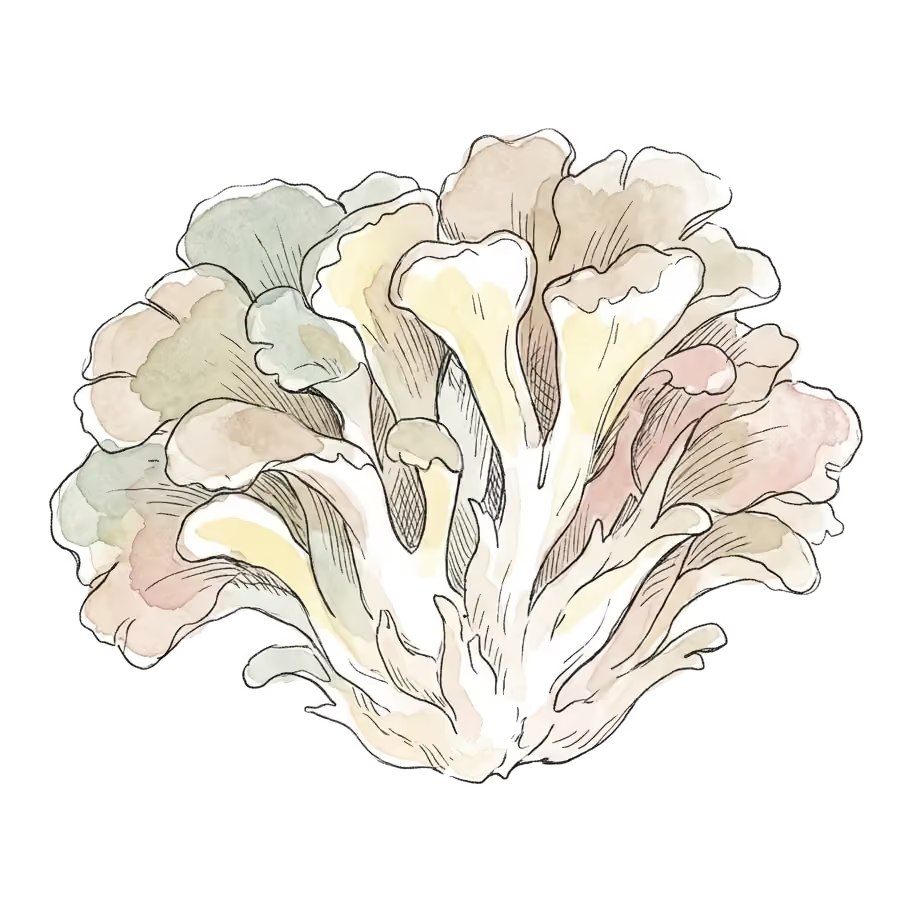
Maitake Mushroom (Grifola frondosa)
Grifola frondosa · also known as maitake, hen of the woods, ram's head, sheep's head, dancing mushroom, hui shu hua, king of mushrooms
By Superfoods Advisor Editors·July 3, 2026
Maitake mushroom benefits for immunity and blood sugar, weighed against mostly animal research; plus nutrition, D-fraction extracts and drug interactions.
Maitake (Grifola frondosa), also called hen of the woods, is an edible polypore mushroom eaten in Japan for centuries and sold as beta-glucan extracts such as D-fraction. Its purported immune, anticancer and blood sugar benefits come mostly from mouse studies; human data are limited to small uncontrolled studies and one dose-finding trial (Deng et al., 2009).
The name maitake means “dancing mushroom,” reportedly because foragers danced upon finding it, and “hen of the woods” refers to its resemblance to the ruffled feathers of a nesting hen. The fungus grows in large overlapping clusters at the base of oak, elm, and maple trees in northeastern North America, Japan, and parts of Europe. The fruiting clusters can grow very large. In Japan, maitake ranked alongside matsutake as one of the most prized wild-harvested mushrooms and, by popular account, was once traded for its weight in silver.
Maitake has been consumed as a culinary mushroom in Japan for centuries and is reported to have a place in Japanese folk medicine as a tonic. Systematic scientific investigation of maitake’s bioactive compounds began in earnest in the 1980s when Japanese researchers isolated a distinctive class of beta-glucan polysaccharides — now known commercially as D-fraction — and characterized their immunostimulatory activity. Subsequent decades of research have focused on two proprietary extract families (D-fraction and MD-fraction) and a separate extract (SX-fraction) targeted at metabolic effects, generating a body of mostly preclinical evidence and a small number of early-phase human studies.
Evidence at a glance
Active Compounds
D-fraction: The most extensively studied maitake extract, D-fraction is a beta-(1,6)/(1,3)-D-glucan proteoglycan complex isolated from the fruiting body of G. frondosa. Developed and patented in Japan in the late 1980s, D-fraction is sold as a standardized extract, though manufacturers do not use a common standard for its beta-glucan content. In mouse studies, maitake beta-glucans activated macrophages, T cells, and natural killer (NK) cells; the closely related MD-fraction signaled through the Dectin-1 receptor in mouse macrophages (Masuda et al., 2012), and D-fraction raised IL-12 production in tumor-bearing mice (Kodama et al., 2005). D-fraction is available commercially as an oral liquid extract and in capsule form.
MD-fraction: A refined and concentrated version of D-fraction described by the same Kobe Pharmaceutical University group (Nanba) as a highly purified, soluble beta-(1,3)(1,6)-glucan (Masuda et al., 2012). It is marketed as more potent than D-fraction, but head-to-head human clinical comparisons are absent.
SX-fraction: A distinct proprietary preparation derived from maitake, the SX-fraction is a glycoprotein extract (Preuss et al., 2007) developed for metabolic research, particularly blood glucose regulation. It differs structurally and mechanistically from the D-fraction beta-glucan extracts and should not be conflated with them. SX-fraction is the maitake preparation most studied for glycemic effects, almost entirely in animals.
Beta-glucan polysaccharides (whole food): Beyond proprietary extracts, unprocessed maitake fruiting bodies are a direct dietary source of beta-glucan; USDA analysis lists about 2.3 g per 100 g fresh weight, roughly a quarter of the dry matter (USDA FoodData Central). Whole maitake dietary consumption delivers these polysaccharides in their native food matrix, though extraction yields substantially higher per-dose beta-glucan concentrations.
Ergothioneine: Like other culinary mushrooms, maitake is a source of L-ergothioneine, a sulfur-containing amino acid synthesized only by fungi and certain bacteria, which accumulates in human tissues and has antioxidant properties. Human transporter specificity (OCTN1) suggests this compound is biologically recognized, though its independent clinical relevance in the maitake context is not well characterized.
Sterols: Maitake contains ergosterol and related sterols, which reduced mast-cell degranulation in cell and mouse experiments (Kawai et al., 2019). These compounds are less studied than the beta-glucan extracts and their significance in humans at dietary concentrations is not established.
Nutritional profile: Per 100 g raw, maitake provides approximately 31 kcal, 2.2 g protein, 6.6 g carbohydrate, 3.1 g fiber, niacin at about 6.8 mg, riboflavin at about 0.27 mg, and minerals including copper, potassium, and phosphorus (USDA FoodData Central). USDA lists no measurable vitamin C (USDA FoodData Central, SR Legacy). It is very low in sodium and fat.
Evidence for Purported Benefits
Maitake has a large body of animal research and very little controlled human evidence. The immune data in people come from uncontrolled case series and one small dose-finding trial, and the blood sugar and blood pressure claims have not been tested in controlled human trials.
Immune Modulation and NK Cell Activation
Evidence:Preliminary Extensive mouse data; human data come from an uncontrolled case series and a small phase I/II dose-finding trial.
Preclinical studies, mostly in mice, report that D-fraction and MD-fraction activate NK cells, macrophages, and T cells, with MD-fraction acting partly through Dectin-1 and TNF-α signaling (Masuda et al., 2012) and D-fraction shifting immune responses toward a Th1, IL-12-dominant pattern (Kodama et al., 2005). These mechanistic studies provide a plausible biological framework for immune effects observed in vivo.
Human clinical data are limited by small sample sizes and regulatory constraints on efficacy claims. A non-randomized case series (Kodama et al., 2002, Alternative Medicine Review) gave MD-fraction with whole maitake powder to patients with stage II–IV cancers and reported symptom improvement or tumor regression in some cancer types, along with higher immune-cell activity when maitake was added to chemotherapy; the uncontrolled design makes these reports difficult to interpret, and a published letter pointed out apparent errors in the article (Black, 2002). A subsequent small study (Kodama et al., 2003, Journal of Medicinal Food) gave D-fraction to cancer patients not receiving anticancer drugs and reported increased NK cell activity, again without a control group.
A 2009 phase I/II dose-escalation trial (Deng et al., 2009, Journal of Cancer Research and Clinical Oncology, n=34 postmenopausal breast cancer patients free of disease after initial treatment) gave an oral maitake polysaccharide extract at 0.1–5 mg/kg twice daily for three weeks. No dose-limiting toxicity occurred, and the extract was associated with both immune-stimulatory and immune-inhibitory changes in peripheral blood; many dose-response curves were non-monotonic, with intermediate doses enhancing or suppressing immune measures relative to high and low doses. This is among the more rigorous human data available, but the absence of a placebo arm and the mixed direction of effects warrant cautious interpretation.
Antitumor Effects (Preclinical)
Evidence:Preliminary Extensive mouse tumor work; human data are an uncontrolled case series, with no randomized trials.
Maitake D-fraction and MD-fraction have been extensively studied in murine tumor models. In mouse studies, D-fraction inhibited tumor growth in models including MM-46 mammary carcinoma, and combined with low-dose mitomycin-C it inhibited tumor growth more than the drug alone (Kodama et al., 2005). Proposed mechanisms include NK cell and cytotoxic T-cell activation, increased macrophage phagocytic activity, induction of apoptosis in tumor cells via TNF-α, and inhibition of tumor-induced angiogenesis.
In human studies, the data remain preliminary. The uncontrolled Kodama case series reported immunological changes and some tumor responses, but no randomized, placebo-controlled human trial has evaluated maitake extracts as cancer treatments or demonstrated tumor regression. The antitumor evidence base is preclinical and mechanistic, not clinical efficacy data, and maitake cannot be represented as a cancer treatment.
Blood Glucose Regulation (SX-Fraction)
Evidence:Lab & animal only Diabetic mouse and rat studies; human data are a brief case letter, with no controlled trials.
The SX-fraction is the maitake preparation most often marketed for metabolic health. Early work by Kubo et al. (1994) (Biological and Pharmaceutical Bulletin), from a maitake producer, found that powdered maitake fruit body lowered blood glucose in genetically diabetic (KK-Ay) mice, with hypoglycemic activity traced to a lipid (ES) fraction and a peptidoglycan (X) fraction. Preuss et al. (2007) reported improved insulin sensitivity in spontaneously hypertensive rats fed SX-fraction. Proposed mechanisms include improved insulin sensitivity and alpha-glucosidase inhibition, though the inhibitor isolated from maitake fruit bodies in vitro was trehalose, a weak one (Matsuura et al., 2002).
Human data are limited to a brief 2001 letter by Konno et al. (Diabetic Medicine) describing a possible hypoglycaemic effect of maitake in patients with type 2 diabetes; no randomized, placebo-controlled trial of SX-fraction in people was identified. The current evidence is not sufficient to recommend maitake SX-fraction as a substitute for pharmaceutical glucose management in diabetes.
Blood Pressure
Evidence:Lab & animal only Hypertensive rat and laboratory peptide studies; no controlled human trials.
In spontaneously hypertensive rats, a diet containing maitake powder lowered blood pressure (Kabir et al., 1987), and an ACE-inhibitory peptide has been isolated from maitake in laboratory work (Song et al., 2024). No controlled human trials were identified. This area requires dedicated human trials before meaningful conclusions can be drawn.
Typical Use and Preparation
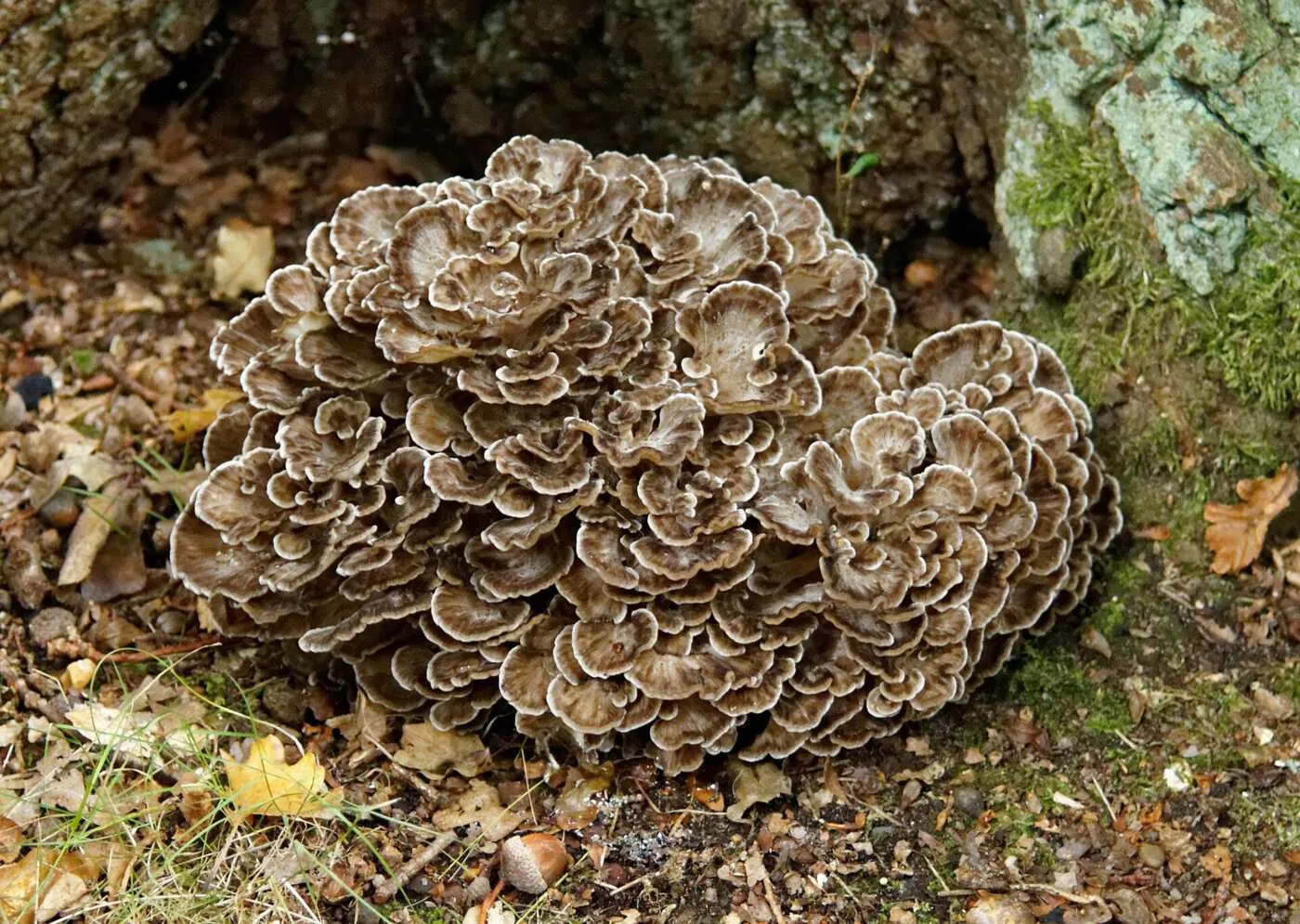 Photo: Lukas from London, England, CC BY-SA 2.0, via Wikimedia Commons
Maitake is eaten as a cooked culinary mushroom or taken as a hot-water extract, usually labeled D-fraction, MD-fraction or SX-fraction. No effective dose has been established for any of these forms.
Culinary: Maitake has a rich, earthy, woodsy flavor with a somewhat peppery note and a firm but yielding texture. It is well suited to sautéing, roasting, stir-frying, and inclusion in soups and risottos. Culinary consumption does not require any special preparation beyond cleaning (brushing off debris; maitake does not wash well due to its layered structure). Cooking deactivates most enzymes while preserving beta-glucan content, which is heat-stable.
Dietary amounts: No food-based human study has established an intake of whole maitake with immune effects; ordinary culinary portions are well within normal dietary use.
D-fraction or MD-fraction supplements: Commercial products differ in how much beta-glucan they declare per serving. The Deng 2009 dose-escalation trial used 0.1–5 mg/kg body weight twice daily of a liquid polysaccharide extract; because extract standardization differs between products, research doses do not translate directly to commercial labels. Products are available in liquid tincture and capsule form.
SX-fraction: No controlled human trial has established an effective dose; labeled doses vary by product. Available as a standalone supplement, typically in capsule form, and often labeled specifically as “SX-fraction” to distinguish it from standard maitake extracts.
Hot-water extraction: Hot-water extracts (decoctions or concentrated extract powders) are the most common form of maitake beta-glucan supplement. Many commercial products are hot-water extracts with a declared beta-glucan percentage, which varies by brand.
What the research says about medicinal mushrooms compares the maitake evidence with that for other functional species. For maitake’s culinary relatives, see the entries on shiitake and common edible mushrooms.
Safety, Interactions, and Contraindications
Maitake has a long history of use as a culinary food. In small trials of extracts, no dose-limiting toxicity occurred over three weeks, though two participants withdrew with mild side effects (nausea and joint swelling; rash and itching) (Deng et al., 2009), and a 12-week trial in myelodysplastic syndromes reported the extract was well tolerated, with asymptomatic eosinophilia in 4 of 18 patients (Wesa et al., 2015). Long-term safety data remain limited.
Hypoglycemia risk with antidiabetic medications: SX-fraction and potentially D-fraction may lower blood glucose. Patients taking insulin, metformin, sulfonylureas, or other glucose-lowering agents should monitor blood glucose carefully if using maitake extracts, as additive effects could cause hypoglycemia. This interaction is clinically plausible based on the proposed mechanism.
Warfarin: A published case report described an elevated INR (a stronger anticoagulant effect) in a patient taking warfarin with a maitake extract (Hanselin et al., 2010). People taking warfarin or other anticoagulants should talk to their doctor before using maitake extracts.
Immunosuppressant interactions: The immunostimulatory activity of D-fraction and MD-fraction could theoretically antagonize the action of immunosuppressant drugs (cyclosporine, tacrolimus, mycophenolate) used in organ transplantation or autoimmune management. Transplant patients should avoid maitake extracts without physician guidance.
Autoimmune conditions: As with other immunostimulatory fungi, patients with active autoimmune conditions (systemic lupus erythematosus, rheumatoid arthritis, multiple sclerosis, etc.) should consult with a physician before supplementing, as immune stimulation could theoretically exacerbate disease activity.
Occupational allergy: Hypersensitivity pneumonitis from inhaled maitake spores has been reported in a mushroom-farm worker (Tanaka et al., 2004).
Pregnancy and lactation: Insufficient safety data exist for supplemental maitake extracts during pregnancy or lactation. Culinary amounts eaten as food are not a known concern, but high-dose extracts are best avoided.
Product Selection Criteria
Extract origin: High-quality maitake supplements should specify fruiting body origin. Products derived from mycelium grown on grain substrates (oat or rice) may contain substantial grain polysaccharides that inflate apparent beta-glucan readings without providing mushroom-specific compounds.
Beta-glucan quantification: The most reliable products declare beta-glucan content measured by a method specific to mushroom beta-glucan (such as the Megazyme mushroom and yeast assay, which uses acid hydrolysis and subtracts alpha-glucan; McCleary et al., 2016), not simply “polysaccharide” content by total carbohydrate measurement, which may include grain starches.
Proprietary fraction identity: D-fraction and MD-fraction are specific proprietary extracts. Verify that the product label clearly indicates which preparation is being used, as these differ from generic maitake powder or undifferentiated hot-water extract.
Third-party testing: Independent testing for heavy metals (particularly arsenic, lead, and cadmium, to which mushrooms can be bioaccumulators), microbial contamination, and species identity via DNA barcoding provides important quality assurance. Look for a certificate of analysis (CoA) from an ISO-accredited laboratory.
Organic certification: Maitake cultivated on oak logs or sawdust blocks under controlled conditions is less likely to accumulate environmental contaminants than wild-harvested specimens, though certified organic cultivation provides additional assurance.
Frequently Asked Questions
What is maitake mushroom?
Maitake (Grifola frondosa) is an edible polypore fungus that grows in large overlapping clusters at the base of oak, elm and maple trees in northeastern North America, Japan and parts of Europe. In North America it is called hen of the woods. It is eaten as a culinary mushroom and sold as concentrated beta-glucan extracts.
Is maitake mushroom good for you?
As a food it is a low-calorie source of fiber, beta-glucan and niacin, with about 31 kcal and 6.8 mg niacin per 100 g raw (USDA FoodData Central). Claims that maitake extracts strengthen immunity, fight cancer or lower blood sugar rest mostly on animal studies and have not been confirmed in controlled human trials.
Is maitake mushroom safe?
Maitake has a long history as a food. In a three-week trial of extract doses, no dose-limiting toxicity occurred, though two participants withdrew with mild side effects such as nausea or rash (Deng et al., 2009). Long-term safety data for extracts are limited, and high-dose extracts are best avoided in pregnancy and breastfeeding.
Does maitake mushroom interact with medications?
It may. A case report described a raised INR, meaning a stronger anticoagulant effect, in a patient taking warfarin with a maitake extract (Hanselin et al., 2010). Extracts may also add to the effect of glucose-lowering drugs, and could in theory counter immunosuppressants. Anyone on these medications should talk to a clinician before using maitake extracts.
References
Show all 19 referencesShow fewer
- Deng, G., Lin, H., Seidman, A., et al. (2009). A phase I/II trial of a polysaccharide extract from Grifola frondosa (maitake mushroom) in breast cancer patients: Immunological effects. Journal of Cancer Research and Clinical Oncology, 135(9), 1215–1221.
- Kodama, N., Komuta, K., & Nanba, H. (2002). Can maitake MD-fraction aid cancer patients? Alternative Medicine Review, 7(3), 236–239.
- Kubo, K., Aoki, H., & Nanba, H. (1994). Anti-diabetic activity present in the fruit body of Grifola frondosa (maitake). I. Biological and Pharmaceutical Bulletin, 17(8), 1106–1110.
- Kodama, N., Komuta, K., & Nanba, H. (2003). Effect of maitake (Grifola frondosa) D-fraction on the activation of NK cells in cancer patients. Journal of Medicinal Food, 6(4), 371–377.
- Wesa, K. M., Cunningham-Rundles, S., Klimek, V. M., et al. (2015). Maitake mushroom extract in myelodysplastic syndromes (MDS): A phase II study. Cancer Immunology, Immunotherapy, 64(2), 237–247.
- Preuss, H. G., Echard, B., Bagchi, D., et al. (2007). Enhanced insulin-hypoglycemic activity in rats consuming a specific glycoprotein extracted from maitake mushroom. Molecular and Cellular Biochemistry, 306(1–2), 105–113.
- Konno, S., Tortorelis, D. G., Fullerton, S. A., Samadi, A. A., Hettiarachchi, J., & Tazaki, H. (2001). A possible hypoglycaemic effect of maitake mushroom on Type 2 diabetic patients. Diabetic Medicine, 18(12), 1010.
- U.S. Department of Agriculture, Agricultural Research Service. FoodData Central: Mushroom, maitake (Foundation, FDC ID 2003602).
- U.S. Department of Agriculture, Agricultural Research Service. FoodData Central: Mushrooms, maitake, raw (SR Legacy, FDC ID 169403).
- Black, W. (2002). Several apparent errors surfaced on reading the article in the June 2002 issue of Alternative Medicine Review by Kodama et al. Alternative Medicine Review, 7(6), 451.
- Masuda, Y., Togo, T., Mizuno, S., Konishi, M., & Nanba, H. (2012). Soluble β-glucan from Grifola frondosa induces proliferation and Dectin-1/Syk signaling in resident macrophages via the GM-CSF autocrine pathway. Journal of Leukocyte Biology, 91(4), 547–556.
- Kodama, N., Murata, Y., Asakawa, A., et al. (2005). Maitake D-Fraction enhances antitumor effects and reduces immunosuppression by mitomycin-C in tumor-bearing mice. Nutrition, 21(5), 624–629.
- Kawai, J., et al. (2019). Grifola frondosa extract and ergosterol reduce allergic reactions in an allergy mouse model by suppressing the degranulation of mast cells. Bioscience, Biotechnology, and Biochemistry.
- Matsuura, H., Asakawa, C., Kurimoto, M., & Mizutani, J. (2002). Alpha-glucosidase inhibitor from the seeds of balsam pear (Momordica charantia) and the fruit bodies of Grifola frondosa. Bioscience, Biotechnology, and Biochemistry, 66(7), 1576–1578.
- Kabir, Y., Yamaguchi, M., & Kimura, S. (1987). Effect of shiitake and maitake mushrooms on blood pressure and plasma lipids of spontaneously hypertensive rats. Journal of Nutritional Science and Vitaminology, 33(5), 341–346.
- Song, T., Zhang, T., Cai, Q., Ding, Y. Y., & Gu, Z. (2024). A novel angiotensin I-converting enzyme inhibitory peptide APPLRP from Grifola frondosa. International Journal of Biological Macromolecules, 278, 134998.
- Hanselin, M. R., Vande Griend, J. P., & Linnebur, S. A. (2010). INR elevation with maitake extract in combination with warfarin. Annals of Pharmacotherapy, 44(1), 223–224.
- Tanaka, H., Tsunematsu, K., Nakamura, N., et al. (2004). Successful treatment of hypersensitivity pneumonitis caused by Grifola frondosa (maitake) mushroom using a HFA-BDP extra-fine aerosol. Internal Medicine, 43(8), 737–740.
- McCleary, B. V., et al. (2016). Measurement of β-glucan in mushrooms and mycelial products. Journal of AOAC International, 99(2).
Related content
More in Medicinal Mushrooms
- Chaga Mushroom (Inonotus obliquus)
Chaga benefits examined: what lab and animal studies show for antioxidant and immune effects, why human data are missing, and its oxalate kidney risk.
- Cordyceps (Cordyceps militaris / Ophiocordyceps sinensis)
Cordyceps benefits for exercise, energy, immunity and kidney health, checked against small human trials; plus doses studied, safety and product types.
- Edible Mushrooms
Mushrooms benefits and nutrition: what button, cremini, oyster and shiitake supply, from ergothioneine to vitamin D2, what studies show, and side effects.
- Lion's Mane Mushroom (Hericium erinaceus)
Lion's mane benefits explained: what small human trials show for memory and mood, how hericenones and erinacines work, typical doses and side effects.
- Reishi Mushroom (Ganoderma lingzhi)
Reishi benefits for immunity, fatigue and sleep, weighed against the trials; plus doses studied, side effects such as liver injury, and drug interactions.
- Shiitake Mushroom (Lentinula edodes)
Shiitake mushrooms benefits for immunity, cholesterol and vitamin D, checked against human trials; plus nutrition, daily amounts and shiitake dermatitis.

Browse all medicinal mushrooms →
Curated by Superfoods Advisor Editors·Last updated