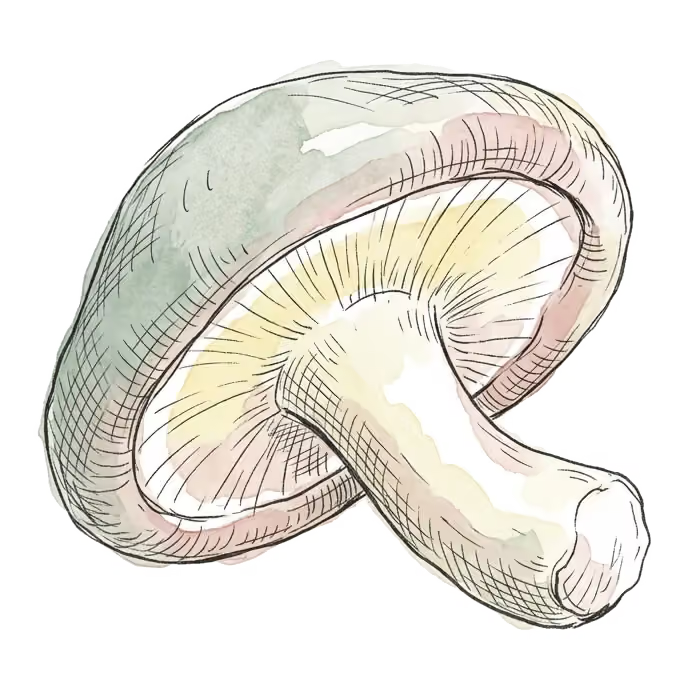
Shiitake Mushroom (Lentinula edodes)
Lentinula edodes · also known as shiitake, black forest mushroom, golden oak mushroom, Chinese black mushroom, Japanese mushroom, hua gu, donko
By Superfoods Advisor Editors·July 3, 2026
Shiitake mushrooms benefits for immunity, cholesterol and vitamin D, checked against human trials; plus nutrition, daily amounts and shiitake dermatitis.
Shiitake (Lentinula edodes), also sold as black forest or golden oak mushroom, is an edible East Asian mushroom valued for its umami flavor. It supplies protein, fiber and ergothioneine, and UV-exposed shiitake supplies vitamin D2. Small trials suggest effects on immune markers and triglycerides (Dai et al., 2015); the strongest evidence concerns injectable lentinan, not the food.
It is one of the world’s most widely cultivated edible mushrooms and one of the most researched. Native to the dead and decaying logs of oak (Quercus spp.), shii (Castanopsis spp.), and other hardwood trees across the temperate forests of China, Japan, Korea, and southeastern Asia, shiitake has been cultivated in China for over a thousand years, with records dating to the Song Dynasty (960–1279 CE) indicating its deliberate propagation on oak logs. In Japan, systematic cultivation on cut hardwood logs developed during the Edo period (1603–1868), and shiitake became deeply embedded in Japanese culinary and traditional medical culture.
In Chinese and Japanese folk tradition, shiitake has long been regarded as a health-promoting tonic food. Japanese researchers isolated lentinan, a specific beta-glucan polysaccharide from shiitake, around 1970 and reported marked antitumor activity in mice (Chihara et al., 1970), catalyzing decades of clinical investigation and eventually leading to lentinan’s approval in Japan as an adjunct treatment for gastric cancer (Ina et al., 2013).
Evidence at a glance
Active Compounds
Shiitake’s bioactive profile includes several well-characterized compounds that are more definitively isolated and studied than those of most other medicinal mushrooms:
Lentinan: A triple-helix beta-(1,3)/(1,6)-D-glucan polysaccharide found in the fruiting body of L. edodes. As a purified intravenous pharmaceutical agent (not oral supplement), it is approved in Japan as a biological response modifier used alongside chemotherapy for gastric cancer (Ina et al., 2013). In laboratory and animal studies, lentinan stimulates macrophage and NK cell activity and cytokine production, and it is considered a biological response modifier rather than a direct cytotoxic agent (MSK About Herbs). Oral bioavailability of lentinan is low compared to the injectable form used in clinical trials. In animal and cell studies, orally given lentinan was taken up through M cells of the intestinal Peyer’s patches and acted on immune cells there via Dectin-1 (Wang et al., 2024), a route that may be mechanistically distinct from IV administration.
Eritadenine (lentinacin): An adenosine derivative best known from shiitake. Eritadenine is a potent inhibitor of S-adenosyl-L-homocysteine (SAH) hydrolase, an enzyme involved in methylation and homocysteine metabolism, and has lowered serum cholesterol in animal studies, apparently by altering hepatic phospholipid synthesis (Yamada et al., 2007). This mechanism is distinct from statins and has attracted cardiovascular research interest.
AHCC (Active Hexose Correlated Compound): A proprietary alpha-glucan-rich extract derived from the mycelium of shiitake hybrids. AHCC is not a naturally occurring compound but a processed commercial extract. AHCC has been studied in small human trials in cancer patients, healthy individuals, and people with HPV infection. AHCC is not equivalent to ordinary shiitake supplements.
KS-2 and other immunomodulatory polysaccharides: Additional polysaccharide-protein complexes from shiitake mycelium with antitumor and interferon-inducing activity in animal models.
Ergosterol and vitamin D2: Like other mushrooms, shiitake contains ergosterol; when exposed to ultraviolet (UV) light (natural sunlight or UV lamp treatment), ergosterol converts to vitamin D2 (ergocalciferol). Sun-dried or UV-treated shiitake can provide meaningful vitamin D2: a review found that mushrooms grown in the dark contain less than 1 µg per 100 g, while 15–120 minutes of midday sun usually lifts levels above 10 µg per 100 g fresh weight, close to the 15 µg US adult RDA (Cardwell et al., 2018). Results vary with UV intensity, mushroom age, and preparation method.
L-ergothioneine: A naturally occurring thiol amino acid produced by fungi and some bacteria. Mushrooms, shiitake included, are the richest known dietary source of ergothioneine, though levels vary widely by species (0.15–7.27 mg/g dry weight in one survey; Kalaras et al., 2017). Ergothioneine accumulates in human tissues (particularly mitochondria-rich cells) and has antioxidant properties. Ergothioneine has a dedicated human transporter, OCTN1 (Gründemann et al., 2005), suggesting biological relevance. Human clinical evidence for ergothioneine-specific health benefits remains limited.
Amino acid profile: Dried shiitake provides about 9.6 g of protein per 100 g (USDA FoodData Central), with a favorable essential amino acid profile, including lysine (often limiting in plant foods), threonine, and leucine. It also contains glutamate and guanosine monophosphate (GMP), the compounds primarily responsible for its characteristic umami flavor.
Evidence for Purported Benefits
Shiitake’s human evidence is limited for food-level benefits such as immune markers and blood lipids. The moderate-grade findings concern two narrower cases: injectable lentinan given with chemotherapy, and vitamin D from UV-exposed mushrooms.
Immune Modulation
Evidence:Limited A few small trials, mostly with extracts such as AHCC; one uncontrolled whole-mushroom diet study.
A randomized parallel-group dietary trial published in the Journal of the American College of Nutrition (Dai et al., 2015) enrolled 52 healthy adults aged 21–41 who consumed 5 g or 10 g of whole dried shiitake per day for 4 weeks. Compared with baseline, the study found increased ex vivo proliferation and activation of γδ-T and NK-T cells, higher salivary sIgA, and lower C-reactive protein (CRP); there was no placebo group, so the changes are before-and-after comparisons. This study is notable because it used a dietary amount of whole shiitake rather than a concentrated extract, suggesting that regular culinary consumption may exert measurable immune effects.
AHCC (the proprietary shiitake mycelium derivative) has been tested in several small human trials. A small double-blind, placebo-controlled trial in Nutrition and Cancer (Terakawa et al., 2008, n=21 healthy volunteers, 3 g/day AHCC for 4 weeks) found increases in circulating dendritic cells but no significant difference in NK cell activity or cytokine production versus placebo. AHCC has also been studied in persistent high-risk HPV infection: two pilot studies of 10 women each (Smith et al., 2019, Frontiers in Oncology) reported confirmed clearance in 4 of 6 women after 3–6 months of 3 g/day and in 4 of 9 after about 7 months of 1 g/day. A subsequent randomized, double-blind, placebo-controlled phase II trial (Smith et al., 2022, Frontiers in Oncology, n=50, 41 completers) reported that 14 of 22 women in the AHCC arm tested HPV-negative after 6 months, compared with 2 of 19 on placebo at 12 months. These HPV findings come from small trials by a single research group, and larger confirmatory trials are needed.
Cardiovascular and Cholesterol Effects
Evidence:Limited Consistent cholesterol lowering in animals; one human RCT lowered triglycerides but not LDL.
Animal studies using eritadenine-supplemented diets consistently show significant reductions in plasma cholesterol, apparently through changes in hepatic phospholipid metabolism (Sugiyama et al., 1995). Human data are limited. In a double-blind, placebo-controlled trial in 68 adults with borderline-high cholesterol or triglycerides (Spim et al., 2021, International Journal of Medicinal Mushrooms), eating shiitake bars for 66 days lowered triglycerides by about 10%; the abstract does not report a significant change in total or LDL cholesterol. The lipid effects observed in human studies are smaller than those seen in animal experiments and would not substitute for pharmaceutical interventions in clinical hyperlipidemia.
Cancer Adjunct Therapy (Lentinan IV)
Evidence:Moderate A meta-analysis of five RCTs supports injectable lentinan with chemotherapy in gastric cancer; does not apply to oral shiitake.
Purified injectable lentinan has been evaluated in Japanese RCTs and meta-analyses as an adjunct to chemotherapy, mainly in gastric cancer. A 2009 individual-patient-data meta-analysis published in Anticancer Research (Oba et al., 2009; 650 patients from 5 randomized trials) found that adding lentinan to standard chemotherapy for advanced gastric cancer was associated with longer overall survival than chemotherapy alone (hazard ratio 0.80). These findings relate specifically to the pharmaceutical-grade injectable form, not to oral shiitake supplements or extracts. The oral bioavailability of lentinan is low, and extrapolating IV clinical data to oral supplement use is not scientifically valid.
Antiviral Effects
Evidence:Limited Small AHCC trials for HPV from a single research group; other antiviral data are laboratory only.
Beyond the HPV data, laboratory studies have reported antiviral activity of shiitake extracts and lentinan against poliovirus and a bovine herpesvirus, and a shiitake protein (lentin) inhibited HIV-1 reverse transcriptase in vitro; clinical data are lacking (MSK About Herbs).
Vitamin D Sufficiency
Evidence:Moderate UV-treated mushrooms raise blood vitamin D in trials; only applies to UV-exposed shiitake, which most fresh shiitake is not.
The conversion of ergosterol to vitamin D2 in UV-exposed shiitake is a well-characterized photochemical reaction. Studies have confirmed that vitamin D2 from UV-treated mushrooms can raise serum 25-hydroxyvitamin D levels in humans; a 5-week randomized trial in 26 vitamin D-deficient young adults found that soup made with UV-B-irradiated button mushrooms raised serum 25(OH)D about as effectively as a vitamin D2 supplement (Urbain et al., 2011). Comparable human trials with UV-treated shiitake specifically are limited. However, most commercially sold fresh shiitake is grown indoors without UV exposure and contains minimal vitamin D2. Sun-dried or UV-labeled shiitake is required for this benefit.
Typical Use and Dosing
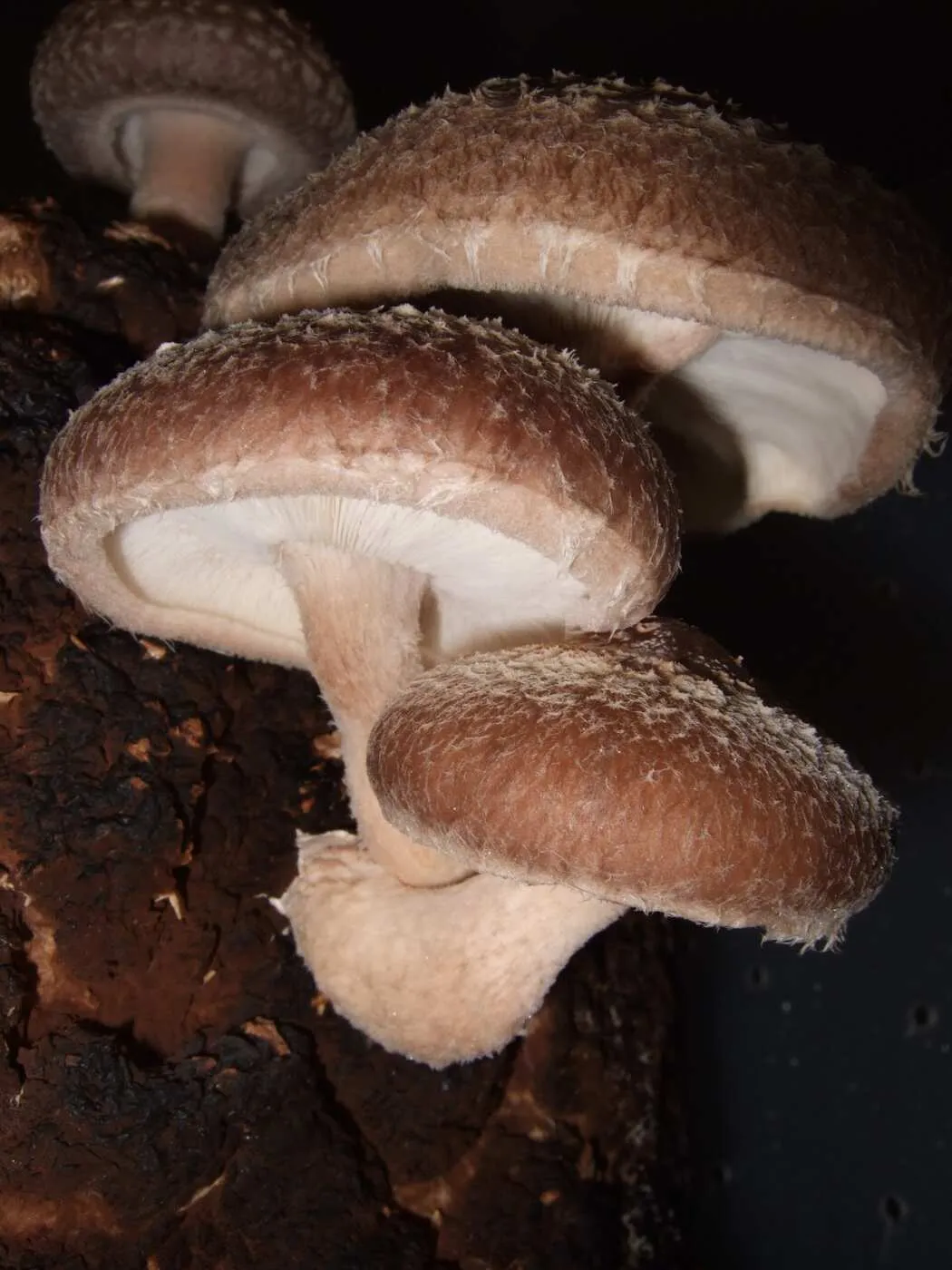 Photo: frankenstoen from Portland, Oregon, CC BY 2.0, via Wikimedia Commons
Shiitake is mostly eaten cooked, fresh or dried; the one whole-food immune trial used 5–10 g of dried shiitake a day, roughly 50–100 g fresh. Supplements and the proprietary extract AHCC are separate products with their own trial doses.
Culinary preparation: Shiitake is consumed fresh or dried across East Asian cuisines and globally. Dried shiitake (reconstituted in water) concentrates compounds including eritadenine, ergosterol, and water-soluble polysaccharides. The reconstitution soaking water retains significant polysaccharide and nucleotide content and is used in East Asian cooking as a umami-rich broth base.
Dietary amounts with immune evidence: The 2015 Dai et al. trial used 5–10 g/day of whole dried shiitake — a nutritionally achievable amount, roughly equivalent to 50–100 g of fresh mushrooms given that fresh shiitake is about 90% water.
Supplement extracts: Hot-water extracts standardized to beta-glucan content are the most common supplement form. Label doses vary by product, and no extract dose has been established in clinical trials.
AHCC: Available as a distinct proprietary supplement; the trials described above used 1–3 g/day, and a 14-day phase I safety study of 9 g/day in 26 healthy adults reported mainly mild, transient gastrointestinal side effects (Spierings et al., 2007). AHCC is not interchangeable with standard shiitake extracts.
Vitamin D optimization: For vitamin D2 content, specifically purchase sun-dried or UV-B-treated shiitake, confirmed on the label. Store in a sealed container away from light after purchase to preserve D2 content.
Shiitake is also discussed in the medicinal mushrooms research overview and the immune-support foods guide. For the nutrition of everyday button, cremini and oyster mushrooms, see the common mushrooms entry.
Safety, Interactions, and Contraindications
Cooked shiitake is generally well tolerated as a food, but shiitake powder has caused rash, gastrointestinal upset, and eosinophilia in some people. In one cholesterol study, 17 of 49 participants withdrew because of rash or abdominal discomfort (Levy et al., 1998). Case reports also describe hypersensitivity pneumonitis after inhaling shiitake spores and small bowel obstruction after swallowing a whole mushroom (MSK About Herbs). Specific considerations:
Shiitake dermatitis (flagellate dermatitis): Raw or undercooked shiitake can cause a distinctive linear, flagellate (whip-like) erythematous skin rash, sometimes accompanied by systemic symptoms such as fever or diarrhea. The likely cause is lentinan, a heat-labile beta-glucan, so thorough cooking is thought to lower the risk (Stephany et al., 2016). The reaction is rare: a systematic review of 50 published cases found most followed raw mushrooms, 22% followed lightly cooked ones, and the rash resolved in about 12.5 days without treatment (Nguyen et al., 2017). Processed products are not exempt: flagellate erythema has been reported after drinking a shiitake-containing mushroom coffee (Mijares & Ramachandran, 2026).
Eosinophilia: In a small study, 5 of 10 healthy volunteers taking 4 g of shiitake powder daily developed blood eosinophilia (elevated eosinophils), sometimes with gastrointestinal symptoms, which resolved after they stopped (Levy et al., 1998). The mechanism may involve an immune-mediated reaction.
Immunosuppressant interactions: Shiitake’s immunostimulatory polysaccharides may theoretically antagonize cyclosporine, tacrolimus, and other immunosuppressant agents. Transplant patients should seek physician guidance before supplementing.
Anticoagulant interactions: In laboratory studies, shiitake extracts inhibited platelet aggregation; the activity was attributed to lenthionine, a sulfur flavor compound (Shimada et al., 2004), and to low-molecular-weight compounds possibly including nucleosides (Hokama & Hokama, 1981). The clinical significance with anticoagulant medications is unknown.
Autoimmune conditions: As with other immunostimulatory fungi, caution is warranted in autoimmune disease patients.
Pregnancy and lactation: Culinary amounts of cooked shiitake are generally regarded as safe; supplemental doses lack safety data. Avoid high-dose extracts during pregnancy.
Purine content: Shiitake contains purines that metabolize to uric acid, and dried fungi ranked among the highest-purine plant foods in a Chinese survey (Rong et al., 2012); patients with gout or hyperuricemia should be mindful of intake, particularly from concentrated extracts.
Product Selection Criteria
Fruiting body origin: Most quality shiitake supplements are derived from fruiting bodies, which contain lentinan, eritadenine, and ergothioneine. Mycelium-only products grown on grain substrates may have a different compound profile and higher starch content.
Beta-glucan content by enzymatic assay: Seek products declaring beta-glucan content (minimum 20%) verified by enzymatic method (Megazyme assay), not simply total polysaccharide content by the phenol-sulfuric acid method, which includes starch.
AHCC distinction: If AHCC is the specific form sought (particularly for HPV research), purchase a product explicitly labeled as AHCC from a licensed manufacturer. Generic shiitake extracts are not equivalent to AHCC.
Vitamin D specification: For vitamin D2 benefit, look for “UV-treated” or “sun-dried” on the label with a declared vitamin D content per serving, ideally confirmed by a CoA.
Organic certification: Shiitake cultivated on oak sawdust blocks can accumulate contaminants present in the substrate. USDA Organic or equivalent certification reduces exposure to pesticides and synthetic substrate additives.
Third-party CoA: Standard third-party testing should confirm species identity, heavy metal levels (particularly arsenic, lead, cadmium), microbial safety, and absence of pesticide residues. ISO-accredited laboratory verification is preferred.
Frequently Asked Questions
Are shiitake mushrooms good for you?
They are a nutritious food: dried shiitake provides about 9.6 g of protein per 100 g (USDA FoodData Central) along with fiber and ergothioneine. Health effects beyond nutrition are less certain. Small trials reported changes in immune markers and a roughly 10% fall in triglycerides, but neither has been confirmed in large placebo-controlled studies.
How much shiitake should you eat per day?
No recommended amount exists. The immune-marker trial used 5 g or 10 g of whole dried shiitake a day for four weeks, about 50–100 g fresh (Dai et al., 2015), which is an ordinary culinary portion. Concentrated powders are another matter: 4 g of shiitake powder daily caused eosinophilia in half of one small group of volunteers.
Are shiitake mushrooms safe to eat raw?
Cooking is the safer choice. Raw or undercooked shiitake can cause shiitake dermatitis, a rare whip-like rash thought to come from heat-sensitive lentinan. In a review of 50 published cases, most followed raw mushrooms and the rash cleared in about 12.5 days without treatment (Nguyen et al., 2017). Thoroughly cooked, it is an everyday food in East Asian cuisines.
Do shiitake mushrooms contain vitamin D?
Only if they have been exposed to UV light. Mushrooms grown in the dark contain less than 1 µg of vitamin D per 100 g, while 15–120 minutes of midday sun usually lifts levels above 10 µg (Cardwell et al., 2018). Most fresh shiitake is grown indoors, so look for sun-dried or UV-treated on the label.
References
Show all 24 referencesShow fewer
- Dai, X., Stanilka, J. M., Rowe, C. A., et al. (2015). Consuming Lentinula edodes (Shiitake) mushrooms daily improves human immunity: A randomized dietary intervention in healthy young adults. Journal of the American College of Nutrition, 34(6), 478–487.
- Oba, K., Kobayashi, M., Matsui, T., et al. (2009). Individual patient-based meta-analysis of lentinan for unresectable/recurrent gastric cancer. Anticancer Research, 29(7), 2739–2745.
- Urbain, P., Singler, F., Ihorst, G., et al. (2011). Bioavailability of vitamin D2 from UV-B-irradiated button mushrooms in healthy adults deficient in serum 25-hydroxyvitamin D. European Journal of Clinical Nutrition, 65(8), 965–971.
- Smith, J. A., Mathew, L., Gaikwad, A., et al. (2019). From bench to bedside: evaluation of AHCC supplementation to modulate the host immunity to clear high-risk human papillomavirus infections. Frontiers in Oncology, 9, 173.
- Smith, J. A., Gaikwad, A. A., Mathew, L., et al. (2022). AHCC® supplementation to support immune function to clear persistent human papillomavirus infections. Frontiers in Oncology, 12, 881902.
- Terakawa, N., Matsui, Y., Satoi, S., et al. (2008). Immunological effect of active hexose correlated compound (AHCC) in healthy volunteers: a double-blind, placebo-controlled trial. Nutrition and Cancer, 60(5), 643–651.
- Spim, S. R. V., Pistila, A. M. H., Pickler, T. B., Silva, M. T., & Grotto, D. (2021). Effects of shiitake culinary-medicinal mushroom, Lentinus edodes (Agaricomycetes), bars on lipid and antioxidant profiles in individuals with borderline high cholesterol: a double-blind randomized clinical trial. International Journal of Medicinal Mushrooms, 23(7), 1–12.
- Ina, K., Kataoka, T., & Ando, T. (2013). The use of lentinan for treating gastric cancer. Anticancer Agents in Medicinal Chemistry, 13(5), 681–688.
- Stephany, M. P., Chung, S., Handler, M. Z., et al. (2016). Shiitake mushroom dermatitis: a review. American Journal of Clinical Dermatology, 17(5), 485–489.
- Nguyen, A. H., Gonzaga, M. I., Lim, V. M., et al. (2017). Clinical features of shiitake dermatitis: a systematic review. International Journal of Dermatology, 56(6), 610–616.
- Levy, A. M., Kita, H., Phillips, S. F., et al. (1998). Eosinophilia and gastrointestinal symptoms after ingestion of shiitake mushrooms. Journal of Allergy and Clinical Immunology, 101(5), 613–620.
- Cardwell, G., Bornman, J. F., James, A. P., & Black, L. J. (2018). A review of mushrooms as a potential source of dietary vitamin D. Nutrients, 10(10), 1498.
- Kalaras, M. D., Richie, J. P., Calcagnotto, A., & Beelman, R. B. (2017). Mushrooms: a rich source of the antioxidants ergothioneine and glutathione. Food Chemistry, 233, 429–433.
- Sugiyama, K., Akachi, T., & Yamakawa, A. (1995). Hypocholesterolemic action of eritadenine is mediated by a modification of hepatic phospholipid metabolism in rats. Journal of Nutrition, 125(8), 2134–2144.
- Spierings, E. L., Fujii, H., Sun, B., & Walshe, T. (2007). A Phase I study of the safety of the nutritional supplement, active hexose correlated compound, AHCC, in healthy volunteers. Journal of Nutrition Science and Vitaminology, 53(6), 536–539.
- Chihara, G., Hamuro, J., Maeda, Y., Arai, Y., & Fukuoka, F. (1970). Fractionation and purification of the polysaccharides with marked antitumor activity, especially lentinan, from Lentinus edodes (Berk.) Sing. (an edible mushroom). Cancer Research, 30(11), 2776–2781.
- Wang, K., Liu, Y., Zhang, Z., et al. (2024). Insights into oral lentinan immunomodulation: Dectin-1-mediated lymphatic transport from Peyer’s patch M cells to mononuclear phagocytes. Carbohydrate Polymers, 346, 122586.
- Yamada, T., Komoto, J., Lou, K., et al. (2007). Structure and function of eritadenine and its 3-deaza analogues: potent inhibitors of S-adenosylhomocysteine hydrolase and hypocholesterolemic agents. Biochemical Pharmacology, 73(7), 981–989.
- Gründemann, D., Harlfinger, S., Golz, S., et al. (2005). Discovery of the ergothioneine transporter. Proceedings of the National Academy of Sciences USA, 102(14), 5256–5261.
- Mijares, J., & Ramachandran, V. (2026). Flagellate erythema from mushroom coffee: a novel exposure route for shiitake dermatitis. International Journal of Dermatology.
- Shimada, S., Komamura, K., Kumagai, H., & Sakurai, H. (2004). Inhibitory activity of shiitake flavor against platelet aggregation. BioFactors, 22(1–4), 177–179.
- Hokama, Y., & Hokama, J. L. (1981). In vitro inhibition of platelet aggregation with low dalton compounds from aqueous dialysates of edible fungi. Research Communications in Chemical Pathology and Pharmacology, 31(1), 177–180.
- Rong, S., Zou, L., Wang, Z., Pan, H., & Yang, Y. (2012). Purine in common plant food in China [in Chinese]. Wei Sheng Yan Jiu, 41(1), 92–95, 101.
- Memorial Sloan Kettering Cancer Center. Shiitake mushroom. About Herbs, Botanicals & Other Products.
Related content
More in Medicinal Mushrooms
- Chaga Mushroom (Inonotus obliquus)
Chaga benefits examined: what lab and animal studies show for antioxidant and immune effects, why human data are missing, and its oxalate kidney risk.
- Cordyceps (Cordyceps militaris / Ophiocordyceps sinensis)
Cordyceps benefits for exercise, energy, immunity and kidney health, checked against small human trials; plus doses studied, safety and product types.
- Edible Mushrooms
Mushrooms benefits and nutrition: what button, cremini, oyster and shiitake supply, from ergothioneine to vitamin D2, what studies show, and side effects.
- Lion's Mane Mushroom (Hericium erinaceus)
Lion's mane benefits explained: what small human trials show for memory and mood, how hericenones and erinacines work, typical doses and side effects.
- Maitake Mushroom (Grifola frondosa)
Maitake mushroom benefits for immunity and blood sugar, weighed against mostly animal research; plus nutrition, D-fraction extracts and drug interactions.
- Reishi Mushroom (Ganoderma lingzhi)
Reishi benefits for immunity, fatigue and sleep, weighed against the trials; plus doses studied, side effects such as liver injury, and drug interactions.

Browse all medicinal mushrooms →
Curated by Superfoods Advisor Editors·Last updated