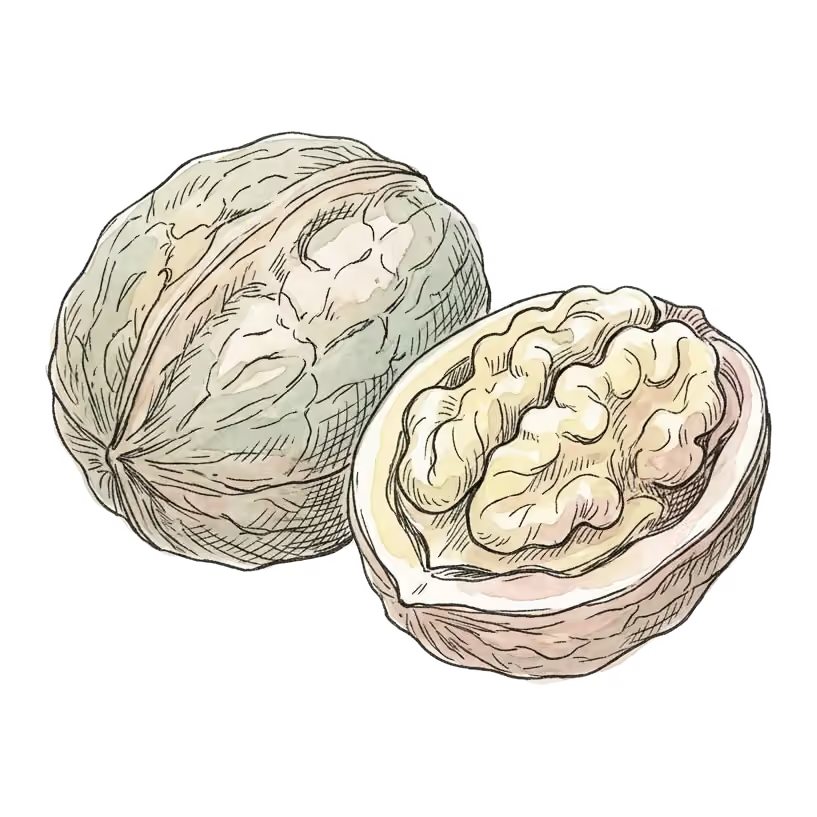
Walnuts (Juglans regia)
Juglans regia · also known as English walnut, Persian walnut, common walnut, Castilian walnut
By Superfoods Advisor Editors·July 3, 2026
Walnuts benefits and nutrition: the richest nut source of ALA omega-3, what trials show for cholesterol, brain and gut health, and how many to eat per day.
Walnuts (Juglans regia, the English or Persian walnut) are the richest nut source of the plant omega-3 ALA, with about 9 g per 100 g; a 28 g serving of about 14 halves provides 185 kcal and 2.6 g ALA. A two-year trial and a 26-trial meta-analysis found walnuts modestly lower LDL cholesterol. Evidence for brain health is mixed.
The tree is native to a broad belt stretching from the Carpathian Mountains through Central Asia to the Himalayas and southwestern China. Fossil and archaeobotanical evidence indicates walnut consumption in the Near East and southeastern Europe since prehistoric times, and cultivated orchards are documented in ancient Persia, Greece, and Rome. The Romans called them Jovis glans (“Jupiter’s acorn”), a name that evolved into Juglans, reflecting the esteem in which they were held. Trade along the Silk Road dispersed walnut cultivation across Asia; Spanish missionaries introduced Juglans regia to California in the eighteenth century, which is now the world’s second-largest producer after China.
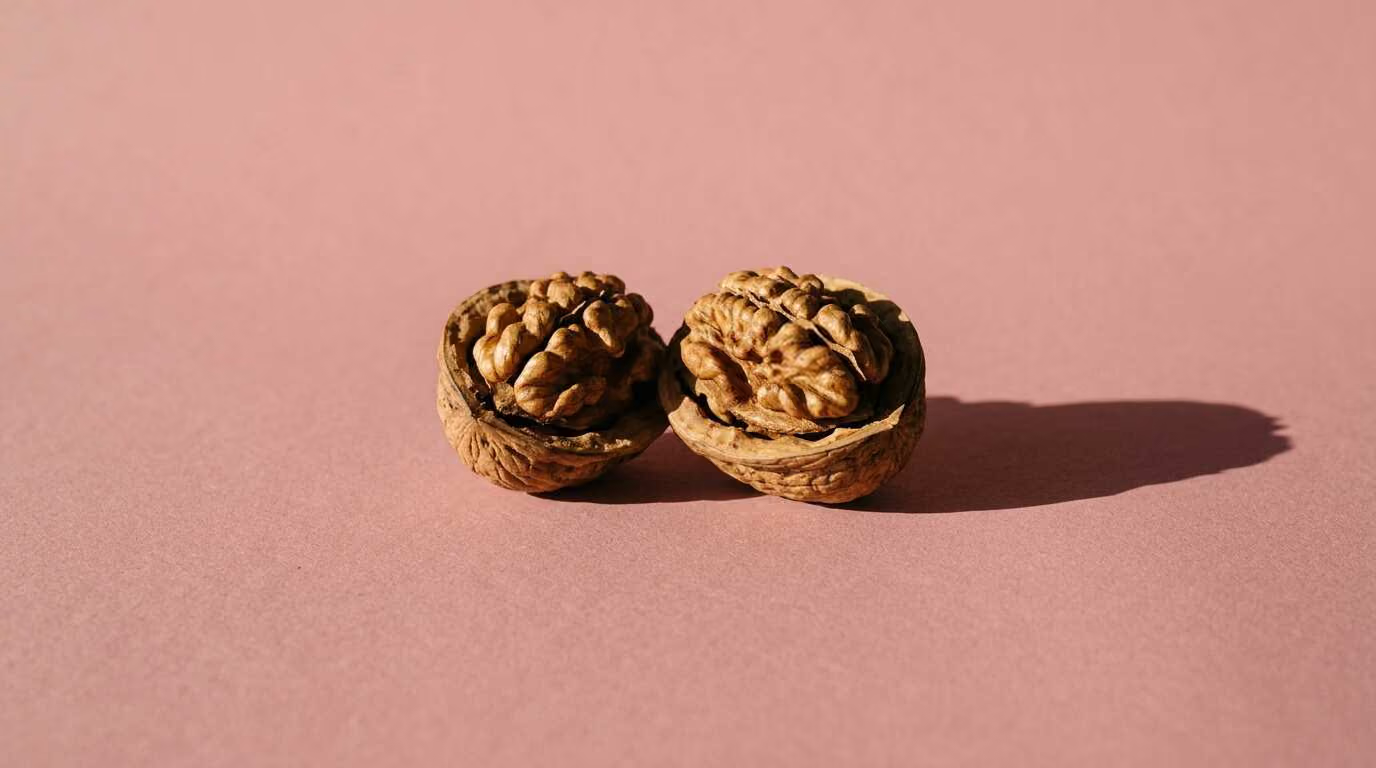
Historically, walnuts were linked to the brain through the Doctrine of Signatures, a Renaissance-era idea that attributed medicinal significance to the nut’s resemblance to the human brain. Whatever the folkloric basis, large prospective cohorts have associated walnut consumption with lower cardiovascular risk (Guasch-Ferré et al., 2017), and mechanistic studies have identified a suite of bioactive compounds that lend biological plausibility to these observations. Walnuts are nutritionally distinct from most other tree nuts by virtue of their exceptionally high alpha-linolenic acid (ALA) content and their diverse polyphenol profile.
Evidence at a glance
Active Compounds
Alpha-linolenic acid (ALA): Walnuts are the most concentrated tree nut source of ALA (18:3n-3), the short-chain plant omega-3 fatty acid, providing approximately 9 g per 100 g of kernels (USDA FoodData Central). ALA is an essential fatty acid — humans cannot synthesize it — and serves as a metabolic precursor to the longer-chain EPA (eicosapentaenoic acid) and DHA (docosahexaenoic acid), though stable-isotope studies indicate that conversion to EPA is limited and further conversion to DHA is very low (Burdge & Calder, 2005). Despite low conversion, ALA itself may have independent anti-inflammatory and cardioprotective properties, and its enrichment of cell membrane phospholipids may favorably influence membrane fluidity.
Ellagic acid and ellagitannins: Walnut pellicula (the thin papery skin) is particularly rich in ellagitannins — polymeric polyphenols including pedunculagin, tellimagrandin, and valoneic acid dilactone — which are hydrolyzed by gut microbiota into ellagic acid and then converted to urolithins (particularly urolithin A and B). Urolithins are bioactive metabolites associated in preliminary research with mitophagy induction, anti-inflammatory effects, and potential anticancer activity. Ellagic acid itself has demonstrated antioxidant and anti-proliferative properties in vitro and in animal models.
Melatonin: Walnuts are among the many plant and animal foods documented to contain measurable amounts of melatonin (approximately 3.5 ng per gram of walnut), a neurohormone synthesized in the pineal gland that regulates circadian rhythms and acts as an antioxidant (Meng et al., 2017). A study by Reiter et al. (Nutrition, 2005) found that walnut feeding in rats increased blood melatonin levels and antioxidant capacity, suggesting dietary walnut melatonin may be bioavailable; this has not been confirmed in humans.
Juglone (5-hydroxy-1,4-naphthoquinone): While primarily concentrated in walnut hulls, roots, and leaves rather than the edible kernel, juglone is a naphthoquinone with documented antimicrobial, antifungal, and cytotoxic properties in laboratory settings. The edible kernel is not considered a significant source.
Gamma-tocopherol: Unlike most foods where alpha-tocopherol predominates, walnuts are particularly high in gamma-tocopherol (~21 mg/100 g; USDA FoodData Central), a form that inhibited cyclooxygenase-derived prostaglandin synthesis in cell studies (Jiang et al., 2000).
Folate and vitamin B6: Walnuts contribute meaningfully to B-vitamin intake, with approximately 98 µg folate and 0.54 mg vitamin B6 per 100 g (USDA FoodData Central), nutrients involved in homocysteine metabolism.
Phenolic acids and flavonoids: Caffeic acid, ferulic acid, quercetin, kaempferol, and myricetin are among the phenolic compounds identified in walnut kernels and skins, contributing to the nut’s high total polyphenol content.
Nutritional Profile
Per 100 g of English walnuts (USDA FoodData Central, FDC ID 170187):
| Nutrient | Amount | % DV |
|---|---|---|
| Energy | 654 kcal | — |
| Protein | 15.2 g | — |
| Total fat | 65.2 g | — |
| — Saturated fat | 6.1 g | — |
| — Monounsaturated fat | 8.9 g | — |
| — Polyunsaturated fat | 47.2 g | — |
| — Omega-3 (ALA) | ~9.1 g | — |
| — Omega-6 (linoleic) | ~38.1 g | — |
| Carbohydrates | 13.7 g | — |
| Dietary fiber | 6.7 g | — |
| Magnesium | 158 mg | 38% |
| Phosphorus | 346 mg | 28% |
| Copper | 1.6 mg | 178% |
| Manganese | 3.4 mg | 148% |
| Zinc | 3.1 mg | 28% |
| Folate | 98 µg | 25% |
| Vitamin B6 | 0.54 mg | 32% |
| Vitamin B1 (thiamine) | 0.34 mg | 28% |
| Vitamin E (gamma-tocopherol) | ~21 mg | — |
| Melatonin | ~3.5 ng/g | — |
The high proportion of polyunsaturated fats (particularly linoleic acid) makes walnuts among the most susceptible tree nuts to oxidative rancidity; they should be stored in cool, dark conditions or refrigerated.
Evidence for Purported Benefits
Cardiovascular Risk Reduction
Evidence:Moderate A 26-trial meta-analysis and a two-year RCT show consistent LDL reductions; event reduction is unproven.
The cardioprotective evidence for walnuts is among the strongest in the tree nut literature. In the Walnuts and Healthy Aging (WAHA) trial (Rajaram et al., Circulation, 2021), 636 healthy older adults completed two years of either a walnut-supplemented diet (30–60 g/day) or a walnut-free control diet; the walnut diet lowered total cholesterol by 8.5 mg/dL (4.4%) and LDL cholesterol by 4.3 mg/dL (3.6%) and reduced total and small LDL particle numbers, while triglycerides and HDL cholesterol were unaffected. A meta-analysis of 26 controlled trials (1,059 participants) by Guasch-Ferré et al. (American Journal of Clinical Nutrition, 2018) found that walnut-enriched diets lowered total cholesterol by 6.99 mg/dL (a 3.25% greater reduction than control), LDL cholesterol by 5.51 mg/dL (3.73%), and triglycerides by 4.69 mg/dL (5.52%). The FDA allows a qualified health claim for walnuts and reduced risk of coronary heart disease, worded as “supportive but not conclusive research” (FDA).
Cognitive Function and Brain Health
Evidence:Limited Results conflict: a two-year RCT found no global cognitive effect; a mixed-nut trial reported memory benefit.
Observational data link higher nut intake — including walnuts — to better cognitive performance in aging adults. In the WAHA trial’s primary cognitive analysis (Sala-Vila et al., American Journal of Clinical Nutrition, 2020; 708 randomized, 636 completed), two years of walnut supplementation had no effect on the global cognition composite; post hoc analyses suggested a possible benefit in the Barcelona cohort only. An earlier randomized trial within PREDIMED (Valls-Pedret et al., JAMA Internal Medicine, 2015; 447 older adults at high cardiovascular risk) found that a Mediterranean diet supplemented with mixed nuts (30 g/day, including walnuts) improved a memory composite score compared with a low-fat control diet, while the global cognition benefit was seen in the olive oil arm. Proposed mechanisms include ALA’s role in neuronal membrane integrity, polyphenol neuroprotection, and melatonin’s antioxidant activity.
Gut Microbiome Modulation
Evidence:Preliminary A single small crossover RCT (18 adults) on microbiome markers.
Walnuts appear to favorably shift gut microbial composition. A controlled-feeding randomized crossover study by Holscher et al. (Journal of Nutrition, 2018) in 18 healthy adults found that 42 g of walnuts daily for 3 weeks increased the relative abundance of Faecalibacterium, Clostridium, Dialister, and Roseburia (genera that include butyrate producers), lowered fecal secondary bile acids, and lowered LDL cholesterol by 7% compared with a walnut-free control period. Ellagitannins and fiber are the proposed substrates driving microbiome changes.
Anti-inflammatory Effects
Evidence:Limited Results conflict: RCTs show changes in some inflammatory markers but not others.
A meta-analysis of 17 randomized trials in middle-aged and older adults reported decreases in some, but not all, inflammatory markers with walnut-enriched diets (Mateș et al., 2022). In a randomized crossover trial in hypercholesterolemic adults, Ros et al. (Circulation, 2004) found that substituting walnuts for about 32% of the monounsaturated-fat energy in a Mediterranean diet for four weeks improved endothelium-dependent vasodilation and reduced vascular cell adhesion molecule-1 (VCAM-1), while ICAM-1, C-reactive protein, and oxidation markers did not differ between diets. ALA, ellagitannin-derived urolithins, and gamma-tocopherol are the principal anti-inflammatory agents proposed.
Blood Pressure and Endothelial Function
Evidence:Insufficient For blood pressure: an 18-trial meta-analysis found no overall effect.
Evidence:Limited For endothelial function: a few small trials report improved vasodilation.
A meta-analysis of 18 randomized trials (1,799 participants) by Li et al. (Phytotherapy Research, 2020) found that walnut consumption did not change systolic or diastolic blood pressure overall; subgroup analyses of intakes up to 40 g/day or interventions of 8 weeks or longer showed very small reductions of uncertain clinical relevance. Endothelial function, measured by flow-mediated dilation, improved in some small trials such as Ros et al. (2004), potentially mediated by arginine → nitric oxide synthesis and ALA effects on vascular tone.
Typical Use and Preparation
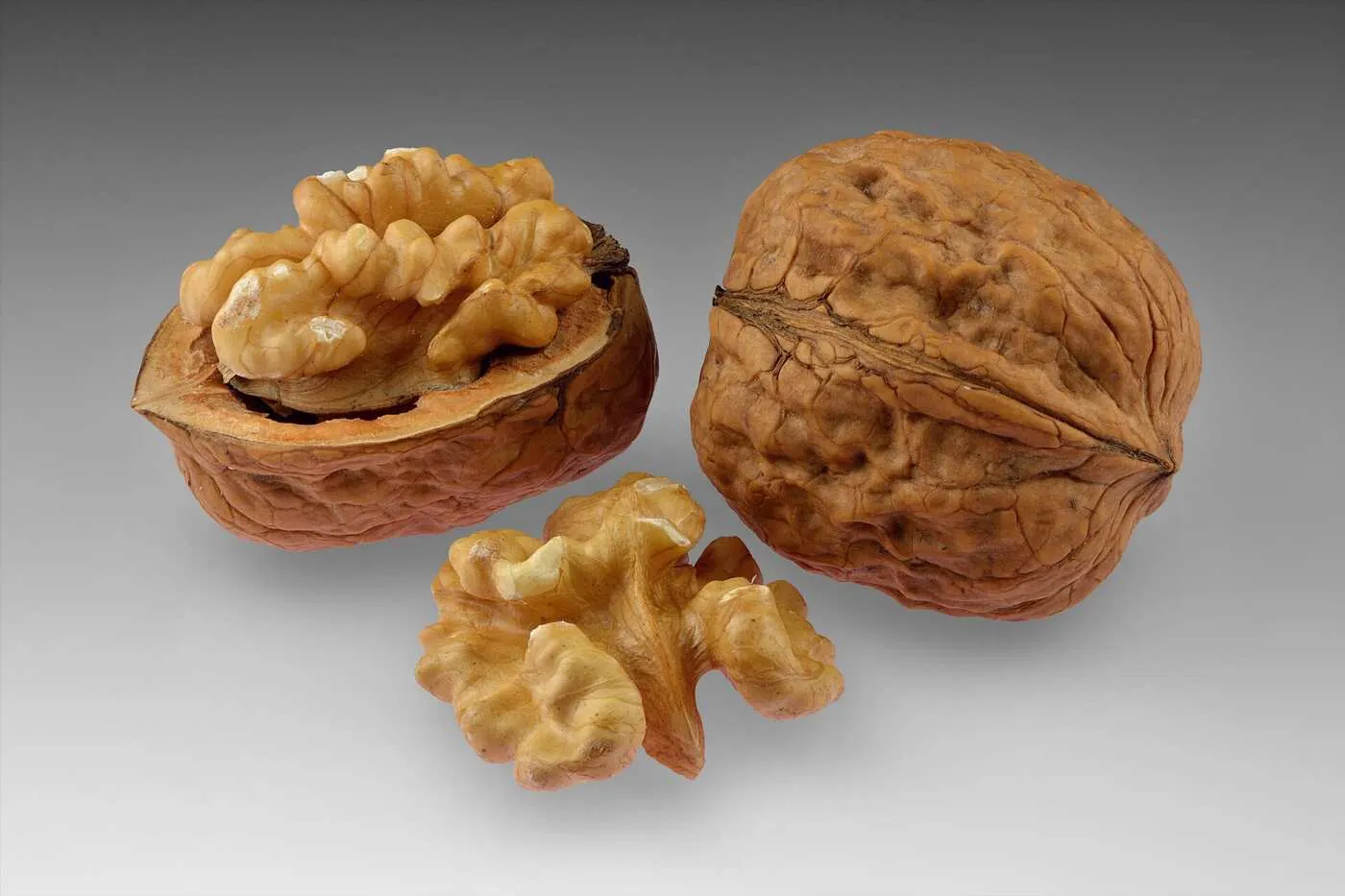 Photo: Ivar Leidus, CC BY-SA 4.0, via Wikimedia Commons
Walnuts are consumed raw or lightly toasted and are incorporated into baked goods, salads, pasta, pestos, grain dishes, and confectionery. They pair naturally with bitter chocolate, blue cheese, and dried fruit. Ground walnuts form the basis of the Persian sauce fesenjan (with pomegranate molasses) and certain Georgian sauces.
Raw vs. roasted: Roasting at 135–150°C (275–300°F) for 10–12 minutes enhances flavor through Maillard products. In a comparison of roasting conditions, walnut fatty acid composition (including ALA) was unchanged, but tocopherols and hydrophilic antioxidant capacity fell and the lipid-oxidation marker malondialdehyde rose with higher temperatures (Schlörmann et al., 2015). To retain tocopherols and antioxidant capacity, raw or lightly toasted walnuts are preferred. The pellicle (inner skin) should be retained rather than blanched off, as it is where the kernel’s ellagitannins are concentrated.
Storage: Given their high PUFA content, walnuts oxidize (go rancid) more readily than most tree nuts. Unshelled walnuts keep longer in a cool, dry place than shelled kernels, which are best refrigerated in an airtight container and used within a few months. Rancid walnuts develop a bitter, paint-like flavor and smell — a reliable organoleptic indicator.
A standard serving of 28 g (approximately 14 halves) provides approximately 185 kcal, 4 g protein, 18 g fat (2.6 g ALA), and 1.9 g fiber.
Chopped walnuts go into the apple-cinnamon version among the overnight oats recipes. The brain foods guide puts the walnut cognition trials alongside other foods, and EPA vs DHA: what the omega-3 research shows explains why plant ALA is not a substitute for fish omega-3.
Safety, Interactions, and Contraindications
Tree nut allergy: Walnut allergy is one of the most prevalent tree nut allergies globally, mediated primarily by the seed storage proteins Jug r 1 (2S albumin), Jug r 2 (vicilin), and Jug r 4 (legumin), with the lipid transfer protein Jug r 3 also implicated. Reactions range from mild oral symptoms to systemic anaphylaxis. Walnut and pecan are highly cross-reactive, and cross-reactivity with other Juglans species (black walnut, butternut) and, in some individuals, with other tree nuts has been documented (Smeekens et al., 2018). Tree nut allergy is usually persistent, with reported resolution rates of roughly 9–14% (McWilliam et al., 2020).
Warfarin and anticoagulant interactions: Walnuts contain little vitamin K (~2.7 µg/100 g; USDA FoodData Central), far less than most green vegetables. No published clinical study or case report documenting a walnut–warfarin interaction was found. As with any large dietary change, people on warfarin should keep intake consistent and discuss changes with their clinician.
Black walnut vs. English walnut distinction: Juglans nigra (black walnut), native to North America, has a distinct nutritional and phytochemical profile, with higher juglone concentrations in the hull; its allergens are homologous to, and cross-react with, those of English walnut. Most food safety and nutrition research pertains to Juglans regia; the two should not be conflated.
Levothyroxine: The U.S. prescribing information for levothyroxine lists walnuts, along with soybean flour, cottonseed meal, and dietary fiber, among foods that may bind the drug and decrease its absorption (Synthroid label, DailyMed). People taking thyroid hormone may want to separate walnut-heavy meals from their dose and discuss timing with their prescriber.
Caloric density and energy balance: At 654 kcal/100 g, walnuts are calorie-dense. A meta-analysis of prospective cohorts and randomized trials found no adverse effect of nut intake on body weight (Nishi et al., 2021), possibly reflecting compensation mechanisms; however, individuals with strict caloric goals should account for walnut calories. A 28 g serving is standard.
This entry is for informational purposes only and does not constitute medical advice, diagnosis, or treatment.
Frequently Asked Questions
How many walnuts should you eat per day?
A standard serving is 28 g, about 14 halves, which provides roughly 185 kcal and 2.6 g ALA. Trials have used 30 to 60 g a day for two years, and 42 g a day in a gut microbiome study. No official limit exists. A meta-analysis found nuts did not cause weight gain, but walnuts added on top of an unchanged diet still add calories.
Are walnuts good for you?
For most people without a nut allergy, yes. Walnuts have the most consistent cholesterol evidence among tree nuts: a two-year trial and a meta-analysis of 26 trials both found modest LDL reductions, and the FDA permits a qualified heart-disease claim. They also supply ALA omega-3, copper, manganese and polyphenols. Effects on heart attacks themselves have not been proven.
Are walnuts good for your brain?
The evidence is mixed. In the two-year WAHA trial, walnuts had no effect on overall cognition in 636 healthy older adults, with a possible benefit in one site only. A PREDIMED sub-study found a mixed-nut Mediterranean diet improved a memory score. Walnuts’ resemblance to a brain is folklore; their ALA and polyphenols make a link plausible but unproven.
Do walnuts have protein?
Walnuts vs pecans: what is the difference?
Both belong to the same plant family, but walnuts are mostly polyunsaturated fat with about nine times the ALA of pecans and more protein, while pecans are mostly monounsaturated and higher in fiber and manganese. Walnuts have the larger trial record for cholesterol. Their allergens cross-react strongly, so an allergy to one usually rules out both.
Can walnuts interact with medications?
Walnuts are listed on levothyroxine prescribing information among foods that may reduce the drug’s absorption, so people on thyroid hormone may want to separate walnut-heavy meals from their dose. Walnuts contain very little vitamin K, and no walnut-warfarin interaction has been documented, though anyone on warfarin should keep their diet consistent and discuss large changes with their clinician.
References
Show all 20 referencesShow fewer
- Guasch-Ferré, M., Li, J., Hu, F. B., Salas-Salvadó, J., & Tobias, D. K. (2018). Effects of walnut consumption on blood lipids and other cardiovascular risk factors: An updated meta-analysis and systematic review of controlled trials. American Journal of Clinical Nutrition, 108(1), 174–187.
- Rajaram, S., Cofán, M., Sala-Vila, A., Haddad, E., Serra-Mir, M., Bitok, E., … Ros, E. (2021). Effects of walnut consumption for 2 years on lipoprotein subclasses among healthy elders: Findings from the WAHA randomized controlled trial. Circulation, 144(13), 1083–1085.
- Sala-Vila, A., Valls-Pedret, C., Rajaram, S., Coll-Padrós, N., Cofán, M., Serra-Mir, M., … Ros, E. (2020). Effect of a 2-year diet intervention with walnuts on cognitive decline. The Walnuts And Healthy Aging (WAHA) study: A randomized controlled trial. American Journal of Clinical Nutrition, 111(3), 590–600.
- Holscher, H. D., Guetterman, H. M., Swanson, K. S., An, R., Matthan, N. R., Lichtenstein, A. H., … Baer, D. J. (2018). Walnut consumption alters the gastrointestinal microbiota, microbially derived secondary bile acids, and health markers in healthy adults: A randomized controlled trial. Journal of Nutrition, 148(6), 861–867.
- Reiter, R. J., Manchester, L. C., & Tan, D. X. (2005). Melatonin in walnuts: influence on levels of melatonin and total antioxidant capacity of blood. Nutrition, 21(9), 920–924.
- Ros, E., Núñez, I., Pérez-Heras, A., Serra, M., Gilabert, R., Casals, E., & Deulofeu, R. (2004). A walnut diet improves endothelial function in hypercholesterolemic subjects: A randomized crossover trial. Circulation, 109(13), 1609–1614.
- Valls-Pedret, C., Sala-Vila, A., Serra-Mir, M., Corella, D., de la Torre, R., Martínez-González, M. Á., … Ros, E. (2015). Mediterranean diet and age-related cognitive decline: A randomized clinical trial. JAMA Internal Medicine, 175(7), 1094–1103.
- Li, J., Jiang, B., Santos, H. O., Santos, D., Singh, A., & Wang, L. (2020). Effects of walnut intake on blood pressure: A systematic review and meta-analysis of randomized controlled trials. Phytotherapy Research, 34(11), 2921–2931.
- Burdge, G. C., & Calder, P. C. (2005). Conversion of alpha-linolenic acid to longer-chain polyunsaturated fatty acids in human adults. Reproduction Nutrition Development, 45(5), 581–597.
- U.S. Department of Agriculture, Agricultural Research Service. FoodData Central: Nuts, walnuts, english (FDC ID 170187).
- Guasch-Ferré, M., Liu, X., Malik, V. S., Sun, Q., Willett, W. C., Manson, J. E., … Bhupathiraju, S. N. (2017). Nut consumption and risk of cardiovascular disease. Journal of the American College of Cardiology, 70(20), 2519–2532.
- Meng, X., Li, Y., Li, S., Zhou, Y., Gan, R. Y., Xu, D. P., & Li, H. B. (2017). Dietary sources and bioactivities of melatonin. Nutrients, 9(4), 367.
- Jiang, Q., Elson-Schwab, I., Courtemanche, C., & Ames, B. N. (2000). γ-Tocopherol and its major metabolite, in contrast to α-tocopherol, inhibit cyclooxygenase activity in macrophages and epithelial cells. Proceedings of the National Academy of Sciences, 97(21), 11494–11499.
- Mateș, L., Popa, D. S., Rusu, M. E., Fizeșan, I., & Leucuța, D. (2022). Walnut intake interventions targeting biomarkers of metabolic syndrome and inflammation in middle-aged and older adults: A systematic review and meta-analysis of randomized controlled trials. Antioxidants, 11(7), 1412.
- Schlörmann, W., Birringer, M., Böhm, V., Löber, K., Jahreis, G., Lorkowski, S., … Glei, M. (2015). Influence of roasting conditions on health-related compounds in different nuts. Food Chemistry, 180, 77–85.
- Smeekens, J. M., Bagley, K., & Kulis, M. (2018). Tree nut allergies: Allergen homology, cross-reactivity, and implications for therapy. Clinical & Experimental Allergy, 48(7), 762–772.
- McWilliam, V. L., Perrett, K. P., Dang, T., & Peters, R. L. (2020). Prevalence and natural history of tree nut allergy. Annals of Allergy, Asthma & Immunology, 124(5), 466–472.
- Nishi, S. K., Viguiliouk, E., Blanco Mejia, S., Kendall, C. W. C., Bazinet, R. P., Hanley, A. J., … Sievenpiper, J. L. (2021). Are fatty nuts a weighty concern? A systematic review and meta-analysis and dose-response meta-regression of prospective cohorts and randomized controlled trials. Obesity Reviews, 22(11), e13330.
- U.S. Food and Drug Administration. Qualified health claims: Letters of enforcement discretion (Walnuts and coronary heart disease).
- U.S. National Library of Medicine, DailyMed. Synthroid (levothyroxine sodium) tablets: prescribing information.
Related content
More in Nuts & Seeds
- Almonds (Prunus dulcis)
Almonds benefits and nutrition: what trials show for LDL cholesterol, blood sugar and weight, plus serving size, vitamin E, oxalate and allergy risks.
- Brazil Nuts (Bertholletia excelsa)
Brazil nuts benefits come down to selenium: one nut can hold 8 to 200 mcg. How many to eat per day, what the research shows, and the toxicity limit.
- Cashews (Anacardium occidentale)
Cashews benefits and nutrition: copper, magnesium and iron per serving, what trials show for blood pressure and blood sugar, and allergy and oxalate risks.
- Chia Seeds (Salvia hispanica)
How to eat chia seeds: soaked, ground or in pudding, with serving size, nutrition and what trials show for blood sugar, blood pressure and weight loss.
- Flaxseed (Linum usitatissimum)
Flaxseed benefits explained: what trials show for blood pressure, cholesterol and constipation, why ground beats whole, daily amounts and side effects.
- Hazelnuts (Corylus avellana)
Hazelnuts benefits and nutrition: oleic acid, vitamin E and folate per serving, what trials show for cholesterol, and how birch-pollen allergy works.

Curated by Superfoods Advisor Editors·Last updated