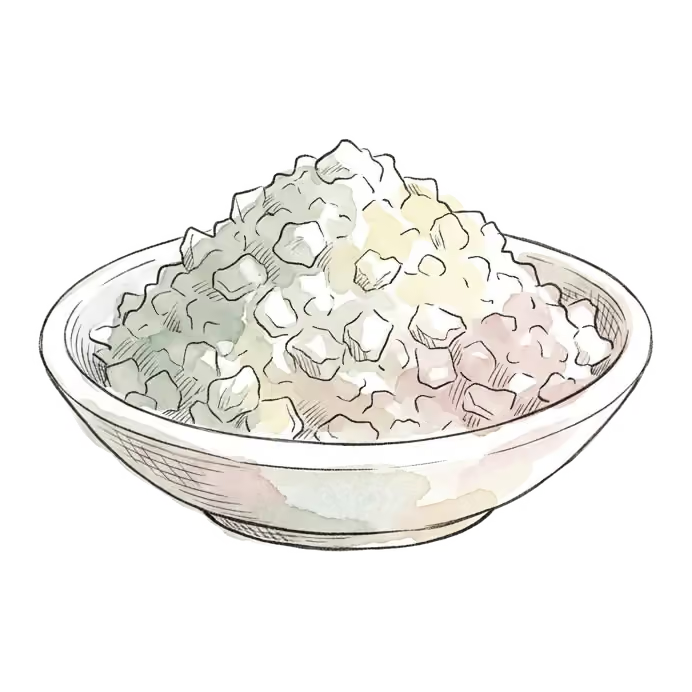
Sea Salt
By Superfoods Advisor Editors·July 3, 2026
Celtic salt benefits and sea salt claims checked: trace minerals, electrolytes and iodine versus table and Himalayan salt, plus daily sodium limits.
Sea salt, including Celtic grey salt (sel gris), is sodium chloride made by evaporating seawater. Its claimed benefits rest on trace minerals such as magnesium, but at seasoning amounts they supply only a few percent of daily needs. For health it behaves like table salt: its sodium raises blood pressure, and most sea salts lack the iodine of iodized salt.
Sea salt can also come from saline lake water, as opposed to mined rock salt (halite) extracted from underground deposits. The primary chemical constituent — sodium chloride — is identical in sea salt, table salt, Himalayan pink salt, and mineral-rich grey salt varieties. The meaningful differences between salt types lie primarily in trace mineral content, particle size and texture, processing degree, and iodine content — not in the fundamental chemistry of the majority compound.
In the context of health and wellness, sea salt is often marketed as a superior or more “natural” alternative to refined table salt, with claims centering on trace mineral content, absence of additives (anti-caking agents, bleaching agents), and purported electrolyte benefits. A scientifically honest assessment must acknowledge that while these distinctions are real, their practical health significance is generally not established for typical dietary use. The cardiovascular effects of sodium — irrespective of whether it arrives as sea salt or iodized table salt — are what the evidence most robustly supports. The relevant public health consideration for the vast majority of consumers is not which salt to use but how much total sodium to consume.
Evidence at a glance
Active Compounds and Composition
Sea salt and table salt are both overwhelmingly sodium chloride (NaCl) by mass. The small remainder in unrefined sea salt includes moisture and trace amounts of:
- Magnesium (primarily magnesium chloride): Content varies widely by source and processing. Even in mineral-rich unrefined salts it is small: an Australian analysis of 31 retail pink salts measured an average of about 2,655 mg/kg (roughly 0.27% by mass) (Fayet-Moore et al., 2020). At that level, a one-quarter teaspoon serving (~1.5 g salt) would provide about 4 mg magnesium — negligible relative to the adult RDA of 310–420 mg/day.
- Potassium: Similarly trace quantities, contributing a small fraction of the 2,600–3,400 mg/day recommended intake.
- Calcium, sulfate, bromide, strontium, and other minerals: Present at parts-per-million concentrations in most sea salt varieties.
- Iodine: Largely absent from unrefined sea salts unless explicitly iodized. The natural iodine content of seawater is very low and is further reduced by evaporation and processing; most unrefined and artisan sea salts are non-iodized. This is a nutritionally significant distinction: table salt in most countries is iodized as a public health measure to prevent iodine deficiency disorders (goiter, cretinism). Consumers who switch entirely to non-iodized sea salt and do not consume adequate iodine from seafood, dairy, or other sources may be at risk of iodine insufficiency, particularly in inland regions.
Varieties of unrefined sea salt differ primarily in their trace mineral concentrations and textures, driven by their geographic source and harvesting method:
- Fleur de sel (France): Hand-harvested from the surface crust of salt pans; relatively low trace mineral, high moisture; prized culinary finishing salt.
- Celtic grey salt (sel gris, France): Harvested from the bottom of salt pans; higher moisture content, higher magnesium and mineral content than fleur de sel. Its extra minerals are still trace amounts at seasoning doses (see Trace Mineral Supplementation below).
- Himalayan pink salt: Technically a mined rock salt (halite), not a sea salt, though often sold alongside sea salts. Its pink color derives from trace iron oxide. Marketing often cites “84 minerals,” but most are present only in trace amounts. Even the more abundant ones are small in absolute terms: across 31 pink salts sold in Australia, calcium, magnesium, and potassium each averaged roughly 2,400–2,700 mg/kg and iron about 64 mg/kg, and the authors estimated that more than 30 g of salt a day would be needed before the minerals made a meaningful nutritional contribution; one sample exceeded the national limit for lead (Fayet-Moore et al., 2020).
- Black lava salt: Hawaiian sea salt co-processed with activated charcoal; the charcoal provides color and some adsorption properties but no nutritionally significant compound at seasoning quantities.
Evidence for Purported Benefits
Electrolyte Balance
Evidence:Moderate Sodium’s role in fluid and electrolyte balance is well established; nothing is specific to sea salt over other salt.
Sodium and chloride are the primary extracellular electrolytes and are essential for fluid balance, nerve impulse conduction, muscle contraction, and acid-base homeostasis. The kidneys tightly regulate serum sodium within a narrow range (136–145 mEq/L) through renin-angiotensin-aldosterone axis feedback. Dietary sodium adequacy is rarely a concern in Western populations consuming modern diets — the more common issue is excess sodium intake relative to kidney excretion capacity, not deficiency. Electrolyte supplementation with sodium is clinically relevant in endurance athletes (sweat sodium losses), individuals with certain GI conditions causing high-output losses, and in clinical rehydration contexts. These applications have no specificity to sea salt vs. any other sodium chloride source.
Trace Mineral Supplementation
Evidence:Insufficient At seasoning amounts the trace minerals add only a few percent of daily needs.
The trace mineral content of unrefined sea salt is real but nutritionally inconsequential at typical seasoning intake levels. A person consuming 2,300 mg of sodium per day (the Dietary Guidelines upper limit) uses approximately 5.8 g of salt. Even if that salt contained as much magnesium as the average pink salt in one retail analysis (about 0.27% by mass; Fayet-Moore et al., 2020), it would supply roughly 15 mg magnesium — about 4–5% of the adult RDA. This contribution is not clinically meaningful, particularly relative to dietary magnesium from food sources such as leafy greens, nuts, seeds, and legumes. Claims that sea salt provides meaningful mineral nutrition are not supported by quantitative dietary analysis. Individuals requiring supplemental magnesium, potassium, or trace minerals should source these from foods or targeted supplements, not from condiment quantities of salt.
Hydration and Rehydration
Evidence:Moderate Sodium-based oral rehydration is standard practice; sea salt offers no advantage over other sodium sources.
Sodium is the primary osmotic driver of fluid retention and extracellular fluid volume maintenance. Sodium-containing rehydration solutions are the evidence-backed standard for oral rehydration therapy (ORT) in diarrheal illness, based on the glucose-sodium cotransport mechanism in enterocytes. The WHO reduced-osmolarity Oral Rehydration Solution contains 75 mmol/L sodium (Pulungsih et al., 2006). Sea salt used in home rehydration preparations provides sodium but without standardized electrolyte concentrations; for medical rehydration, standardized formulations are preferable. For general hydration in healthy individuals during ordinary, shorter exercise sessions, plain water is generally adequate; electrolyte-containing drinks offer an advantage only in certain circumstances, such as prolonged exercise with heavy sweating (American College of Sports Medicine, 2007).
Culinary and Food Quality
Evidence:Insufficient Texture and flavor are matters of taste, not health benefits.
Chefs and culinary professionals frequently prefer specific sea salts for their texture, moisture content, and flavor profiles — fleur de sel for finishing dishes, coarser grains for crusting meats, and so forth. These are legitimate culinary distinctions not reducible to health claims. The texture difference between large-flake sea salt and fine-grained iodized table salt affects rate of dissolution and tactile saltiness perception, which can influence how much is used by volume — a practical point but not a health benefit.
Sodium and Blood Pressure: The Evidence That Matters
The most evidence-supported health consideration with any salt — sea or otherwise — is its sodium content and the relationship between dietary sodium and blood pressure:
- The DASH-Sodium trial (Sacks et al., 2001, New England Journal of Medicine) fed 412 adults high, intermediate, and low sodium levels for 30 days each on either a typical American control diet or the DASH diet. Each step down in sodium lowered systolic blood pressure on both diets, in participants with and without hypertension; compared with the control diet at high sodium, the DASH diet at low sodium lowered systolic pressure by 7.1 mmHg in participants without hypertension and 11.5 mmHg in those with hypertension.
- A systematic review and meta-analysis by Aburto et al. (2013) (BMJ; 37 RCTs measuring blood pressure in adults) found that reduced sodium intake lowered resting systolic blood pressure by about 3.4 mmHg and diastolic by about 1.5 mmHg, with no adverse effect on blood lipids, catecholamines, or renal function; in cohort studies, lower sodium intake was also associated with lower risk of stroke.
- The INTERSALT study (Intersalt Cooperative Research Group, 1988, BMJ) of 10,079 people across 32 countries found that 24-hour urinary sodium excretion was significantly related to blood pressure in individuals within centres. Across centres the picture was weaker: outside four very-low-sodium populations, sodium was related to the rise in blood pressure with age but not to median blood pressure or the prevalence of high blood pressure.
- Not all individuals are “salt-sensitive”: the size of the blood pressure response to sodium varies with genetic factors, race/ethnicity, age, body mass, diet, and conditions such as diabetes and kidney dysfunction (Franco & Oparil, 2006). However, because salt sensitivity is difficult to predict without physiological testing, population-level sodium moderation is recommended.
The critical point: sodium’s blood pressure effects are identical whether the sodium is delivered as sea salt, table salt, Himalayan salt, soy sauce, or any other vehicle. The form of salt has no differential effect on blood pressure.
Typical Use and Dosing
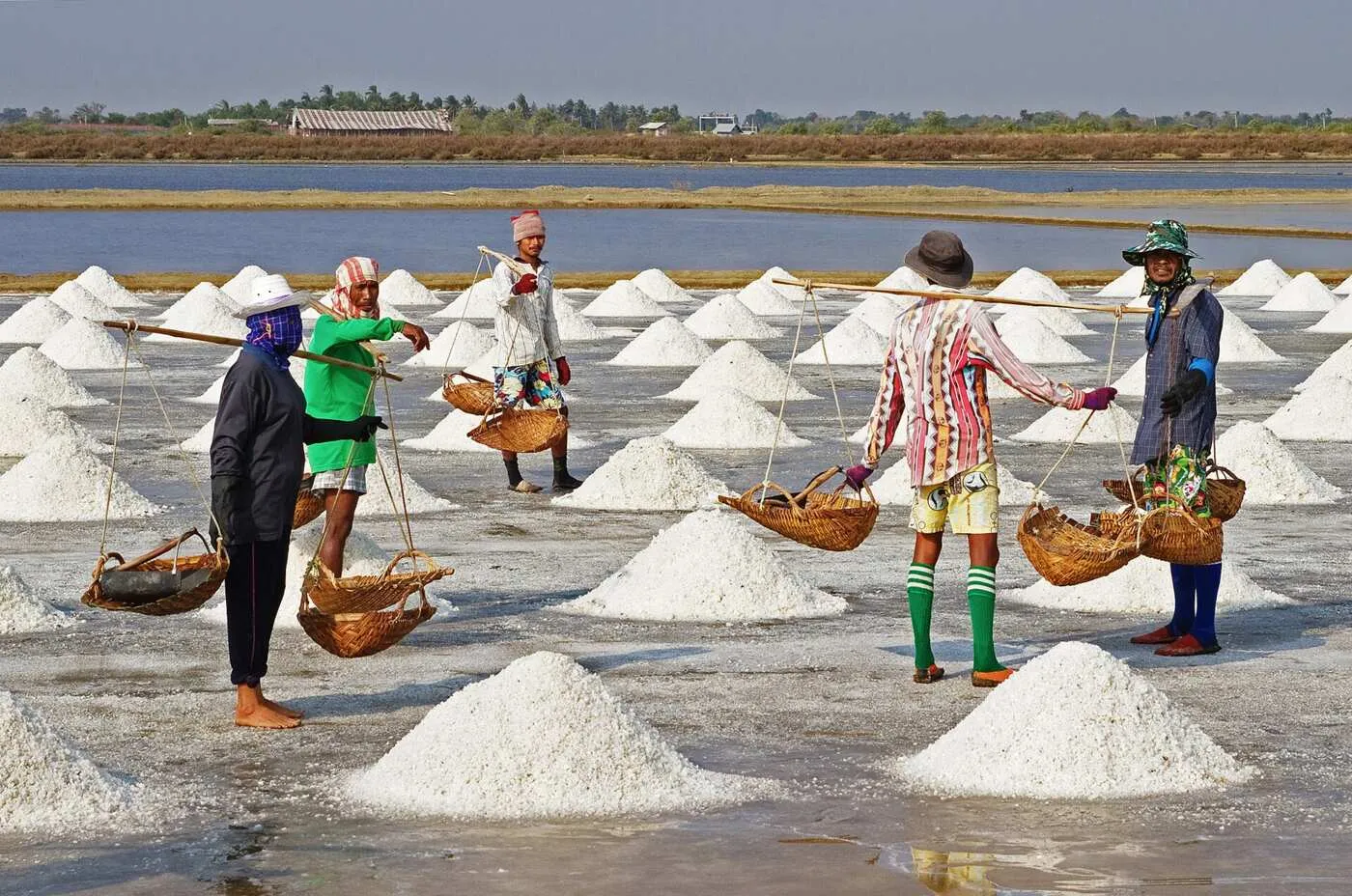 Photo: JJ Harrison ( jjharrison89@facebook.com ) (tilt correction)., CC BY-SA 3.0, via Wikimedia Commons
Sea salt is a condiment and ingredient, not a supplement with a therapeutic dose. Guidance reflects sodium intake context:
- Dietary Guidelines for Americans (2025–2030, unchanged from 2020–2025): Less than 2,300 mg sodium per day for ages 14 and up (DGA 2025–2030), about 1 teaspoon of table salt (FDA); the World Health Organization recommends less than 2,000 mg/day, equivalent to under 5 g of salt (WHO).
- Athletes and heavy sweaters: Sweat sodium concentration varies widely between individuals, typically about 10–90 mmol/L, or roughly 0.2–2 g sodium per litre of sweat (Baker, 2017). During prolonged exercise with heavy sweating, sodium replacement alongside fluid may be warranted, ideally customized to the individual (American College of Sports Medicine, 2007).
- Low-sodium diets: Lower targets are common for specific conditions. U.S. hypertension guidelines describe an optimal goal of under 1,500 mg sodium/day (Whelton et al., 2018), and KDIGO suggests under 2 g/day for people with chronic kidney disease and high blood pressure (KDIGO, 2021). Heart failure targets are less settled (see below).
There is no established therapeutic benefit of adding sea salt or increasing sodium intake beyond dietary needs in healthy individuals with adequate dietary sodium.
Sodium is only one factor in blood pressure; the heart-health guide covers the dietary patterns and foods studied for it.
Safety, Interactions, and Contraindications
Hypertension: Excess sodium intake is a well-documented, modifiable risk factor for hypertension in salt-sensitive individuals. Individuals with hypertension should monitor total dietary sodium regardless of salt type.
Chronic kidney disease (CKD): The kidneys’ ability to excrete excess sodium is impaired in CKD; sodium restriction is a central component of CKD dietary management.
Heart failure and edema: Sodium retention can worsen fluid overload, and sodium restriction has long been part of heart failure advice. However, in the SODIUM-HF randomized trial of 806 outpatients, a diet targeting under 1,500 mg/day did not reduce hospital admissions, emergency visits, or deaths over 12 months compared with usual care (Ezekowitz et al., 2022). People with heart failure should follow the sodium guidance of their treating clinician.
Iodine deficiency risk: Individuals who switch from iodized table salt to non-iodized sea salt and who do not obtain adequate iodine from other dietary sources (seafood, dairy, iodine-enriched foods) are at risk of iodine insufficiency. A 2011 global assessment estimated that about 30% of school-age children worldwide (241 million) had insufficient iodine intake (Andersson et al., 2012); in populations without robust iodine dietary sources, abandoning iodized salt in favor of artisan sea salt represents a potential nutritional risk.
Sodium-potassium ratio: In a nationally representative US cohort, a higher sodium-to-potassium intake ratio was associated with higher cardiovascular and all-cause mortality (Yang et al., 2011). Emphasizing potassium-rich whole foods alongside sodium moderation is the evidence-based approach.
Product Selection Criteria
Given that sea salt is fundamentally a seasoning and not a supplement with evidence-based health benefits specific to its trace mineral content, selection criteria are primarily culinary and practical:
- Iodine status: If iodized table salt is not a regular part of the diet, ensure adequate iodine from other sources (seaweed, fish, dairy) or choose an iodized sea salt.
- Texture and grain size: Match to intended culinary application (finishing vs. cooking vs. brining).
- Source transparency: Seawater quality affects trace contaminant potential; reputable producers specify harvest region and test for heavy metals and microplastics — both of which have been detected in some commercial sea salts.
- No additives: Pure sea salt should list only “sea salt” as the ingredient; anti-caking agents (sodium aluminosilicate, calcium silicate) are common in refined salts and are generally recognized as safe (GRAS) at up to 2% of table salt (21 CFR Part 182) but absent in unrefined products.
- Microplastics consideration: Studies have detected microplastic particles in commercial sea salt samples globally; a survey of 39 salt brands by Kim et al. (2018) found the widest range in sea salts (0–1,674 particles/kg, excluding one outlier) compared with 0–148 particles/kg in rock salt. This is an emerging research area without established health impact at typical dietary exposure, but it is a distinguishing consideration relative to mined rock salt from pre-industrial deposits.
Frequently Asked Questions
What are the benefits of Celtic salt?
Celtic grey salt has a coarse, moist texture and a mineral flavor that many cooks like, and it carries more magnesium than fleur de sel. Its health benefits are not established: at seasoning amounts, its trace minerals supply only a few percent of daily needs. Its sodium affects blood pressure exactly as table salt’s does.
Is sea salt healthier than table salt?
Not in any measurable way. Both are overwhelmingly sodium chloride, and sodium’s effect on blood pressure is the same whatever the salt. Sea salt avoids anti-caking agents and keeps trace minerals, but table salt is usually iodized, which matters for people who get little iodine from seafood or dairy. Total sodium intake is the factor the evidence supports.
Does sea salt have iodine?
Usually very little. Seawater’s natural iodine is low and is further reduced by evaporation and processing, so most unrefined and artisan sea salts are not iodized unless the label says so. People who switch fully from iodized table salt should make sure they get iodine from seafood, seaweed, dairy or an iodized sea salt.
Is Himalayan salt better than sea salt?
No. Himalayan pink salt is mined rock salt, not sea salt, colored by trace iron oxide. Across 31 pink salts sold in Australia, researchers estimated that more than 30 g a day would be needed before its minerals made a meaningful nutritional contribution, far above safe sodium limits, and one sample exceeded the national limit for lead.
How much sea salt should I add to water for electrolytes?
There is no standard recipe. For ordinary, shorter exercise, plain water is generally adequate. Sweat sodium losses range from about 0.2 to 2 g per litre, so needs during long, sweaty sessions vary widely between people. For rehydration during illness, standardized oral rehydration solutions (75 mmol/L sodium) are preferable to homemade salt water.
References
Show all 14 referencesShow fewer
- Sacks, F. M., Svetkey, L. P., Vollmer, W. M., et al. (2001). Effects on blood pressure of reduced dietary sodium and the Dietary Approaches to Stop Hypertension (DASH) diet. New England Journal of Medicine, 344(1), 3–10.
- Aburto, N. J., Ziolkovska, A., Hooper, L., et al. (2013). Effect of lower sodium intake on health: Systematic review and meta-analyses. BMJ, 346, f1326.
- Intersalt Cooperative Research Group. (1988). Intersalt: An international study of electrolyte excretion and blood pressure. Results for 24 hour urinary sodium and potassium excretion. BMJ, 297(6644), 319–328.
- Franco, V., & Oparil, S. (2006). Salt sensitivity, a determinant of blood pressure, cardiovascular disease and survival. Journal of the American College of Nutrition, 25(3 Suppl), 247S–255S.
- Yang, Q., Liu, T., Kuklina, E. V., et al. (2011). Sodium and potassium intake and mortality among US adults: Prospective data from the Third National Health and Nutrition Examination Survey. Archives of Internal Medicine, 171(13), 1183–1191.
- Kim, J. S., Lee, H. J., Kim, S. K., & Kim, H. J. (2018). Global pattern of microplastics (MPs) in commercial food-grade salts: Sea salt as an indicator of seawater MP pollution. Environmental Science and Technology, 52(21), 12819–12828.
- Fayet-Moore, F., Wibisono, C., Carr, P., et al. (2020). An analysis of the mineral composition of pink salt available in Australia. Foods, 9(10), 1490.
- Pulungsih, S. P., Punjabi, N. H., Rafli, K., et al. (2006). Standard WHO-ORS versus reduced-osmolarity ORS in the management of cholera patients. Journal of Health, Population and Nutrition, 24(1), 107–112.
- American College of Sports Medicine. (2007). Position stand: Exercise and fluid replacement. Medicine & Science in Sports & Exercise, 39(2), 377–390.
- Baker, L. B. (2017). Sweating rate and sweat sodium concentration in athletes: A review of methodology and intra/interindividual variability. Sports Medicine, 47(Suppl 1), 111–128.
- Whelton, P. K., Carey, R. M., Aronow, W. S., et al. (2018). 2017 ACC/AHA guideline for the prevention, detection, evaluation, and management of high blood pressure in adults. Hypertension, 71(6), e13–e115.
- KDIGO Blood Pressure Work Group. (2021). KDIGO 2021 clinical practice guideline for the management of blood pressure in chronic kidney disease. Kidney International, 99(3S), S1–S87.
- Ezekowitz, J. A., Colin-Ramirez, E., Ross, H., et al. (2022). Reduction of dietary sodium to less than 100 mmol in heart failure (SODIUM-HF): An international, open-label, randomised, controlled trial. The Lancet, 399(10333), 1391–1400.
- Andersson, M., Karumbunathan, V., & Zimmermann, M. B. (2012). Global iodine status in 2011 and trends over the past decade. Journal of Nutrition, 142(4), 744–750.
More in Supplements & Ingredients
- Berberine
Berberine for weight loss: trials show about 1 to 2 kg, not Ozempic-level results, plus blood sugar and LDL effects, dosage, side effects and interactions.
- CBD (Cannabidiol)
CBD for sleep: what the research shows, how CBD differs from THC, plus the anxiety and epilepsy evidence, dosing, legal status and side effects.
- Collagen (Hydrolyzed Collagen Peptides)
Collagen peptides benefits weighed against the trials: skin elasticity, joint pain, bone density and muscle, plus daily dose, timing and side effects.
- Inulin
What is inulin? A prebiotic fiber from chicory root and other plants: how it feeds gut bacteria, benefits, daily dose, side effects and inulin vs psyllium.
- MCT Oil (Medium-Chain Triglycerides)
What is MCT oil? C8 and C10 fats fractionated from coconut or palm kernel oil. Ketones, weight and brain evidence, vs coconut oil, dose and side effects.
- Nutritional Yeast
Is nutritional yeast good for you? About 8 g complete protein per 15 g, B vitamins and B12 if fortified, vs brewer's yeast, daily amounts and gout.

Browse all supplements & ingredients →
Curated by Superfoods Advisor Editors·Last updated