
Whey Protein Isolate
Bos taurus · also known as WPI, whey isolate, whey protein, whey hydrolysate, isolate protein powder
By Superfoods Advisor Editors·July 3, 2026
Whey protein isolate vs regular whey: protein, lactose and fat compared, plus muscle evidence, daily amounts, lactose intolerance and side effects.
Whey protein isolate (WPI) is whey protein filtered to at least 90% protein on a dry basis, with minimal lactose and fat. Regular “whey protein” usually means whey protein concentrate, at about 35–80% protein. Both supply the same milk proteins; the isolate’s advantage is less lactose and fat per serving, which many lactose-intolerant people find easier to tolerate.
Whey itself is the liquid fraction of bovine milk that separates from curds during cheese and casein production. During traditional cheesemaking, rennet or acid is added to milk, causing the casein proteins to aggregate and precipitate; the remaining liquid — whey — contains the soluble milk proteins (primarily beta-lactoglobulin, alpha-lactalbumin, immunoglobulins, bovine serum albumin, and lactoferrin), along with lactose, water, minerals, and fat. Further processing through filtration and ion exchange concentrates and purifies the whey protein fraction into powders suitable for supplemental and food use.
Isolate vs. concentrate: whey protein isolate is distinguished from whey protein concentrate (WPC) primarily by its protein concentration and lactose content. FDA’s GRAS regulation defines WPC only loosely: at least 25% protein, and up to 60% lactose, on a dry basis (21 CFR 184.1979c); it sets no separate standard for isolate. Commercial WPC grades typically run from about 35% to 80% protein, with proportionally higher residual lactose and fat. WPI, produced through more extensive filtration or ion exchange chromatography (IEX), generally contains ≥90% protein on a dry basis with minimal lactose and fat (Szołtysik et al., 2026) — making it suitable for lactose-intolerant individuals who can tolerate whey (lactose intolerance is not a contraindication to WPI in most cases, though individuals with a true milk protein allergy must avoid it entirely).
Hydrolysate: a third form, whey protein hydrolysate (WPH), undergoes partial enzymatic hydrolysis into peptides and free amino acids, producing the fastest absorption kinetics of the three but often with a more bitter taste and higher cost.
Evidence at a glance
Active Compounds and Composition
Whey protein isolate’s biological value for muscle protein synthesis rests on two characteristics: its amino acid profile and its rapid absorption kinetics.
Amino acid profile: WPI contains all nine essential amino acids in adequate amounts and has one of the highest concentrations of leucine among food-derived protein sources, roughly 11–14 g leucine per 100 g protein in published analyses (Gorissen et al., 2018; Gilmour et al., 2024). Leucine is the critical amino acid for activating the mechanistic target of rapamycin complex 1 (mTORC1), the central intracellular signaling hub regulating muscle protein synthesis (MPS). The International Society of Sports Nutrition suggests that each protein dose contain about 700–3,000 mg of leucine (Jäger et al., 2017); 25 g of whey protein supplies about 2.7 g (Gorissen et al., 2018). The idea that a leucine “trigger” governs the size of the MPS response has mixed experimental support (Zaromskyte et al., 2021). Branched-chain amino acids (BCAAs — leucine, isoleucine, valine) make up roughly a fifth to a quarter of whey protein by weight in the same analyses.
Individual whey proteins (approximate shares of total whey protein, per Cava et al., 2024):
- Beta-lactoglobulin (~50–55% of whey protein): Not present in human milk; the primary protein in bovine whey. Binds retinol, fatty acids, and some hydrophobic compounds. A common immunogenic target in milk protein allergy.
- Alpha-lactalbumin (~15–20%): Rich in tryptophan; plays a role in lactose synthesis in the mammary gland. Also one of the main cow’s milk allergens (Jensen et al., 2022).
- Bovine serum albumin (~5–10%): Abundant lysine content; also a recognized milk allergen.
- Lactoferrin (<1–2%): Iron-binding glycoprotein studied for antimicrobial and immune-modulating activity; how much survives in a given WPI depends on the processing method.
- Immunoglobulins (up to ~15%): IgG, IgM, IgA; any biological activity they retain in “native” or cold-processed WPI products is marketed but not clinically established.
Biological Value and DIAAS: Using rat ileal digestibility data and the reference pattern for children aged 3–10, a whey protein isolate scored a Digestible Indispensable Amino Acid Score (DIAAS) of 1.09, with histidine the lowest-scoring amino acid (Moughan & Lim, 2024). A score above 1.0 means every essential amino acid is supplied in excess of the reference requirement per gram of protein. It is high but not the top score: a milk protein concentrate reached 1.18 in a rat study of 14 protein sources (Rutherfurd et al., 2015), and scores shift with the reference pattern used.
Evidence for Purported Benefits
Muscle Protein Synthesis and Lean Mass Accretion
Evidence:Strong Many RCTs and a meta-analysis of 49 trials; long-term gains are similar to soy and other proteins.
Whey protein’s effect on muscle protein synthesis is among the most extensively studied outcomes in sports nutrition research. A review by Phillips, Tang, and Moore (2009) summarized evidence that whey protein supports MPS better than soy protein, plausibly because of its amino acid composition and rapid digestion. That acute advantage has not shown up in longer training studies: a 2018 meta-analysis of nine trials found similar strength and lean-mass gains with soy and with whey or other animal proteins (Messina et al., 2018). Tang et al. (2009) (n = 18 young men) found that whey hydrolysate raised blood leucine more than casein or soy and stimulated greater MPS than casein both at rest and after resistance exercise, and greater MPS than soy after exercise. A 2018 meta-analysis by Morton et al. synthesizing 49 RCTs (n=1,863) found that protein supplementation significantly increased gains in fat-free mass (+0.30 kg) and strength during resistance training programs, with a smaller effect at older ages. Churchward-Venne et al. (2012) found that 25 g of whey sustained elevated myofibrillar protein synthesis 3–5 hours after resistance exercise, whereas a 6.25 g whey dose topped up with leucine or other essential amino acids matched it only in the first hours.
Post-Exercise Recovery
Evidence:Moderate A meta-analysis found protein helps preserve strength after damaging exercise but does not reduce soreness.
Protein ingestion post-exercise reduces exercise-induced muscle protein breakdown (MPB) and augments net MPS. A 2023 meta-analysis found that protein taken around resistance exercise helped maintain maximal strength and lowered creatine kinase, a marker of muscle damage, but did not reduce muscle soreness (Pearson et al., 2023). Cockburn et al. (2010) (four groups of 8 men) found that a milk-based carbohydrate-protein drink consumed immediately or 24 hours after muscle-damaging exercise limited soreness and losses of muscle performance over 48 hours better than the same drink taken before exercise. Timing: while much has been made of a narrow “anabolic window” immediately post-exercise, a meta-analysis (Schoenfeld et al., 2013) suggests that total daily protein intake is likely more important than precise timing. The ISSN notes that protein taken before or after resistance exercise acts synergistically with it (Jäger et al., 2017).
Satiety and Appetite Regulation
Evidence:Limited A few small, short-term studies of whey preloads; broader support comes from reviews of high-protein diets in general.
Protein is generally considered the most satiating macronutrient, and whey’s effects on appetite have been attributed to gut hormone responses (GLP-1, GIP, CCK, PYY release), slower emptying of a following meal from the stomach (seen with a whey preload in a small study of people with type 2 diabetes; Ma et al., 2009), and amino acid-mediated appetite regulation. Akhavan et al. (2010) found that 20–40 g whey protein taken 30 minutes before an ad libitum pizza meal suppressed food intake, and that 10–40 g lowered post-meal blood glucose, in healthy young adults. Reviews of higher-protein diets in general attribute part of their effect on weight management to changes in appetite and energy intake (Leidy et al., 2015).
Body Weight and Fat Mass
Evidence:Moderate A meta-analysis of nine RCTs in overweight adults found modestly greater weight and fat loss.
A 2018 meta-analysis of nine RCTs in overweight and obese adults found modestly greater reductions in body weight and fat mass with whey supplementation than with placebo or control (Wirunsawanya et al., 2018). In the 16-week PRISE study (Arciero et al., 2014), overweight and obese adults taking 20 g whey protein three times daily lost body weight and fat mass in all groups, with the largest losses in the group that combined whey with multimode exercise training; every group took whey, so the trial could not isolate whey’s own effect.
Older Adults and Sarcopenia Prevention
Evidence:Moderate One enriched-whey RCT and a 17-trial meta-analysis of mixed protein types combined with resistance exercise.
Sarcopenia — the age-related loss of skeletal muscle mass and function — is associated with disability, falls, and mortality in older adults. The PROT-AGE group argues that older adults need more protein, partly because of anabolic resistance (reduced MPS response per gram of protein) (Bauer et al., 2013). The PROVIDE trial (Bauer et al., 2015) found that a vitamin D- and leucine-enriched whey supplement increased appendicular muscle mass and chair-stand performance, but not handgrip strength, in older adults with sarcopenia, and a meta-analysis of 17 RCTs (Liao et al., 2017) found greater lean mass and leg strength gains when protein supplements of various types were added to resistance exercise in older adults; together they suggest whey can be a useful protein source in this group, though not as a stand-alone treatment.
Typical Use and Dosing
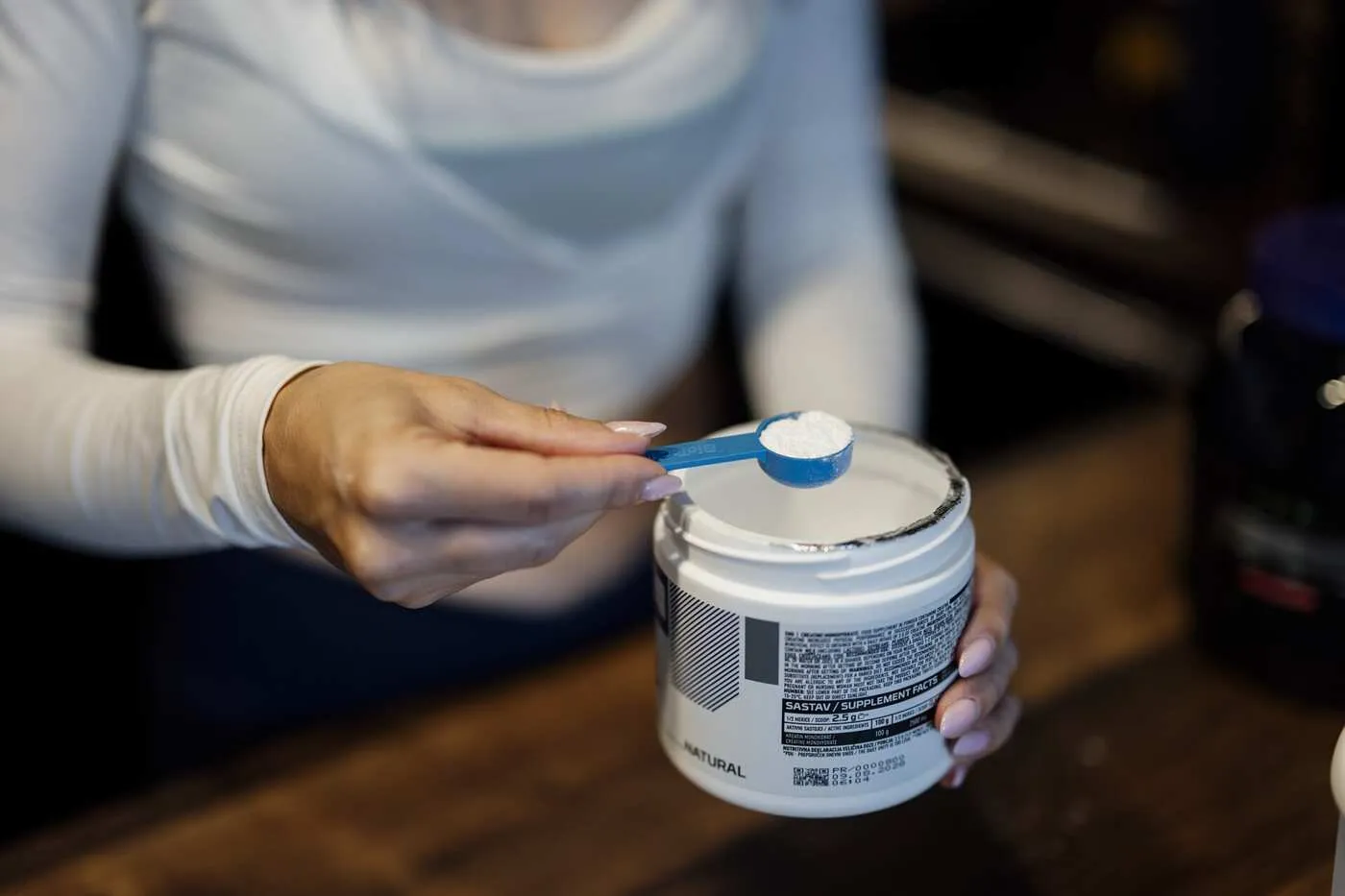 Photo: Shixart1985, CC BY 2.0, via Wikimedia Commons
Whey protein isolate is available as flavored and unflavored powders, ready-to-drink beverages, and protein bars.
- General protein supplementation: The ISSN suggests 20–40 g of high-quality protein (or about 0.25 g/kg body weight) per dose (Jäger et al., 2017).
- Total daily protein target: The ISSN considers 1.4–2.0 g protein/kg body weight/day sufficient for most exercising individuals (Jäger et al., 2017); in the Morton et al. meta-analysis, intakes above about 1.6 g/kg/day brought no further gains in fat-free mass from resistance training (Morton et al., 2018). For older adults, the PROT-AGE group recommends at least 1.0–1.2 g/kg/day, and at least 1.2 g/kg/day for those who exercise (Bauer et al., 2013).
- Timing: Before or after resistance exercise both work (Jäger et al., 2017); total daily intake matters more than precise timing.
- Mixing: Typically mixed in 250–400 mL water or milk; milk-based mixing provides additional protein and casein, prolonging amino acid availability.
WPI is heat-sensitive; adding it to very hot liquids denatures the proteins, which can cause clumping and lower solubility. Denaturation changes protein structure, not amino acid content.
Our overnight oats recipes show one simple way to use whey isolate in food: a scoop stirred into the oats, with the liquid adjusted to match. For dairy-free options, the plant-based protein guide compares legume, soy and other sources, and collagen peptides are a lower-leucine protein that does not substitute for whey.
Safety, Interactions, and Contraindications
Milk protein allergy: WPI is derived from bovine milk and contains milk proteins, including beta-lactoglobulin and alpha-lactalbumin, two of the main allergens in cow’s milk protein allergy (CMPA). Milk protein allergy — distinct from lactose intolerance — can be immunoglobulin E-mediated or non-IgE-mediated (Jensen et al., 2022), and IgE-mediated reactions can include anaphylaxis. WPI is contraindicated in individuals with true milk protein allergy.
Lactose intolerance: WPI contains little lactose and is generally well tolerated by lactose-intolerant individuals. WPC (concentrate) has higher residual lactose and is more likely to cause GI symptoms in this population. Those with severe lactose intolerance may prefer WPI or plant-based protein alternatives; people with galactosemia, for whom even small amounts of lactose matter, should follow their metabolic specialist’s guidance.
Kidney function: A 2018 meta-analysis of 28 trials found that changes in kidney function did not differ between healthy adults on higher- and lower-protein diets (Devries et al., 2018). People with chronic kidney disease are a different case: the KDOQI 2020 guideline recommends protein restriction for many with stage 3–5 CKD not on dialysis (Ikizler et al., 2020). Protein supplementation in CKD patients should be guided by a nephrologist.
Heavy metal contamination: An independent testing investigation by Consumer Reports (2010) found arsenic, cadmium, lead, and mercury in samples of all 15 protein drinks and powders it tested, with three products potentially exceeding proposed limits at three servings a day. A later risk assessment of reported levels (Bandara et al., 2020) concluded that typical intake was unlikely to cause adverse effects and found the lowest hazard estimates among whey protein powders. Contamination is a quality control issue in the supplement industry, not intrinsic to whey protein. NSF Certified for Sport and USP Verified both test for heavy metals; Informed Sport screens only for banned substances.
Acne: Several case reports and a limited number of observational studies (Cava et al., 2024) have associated whey protein consumption with increased acne severity in susceptible individuals, potentially through insulin-IGF-1 signaling pathways that stimulate sebaceous gland activity. The causal evidence is not definitive, but individuals experiencing acne exacerbation during whey supplementation may consider a trial elimination.
Drug interactions: The main documented concern is levodopa. In a small study of people with Parkinson’s disease, high-protein meals or oral leucine reversed the effect of infused levodopa, likely because large neutral amino acids compete with it for transport into the brain (Nutt et al., 1984). People taking levodopa should ask their doctor about timing protein supplements.
Product Selection Criteria
- Protein content per serving: A quality WPI should provide ≥90% protein by dry weight; verify by checking grams of protein per serving against total serving size.
- Third-party certification: NSF Certified for Sport covers label accuracy, heavy-metal limits and banned substances; USP Verified covers label accuracy and contaminants; Informed Sport covers banned substances only — most important for competitive athletes subject to doping regulations.
- Short ingredient list: High-quality WPI has limited ingredients: whey protein isolate, flavor (if flavored), sweetener, and minimal additives. Products with long proprietary blends, amino acid spiking agents (taurine, glycine, creatine added to inflate total protein readings) should be avoided.
- Amino acid spiking awareness: Some products declare inflated protein amounts achieved by adding free amino acids (taurine, glycine) rather than complete protein; DIAAS-scored or independently amino-acid-profiled products are most trustworthy.
- Processing disclosure: Cold-processed or microfiltration-derived WPI preserves more native protein structure (though the clinical significance of this is limited at typical supplement doses).
Frequently Asked Questions
Is whey protein isolate lactose-free?
Not entirely. Isolate contains minimal lactose, little enough that most lactose-intolerant people tolerate it, while concentrate can carry considerably more. People with severe lactose intolerance may still react, and those with galactosemia should follow their metabolic specialist’s advice. Lactose intolerance and milk protein allergy are different: isolate is unsafe for anyone allergic to milk proteins.
Is whey protein isolate better than whey concentrate?
For most goals, not meaningfully. Both deliver the same milk proteins and leucine-rich amino acid profile. Isolate packs more protein per gram with less lactose and fat, which suits lactose-sensitive people or those counting fat grams. Hydrolysate absorbs fastest but tends to taste more bitter and costs more.
How much whey protein isolate per day?
It depends on total protein needs. The ISSN suggests 20–40 g of high-quality protein per dose and 1.4–2.0 g per kg of body weight a day for most exercising people, from food and supplements combined. Gains in fat-free mass plateaued above about 1.6 g/kg a day in one meta-analysis. People with chronic kidney disease should be guided by a nephrologist.
Is whey protein isolate a complete protein?
Yes. It contains all nine essential amino acids and is one of the richest food sources of leucine, at roughly 11–14 g per 100 g of protein. A whey isolate scored a DIAAS of 1.09 in a rat-digestibility analysis, meaning every essential amino acid exceeded the reference requirement, although a milk protein concentrate scored higher.
Can whey protein isolate cause stomach problems or acne?
Digestive symptoms are more often linked to the lactose in concentrate than to isolate, though sensitive people can react to either. Case reports and some observational studies associate whey with worse acne in susceptible people, but causation is not established. People taking levodopa should ask their doctor about timing protein supplements, because amino acids can compete with the drug.
References
Show all 31 referencesShow fewer
- Phillips, S. M., Tang, J. E., & Moore, D. R. (2009). The role of milk- and soy-based protein in support of muscle protein synthesis and muscle protein accretion in young and elderly persons. Journal of the American College of Nutrition, 28(4), 343–354.
- Tang, J. E., Moore, D. R., Kujbida, G. W., Tarnopolsky, M. A., & Phillips, S. M. (2009). Ingestion of whey hydrolysate, casein, or soy protein isolate: Effects on mixed muscle protein synthesis at rest and following resistance exercise in young men. Journal of Applied Physiology, 107(3), 987–992.
- Morton, R. W., Murphy, K. T., McKellar, S. R., et al. (2018). A systematic review, meta-analysis and meta-regression of the effect of protein supplementation on resistance training-induced gains in muscle mass and strength in healthy adults. British Journal of Sports Medicine, 52(6), 376–384.
- Schoenfeld, B. J., Aragon, A. A., & Krieger, J. W. (2013). The effect of protein timing on muscle strength and hypertrophy: A meta-analysis. Journal of the International Society of Sports Nutrition, 10(1), 53.
- Bauer, J., Biolo, G., Cederholm, T., et al. (2013). Evidence-based recommendations for optimal dietary protein intake in older people: A position paper from the PROT-AGE Study Group. Journal of the American Medical Directors Association, 14(8), 542–559.
- Churchward-Venne, T. A., Burd, N. A., Mitchell, C. J., et al. (2012). Supplementation of a suboptimal protein dose with leucine or essential amino acids: effects on myofibrillar protein synthesis at rest and following resistance exercise in men. Journal of Physiology, 590(11), 2751–2765.
- Consumer Reports. (2010, July). Health risks of protein drinks. Consumer Reports.
- Cockburn, E., Stevenson, E., Hayes, P. R., Robson-Ansley, P., & Howatson, G. (2010). Effect of milk-based carbohydrate-protein supplement timing on the attenuation of exercise-induced muscle damage. Applied Physiology, Nutrition, and Metabolism, 35(3), 270–277.
- Akhavan, T., Luhovyy, B. L., Brown, P. H., Cho, C. E., & Anderson, G. H. (2010). Effect of premeal consumption of whey protein and its hydrolysate on food intake and postmeal glycemia and insulin responses in young adults. American Journal of Clinical Nutrition, 91(4), 966–975.
- Arciero, P. J., Baur, D., Connelly, S., & Ormsbee, M. J. (2014). Timed-daily ingestion of whey protein and exercise training reduces visceral adipose tissue mass and improves insulin resistance: the PRISE study. Journal of Applied Physiology, 117(1), 1–10.
- Bauer, J. M., Verlaan, S., Bautmans, I., et al. (2015). Effects of a vitamin D and leucine-enriched whey protein nutritional supplement on measures of sarcopenia in older adults, the PROVIDE study: a randomized, double-blind, placebo-controlled trial. Journal of the American Medical Directors Association, 16(9), 740–747.
- Liao, C. D., Tsauo, J. Y., Wu, Y. T., et al. (2017). Effects of protein supplementation combined with resistance exercise on body composition and physical function in older adults: a systematic review and meta-analysis. American Journal of Clinical Nutrition, 106(4), 1078–1091.
- Bandara, S. B., Towle, K. M., & Monnot, A. D. (2020). A human health risk assessment of heavy metal ingestion among consumers of protein powder supplements. Toxicology Reports, 7, 1255–1262.
- Gorissen, S. H. M., Crombag, J. J. R., Senden, J. M. G., et al. (2018). Protein content and amino acid composition of commercially available plant-based protein isolates. Amino Acids, 50(12), 1685–1695.
- Gilmour, S. R., Holroyd, S. E., Fuad, M. D., Elgar, D., & Fanning, A. C. (2024). Amino acid composition of dried bovine dairy powders from a range of product streams. Foods, 13(23), 3901.
- Jäger, R., Kerksick, C. M., Campbell, B. I., et al. (2017). International Society of Sports Nutrition position stand: protein and exercise. Journal of the International Society of Sports Nutrition, 14, 20.
- Zaromskyte, G., Prokopidis, K., Ioannidis, T., Tipton, K. D., & Witard, O. C. (2021). Evaluating the leucine trigger hypothesis to explain the post-prandial regulation of muscle protein synthesis in young and older adults: a systematic review. Frontiers in Nutrition, 8, 685165.
- Moughan, P. J., & Lim, W. X. J. (2024). Digestible indispensable amino acid score (DIAAS): 10 years on. Frontiers in Nutrition, 11, 1389719.
- Rutherfurd, S. M., Fanning, A. C., Miller, B. J., & Moughan, P. J. (2015). Protein digestibility-corrected amino acid scores and digestible indispensable amino acid scores differentially describe protein quality in growing male rats. Journal of Nutrition, 145(2), 372–379.
- Cava, E., Padua, E., Campaci, D., et al. (2024). Investigating the health implications of whey protein consumption: a narrative review of risks, adverse effects, and associated health issues. Healthcare, 12(2), 246.
- Szołtysik, M., Dibagar, N., Słupska, M., et al. (2026). Physical instability and functional deterioration of high-protein dairy powders: mechanisms of caking, agglomeration, and rehydration loss. Molecules, 31(13), 2230.
- U.S. Food and Drug Administration. 21 CFR 184.1979c — Whey protein concentrate.
- Messina, M., Lynch, H., Dickinson, J. M., & Reed, K. E. (2018). No difference between the effects of supplementing with soy protein versus animal protein on gains in muscle mass and strength in response to resistance exercise. International Journal of Sport Nutrition and Exercise Metabolism, 28(6), 674–685.
- Pearson, A. G., Hind, K., & Macnaughton, L. S. (2023). The impact of dietary protein supplementation on recovery from resistance exercise-induced muscle damage: a systematic review with meta-analysis. European Journal of Clinical Nutrition, 77(8), 767–783.
- Ma, J., Stevens, J. E., Cukier, K., et al. (2009). Effects of a protein preload on gastric emptying, glycemia, and gut hormones after a carbohydrate meal in diet-controlled type 2 diabetes. Diabetes Care, 32(9), 1600–1602.
- Leidy, H. J., Clifton, P. M., Astrup, A., et al. (2015). The role of protein in weight loss and maintenance. American Journal of Clinical Nutrition, 101(6), 1320S–1329S.
- Wirunsawanya, K., Upala, S., Jaruvongvanich, V., & Sanguankeo, A. (2018). Whey protein supplementation improves body composition and cardiovascular risk factors in overweight and obese patients: a systematic review and meta-analysis. Journal of the American College of Nutrition, 37(1), 60–70.
- Jensen, S. A., Fiocchi, A., Baars, T., et al. (2022). Diagnosis and Rationale for Action against Cow’s Milk Allergy (DRACMA) guidelines update – III – Cow’s milk allergens and mechanisms triggering immune activation. World Allergy Organization Journal, 15(9), 100668.
- Devries, M. C., Sithamparapillai, A., Brimble, K. S., et al. (2018). Changes in kidney function do not differ between healthy adults consuming higher- compared with lower- or normal-protein diets: a systematic review and meta-analysis. Journal of Nutrition, 148(11), 1760–1775.
- Ikizler, T. A., Burrowes, J. D., Byham-Gray, L. D., et al. (2020). KDOQI clinical practice guideline for nutrition in CKD: 2020 update. American Journal of Kidney Diseases, 76(3 Suppl 1), S1–S107.
- Nutt, J. G., Woodward, W. R., Hammerstad, J. P., et al. (1984). The “on-off” phenomenon in Parkinson’s disease: relation to levodopa absorption and transport. New England Journal of Medicine, 310(8), 483–488.
More in Supplements & Ingredients
- Berberine
Berberine for weight loss: trials show about 1 to 2 kg, not Ozempic-level results, plus blood sugar and LDL effects, dosage, side effects and interactions.
- CBD (Cannabidiol)
CBD for sleep: what the research shows, how CBD differs from THC, plus the anxiety and epilepsy evidence, dosing, legal status and side effects.
- Collagen (Hydrolyzed Collagen Peptides)
Collagen peptides benefits weighed against the trials: skin elasticity, joint pain, bone density and muscle, plus daily dose, timing and side effects.
- Inulin
What is inulin? A prebiotic fiber from chicory root and other plants: how it feeds gut bacteria, benefits, daily dose, side effects and inulin vs psyllium.
- MCT Oil (Medium-Chain Triglycerides)
What is MCT oil? C8 and C10 fats fractionated from coconut or palm kernel oil. Ketones, weight and brain evidence, vs coconut oil, dose and side effects.
- Nutritional Yeast
Is nutritional yeast good for you? About 8 g complete protein per 15 g, B vitamins and B12 if fortified, vs brewer's yeast, daily amounts and gout.



Browse all supplements & ingredients →
Curated by Superfoods Advisor Editors·Last updated