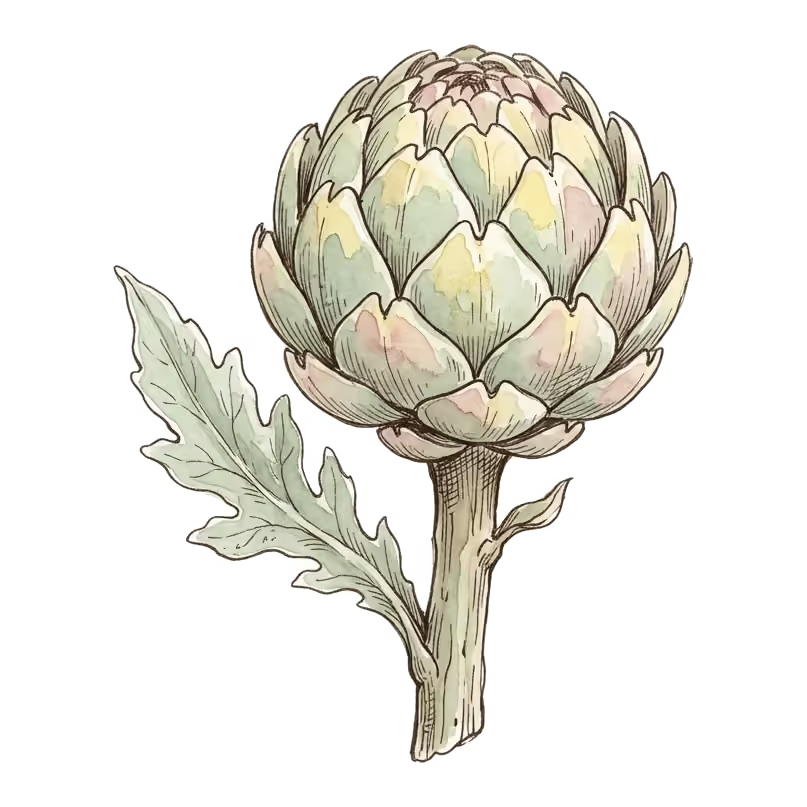
Artichoke (Cynara cardunculus var. scolymus)
Cynara cardunculus var. scolymus · also known as Globe artichoke, French artichoke, Green artichoke, Artichokes
By Superfoods Advisor Editors·July 3, 2026
Artichokes benefits explained: prebiotic inulin, cynarin, nutrition per 100 g, and what leaf-extract trials show for cholesterol, digestion and the liver.
The globe artichoke (Cynara cardunculus var. scolymus), also sold as the French or green artichoke, is a thistle in the daisy family (Asteraceae) eaten for its immature flower bud. Its best-studied benefits come from inulin, a prebiotic fiber, and from cynarin-rich leaf extracts, which small trials link to modestly lower cholesterol and less indigestion.
The artichoke is a cultivated form of the wild cardoon, native to the Mediterranean basin and the Canary Islands. Historical, linguistic, and genetic evidence suggests it was domesticated in Roman times, possibly in Sicily, and spread by the Arabs during the early Middle Ages (Sonnante et al., 2007). Traditional herbalists prescribed the leaves to stimulate bile flow, ease indigestion, and support the liver, uses that have since attracted controlled clinical investigation.
Today the artichoke is grown commercially across southern Europe, North Africa, and California. The edible portion is the immature flower bud; the fleshy “heart” and the bases of the bracts (leaves) are consumed, while the fibrous choke is discarded. Beyond the kitchen, standardized artichoke leaf extract (ALE) is one of the more rigorously studied botanical preparations for dyslipidemia and functional dyspepsia.
Evidence at a glance
Active Compounds
The artichoke’s pharmacological interest rests primarily on three classes of bioactive constituents:
Cynarin (1,3-dicaffeoylquinic acid): A hydroxycinnamic acid derivative concentrated in the leaves and, to a lesser extent, the bracts. A standardized leaf extract containing it increased bile secretion (choleresis) in a small placebo-controlled crossover trial (Kirchhoff et al., 1994), and cynarin has shown hepatoprotective activity in cell and animal models. Cynarin and chlorogenic acid are also behind the sensory phenomenon of water tasting sweet immediately after eating an artichoke (Bartoshuk et al., 1972); the effect is thought to come from a temporary change in the tongue’s sweet-taste response rather than from a sweet substance.
Luteolin and chlorogenic acid: Polyphenols (luteolin is a flavone; chlorogenic acid is a hydroxycinnamic acid ester, not a flavonoid) with antioxidant and anti-inflammatory properties in vitro. Luteolin and a luteolin-rich artichoke extract slowed LDL oxidation in laboratory assays (Brown & Rice-Evans, 1998), a proposed mechanism for artichoke’s observed lipid-modulating activity.
Inulin: A fructan-type soluble dietary fiber that makes up about 5–7 g per 100 g of fresh artichoke head, declining during storage as it breaks down to fructose and sucrose (Leroy et al., 2010). Inulin is not digested in the small intestine; it reaches the colon largely intact, where it is fermented and selectively feeds Bifidobacterium and, less consistently, Lactobacillus. A meta-analysis of human fiber trials found that fructan supplements raised both groups without changing overall microbial diversity (So et al., 2018).
Cynaropicrin: A bitter sesquiterpene lactone that contributes to the characteristic flavor and exhibits antiparasitic (for example, against Trypanosoma brucei in cells and mice; Zimmermann et al., 2012) and anti-inflammatory properties in preclinical models. Its bioavailability in humans has not been thoroughly characterized.
Nutritional Profile
Per 100 g of globe artichoke, boiled and drained (USDA FoodData Central):
| Nutrient | Amount | % DV |
|---|---|---|
| Energy | 53 kcal | — |
| Protein | 2.9 g | — |
| Total fat | 0.3 g | — |
| Carbohydrate | 12.0 g | — |
| Dietary fiber | 5.7 g | — |
| Sugars | 1.0 g | — |
| Vitamin C | 7.4 mg | 8% |
| Folate | 89 µg | 22% |
| Vitamin K | 14.8 µg | 12% |
| Magnesium | 42 mg | 10% |
| Potassium | 286 mg | 6% |
| Phosphorus | 73 mg | 6% |
Artichoke is notably low in calories while providing meaningful amounts of folate, fiber, and several minerals. Much of the fiber is inulin, which is fermentable and prebiotic but non-viscous, so it is not expected to bind bile acids and cholesterol the way viscous fibers do (McRorie & McKeown, 2017).
Evidence for Purported Benefits
Lipid Modulation
Evidence:Moderate A meta-analysis of nine small RCTs (702 people) found artichoke leaf extract lowered total and LDL cholesterol.
A 2018 meta-analysis by Sahebkar et al. (Critical Reviews in Food Science and Nutrition) pooled data from nine randomized controlled trials (702 participants) and found that artichoke extract supplementation was associated with significant reductions in total cholesterol (weighted mean difference −17.6 mg/dL), LDL cholesterol (−14.9 mg/dL), and triglycerides (−9.2 mg/dL), with no significant change in HDL cholesterol. The LDL reduction was larger in people with higher baseline LDL. Larger, longer trials are needed to confirm clinical significance.
Functional Dyspepsia and Digestive Comfort
Evidence:Limited One multicenter RCT (247 patients) found symptom relief with leaf extract; the EMA classes the use as traditional.
A multicenter RCT by Holtmann et al. (2003, Alimentary Pharmacology & Therapeutics) enrolled 247 patients with functional dyspepsia (244 analyzed) and found that ALE (2 × 320 mg three times daily) for six weeks produced significantly greater overall symptom improvement and better disease-specific quality of life than placebo. The main proposed mechanism is increased bile secretion, which a small crossover trial measured directly after a single dose of leaf extract (Kirchhoff et al., 1994). The European Medicines Agency classes artichoke leaf for dyspepsia as a traditional-use herbal medicine, based on long-standing use rather than proven efficacy (EMA monograph).
Liver Function Support
Evidence:Limited A meta-analysis of five small, short RCTs in fatty liver disease found lower liver enzymes; rodent studies agree.
Rodent studies using cynarin and ALE have reported reductions in hepatotoxin-induced liver enzyme elevation and histological damage. A 2022 meta-analysis by Kamel and Farag (Journal of Medicinal Food) pooled five small RCTs (333 patients with non-alcoholic fatty liver disease) and found that ALE reduced alanine aminotransferase (ALT), aspartate aminotransferase (AST), total cholesterol, LDL cholesterol, and triglycerides compared with control. The trials were few and short (a similar evidence picture to milk thistle, another daisy-family plant studied for the liver), and larger, rigorous RCTs with liver-histology outcomes are lacking. The EMA lists liver disease among the contraindications for artichoke leaf products, so anyone with a liver condition should use them only under medical supervision.
Prebiotic and Microbiome Effects
Evidence:Lab & animal only Inulin’s prebiotic effect is well replicated with supplements; artichoke itself has not been tested.
The prebiotic efficacy of inulin is one of the most replicated findings in nutritional science. Gibson and Roberfroid (1995, Journal of Nutrition), who introduced the prebiotic concept, reviewed human feeding studies showing that fructooligosaccharides selectively stimulate endogenous bifidobacteria, which become predominant in feces after a short feeding period. Whether the amount of inulin delivered by typical artichoke consumption (1–2 medium artichokes per day) is sufficient to produce clinically meaningful microbiome shifts has not been specifically studied; most prebiotic trials use isolated inulin supplements.
Typical Use and Preparation
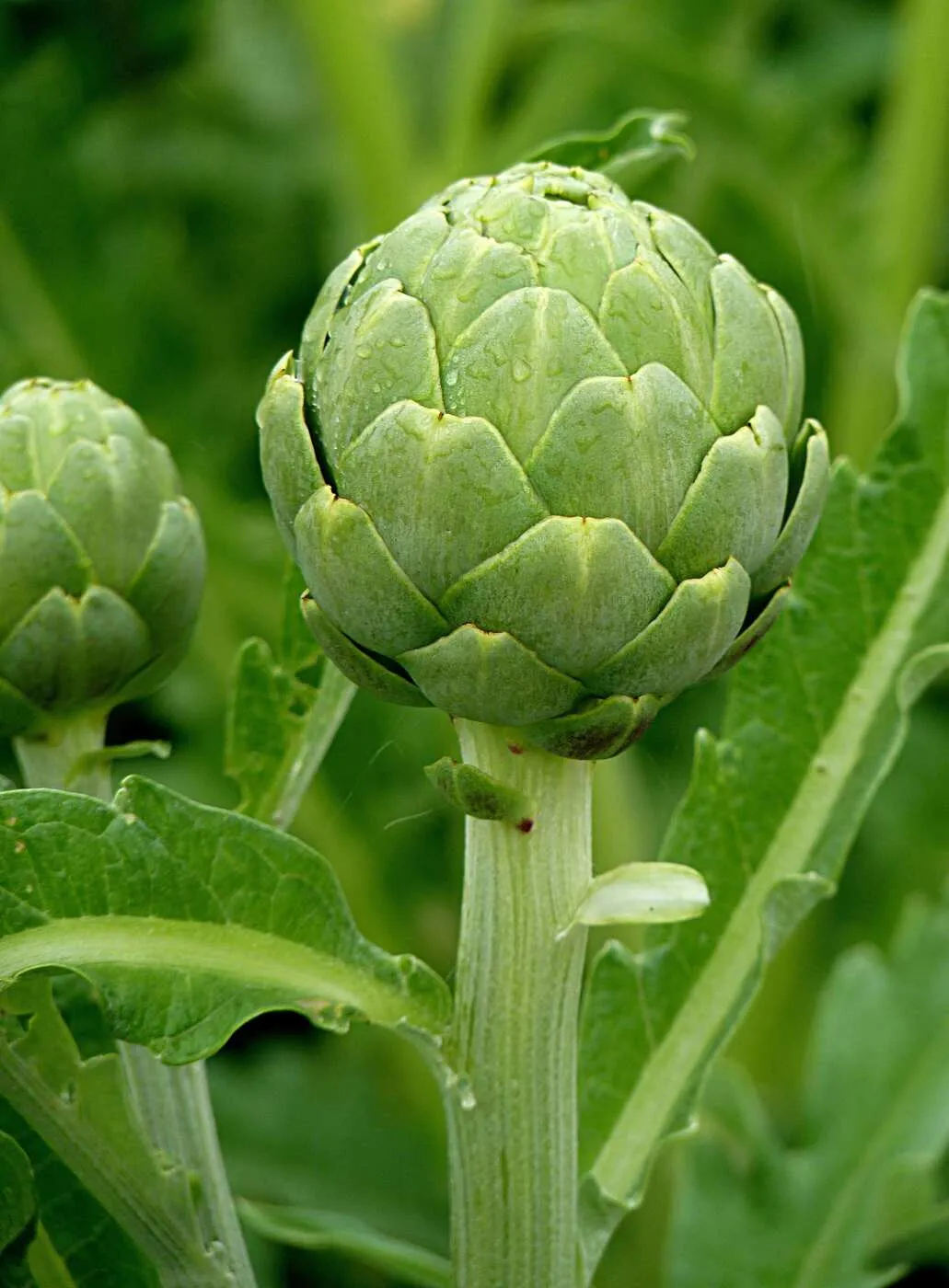 Photo: Jamain, CC BY-SA 3.0, via Wikimedia Commons
Artichokes are consumed steamed, boiled, roasted, grilled, or marinated. Cooking reduces the bitterness of cynaropicrin and softens the bracts for eating. The inulin content survives most cooking methods, although extended high-heat processing (pressure cooking, industrial canning) can partially hydrolyze fructans to fructose. For maximal fiber benefit, lightly steaming whole artichokes is preferred over prolonged boiling.
Artichoke leaf extract (ALE) supplements used in clinical research are typically standardized to their caffeoylquinic acid content, which includes cynarin. Doses vary between products and trials; the Holtmann dyspepsia trial used 1,920 mg per day, taken as two 320 mg capsules three times daily. Raw artichoke leaves are too bitter for regular consumption; commercial supplements use the dried, extracted leaf.
Artichoke pairs well with olive oil, lemon, garlic, and capers in Mediterranean cuisine. The heart is also used in dips, pasta, and pizza toppings.
Artichokes are grouped with garlic, onions, leeks, and asparagus as inulin and FOS sources in our review of fiber and microbiome research.
Safety, Interactions, and Contraindications
Artichoke is a widely eaten vegetable, and the adverse reactions reported for it are mainly allergic. Case reports describe contact dermatitis, often in people handling artichokes at work and linked to sensitivity to sesquiterpene lactones shared across the Asteraceae (daisy) family (Gallo et al., 2023), and contact urticaria (Quirce et al., 1996). The EMA lists hypersensitivity to Asteraceae plants (such as chrysanthemums, daisies, marigolds, and ragweed) as a contraindication for artichoke leaf products (EMA monograph). Reported side effects of the leaf extract include mild diarrhoea with abdominal cramping, nausea, and heartburn.
Bile duct and liver conditions: Because the extract increases bile flow, the EMA lists bile duct obstruction, cholangitis, liver disease, gallstones, and other biliary disorders needing medical supervision as contraindications for artichoke leaf products; stimulating bile secretion in these conditions may precipitate or worsen biliary colic.
Drug interactions: The EMA monograph lists no reported interactions for artichoke leaf; that reflects an absence of reports, not formal interaction studies. Patients on anticoagulants (warfarin) should note that artichoke contains vitamin K, though typical dietary amounts are unlikely to be clinically significant.
Pregnancy and lactation: Safety of artichoke leaf extract during pregnancy and breastfeeding has not been established, and the EMA does not recommend it in either (EMA monograph). Artichoke as a food ingredient is a normal part of the diet; supplements should be avoided without medical supervision.
Frequently Asked Questions
What are artichokes?
Artichokes are the immature flower buds of Cynara cardunculus var. scolymus, a thistle in the daisy family grown mainly around the Mediterranean and in California. Cooks eat the fleshy heart and the soft bases of the bracts and discard the fibrous choke. Botanically the edible part is a flower bud, but in the kitchen and in nutrition tables the artichoke is treated as a vegetable.
Are artichokes good for you?
Artichokes are low in calories and a good source of fiber and folate: 100 g, boiled, provides about 53 kcal, 5.7 g of fiber and 89 µg of folate (USDA FoodData Central). Much of the fiber is inulin, a prebiotic. Most clinical research on cholesterol and digestion used concentrated leaf extract, so whether eating the vegetable produces the same effects is not known.
Can artichokes cause gas?
They can. Artichoke inulin passes the small intestine undigested and is fermented by colon bacteria, which produces gas. In a small crossover trial, 10 g doses of short-chain inulin increased flatulence and bloating, while native inulin was better tolerated (Bonnema et al., 2010). Inulin is also a high-FODMAP fiber, so people with irritable bowel syndrome may react to smaller servings.
Does artichoke lower cholesterol?
Artichoke leaf extract produced modest reductions in trials. A 2018 meta-analysis of nine randomized trials (702 participants) found average falls of about 17.6 mg/dL in total cholesterol and 14.9 mg/dL in LDL, larger in people who started with higher LDL (Sahebkar et al., 2018). The trials were small and short, and the extract is not a substitute for prescribed lipid-lowering treatment.
How much artichoke extract per day?
There is no established dose. Trials used different standardized products; the Holtmann dyspepsia trial gave 1,920 mg a day, as two 320 mg capsules three times daily, for six weeks. Products differ in their caffeoylquinic acid content, so a trial dose does not transfer cleanly between brands. Anyone considering the extract, particularly for a liver condition, should talk to a clinician first, because the EMA lists liver disease among its contraindications.
References
Show all 17 referencesShow fewer
- Sahebkar, A., Pirro, M., Banach, M., Mikhailidis, D. P., Atkin, S. L., & Cicero, A. F. G. (2018). Lipid-lowering activity of artichoke extracts: A systematic review and meta-analysis. Critical Reviews in Food Science and Nutrition, 58(15), 2549–2556.
- Holtmann, G., Adam, B., Haag, S., Collet, W., Grünewald, E., & Windeck, T. (2003). Efficacy of artichoke leaf extract in the treatment of patients with functional dyspepsia. Alimentary Pharmacology & Therapeutics, 18(11–12), 1099–1105.
- Kamel, A. M., & Farag, M. A. (2022). Therapeutic potential of artichoke in the treatment of fatty liver: A systematic review and meta-analysis. Journal of Medicinal Food, 25(10), 931–942.
- Gibson, G. R., & Roberfroid, M. B. (1995). Dietary modulation of the human colonic microbiota: introducing the concept of prebiotics. Journal of Nutrition, 125(6), 1401–1412.
- USDA FoodData Central. (2019). Artichokes, globe or French, cooked, boiled, drained, without salt. FDC ID 168386. U.S. Department of Agriculture. https://fdc.nal.usda.gov/food-details/168386/nutrients
- Sonnante, G., Pignone, D., & Hammer, K. (2007). The domestication of artichoke and cardoon: from Roman times to the genomic age. Annals of Botany, 100(5), 1095–1100.
- Leroy, G., Grongnet, J. F., Mabeau, S., Le Corre, D., & Baty-Julien, C. (2010). Changes in inulin and soluble sugar concentration in artichokes (Cynara scolymus L.) during storage. Journal of the Science of Food and Agriculture, 90(7), 1203–1209.
- Kirchhoff, R., Beckers, C., Kirchhoff, G. M., Trinczek-Gärtner, H., Petrowicz, O., & Reimann, H. J. (1994). Increase in choleresis by means of artichoke extract. Phytomedicine, 1(2), 107–115.
- Bartoshuk, L. M., Lee, C. H., & Scarpellino, R. (1972). Sweet taste of water induced by artichoke (Cynara scolymus). Science, 178(4064), 988–989.
- Brown, J. E., & Rice-Evans, C. A. (1998). Luteolin-rich artichoke extract protects low density lipoprotein from oxidation in vitro. Free Radical Research, 29(3), 247–255.
- So, D., Whelan, K., Rossi, M., et al. (2018). Dietary fiber intervention on gut microbiota composition in healthy adults: a systematic review and meta-analysis. American Journal of Clinical Nutrition, 107(6), 965–983.
- Zimmermann, S., Kaiser, M., Brun, R., Hamburger, M., & Adams, M. (2012). Cynaropicrin: the first plant natural product with in vivo activity against Trypanosoma brucei. Planta Medica, 78(6), 553–556.
- McRorie, J. W., Jr., & McKeown, N. M. (2017). Understanding the physics of functional fibers in the gastrointestinal tract. Journal of the Academy of Nutrition and Dietetics, 117(2), 251–264.
- Gallo, R., Oddenino, G., Trave, I., Gasparini, G., Guadagno, A., & Parodi, A. (2023). Contact sensitivity to sesquiterpene lactone mix and artichoke in a patient with severe recurrent dermatitis: A puzzling case. Contact Dermatitis, 88(2), 156–158.
- Quirce, S., Tabar, A. I., Olaguibel, J. M., & Cuevas, M. (1996). Occupational contact urticaria syndrome caused by globe artichoke (Cynara scolymus). Journal of Allergy and Clinical Immunology, 97(2), 710–711.
- European Medicines Agency, HMPC. (2018). European Union herbal monograph on Cynara cardunculus L. (syn. Cynara scolymus L.), folium. EMA/HMPC/194014/2017. https://www.ema.europa.eu/en/documents/herbal-monograph/final-european-union-herbal-monograph-cynara-cardunculus-l-syn-cynara-scolymus-l-folium_en.pdf
- Bonnema, A. L., Kolberg, L. W., Thomas, W., & Slavin, J. L. (2010). Gastrointestinal tolerance of chicory inulin products. Journal of the American Dietetic Association, 110(6), 865–868.
Related content
More in Vegetables
- Asparagus (Asparagus officinalis)
Is asparagus good for you? Nutrition per 100 g, including 37% DV folate and 42% vitamin K, its prebiotic fiber, what studies show, and safety notes.
- Beets / Beetroot (Beta vulgaris)
Beet juice benefits explained: how beetroot nitrates lowered systolic blood pressure and aided endurance in trials, beets nutrition per 100 g, and safety.
- Broccoli (Brassica oleracea var. italica)
Is broccoli good for you? Broccoli nutrition per 100 g, including 118% DV vitamin K, how sulforaphane forms, what human studies show, and safety notes.
- Brussels Sprouts (Brassica oleracea var. gemmifera)
Brussels sprouts benefits and nutrition per 100 g (148% DV vitamin K, 94% vitamin C), their glucosinolates, what studies show, gas, and warfarin safety.
- Cabbage (Brassica oleracea var. capitata)
Is cabbage good for you? Cabbage nutrition per 100 g (63% DV vitamin K, 41% vitamin C), red vs green, sauerkraut, what studies show, and thyroid safety.
- Carrot (Daucus carota)
Carrots benefits explained: beta-carotene (93% DV vitamin A per 100 g), what studies show for eyes and heart, carrot nutrition facts, and safety notes.

Curated by Superfoods Advisor Editors·Last updated