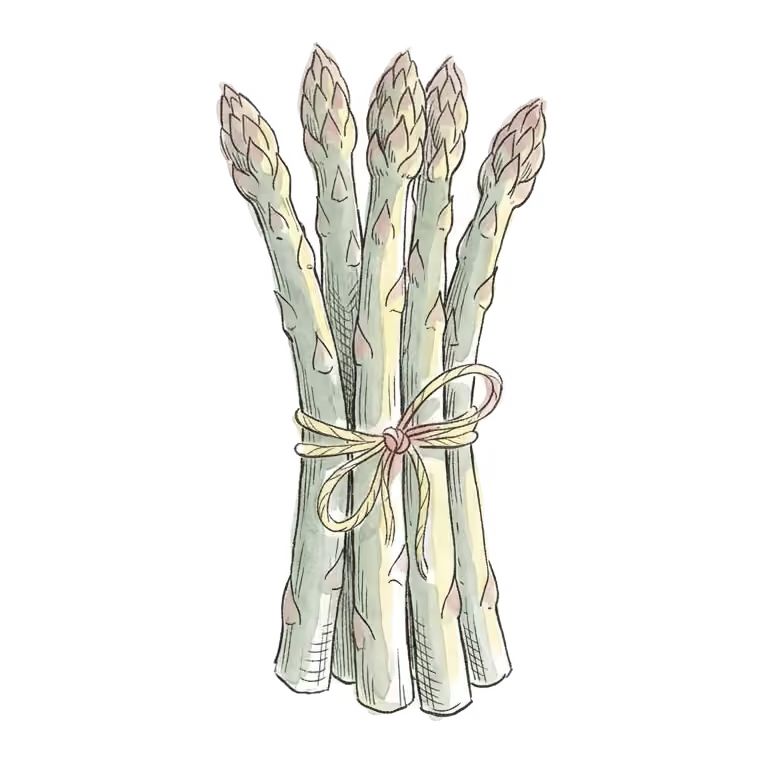
Asparagus (Asparagus officinalis)
Asparagus officinalis · also known as Garden asparagus, Spargel, Espárrago
By Superfoods Advisor Editors·July 3, 2026
Is asparagus good for you? Nutrition per 100 g, including 37% DV folate and 42% vitamin K, its prebiotic fiber, what studies show, and safety notes.
Asparagus (Asparagus officinalis) is a perennial spring vegetable in the family Asparagaceae, eaten for its young shoots, or spears. It is good for you mainly as a low-calorie source of nutrients: 100 g cooked provides 22 kcal, 37% of the daily value for folate and 42% for vitamin K. Its diuretic and antioxidant reputation rests on lab and animal work.
Native to the coastlines and meadows of Europe and western Asia, asparagus has been eaten since antiquity, and Roman writers including Cato the Elder and Pliny the Elder described how to cultivate it. By the 17th century it was a prized luxury vegetable among European royalty and was widely grown in French royal gardens under Louis XIV.
Medicinally, asparagus root has been used in European herbal medicine, primarily as a diuretic. Related species fill that role elsewhere: Asparagus racemosus (shatavari) is an important herb in Ayurveda and A. cochinchinensis is used in Traditional Chinese Medicine, but both are distinct plants from the culinary A. officinalis. Today, commercial asparagus is produced predominantly in China, Peru, Mexico, and Germany. The spear — actually the young shoot of the crown — is harvested in early spring before the fronds unfurl.
Evidence at a glance
Active Compounds
Asparagine: The amino acid asparagine was first isolated from asparagus juice in 1806 and takes its name from the plant. Asparagine is often named as the source of asparagus’s traditional diuretic reputation, but no human study has shown that dietary asparagine increases urine output. The characteristic sulfurous odor of urine following asparagus consumption arises from asparagusic acid and its volatile metabolites (methanethiol, dimethyl sulfide, dimethyl disulfide), though the ability to smell these compounds is genetically variable.
Inulin and fructooligosaccharides (FOS): Asparagus contains prebiotic inulin-type fructans, concentrated mainly in the root; one analysis cited by Olas (2024) measured about 16 g per 100 g dry matter in root by-products but only about 1.3 g per 100 g dry matter in the edible spear. These pass undigested to the colon, where they are fermented by gut bacteria; in a meta-analysis of human fiber trials, fructans raised fecal Bifidobacterium and, to a lesser extent, Lactobacillus (So et al., 2018).
Rutin (quercetin-3-rutinoside): The main flavonoid in green and purple asparagus, accounting for 60–80% of total phenolics in one analysis, at roughly 1.5–7.3 mg per gram dry weight in green spears and under 0.5 mg/g in white (Olas, 2024). Rutin has demonstrated anti-inflammatory and antioxidant activity in vitro. Its bioavailability from whole asparagus has not been rigorously quantified.
Saponins (protodioscin, sarsasapogenin): Steroidal saponins concentrated in the root and, to a lesser extent, the spear. Protodioscin has been investigated for androgenic activity in rats (largely from Tribulus terrestris extract; Gauthaman et al., 2002) and for anti-tumor properties in cell studies, but human clinical data are insufficient to draw conclusions.
Glutathione: Asparagus contains glutathione, a tripeptide antioxidant. In a US survey of glutathione in foods, fruits and vegetables carried moderate to high amounts, freezing left levels largely unchanged, and most other processing and preservation caused extensive losses (Jones et al., 1992).
Nutritional Profile
Per 100 g of cooked asparagus (boiled, drained, USDA FoodData Central):
| Nutrient | Amount | % DV |
|---|---|---|
| Energy | 22 kcal | — |
| Protein | 2.4 g | — |
| Total fat | 0.2 g | — |
| Carbohydrate | 4.1 g | — |
| Dietary fiber | 2.0 g | — |
| Sugars | 1.3 g | — |
| Folate | 149 µg | 37% |
| Vitamin K | 50.6 µg | 42% |
| Vitamin C | 7.7 mg | 9% |
| Thiamine (B1) | 0.16 mg | 14% |
| Riboflavin (B2) | 0.14 mg | 11% |
| Vitamin E | 1.5 mg | 10% |
| Potassium | 224 mg | 5% |
| Phosphorus | 54 mg | 4% |
Asparagus is an exceptionally low-calorie vegetable and stands out nutritionally for its folate content — a single 180 g serving of cooked asparagus provides approximately two-thirds of the adult daily value. It is also a meaningful source of vitamin K1 (phylloquinone).
Evidence for Purported Benefits
Diuretic Activity
Evidence:Insufficient Traditional use; extract findings come from lab and animal models, and no human trials have measured urine output.
The diuretic effect long attributed to asparagus is usually credited to asparagine and saponins, but a renal mechanism for these compounds has not been demonstrated in humans. The use is documented across multiple herbalism traditions. However, rigorous placebo-controlled human trials specifically measuring urine output with culinary asparagus doses are lacking. A 2024 review of Asparagus officinalis by Olas (Foods) lists a diuretic effect among its reported activities, but notes that the biological findings for its extracts are limited to in vitro and animal models.
Antioxidant and Anti-inflammatory Activity
Evidence:Lab & animal only In vitro work and one rat study of seed extract; no human trials of dietary asparagus.
In vitro studies summarized by Olas (2024) report antioxidant and anti-inflammatory activity for asparagus extracts and isolated compounds, especially saponins. A 2012 animal study by Hafizur et al. (British Journal of Nutrition) found that a methanolic extract of asparagus seeds (not spears) lowered blood glucose, improved insulin secretion and β-cell function, and improved total antioxidant status in streptozotocin-induced type 2 diabetic rats. Human trials testing these outcomes with dietary asparagus are absent from the peer-reviewed literature.
Prebiotic and Gut Health Effects
Evidence:Lab & animal only Extrapolated from chicory inulin trials; asparagus has not been tested and contains far less fructan.
Inulin-type fructans are established prebiotics under the ISAPP definition, a substrate selectively used by host microorganisms that confers a health benefit (Gibson et al., 2017); asparagus itself has not been tested against that standard. A meta-analysis of randomized trials found that chicory-derived inulin-type fructans at 3–20 g/day increased Bifidobacterium abundance (Nagy et al., 2023); two of its authors are affiliated with the BENEO-Institute of BENEO, a manufacturer of chicory inulin. Asparagus-specific clinical prebiotic trials are lacking, and its spear contains far less fructan than the doses used in these chicory inulin trials or than fresh artichoke, which holds about 5–7 g per 100 g. The wider evidence on fermentable fibers is covered in our review of fiber and microbiome research.
Folate and Pregnancy Outcomes
Evidence:Moderate Folic acid supplements prevent neural tube defects in RCTs; asparagus supplies food folate but was not tested itself.
Folic acid taken before and during early pregnancy reduces the risk of neural tube defects (NTDs), the basis for folic acid fortification policies worldwide. In the MRC Vitamin Study (1991), women with a previously affected pregnancy who took folic acid had a 72% lower recurrence risk, and in a Hungarian trial on first occurrence there were six NTD cases in the trace-element group versus none among women taking a folic-acid-containing multivitamin (Czeizel & Dudás, 1992). These trials tested folic acid supplements, not food folate. Asparagus contributes folate to the diet, though the synthetic form (folic acid) used in supplements has higher bioavailability.
Typical Use and Preparation
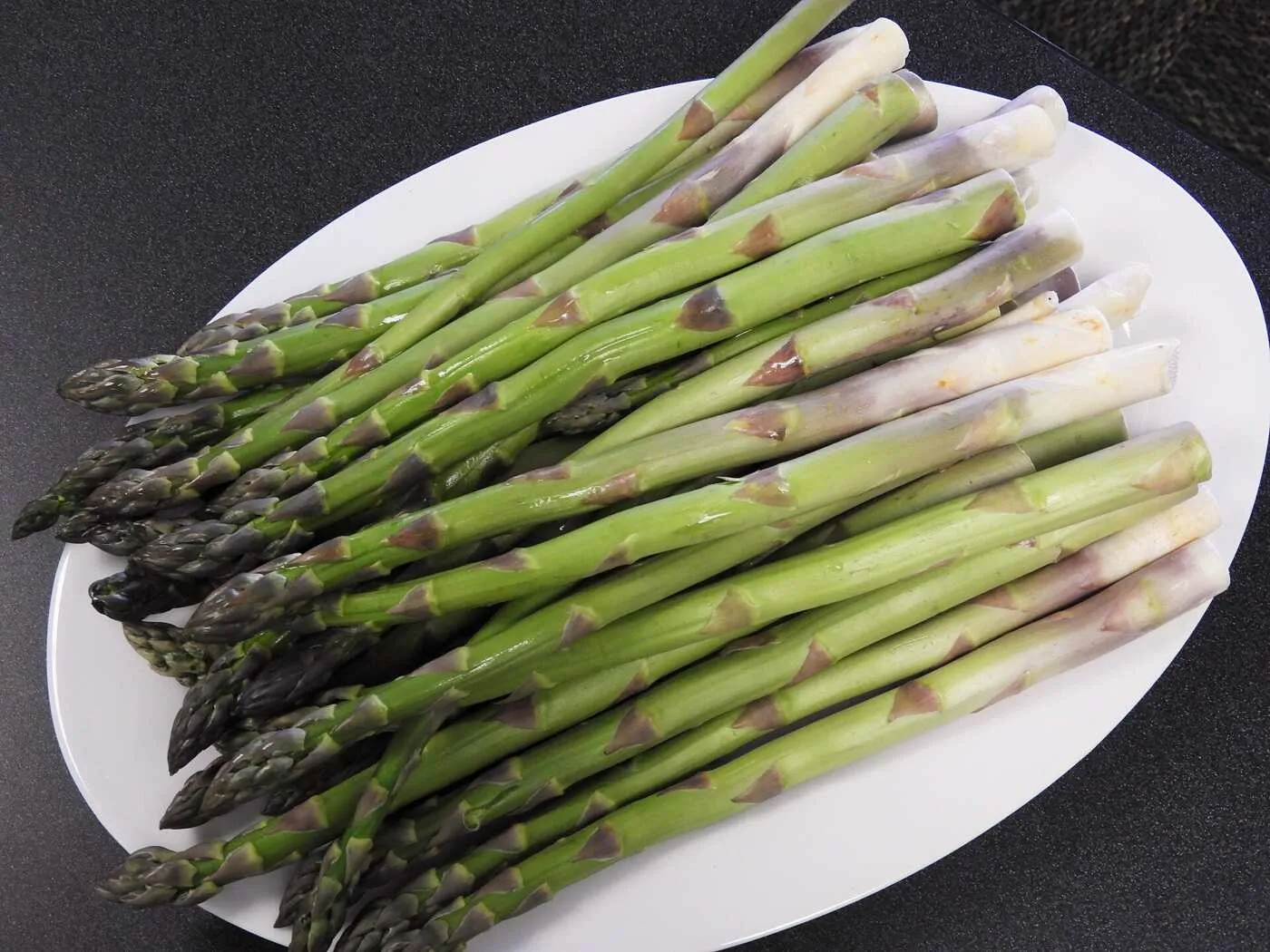 Photo: Nutrition, Food Safety & Health, CC0, via Wikimedia Commons
Asparagus is most commonly steamed, roasted, grilled, or briefly sautéed. Minimal cooking preserves heat-labile nutrients (vitamin C, folate) while softening the fibrous exterior. Overcooking renders spears mushy, and prolonged boiling leaches water-soluble folate into the cooking water.
Green asparagus is the most common variety. White asparagus, produced by mounding soil over the emerging spears to exclude light (etiolation), has a milder flavor, no chlorophyll, and a much lower rutin content than green spears (Olas, 2024). Purple asparagus contains elevated levels of anthocyanins but reverts to green when cooked.
Raw asparagus is edible and retains the highest nutrient content, but the fibrous texture can be tough; thin-spear varieties are better suited for raw preparations. Asparagus pairs well with eggs, butter, lemon, olive oil, Parmesan, and cured meats.
The gut-health guide includes asparagus among the everyday foods that supply prebiotic fiber without supplements.
Safety, Interactions, and Contraindications
Asparagus is well tolerated by most people. The sulfurous urinary odor produced after consumption, caused by volatile thioether metabolites of asparagusic acid, is harmless and transient. People differ both in whether they produce the odorants in detectable amounts and in whether they can smell them; the inability to smell it is associated with a variant in an olfactory receptor gene cluster (Pelchat et al., 2011).
Warfarin (anticoagulant) interaction: Asparagus is a meaningful dietary source of vitamin K1. Vitamin K is the pharmacological antagonist of warfarin; large or highly variable asparagus consumption can alter the international normalized ratio (INR) in patients taking warfarin. Patients on warfarin therapy should maintain consistent vitamin K intake rather than eliminating asparagus (Violi et al., 2016) — abrupt changes are more disruptive to INR stability than consistent moderate intake. Clinicians managing warfarin should be informed of dietary patterns.
Gout and kidney stones: Asparagus contains moderate amounts of purines. In a large cohort of men, purine-rich vegetables were not associated with higher risk of developing gout (Choi et al., 2004), though among people who already had gout, plant purines were linked to a modestly higher risk of recurrent attacks, weaker than animal purines (Zhang et al., 2012). Its purine content (about 55 mg/100 g in the upper spear and 10 mg/100 g in the lower part, per Kaneko et al., 2014) is considerably lower than organ meats or sardines.
Asparagus allergy: IgE-mediated asparagus allergy is uncommon but documented, and most reported cases are occupational (contact dermatitis, contact urticaria, or asthma from handling spears); in one Spanish series, lipid transfer proteins were the main allergens and severe reactions, including anaphylaxis, occurred (Tabar et al., 2004). Leeks, onions, and garlic are not close relatives (they belong to the Amaryllidaceae), and cross-reactivity between them and asparagus is not well established.
Pregnancy: Asparagus in culinary amounts is a normal part of the diet during pregnancy and adds folate, though it does not replace the recommended folic acid supplement. Asparagus root extracts used in supplements have not been adequately studied for safety in pregnant women.
Frequently Asked Questions
What is asparagus good for?
Asparagus is mainly useful as a nutrient-dense, low-calorie vegetable. Its standout nutrients are folate and vitamin K: a 180 g serving of cooked asparagus supplies roughly two-thirds of the adult daily value for folate. Specific effects attributed to it, such as diuretic or blood-sugar benefits, come from traditional use or from lab and animal studies of extracts, and have not been shown in human trials.
Is asparagus high in fiber?
Moderately. 100 g of boiled asparagus provides about 2.0 g of dietary fiber, so a 180 g serving gives roughly 3.6 g. Part of that fiber is inulin-type fructan, though the edible spear holds far less than the root: about 1.3 g versus 16 g per 100 g of dry matter in one analysis (Olas, 2024).
Is asparagus keto-friendly?
Asparagus is low in carbohydrate. 100 g cooked contains 4.1 g of carbohydrate, of which 2.0 g is fiber and 1.3 g sugars, leaving about 2 g of net carbohydrate, so it fits most low-carb and ketogenic meal plans. It also supplies 224 mg of potassium per 100 g, a modest amount rather than a high one (USDA FoodData Central).
How much asparagus is too much?
There is no defined upper limit for asparagus as a food. The practical limits are individual. Its fermentable fructans can cause gas in sensitive people, its vitamin K matters for anyone on warfarin, who should keep intake steady, and people managing gout may note its moderate purine content, about 55 mg per 100 g in the upper spear. Anyone with those conditions can ask a clinician about portions.
Why does asparagus make urine smell?
The odor comes from volatile sulfur compounds, such as methanethiol and dimethyl sulfide, formed when the body breaks down asparagusic acid. It is harmless and transient. People differ in whether they produce detectable amounts and in whether they can smell them; the inability to smell it is linked to a variant near olfactory receptor genes (Pelchat et al., 2011).
References
Show all 16 referencesShow fewer
- Olas, B. (2024). A review of the pro-health activity of Asparagus officinalis L. and its components. Foods, 13(2), 288.
- Hafizur, R. M., Kabir, N., & Chishti, S. (2012). Asparagus officinalis extract controls blood glucose by improving insulin secretion and β-cell function in streptozotocin-induced type 2 diabetic rats. British Journal of Nutrition, 108(9), 1586–1595.
- Czeizel, A. E., & Dudás, I. (1992). Prevention of the first occurrence of neural-tube defects by periconceptional vitamin supplementation. New England Journal of Medicine, 327(26), 1832–1835.
- Gibson, G. R., Hutkins, R., Sanders, M. E., Prescott, S. L., Reimer, R. A., Salminen, S. J., … & Reid, G. (2017). Expert consensus document: The International Scientific Association for Probiotics and Prebiotics (ISAPP) consensus statement on the definition and scope of prebiotics. Nature Reviews Gastroenterology & Hepatology, 14(8), 491–502.
- USDA FoodData Central. (2019). Asparagus, cooked, boiled, drained. FDC ID 168390. U.S. Department of Agriculture.
- Nagy, D. U., Sándor-Bajusz, K. A., Bódy, B., Decsi, T., Van Harsselaar, J., Theis, S., & Lohner, S. (2023). Effect of chicory-derived inulin-type fructans on abundance of Bifidobacterium and on bowel function: a systematic review with meta-analyses. Critical Reviews in Food Science and Nutrition, 63(33), 12018–12035.
- Kaneko, K., Aoyagi, Y., Fukuuchi, T., Inazawa, K., & Yamaoka, N. (2014). Total purine and purine base content of common foodstuffs for facilitating nutritional therapy for gout and hyperuricemia. Biological and Pharmaceutical Bulletin, 37(5), 709–721.
- MRC Vitamin Study Research Group. (1991). Prevention of neural tube defects: results of the Medical Research Council Vitamin Study. The Lancet, 338(8760), 131–137.
- So, D., Whelan, K., Rossi, M., Morrison, M., Holtmann, G., Kelly, J. T., … & Campbell, K. L. (2018). Dietary fiber intervention on gut microbiota composition in healthy adults: a systematic review and meta-analysis. American Journal of Clinical Nutrition, 107(6), 965–983.
- Gauthaman, K., Adaikan, P. G., & Prasad, R. N. V. (2002). Aphrodisiac properties of Tribulus terrestris extract (protodioscin) in normal and castrated rats. Life Sciences, 71(12), 1385–1396.
- Jones, D. P., Coates, R. J., Flagg, E. W., et al. (1992). Glutathione in foods listed in the National Cancer Institute’s Health Habits and History Food Frequency Questionnaire. Nutrition and Cancer, 17(1), 57–75.
- Pelchat, M. L., Bykowski, C., Duke, F. F., & Reed, D. R. (2011). Excretion and perception of a characteristic odor in urine after asparagus ingestion: a psychophysical and genetic study. Chemical Senses, 36(1), 9–17.
- Violi, F., Lip, G. Y., Pignatelli, P., & Pastori, D. (2016). Interaction between dietary vitamin K intake and anticoagulation by vitamin K antagonists: is it really true? A systematic review. Medicine, 95(10), e2895.
- Choi, H. K., Atkinson, K., Karlson, E. W., Willett, W., & Curhan, G. (2004). Purine-rich foods, dairy and protein intake, and the risk of gout in men. New England Journal of Medicine, 350(11), 1093–1103.
- Zhang, Y., Chen, C., Choi, H., et al. (2012). Purine-rich foods intake and recurrent gout attacks. Annals of the Rheumatic Diseases, 71(9), 1448–1453.
- Tabar, A. I., Alvarez-Puebla, M. J., Gomez, B., et al. (2004). Diversity of asparagus allergy: clinical and immunological features. Clinical & Experimental Allergy, 34(1), 131–136.
Related content
More in Vegetables
- Artichoke (Cynara cardunculus var. scolymus)
Artichokes benefits explained: prebiotic inulin, cynarin, nutrition per 100 g, and what leaf-extract trials show for cholesterol, digestion and the liver.
- Beets / Beetroot (Beta vulgaris)
Beet juice benefits explained: how beetroot nitrates lowered systolic blood pressure and aided endurance in trials, beets nutrition per 100 g, and safety.
- Broccoli (Brassica oleracea var. italica)
Is broccoli good for you? Broccoli nutrition per 100 g, including 118% DV vitamin K, how sulforaphane forms, what human studies show, and safety notes.
- Brussels Sprouts (Brassica oleracea var. gemmifera)
Brussels sprouts benefits and nutrition per 100 g (148% DV vitamin K, 94% vitamin C), their glucosinolates, what studies show, gas, and warfarin safety.
- Cabbage (Brassica oleracea var. capitata)
Is cabbage good for you? Cabbage nutrition per 100 g (63% DV vitamin K, 41% vitamin C), red vs green, sauerkraut, what studies show, and thyroid safety.
- Carrot (Daucus carota)
Carrots benefits explained: beta-carotene (93% DV vitamin A per 100 g), what studies show for eyes and heart, carrot nutrition facts, and safety notes.

Curated by Superfoods Advisor Editors·Last updated