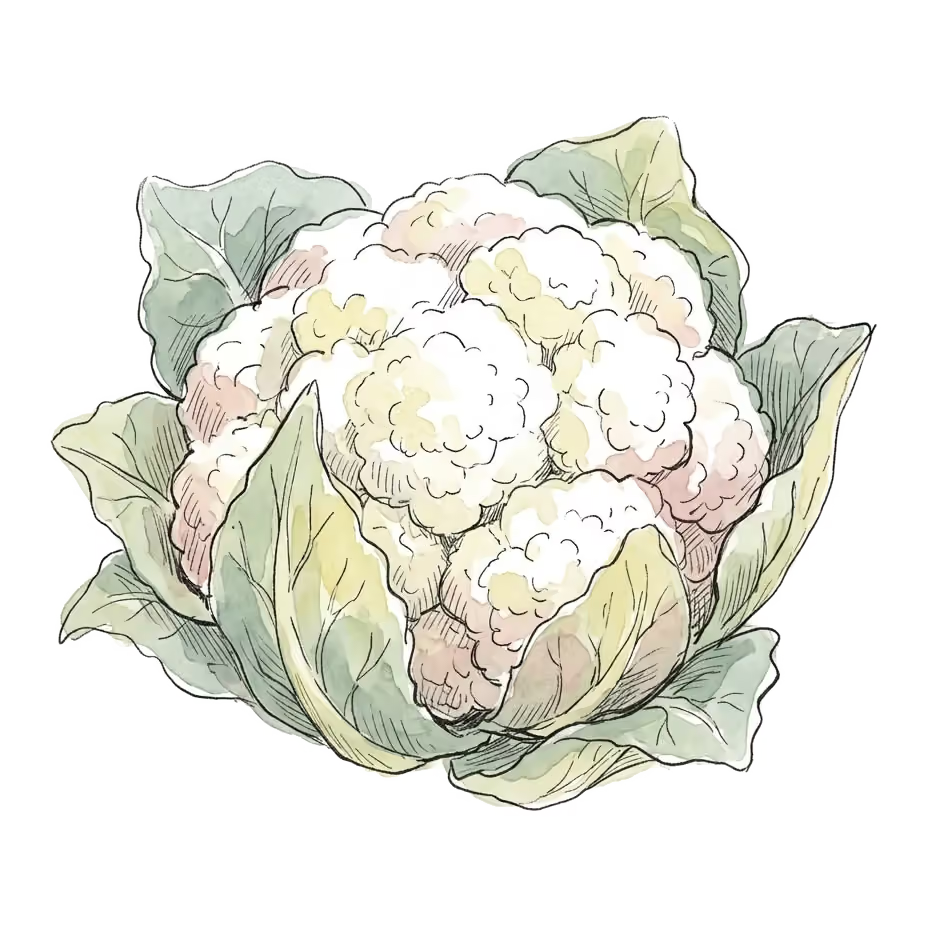
Cauliflower (Brassica oleracea var. botrytis)
Brassica oleracea var. botrytis · also known as white cauliflower, coliflor, chou-fleur, cavolfiore
By Superfoods Advisor Editors·July 3, 2026
Is cauliflower good for you? Cauliflower nutrition per 100 g (54% DV vitamin C, 25 kcal), glucosinolates, cauliflower rice, what studies show, and safety.
Cauliflower (Brassica oleracea var. botrytis) is a cruciferous vegetable in the family Brassicaceae, eaten for its dense flower head, or curd. It is good for you mainly as a low-calorie, low-carbohydrate source of vitamin C: 100 g raw provides 25 kcal, 5 g of carbohydrate and 54% of the daily value for vitamin C. Cancer-protection evidence is observational.
A cool-season annual, cauliflower is one of several domesticated forms of wild cabbage (Brassica oleracea), sharing botanical lineage with broccoli, kale, Brussels sprouts, and kohlrabi. It is thought to have arisen in the eastern Mediterranean, and genomic analysis suggests it was selected stepwise from broccoli-like forms (Chen et al., 2024). It reached southern Europe in the Middle Ages, and by the 16th century it was grown in France, Italy, and England, and today is produced on every inhabited continent, with India, China, and the United States among the largest producers.
The edible portion is the immature inflorescence, known as the “curd” — a dense, white (or in colored varieties, orange, purple, or green) aggregate of pre-floral tissue. Contemporary interest in cauliflower derives principally from its glucosinolate content — a class of sulfur-containing phytochemicals whose enzymatic breakdown products are under active investigation for anticancer and anti-inflammatory mechanisms.
Evidence at a glance
Active Compounds
Cauliflower’s bioactive profile is defined by both its glucosinolate content and its conventional micronutrient density:
- Glucosinolates (sinigrin, glucobrassicin, glucoraphanin): In a comparison of Brassica oleracea crops, cauliflower’s predominant glucosinolates were sinigrin and glucobrassicin (Kushad et al., 1999). These sulfur-containing glycosides are hydrolyzed by the enzyme myrosinase — present in intact plant cells but released upon cutting, chewing, or processing — to form isothiocyanates (allyl isothiocyanate from sinigrin, sulforaphane from glucoraphanin) and indoles (indole-3-carbinol from glucobrassicin). Sulforaphane is the most studied of these derivatives; it is a potent inducer of Nrf2-mediated phase II detoxification enzymes in human cells. Broccoli, not cauliflower, is the main dietary source of glucoraphanin, the sulforaphane precursor.
- Indole-3-carbinol (I3C) and 3,3’-diindolylmethane (DIM): I3C is not stored in the plant; it forms when glucobrassicin is broken down, and in stomach acid I3C molecules condense into DIM (Linus Pauling Institute). In a small human study, I3C supplements increased estrogen 2-hydroxylation (Michnovicz et al., 1997); whether dietary amounts have a clinically meaningful effect is unclear.
- Vitamin C (ascorbic acid): Cauliflower provides a substantial concentration of vitamin C, a water-soluble antioxidant essential for collagen synthesis, immune function, and non-heme iron absorption.
- Choline: Cauliflower is one of the higher-choline vegetables, though legumes and animal foods supply more — a nutrient essential for cell membrane integrity, neurotransmitter synthesis (acetylcholine), and hepatic lipid metabolism.
- Kaempferol and quercetin: Flavonoids present in cauliflower in small amounts; their anti-inflammatory activity has been studied mainly in laboratory research.
- Dietary fiber: A moderate source of insoluble fiber, supporting colonic transit, and soluble fiber, contributing to prebiotic fermentation.
Nutritional Profile
The following values represent raw cauliflower per 100 g edible portion (USDA FoodData Central, SR Legacy):
| Nutrient | Amount | % DV |
|---|---|---|
| Energy | 25 kcal | — |
| Carbohydrates | 5.0 g | — |
| Dietary fiber | 2.0 g | — |
| Sugars | 1.9 g | — |
| Protein | 1.9 g | — |
| Total fat | 0.3 g | — |
| Vitamin C | 48.2 mg | 54% |
| Vitamin K1 | 15.5 µg | 13% |
| Folate | 57 µg DFE | 14% |
| Choline | 44.3 mg | 8% |
| Potassium | 299 mg | 6% |
| Vitamin B6 | 0.18 mg | 11% |
Cooked cauliflower retains the majority of fat-soluble nutrients but loses a meaningful fraction of vitamin C due to heat and leaching into cooking water; steaming preserves more than boiling.
Evidence for Purported Benefits
Cancer Risk Reduction
Evidence:Preliminary Observational cruciferous-vegetable data, inconsistent across cancer sites; no trials of cancer outcomes.
Meta-analyses of cruciferous vegetable intake and cancer risk have produced inconsistent results; an umbrella review of 22 meta-analyses found evidence suggesting associations with lung, gastric, prostate, breast, endometrial, ovarian, and renal cancers (Guo et al., 2024). A meta-analysis of 24 case-control and 11 prospective studies by Wu et al. (2013, Annals of Oncology) found that higher cruciferous vegetable intake was associated with a statistically significant reduction in colorectal cancer risk (relative risk 0.82; 95% CI 0.75–0.90), although the prospective studies on their own reached only borderline significance. The proposed mechanism centers on sulforaphane’s induction of Nrf2 target genes — including glutathione-S-transferases and NAD(P)H quinone dehydrogenase 1 — which enhance detoxification of carcinogens and reduce oxidative DNA damage. Importantly, whole-food consumption studies cannot isolate the effect of any single compound, and meta-analytic estimates are subject to confounding by overall dietary pattern quality.
Cooking method affects glucosinolate breakdown: boiling inactivates myrosinase and reduces glucosinolate content much more than steaming, microwaving, or stir-frying (Linus Pauling Institute). In broccoli, brief steaming increased sulforaphane yield while boiling cut it (Wang et al., 2012). Adding mustard seed, a myrosinase source, to cooked broccoli raised sulforaphane uptake in a small human study (Okunade et al., 2018); cauliflower itself has not been tested this way.
Cardiovascular Health
Evidence:Preliminary Cohort data cover fruits and vegetables broadly; cauliflower has not been studied on its own.
Cauliflower has not been studied on its own for cardiovascular outcomes. A large prospective cohort analysis (Joshipura et al., 2001, Annals of Internal Medicine) found that each daily serving of fruits and vegetables was associated with a 4% lower risk of coronary heart disease, with green leafy vegetables and vitamin C-rich fruits and vegetables contributing most to the association. Cauliflower also supplies potassium and folate. Folate lowers circulating homocysteine, but trials of homocysteine-lowering B vitamins did not reduce heart attacks or deaths (Martí-Carvajal et al., 2017).
Cognitive Function and Choline
Evidence:Preliminary One cohort links choline intake to better memory; cauliflower itself has not been studied.
Choline is a precursor to acetylcholine, the primary neurotransmitter involved in memory and neuromuscular signaling. The Adequate Intake is 425 mg/day for women and 550 mg/day for men. In the Framingham Offspring cohort, higher choline intake was associated with better verbal and visual memory (Poly et al., 2011). Cauliflower’s choline content (~44 mg/100 g) makes it one of the richer vegetable sources, though animal-derived foods remain the primary dietary contributors.
Glycemic Management and Weight Management
Evidence:Lab & animal only Based on nutrient composition; no trials compare cauliflower-substitution diets with control diets.
With only 5 g of carbohydrate and 2 g of fiber per 100 g, cauliflower has a very low glycemic load and caloric density, making it a practical inclusion in calorie-controlled and low-carbohydrate dietary patterns. Its use as a low-carbohydrate substitute for rice, mashed potatoes, and pizza crust has become widespread; however, direct clinical trial evidence comparing cauliflower-substitution diets to control diets on metabolic outcomes remains limited.
Typical Use and Preparation
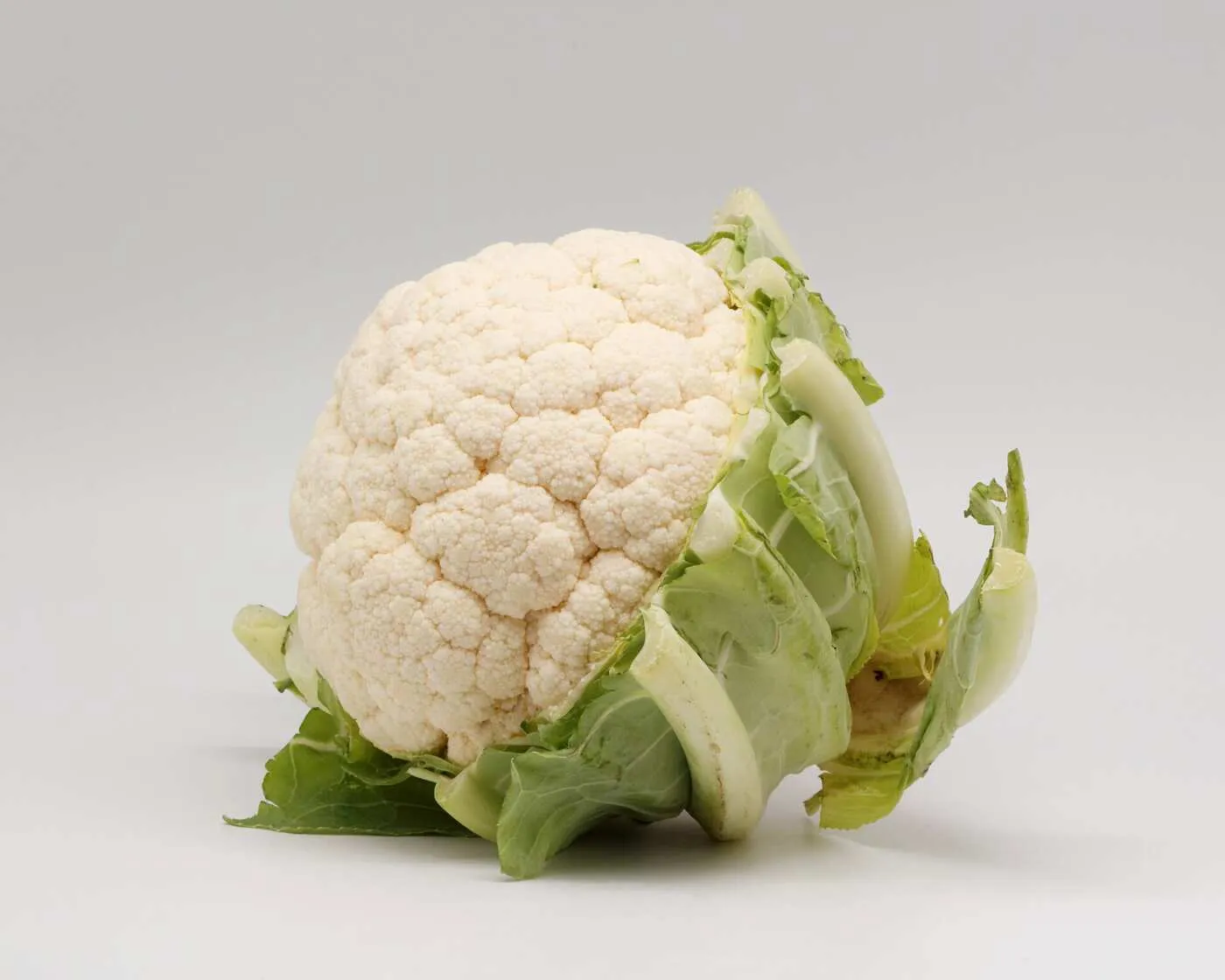 Photo: Coyau, CC BY-SA 3.0, via Wikimedia Commons
Cauliflower is consumed raw in salads, roasted, steamed, boiled, stir-fried, and increasingly used as a grain or starch substitute:
- Raw florets: Preserve myrosinase activity; appropriate for dipping with fat-containing sauces that enhance absorption of fat-soluble compounds.
- Steaming (5–7 minutes): Preferred over boiling for retaining both vitamin C and glucosinolate content; the curd softens while maintaining structural integrity.
- Roasting (200°C/400°F): Causes Maillard browning, developing complex flavors; caramelization of naturally occurring sugars occurs at higher temperatures. Some glucosinolate degradation occurs, but the result remains nutritionally substantial.
- Boiling: Causes the most significant nutrient loss through leaching into cooking water; if boiling, using minimal water and consuming the cooking liquid where feasible reduces losses.
- Riced cauliflower: Grated or processed raw cauliflower steamed briefly; used as a low-carbohydrate grain substitute.
Cauliflower is among the vegetables covered in the cruciferous vegetables research review.
Safety, Interactions, and Contraindications
Specific considerations:
Thyroid function (goitrogenic potential): Glucosinolate hydrolysis products — goitrin (from progoitrin), which can interfere with thyroid hormone synthesis, and thiocyanate (mainly from indole glucosinolates), which competes with iodine uptake — may affect thyroid function in susceptible individuals (Felker et al., 2016, a review partly authored by produce-company staff, which estimated the thiocyanate contribution from indole glucosinolates as minimal). Thiocyanate does not appear to raise hypothyroidism risk unless iodine intake is low, and 150 g/day of cooked Brussels sprouts for four weeks had no adverse effect on thyroid function in one human study (Linus Pauling Institute). Individuals with thyroid conditions should discuss cruciferous vegetable intake with their endocrinologist.
Vitamin K and anticoagulants: Cauliflower contains 15.5 µg of vitamin K1 per 100 g (USDA FoodData Central), a modest amount compared with leafy greens. Individuals taking warfarin should maintain consistent cruciferous vegetable intake and inform their prescriber of habitual consumption patterns, as a sudden increase in vitamin K intake can lower INR and weaken warfarin’s effect.
Gastrointestinal gas: Fermentation of cauliflower fiber and other fermentable carbohydrates by colonic bacteria produces gas (hydrogen, carbon dioxide, methane). This is a normal physiological response and not harmful, but may be uncomfortable for individuals with irritable bowel syndrome (IBS) or FODMAP sensitivity. People following a low-FODMAP elimination diet can check current serving thresholds in the Monash University FODMAP app.
Drug interactions: A controlled feeding study found that a brassica-rich diet induced the cytochrome P450 enzyme CYP1A2 in humans (Lampe et al., 2000), which could lower blood levels of drugs cleared by CYP1A2, including certain antidepressants and antipsychotics. Clinical significance at normal dietary intake is unclear; individuals on narrow therapeutic-window medications should discuss dietary patterns with their prescribing clinician.
This entry is for informational purposes only and does not constitute medical advice. Consult a qualified healthcare provider before making dietary changes for health management.
Frequently Asked Questions
What is cauliflower good for?
Cauliflower is a low-calorie way to get vitamin C, folate, vitamin B6, choline and fiber, with 25 kcal per 100 g raw. Like other cruciferous vegetables it supplies glucosinolates, whose breakdown products induce detoxification enzymes in laboratory studies. Links to lower cancer and heart disease risk come from observational research on vegetables in general and remain preliminary for cauliflower itself.
Does cauliflower have fiber?
Yes, a moderate amount. Raw cauliflower provides about 2.0 g of dietary fiber per 100 g, out of 5.0 g of total carbohydrate (USDA FoodData Central). The fiber is a mix of insoluble types, which add bulk and support transit, and soluble types that colon bacteria ferment, which is also why cauliflower can cause gas.
Is cauliflower rice good for you?
Riced cauliflower is raw cauliflower grated into rice-sized pieces, so it keeps cauliflower’s nutrition: about 25 kcal and 5 g of carbohydrate per 100 g raw, far less than cooked grain rice. That makes it a practical swap in low-carbohydrate or calorie-controlled eating. Brief steaming preserves more vitamin C than boiling. Trials comparing cauliflower-substitution diets with standard diets are lacking.
Is cauliflower as healthy as broccoli?
Both are nutritious cruciferous vegetables, but broccoli is denser in several nutrients. Raw broccoli has about 89 mg of vitamin C per 100 g versus 48 mg in cauliflower, considerably more vitamin K, and much more glucoraphanin, the sulforaphane precursor studied in most cruciferous trials. Cauliflower is milder in taste and works as a lower-carbohydrate substitute for starches.
Is cauliflower low FODMAP?
Cauliflower contains fermentable carbohydrates that colon bacteria break down, producing gas, so it can trigger symptoms in people with irritable bowel syndrome or FODMAP sensitivity. Serving thresholds are updated as testing is repeated, so people following a low-FODMAP elimination diet are advised to check the current figure in the Monash University FODMAP app, ideally with a dietitian.
References
Show all 16 referencesShow fewer
- Wu, Q. J., et al. (2013). Cruciferous vegetables intake and the risk of colorectal cancer: a meta-analysis of observational studies. Annals of Oncology, 24(4), 1079–1087.
- Joshipura, K. J., et al. (2001). The effect of fruit and vegetable intake on risk for coronary heart disease. Annals of Internal Medicine, 134(12), 1106–1114.
- USDA FoodData Central. Cauliflower, raw (FDC 169986). SR Legacy. Retrieved 2026.
- Felker, P., Bunch, R., & Leung, A. M. (2016). Concentrations of thiocyanate and goitrin in human plasma, their precursor concentrations in brassica vegetables, and associated potential risk for hypothyroidism. Nutrition Reviews, 74(4), 248–258.
- Lampe, J. W., et al. (2000). Brassica vegetables increase and apiaceous vegetables decrease cytochrome P450 1A2 activity in humans. Carcinogenesis, 21(6), 1157–1162.
- Linus Pauling Institute. Choline. Micronutrient Information Center.
- Chen, R., et al. (2024). Genomic analyses reveal the stepwise domestication and genetic mechanism of curd biogenesis in cauliflower. Nature Genetics, 56(6), 1235–1244.
- Kushad, M. M., et al. (1999). Variation of glucosinolates in vegetable crops of Brassica oleracea. Journal of Agricultural and Food Chemistry, 47(4), 1541–1548.
- Linus Pauling Institute. Indole-3-Carbinol. Micronutrient Information Center.
- Michnovicz, J. J., et al. (1997). Changes in levels of urinary estrogen metabolites after oral indole-3-carbinol treatment in humans. Journal of the National Cancer Institute, 89(10), 718–723.
- Guo, C., et al. (2024). Effect of cruciferous vegetable intake on cancer: an umbrella review of meta-analysis. Journal of Food Science, 89(9), 5230–5244.
- Linus Pauling Institute. Cruciferous Vegetables. Micronutrient Information Center.
- Wang, G. C., et al. (2012). Impact of thermal processing on sulforaphane yield from broccoli (Brassica oleracea L. ssp. italica). Journal of Agricultural and Food Chemistry, 60(27), 6743–6748.
- Okunade, O., et al. (2018). Supplementation of the diet by exogenous myrosinase via mustard seeds to increase the bioavailability of sulforaphane in healthy human subjects after the consumption of cooked broccoli. Molecular Nutrition & Food Research, 62(18), e1700980.
- Martí-Carvajal, A. J., et al. (2017). Homocysteine-lowering interventions for preventing cardiovascular events. Cochrane Database of Systematic Reviews, 8, CD006612.
- Poly, C., et al. (2011). The relation of dietary choline to cognitive performance and white-matter hyperintensity in the Framingham Offspring Cohort. American Journal of Clinical Nutrition, 94(6), 1584–1591.
Related content
More in Vegetables
- Artichoke (Cynara cardunculus var. scolymus)
Artichokes benefits explained: prebiotic inulin, cynarin, nutrition per 100 g, and what leaf-extract trials show for cholesterol, digestion and the liver.
- Asparagus (Asparagus officinalis)
Is asparagus good for you? Nutrition per 100 g, including 37% DV folate and 42% vitamin K, its prebiotic fiber, what studies show, and safety notes.
- Beets / Beetroot (Beta vulgaris)
Beet juice benefits explained: how beetroot nitrates lowered systolic blood pressure and aided endurance in trials, beets nutrition per 100 g, and safety.
- Broccoli (Brassica oleracea var. italica)
Is broccoli good for you? Broccoli nutrition per 100 g, including 118% DV vitamin K, how sulforaphane forms, what human studies show, and safety notes.
- Brussels Sprouts (Brassica oleracea var. gemmifera)
Brussels sprouts benefits and nutrition per 100 g (148% DV vitamin K, 94% vitamin C), their glucosinolates, what studies show, gas, and warfarin safety.
- Cabbage (Brassica oleracea var. capitata)
Is cabbage good for you? Cabbage nutrition per 100 g (63% DV vitamin K, 41% vitamin C), red vs green, sauerkraut, what studies show, and thyroid safety.

Curated by Superfoods Advisor Editors·Last updated