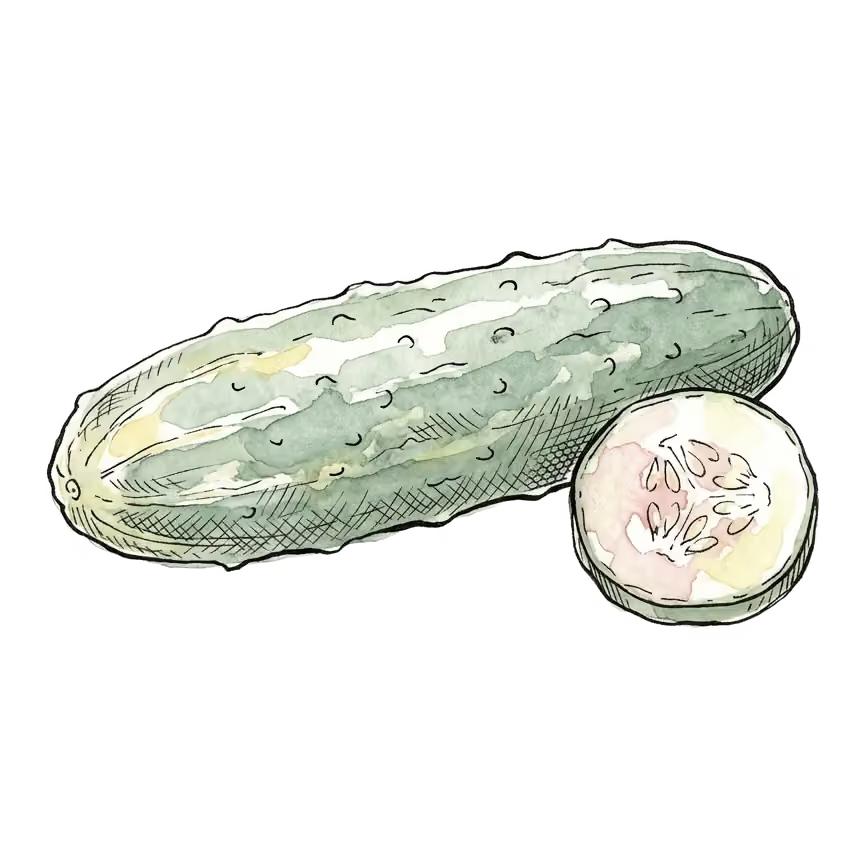
Cucumber (Cucumis sativus)
Cucumis sativus · also known as garden cucumber, pepino, concombre, Gurke, kheera, Cucumbers
By Superfoods Advisor Editors·July 3, 2026
Cucumber benefits explained: 95% water and 15 kcal per 100 g, what studies show for hydration, skin and blood sugar, cucumber nutrition, and side effects.
Cucumber (Cucumis sativus) is a gourd in the family Cucurbitaceae, eaten raw as a vegetable though botanically a fruit. Its main benefit is hydration with almost no calories: 100 g with peel is 95% water and provides 15 kcal and 16.4 µg of vitamin K. Claims about skin, blood sugar and antioxidant effects rest on traditional use and lab studies.
The plant is a creeping vine related to melons, squash, and zucchini. Genetic analyses suggest the cucumber was first domesticated in the Indian subcontinent roughly 3,000 years ago (Guan et al., 2026). It reached the Mediterranean later than is often stated: the cucumis described by Pliny and Columella, including the fruit grown for the emperor Tiberius, was a vegetable (snake) melon, and there is no clear evidence of true cucumber in the region in Roman times (Janick et al., 2007). Written sources place cucumber in Persia and the lands east of the Mediterranean by the 6th or 7th century and in Arab Spain by the 10th, and it was established across Europe by the late Middle Ages (Paris et al., 2012). European colonizers introduced it to the Americas in the 16th century.
From a botanical standpoint, cucumber is a pepo — a type of berry with a hard outer rind — though culinarily it is treated as a vegetable. It is cultivated in three principal types: slicing cucumbers for fresh consumption, brining cucumbers, and seedless (English or hothouse) cucumbers. In Indian traditional medicine, cucumber was regarded as cooling, and the fresh juice was applied to soothe skin irritation, sunburn, and swelling (Mukherjee et al., 2013). Contemporary scientific interest has focused on cucumber’s hydration contribution, its unique phytochemical profile (particularly cucurbitacins and lignans), and its use in cosmetic applications.
Evidence at a glance
Active Compounds
Cucumber’s bioactive profile is characterized by its distinctive combination of phytochemicals within a very low-calorie matrix:
- Cucurbitacins (in cucumber, chiefly cucurbitacin C): Tetracyclic triterpenoid compounds responsible for the characteristic bitter taste of wild and some cultivated cucumbers (Shang et al., 2014). Cucurbitacins are under oncological investigation; in vitro studies demonstrate potent cytotoxicity against multiple cancer cell lines via JAK/STAT and PI3K/Akt pathway inhibition, though in vivo human data are lacking. Selection during domestication and modern breeding has produced non-bitter cultivars with low fruit cucurbitacin content; the skin and stem-end retain higher concentrations than the flesh.
- Lignans (lariciresinol, pinoresinol, secoisolariciresinol): Polyphenolic compounds with phytoestrogenic and antioxidant activity. Lignans are converted by gut microbiota to enterolactone and enterodiol, which may modulate estrogen receptor activity. In a meta-analysis of observational studies, high lignan intake was associated with modestly lower breast cancer risk in postmenopausal women but not overall (Buck et al., 2010); pooled prospective data found no association between circulating lignans and prostate cancer risk (Perez-Cornago et al., 2018).
- Flavonoids (quercetin, apigenin, luteolin, kaempferol): Present primarily in the skin; these compounds have anti-inflammatory and antioxidant properties documented in mechanistic studies.
- Silicon: Cucumber is often promoted as a silicon source, but in a UK food analysis the highest silicon levels were in cereals, with green beans, spinach, and bananas among the notable produce sources (Powell et al., 2005). Silicon may play a role in bone and connective tissue, but no intake requirement has been set, and no research links cucumber-derived silicon to clinical outcomes.
- Molybdenum: Cucumber contains this trace mineral, which serves as a cofactor for sulfite oxidase and other metalloenzymes; USDA FoodData Central does not report molybdenum, and published amounts vary with soil content.
Nutritional Profile
The following values represent raw cucumber with peel per 100 g edible portion (USDA FoodData Central, SR Legacy 168409):
| Nutrient | Amount | % DV |
|---|---|---|
| Energy | 15 kcal | — |
| Water | 95.2 g | — |
| Carbohydrates | 3.6 g | — |
| Dietary fiber | 0.5 g | — |
| Sugars | 1.7 g | — |
| Protein | 0.7 g | — |
| Total fat | 0.1 g | — |
| Vitamin K1 | 16.4 mcg | 14% |
| Vitamin C | 2.8 mg | 3% |
| Potassium | 147 mg | 3% |
| Magnesium | 13 mg | 3% |
Cucumber’s most notable nutritional characteristic is its water content (~95%), making it one of the highest-water-content whole foods available. Removing the peel eliminates a meaningful portion of vitamin K and phytochemical-rich skin tissue; consuming the peel is preferred for maximal phytonutrient intake.
Evidence for Purported Benefits
Hydration and Electrolyte Contribution
Evidence:Moderate Cucumber is 95% water and food moisture supplies part of daily intake; no trials test cucumber for hydration.
Adequate hydration is fundamental to renal function, thermoregulation, cognitive performance, and cardiovascular health. Cucumber’s 95% water content, combined with its potassium and magnesium content, makes it a useful contributor to daily fluid and electrolyte intake — particularly in populations with low plain water consumption. In NHANES data analyzed by Kant et al. (2009, American Journal of Clinical Nutrition), plain water and beverages supplied about 33% and 48% of US adults’ total water intake, leaving roughly a fifth to come from the moisture in foods. However, no randomized controlled trials have specifically examined cucumber consumption as a hydration intervention.
Antioxidant Activity
Evidence:Lab & animal only Cell and animal studies of skin flavonoids and phenolic acids; no human trials.
The flavonoids and phenolic acids in cucumber skin demonstrate significant free radical scavenging activity in cell culture and animal models. A review by Mukherjee et al. (2013, Fitoterapia) summarized laboratory studies attributing the antioxidant activity of cucumber extracts largely to their flavonoids and phenolic acids. Whether these findings translate to meaningful in vivo antioxidant protection in humans consuming typical dietary quantities of cucumber remains to be established in clinical trials.
Skin Health (Topical Use)
Evidence:Insufficient Long folk use; rigorous human trials are sparse.
Topical application of cucumber slices or extract has a long folk tradition for reducing periorbital puffiness, soothing sunburned skin, and improving skin luminosity. The proposed mechanisms include the mild astringent effect of natural tannins, cooling via high water content, and anti-inflammatory effects of flavonoids. Robust double-blind RCTs in humans are sparse. Cucumber extract is a recognized ingredient in cosmetic formulations.
Blood Glucose Regulation
Evidence:Lab & animal only Seed extracts lowered glucose in diabetic rodents; no human data.
Several animal studies have examined cucumber seed extract and juice for hypoglycemic effects, finding reductions in fasting blood glucose in streptozotocin-induced diabetic rodents; the mechanism has not been established. In one such study, Minaiyan et al. (2011, Iranian Journal of Basic Medical Sciences) found that cucumber seed extracts had no acute effect but lowered blood glucose by roughly 22–45% in diabetic rats after nine days of daily dosing. Human translational evidence is lacking; cucumber’s very low carbohydrate content means it has negligible direct glycemic impact, but specific pharmacological blood glucose effects from phytochemicals are not established in humans.
Weight Management
Evidence:Lab & animal only Based on energy density; low-energy-density diets aid weight control, but no trial has tested cucumber.
At 15 kcal per 100 g and very high water content, cucumber is among the most energy-dilute whole foods. Diets high in low-energy-density foods are associated with reduced total caloric intake and body weight in multiple epidemiological and intervention studies (Rolls, 2017, Nutrition Bulletin). Cucumber serves as a practical, satiating inclusion in calorie-controlled dietary patterns, though no clinical trials specifically targeting cucumber consumption and weight outcomes have been conducted.
Typical Use and Preparation
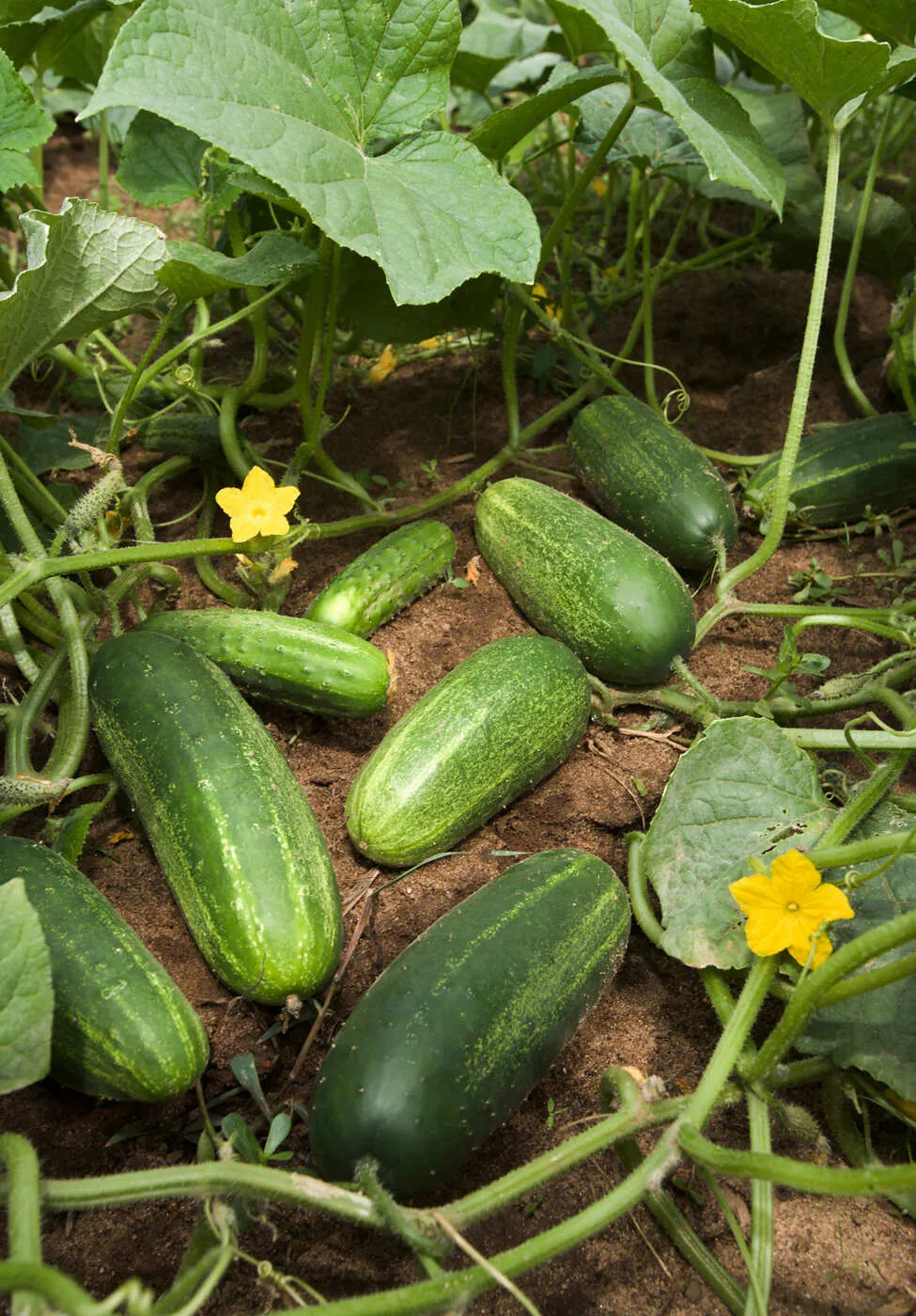 Photo: Stephen Ausmus, USDA ARS, public domain, via Wikimedia Commons
Cucumber is predominantly consumed raw, owing to its delicate texture and flavor, which deteriorate with significant heat:
- Fresh slicing: The most common preparation; peel-on slices retain more nutrients and phytochemicals than those with the skin removed.
- Salads and cold soups: Cucumber’s water content makes it refreshing in warm-weather cuisine; standard preparations include Greek tzatziki, Middle Eastern fattoush, and East Asian cucumber salads.
- Brined and fermented preparations: Cucumber preserved in brine undergoes lacto-fermentation, which adds live lactic acid bacteria (unless the pickles are later pasteurized) but significantly increases sodium content. Quick-brined cucumbers prepared with vinegar and sugar do not involve fermentation.
- Infused water: Sliced cucumber in water is a popular hydration strategy; while it contributes negligible nutrients at typical proportions, it may increase overall fluid intake by improving palatability.
- Topical use: Chilled cucumber slices are applied to closed eyelids for 10-15 minutes; this is a cosmetic rather than medical application.
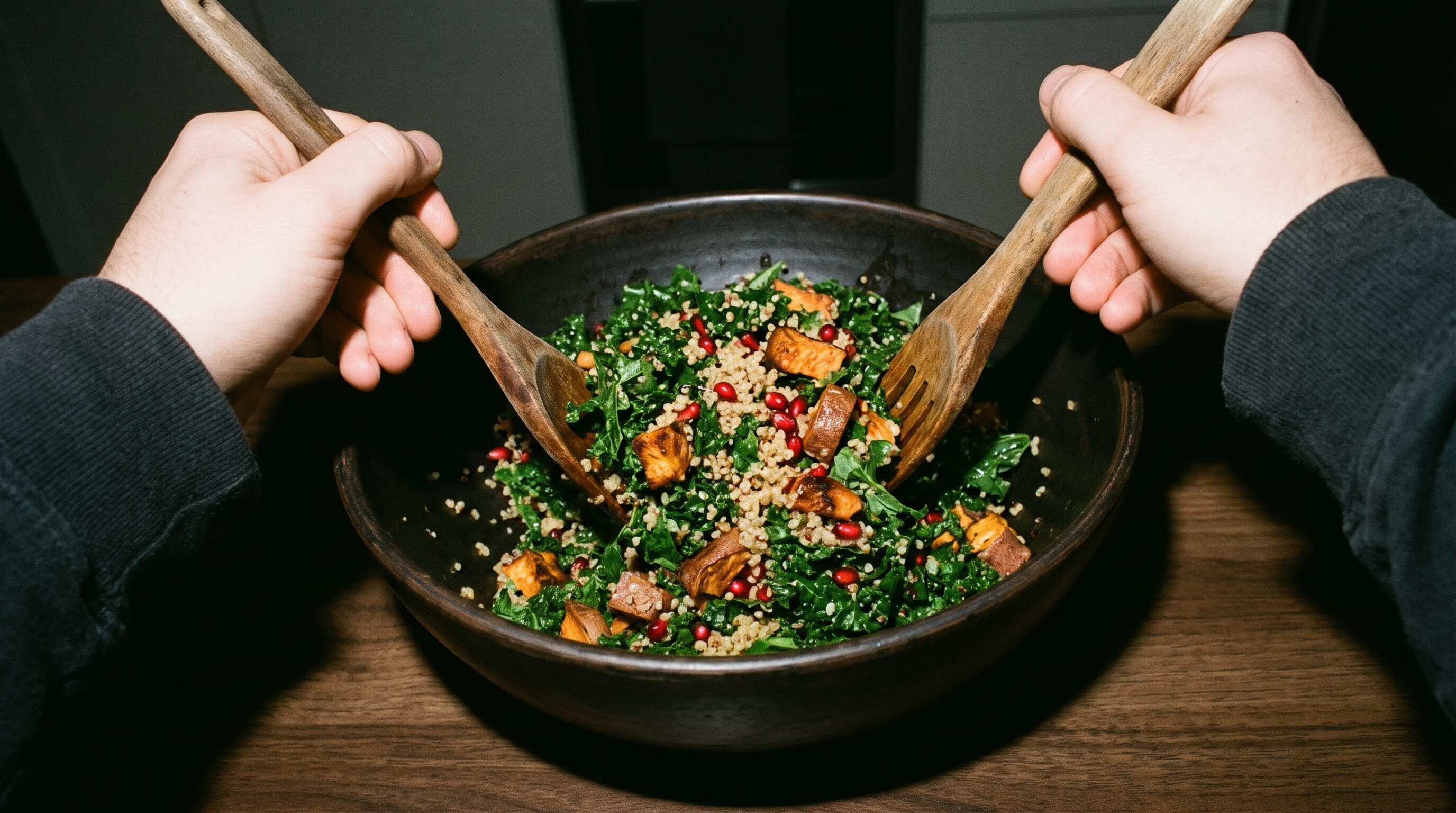
Chopped cucumber goes into the olive-and-feta variation of the superfood salad bowl.
Safety, Interactions, and Contraindications
Specific considerations:
Cucurbitacin toxicity (“toxic squash syndrome”): Bitter cucurbit fruits can contain enough cucurbitacins to cause vomiting, diarrhea, and abdominal pain; most reported cases involve squash, zucchini, or bottle gourd rather than cucumber. In a French poison-centre series of 353 patients, more than half had eaten bitter squash bought in a store rather than grown at home (Le Roux et al., 2018). Commercial cucumber cultivars are bred for low cucurbitacin content, but any cucumber that tastes markedly bitter, store-bought or homegrown, should be discarded rather than eaten.
Vitamin K and anticoagulants: As with other vegetables containing vitamin K1, individuals on warfarin therapy should maintain consistent cucumber intake and report significant dietary changes to their healthcare provider.
Allergy: Cucumber belongs to the Cucurbitaceae family; an association between ragweed pollen allergy and sensitivity to cucurbits, including cucumber (oral allergy syndrome), has been reported (Caballero & Martín-Esteban, 1998), typically presenting as itching and mild swelling of the oral mucosa. Anaphylaxis from cucumber is rare.
Digestive sensitivity: Some individuals report bloating or belching after cucumber consumption. Removing the peel and seeds may reduce this for sensitive individuals.
This entry is for informational purposes only and does not constitute medical advice. Consult a qualified healthcare provider for medical guidance.
Frequently Asked Questions
Is cucumber a fruit or a vegetable?
Botanically, cucumber is a fruit: a pepo, a type of berry with a hard rind that develops from the flower and contains the seeds. In cooking and in nutrition tables it is treated as a vegetable because it is eaten raw or pickled in savory dishes. Its relatives zucchini and squash are classed the same way.
Is cucumber good for you?
Cucumber is a useful low-calorie food, mainly for its water: 100 g is about 95% water and has only 15 kcal, so it adds volume and fluid to meals with little energy. It supplies some vitamin K, potassium and magnesium but is not a concentrated source of any nutrient. Diets built on low-energy-density foods are linked to lower calorie intake (Rolls, 2017).
Does cucumber have fiber?
Very little. Raw cucumber with peel contains about 0.5 g of dietary fiber per 100 g, out of 3.6 g of total carbohydrate (USDA FoodData Central). Peeling removes part of that. People looking to raise their fiber intake will get far more from legumes, whole grains or denser vegetables such as broccoli.
Can cucumber cause diarrhea?
Ordinary cucumbers rarely do. The exception is a bitter fruit: cucurbitacins, the compounds behind bitterness in cucurbits, can cause vomiting, diarrhea and abdominal pain, though most reported cases involve squash or bottle gourd rather than cucumber (Le Roux et al., 2018). Some people also report bloating or belching after cucumber, which removing the peel and seeds may reduce.
How much cucumber can you eat a day?
No upper limit has been set for cucumber as a food, and its low calorie and high water content make large servings common in salads. The practical cautions are a consistent intake for people taking warfarin, because of its vitamin K, and discarding any cucumber that tastes strongly bitter. People with ragweed pollen allergy may notice mouth itching from raw cucumber.
References
Show all 14 referencesShow fewer
- Mukherjee, P. K., et al. (2013). Phytochemical and therapeutic potential of cucumber. Fitoterapia, 84, 227–236.
- Minaiyan, M., Zolfaghari, B., & Kamal, A. (2011). Effect of hydroalcoholic and buthanolic extract of Cucumis sativus seeds on blood glucose level of normal and streptozotocin-induced diabetic rats. Iranian Journal of Basic Medical Sciences, 14(5), 436–442.
- Rolls, B. J. (2017). Dietary energy density: Applying behavioural science to weight management. Nutrition Bulletin, 42(3), 246–253.
- USDA FoodData Central. Cucumber, with peel, raw (FDC ID 168409). SR Legacy. Retrieved 2026.
- Kant, A. K., Graubard, B. I., & Atchison, E. A. (2009). Intakes of plain water, moisture in foods and beverages, and total water in the adult US population—nutritional, meal pattern, and body weight correlates: National Health and Nutrition Examination Surveys 1999–2006. American Journal of Clinical Nutrition, 90(3), 655–663.
- Guan, J., Li, X., Miao, H., Yan, X., et al. (2026). Pangenome-resolved structural variation drives adaptation and trait evolution in cucumber. Nature Genetics, 58(8), 2040–2052.
- Janick, J., Paris, H. S., & Parrish, D. C. (2007). The cucurbits of Mediterranean antiquity: identification of taxa from ancient images and descriptions. Annals of Botany, 100(7), 1441–1457.
- Paris, H. S., Daunay, M.-C., & Janick, J. (2012). Occidental diffusion of cucumber (Cucumis sativus) 500–1300 CE: two routes to Europe. Annals of Botany, 109(1), 117–126.
- Shang, Y., Ma, Y., Zhou, Y., et al. (2014). Biosynthesis, regulation, and domestication of bitterness in cucumber. Science, 346(6213), 1084–1088.
- Buck, K., Zaineddin, A. K., Vrieling, A., Linseisen, J., & Chang-Claude, J. (2010). Meta-analyses of lignans and enterolignans in relation to breast cancer risk. American Journal of Clinical Nutrition, 92(1), 141–153.
- Perez-Cornago, A., Appleby, P. N., Boeing, H., et al. (2018). Circulating isoflavone and lignan concentrations and prostate cancer risk: a meta-analysis of individual participant data from seven prospective studies. International Journal of Cancer, 143(11), 2677–2686.
- Powell, J. J., McNaughton, S. A., Jugdaohsingh, R., et al. (2005). A provisional database for the silicon content of foods in the United Kingdom. British Journal of Nutrition, 94(5), 804–812.
- Le Roux, G., Leborgne, I., Labadie, M., et al. (2018). Poisoning by non-edible squash: retrospective series of 353 patients from French Poison Control Centers. Clinical Toxicology, 56(8), 790–794.
- Caballero, T., & Martín-Esteban, M. (1998). Association between pollen hypersensitivity and edible vegetable allergy: a review. Journal of Investigational Allergology and Clinical Immunology, 8(1), 6–16.
Related content
More in Vegetables
- Artichoke (Cynara cardunculus var. scolymus)
Artichokes benefits explained: prebiotic inulin, cynarin, nutrition per 100 g, and what leaf-extract trials show for cholesterol, digestion and the liver.
- Asparagus (Asparagus officinalis)
Is asparagus good for you? Nutrition per 100 g, including 37% DV folate and 42% vitamin K, its prebiotic fiber, what studies show, and safety notes.
- Beets / Beetroot (Beta vulgaris)
Beet juice benefits explained: how beetroot nitrates lowered systolic blood pressure and aided endurance in trials, beets nutrition per 100 g, and safety.
- Broccoli (Brassica oleracea var. italica)
Is broccoli good for you? Broccoli nutrition per 100 g, including 118% DV vitamin K, how sulforaphane forms, what human studies show, and safety notes.
- Brussels Sprouts (Brassica oleracea var. gemmifera)
Brussels sprouts benefits and nutrition per 100 g (148% DV vitamin K, 94% vitamin C), their glucosinolates, what studies show, gas, and warfarin safety.
- Cabbage (Brassica oleracea var. capitata)
Is cabbage good for you? Cabbage nutrition per 100 g (63% DV vitamin K, 41% vitamin C), red vs green, sauerkraut, what studies show, and thyroid safety.

Curated by Superfoods Advisor Editors·Last updated