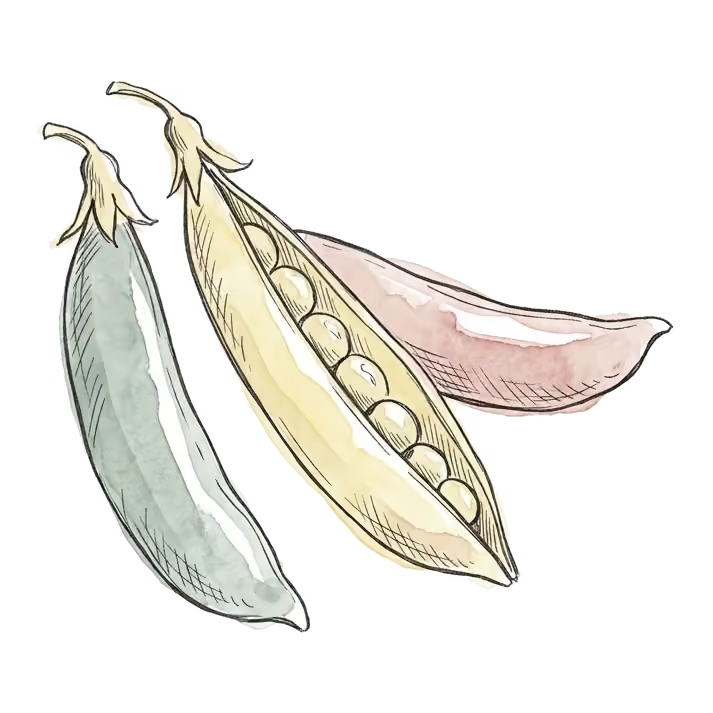
Snap Pea (Pisum sativum var. macrocarpon)
Pisum sativum var. macrocarpon · also known as sugar snap pea, snap pea, sugar snap, Snap peas, Sugar snap peas
By Superfoods Advisor Editors·July 3, 2026
Snap peas vs snow peas: how the pods differ, snap pea nutrition per 100 g (67% DV vitamin C, 2.8 g protein), health benefits, FODMAPs, and safety notes.
The snap pea (Pisum sativum var. macrocarpon), or sugar snap pea, is an edible-pod garden pea in the legume family (Fabaceae). The difference between snap peas and snow peas is the pod: snap peas have thick, round pods with full-sized peas inside, while snow peas have flat pods with small, undeveloped peas. Both are eaten whole.
A cultivar group selected for fleshy pods that stay crisp and sweet as the peas inside reach full size, the snap pea was developed in the late 1970s by plant breeder Calvin Lamborn in the United States, through crossbreeding snow peas (flat, edible-pod peas with undeveloped seeds) with garden peas. The first commercial snap pea cultivar, “Sugar Snap,” was introduced in 1979 and received the All-America Selections award — an unusually rapid transition from breeding to widespread adoption.
Evidence at a glance
Snap Peas vs Snow Peas vs Garden Peas
All three are forms of the same species, Pisum sativum, and differ mainly in the pod. Snap peas combine an edible pod with full-sized peas; snow peas are picked flat; garden peas are shelled.
| Snap pea | Snow pea | Garden pea | |
|---|---|---|---|
| Botanical name | P. sativum var. macrocarpon | P. sativum var. saccharatum | P. sativum |
| Pod | Thick, round, edible | Flat, thin, edible | Fibrous, discarded |
| Peas inside | Fully developed | Small, undeveloped | Fully developed, shelled |
| Typical use | Raw snacking, quick stir-fries | Stir-fries, Asian dishes | Cooked as shelled peas |
Nutritionally, snap peas sit between the other two. They are lower in protein and fiber per gram than shelled garden peas but offer pod fiber alongside pea nutrition in a single edible unit; USDA data do not separate snap peas from snow peas.
Active Compounds and Key Nutrients
Snap peas do not contain a single signature bioactive compound in the manner of, say, glucosinolates in brassicas or quercetin in onions. Their nutritional value arises from a combination of vitamins, minerals, fiber fractions, and plant protein:
Vitamin K1 (phylloquinone): Snap peas provide approximately 25 µg per 100 g (USDA FoodData Central), contributing meaningfully to the adult adequate intake of 90–120 µg/day. Vitamin K1 functions as cofactor for carboxylation of clotting factors (II, VII, IX, X) and osteocalcin (Schwalfenberg, 2017).
Vitamin C (ascorbic acid): At roughly 60 mg per 100 g (USDA FoodData Central), snap peas provide about two-thirds of the 90 mg adult male RDA (80% of the 75 mg female RDA) — a higher concentration than most commonly consumed vegetables. Vitamin C serves as a water-soluble antioxidant, cofactor in collagen synthesis, and enhancer of non-heme iron absorption.
Dietary fiber: Total fiber is approximately 2.6 g per 100 g, comprising both insoluble fiber (from pod cellulose) and soluble fiber (pectin). Shelled green peas are denser in fiber per gram (about 5.7 g per 100 g raw, per USDA FoodData Central), because the watery pod dilutes the total.
Resistant starch: Peas, including snap peas, contain resistant starch (primarily RS2 from raw state and retrograded RS3 after cooking and cooling), which resists small intestinal digestion and reaches the colon, where it serves as a prebiotic substrate for beneficial bacteria. Quantification of resistant starch in snap peas specifically is limited in the literature.
Plant protein: Snap peas provide approximately 2.8 g protein per 100 g — modest in absolute terms but notable for a vegetable. Pea protein is relatively complete, containing all essential amino acids, though lysine:methionine ratios favor lysine with limiting methionine, making peas complementary to grains.
Galacto-oligosaccharides (GOS): Peas are a recognized source of α-galacto-oligosaccharides of the raffinose family (Marín-Manzano et al., 2020), fermentable carbohydrates relevant to digestive tolerance (see Safety section).
Nutritional Profile (per 100 g raw)
| Nutrient | Amount | % DV (approx.) |
|---|---|---|
| Energy | 42 kcal | — |
| Carbohydrate | 7.6 g | 3% |
| Dietary fiber | 2.6 g | 9% |
| Sugars | 4.0 g | — |
| Protein | 2.8 g | 6% |
| Fat | 0.2 g | — |
| Vitamin C | 60 mg | 67% |
| Vitamin K1 | 25 µg | 21% |
| Folate (B9) | 42 µg | 11% |
| Iron | 2.1 mg | 12% |
| Potassium | 200 mg | 4% |
Source: USDA FoodData Central, FDC ID 170010, “Peas, edible-podded, raw”. The USDA entry covers edible-podded peas as a group (snap and snow peas together).
Evidence for Purported Benefits
Blood Glucose and Glycemic Response
Evidence:Preliminary A meta-analysis of 41 RCTs supports pulses for glucose control; snap peas themselves have not been tested.
Legumes as a food class have among the best-documented evidence for glycemic benefit of any whole food category. Their generally low glycemic index and combination of fiber, resistant starch, and protein slow gastric emptying and flatten postprandial glucose curves. A meta-analysis of 41 randomized controlled trials by Sievenpiper et al. (Diabetologia, 2009) found that pulses (chickpeas, beans, peas, lentils), eaten alone or as part of low-GI or high-fiber diets, improved fasting blood glucose and longer-term glycemic markers such as HbA1c, though heterogeneity between trials was high. Snap peas share the key macronutrient characteristics underlying this effect, though they have not been specifically studied in glycemic index trials.
Cardiovascular Risk Factors
Evidence:Preliminary Pulse diets lowered LDL in trials and legume intake tracks lower heart disease in a cohort; snap peas are untested.
In a meta-analysis of 26 randomized trials, diets emphasizing pulses lowered LDL cholesterol modestly (Ha et al., 2014); bile acid binding by soluble fiber is one proposed mechanism. In the NHANES I Epidemiologic Follow-up Study, a prospective cohort of 9,632 US adults followed for about 19 years, Bazzano et al. (Archives of Internal Medicine, 2001) found that eating legumes four or more times per week, compared with less than once a week, was associated with a 22% lower risk of coronary heart disease. Whether snap peas specifically contribute similarly is plausible mechanistically but untested in dedicated trials.
Gut Microbiome Prebiotic Support
Evidence:Lab & animal only A fecal fermentation model showed bifidogenic activity for pea sugars; no snap pea trials.
In a fecal fermentation model, pea α-GOS showed bifidogenic activity, selectively increasing certain Bifidobacterium species (Marín-Manzano et al., 2020). Butyrate and other short-chain fatty acids from colonic fermentation of resistant starch serve as an energy source for colonocytes (Topping & Clifton, 2001). The snap pea contribution is nutritionally similar to garden peas and other legumes; no snap pea-specific prebiotic trials are available.
Bone Health
Evidence:Preliminary Some cohorts link vitamin K intake to lower fracture risk, trials are inconclusive, and snap peas have not been studied.
Vitamin K1 is required for carboxylation of osteocalcin, a bone matrix protein. Some, but not all, observational studies link higher vitamin K intake to lower fracture risk; a meta-analysis of five cohorts found modestly lower risk (Hao et al., 2017), while trials remain inconclusive. Snap peas as a vitamin K source contribute to meeting adequate intake levels, supporting the general dietary pattern associated with bone health, though the relationship between dietary vitamin K from vegetables and fracture risk remains an active research area.
Typical Use and Preparation
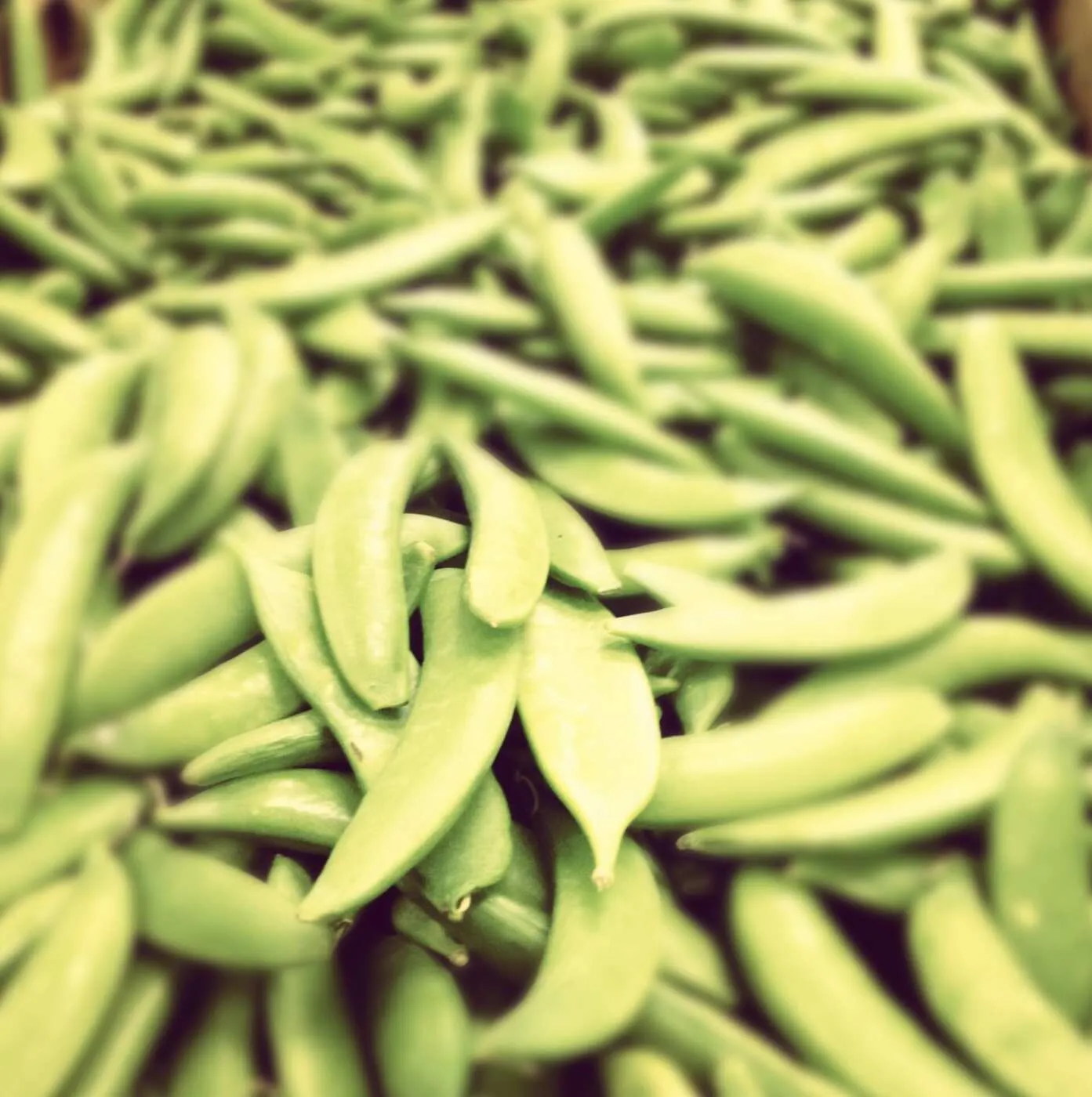 Photo: Brianga, CC BY-SA 3.0, via Wikimedia Commons
Snap peas are typically eaten raw as a snack (their sweetness and crunch making them palatable without preparation) or lightly cooked — stir-fried, steamed, blanched, or sautéed for 2–3 minutes to preserve texture and vitamin C content. String removal (pulling the fibrous seam from the pod) is optional; many modern cultivars have been selected for stringlessness.
Comparison to related forms at a glance:
- Snow pea: flatter pod, smaller developing peas
- Snap pea: thick, round pod, full-sized peas inside
- Garden pea (shelled): no pod consumed; roughly twice the protein and fiber per gram (5.4 g and 5.7 g per 100 g raw)
Brief blanching (60–90 seconds in boiling water, then ice bath) retains color, texture, and most vitamin C while slightly softening the pod. Prolonged boiling leaches vitamin C into the cooking water and softens the pod to an undesirable consistency.
The blood sugar and metabolic health guide explains the legume evidence that the glycemic section above draws on.
Safety, Interactions, and Contraindications
FODMAP content: Peas contain fermentable carbohydrates that are poorly absorbed in the small intestine and fermented by colonic bacteria. Monash University lists sugar snap peas among high-FODMAP vegetables, and its FODMAP Diet app gives serving-size thresholds: small servings are rated low FODMAP, while larger servings move into the moderate-to-high range. Individuals on low-FODMAP diets should adhere to portion-controlled servings during the elimination phase.
Vitamin K and anticoagulant therapy: While snap peas provide meaningful vitamin K content (25 µg/100 g), a typical serving of approximately 80–100 g contributes about 20–25 µg — well below the amounts in high-K vegetables like kale, spinach, or Brussels sprouts. Current guidance for warfarin users is to keep vitamin K intake steady rather than avoid vitamin K foods (Violi et al., 2016); a sudden large increase can lower INR. Any significant dietary change should be discussed with the anticoagulant care team.
Legume allergy: Pea allergy is uncommon but increasingly reported, and severe reactions have been described; IgE cross-reactivity with other legumes such as peanut is possible but not universal (Abu Risha et al., 2024). As pea protein isolate is now used in a wide range of processed foods and protein powders, sensitization to pea protein is a recognized clinical entity. Individuals with known legume allergy should approach pea-based foods with caution.
Purine content: Peas contain moderate purines, considerably less than organ meats or seafood. In a large cohort of men, intake of purine-rich vegetables was not associated with incident gout (Choi et al., 2004), though plant purines were weakly associated with recurrent attacks in people who already have gout (Zhang et al., 2012).
Pesticide residue: Snap peas have appeared on environmental watchdog monitoring lists (imported snap peas were on the Environmental Working Group “Dirty Dozen” list in 2014 and 2015) due to pesticide residue detection rates. Washing thoroughly before consumption reduces surface residues; organically grown options exist for those preferring to minimize pesticide exposure.
Frequently Asked Questions
What are snap peas?
Snap peas, also called sugar snap peas, are a type of garden pea bred for thick, crisp, sweet pods that are eaten whole along with the peas inside. They were developed in the United States by plant breeder Calvin Lamborn by crossing snow peas with garden peas, and the first commercial cultivar, “Sugar Snap,” was introduced in 1979.
Can snap peas be eaten raw?
Yes. Snap peas are commonly eaten raw as a snack or in salads, and raw is the form that keeps the most vitamin C. They can also be blanched for 60–90 seconds or stir-fried for 2–3 minutes, which softens the pod slightly while keeping color and crunch. Pulling off the fibrous seam is optional, as many modern cultivars are stringless.
Are snap peas good for you?
Snap peas are a nutrient-dense, low-calorie vegetable: 100 g raw supplies about two-thirds of the daily value for vitamin C, a fifth of the vitamin K, plus fiber, folate and iron for 42 kcal. As legumes, they share the fiber, resistant starch and protein behind the glucose and cholesterol benefits seen for pulses in trials (Sievenpiper et al., 2009), though snap peas were not tested directly.
Are snap peas the same as edamame?
No. Snap peas are a variety of garden pea (Pisum sativum) with an edible pod. Edamame are immature soybeans (Glycine max), a different legume whose fuzzy pods are not eaten; only the beans inside are. Edamame are much higher in protein and fat, while snap peas are lower in calories and richer in vitamin C per serving.
Are snap peas low FODMAP?
Only in small servings. Peas contain fermentable carbohydrates, including galacto-oligosaccharides, and Monash University lists sugar snap peas among high-FODMAP vegetables. Its app rates small portions as low FODMAP and larger ones as moderate to high. People following a low-FODMAP elimination diet should check the current serving size in the app.
References
Show all 13 referencesShow fewer
- Bazzano, L. A., et al. (2001). Legume consumption and risk of coronary heart disease in US men and women: NHANES I epidemiologic follow-up study. Archives of Internal Medicine, 161(21), 2573–2578.
- Sievenpiper, J. L., Kendall, C. W. C., Esfahani, A., et al. (2009). Effect of non-oil-seed pulses on glycaemic control: a systematic review and meta-analysis of randomised controlled experimental trials in people with and without diabetes. Diabetologia, 52(8), 1479–1495.
- Monash University. The Monash University Low FODMAP Diet app and FODMAP food guide.
- Topping, D. L., & Clifton, P. M. (2001). Short-chain fatty acids and human colonic function: roles of resistant starch and nonstarch polysaccharides. Physiological Reviews, 81(3), 1031–1064.
- Schwalfenberg, G. K. (2017). Vitamins K1 and K2: the emerging group of vitamins required for human health. Journal of Nutrition and Metabolism, 2017, 6254836.
- USDA FoodData Central. Peas, edible-podded, raw. FDC ID 170010. Retrieved 2026.
- Ha, V., et al. (2014). Effect of dietary pulse intake on established therapeutic lipid targets for cardiovascular risk reduction: a systematic review and meta-analysis of randomized controlled trials. CMAJ, 186(8), E252–E262.
- Marín-Manzano, M. C., et al. (2020). Prebiotic properties of non-fructosylated α-galactooligosaccharides from pea (Pisum sativum L.) using infant fecal slurries. Foods, 9(7), 921.
- Hao, G., et al. (2017). Vitamin K intake and the risk of fractures: a meta-analysis. Medicine (Baltimore), 96(17), e6725.
- Violi, F., et al. (2016). Interaction between dietary vitamin K intake and anticoagulation by vitamin K antagonists: is it really true? A systematic review. Medicine (Baltimore), 95(10), e2895.
- Abu Risha, M., et al. (2024). Legume allergens pea, chickpea, lentil, lupine and beyond. Current Allergy and Asthma Reports, 24(9), 527–548.
- Choi, H. K., et al. (2004). Purine-rich foods, dairy and protein intake, and the risk of gout in men. New England Journal of Medicine, 350(11), 1093–1103.
- Zhang, Y., et al. (2012). Purine-rich foods intake and recurrent gout attacks. Annals of the Rheumatic Diseases, 71(9), 1448–1453.
More in Vegetables
- Artichoke (Cynara cardunculus var. scolymus)
Artichokes benefits explained: prebiotic inulin, cynarin, nutrition per 100 g, and what leaf-extract trials show for cholesterol, digestion and the liver.
- Asparagus (Asparagus officinalis)
Is asparagus good for you? Nutrition per 100 g, including 37% DV folate and 42% vitamin K, its prebiotic fiber, what studies show, and safety notes.
- Beets / Beetroot (Beta vulgaris)
Beet juice benefits explained: how beetroot nitrates lowered systolic blood pressure and aided endurance in trials, beets nutrition per 100 g, and safety.
- Broccoli (Brassica oleracea var. italica)
Is broccoli good for you? Broccoli nutrition per 100 g, including 118% DV vitamin K, how sulforaphane forms, what human studies show, and safety notes.
- Brussels Sprouts (Brassica oleracea var. gemmifera)
Brussels sprouts benefits and nutrition per 100 g (148% DV vitamin K, 94% vitamin C), their glucosinolates, what studies show, gas, and warfarin safety.
- Cabbage (Brassica oleracea var. capitata)
Is cabbage good for you? Cabbage nutrition per 100 g (63% DV vitamin K, 41% vitamin C), red vs green, sauerkraut, what studies show, and thyroid safety.

Curated by Superfoods Advisor Editors·Last updated