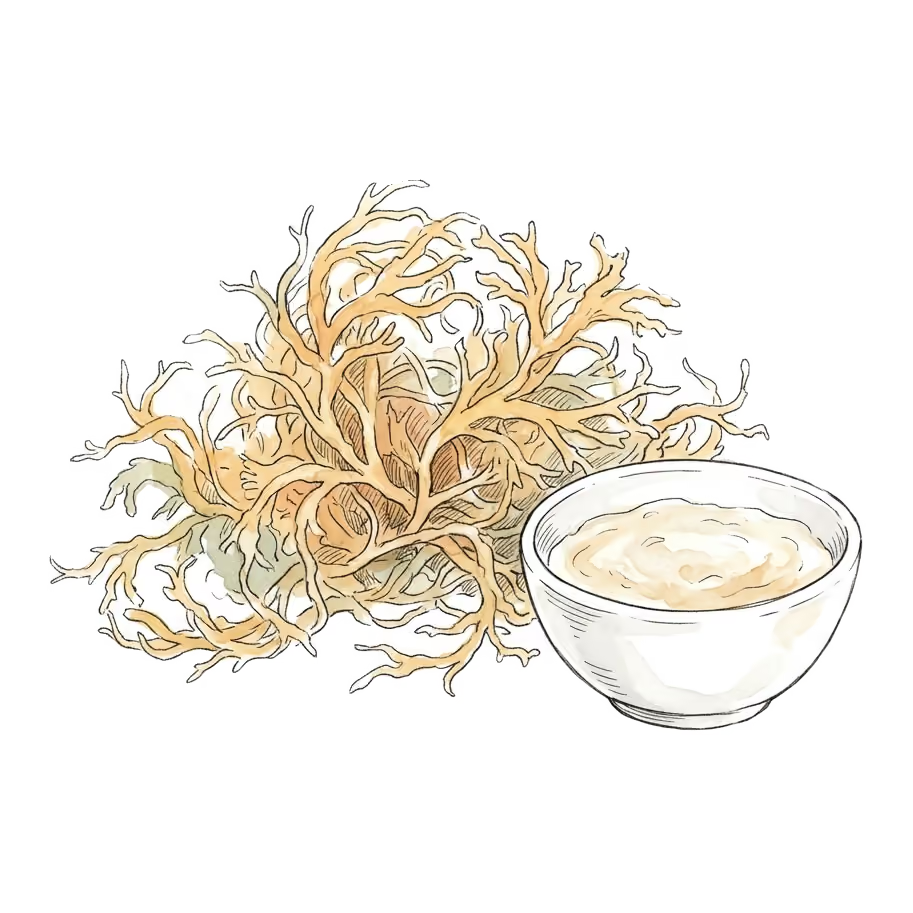
Sea Moss (Irish Moss)
Chondrus crispus; Gracilaria spp.; Eucheuma and Kappaphycus spp. · also known as sea moss, Irish moss, carrageen moss, carrageen, sea moss gel, seamoss, Chondrus crispus, Gracilaria, Eucheuma, purple sea moss, gold sea moss
By Superfoods Advisor Editors·October 23, 2026
What is sea moss good for? Sea moss benefits against the evidence: nutrition, gut, thyroid and immune claims, iodine and heavy metals, and safety.
Sea moss is a red seaweed, originally Irish moss (Chondrus crispus), sold as gel or capsules. Its proven use is culinary: it thickens food and adds some minerals and fiber. Claims that it supports the thyroid, immunity, skin or weight loss have essentially no human trials behind them, and its iodine and heavy-metal content vary from product to product.
“Sea moss” is a market name, not a species. In its original sense it refers to Irish moss, Chondrus crispus, a small, cartilaginous red alga (Rhodophyta) that grows on rocky shores of the North Atlantic, from Ireland and Brittany to Maine and the Canadian Maritimes. Coastal Irish and Caribbean communities have long boiled it to set milk puddings and drinks, and it was the original commercial source of carrageenan, the gelling polysaccharide now used across the food industry.
Most of the sea moss sold online today is not Chondrus crispus. Products labelled “sea moss”, “gold sea moss”, or “purple sea moss” are usually warm-water red algae from the genera Gracilaria, Eucheuma, or Kappaphycus, harvested or farmed in the Caribbean, Central America, and Southeast Asia. They gel in much the same way, but they differ in polysaccharide type, mineral content, and growing conditions, so data on one species does not carry over to another. Sellers also distinguish “wild-harvested” sea moss from “pool-grown” sea moss, a term applied to algae cultivated in tanks or enclosed ponds of salted water. Neither label tells you much about the water or the quality control behind it.
Sea moss belongs to the broader group of edible macroalgae described in the seaweed entry. Its recent popularity comes largely from social media, where it is promoted as a source of “92 of the 102 minerals the body needs.” No published analysis produced that figure, and human research on sea moss as a food or supplement is very thin.
Evidence at a glance
Active Compounds
Carrageenan is the defining component. It is a family of sulfated galactans that makes up a large share of the dry weight of carrageenophyte red algae. Chondrus crispus produces mainly kappa- and iota-type carrageenans (with lambda-carrageenan in some life stages), while Kappaphycus alvarezii and Eucheuma denticulatum are the main commercial sources of kappa- and iota-carrageenan respectively. Gracilaria species produce agar-type polysaccharides rather than carrageenan. They are what turn soaked, blended sea moss into a gel. They are largely indigestible in the human small intestine and pass to the colon, where some can be fermented by gut bacteria.
Iodine matters most in practice. Seaweeds concentrate it from seawater, and the amount swings with species, harvest site, season, and processing. Red algae such as Irish moss generally contain far less iodine than brown kelps, but the range is wide enough that no label figure should be taken on trust without testing.
Minerals such as magnesium, calcium, iron, potassium, and zinc come from the seawater the alga grew in. So do arsenic, cadmium, lead, and mercury: the same uptake works for both, which is why contaminant testing counts for more with sea moss than with most land-grown foods.
Pigments and minor compounds include phycoerythrin (the red pigment of red algae), small amounts of carotenoids, and polyphenols, studied mainly in cell and animal models.
Nutritional Profile
The USDA FoodData Central entry for Seaweed, irishmoss, raw (FDC 168456) gives the following values. The sample is fresh seaweed at roughly 81% water. Dried sea moss runs several times higher per 100 g; gel, which is mostly added water, runs lower.
Per 100 g raw Irish moss (USDA FDC 168456):
| Nutrient | Amount |
|---|---|
| Calories | 49 kcal |
| Water | 81.3 g |
| Protein | 1.5 g |
| Fat | 0.2 g |
| Carbohydrate | 12.3 g |
| Fiber | 1.3 g |
| Calcium | 72 mg |
| Iron | 8.9 mg |
| Magnesium | 144 mg |
| Phosphorus | 157 mg |
| Potassium | 63 mg |
| Sodium | 67 mg |
| Zinc | 1.95 mg |
| Folate | 182 µg |
| Iodine | Not reported |
The USDA entry does not report iodine. Independent analyses fill part of that gap. Darias-Rosales et al. measured iodine in commercial dulse and Irish moss sold in Spain and found Irish moss averaged about 3.9 mg/kg dry weight (roughly 3.9 µg per gram), well below the kombu and kelp values discussed in the seaweed entry. At that concentration, a typical 4 g daily portion of dried Irish moss would not approach the adult Tolerable Upper Intake Level of 1,100 µg/day (Darias-Rosales et al., 2020, Environmental Science and Pollution Research). That holds for the samples tested, but not for every product: one major US seller lists about 29,600 µg of iodine per 100 g of its dried Irish moss, which puts a single 4–5 g portion at or above the upper limit (Maine Coast Sea Vegetables). Iodine in seaweeds can vary by orders of magnitude with species, harvest conditions, and storage (Teas et al., 2004, Thyroid), and published iodine data for the Gracilaria and Eucheuma products most often sold as sea moss are sparse. Most sea moss labels do not state iodine per serving.
On the “92 minerals” claim: Human nutrition recognises a much smaller set of essential minerals, and an element turning up in a seaweed is not evidence of a benefit. Any marine alga carries traces of most elements dissolved in seawater, toxic ones included. No peer-reviewed analysis supports the “92 of 102” figure, and measured mineral content varies from sample to sample.
Evidence for Purported Benefits
There are essentially no published randomised controlled trials of sea moss, Irish moss, or sea moss gel eaten as a food or supplement in humans. A 2019 narrative review of edible seaweeds concluded that more human intervention studies are needed before health claims for seaweeds or their components can be substantiated (Cherry et al., 2019, Nutrition Reviews). The claims below rest mainly on animal, laboratory, and component-level evidence.
Gut Health and Prebiotic Effects
Evidence:Lab & animal only One rat feeding study and one in vitro fecal model; no human trial of sea moss.
In weaning rats, a diet supplemented with cultivated Chondrus crispus increased some bacterial groups considered beneficial, raised fecal short-chain fatty acids, and improved colon tissue measures compared with a basal diet (Liu et al., 2015, BMC Complementary and Alternative Medicine). An in vitro model using human fecal microbiota reported that digested red seaweeds, including C. crispus, increased several bacterial species associated with gut health (López-Santamarina et al., 2025, Food Chemistry). These findings fit the general picture of fermentable fibre covered in our review of dietary fibre and microbiome research, but no human trial has tested whether eating sea moss changes gut outcomes. For established food-first approaches, see the gut health superfoods guide.
Thyroid Support
Sea moss is not a dependable thyroid aid: its iodine content varies widely, and too much iodine can itself disturb thyroid function.
Sea moss is often marketed for thyroid health because it contains iodine. Iodine is essential for thyroid hormone production, but most people in countries with iodised salt are not iodine-deficient, and excess iodine can itself cause hypothyroidism or hyperthyroidism in susceptible people (Leung & Braverman, 2014, Nature Reviews Endocrinology). With iodine content this variable and this rarely disclosed, sea moss is not a reliable way to correct a deficiency. Anyone worried about iodine status should have it assessed by a clinician rather than self-dosing with seaweed.
Immune Function
Evidence:Lab & animal only Cell studies of red-algal polysaccharides; carrageenan nasal-spray trials do not apply to eating sea moss.
Immune claims for sea moss usually borrow from research on purified carrageenan. Iota-carrageenan nasal sprays have been tested in randomised trials for the common cold; a 35-person exploratory trial reported reduced symptoms and nasal viral load versus placebo (Eccles et al., 2010, Respiratory Research). Those trials applied an isolated polysaccharide directly to the nasal lining; they say nothing about eating sea moss gel. Laboratory studies of red-algal polysaccharides, including fractions from Chondrus crispus, report immunomodulatory activity in cultured immune cells (Premarathna et al., 2024, International Journal of Biological Macromolecules). No human dietary study has followed. The immune-boosting superfoods guide covers foods with stronger human data.
Skin, Energy, Weight Loss, and Other Claims
Evidence:Insufficient No published human research on sea moss itself for these claims.
Claims that sea moss improves skin, energy, libido, joint health, or weight loss are not supported by published human research on sea moss itself. Cosmetic use relies on carrageenan’s film-forming and moisture-holding properties. That is a formulation effect, not a demonstrated health benefit.
Shopping for sea moss?
Top-ranked of 6 products compared.
Compare all 6 picks →Affiliate links. Disclosure.
Typical Use and Preparation
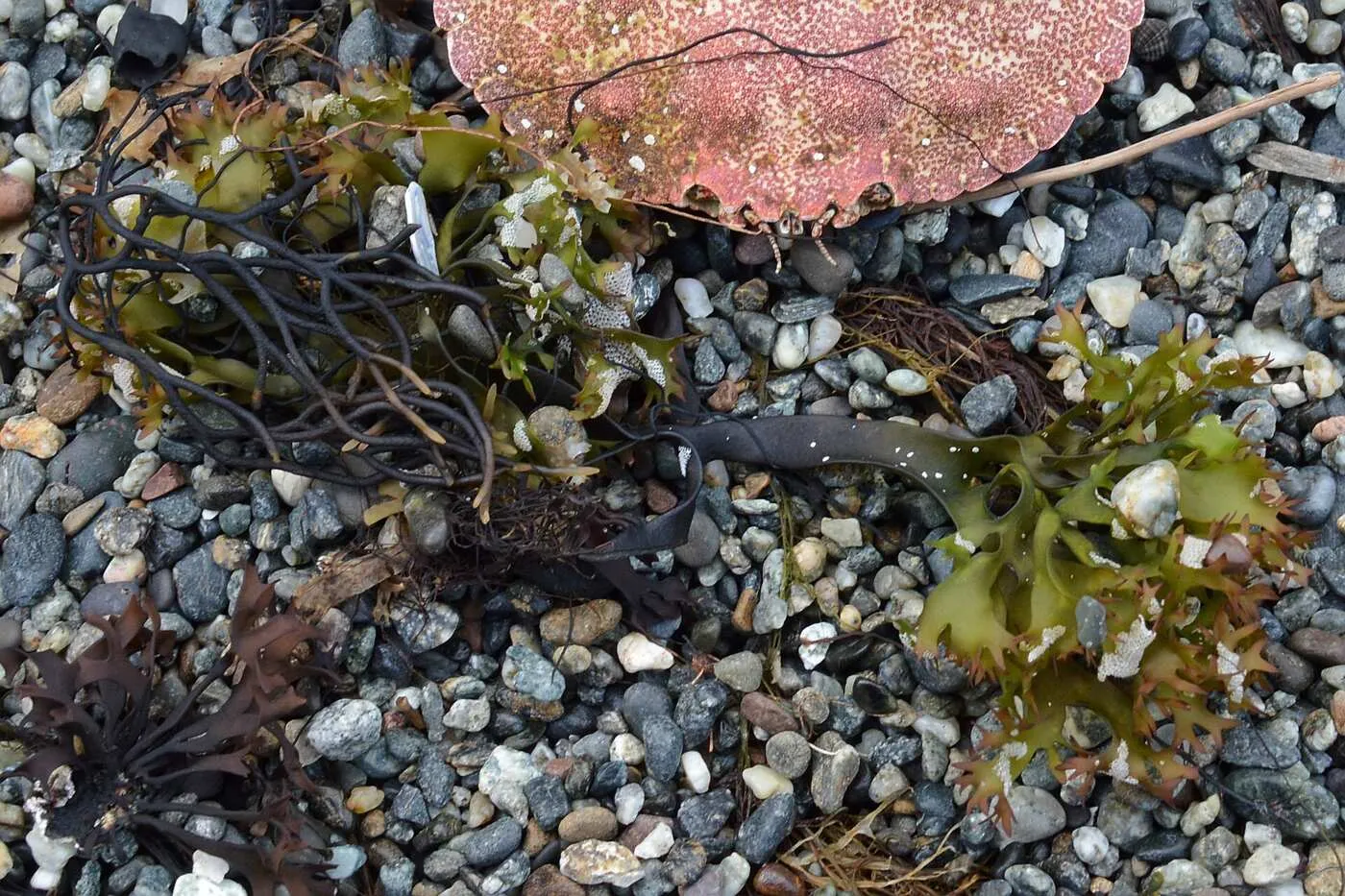 Photo: Ryan Hodnett, CC BY-SA 4.0, via Wikimedia Commons
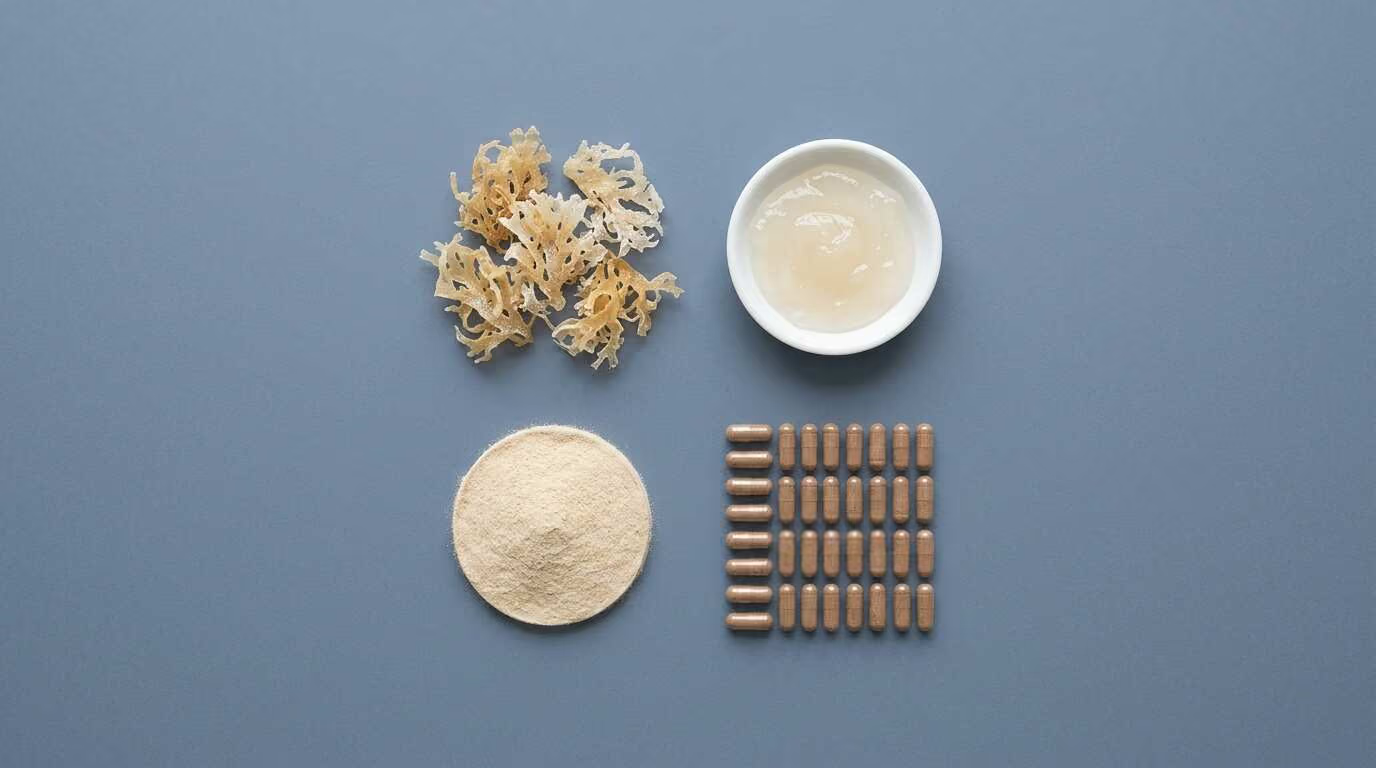
Sea moss is sold in four main forms:
- Raw dried sea moss: whole dried fronds, often still carrying sand, salt, and debris. It is rinsed well, soaked in fresh water for 12–24 hours until it swells and softens, then rinsed again.
- Sea moss gel: soaked sea moss blended with fresh water and refrigerated until it sets. It is typically used a tablespoon or two at a time in smoothies, oatmeal, sauces, or desserts, where it thickens without much flavour. Sellers commonly advise keeping homemade gel refrigerated and using it within a few weeks, but no evidence-based storage guidance exists yet (Rejuso et al., 2026); discard gel that smells sour, discolours, or shows mould.
- Capsules and powders: dried, milled sea moss, often blended with bladderwrack and burdock root. Adding bladderwrack, an iodine-rich brown alga (LactMed: Seaweed), can raise iodine content substantially compared with sea moss alone.
- Gummies: sea moss powder in a sugar or pectin base. Each gummy usually holds little sea moss, and the sugar comes along with it.
There is no established effective dose for any health outcome. Traditional food use involved modest amounts in puddings and drinks. Sea moss gel fits easily into recipes such as the superfood smoothie recipes on this site, as a thickener rather than as a therapeutic ingredient.
A 2026 survey of 66 sea moss products bought from major US online retailers (53 dried products and 13 gels) found wide variation in microbial load, pH, and sugar content. Presumptive Salmonella, Escherichia, Listeria, and Vibrio were detected in some samples, and the authors called for evidence-based guidance on processing, storage, and handling (Rejuso et al., 2026, Journal of Food Protection). Buying refrigerated gel from a producer with clear food-safety practices, or preparing gel from cleaned dried sea moss and keeping it chilled, reduces but does not remove that risk.
Safety, Interactions, and Contraindications
Iodine excess and thyroid conditions: Even though Irish moss is lower in iodine than kelp, products vary, blends often include bladderwrack, and labels rarely state iodine content. Excess iodine can trigger or worsen thyroid dysfunction, particularly in people with autoimmune thyroid disease, thyroid nodules, or a history of thyroid surgery or radioactive iodine treatment (Leung & Braverman, 2014). People with a thyroid condition, or taking levothyroxine, methimazole, or propylthiouracil, should speak with their clinician before using sea moss.
Heavy metals: Seaweeds take up arsenic, cadmium, lead, and mercury from their surrounding water, and levels depend heavily on location. In the 2026 product survey, arsenic, cobalt, and mercury were detected in dried sea moss, while arsenic and cobalt were below detection limits in the gels and mercury appeared only at trace levels (Rejuso et al., 2026). One set of products does not predict the next harvest; only batch-level testing covers that. The question of whether algae can remove heavy metals from the body, a separate and often conflated claim, is examined in Does chlorella actually detox heavy metals?.
Pregnancy and breastfeeding: Iodine needs rise during pregnancy and lactation, but sea moss provides an unpredictable dose alongside possible heavy-metal exposure. The NIH Drugs and Lactation Database notes that maternal consumption of excess iodine from seaweed has caused thyroid suppression in breastfed infants, and advises that sea moss be avoided during breastfeeding unless iodine and heavy-metal levels have been shown to be low enough (LactMed, 2026). A prenatal supplement with a stated iodine dose is the more predictable option during pregnancy; any change should be discussed with a prenatal care provider.
Anticoagulant and antiplatelet medication: Some sulfated polysaccharides from red algae, including carrageenan-type polysaccharides, have shown anticoagulant activity in laboratory assays (Premarathna et al., 2024). Whether dietary amounts of sea moss affect clotting in people is not known. As a precaution, people taking warfarin or other blood thinners should tell their prescriber before using concentrated sea moss products.
Carrageenan and digestive conditions: Food-grade carrageenan has been re-evaluated by food-safety regulators and is permitted as an additive (EFSA ANS Panel, 2018), but its effect on inflammatory bowel disease remains debated. In a small randomised trial in people with ulcerative colitis in remission, 12 completed follow-up; three of those given carrageenan capsules relapsed, against none given placebo (Bhattacharyya et al., 2017, Nutrition and Healthy Aging), while a seven-person crossover pilot found no difference in disease activity over one week (Laatikainen et al., 2023, Food & Nutrition Research). A 2023 scoping review found only five human studies on carrageenan and intestinal effects and called for larger trials at realistic dietary exposures (Tahiri et al., 2023, Critical Reviews in Toxicology). On evidence this thin, people with inflammatory bowel disease have good reason to skip sea moss for now.
Microbial contamination: Gels are moist and often unpreserved, and the 2026 survey found presumptive pathogens in some samples. Pregnant people, older adults, and anyone immunocompromised carry the highest risk from foodborne illness.
Sodium and digestive tolerance: Poorly rinsed dried sea moss can carry a noticeable amount of salt. Large servings of the gel may cause bloating or loose stools in some people because of its fibre-like polysaccharides.
Product Selection Criteria
Species and origin on the label: A useful label names the species (Chondrus crispus, Gracilaria, or Eucheuma/Kappaphycus) and the harvest region, rather than just “sea moss.” “Wildcrafted” and “pool-grown” are marketing terms. Ask what water the product grew in and how it was tested.
Heavy-metal and microbial testing: Batch-specific certificates of analysis covering arsenic (ideally inorganic arsenic), lead, cadmium, and mercury, plus microbial testing, are the most important quality signal. A brand that cannot supply them on request is asking to be taken on faith.
Iodine disclosure: Products that state iodine in µg per serving allow comparison against the 150 µg/day adult RDA and the 1,100 µg/day upper limit (Linus Pauling Institute, Micronutrient Information Center: Iodine). Check this twice on any blend containing bladderwrack.
Form and handling: For gels, look for refrigerated shipping, a clear use-by date, and a stated acidity or preservation method. For capsules, look for third-party testing of the finished product.
For brand-level comparisons applying these criteria, see our roundup of the best sea moss products.
Frequently Asked Questions
What is sea moss good for?
Sea moss is good for thickening smoothies, puddings and sauces, and it adds small amounts of minerals such as magnesium and iron plus fermentable polysaccharides. Health claims for thyroid support, immunity, energy, skin and weight loss are not backed by human trials. A 2019 review of edible seaweeds concluded more human studies are needed before such claims can be substantiated.
Does sea moss really work?
For specific health outcomes, there is no good evidence that it does. No randomized controlled trials have tested sea moss or sea moss gel as a food or supplement in people. The supporting studies are a rat feeding study, a test-tube gut model and cell work on red-algal polysaccharides, which cannot show an effect in humans. Its value is as a food ingredient.
How much sea moss per day?
There is no established effective dose. Gel is typically used a tablespoon or two at a time, and a 4 g daily portion of dried Irish moss, at the iodine levels measured in one analysis, would stay well below the adult iodine upper limit of 1,100 µg. Blends with bladderwrack can contain far more iodine, so check the label and talk to a clinician if you have a thyroid condition.
How long does it take to feel the effects of sea moss?
No timeline can be given, because no human trial has shown a measurable health effect from sea moss. Claims about feeling more energetic or seeing skin changes after a few weeks come from marketing and personal reports, not research. If you notice symptoms such as palpitations, fatigue or weight change while using it, especially a bladderwrack blend, ask a clinician to check your thyroid.
What are the side effects of sea moss gel?
Large servings can cause bloating or loose stools because of its fiber-like polysaccharides. The bigger risks are product-related: unpredictable iodine, which can disturb thyroid function in susceptible people; heavy metals; and microbial contamination, since gels are moist and often unpreserved. People with ulcerative colitis may want to be cautious, as a small trial raised concerns about carrageenan.
Can sea moss help you lose weight?
No published human research shows that sea moss causes weight loss. Gel is low in calories per spoonful because it is mostly water, and its polysaccharides add bulk, but that has not been tested as a weight-loss effect. Gummies add sugar. Using sea moss for weight loss with a thyroid condition is riskier still, because extra iodine can affect thyroid function.
References
Show all 17 referencesShow fewer
- U.S. Department of Agriculture, Agricultural Research Service. Seaweed, irishmoss, raw (FDC ID 168456). FoodData Central, SR Legacy.
- Darias-Rosales, J., Rubio, C., Gutiérrez, Á. J., Paz, S., & Hardisson, A. (2020). Risk assessment of iodine intake from the consumption of red seaweeds (Palmaria palmata and Chondrus crispus). Environmental Science and Pollution Research, 27(36), 45737–45741.
- Teas, J., Pino, S., Critchley, A., & Braverman, L. E. (2004). Variability of iodine content in common commercially available edible seaweeds. Thyroid, 14(10), 836–841.
- Cherry, P., O’Hara, C., Magee, P. J., McSorley, E. M., & Allsopp, P. J. (2019). Risks and benefits of consuming edible seaweeds. Nutrition Reviews, 77(5), 307–329.
- Liu, J., Kandasamy, S., Zhang, J., et al. (2015). Prebiotic effects of diet supplemented with the cultivated red seaweed Chondrus crispus or with fructo-oligo-saccharide on host immunity, colonic microbiota and gut microbial metabolites. BMC Complementary and Alternative Medicine, 15, 279.
- López-Santamarina, A., Cardelle-Cobas, A., Mondragón Portocarrero, A. D. C., Cepeda Sáez, A., & Miranda, J. M. (2025). Modulatory effects of red seaweeds (Palmaria palmata, Porphyra umbilicalis and Chondrus crispus) on the human gut microbiota via an in vitro model. Food Chemistry, 476, 143437.
- Leung, A. M., & Braverman, L. E. (2014). Consequences of excess iodine. Nature Reviews Endocrinology, 10(3), 136–142.
- Eccles, R., Meier, C., Jawad, M., et al. (2010). Efficacy and safety of an antiviral Iota-Carrageenan nasal spray: a randomized, double-blind, placebo-controlled exploratory study in volunteers with early symptoms of the common cold. Respiratory Research, 11, 108.
- Premarathna, A. D., et al. (2024). Immunomodulation by xylan and carrageenan-type polysaccharides from red seaweeds: anti-inflammatory, wound healing, cytoprotective, and anticoagulant activities. International Journal of Biological Macromolecules, 260(Pt 1), 129433.
- Rejuso, A., Çobo, M., Curran, J. E., Wang, R., Humiston, G., Worobo, R., & Vegdahl, A. C. (2026). Microbial and heavy metal analyses of commercially available sea moss and sea moss products. Journal of Food Protection, 89(11), 100915.
- Drugs and Lactation Database (LactMed). (2026). Sea Moss. National Institute of Child Health and Human Development.
- Bhattacharyya, S., Shumard, T., Xie, H., et al. (2017). A randomized trial of the effects of the no-carrageenan diet on ulcerative colitis disease activity. Nutrition and Healthy Aging, 4(2), 181–192.
- Laatikainen, R., Lehto, M., Mäkelä-Salmi, N., Hillilä, M., Groop, P. H., & Salmenkari, H. (2023). Randomized controlled pilot study: effect of carrageenan emulsifier on inflammation and gastrointestinal symptoms in quiescent ulcerative colitis. Food & Nutrition Research, 67.
- Tahiri, M., Johnsrud, C., & Steffensen, I. L. (2023). Evidence and hypotheses on adverse effects of the food additives carrageenan (E 407)/processed Eucheuma seaweed (E 407a) and carboxymethylcellulose (E 466) on the intestines: a scoping review. Critical Reviews in Toxicology, 53(9), 521–571.
- Linus Pauling Institute. Iodine. Micronutrient Information Center, Oregon State University.
- Drugs and Lactation Database (LactMed). Seaweed. National Institute of Child Health and Human Development.
- EFSA Panel on Food Additives and Nutrient Sources added to Food (ANS). (2018). Re-evaluation of carrageenan (E 407) and processed Eucheuma seaweed (E 407a) as food additives. EFSA Journal, 16(4), 5238.
Reviews
Product recommendations tied to this entry, selected by the criteria in our affiliate disclosure.
The Best Sea Moss (2026): Raw, Gel, Capsules and Drops Compared
 Check price on Amazon on Amazon for Maine Coast Sea Vegetables Organic Irish Moss Whole Leaf, 2 oz (opens in a new tab)
 Check price on Amazon on Amazon for Alkaline Herb Shop Wildcrafted Sea Moss, 140 Capsules (opens in a new tab)
 Check price on Amazon on Amazon for MaryRuth's Organic Irish Sea Moss Liquid Drops, Unflavored, 1 fl oz (opens in a new tab)
Compare all 6 picks →Affiliate links. Disclosure.
Related content
More in Seaweed & Algae
- Algae Oil (Schizochytrium and Crypthecodinium)
Algae oil omega-3 explained: how much EPA and DHA it supplies, algae oil vs fish oil, what trials show for heart and pregnancy, dosing, and safety.
- Chlorella (Chlorella vulgaris)
Chlorella vs spirulina compared, plus chlorella benefits: trials on immunity and cholesterol, the detox claim, B12, cell walls, dose and side effects.
- Seaweed (Edible Sea Vegetables)
Is seaweed good for you? Nutrition of nori, wakame and kombu, iodine benefits and risks, what research shows, how much is too much, and which to avoid.
- Spirulina (Arthrospira platensis)
What is spirulina good for? Spirulina nutrition, what trials show for cholesterol and blood sugar, the B12 myth, how much per day, and side effects.

Curated by Superfoods Advisor Editors·Last updated